Get every episode summarized
Each time The Projection Booth Podcast publishes, we email you a written briefing from the transcript — the topics, who appeared, and any specific claims, with the ad reads skipped.
Email me new episodesFree for 3 shows. No card needed.
About this episode
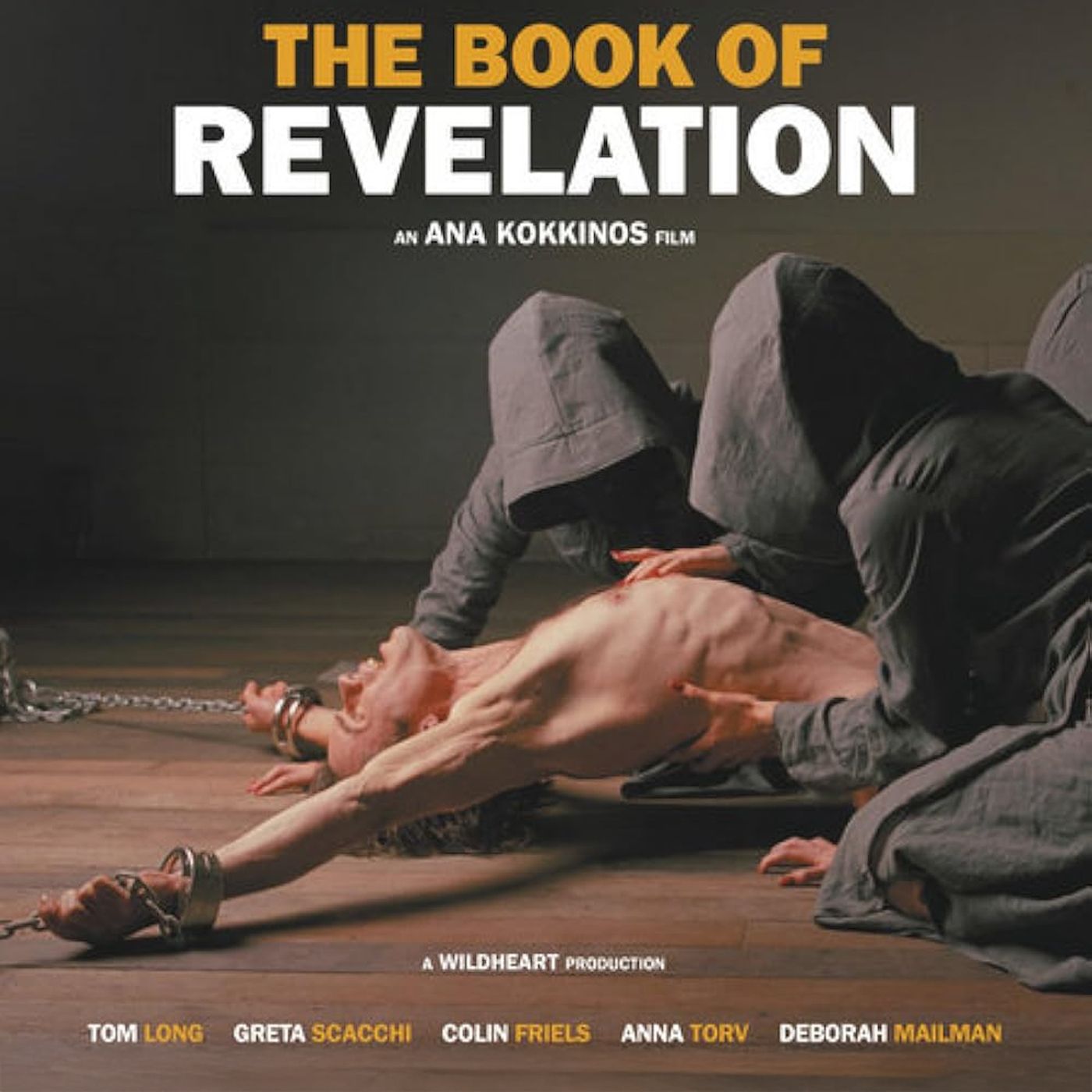
Spencer Parsons and Rob St. Mary join Mike to unpack Ana Kokkinos’s unflinching 2006 adaptation of Rupert Thomson’s novel. The Book of Revelation, a film that refuses easy provocation, using intimacy, trauma, and performance as tools for something far more unsettling.
The story follows Daniel (Tom Long), a dancer who vanishes during a mundane errand for his girlfriend Bridget (Anna Torv). What initially plays as a mystery gradually reveals itself as a confrontation with sexual violence, shame, and the long aftermath of violation—rendered without sensationalism and without moral shortcuts.
Mike also sits down with director Ana Kokkinos to discuss the making of the film, her approach to depicting male sexual assault, and her insistence on pushing past eroticism toward emotional truth. The conversation explores how The Book of Revelation challenges audience expectations, destabilizes gendered narratives of victimhood, and stands as one of the most difficult—and necessary—Australian films of its era.
This episode wrestles with discomfort, representation, and empathy, asking what it really means when cinema turns its gaze on trauma.
Become a supporter of this podcast: https://www.spreaker.com/podcast/the-projection-booth--5513239/support.
Become a supporter of The Projection Booth at http://www.patreon.com/projectionbooth
The story follows Daniel (Tom Long), a dancer who vanishes during a mundane errand for his girlfriend Bridget (Anna Torv). What initially plays as a mystery gradually reveals itself as a confrontation with sexual violence, shame, and the long aftermath of violation—rendered without sensationalism and without moral shortcuts.
Mike also sits down with director Ana Kokkinos to discuss the making of the film, her approach to depicting male sexual assault, and her insistence on pushing past eroticism toward emotional truth. The conversation explores how The Book of Revelation challenges audience expectations, destabilizes gendered narratives of victimhood, and stands as one of the most difficult—and necessary—Australian films of its era.
This episode wrestles with discomfort, representation, and empathy, asking what it really means when cinema turns its gaze on trauma.
Become a supporter of this podcast: https://www.spreaker.com/podcast/the-projection-booth--5513239/support.
Become a supporter of The Projection Booth at http://www.patreon.com/projectionbooth
Get every episode summarized
Each time The Projection Booth Podcast publishes, we email you a written briefing from the transcript — the topics, who appeared, and any specific claims, with the ad reads skipped.
Email me new episodesFree for 3 shows. No card needed.
No transcript yet
This episode has not been transcribed. Request it and it moves to the front of the queue.
More episodes
More from The Projection Booth Podcast

Special Report: The World of Nancy Kwan
The Projection Booth Podcast
Sep 28, 202620:32completed

Special Report: Take Me Home (2026)
The Projection Booth Podcast
Sep 25, 202630:24completed

Special Report: Playing with Fire: An Ecosexual Emergency (2025)
The Projection Booth Podcast
Sep 25, 202634:04completed

Special Report: Digital Kitchen's Titles for Smoke and Spider-Noir
The Projection Booth Podcast
Sep 25, 202638:48completed