Get every episode summarized
Each time ChinesePod - Beginner publishes, we email you a written briefing from the transcript — the topics, who appeared, and any specific claims, with the ad reads skipped.
Email me new episodesFree for 3 shows. No card needed.
About this episode
“And it's a lesson about one of the Chinese people's favorite topics. So in the dialogue, we're going to talk about which restaurant to go to. Only we're not going to hear the word for restaurant. We're just going to hear, you know, different types of food.”From the transcript
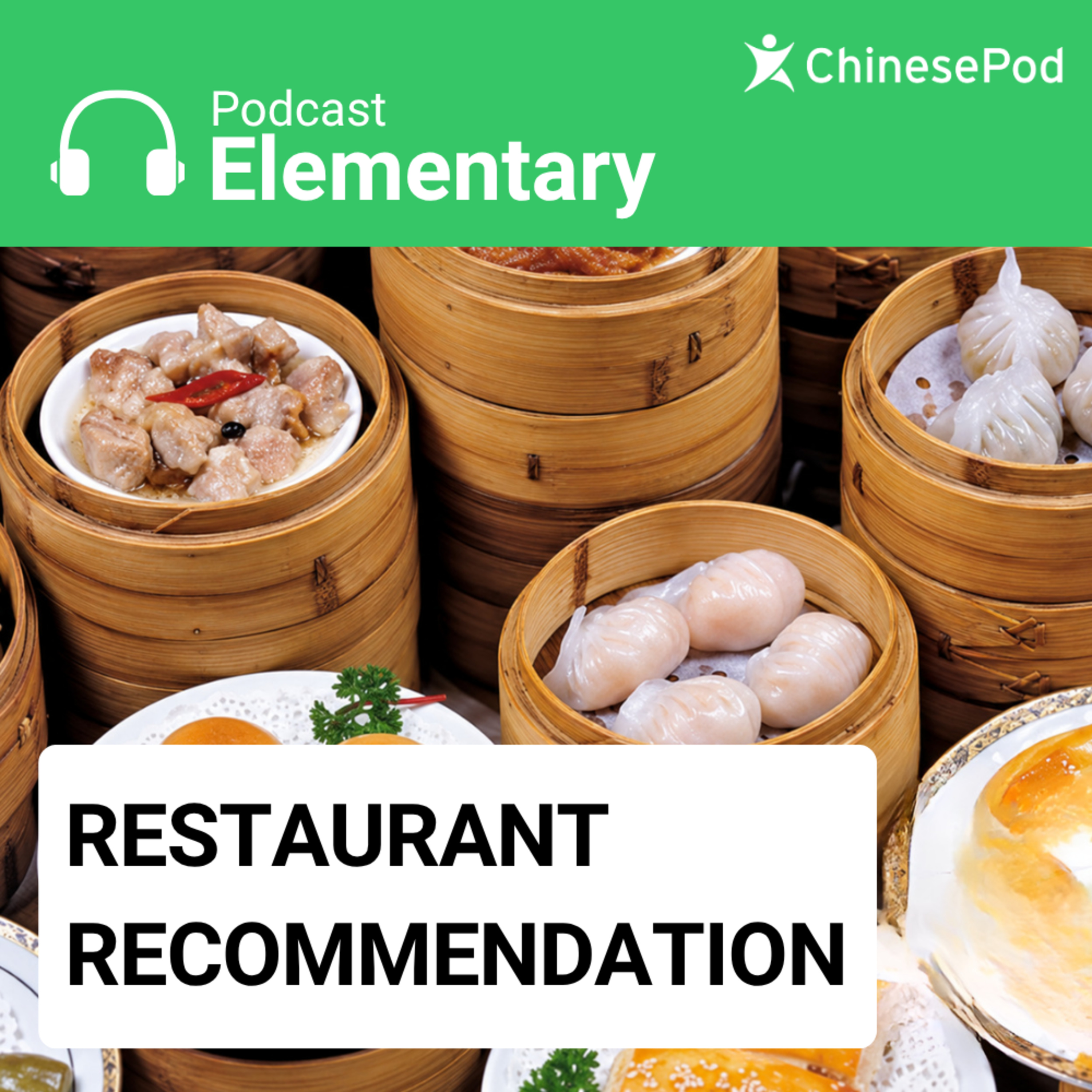
Each person has his own preferences, but the Chinese way to finding a good restaurant is -- no, not Yelp or Dianping -- asking friends, face to face, the good old-fashioned way! In this lesson, follow such a conversation about where to eat lunch and learn some Chinese. Episode link: https://www.chinesepod.com/1847
Get every episode summarized
Each time ChinesePod - Beginner publishes, we email you a written briefing from the transcript — the topics, who appeared, and any specific claims, with the ad reads skipped.
Email me new episodesFree for 3 shows. No card needed.
Transcript ready
350 searchable segments. Every word is indexed and playable.
Full transcript
ChinesePod - Beginner — Elementary | Restaurant Recommendation. Machine-transcribed; use the interactive transcript above to jump the player to any line.
Hello, you're listening to Chinese part. My name is Dilu. Hey guys, I'm John. This is an elementary lesson. And it's a lesson about one of the Chinese people's favorite topics. Restaurants. And food. Yes. So in the dialogue, we're going to talk about which restaurant to go to. For lunch, right? Yes. Only we're not going to hear the word for restaurant. We're just going to hear, you know, different types of food. So we're going to hear different kind of Thai. Yeah, Thai. C-A-I, fourth tone, right? Yes. Fourth tone. Thai. It means dish. I can't be vegetables, but here it's talking about food.
Yes, different cuisine, actually. All right. Let's listen to the dialogue three times. Okay, then go. Second side. What do you eat in the afternoon? I don't know. What about you? How about eating four dishes? I don't eat spicy food. Then, what about Guangdong? There is a good restaurant in the middle of the mountain park. Okay, then go. Third side. And now the translation. What should we eat at noon today?
I don't know. I don't know. I don't know. Then, what about Guangdong? There is a good restaurant in the middle of the mountain park. Okay, then go. And now the translation. What should we eat at noon today? What should we eat for lunch today? What should we eat for lunch today? I don't know. What are you having? I don't know. What about you? I don't know. What are you having? How about going for a Sichuan food? How about going for a Sichuan food? How about going for a Sichuan food? How about going for a Sichuan food?
I don't eat spicy food. I don't eat spicy food. I don't eat spicy food. I don't eat spicy food. Guangdong is a good restaurant in the middle of the mountain park. Then how about Cantonese food? There is a decent restaurant by Zhongshan Park. Guangdong is a good restaurant in the middle of the mountain park. Guangdong is a good restaurant in the middle of the mountain park. Guangdong is a good restaurant in the middle of the mountain park. Okay, then let's just go there. Okay, then let's just go there. Okay, then let's just go there. So in China, there are so many different kinds of Chinese food that the conversation often revolves around which type of Chinese food to eat. It's a good thing that you have many options.
Yeah, and Chinese people are often amazed when you tell them that in my country it's all Chinese food. They're like, what? It's so varied. It is very varied. Sometimes you need those of a capillaries and knowledge about food and restaurant. Yeah, otherwise you can't communicate with Chinese people. All right, let's start from the very beginning. What do we eat today? What do we eat today? Okay, we don't have a subject here because we're obviously talking about what we're going to eat. So we start with a time where though and it has two parts. Right, today, noon, noon, noon, noon. So in Chinese you start with the big and then the small. So the big is today, right? Today, two first tones. Okay, today, and then we get more specific by talking about the time of day. noon, noon, noon. So first tone, third tone, right?
Exactly. Okay, Zhongwu. And then, shusha, might eat what, right? Right. Now, you notice there's no word for lunch in here. In English, we don't really say today at noon, what are we going to eat? We always say what are we going to eat for lunch. But in Chinese, you can say both ways. Okay, so it's common to say it this way. That's very common. It's very natural. All right, so you need to know it. And then anyway, the guy doesn't know, right? He says,不知道. So this ah at the end, what does that add? Well, just imagine if the guy said, 不知道, sounds quite cold and rude. A little bit,不知道. And that's it. So it's kind of like the difference in English between, I don't know. And I don't know. Exactly. It's just a tone of voice thing, right? It is. Okay. So,不知道. Don't forget this ah at the very end to soften the tone.
Yeah, so you can try it out. Try not to put it on the end of every single sentence, but you can try it out from time to time. I'll be careful over using that word. Otherwise, you'll sound like a girl sometimes. Yeah, not every sentence needs ah at the end, right? Okay, so then the girl has an idea about where to go, right? She says, 去吃四川菜,怎麼樣? So literally to go and eat四川菜, right? Mm. Do you have to say 去吃 there? Or can you just say 四川菜,怎麼樣? That also works. Okay, but when you're giving a suggestion, you frequently end the sentence with 怎麼樣? Okay, now let's cover the tones in the words she uses in her suggestion. 四川菜,四川菜, so what are the tones there? Fourth, first, and fourth. 四川菜,對,四川菜, so you may know that
四川 is a province in China, and their cuisine is called 四川菜. That's one of the spicy provinces, right? Their food are very spicy, yes. Okay, so when you think of Sichuan, you think spicy, so the guy immediately responds with 五川菜, 我不吃辣,我不吃辣, So辣, fourth tone being spicy, that's an adjective, no? It can also be a noun. So it kind of means like spicy food, if you say 五川菜, Okay, good. So anyway, the guy does need spicy food, so the girl makes another suggestion, right? It's the cuisine from a not spicy province, which is 廣东菜,廣东菜, Also known as Canton and English, right? Yes, and the tones are third and first. 廣东菜, so this is the food with dim sum, right?
Yes. So anyway, she suggests 廣东菜, and then she says 中山公園有一家很不错, Okay, now 中山公園, that's the name of a park in Shanghai, right? It is, however she suggests this area, instead of this park. So that could be an area in any city, right? Yes. Okay, and if you're curious about the tones, they are... They are 中山公園, Okay, and so this area... 有一家很不错, 有一家很不错, So 一家, this 家, first tone, is a measure word for a restaurant, right? Yes. 有一家 restaurant, Okay, you can just drop the restaurant part. Yes. So remember you have a general area,
you have yo, and then you can have a shop or restaurant or whatever. So you wouldn't say this area of the city has a restaurant, you would say there is a restaurant in this area of the city, in English, right? Let's give more examples. Okay, so in the larger scale, like a city, maybe, what would I say? 上海, 上海有两个机场, Okay, so Shanghai has two airports. We could say has in English. There are two airports in Shanghai. There are, 爸爸, in English. However, in Chinese, it's more like a, 上海 has two airports. Okay, and that example, we could do both in English. But let's, let's go a little smaller, like, for example, at home or something. 我家有一个电视机, So yeah, in English, you can't say my home has a TV set. You have to say there is a TV set in my home. Okay, this is a good example. 我家有一个电视机, Okay, got it. So anyway, they decided on where to go, right? How does the dialogue end up? 行,那就去吧.
行,那就去吧. So 行, is kind of like, all right. Okay, all right. Now let's listen to the pronunciation this word again. How do you say it? 行, second tone. Yes. Now, in the dialogue, it sounds kind of like you said, 行,行, like, a little bit different. Well, some of our parties may notice that sometimes the southerners and the northerners, they pronounce certain words differently. Yeah, like, it seems like southerners say Xing, and the northerners are like, 行,行,行, and like that. I have, anyways, the same word. And then the end of the sentence is 那就去吧. So 那, meaning, then, in that case, 就, was kind of like, just... Just, then, let's just go. It's a friendly suggestion. Let's do it. All right, and that Bob brings in the friendliness, right? The Bob at the end. Dway. All right, let's listen to the dialogue three more times.
好,那就,听吧. Welcome back to another installment of Chinese Pod Trivia. And the question for you is, for what test does Chinese Pod offer preparation services for? Is it A, the polygraph? B, the colonoscopy? C, the HSK test? Or D, the CAT scan? The CAT scan? Sorry, that is incorrect. The correct answer is C, the HSK test. That's right, Chinese Pod will thoroughly prepare you to pass this rigorous test of proficiency in Chinese. ChinesePod.com, forward slash HSK. Yes. The first answer. What is lunch today? I don't know. What about you? How about eating four dishes? I don't eat spicy. Then, what about Guangdong?
There is a good restaurant in the middle of the mountains. All right, then, go ahead. The second answer. What is lunch today? I don't know. What about you? How about eating four dishes? I don't eat spicy. Then, what about Guangdong? There is a good restaurant in the middle of the mountains. All right, then, go ahead. The third answer. What about lunch today? I don't know. What about you? How about eating four dishes? I don't eat spicy. Then, what about Guangdong? There is a good restaurant in the middle of the mountains. All right, then, go ahead. So, Dulu, let's add a little bit more cultural insight to these two types of food we talked about in the lesson.
Well, for example, Sichuan Tai. There are a couple dishes that I think are really famous that a lot of our listeners might know, but they don't realize it's Sichuan Tai. There are two very well-known dishes. The first one is Mapo tofu. Okay, so, I'm not even sure that is in English, but it's a type of tofu that has, like, ground meat. Usually, it's spicy. I think this is the Sichuan dish. Mapo tofu. All right, what's the other one you're thinking of? Well, the other one, I'm pretty sure most of the people have heard the name of the other dish, which is Gongbao Jiting. Gongbao Jiting. Ah, yes, very famous among foreigners. So, that's the Kung Pao chicken. And it's great because it doesn't have bones, it tastes good, it's familiar ingredients. Yum. Spicy. And this dish, maybe, it's from Sichuan, but I've talked to people from Sichuan, and they say they don't really eat very much. It's famous throughout China, and the flavor kind of differs a little bit
depending on what kind of restaurant you're in. I think the best idea is to actually go to Sichuan and try the food there. Right, and then the other type of restaurant is the Guangdong Thai, right? Guangdong Thai, Cantonese food. So, it's famous for dim sum, as we mentioned before. How do you say dim sum in Chinese? It's very similar. Tianxin. Tianxin. Okay, third first. So, that's what Guangdong Thai is most famous for, right? Mmm, and also soups. Oh. In Chinese, you can say tang, tang first home. Okay, so if you're in China, you know, working here, living here, or even just for a short time, I'm sure you'll have plenty of opportunities to discuss where to go for lunch or dinner. Mmm, and it will take a long time to get to know dishes from different cuisines. So, don't waste any time, get started, get eating. And get fat. Alright, we've talked a lot today. So, if you have anything that you want to share with us about cuisine, dishes, just go to ChinesePod
and leave comments there. Yep, ChinesePod.com. See you there. See ya. See ya. See ya. See ya. As usual, ChinesePod provides an extensive selection of learning materials for this lesson on its website, www.ChinesePod.com. You can access this lesson directly with the lesson number 1-8-47. So, just go to www.ChinesePod.com. Slash 1-8-47. And you will find a transcript, vocabulary, and much more. The link again, www.ChinesePod.com. Slash 1-8-47.
More episodes
More from ChinesePod - Beginner

Elementary | Directions for the Taxi Driver
ChinesePod - Beginner

Elementary | Getting to the Office
ChinesePod - Beginner

Elementary | Afternoon Meeting
ChinesePod - Beginner

Elementary | Boxing Day
ChinesePod - Beginner