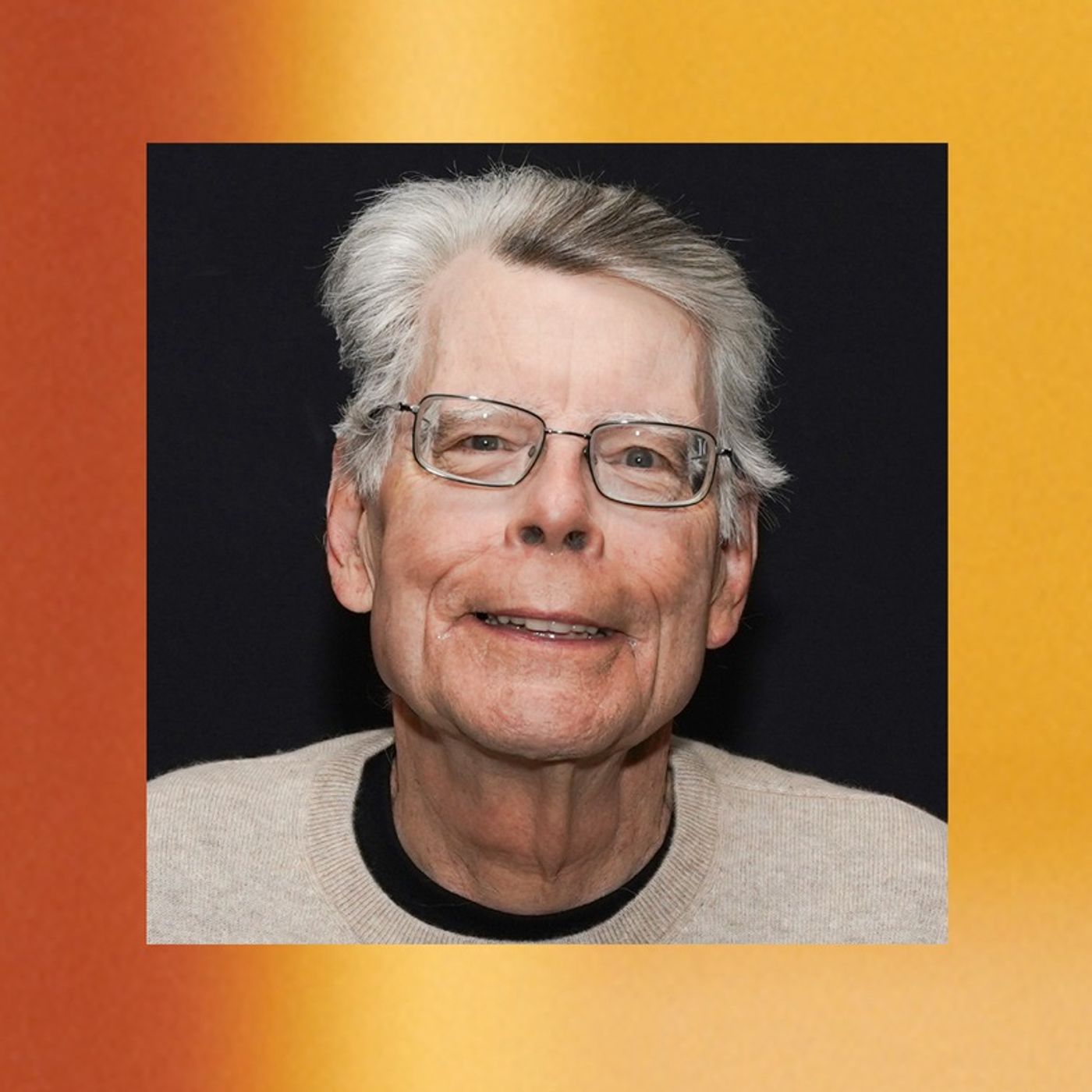
Decades Later, Stephen King Is Finishing What He and Peter Straub Started
Get every episode summarized
Each time The Book Review publishes, we email you a written briefing from the transcript — the topics, who appeared, and any specific claims, with the ad reads skipped.
Email me new episodesFree for 3 shows. No card needed.
About this episode
“If you're a parent of a teen or have teens in your life, it can be hard to figure out the right way to approach social media and technology. Ultimately, if you feel like your teens are ready, there are tools to help.”From the transcript
There are few living writers as closely associated with a genre as Stephen King is with horror. Over a career spanning more than 50 years, 70 novels and hundreds of short stories, King has terrified generations of readers with books like “Carrie,” “The Shining” and “It” while also writing across multiple genres like fantasy, science fiction and crime — producing books that resist easy categorization.
One of those is “The Talisman,” the 1984 fantasy novel King co-wrote with the author Peter Straub (“Ghost Story”). It follows a 12-year-old named Jack Sawyer who discovers that he can move between our world and a parallel one called the Territories. Seventeen years later, King and Straub returned to Jack in the sequel “Black House.” They always intended to write one more book together.
Straub died in 2022, before they could. But King is now publishing that third novel in the series, “Other Worlds Than These,” with Straub still credited as his co-author. The book comes out Oct. 6. To write it King has returned not only to the world they created together but also to Straub’s writing itself, rereading his old friend’s work and trying to channel his voice on the page. In it, Jack Sawyer is much older. And the new book, like “Black House” before it, incorporates King’s epic, sprawling Dark Tower series. Part of the story is also inspired by the crimes of the 1950s mass murderer, Charles Starkweather.
This week, King joins the “Book Review” podcast to talk about finishing the series without Straub, their decades-long friendship and collaboration, his resistance to being defined solely as a horror writer and why, after more than half a century of published books, he still feels compelled to chase the next story.
Books Mentioned on This Episode:
- “The Talisman,” by Stephen King and Peter Straub
- “Black House,” by Stephen King and Peter Straub
- “Other Worlds Than These,” by Stephen King and Peter Straub
- “Ghost Story,” by Peter Straub
- “The Hero’s Journey,” by Joseph Campbell
- “Redheaded Peckerwood,” by Christian Patterson
- “The Gunslinger,” by Stephen King
- “The Eyes of the Dragon,” by Stephen King
- “The Stand,” by Stephen King
- “The Dead Zone,” by Stephen King
- “Firestarter,” by Stephen King
- “Mr. Mercedes,” by Stephen King
- “Survivor Type,” from “Skeleton Crew,” by Stephen King
- “Deliverance,” by James Dickey
- “To the White Sea,” by James Dickey
- “Robinson Crusoe,” by Daniel Defoe
- “Dune,” by Frank Herbert
- “Floating Dragon,” by Peter Straub
Listen to and Follow ‘The Book Review’
Apple Podcasts | Spotify | Amazon Music | YouTube | iHeartRadio
Unlock full access to New York Times podcasts and explore everything from politics to pop culture. Subscribe today at nytimes.com/podcasts or on Apple Podcasts and Spotify.
We Want to Hear From You
We would love to hear your thoughts about this episode, and about the Book Review’s podcast in general. You can send them to [email protected].
Credits
The “Book Review” podcast is hosted byand produced by,and. The show was mixed by Pedro Rosado.
Special thanks toand.
Subscribe today at nytimes.com/podcasts or on Apple Podcasts, Spotify and Amazon Music. You can also subscribe via your favorite podcast app here https://www.nytimes.com/activate-access/audio?source=podcatcher. For more podcasts and narrated articles, download The New York Times app at nytimes.com/app.
Hosted by Simplecast, an AdsWizz company. See pcm.adswizz.com for information about our collection and use of personal data for advertising.
Get every episode summarized
Each time The Book Review publishes, we email you a written briefing from the transcript — the topics, who appeared, and any specific claims, with the ad reads skipped.
Email me new episodesFree for 3 shows. No card needed.
Hosts & guests

Transcript ready
283 searchable segments. Every word is indexed and playable.
Full transcript
The Book Review — Decades Later, Stephen King Is Finishing What He and Peter Straub Started. Machine-transcribed; use the interactive transcript above to jump the player to any line.
If you're a parent of a teen or have teens in your life, it can be hard to figure out the right way to approach social media and technology. Ultimately, if you feel like your teens are ready, there are tools to help. Instagram teen accounts have automatic protections for what your teens see and who can contact them, plus time management tools like daily time limits and sleep mode. An Instagram will continue adding built-in safety features to help create age-appropriate experiences. Learn more about teen accounts and Instagram's ongoing work to protect teens online at Instagram.com slash teen accounts. That's Instagram.com slash teen accounts. There's Gilbert. Gilbert! Hello! Are you talking about Molly? Yeah. Can we see Molly? There's Molly. So great. Molly is the only reason I'd ever want to get a corgi. The queen never sold me, but you have sold me. I'm corkies. I'm Gilbert Cruz and this is the book review for The New York Times.
Our guest today is none other than Stephen King, best-selling horror author and owner of the adorable 10-year-old corgi that you just heard named Molly. To quote the main character of Muriel Sparks novel, The Prime of Miss Jean Brodie, give me a girl at an impressionable age and she's mine for life. Well, Stephen King got me and I think many of us at an impressionable age. I was around 10 or 11 when I read his sprawling novel It and it kicked off a lifelong love of horror as a genre and of King as a writer. I've since read many of his 70-Semod books more than once. There's something wrong with me. One of those books is The Talisman. Back in the early 1980s in the midst of an astoundingly productive period, King co-wrote with his friend and fellow author Peter Straub, The Talisman, a story about a 12-year-old boy named Jack Sawyer, whose mother, a B-movie actress, is dying. Jack discovers that he is able to flip back and forth between our reality and a parallel world called the Territories.
And so he goes on a quest to find that mystical item of the title in order to heal his mother. The book was a massive success and 17 years later in 2001, the writing duo published a sequel called Black House that picked up with Jack as an adult. King and Straub had always planned to write a third and final book to the series, but Peter Straub died in 2022 before they were able to begin working it. That didn't stop Stephen King, however, because he is finally publishing with Straub, down his co-author, That Book. It's titled Other Worlds Than These. In it, Jack Sawyer is much older, and the new book, Like Black House Before It, incorporates King's sprawling Dark Tower epic series. Part of the story is also inspired by the crimes of the 1950s mass murderer, Charles Starkweather. Steve, welcome back. Thank you very much, Gilbert. It's good to be here. You and Peter first came up with this character, Jack Sawyer, and this concept of the territories in the early 1980s. You revisited both years later in Black House.
Tell me about any conversations that you had had with Peter to write a third one. Well, Peter and I started with the talisman because he had read a book called The Heroes Journey. And there were certain ideas in there that he really liked. I came up with the idea of a young guy who was going to go on a quest to find an object, which was the talisman. And so we wrote the book. We had modems back in the day when you had this kind of weird chirping noise going back and forth. And we always had designs on a second book, which turned out to be Black House. And it was published one day after 9-11. It kind of got overshadowed by that event.
As indeed it should have been and would have been. It was like publishing a book after Pearl Harbor. So we had always thought that we would write a third volume of the talisman. It was a natural. And so things went on. Peter had his work. I had my work. We kept putting it off and putting it off. And finally Peter wrote me a letter. And he said, we were really ought to do this. And he sent me a book called Red Hated Peckerwood. And it was about Charles Starkweather. But it was a book of photographs. There were no people. It was just found objects from that period and that time when Charles Starkweather went on the first modern killing spree, if you will. Peter said, this would be a great idea for a book.
And he wrote me a letter about it. I didn't find it until after other worlds and these was actually written. Time went by and Peter got sick. And then he passed away. And I had this idea for the third book. And I just channeled him like crazy. He was with me in the course of writing this book. So it finally turned out to be Stephen King and Peter Straub. We got the band back together, so to speak. What does it mean to channel Peter Straub? I know the two of you have been friends for such a long time. I've written two previous books together. But when you're sitting down, you're like, all right, this is, I'm going to do Peter here. What does that look like? Well, I read Ghost Story and some of his short fiction before I started to try and get his voice.
It's like a kind of literary forgery. When we wrote Black House, Peter said to me before we started, I said, you're going to write like you and you're going to write like me. And nobody will be able to figure out who wrote what? Because in the first book, the talisman, people had no problem picking out things that Peter did and things that I did. So I said, okay, we'll do that. We tried as much as we could in Black House. I wrote like him and he wrote like me. And when I read Ghost Story and the short fiction that he did, I sat down and the first thing that I did was I wrote here and now as an old friend used to say, which was a very Straubian line, you know, in terms of rhythm or syntax or...
In terms of syntax and there was a way that Peter wrote. I can't explain it any better than that. But I've always been a literary forger. If I read a lot of H.V. Lovecraft, I would write about Tenebrus Unknown Horrors. You know, Peter has a very clear style. He's got a poetic sensibility combined with a narrative ability. I don't think anybody else has it. Maybe James Dickie, a little bit in deliverance and to the white sea. Maybe a little bit of Cornic McCarthy. But he never got floored like McCarthy did. He always seemed to come back to the basic story. And I love that about Peter. I always did. Peter was special. I'm sure you guys would poke each other as friends and long-term collaborators.
What would he say was your style? Oh, man. You know, it's like trying to describe what you see in the mirror when it's yourself. It's very hard for me to say. Yeah. I'm all about story primarily. And as time has gone by, I have a tendency to see the whole frame. Yeah. I am curious. You're embarking on the release of this book. You are aware. You know, just like we're having this conversation that you're going to have to talk about. You're friend a lot. Think about him a lot. Is that something that fills you with dread? Is that something you're looking forward to remembering Peter? I love Peter. And he was one of a kind. There were things that we did not agree on. Music was one thing.
He was totally into jazz. And I was a rock and roll guy. And so he was into Miles Davis and Charlie Parker and people like that. I almost felt like I had a low grade fever when I was listening to his kind of music. They seemed to have no beat and no rhythm. And he felt the same way about rock and roll. And I guess what I'm saying is that he had a certain style. I don't know. We clicked somehow and I can't really describe it. Yeah. I guess one thing I'm curious about and I'm lucky enough to not have experienced the loss of many of my friends yet. I will one day. But at the point in my life when that comes, I'm wondering with my own emotional state of mind or being. Am I going to want to revisit that person? Am I going to want to talk to people about them?
Or is that just going to feel so raw for me that I wouldn't be able to do it? In this case, you sort of have to because he's the co-author of this book. And you have to sort of engage with the idea of Peter who's no longer with me. I welcomed him in. I did. I welcomed him in. And I am not going to get all woo-woo and say on say. But I will say that I am where I was when I started to write other worlds and these. I was sitting at this desk and I said to myself, Peter, help me start this book. Because Gilgurt, starting a book is sometimes the most difficult part of all. I mean, it kind of pulls you along after that. But when you start, where do you put your foot down?
It's kind of like stepping on a conveyor belt. It's going to pull you along. And I'm sitting at this desk and saying, how would you start this book, Peter? And he says to me in my mind, and I'm not talking about a ghost here. I'm talking about summoning the idea of Peter Straug. I had an image that I wanted to start with of Jack Sawyer standing on a balustrade looking down at a city on paint terraces going down to an ocean, which is called the Clean Sea. And I thought to myself, yes, but how am I going to say that? How am I going to start that? And Peter said, you're going to say right here and now as an old friend used to say, and immediately I said, that's the way to start. And I did and everything followed.
Coming up, Stephen King shares his obsession with one of America's first serial killers and talks about the highs and the lows of being pegged as quote, the King of horror. If you're a parent of a teen or have teens in your life, it can be hard to figure out the right way to approach social media and technology. Ultimately, if you feel like your teens are ready, there are tools to help. Instagram teen accounts have automatic protections for what your teens see and who can contact them, plus time management tools like daily time limits and sleep mode. An Instagram will continue adding built-in safety features to help create age-appropriate experiences. Learn more about teen accounts and Instagram's ongoing work to protect teens online at Instagram.com slash teen accounts. That's Instagram.com slash teen accounts. If you're like YouTube, you'll love YouTube Premium. It's destroying, athlete, creator, and YouTube Maxer. YouTube Premium enhances how I use YouTube with awesome features like offline downloads so I can download my favorite training videos before I hit the gym.
So no Wi-Fi doesn't turn leg day into loading day. Plus, I get ad-free videos, background play, and so much more. YouTube Premium is like YouTube got some extra gains. Try YouTube Premium for two months free at youtube.com slash premium. Hey, what's up guys? It's Hayley Bailey. Okay, I need to tell you about something. I just got YouTube Premium. It's got tons of awesome features like offline downloads so I can download my favorite videos before I travel and watch them whenever I don't have Wi-Fi. Because we all know airplane Wi-Fi is the worst. I get ad-free, I get background play, and there's like a ton more in there. You should try it. If you like YouTube, you'll love YouTube Premium. So try YouTube Premium for two months free at youtube.com slash premium. Try eligibility varies. Terms apply. Can't fill anytime. That's a mouthful. I hope you're enjoying this conversation with Stephen King. A quick note. If you're not already a subscriber, you can now explore the times for free without paywalls during your first month in the New York Times app. Go check it out. Now back to the show.
I'm curious about Charles Starkweather because when I heard that this book included the idea of Starkweather, I remembered that this was something that you had talked about before. In a 1997 60 minutes interview, you were talking Leslie Stahl, who's still on 60 minutes. God bless her. God bless her. She asked you about a scrapbook that you kept as a child in which you had flipped out, if I'm recalling correctly, stuff about Charles Starkweather. As you said, one of the first famous mass murders in American history, this happened in Nebraska in the late 1950s. It's inspired a bunch of art. The Terence Malik filled badlands, the Bruce Springsteen album, Nebraska. Now other worlds in these. What was it about this character? Why is he someone who persists? Yeah, I kept a scrapbook. I kept articles about him while he was on this killing spree, starting in Nebraska and ending up in Wyoming. The thing was, I really admired his look. He had a kind of a James Dean pompador, kind of an Elvis Presley look.
At the same time, he was evil. He was a killer. He had beaten to death a baby in a crib with a butt of a shotgun. I said to my mother, who was very disturbed that I should be interested in this guy. I said, I want to know him to avoid him. If I see him or see anybody like him, it was the face of evil. There was a kind of a vacancy in his eyes that, you know, I thought to myself, this is an interesting person, but not a person that you want to jump with or be close to. This is a kind of disease. You don't want to catch it. So, yeah, yeah, I, he was interesting. And he was the first of the young serial killers.
Yeah, there's, there's a way to your point in which the ordinaryness of him, you know, his James Dean looks aside is frightening of itself. It's sort of like the guy down the street could be Charles Starkweather, the, you know, person that serves me at the supermarket could be Charles Starkweather. You see that someone who looks so plain could be so capable of such evil. He seemed like a nice young man. He called. That's what they say about serial killers. He just seemed like a nice young man. I know, but he talked to people, Mr. So-and-so, Miss So-and-so, Mrs. So-and-so. He was polite. And at the same time, he was going around bashing mailboxes. There were two sides to him. So, this is the third in a trilogy. However, it's also very intertwined with your Grand Dark Tower saga. There have been eight books. And this is an epic that follows the adventures of a man named Roland. He's the last gunslinger in this world, mid world.
And along the way, you've seated elements and a bunch of other novels and a bunch of other stories. And you've created this incredible universe now. The talisman was not directly a part of that series or acknowledged to be the second book was this third book firmly is rolling this protagonist of the Dark Tower series as reference many times in this book. Was there ever a concern whenever you're seating dark tower stuff throughout your books? This should stay over there and this should stay over here because once you connect them like you did with black house, then they're connected forever. Well, we had to because we had a deadline and Peter and I were just kind of like, well, what are we going to do? How are we going to end this thing? Well, it's obvious that the territories are mid world and mid world are the territories and the two things are, you know, a child will keep things separate on their plate. They mustn't touch.
You know, the beans must not touch the gravy and the gravy must not touch the beans. You got to throw it all away. So I said to Peter, what we're going to do is we're going to make stew. It just seemed natural to me that this fantasy world was always the territory. So we had fun. And the second one ended up being a lot more in the world. And more in the America part that Peter knew rather than than I did. So the third one just went off into mid world because I saw a chance to button up both. To bring the dark tower to the end that readers sort of wanted and to bring the talisman to the end too. I wanted to end both.
By the time of the second book, you and Peter are emailing back and forth, just like everyone in the world is emailing back and forth. But when you start at the first book, you had these early modems. You had this crazy system that you had set in place. What was the actual process like of trading pages back and forth? Is there are there edits? Are you making suggestions on what Peter is sending you and vice versa? Are you rewriting any of each other's work? No, we never rewrote each other's work. You have to keep in mind that we rewrote each other like crazy on black house because we knew each other. But we were just getting acquainted when we wrote the talisman because it seemed like a really good idea. Peter had a big success with ghost story and I had had some successes. We thought we would make a lot of money and we would have a bestseller guaranteed almost and we did as it turned out. But we didn't really know each other. For me, I respected the hell out of Peter because I thought he was a much better writer than I was.
He was a better stylist. He understood people better but he had this kind of poetic sensibility to his work. And I was just, man, I was in awe of what he could do with prose. I never would have suggested that he changed lines or dialogue or anything because like I say, I was in awe. I want to run an idea by you. You by the time you published the talisman with Peter, you had already published the gunslinger and the eyes of the dragon. You had done your first version of the stand. You had published the dead zone in the fire starter, which to me is much science fiction as they are anything else. I'm wondering if at the time or even when you look back, you start to think of what you were doing then as so much more complex than what everyone else thought you were doing. You had been pegged as the king of horror.
You were already writing fantasy. You're already writing science fiction. You're really working in a cross genre way, even though you had earned this amazing reputation by that point. Do you think about that time in a different way when you really understand, man, I was doing more than horror that whole time. There was one point where I had an idea for a detective novel about an old detective named Bill Hodges. I thought to myself, I can write a story about this guy and a serial killer, a dangerous guy named Brady Hartzfield. We'll have him up front. We'll show who the bad guy is. It won't be a mystery novel. It'll be more like a Patricia Heismith kind of thing. But then I thought to myself one day while I was walking on this deserted road in Florida, well, you have a reputation as a horror writer, a fantasy writer, somebody who specializes in make believe.
Maybe this kind of thing your fans won't like it. I wanted to be liked. I do. Then I thought to myself, now wait a minute, the kids are growing up there on their own. You've got a lot of money in the bank. What are you worried about? Are you worried about your reputation? Are you worried about whether or not fans will like this thing that you really want to write? You really want to write this? Are you going to not write it because you're worried about your reputation as the master of horror, the boogie man, the king of horror? I thought to myself, you're talking about a writer's hell where you just start to phone it in. You become a formula writer. I said, I don't care if people don't like this. I like it.
And maybe if I like it, other people will like it as well. And so I wrote the book. And in the course of it, I really stumbled across this woman named Holly Gibney. And she has become one of my favorite characters. And if I hadn't written that first book, Mr. Mercedes, I never would have found her. And she has become very important to me. She's almost my alter ego, my feminine half. I don't want to be one thing necessarily. I just want to, you know, Holly Gibney has this saying. She says, I have to chase the case. And for me, I have to chase the story. I can remember going to my next door neighbor who was a retired surgeon and saying to him, how long could a person live if they were cannibalizing themselves, just thought it was their fingers.
And then maybe their hands, how long could a person live? And it was a guy on an island who was this had a background as a surgeon. Survivor type. Yeah, survivor type. Anyway, the doctor got interested in these things. And he said, a person could dine on themselves. That was the phrase he used. Dine on themselves. I love that. Very classy. For quite a while. He said he would have to spit out the fingernails. That is a detail that I left out. So gross. I'm glad he did. After the break, Steve discusses his thoughts on mixing magic and science. We'll be right back. If you're a parent of a teen or have teens in your life, it can be hard to figure out the right way to approach social media and technology.
Ultimately, if you feel like your teens are ready, there are tools to help. Instagram teen accounts have automatic protections for what your teens see and who can contact them. Plus, time management tools like daily time limits and sleep mode. An Instagram will continue adding built-in safety features to help create age-appropriate experiences. Learn more about teen accounts and Instagram's ongoing work to protect teens online at Instagram.com slash teen accounts. That's Instagram.com slash teen accounts. If you're like YouTube, you'll love YouTube Premium. It's destroying, athlete, creator, and YouTube Maxer. YouTube Premium enhances how I use YouTube with awesome features like offline downloads so I can download my favorite training videos before I hit the gym. So no Wi-Fi doesn't turn leg day into loading day. Plus, I get ad-free videos, background play, and so much more. YouTube Premium is like YouTube got some extra gains. Try YouTube Premium for two months free at youtube.com slash premium. Hey, what's up guys? It's Hayley Bailey. Okay, I need to tell you about something. I just got YouTube Premium. It's got tons of awesome features like offline downloads so I can download my favorite videos before I travel and watch them whenever I don't have Wi-Fi.
Because we all know airplane Wi-Fi is the worst. I get ad-free, I get background play, and there's like a ton more in there. You should try it. If you like YouTube, you'll love YouTube Premium. So try YouTube Premium for two months free at youtube.com slash premium. Try eligibility varies. Terms apply. Can't for any time. That's a mouthful. I mean, one of the amazing things about your dark tower books and now this talisman trilogy is that cross-pollination. It is very rare to me and maybe I'm just not well read enough to see a story or series of stories that combine western fan. Western fantasy sci-fi horror elements, even in this book, sort of some detective fiction elements. You're just you've gotten to the point where you're able to sort of like move between all those modes in such a very seamless way. But see what you're talking about is you can't let parts of the meal touch on the plate. You're right. I was that kind of kid. I was that kind of kid.
I'm sure that you were and I was to a certain degree. I had bad ideas about food. Yeah. Because rice to me, it looked like maggots. You know, my brother said, yeah, Stevie, they're really maggots. You know, and my brother would say things like that's the bugs popping out of the bacon when you hear it popping in the pan. So I had bad ideas about food, but one idea about food that I never had was that you could mix flavors. The idea of the western, the science fiction, because they're all in the dark tower books and they're all in other worlds in these. Have you read that yet? Yeah. I have sure have. There is speaking of other worlds in these. You referenced directly in this book a very famous Arthur C. Clark quote that anyone who cares about speculative fiction.
I feel like knows and is memorized at this point almost the quote is from from your book. Any sufficiently advanced technology is indistinguishable from magic. It crosses his mind that if you swapped technology and magic. In that little bon ma, you'd have a pretty good description of life as he's founded in mid world the decision to make something magic or make something technology in these stories is that something that is fun to play around with because it really as you're reading them, you never know what side something is going to fall on. You know Raymond Chandler once said when you don't know what happens next bring on the man with a gun. And I think that I've kind of written myself into a corner here. What is the solution? Well, the solution is that if the floor is covered with wet paint and you're in the corner. You have to spread your wings and fly over that mess so that I would bring in magic when magic was required. I mean the talisman is magic. It's it's always been magic.
One of the things that I hope will happen is that maybe there are people who have avoided the dark tower books that will come to them as a natural thing from this. And you know the editor, Nan Graham in this book said to me, there's so much backstory that you don't talk about the talisman and black house. Why don't you do something that will kind of clue readers in about the backstory. And I say, well, what if Jack had written a book for his late wife that has to do with all his adventures in mid world. So I did that. And I'm not really crazy about it. It feels a little bit like
you know, and Robinson Crusoe where you know, he's just got this ship that's foundering on the reef that he can go out and resupply at any time. It felt kind of like fortuitous, a little bit Gilbert. I hate in books where you see the hand of the writer moving the characters around. I hate that. And so that felt a little bit like this. But Nan was insistent that I needed to get more of the backstory in there about wolf in particular. So I did it. I hope that people will realize that other worlds in these stands alone. Okay. I think it can. But I think those sections are helpful, even though I can understand why you as the author would find them a little too insistent.
I want to ask you about technology without giving away anything that happens in the book. There is sort of an element having to deal with artificial intelligence. And it made me think of this thing. If you've only ever seen sort of the new doon movies and you've never read the book. I actually don't have this context that happens in the book, which is these events take place thousands of years after humans have risen up against artificial intelligence and smashed all the computers because they were worried about the fact that computers and artificial intelligence were going to take over and possibly destroy humanity. We're at this moment. You're reading the headlines same as I am in which this conversation is literally happening in society right now. And there is a reference to the idea of artificial intelligence at some point in this book. I won't say more than that. I'm curious how you're tracking these conversations and how you see it as as sitting sort of alongside this. Well, I think that as a writer, you have to be very careful with chat, GBT or whatever it is or flawed or any of these things. You have to be very, very careful.
Now, I published a story about Chattanooga Chuchu. That's that song Chattanooga Chuchu. I got really sort of interested in that. And some of the rhymes in that really interested me. And at one point, the editor said he picked out a line and said, this sounds like artificial intelligence. What editor accused you of using AI in your writing? I can't believe that. They just pointed it out. There was something about neither nor or something, you know, some construction. It's a sore point with a lot of writers. I'm really not one because I do my work and everything else goes the way it goes. You know what I do is I listen to news articles from the New York Times and from the Washington Post that are read by automated voices.
Now, they sound like human beings, but they're not. There's a lot of scary stuff about this. So you have to be careful. You've, I would argue you have long been in a phase of your career where all the criticism that you got in the early parts of your career have sort of flattened out because you have a generation of editors like me, perhaps or fellow authors like Colson Whitehead or all these people that create. Yeah, create movies and TV shows who grew up on you are like this. This guy sparked my imagination, you know, you could sit on those laurels. You can be like, I did it. I reached the phase of my career where like I'm a bestseller. Everyone respects me. I influenced an entire generation of people who are writing their own books and making their own movies and you're still publishing books. What do you have left to tackle? Man, I never want to phone it in. And when I get done, I'm going to be done because I don't want to be in a situation where people just kind of shake their heads and say, I remember when he used to be good.
I don't want to get into that. You know, what I have tried to do my entire career is to build a bridge between what's popular and what's literary, if you will, there has to be some kind of connection between those two things. It's not fair for people to say, if everybody likes this book, it must be shit. Okay. But it's not fair for people to say, this book is very, very difficult. So it must be great. Somewhere there has to be a middle ground. And I've tried to provide that to some degree. So as we depart here, Steve, you've talked a lot about your friend and collaborator, Peter Straub. I feel like many people are aware of Ghost Story, which is a wonderful novel.
If you had one or two other recommendations for books that people should check out by Peter Straub that maybe they haven't gotten to yet, what are they? My favorite book of his is a long novel called Floating Dragon. And it has the best line that I've ever read about reincarnation where he says, reincarnation is bigger than pro football. I love that. The Vietnam books are really good. His short fiction is really good. I love all that. I love Peter. Like I say, to read somebody as good as he is, as literary as he is, who still has that narrative drive. It's incredible. I mean, Ghost Story is the best, but the other ones are terrific too. And like I say, Floating Dragon is my favorite.
Stephen King, co-author with Peter Straub of the new book, Other Worlds, and Knees. Thank you for making time. Thank you very much for letting me get a peek of Molly there. I hope she and you and everyone in the house there is doing well. Yeah, thank you very much Gilbert. Just wonderful to be here. The book review is produced by Sarah Diamond, Amy Pearl and Patricia Sue Baran, and mixed by Pedro Rosado, original music by Dan Powell and Alicia Bette Tup, special thanks to Dalia Hadad. We want to hear what you think about the show. So send us an email at the book review at nytimes.com. I'm Gilbert Cruz. Thanks for listening. This podcast is supported by Radio Drama Network and CUNY TV. Before podcasts, Radio Director Hyman Brown created stories told audibly utilizing what he called the theater of the mind.
After the advent of television, this art died. In the 1970s, Brown mounted a revival with his radio mystery theater using the finest writers and actors to bring stories to life. This podcast presents shows taken from his personal master's, Archive.com.cunyTV. Radio Drama Network and CUNY TV present, If you please, Hyman Brown's Radio Mystery Theater. Episodes drop Thursdays, listen wherever you get your podcasts.
More episodes
More from The Book Review

Book Club: Let’s Talk About ‘Etna,’ by Paul Yoon
The Book Review

John Green Knows a True Hollywood Ending is Complicated
The Book Review

The Best Books of the 21st Century: Taffy Brodesser-Akner on ‘The Corrections’
The Book Review

It’s Time for a Big Ol’ Fall Book Preview
The Book Review