Get every episode summarized
Each time Science Friday publishes, we email you a written briefing from the transcript — the topics, who appeared, and any specific claims, with the ad reads skipped.
Email me new episodesFree for 3 shows. No card needed.
About this episode
Science Friday is made possible by:
“Insurance isn't one size fits all, and that's why drivers have enjoyed Progressive's Name Your Price Tool for years now. With the Name Your Price Tool, you tell them what you want to pay, and they'll show you options that fit your budget.”From the transcript
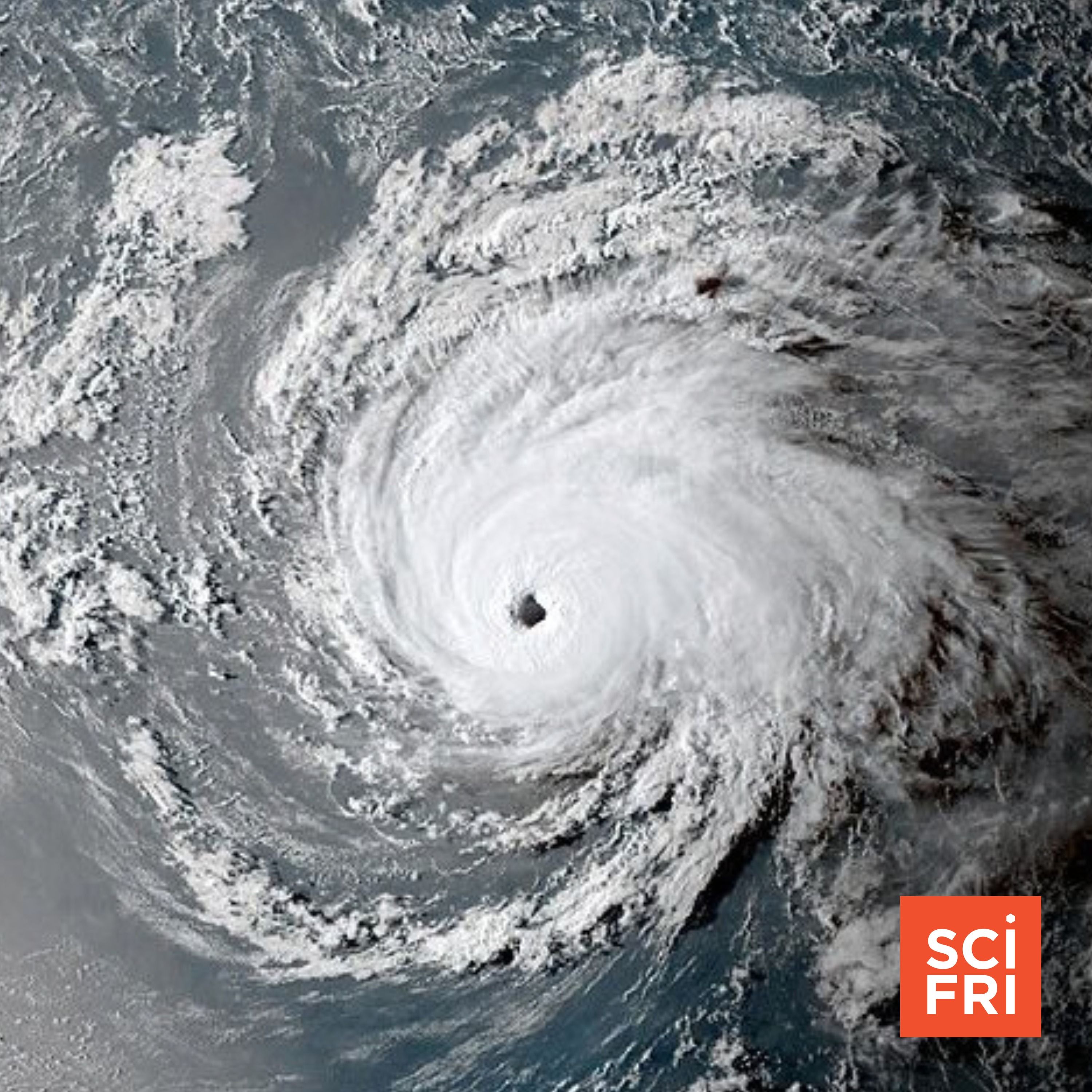
The Hawaiian Islands tend to be insulated from the worst effects of hurricanes, but this summer has been different. In mid-August, Hurricane Lala pummeled the Big Island, damaging homes and roads and causing flooding and power outages. Then a few weeks later, Hurricane Lowell hit the islands of Ni‘ihau and Kaua‘i.
What do scientists make of this hurricane season? And how is climate change playing out along Hawaiʻi’s coasts? Flora talks with Haunani Kane, who studies how climate change impacts the islands, about resilience, the importance of reefs, and combining different types of knowledge.
Guest:
Dr. Haunani Kane is an assistant professor at the University of Hawaiʻi at Mānoa studying how climate change impacts islands and island people.
Transcripts for each episode are available within 1-3 days at sciencefriday.com.
Subscribe to this podcast. Follow our show on Instagram, TikTok, Facebook, and Bluesky @scifri and sign up for our newsletters. Got a science question that’s keeping you up at night? Call us: 877-472-4374
Hosted by Simplecast, an AdsWizz company. See pcm.adswizz.com for information about our collection and use of personal data for advertising.
Get every episode summarized
Each time Science Friday publishes, we email you a written briefing from the transcript — the topics, who appeared, and any specific claims, with the ad reads skipped.
Email me new episodesFree for 3 shows. No card needed.
Hosts & guests

Transcript ready
125 searchable segments. Every word is indexed and playable.
Full transcript
Science Friday — Climate change is increasing hurricane risk for Hawaiʻi. Machine-transcribed; use the interactive transcript above to jump the player to any line.
Science Friday is brought to you by Progressive Insurance. Insurance isn't one size fits all, and that's why drivers have enjoyed Progressive's Name Your Price Tool for years now. With the Name Your Price Tool, you tell them what you want to pay, and they'll show you options that fit your budget. So, whether you're picking out your first policy or just looking for something that works better for you and your family, they make it easy to see your options. Visit Progressive.com. Find a rate that works for you with the Name Your Price Tool. Progressive casualty insurance company and affiliates price and coverage match limited by state law. WNYC is supported by bear. Science is about asking questions, testing, trying again. It's not easy, but it's relentless. It evolves, and that's why science delivers. Learn more at sciencedelivers.com. Hey, it's Flora, and you're listening to Science Friday. The Hawaiian Islands tend to be insulated from the worst effects from hurricanes, but this summer told a different story. In mid-August,
Hurricane Lala struck the big island, damaging homes and roads, creating flooding and power outages. Then a few weeks later, Hurricane Lowell hit the islands of Nihihau and Kauai, leaving more destruction in its wake. So, what does scientists make of this dramatic storm season for the Hawaiian Islands? Joining me now is Dr. Haudenosa Nani Kane, an assistant professor at the University of Hawaii at Manoa, where she studies how climate change impacts islands, reefs, and island people. Welcome to Science Friday. Hello, Flora. I'm all over having me here today. Thank you so much for being here. How anomalous is this hurricane season for Hawaii? This hurricane season has been wild. The fact that within a month we had two back-to-back hurricanes, that is definitely something that I have not experienced in my lifetime. I mean, do hurricanes usually make landfall in Hawaii? It's rare. It's rare for hurricanes to make
landfall in Hawaii. A lot of times, as you have mentioned, we're buffered from the majority of the storms due to both our isolated location, but also the fact that a lot of these hurricanes, they enter cooler waters before they come close to Hawaii. So, with this year, with El Nino, with the prolonged warming of our oceans, the fact that our ocean is actually warmer and that there are numerous hurricanes that are coming straight for Hawaii. It's been, frankly, it's been a bit scary for a lot of the people that live here in Hawaii. Is that how it feels for you? Yeah, I think so. I live in Hilo on the big island or Hawaii island. We're used to getting a lot of rain. We're used to getting wind, but this much rain, like upwards of 10, 15 inches over the
course of a day or two, that it's been a lot. So, just to unpack it a little bit, we have an El Nino year, and you mentioned that the waters are getting warmer and is the problem that then the hurricane doesn't lose power. Like, if it's not bumping into colder waters, it sort of stays powerful. Yeah, so when you look at typically what happens during Uninio, and also what is forecasted with climate change, you see that within Uninio year, the waters are warmer, so that's more fuel for the hurricane. The warmer water season is prolonged with Uninio through the fall, and then the fact with climate change, it's projected that this warmer water and these warmer air temperatures will also steer the hurricanes further towards the west and towards the north. So, it'll allow those tracks to come closer to Hawaii as well. I mean, I think on the news, we've seen damage to houses
and infrastructure. How are these storms impacting natural features, like reefs and shorelines? Yeah, so we're still we're still learning. We're still studying. We're still trying to figure out exactly how these storms have directly impacted our reefs. We've seen photos from reefs along the south shore of Maui that have been damaged. We've seen beaches that are covered in coral rubble, and this reminds me of a hurricane that came to Hawaii in 2018. Hurricane Molaca, and it was the first time in recorded history that this hurricane, a category three hurricane, made direct landfall on one of the northern atles in Papahana, Mokua Kea, National Marine Sanctuary. And what we saw there is these large beautiful pristine reefs with large plated corals be completely ripped off of the reef platform. And instead you you saw after the hurricane
large fields of rubble and sand. What we saw also was that entire islands were completely moved or swept off into the lagoon. And over the past eight years we've been studying the recovery of these reefs. So I'm trying to understand as a reef recovers what are the first things that pop up? What are the first types of corals? What are the first types of algae and then how that then translates into the recovery of the islands and you know seeing those cascading effects throughout the ecosystem. So using that as a lesson here for our main Hawaiian islands, we do understand that our reefs you know they're important. They not only help to dissipate the energy of these storms, the wave energy that comes to shore and eventually erodes our beaches, but they are also capable of recovery and they are resilient as well. So a lot of our work has been
focusing on trying to understand the direct impacts to the reefs and then how that translates to land. So they can continue to protect our islands and our people well into the future. Yeah, talk to me about that connection, the protection of the islands and how that's related to the protection of people. Yeah, so you know from an islander's perspective from a Hawaiian perspective, we're all related. There's no separation between people, place or nature. We have an olalo noeal or a a white saying in Hawaiian that says, Hey, Pukau Akani Aina and it can be translated in a number of ways. Literally it's translated into a coral reef that grows into an island. So this is a little you know reverse of what we think of from like the geological evolution of islands where the reefs come later, but from this perspective, when we think especially about our sandy beaches and our older islands, it's the reefs that are literally feeding our islands with sediment. It's the reefs
that are on the platform upon which these alto islands sit upon and then it's the reef that is also literally like physically feeding our people with resources and cultural empowerment. We also believe that the first living organism was a coral polyp and from the coral polyp, all other life including humans, people came from that coral polyp. So there's this really intimate relationship between between our reefs and our people. It's interesting. I hear you integrating all of these different types of knowledge that can real time and that answer, traditional knowledge, traditional science. How do you think about bridging these different ways of knowing? Yeah, I think of it as a as a way of necessity. So living on islands, we see first 10, the impacts that climate change is having upon us whether or not it's you know being warmer or
having increased sea level rise, increased coastal erosion, drought resulting in wildfires. These are things that are affecting us now. It's not something that we're thinking about planning in the next 10, 15, 20 years. I've been a professor only a handful of years and within that time I've seen my students be directly impacted by the wildfires on the Hina. I've seen my students trying to complete their thesis but also having no electricity or internet or losing you know parts of their houses or caring for their families while there's also a hurricane that's impacting them. So for us here in Hawai'i and for many other people that are living on islands, this is definitely we see we see the impacts of climate change and we see them happening now and we're trying our best using all of the best available knowledge whether or not it be something that's been passed down from generations or things that you know we're learning now by using technology to
study what's happening around us. Did the stakes feel very high? Oh the stakes are higher than ever and you know especially um especially I think being like a young professor and still considering myself as a student and having a young family. I'm thinking about how these things are going to are impacting us not just now but how they're going to impact their children and our children's children and our students and their children and all the future generations. What's the knowledge we need? I think the knowledge that we need is to be open-minded. I think we need to be open-minded about where we're seeking knowledge whether or not it be from our climate models, from you know our sensors that are out in the ocean or if it's from the people that are living in the places that are being impacted the most and I think we really need to consider what the needs are and the wants of those people and how they want to adapt and we need to fight for for those wants and
those desires and making sure that that knowledge is helping us to develop solutions. And what about science-wise? What are you researching now? Yeah so science-wise we're focusing a lot on resilience, natural resilience and thresholds of resilience. I'm using both modern records, historical records and paleo records so try to understand at what ranges of sea level rise or you know if we can identify storms in the past how how did our reefs, how did our islands fare during those time periods and if we project those same values of sea level rise into the future we'll get some sort of understanding of whether or not our reefs and our islands can continue to provide the same functions that we need them to as people. What makes islands resilient and can we use that knowledge to intervene in a helpful way to make the Hawaiian Islands more resilient to
climate change? Yeah for sure so I think there's definitely certain types of coral certain types of limo or calcareous seaweeds that are more resilient than others. We're seeing that crustose corlean algae that pink limo or seaweed that you find on rocks and corals is being is really critical both to the recovery of our reefs as well as the recovery of our beaches and our coastal areas and then the other component is resilient islands are a lot of times a function of resilient people so people and communities that understand the value of their resources, caring for their resources and understanding their relationship with their place and with nature. Dr. Hounani Kane is an assistant professor at the University of Hawaii at Manoa. Thank you so much for joining me today. Thank you so much for having me and for sharing this story. It's very
important. This episode was produced by Rasha Auready and I want to shout out Babs Gigi who wrote on Apple Podcasts each daily segment opens up a whole new world. I feel the same way thank you for that review appreciate it we will catch you next time thank you for listening I'm Flora Littman. The best time to recommit to your gut health goals right now take charge of your gut with nature made are clinically studied ingredients support digestive health digestive enzymes breakdown nutrients probiotic and prebiotic fiber nourished good gut bacteria and supergreens with probiotics empowered daily digestive health try the full lineup of gut health support from nature made the number one pharmacist recommended vitamin and supplement brand he statements have not
been evaluated by the Food and Drug Administration these products are not intended to diagnose, treat cure or prevent any disease.
More episodes
More from Science Friday

Are new treatments for celiac disease on the horizon?
Science Friday

Everyone is calling for safer AI. So what does that mean?
Science Friday

Underwater archeology reveals clues about Ice Age humans
Science Friday

Bringing hard electronics into soft and squishy bodies
Science Friday