Get every episode summarized
Each time Clare FM publishes, we email you a written briefing from the transcript — the topics, who appeared, and any specific claims, with the ad reads skipped.
Email me new episodesFree for 3 shows. No card needed.
About this episode
“Time now on morning focus for our latest clear history and focus chat and as always I am joined by the local historian and author column lady column. You're going to talk about the very first people to get jobs in Shannon.”From the transcript
Get every episode summarized
Each time Clare FM publishes, we email you a written briefing from the transcript — the topics, who appeared, and any specific claims, with the ad reads skipped.
Email me new episodesFree for 3 shows. No card needed.
Transcript ready
151 searchable segments. Every word is indexed and playable.
Full transcript
Clare FM — Clare History In Focus: The First Jobs In Shannon. Machine-transcribed; use the interactive transcript above to jump the player to any line.
Time now on morning focus for our latest clear history and focus chat and as always I am joined by the local historian and author column lady column. Good morning to you. Good morning, Alan. Thanks very much for being with us. We are in Shannon today. So you've picked a very apt piece. You're going to talk about the very first people to get jobs in Shannon. They probably didn't benefit from the jobs where they were at today. True, very true. Yeah, like let's just go over the prehistory for a second I mean Shannon is quite a new entity as a parish. I think it only exists since 1967 for the previous two centuries it was part of Newmarket on Fergus. You could even say it was an unfashionable little corner of Newmarket parish. Sorry to our Shannon listeners. Before that for about 700 years it was a little parish of its own a small one called Kilconry. And then go back even further and the area is called Trattery. It's like that's what it was
called when the Vikings were here and I'd say it pretty much stretches by that name all the way back into the Iron Age and the and the Celts. So as for jobs that would have existed in this area well really there was only two of course for most fishery agriculture and farming and a certain amount of fishing and because it's right beside an estuary and the tide goes in and out that actually really lends itself to trapping fish. So in the ancient times fish and agriculture those are the only jobs we have around here. Okay so for a long time fishing and agriculture when does that begin to change when does it a new era begin for Shannon and Shannon begin to look a bit more like Shannon. So around 1935 the whole concept of obviously flight had been invented you know airplanes about two decades earlier but now they're beginning to be bold enough to attempt to cross the Atlantic. They know it can be done but they like the idea all the same of taking the shortest distance. So Ireland on the very edge of Western Europe is an obvious spot to get across. So the
British are involved too and they send a delegation to Ireland to meet the Irish and to figure out a good place for an airport that will connect us to America. And at this time the thinking is very much that a boat or a airplane has to be up to land and water also. There's sea plains you know because they often hop across the go to Greenland and then to Newfoundland and so on and rather than taking on the full 3000 miles from one go. So your airport has to have water and has to have land and has to have boat. And there's a short list of places in Ireland they seriously consider luck re actually is their number one choice. And all around Ireland you know Galway Bay, Cork, Tralee Bay, Luck Carob, they all got a shot you know as being the place. Eventually the side of the best water was in fines but in fines on limeracost the land is not suitable not flattened off. Until finally they were jaded out this delegation who were going around Ireland
and they sent their two most junior men the junior Irish guy Richard O'Sullivan and a British called George Hancock. And so they were sent to look at what would become Shannon. So they go on their car to where the roads stop and then they have to clamber out and go through these tiny little fields which are completely surrounded by brambles and they get through it all and eventually come into a clearing where there's this vast open space as they see it. A pretty flat land and it's right beside the estuary of course. And in this place it's November 1935 the entire thing is slightly flooded so there's a vast vast amount of geese just taking their pasture on this thing and they make a false move and the geese just take off like literally a thousand of them overhead with a massive cacophony of alarm. And when they're gone the two men look at each other and go yeah this is the spot. What a brilliant moment that is a really pet painting image there.
So when they decide that they have finally found their location how do things progress from there. Right well action really begins so I think it's October 1936 at that stage there's a four men is employed. His name is Paddy Kelly and he's from Donnie Gawd. So he comes on the train to Bellicara Railway Station which is just outside your market the closest point and he brings his bicycle with him gets off the train and then cycles the eight miles from there down into the corner of the parish to what will be Shannon and the only business of any description from miles around is a pub called Quinlevans and he goes in there that pub incidentally still exists. It's known as the Hunk and it's still there just off the runway but goes in there and he meets a local lad young Falani's twenties who was currently unemployed but he likes the code of his jib and the guy's name is Petty Dogan or goes by the nickname Pony Dugi. Pony Dugi. I just talk about you
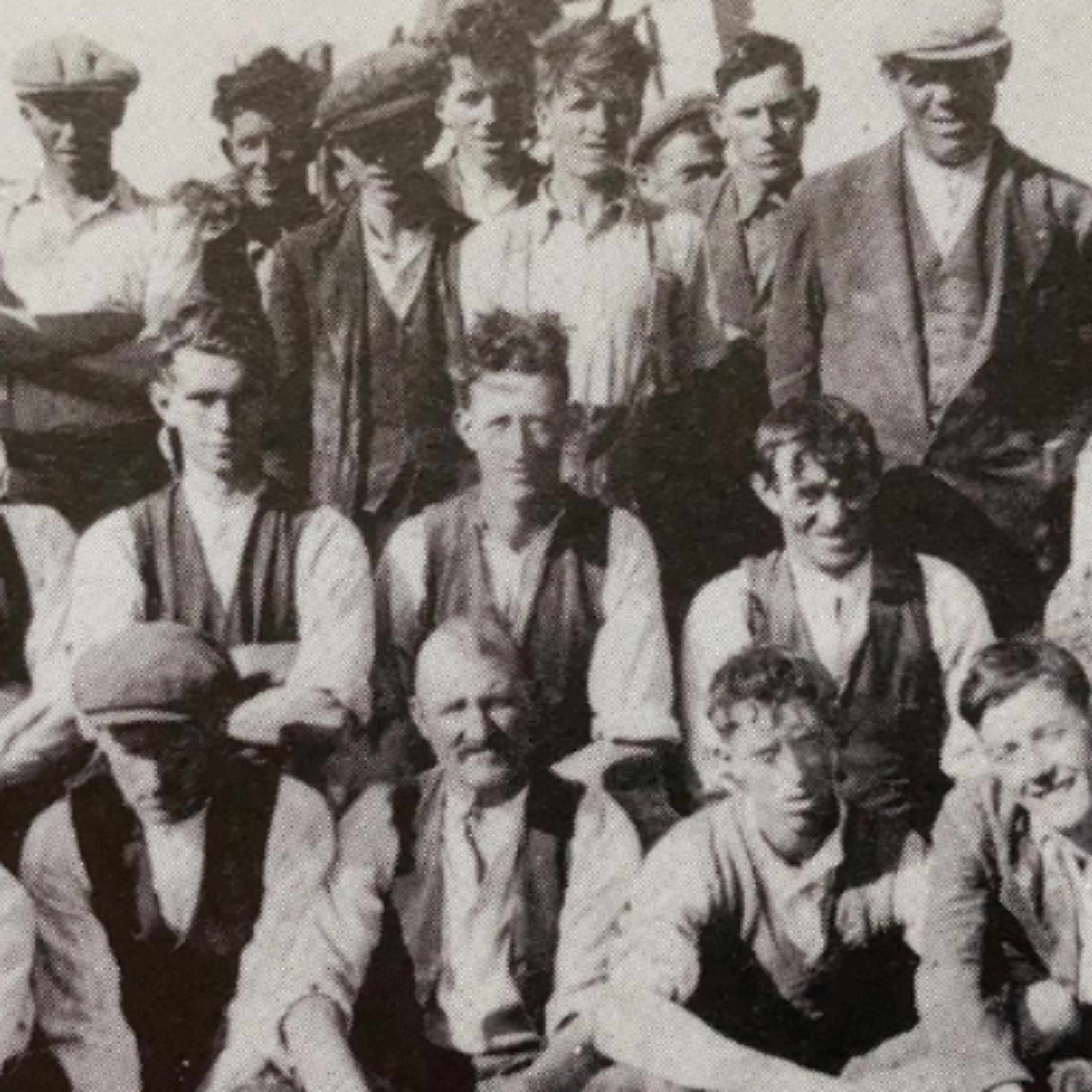
Dugan myself. So Pony Dugi becomes the first employee of Shannon and Paddy Kelly is the first boss. So over the next week or two they collect up 15 men and there's some remarkable photos of this era where literally with a horse and cart for the most part and just the most primitive instruments they are beginning to build an international airport and I say those photos of it and eventually they do get the help of a primitive type of JCB and excavator but there they are anyway in this what you might all say it's like a Samuel Beckett play the whole landscape is so bleak and there they are and they start building what will become the first building of Shannon Airport and you may be asking what would that be something presumably like an air traffic control tower know the first building and it still exists is a pump house that's it because quite frankly the whole thing wouldn't exist without draining the water I mean Shannon's natural state would be to have puddles of water
all across it but I'm pumping it was that was the first issue we've got a 600 acre site which is quite buggy needs a lot of drainage so ultimately hundreds of men are there over the next few years and they're doing two things they're all in little gangs of 20 they're right across this vast site they're digging often just with a shovel and pick lines of drain because they put down no less than 200 miles of piping underground this site and they also are building runways because the early Shannon has four runways the longest one is a mile long and it runs north east to southwest you know like a diagonal slash across the whole thing and then there's three more smaller ones at 45 degree angles round the compass because airplanes in those days can't just land any which way they like depending on the wind you know they need to have an angle that will
kind of not topple them you know so you've got all these runways and incidentally the early runways were all grass there's no tarmac the earliest version of it now it's it's been tamped down and it's pretty flat but it is still grass it's grass it's grass so the doing that these these huge gangs they work a 48 hour week it's the standard week in those days it's the five days and half days Saturday they're paid I think it's 27 shillings a week which is one bit less than 150 for a week and each gang I know read in the notes they they would have like 15 or 20 ben in each gang but they always had a young fellow with them known as the nipper and the nippers job was to run back to the store and get things for them when they needed it and to keep them fully supplied at all times with tea tea was constantly available on site at least they deserve doing the amount of work that they were doing 200 miles of pipe and water yeah and as for facilities the only
facilities were I mean a lot of the laborers were from the surrounding parish but also I mean unemployment was massive across the counties it was a lot of fellas common distances from all overclar and for them there was a actually a camp set up you know essentially timber hots 20 men to a timber hot I'm sure it was the lap of luxury was it a toilet I wouldn't like to think let's yeah let moving this I was sure there was a place out the back you know what I mean I'm speaking of drainage okay so the last eight minutes was 1936 when does this work if not completed begin to near completion and it begins to look a bit more like some sort of an airport well the next I suppose the thing that really kind of tops it off is that I mean you to so much that when we drive in Shannon you kind of don't really notice it's just there but if you ever drive in look to your left and you'll notice that the entire area is surrounded by a massive embankment you know and it's there of course for two very good reasons first of all to keep the water out I mean the estuary is just over it's and like there's a massive amount of water and
mud out there and as I say all the ground is quite low lying so it's needed but also because again of this idea that planes were going to be landing on water which was you know how they thought of things they needed to build kind of a perfect little basin for planes to land in so again if as you drive into Shannon now as you go into that last bit you will notice a circular kind of area of water just to your left coming in that was manmade of course and I mean you know you talk about these massive constructions like obviously the pyramids and stuff well the guys who built the pyramids did it after all in sunshine Alan in beautiful sunshine they had it easy they had it easy these Irish lads were doing it in the depths of winter raining freezing and with more water and mock to be you know gone around in so you know we need to remember that but anyway they decided to build this embankment and it kind of became a bit epic the last bit of it so much so that's the
commander of Shannon at the time he rose a really really long poem which describes and it an epic poem if you will and it describes how it was called embankment e it's like it stretches out into the water there to the left as you as you get up to the airport and how they did it as fascinating they would build first of all a little trestle a scaffold out into the water a certain distance very rickety you can see from the pictures because there is quite a few photos of it how you know barely thrown together with cellar tape the whole thing is but they do that then they lay a railway track along that and then they bring out bizarrely the first layer is hazel trees they get hazel trees which have been cussed from all over the parish and throw them down and then on top of that a lot of earth stone and build it build it build it up but all of this is happening like with a tide coming in and out and with mud everywhere I mean I only dare to tear
went out over the embankment to to check out the scene there is astonishing when the tide is out there is just like that vast acreage of farms almost out there of mud but anyway they're up to their highs in mud and water freezing cold and they're building this thing out along and eventually they come to a point where there's only 30 yards to go and they've been commented it from both directions and it's just going to take this all nighter for three nights for three days and nights because you see everything you do the minute the tide comes in it attempts to wash it away so that like does this final thing where they're trying to close the gap and it's all described in your man's poem you know how epic it all was or at least in their points and eventually they did they basically had to stay awake for three days and three nights building it and then it would get washed a little way during the night but they'd keep going keep going keep going until finally the tide came in and it just licked at the top of us but couldn't
get over this dam that had creased success and then they all repaired to Quinlanman's pub and I'd say there was a hell of a dude there and they thoroughly deserved however many pines they sank so that's an epic piece of work is completed column what next well I suppose what should be said is the tragic thing about their efforts was that because war war two was very much on at this time as we know in wars technology jumps forward very very quickly and no behold no sooner had they had all done then everyone decided you know what we don't really need to land on water anymore so if you look at that place I'm talking about now it's actually just fallen into disuse and neglect I mean it was meant to be a basin of water and it was but over time it now was just all filled with modern vegetation what took so much labor to build because yeah there's no need to no plane ever landed in us for I was about to ask it wasn't hardly ever used or never used never used never used
by the time that it done it was already obsolete oh my god so I mean and like we'll we'll cover another day but I mean from that point the history of Shannon is very much about being a military airport for the next few years I mean it's not until after war war two that you truly get into the era of any kind of commercial aviation for for regular people but um you know it's their their works of these early laborers are still there to be seen as it's quite remarkable that the pump house they built in 1936 you can see it it's just there um you know there's no plaque on it's it nobody really cares but it's a building that is the foundation of the interacting because there's still a canal running to it and still pumps out water to keep the entire area dry you know the people of Shannon would have gone round in bottles without it well it seems only fitting that given all that other monumental work was all for not that this little pump house
90 years later is not just still intact but is still in use it is forming a critical function it really is yeah yeah well as to say we should have something honest to say here's where it all started brilliant stuff okay the very first people to get jobs in Shannon even if ultimately the work was not for much hilly beans column liddy thank you very much i look forward to hearing more in the history of Shannon at some point further down the road for people who want to check out your online store work and they find you it's shop in Ireland that I brilliant stuff and I'd encourage you to check it out the local historian and author column liddy
More episodes
More from Clare FM

Lahinch "Won't Regain" Blue Flag Without Public Consultation On New WWTP
Clare FM
HGV's Getting Trapped On Killaloe Main Street "On Weekly Basis"
Clare FM

Donncha O’Callaghan On His New Children's Book & TV Show
Clare FM

Weekend Of Celebrations And Connections At Cnoc Na Gaoithe
Clare FM