Get every episode summarized
Each time Merryn Talks Money publishes, we email you a written briefing from the transcript — the topics, who appeared, and any specific claims, with the ad reads skipped.
Email me new episodesFree for 3 shows. No card needed.
About this episode
Merryn Talks Money is made possible by:
“We don't just invest in cutting-edge companies. We look at companies with a history of steady growth, and companies whose growth cycle has come round again. Because in the real world, you have to look at growth in three dimensions.”From the transcript
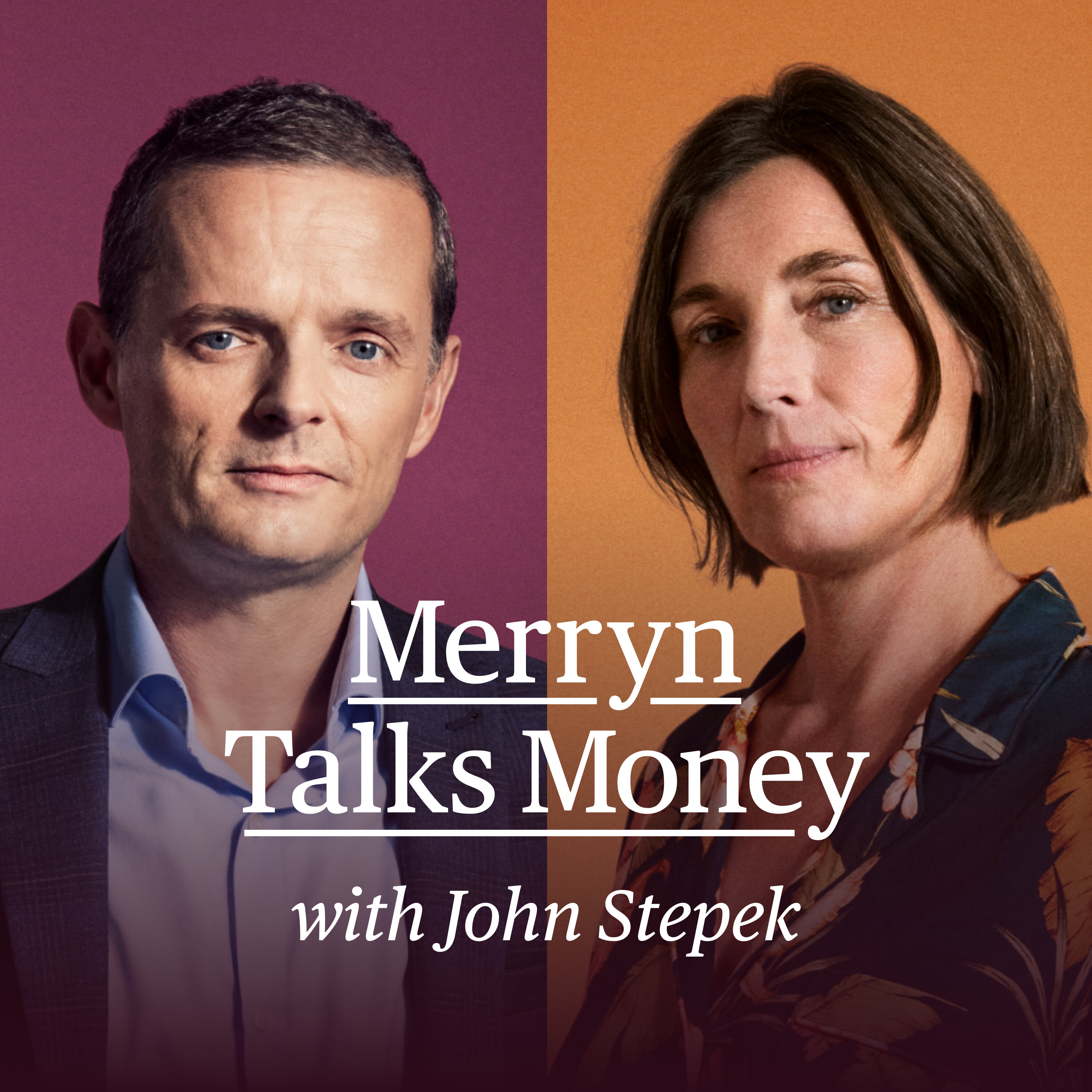
It’s interest-rate week, with central banks around the world making key decisions. Merryn Somerset Webb and John Stepek discuss what rising rates mean for markets, government debt and your money — and why financial repression and currency devaluation could be coming back into focus.
See omnystudio.com/listener for privacy information.
Get every episode summarized
Each time Merryn Talks Money publishes, we email you a written briefing from the transcript — the topics, who appeared, and any specific claims, with the ad reads skipped.
Email me new episodesFree for 3 shows. No card needed.
Hosts & guests
Transcript ready
325 searchable segments. Every word is indexed and playable.
Full transcript
Merryn Talks Money — Can Governments Afford These Interest Rates?. Machine-transcribed; use the interactive transcript above to jump the player to any line.
We don't just invest in cutting-edge companies. We look at companies with a history of steady growth, and companies whose growth cycle has come round again. Because in the real world, you have to look at growth in three dimensions. Monks investment trust. Some people treat Chachy-P-T like some kind of smart search engine, and some use it to get work done. Chachy-P-T work is a new way of working in Chachy-P-T that can take action across your apps and files, stay with a project for hours if needed, and turn a goal into finished work. It's designed to help you move from a chaotic starting point to a reviewable first version. So all the source materials, briefs, and scattered information that you have to grind through to turn into something useful can just become something useful. Put Chachy-P-T to work on your most ambitious ideas and projects. Get started at chachy-P-T.com by selecting Work Mode, available on plus and pro plans. This is Robert Smith from Business History. If you're listening to this, there's a good chance
you're a small business owner. And like every small business owner you started with a dream to do what you love and watch it grow. What you probably didn't dream about, keeping up with cyber threats. That's where MasterCard can help, with access to tools that help identify cyber threats to better protect your business. Building a dream business, priceless. For cybersecurity and a changing world, there's MasterCard. Learn more at mastercard.com slash small business. Bloomberg Audio Studios. Podcasts, radio, news. Welcome to the Marin Dukes Money Market Wrap. What we talk about the biggest moves in the markets this week and what is driving them. I am Marin Somset Webb, UK Editor-at-Large. And I'm joined Stabic, author of the Money, still newsletter and a senior report at Bloomberg. And still here. That's the best. John, this isn't going to be an AI podcast,
but I've been watching you in Twitter, well, I watch you on Twitter all the time. That's the way it is. It's typically active, even by my standards. You really believe that AI could lead to our extinction. I don't, by the way, believe that for a second. No, no. It's nonsense propaganda ahead of big IPOs. No, I think the, basically, I think the AI is at risk of doing something if we don't hold the company's response vote for it more responsible for what they're doing. And I think at the moment they're trying to cover up the fact that they're actually not taking very good care of what they're doing. But they're also asking, aren't they, would have their liability taken away from them? Exactly. We need to slow down. Oh, we need regulation. Someone else needs to take responsibility for the bad stuff that we might do. Yeah, but the... This is very big corporations in the EU, isn't it? Yeah, it is. And it's also their own in-house regulator because all of these regulators, also the regulator that's certainly anthropic suggested is kind of, as it's roots in the effect of altruism movement.
I'm not talking to conspiratorial because obviously people who believe the same things flock together. It's not, they won't have to do. But do you know how we keep saying these days that one day something's a conspiracy theory in the next day? It's true. But we get full of that, we label stuff these days. Exactly. But I do think, yeah, no, I think everybody... Basically, there's a lot of people who believe... And actually, genuinely believe that AI is going to be a superbie in at some point. And to me, that's a very religious belief. And I think that some of them are being partling for a ride and there is also a lot of scooting centres. But I do think equally that AI is in misuse of LLMs and them charging ahead and trying to get them to work in certain ways could kind of... Disciple hack and if it breaks something and the air traffic control system or something, that would be pretty bad. So it's not extension level stuff, but it's kind of catastrophe stuff. It kind of seems to me I keep thinking about this, you know. And if you really believe, if you really believe that LLMs
are that powerful, I don't, by the way. And if you really believe that it's possible that we will develop genuine AI as actual artificial intelligence instead of man-made data analysis which is one of the reasons that I'm going to be able to... Actually believe that. Would you actually invest in AI? Of course you wouldn't. You'd spend a little money right now. Right now because either we're all going to die or money isn't necessary because we move into a utopia, right? So I mean, spend your money now, going all the day. That's all I mean, they didn't invest in these IPOs waste of time. Hi, this is an abundance outcome or a disaster outcome. Yeah, this is very... But yeah, and then do it, I think fundamentally the guys do need the hype. And I do... I find it amazing that... Well, basically, there's these two groups. There's people who seem to be totally naive to me and they just take this off face value and say, oh well, even if there's a 1% chance it could wipe us out. We need to, you know, this, this and this. And then there's the people who are still sort of saying that AI is basically nothing. And I think they're wrong as well. I mean, they're as wrong as the people who said,
Dentonnet was no better than the Fax machine where I'm back in 2000. It was clearly a thing. I mean, I'm still coming down on when it's a big technological deal that's been massively over-haped. I'm gonna probably... Sorry, I was about to say, we're other... Spending too much carpets all. Or in certain things. It's probably not swear on the podcast. I was gonna say, no, we... But no, no, okay. No, no, no, no. No, no, no, no. It's swear on the podcast. You need to keep that one out. All right. Okay, okay, John, now we are going to talk about the thing that might actually bring down the AI bubble. If it is a bubble, of course. Really bring it down. So this is the rising cost of credit. Yes. So we are in interest rate week. Yeah. And this week we've had the Fed putting out rates. Yeah. Not by much. No, but... Well, it wasn't a surprise, but it was kind of... I think market thought... Oh, right. Worship actually does mean business. Was it a surprise to you? Well, it wasn't a surprise to me. But if you look at the kind of markets and the kind of general reaction was...
Oh, okay. So this guy is actually serious and he does want to tackle inflation. He's not going to be bullied by Trump. He's going to be bullied by the bond market instead. And also it was... Would you call it? It was a consensus vote. Which is not that unusual for the Fed, but they were all behind them. So... Okay, so right up in the US, right to not up here? No, no. I mean, that was interesting because... I mean, obviously the bank England is kind of a bit... It's just... Yeah, it's not a high conviction. I think if the Fed had put up rates... And they've had been aware the Fed was going to put up rates, they might have kind of copied it. But the more interesting they did was change quantitative tightening. And the low that is very... Confusing all the rest of it and kind of... Nobody really understood what QE did in the first place and the one we understand is what QT does. For the biggest thing, the bank England has been selling... actively selling gilts into a market which is already sick of gilts.
And what the bank has no finally said after three years, four years in fact, to do in this is that... Oh, actually, maybe we should stop. And normal... Because that's part of what is pushing yields up. So one of the things in the UK is that we look at our bond yields, gilts yields, and they are higher than other people. And everyone says, well, why is that? And we say, well, it's because we have no plan to deal with almost public debt and it's because we're more prone to inflation than other countries, etc. But also, in there is the fact that if you increase the supply of something, obviously you push the price down and with bonds you push the price down, the yield goes up. That's just how it works. If you take that supply out of the market, you might expect yields to fall slightly. No, and that's what has happened. In fact, the yields are in the long-term bonds because what they've said is, for us out, we're going to pause selling any for just now until we've walked to economic. Conversation with the debt management office. That's another issue we probably shouldn't talk about yet.
But in terms of their actual long-bonds, so anything that we choose after 20, 49, they're not going to sell them. They're going to sit on them until they mature. And so that means looking at it, about 20% of the long-dated yield market is on the bank England's balance sheet. So you've basically removed an overhang of about a fifth from the market, so it's not really any wonder that the thought of the yield, which was threatening to go above 6% as kind of dropped significantly today. I mean, maybe this marks a low in the kind of bond-market panic. I don't know that it's a ton of points. We get pointy of the solution. Yeah, and plenty of reasons to think that the UK is not going to be better managed going forward than it is at the moment. And we definitely expect rates to go up over the rest of the year, right? So we stick at 3.75% now. But there's every expectation that it goes up to 4 and then 4.5. 4.5 and then maybe maybe 4.5 by the end of the year.
No, by the end of the year, by the beginning of next year. So you've got that coming, and we know that inflation is probably going to push up, but it's just over three now, but jump over four. Guys, two gas prices are going on here. Energy prices are going to go up by 25% or something, or likely to the next quarter, ladies. So yeah, above four. And the longer that lasts, the more likely it is that rates have to keep rising. Well, you can see the bank looks stupid off. Again, and they have to keep writing these letters to the chancellor. They must have a stock one for that by now. I mean, they go over getting chat GPT to do it. Finally, an effective use. I don't matter how many mistakes it makes. Sorry, we were full of nonsense. Anyway, all good. But listen, his question. So it's not just here, but it is everywhere. It has rates rise. The interest burden for governments gets increasingly intense. So everywhere, the percentage of tax revenues that goes on paying interest alone gives an iron iron iron iron iron iron iron.
Over the years, you and I have spoken a lot about financial repression and how we get out of this. The way that you get out of large amounts of public debt is not by having high interest rates. That's not how it works. You need to have interest rates below inflation or below nominal growth, at least. So I was reading something today that basically said, look, this point, everyone's in the same trouble. So it's not like just one country will run finance, repression, or tribal run finance, repression. Basically, everybody's got to get rates below inflation or below nominal growth. So the great global devaluation is almost upon us. The question being, how long can all the big economies keep rates at this level or have them higher? It's unsustainable. At some point, either inflation has to go much higher or rates have to stop falling again or the debt interest burden becomes unsustainable. So the purchasing power of every currency will fall soon by gold. I mean, yeah, I mean, think bang gold is a pivotal reasonable valid.
You know, I mean, we've said that a million times, but it makes a lot of sense. And I do think, well, I mean, the other thing that bang gang went dead due to the today was something that looks as if it might end up being like the kind of best in style operation twist thing. So basically, it sells the longer dated gilts to the debt management office and they replace it with shorter dated points. And so, you know, it's kind of bringing down longer term interest rates. And again, it's all very financially repressiony. We need a political view. Well, yeah, we obviously will have in the budget. And if they make any more steps towards capital, Nigese or even kind of capital controls. I know you have it. I've found the one man in London who's looking forward to the budget. I can't wait. Oh, wait. Thanks, John. Thanks for listening to this week's Merendog's Money Markets Wrap. If you like us, rate review and subscribe wherever you listen to podcasts.
Also be sure to follow me and John on ex-O-Twitter at Merriners.W and John underscore. This episode was produced by Samasadi and Moses and questions and comments on this show. And all our shows are always welcome. Our show email is Merrimoney at Bloomberg.net. Healthcare doesn't always work great. If you've ever waited on a refill or couldn't schedule an appointment, you get it. That's the kind of stuff Optum is changing. They're using data and technology to integrate patient care, pharmacy and everything else. So healthcare is connected, not complicated. What's that look like? Cheaper prescriptions that are easier to get and care that looks at the whole person. How you need it. Optum is helping make healthcare work as one for everyone. Learn more at business.optum.com. This is Tony A.O. from the real report with Tony A.O. and Uncle Murder. You haven't noticed how everything keeps going up, rent, streaming, even extra socials at your favorite burrito spot. But with boost mobile, you don't have to play the Willis go up soon game. Boost mobile offers an unlimited torque, text and data planned at a price that'll never go up.
It's the same price you'll pay for life. Switch now for unlimited wireless at a price that'll never go up only at boost mobile. After 30 gigabytes, customers may experience slower speeds. Customers will pay $25 a month as long as they remain active on the boost unlimited plan. Until now, the data your AI depends on has been trapped behind ever increasing cloud fees. Wasabi created Hut Cloud Storage and is redefining cloud storage for the AI era, delivering simple, predictable cloud storage for AI, analytics, media and more. Your data is free to move. Fast to access and ready will your AI needs it. Hidden fees add up fast as AI workloads grow. Wasabi's flat pricing eliminates all of it. One rate, no surprises. Learn more and try now for free at wasabi.com. Wasabi, the AI storage cloud. Proud partner of the I Heart Podcast Network.
More episodes
More from Merryn Talks Money

Physical Gold, Stocks and Retirement: Your Questions Answered
Merryn Talks Money

The Stocks That Could Survive an AI Bust
Merryn Talks Money

Is the Stock Market Sending a Warning?
Merryn Talks Money

Is Buy-to-Let Still a Good Investment?
Merryn Talks Money