Get every episode summarized
Each time Documentaries publishes, we email you a written briefing from the transcript — the topics, who appeared, and any specific claims, with the ad reads skipped.
Email me new episodesFree for 3 shows. No card needed.
About this episode
“This BBC podcast is supported by ads outside the UK. I'm your host, Maira Anubi, and the person who is an optimist about a better future. So today I'm taking you to India to meet people who are working hard to stop their lakes from disappearing.”From the transcript
Get every episode summarized
Each time Documentaries publishes, we email you a written briefing from the transcript — the topics, who appeared, and any specific claims, with the ad reads skipped.
Email me new episodesFree for 3 shows. No card needed.
Hosts & guests
Transcript ready
188 searchable segments. Every word is indexed and playable.
Full transcript
Documentaries — Bringing Kashmir’s lakes back to life. Machine-transcribed; use the interactive transcript above to jump the player to any line.
This BBC podcast is supported by ads outside the UK.
Welcome to the documentary from the BBC World Service. I'm your host, Maira Anubi, and the person who is an optimist about a better future. So today I'm taking you to India to meet people who are working hard to stop their lakes from disappearing. I used to live quite close to a lake, and it was one of the best experiences, just being able to go over and sit by its shores. And occasionally we would see hippos sneak out of the water and also being able to catch the sun setting on its horizon. The lake was always inviting, it was a place where family and friends would come together to meet, but also it was a lifeline for many people who fished and fed from it.
So I'm sad because around the world lakes are disappearing. I mean just looking at this, Lake Angami in Botswana, Lake Mead in the US, Marley, Bolivia, Rising Temperatures, Pollution, Rapid Urbanization and Encouragement. These are just some of the many reasons why lakes are under enormous pressure. But this show is all about solutions. And our search today is taking us to India where our reporter, Chavi Sachdev, has visited two lakes in the northern state of Kashmir to see how they've turned a corner. I've got Chavi on the line, Chavi, before we start. I mean Kashmir, it's known for many things including having some of the largest freshwater lakes in the world, right? It is. It's also unfortunately known for its place in political and international conflict, but it is very, very beautiful. And it has something like 700 lakes surrounded by mountains, which is why it's also known as Paradise on Earth.
Earlier this year though, I also saw alarming headlines and one of them said that more than 500 lakes in the state are set to disappear. 500 is so many. I mean Chavi, what's happening? Well, let me give you an example. Wooler, once the largest freshwater lake in Asia, it's far northwest in India, towards the Pakistan border, has been not only the lifeline for the 30 villages around it. It's also an important flood basin for the entire state. But in 1992, there were massive floods in the region. When the flood waters receded, the basin was left with a lot of additional silt or sediment and everything from fish to flowers or affected. And when authorities mapped the catchment areas, they found that the lake had lost an estimated 30% of its capacity. I mean, that sounds really bad, but the big question is how then do you save a dying lake Chavi? Well, it takes a lot of work. And in Wooler, they have been doing a lot to bring the lake back to life. And Maira, there's a very special flower involved, so I had to go see for myself.
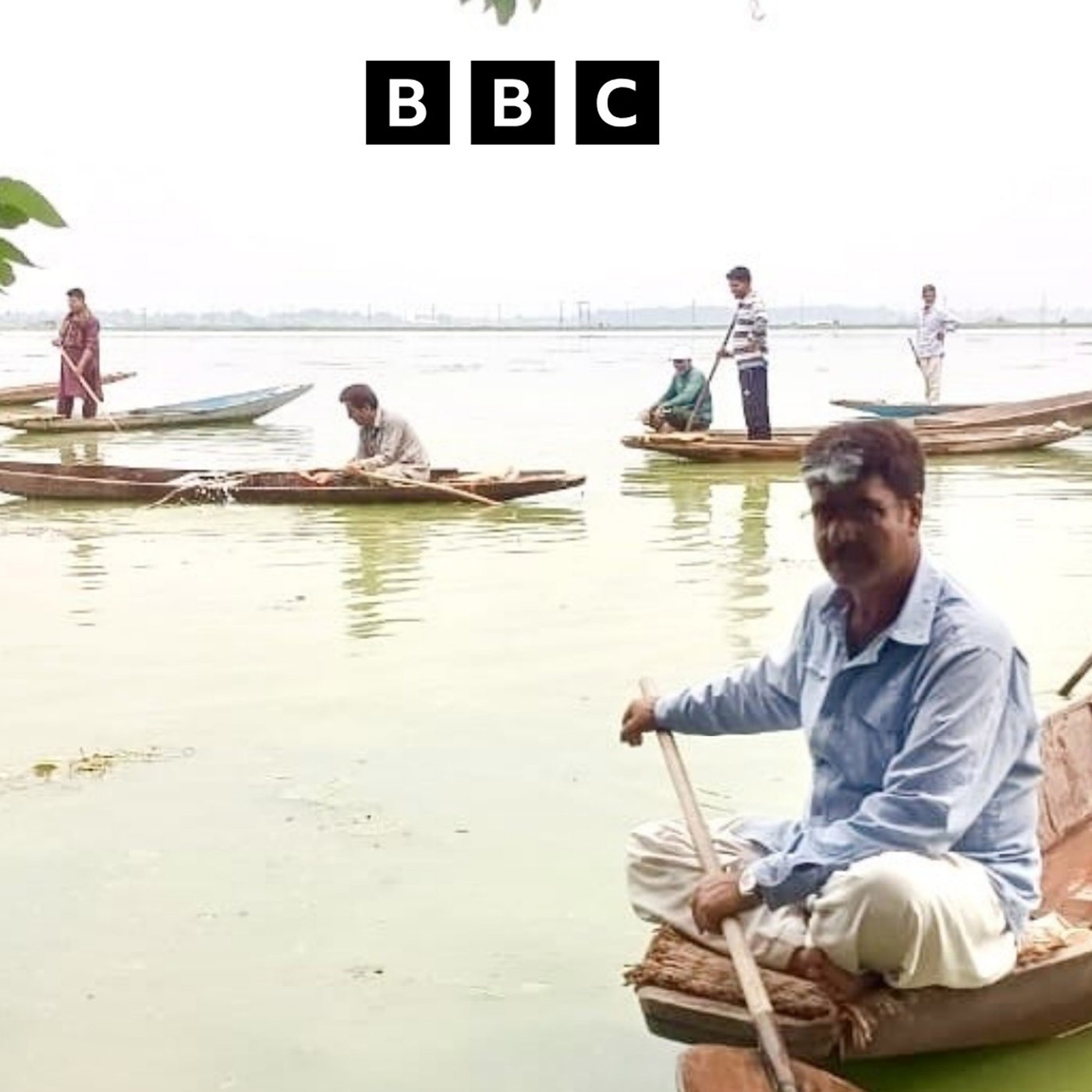
I've just gotten in a small wooden boat with a wide cushioned seat and a canopy. Our boatman, or Shikara Valar, is 19-year-old Faisal, and he's alternating between using the motor and skillfully rowing with the traditional heart-shaped paddle. It used to be really nice here. There was a lot of water and we harvested lotuses, water chestnuts, and even got fodder for our cows. There was plenty of water. That's what my father and grandfather told me. It was clean. We bathed in it, you could even drink it. But it started to get dirty. Then in 1992, when the flood came, the lotus flowers finished. They disappeared entirely. For some, lotuses are just a pretty water flower. But for Kashmiri culture, cuisine, and even the local economy, lotuses are really special.
After lotuses ripen, their seed pods and stems are harvested and sold. So when the lotuses disappeared, it was a real blow for the local communities. And the flood didn't just affect the lotuses, it also affected other aquatic crops like water chestnuts. Even the water chestnuts, which we call shingadas, dwindled, our livelihood was really diminished. But many years later, things are improving. As far as the eye can see, there are dozens of kishthis or wooden boats narrow like canoe moving across the lake. The kishthis are occupied by mostly women in white brimmed hats and gloves who are gathering up the water chestnuts. Under a cloudless sky, the water chestnut patches are so dense, the lake actually looks green. I feel like I could walk on them. So what changed? A consortium of government departments called the Wula Lake Conservation and Management Authority or Wukma, stepped in to revive the lake.
The main thing they did is to remove 8 million cubic meters of silt from the lake. That's more than 3,000 Olympic-sized swimming pools worth. They distributed this rich fertile soil to farmers in the area and also used it to build dikes around Wula to prevent future flood-related incidents. Five years ago, the dredging started and because of that, now the lotuses are slowly, slowly coming back and so are the water chestnuts. Fessal says the dredging dramatically changed the lake for the better. This water here used to play cricket here. It was actually an open ground. People from many villages came and played cricket. There were many trees also. Even now, there are small islands within the lake. There are geese roosting there and cattle grazing after swimming over from the shore. Closer to the shore, I see hundreds of submerged trees sticking out. These willow trees sprung up after the 1992 flood and are considered invasive in this area.
Altav Hussein is from Wukma and he tells me the target is to cut 2 million willows of which they've cut 140,000. It is a habitat intervention. It's not just any other kind of a deforestation because in order to conserve the lake, this is what is required. So this is prescription rather than just simply the removal of the trees. It is an destruction. It is an destruction because that is essential for the revival of the mooner. Once the silt soil and willow trees have been removed, water can move in and take their place. Sunlight can filter through the water and with this space, light and oxygen, the rhizomes of the lotuses that are still dormant in the lake bed start to germinate. And lo and behold, America nobody was expecting happened last year. Notices were back. The lake was carpeted in gorgeous pink blossoms. Local bird watchers also reported that last year migratory birds from Siberia were spotted for the first time in decades and improved water oxygen levels are expected to result in better fish breeding too.
There are still plenty of challenges though. In a different part of the lake, Nisaram Dhar and his wife have peeled off their gloves, opened a thermos of chai and are stopped for a tea break. They've been harvesting water chestnuts for decades. They were bigger back then, now they're small. Nisaram tells me before the flood collecting a boat full of water chestnuts took only two hours. Now it takes them six. But he is hopeful he can start making more money, not just from the water chestnuts. I make much more profit from notices that how this happens in November. It's a lot more effort and it's cold work. I have to get chest high in water in the freezing cold but I make a lot more money. And as our boats idle, I notice another problem, an unmistakable brown film on the water. Now we are literally cutting through sewage that's on the surface of the lake.
It's filthy. We've got bathroom waste coming straight into the cooler. I don't get into the water without my uniform which is waterproof. And yes, I wear gloves. The conservation authority know about this and told me fixing untreated waste coming into the lake is a high priority. They are building several new sewage treatment plants on an accelerated timeline. The vision is to have cleaner water, healthier flora and fauna and eventually bring back tourists and bird watchers. People go to see tulips and Amsterdam, cherry blossoms in Kyoto, why not Lotus is in Wooler. Back on shore, my boatman's dad, Moshtak, agrees that the return of the Lotus heralds a more hopeful future for everyone in the district. The lake is our life. From childhood I have worked in the lake. I have educated my boy from the lake. Our life, our earnings everything. It all depends on the lake.
This is the documentary from the BBC World Service. If your dog treats dinner like it needs a better chef, check this out. Sundays for dogs is the food that gets tails wagging at meal time. Sundays for dogs combines real meat with a gentle air drying process that locks in flavor and nutrition. It looks like food, not kibble. In an independent taste test, all 39 dogs prefer Sundays chicken recipe to a premium kibble. Make the switch today at sundaysfordogs.com and get 30% off your first order. Treat your best friend right and make it sundays for dogs. Self-directed investing, trading, full service wealth management, automated investing, financial planning, thematic investing, retirement planning, few, and to think. That's just a small taste of what Schwab offers. Because Schwab knows that when it comes to your finances, choice matters. No matter your goals, investing style, life stage or experience, Schwab has everything you need, all in one place, so you can invest your way.
Visit Schwab.com to learn more. And advanced kids are challenged to reach higher. Mappnasium makes Mapp fun, so kids learn to love it. Parents say that Mappnasium has not only improved their kids' grades, it's given them a new level of confidence. In Mapp and in school overall, visit Mappnasium.com to find a location near you. I'm Maya and you'll be in your listening to People Fixing the World. And in this episode, it's all about restoring India's wonderful lakes. I've still got our reporter Chavi Sachdev down the line, this time with a solution to save another lake that's pretty famous. Not just pretty famous, Maira, it's the most famous lake in India. It's called Dull, and it's in the heart of the capital city Shrinagar.
Many famous Bollywood songs are set in Dunlaken. Since the 50s, we've seen our movie stars romance on Shakara Boots, cavorting with gorgeous snow-capped peaks in the backdrop. It's very beautiful and very romantic. I'm sure I've seen this in some of the movies I've watched as well. But Chavi, the lake is in trouble, right? Yes, there are a lot of issues, like chemicals and waste getting into the lake. It's not great for the lake or the fish or the birds. And it also results in too many weeds. A problem one man came face to face with. During a walk that me and my wife decided that we'll take along the Dull Lake, I saw these piles of lake weeds accumulated. This is Maninthar Singh Nayar. More than 10 years ago, he was at the lake to celebrate his first wedding anniversary when he saw how bad the situation was. When I went close to the water, trying to feel the moment beautiful as it's shown in movies, Shakara and all that,
I was really surprised by the reality that the lake was choking, water was green and orange at many places. The weed was accumulated on the banks of the lake at multiple places. And the whole scene was just not good to smell and see. Now, my friend, most people visit Kashmir. They return home with its beautiful embroidery or prepare masheh handicrafts. But Maninthar was different. He took three kilograms of weeds back home. He's poor wife. Apparently, she's used to him because he was already working in the field of waste management. And he was determined to find a solution. After spending some time testing the weeds, he realized they could be turned into something useful. What we planned and what we have been able to do is, that we take this lake weed, converted into organic manure through a process which is environmentally beneficial.
And he started turning the weeds into fertilizer. That's right. And so I went to the lake to see how it's done. At 8 a.m. every morning, more than 100 boatmen set out to call weeds from the lake. So I've just met 14 of the weed collectors. They're gathered on the embankment for a break. They're having tea. And then they demonstrate it for me how they get the weeds out. On their... ...kiss these dogboaks, which are made out of a deodor cedar wood. And they each have a willow, a tree stem branch. It was long and skinny but always bent. And that's what they use to... ...basically get the twirl of the weed out of the water like you would twirl, so you get here out of the fork until it snaps. And then they pull out a bunch of it that's wrapped around, put it in the middle of the boat. And then eventually when the boat is full, they come to the unloadings lake and dump it all there.
In peak summer, when the weeds are really abundant, there could be up to 400 men to call weeds or coss as they call it. One of the weed collectors who's been working the lakes since he was a child is Muhammad Kassan. So do you think this work is important? Oh yes, the lake has so many means. We can't leave them. They'll only get worse. We have to maintain the lake. I'm actually reporting about the new facility that's making it into fertilizer. Oh yes, fertilizer. All year they took it to a dumping site. I think what they're doing today is better, that they make compost and give to the landowners, to the farmers and orchards. Just two kilometers up from where I meet the weed collectors is Maninther's bio fertiliser plant. On 11 acres of land provided by the lake conservation management authority Abdel,
most of the site is open ground except for a shed with large machinery and a small hill of nearly dry and ready compost. Round back is the collection area where every day their trucks make multiple trips carrying tons of dripping wet weeds fresh from the lake. I'm been told to move away as the truck bed is raised. Even further back, because there is some stinky stuff coming out. Okay, that was 3000 kilograms of weed from Dalik. And it smells quite quite awful actually. So the truck has dumped them into a little bit of a sink. There is a little channel made for the water to drip out.
I can see stems that are long and skinny, reddish brown. The leaves look green on the top surface but mostly it's just covered in filth. It smells like sewage. After the weeds have dried in the sun, they are taken through the machines. They are wrung out and shredded into smaller pieces. Then they are ground up into paste, sorted and cleaned to remove all plastic and debris. They are treated for heavy metals and also enriched with nutrients, with testing after each stage to ensure the fertilizer is meeting industry standards. So they fall through the hopper and they go into a bag and how, oh wow, that's a lot of fertilizer. How much is in each bag? 50 kg.
It takes three truckloads of weed to make one bag of fertilizer. But the problem with the weeds is larger than this. Weeds will continue to flourish and grow unless there's a change in the way farming is done around Dalik. It's the runoff from the chemicals used in orchards and fields, draining into the lake and making a perfect ecosystem for weeds to rebound that needs to be addressed. Which brings us to another part of the solution. Because farmers can now turn away from chemical fertilizers and switch to the organic fertilizer. 70 km from Dalik in one pole, Ruby Beggum grows apples, plums and apricots. She switched to the organic fertilizer made from weeds two years ago and she still sprays with pesticide but much less. Maybe six times in a season which is half of what she'd need to spray if she were using chemical fertilizer.
And you have to find something. I asked if she's happy with the result and if it's changed anything. She said the fruit is better, of course. And I can see that the apples and plums are really shiny and huge. She buys the bio-fertilizer from Gulam Rasul Itu, a farmer who owns the local agricultural supply store. Though he also sells regular fertilizer, he himself doesn't use any. He is such a staunch supporter of organic farming. He makes a compelling case for it to all his customers whether they grow fruit or vegetables. See, first of all the price is better. Normal fertilizer costs 3,000 rupees or $30 for 100 kilos. It comes from far away so the shipping cost is a big component of the price. It has a higher carbon footprint and of course it's full of chemicals. Gulam Rasul Itu thinks it is the ultimate solution. This organic fertilizer costs one-third less which is a huge saving.
And then there's a question of our health who doesn't want to eat safer, healthier food. I know soon enough people will drive the market towards chemical free fertilizers. He has one last weapon in his arsenal. It's now recommended by the government. The state's directorate of horticulture has officially endorsed a comprehensive transition policy to shift the farmers and orchidists away from chemical fertilizers and toward tested bioorganic alternatives. In this video which is shared on messaging apps, the head of the horticultural department says yes, the process is slow. But farmers can do integrated farming over a three-year period to wean themselves off conventional fertilizers and within a few harvest they will stop needing chemical insecticides. For fertilizers it says it will be better for their crop yields and for their health. For Maninder the state's backing provides the ultimate validation.
So over a period of time what you'll see it will have a magical effect in the entire natural ecosystem of Kashmir. At one side the quality of apples will get better on the other side. Chemical fertilizers use will get decreased and on the other side the lake will get its restoration and it will get better and better ecologically. Chavi, this is a proper trash to treasure or story but I'm just wondering, would it be better also for the lake to just find a permanent solution to get rid of the weeds? 100% Myra but for that what's coming into the lakes has to be managed better. The industrial and chemical runoff has to decrease and all waste must be treated. There are several smaller NGOs that are working to clean up plastic and other waste material from the lake and there are also a couple of environmentalists raising awareness amongst the both people and residents about cleaning it up.
So Chavi, with a work that is happening, is it making a difference? It is, the lake is healthier, removing weeds helps water flow and also improves oxygen for fish and other aquatic life and it's also helping the city. Many locals told me that earlier the heaps of weeds used to obviously look terrible but also smell really noxious. Now every truckload of weeds hauled off to the facility is also a truckload of chemicals and heavy metals that are permanently removed from the ecosystem. I see Chavi, so the hope is while the efforts to stop the pollution scale up what's happening with the weeds kindly is important for the immediate survival of the lake. Exactly right and I have to share with you one of the most hopeful things I saw when I was leaving the organic apple orchard. The farmers showed me ladybugs on the leaves and Myra ladybugs seem to have disappeared ages ago. I haven't seen one in years. I suppose it would be a sign of good luck so hopefully you're giving us a bit of that on the program as well.
Thank you so much for what we've heard today Chavi. Thank you Myra. And that brings us to the end of today's episode but as always I will be fishing around for more solutions. Remember you can always reach out by sending a WhatsApp message or voice note to the number Class 448-1321-721. You've been listening to the documentary from the BBC World Service with me Myra Anubi. Until next time, thanks for listening. I'll see you in the next episode.
More episodes
More from Documentaries

Has Poland fallen out of love with Ukraine?
Documentaries

Where is Austin Tice? 1. 'We believe he’s alive'
Documentaries

From Mao and Nixon to Xi and Trump: A history of China-US trade
Documentaries

The dictators' survival guide
Documentaries