Get every episode summarized
Each time YXE Underground publishes, we email you a written briefing from the transcript — the topics, who appeared, and any specific claims, with the ad reads skipped.
Email me new episodesFree for 3 shows. No card needed.
About this episode
“Hello everyone this is Eric Anderson, host of the YXI Underground Podcast.”From the transcript
"I never really interview people. I converse with them."
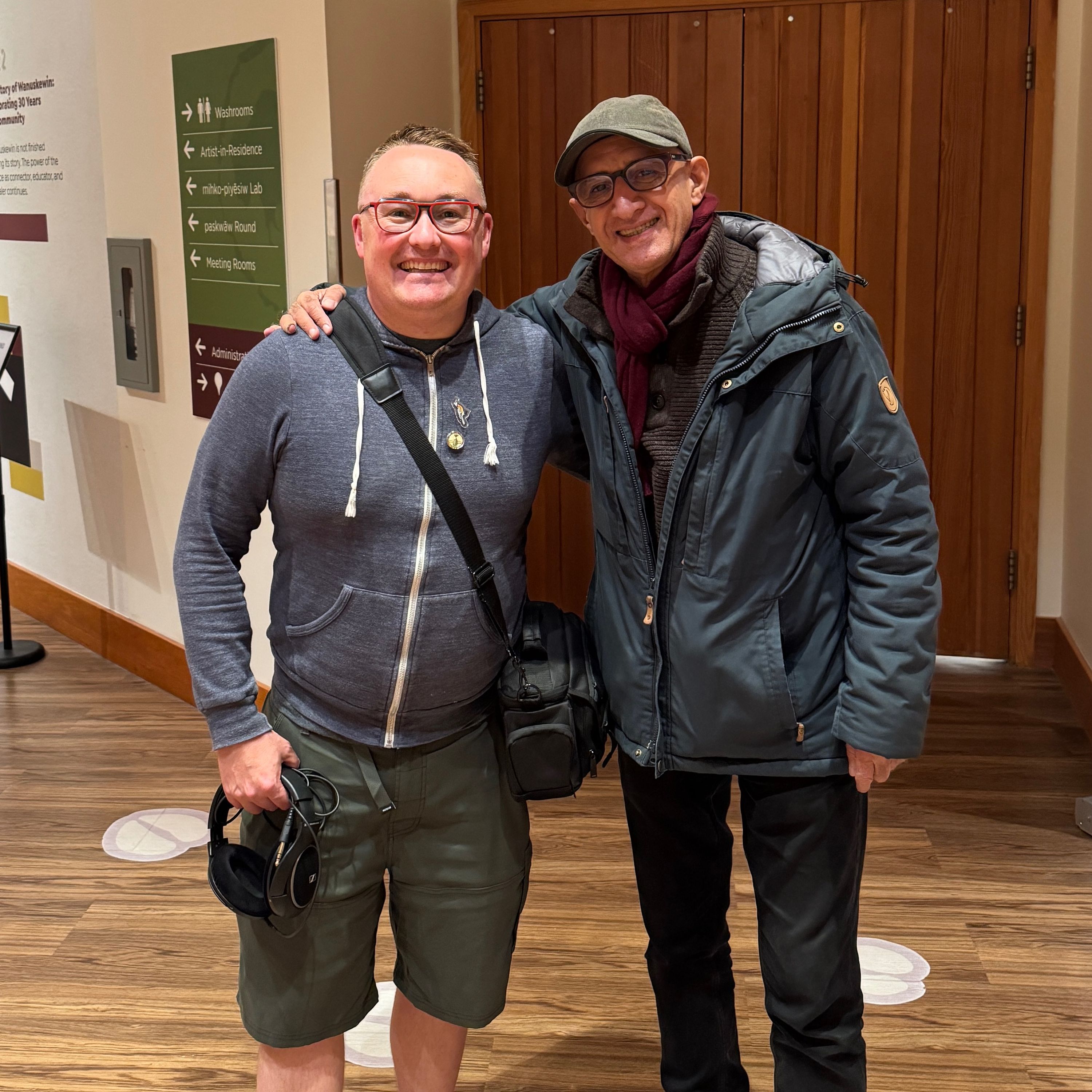
Hossein Martin Fazeli is an award-winning filmmaker who calls Vancouver home. His latest documentary, 'I Am Gitxsan,' has led him to Saskatoon for the National Day for Truth and Reconciliation.
Hossein's documentary is screening at Wanuskewin Heritage Park at 4pm on September 30th as part of the day's events at the park, and he explains in our conversation why he felt compelled to be in the room for this special screening.
'I Am Gitxsan' has won 33 international film awards, and Hossein shares in this episode why it has connected with audiences around the world. He also explains how he built trust with the people featured in the film, including why speaking with people outside in nature was vital to put them at ease.
It was a real honour to speak with Hossein, and I am grateful to Marcel Robitaille and Alex Brown from Wanuskewin for thinking of me and making this conversation happen. There are lots of meaningful events happening throughout our community on September 30th, and I hope you find time to connect with the meaning and importance of this day in some way. If you are interested in watching the documentary, it begins at 4pm in the Greg and Olivia Yuel Gallery at Wanuskewin and includes a question and answer with Hossein afterwards.
Thank you, Hossein, for taking time out of your very busy schedule to converse with me for the podcast. I hope you enjoy your stay in Saskatoon and congratulations on the success of your film.
Eric
- Host, Producer, Editor: Eric Anderson
- Theme Music: Andrew Dickson
- Website: https://www.yxeunderground.com
- Recorded: On Treaty 6 Territory and the traditional homeland of the Metis
Get every episode summarized
Each time YXE Underground publishes, we email you a written briefing from the transcript — the topics, who appeared, and any specific claims, with the ad reads skipped.
Email me new episodesFree for 3 shows. No card needed.
Hosts & guests
Transcript ready
214 searchable segments. Every word is indexed and playable.
Full transcript
YXE Underground — Bonus Episode - Hossein Martin Fazeli. Machine-transcribed; use the interactive transcript above to jump the player to any line.
Hello everyone this is Eric Anderson, host of the YXI Underground Podcast. If you're listening to this on September the 30th that's my goal anyways. It is National Truth and Reconciliation Day and I'm out at Wanda Scei when it's the night before so it's September 29th I'm at Wanda Scei when specifically in the Greg and Olivia Eul gallery here at Wanda Scei when and I'm here to talk with a very distinguished director of a documentary film that's gonna be airing on here at Wanda Scei when starting at four o'clock the film is called I am Gitson and I am here with the documentary filmmaker who made this film a film that's been shown all around the world has won numerous awards and it's really cool that eight being shown here in Saskatoon and be that the director is going to be here so would you care to introduce yourself please sir? Of course my name is Hussein Martin Fazilly and I am the filmmaker and so
yeah I'm I mean Saskatoon right now at the park and and I feel privileged to be here and present my film. We were talking before we hit record that you you felt like like you needed to be here can you explain a little bit about that before I ask you about details about the film why did you feel the need to be here for the screening? Yeah I you know I get a lot of invitations and I had a Zoom meeting with Marcel who is the one of the curators here at the Museum and I talked to him and then I did some research on the Museum I just felt it was an inner calling I felt I had to come to this place and and then when I arrived you know and I spoke with Marcel spoke further with Marcel I realized that this is sacred land so that part of it is very important to me because I mean indigenous cultures in general have a deep connection to the
land to nature and I believe because I mean I travel a lot and I know that certain pieces of land certain areas have special energies and so that energy is something that I felt when I actually entered the promise here and and I think this is this is this is where I should be yeah I know you just landed like three or four hours ago but what's your what's your evening been like? Well you know I landed at four o'clock now it's almost eight so I went to a pipe ceremony my first and it was wonderful I smoked tobacco but real tobacco not you know cigarettes you know with 180 chemicals in them so this this one is good this one was really good healthy and at the same time it was a beautiful ceremony and I learned a lot I met a lot of people also and and then we had very delicious and nutritious soup and I am here right now at your service. Oh yeah. Thank
you for taking the time for me and for our listeners too. For people who have maybe never heard of the documentary before can you tell us a little bit about your film and and maybe when it was made how it was made what would you like people to know? I have the name of the film is I am Gytksen. Gytksen First Nation is a nation in BC occupies about 36,000 scoremals of land and water they've been living there for thousands of years and of course you know when the colonial settlers came about 150 years ago their life or their lives were upside down turned upside down and this was not my project as a matter of fact the Gytksen chiefs came to me and brought the project to me and my first reaction was I'm not sure if I'm qualified to do this because I'm not indigenous but they insisted
and so they invited me to their territories you know we call that they call that La Hype in their language and I went there and I stayed there for about a week and I fell in love with the place the geography was absolutely breathtaking what was it like the geography? The geography untouched in certain parts of that land you can actually drink water from rivers without any filter you know direct drinking and then the very fact that you felt this was an untouched territory this is the way it looked a hundred years ago 200 years ago maybe a thousand years ago and so nature was I mean because again when it comes to an indigenous nation connection to the land is very important and I found a piece of geography which was sublime and so that was what took me and then I met people and I spoke to members of the community and chiefs and
leaders and and I found amazing stories heartbreaking stories stories of resistance and resilience at the same time and met some of the most articulate people in my life I mean I've interviewed about 165 70 people throughout my career I've talked to very articulate people like Newam Chomsky people like Gopro Maté, Slavogizzek and these guys were you know we talked the same caliber the same neighborhood and and so when I met those guys and when I saw the geography and nature I said look I mean you've got a great story here and if you trust me with telling it I mean and so we started it was about two and a half years ago and we finished the film almost a year ago and we've been playing the festival circuit since and the film has one 32 and 33 as a matter of fact because
we got another award in Paris just a few weeks ago so 33 international awards I think it's one of the most critically acclaimed indigenous documentaries indigenous films in Canadian history and you know in that sense I feel proud and humbled I'm really grateful that and you know I feel privileged that you know I was I was given a chance to tell that story I do want to ask you about what it feels like in terms of the response from from viewers from people from all over the world but I want to what what exactly is the story that the documentary tells because I know that there is an 18 year old boy who's rather central to it so basically their story is about a young person adult called Phoenix Apreleu he is Gitxan he was born in under territories but then he was moved to Vancouver I mean his mother and him and his sister they moved to Vancouver at the age of two
and so he basically lost connection with the land and with the people but the land and the people and the culture and the history never left his heart so his dream was to graduate and upon graduation return to the land to learn about his roots about his culture about his history and so he does that and we film all of that we actually go to the graduation ceremony we talk to him he talks to us about his plan to go back to the La Chia and so we travel with him and so he goes there and he starts to learn more and more about his culture and about his history and in the process he of course learns about the tragedy of the residential school system and when he learns more and more about the social ills about the problems about the history of colonialism about intergenerational trauma and the rest of it he decides to write a letter to the prime minister of Canada talk about
all those issues and ask for a meeting because he thinks in his opinion and rightly so that the prime minister owes it to him and all the indigenous youth you know an explanation of some kind so he writes the letter and then of course he talks to people about his letter and he mails the letter to the office of the prime minister that's the story and of course I mean I'm not going to spoil the film for you you got to come and see at the end of it of course we talk about the fate of the letter and what happened and whether the prime minister read it or not and what his reaction was but that's the story how do you as a filmmaker go about building trust with with that one person that one character so that like they're they are comfortable and free to to be themselves and and to do what they want to do how did you go about doing that in this film um well I guess you know it's the same with every film particularly when it comes to documentaries cinema you know
access and when I say access not physical access like being able to see people and talk to them and put them in front of your camera but um emotional access is key now how do you do that I mean there are certain techniques I use but in general I think people like to talk to me and I um I make them feel comfortable um being vulnerable in front of the camera because that's key um and so that happened at a very high level with this film because I mean we're talking about intergenerational trauma we're talking about residential school we're talking about sexual violence domestic violence drug addiction our callism as well I mean you know if you are involved with that if you are a survivor of that of course you have to be brave courageous to open your heart and talk
to the world because the camera is the world anybody can see that um to this and and some of these people actually did that for the first time uh so uh they never talked about their trauma or traumas before um you know in a public platform uh or in that way and so they did that and I was really grateful because of that but I think the going back to your question I think the most important element or reason why people open up is um when you deeply listen like listen without judgment um listen without preconceived notions you just want to know their story you're not judging them and um and that's what I did um I talked to them I never really interview people I converse with them and so I had these um conversations um with these people wonderful people and uh I'm really
grateful uh that the um as I said we're courageous enough to open the hearts to me I I love that you said like it's not so much an interview it's it's a conversation but I think I just think in in life in general the ability to to deeply listen with no judgment from a place of of curiosity and just wanting to know a person's story there is there is power in that isn't there oh yeah oh yeah and that's really um the most important um element of um making a good documentary film um because I mean I basically cast my interviewees um because I mean I do both fictional films and documentary films and um the way I cast for a fictional film I cast for a documentary film I pay attention to my interviewees I period I mean in in in in a way I pay attention to my actors for a fictional film I pay attention to the way they talk the way they carry themselves how articulate they are I even you know pay attention to what they were you know I sometimes if I can even coming and
make suggestions um how like for example with this film um none of the interviewees was interviewed indoors why because I wanted to talk about the connection with nature so I made everybody sit outside and the only person who was interviewed inside was a non indigenous person so um you know that in when you put people outside when you don't throw lights onto their faces um you know you're not intrusive in any way with your equipment for example and then converse with them and then have a relationship with them before um you um um have them sit in front of you when you do all those things then something happens I and I think that goes to your point earlier when you were saying how some people told their stories for the very first time to you clearly it shows that they felt comfortable with you that they that they trusted you when those stories were being told to you what what was what was going through your mind when they're sharing
that for the first time I was a very emotional experience um um I remember you know one of our characters one of our interviewees may have a spanic which was talking about her um residential school experiences um um almost everybody on the set all my crew members um uh simpographers um some and um others um um they were crying like they you know they had tears in their eyes it's very difficult not to um because if these are human experiences these are not indigenous experiences um there is something universal about human pain there's something universal about human joy um at the end of the day we're all human beings so in that sense it was um transformative for us too because um look I mean 75% of Canadians don't know anything meaningful about their residential school tragedy 75% that's a shame okay that's a shock and a shame and so um
sometimes um you know when you do stuff like that when you go and um do a film like that um just the experience and you know what you learn and connecting with these people can be transformative it was transformative for me because I mean you see I'm a migrant okay um originally Iranian a Persian and I came here um as a um um a young person but this is my country now Canada is my country and I think um it's very important to um face uncomfortable facts or truths about the place you call home um every country every nation every culture every history comes as a package uh it's a bag it's a mixed bag full of good things and bad things and I think the way we can make Canada great the way we can make Canada progress in the right way is by talking about the dark chapters as well and by shedding lights on what people um you know try to forget um we
should we should look um to the future I mean you know I'm not a um I don't make downers and I'm not a pessimist and I don't want to focus on the pain but in order to uh reach a state of eclobrium you've got to pass through pain you know um early early Christians had had I'm not religious but I say this because it's a fact early Christians used to say our our path to heaven passes through hell so that is true of human experience as well I think um the path to freedom and the path to happiness is by walking through all these dark um corners dark tunnels of pain and suffering and trauma and this is something that um I hope I have done with this film to tell people it's okay you know it's okay to walk through that tunnel not only you know as you know not only in terms of a personal experience um um but also in terms of um I would say
national experience I think as a nation as as Canada we have to walk through those dark tunnels and come out and uh you know see the light it's clear to me that and I haven't seen the film yet but in a way it's clear to me that you have done that because this film this documentary has connected with so many people not only throughout our country but around the world I was I was blown away when I was on the website today seeing all the the accolades from film festivals around the world and I'm have you have you thought about and um why it seems to be connecting with so many with so many different people from different countries different continents yeah I think um you know again because this is what happened uh to the indigenous people uh here um was um you know the experience was universal um it might be a specific to one nation specific to one area or to one country but the experience of pain and joy uh their universal uh we want a
double award at Bremen Film Festival in Germany um a few months ago and uh for the first time in the history of the festival a film a single film had won two awards and it was this film and so we're talking to the programmers uh German programmers and they were telling me that they were all so moved by the film two of them cry during the screening and um and this is a this is a big festival like you know uh Venice Venice or Redgrave the Oscar winner winning actress was there um um this um uh kind of a lister a list actor British actor I forgot for get his name now isaac um I think Michael isaac he was there and uh and so um this is a big festival and so I have seen I mean most of the awards actually a lot of awards have come from Europe, Asia, South America South America of course has an indigenous history but a lot of those awards have come from
places with no indigenous history um or tradition and I think uh that speaks to the fact that first um these experiences are universal and second uh we we can make um um you know the particular experience or experiences of a person or a nation or a group um universally I think it's also partly how you do it how you make the film as a director. With what's going to happen um I guess if people are listening to this on the 30th so later today um in terms of of the screening and then there's a Q&A with you afterwards what what is that like for you as a as a director to to see an audience watch your film and then and then answer answer their questions afterwards what what's that like? Yeah I think it says a great experience um some some of those uh Q&A sessions are quite um profound actually um because you know they ask your questions that um you don't ask yourself
okay so uh with those questions you go to a different corner of your mind your heart your psyche and so uh you know having a great Q&A session can be quite uh you know therapeutic uh you know sometimes uh I feel that you know a great Q&A session can be like you know 300 hours of therapy so uh I think I look forward to it yeah yeah there can be they can be profound as I said yeah you've been very generous with your time because I know you you flew from Vancouver today and it's been a whirlwind since you landed in Saskatoon but I'm wondering if you could share uh when I was just walking in and you and Marcel were outside and we were talking about um the the heart versus the head and and um perhaps a musical instrument and there is well but I'm wondering can you before we go um Marcel can you just share a little bit with listeners like when it comes to the power of film and specifically this documentary where do you want people to feel it first?
Oh definitely they're heart you know it's a um I film a good film starts with the heart and then ends up in the mind or in the brain um now I know a lot of films do it the other way around okay so they go from the brain and they try to go from the brain to the heart usually doesn't work it's like you know playing saxophone from the other end um so but you know when when a film gets it right then I've made some of those films you know I've played uh saxophone from the other end a number of times in my career I'm not uh you know it happens to everyone but when you get it right uh then uh you can see the impact because you know at at the end of the day you make a documentary because you want to inspire action okay um documentary filmmakers are in the business of um changing the world wanting to change the world whether they say they're not is a different story I am very honest about it I am in that business and if you are in that business then your
films have to be impactful impact people make people feel empowered and then inspire people to action inspire people to do something about the situation not necessarily the situation that happens on the screen but the situation they're facing in their own lives uh to take one step further you know to um come out of a theater thinking feeling that yes they can do it that they're more than they think they are and so in that sense um I think I hope I hope this film has gotten it right but you know um we'll see tomorrow I think judging from the global response I think you got it right thank you very much um it was such a pleasure to to meet you thank you for taking time out of your very busy day and I hope the screening goes well and um yeah it's it's I I it sounds corny but I want to thank you for coming all this way to to be here because like you said that if there's um want to scavenger holds a special place in my heart too and I think there
this is a very special place and the fact that you've created this documentary and it's going to be screening here the fact that you're here I think that's that's pretty wonderful so thank you yeah absolutely you're most welcome American thank you very much for this interview and for your wonderful questions and that's nice to meet you and I hope to see you tomorrow I hope so too thank you absolutely take care
More episodes
More from YXE Underground

Bonus Episode - Nuit Blanche 2026 Preview
YXE Underground

Season Nine - Episode One - CHAMPS Summer Camp
YXE Underground

The Saskatoon Fringe Festival 2026
YXE Underground

Bonus Episode - Saskatoon Summer Hidden Gems
YXE Underground