Get every episode summarized
Each time What I survived publishes, we email you a written briefing from the transcript — the topics, who appeared, and any specific claims, with the ad reads skipped.
Email me new episodesFree for 3 shows. No card needed.
About this episode
What I survived is made possible by:
“Rock and roll hall of fame inductees, Dev Leopard. With four-time Grammy Award nominee, Thuku Kutals. The most anticipated tour of 2027, with special guest, The Stratz. Cat Tickets Friday, October 16th at LiveNation.com.”From the transcript
After surviving malaria, starvation and near death in the Amazon, Benedict Allen was left with a question he couldn't shake: why had he survived? His search for an answer would take him deep into Papua New Guinea and into a brutal initiation ceremony designed to transform young men into “crocodile men.”
In Part 3 of Lost in the Amazon, Benedict explains why simply returning home wasn't enough. Surviving had changed him, and he felt compelled to understand what it meant to be tested, transformed and pushed to the limits of human endurance.
That search took him to live among tribal people in Papua New Guinea, where he underwent the dangerous initiation ceremony traditionally undertaken by young men as part of their passage into manhood.
Benedict also takes Jack through more extraordinary moments from a lifetime spent exploring some of the world's most hostile environments — including an Arctic expedition where he lost his dog team and once again found himself facing the possibility that he might not survive.
From the Amazon rainforest to Papua New Guinea and the Arctic, Benedict's story becomes about something much bigger than one expedition: why did surviving once leave him with the need to keep putting himself back on the edge?
This is Part 3 of Benedict Allen's story on What I Survived.
Hosted on Acast. See acast.com/privacy for more information.
Get every episode summarized
Each time What I survived publishes, we email you a written briefing from the transcript — the topics, who appeared, and any specific claims, with the ad reads skipped.
Email me new episodesFree for 3 shows. No card needed.
Hosts & guests
Transcript ready
507 searchable segments. Every word is indexed and playable.
Full transcript
What I survived — Benedict Allen: Becoming a Crocodile Man P3. Machine-transcribed; use the interactive transcript above to jump the player to any line.
Rock and roll hall of fame inductees, Dev Leopard. With four-time Grammy Award nominee, Thuku Kutals. The most anticipated tour of 2027, with special guest, The Stratz. Live Across North America. Cat Tickets Friday, October 16th at LiveNation.com. Dev Leopard, Thuku Kutals. Netflix's new series, East of Eden, is a bold reimagining of John Steinbeck's masterpiece, following generations of the Trask family through love, betrayal, and the choices that shape our humanity. Saring Mike Feist and Christopher Abbott as the conflicted Trask brothers, and Florence P.S. Kappy Ames, the complex, dark, and fascinating anti-heroine determined to build the life she wants, no matter the cost. Dark, epic, and impossible to look away from. Watch East of Eden now, only on Netflix.
The Crispy Chicken Crunchwrap Slider that you love is back at Taco Bell. And it's back with attitude, because now you can enjoy the all-white meat chicken nuggets inside a slider-sized crunch wrap with Hidden Valley Diablo Ranch. What do you love most? The Crispy Chicken Nuggets, the Crunchwrap Slider, or maybe the Hidden Valley Diablo Ranch? But yes, the answer is yes. The Crispy Chicken Crunchwrap Slider, a brand-new classic is back, only at Taco Bell. It's never too early to start shopping for the holidays and lows. Start decorating for the season with pre-lit Christmas trees, starting at just $59.98. Then, check some names off your list with gifts under $50, like the Stanley Flip Straw 30-ounce Tumblr. We've got tons of ways to bring Christmas home for less. Holiday season starts at lows, in-store, and online. While supplies last, selection varies by location. The New York Times
Most people who nearly die run away from what tried to kill them. They avoid the place, the memory, they build a life somewhere else and try to forget. It's the healthy response. It's what you're supposed to do. But sometimes that doesn't work. Sometimes you can't move forward because part of you is still back there. Part of you is still in the jungle, burning with fever, making choices you'll never fully understand. And so, you have two options. Live with that unfinished business forever. We'll go back. Benedict Allen had nearly died in the Amazon. He'd eaten a doctor, survive. He'd walk through malaria or fever that could have killed him in 24 hours. And he made choices that would haunt him for decades. But he couldn't let it go. He couldn't move forward because he didn't understand why he'd survived. What had carried him through and what it all meant. So instead of running, he'd go back.
Not to the same place that had nearly killed him. Not yet, anyway. But to another jungle, another rainforest, another world that would demand everything from him. This time he wasn't just surviving, but he was trying to understand in what sounds like an incredibly brutal way. I'm looking at the moon in the sky. This shouldn't come as a surprise, but I can't sleep. War in my mind. I'm trying to fight war in my mind. I don't know who's the winner tonight, but it ain't me. Chapter 5. What Dumbar? So Papua New Guinea, there was on my second exhibition. So I'd survived the Amazon. I'd come out of that forest, probably looking back now.
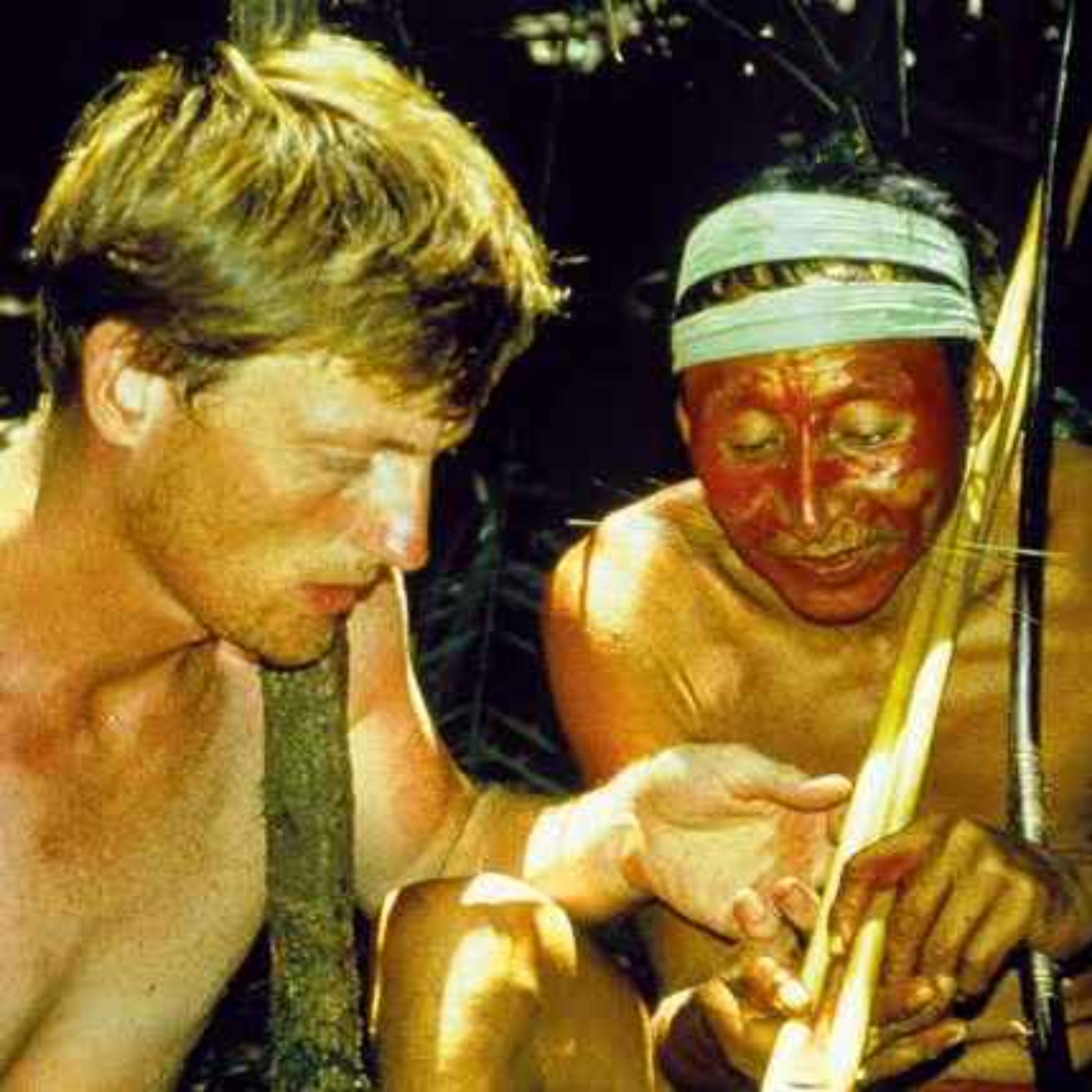
It must be true to say, I want to understand why it survived, as I said earlier. I think it could only be this reason that I went through this ceremony. I thought I wouldn't go back to Amazon. I went to New Guinea to immerse myself in the forest and understand how the forest worked and how the forest was going to be. I think it must be a psychological thing. I need to be a piece again in that forest that are trying to kill me effectively. And here, whether perfect people to teach me that they were very resilient, they had a sort of crocodile cult, anthropologists would say, these big bull called the Nyara on the middle sea beak. And the Nyara, they had a ceremony to toughen their young men up. Hug Snap Hug Snap Huftig HUM FILE Chapter
HOLD HUM FILE HUM FILE HUM of forma Damacked The tribes of Papua New Guinea have lived this way for thousands of years, they've developed independently, no contact with the outside world, no colonial influence, no Western systems. They built their own societies, own spiritual beliefs, and their own rituals that connected them to the land and to each other. The Seapick River is the lifeblood of the tribes in the eastern part of the country. It winds through dense jungle for over 600 miles, and along its banks live dozens of distinct tribal communities. The river provides food, transportation, and water. But it's more than practical. The river is sacred. The crocodiles that live in it are sacred. They're not just animals, they're ancestral beings, spiritual guides and connections to the old ways.
When colonizers arrived, they came with the idea that these people needed to be civilized, that their rituals were primitive and their knowledge was worthless. For a long time, that colonial pressure was intense. Schools were designed to strip away tribal identity. Languages were discouraged, and traditions were frowned upon. But the tribes held on. Despite decades of pressure to abandon who they were, many communities maintained their practices, rituals, and languages survived. Their spiritual beliefs survived. And today, many of these traditions continue exactly as they have for centuries. The process was about becoming a man as strong as a crocodile. So you've got the crocodile. It was a great role model to have. It's a resilient, highly successful creature that is territorial, and is tough, as you imagine. So the hour I wanted to become tough, I thought I want to become tough.
Again, I was still young, I was 24 now. I thought tough is a good thing. I don't want to be a whimper and die. And I assume, at a more serious level, I respect to these people. They knew so much about their environment. And I wanted to know what they knew. Pretty naive, but I think my heart was in the right place. And I was given this extraordinary opportunity. The young man said, look, you say you want to become... You want to stand up forest. You want to understand how we cope. The way we learn is to go through the ceremony. A crocodile ceremony is one of the most significant rights of passage among the tribes of the Sipic River. It marks the transition from boyhood to manhood. But it's not just a symbolic ritual, it's ancient, intense, and it's central to how these communities understand identity and belonging. The ceremony happens every four to five years and young men between the ages of 11 and 30 participate together.
For six weeks before the ceremony, they live in isolation in a spirit house that's called House Tambaran. This is a sacred space where ancestral spirits are said to inhabit every part of the structure. The walls, floors, ceiling, all of it is spiritually inhabited. During these six weeks, the initiates are separated from women and daily life that being prepared. Then the ceremony itself begins and it's where the real transformation happens. And it's most certainly not for the faint hearted. And it's... So what I was... The elders erected a big fence around the spirit house in the heart of the village. And the fence was made out of bamboo. It's like a big screen. They called it the walk dumba, which means crocodile nest. And we were going to be taking in, me, the other young people who were going to go through the ceremony. These people are now my friends. I should say these young men have been there a month or so, maybe more.
And we were led inside the crocodile nest. Lots of people beating drums. So this is the drum I showed earlier, but just to give you this sentence, sound. So this ominous sound of these hand drums being beaten. So that's a lizard skill on a bit of tree trunk. And we'd hear this sound of these beating drums. And we're starting to get really worried because this is... We didn't know. It's a secret ceremony. All we knew was we were going to be taken in to crocodile nest and kept there for as long as it took to become a man as strong as a crocodile. So it's a young man. I thought, wow, that sounds good. I'll be up, you know, strong as a crocodile. Anyway, we seem to realise we were going to be feeling very much less strong than when we went in. It was terrible. We had no idea. And they didn't mean any other young men like me. And I didn't know what was going to happen.
Well, we did know that we'd emerge with crocodile scars because we'd seen it on the elders, so that they had little bumps, something down their chest and back. I mean, hundreds of little bumps, like a crocodile skin, little, little bumps. And obviously that was achieved somehow. We didn't know quite how, but that looked potentially painful, but we thought, well, yeah. Anyway, we'll see what happens. Anyway, that was the first day we went up, upside down, turned canoes and cut repeatedly with bamboo blades. Inside the crocodile nest, laid on his back, like an offering Benedict, was held in place. The elders approached with sharpened bamboo blades, and they began cutting hundreds of cuts across his chest, his arms, along his back, each blade sharpened after split skin, dull enough that the pain wasn't quick. Each cut delivered each one precisely placed to create a pattern, crocodile scales.
A map of transformation written in blood. It wasn't random, it wasn't sadistic, it was ritual. The marks have to be right, the pattern has to be perfect. They would say, this man has been tested, he has endured, this man is one of us. And not only is it painful, but of course, it's dangerous. You lose blood, a lot of blood. Which was terrible, and I was left to last, I don't know what to say. If they were almost to get it even done with, someone's favorite son, or we would be taken forward and I was left hanging around. It's almost like watching people being tortured, knowing that you're going to be coming next. I mean, this is the thing. Yeah, I think it would be like that in most circumstances, except in this circumstance, everyone believes so much in the process. The young men, who as I say my friends, they believed in the avant-garde, the great ancestor, crocodile figure.
And we've told you, if you believe in an instrument, if you won't feel a thing. And a third of those boys, I think, fell asleep during this cutting process. I mean, unbelievable. Bamboo blades are a shop, I should say. We cut repeatedly, what was bad was they lost a blood, lost maybe a liter of blood, sort of a couple of pines. And so you couldn't stand up after this. And you're in sort of a shock through having lost all this blood. But the elders, they weren't trying to inflict pain. They were just starting to get us through this process, which is actually quite dangerous. The loss of that blood in a tropical climate, in risk of infection. So I was actually quite careful about this process. It was afterwards that the pain came. Not that day, I think we rested, I think that day, as best we could.
But over the following days, we were told to see happy little songs while all the old men came out and beat us with sticks. And at the beginning, they'd just beat us with, like, piano legs, because we had these movements up and down our chest and back. But after that, the sticks became bigger and bigger, and then they applied to our backs with all these scars, all these wounds. So it was a brutal process five times a day. And wow, it was sort of, I suppose like a lot of induction ceremonies, it was about breaking you down before you were built up. But I learned, and so did my friends, going through it, that we weren't going to be loud out until we'd loud to work together. That's what the ceremonies are all about. It's all bonding. Because in the future, we'd be looking after the village and theory, and we'd working together. So everything happened together.
So beaten five times a day, we learned very quickly that we'd be beaten more if we didn't look after the weakest of us. Because I was about three, four, as was some of the others, some of the youngest, not only about 15, 16, 17. Wow. It's got an age range, and I'm quite big. So the concerted on the bigger ones, like me, we had to put it at the younger ones. So it was about bonding. We all were covering great clay every day, like a uniform, and we were all called band-y. We weren't referred to by our names ever, it was all band-y, which means initiate. And so this process went on, and it went on for six weeks being beaten every day. But the weird thing was, by the end, we're almost taken pride in the beating sessions. We were so tough now. We're looking for the chance to show that we would do our bit. Very interesting psychologically. I wouldn't say we're looking forward to the pain, but it's time we're getting pride now in what we'd work
towards together, amazing camaraderie looking after each other, because we had nothing else, you know, just us, being given this power and crisis by the elders. And then the day came when we were released, and when we were judged ready to look after the village, and we were led through the forest, pushed off into the water. This sort of mother crocodile's view of that young, they dropped them in the water, given their freedom, and that was our freedom. And the pride, you know, I didn't, of course, belong there, and certainly not culturally, but I too felt that extraordinary sort of pride. We'd done this together, and nothing would ever be quite as harsh again in our lives. From Pushkin Industries, I'm Jonathan Goldstein, and this season on Heavyweight. Jenna Wonders, why her foster family, promised to adopt her, but then never did. In Jade, questions the confession her grandmother made,
just before she died. She said she is the Mrs. Jones, and the famous song Me and Mrs. Jones. Listen to Heavyweight, wherever you get your podcasts. Chapter 6. I wasn't hanging around the backstreet of Medellin. For most of us, a near death experience may come once in our life, possibly. For someone like Benedict, it's happened nine times. So the question is, which was the one where he thought, this is it, it's all over. I've pushed things too far. It's a shrikey one to answer, actually. It should be nice and simple, say the first time, but it wasn't because death has always come my way in various ways. I mentioned the dog while they've been that first terrible time struggling through the Amazon. And then the second time the Amazon, they differed
in the way they started, but the process was actually quite slow. So I had time to dwell on what was going to, what was unraveling, which was that I was a long, long way from home and the odds of getting out of a low. And I did get through those times, but it wasn't, it was a sort of terrible feeling of hopelessness that was backling where than trying to find hope in every single moment when there seemed to be none around me. They're awful, norring loneliness. So it was very, very different. It wasn't so fearful in there, there's no adrenaline there. I've had another couple of times, which I haven't mentioned, which there's a huge amount of adrenaline. One was, I mentioned the Arctic, I had a dog team in the Arctic. I was on a cross the bearing straight with these amazing dogs, and it was a wonderful team of hand. I believed in them and they believed in me.
I got to a sort of roughly halfway point across the bearing straight. So I was thinking, so this is a frozen up bit of the Arctic that is between Russian Far East and Alaska. So it's that little bit right up there, the Arctic. So it was covered in pack eyes, or it should have been. And I left my dogs a roughly halfway point to see if they'd look promising to get to Alaska, to get to America. I just wanted to see if it's okay. Anyway, I went maybe 200, while it was, it was actually 200 paces, 200 roughly meters ahead to see what it looked like. So I'd left the dogs and all my equipment with a sledge, the food, and suddenly wind blew up for nowhere. What Benedict was attempting was something only a handful of people had ever done, crossing the bearing straits on foot over the pack eyes from Siberia to Alaska, no foam, GPS, no backup, just a man, and 10 dogs on a sled over the frozen edge of the world.
He was in the remotest corner of Siberia during one of the worst winters in living memory. The area he was in claims to be colder on average than the North Pole, and considerably more windy. His goal was to learn enough to understand what keeps any of us going when up against it, to understand what it is that helped the greatest ventures stand firm when facing disaster. And he was halfway across the frozen strait, halfway to Alaska. The dogs, after a bit of a rocky start, were finally listening to him. Things were working well, they were working together and working things out. And then he needed a scout ahead, make sure the ice was solid enough for the final push. He left the dogs for a split second. Just to check what lay ahead. And then the wind came. That was it. The dogs had vanished. His equipment was gone, and he was now lost. And wiped out my tracks that led back to the dogs.
I was in a white out. And within moments, the whole thing made a switch and changed from everything looking great, orderly, in control, to total disarray. And I had a very, very long night trying to survive. The Arctic at night is not a place most humans are designed to survive. Wind chills of minus 60 degrees in the frozen northern night temperatures. So extreme that exposed skin freezes in minutes. He lungs burn with every breath. Your body is losing heat faster than it can generate it. So that was a tricky one because a adrenaline at the beginning, wow, things are going out of control, getting out of control. I've got to rectify the situation. I finally just quickly seen my footprints being wiped out, seeing the white out come in on me, take away my orientation. So things played out very differently. And there was about guilt. I thought I got to get these dogs
home. I may or may not survive, but we're in this together and I've got to attend dogs there. They really were everything to me. We've been through so much to get to this point, training together and so on. And I was a very different feeling. That was fear for them, really. Benedict would make it through the night and the following morning was able to locate the dogs. And he did what he planned to do. He got them home. I thought this is the end. So that was my last. So all the other ventures ended pretty well with that one. There it was with my dog team. I found them and then it's morning. I had this long, long night. I haven't been separated as I say, white out, long night thinking, well, I find them in the morning, well, I find them. I won't survive. They won't survive unless we're united. That's I just thought enough is enough.
I thought I pushed myself from rainforest into a harsher environment, which is desert, into a harsher one still, which is the Arctic. Because in the Arctic, if you fall through the icy die in 30 seconds, maybe a couple of minutes. So I was pushing myself further and further. I could see that pattern. And I thought I'm pushing myself to extinction to the to death. And I thought, no, it's time to end. There are all these other personal factors that come into play in our lives. My mom had died. My dad was left, suddenly without his sweetheart, his wife, my mom. I thought it's time to go back and look after my dad, who was the one who inspired me to start with. So these things are never in a bubble. They're always these bigger factors. And that was for me personally, they'd always been a home to come back to. Now there's no longer really a home that I could retreat to after these episodes. So I went back and I looked off from my dad.
However, there would be other incidents where the fear for himself was front and center. I found myself chased by Pablo Escobola's hitmen in the Amazon. As you do. Yeah. Well, you knew what I wasn't expecting to. That's why I suppose to be fair, no unexpected. He tells by Pablo Escobola's goons. I know. Well, especially if you know, what's hanging around the back streets of Medellin. No, I was paddling along. And unfortunately paddled right past his camp. He had he had ducked down. It's difficult to know the truth of the situation, but one way or another it seems. He had come down to the Amazon to hide out on the Potomayo River, which on the border of Peru. It's a good place to escape from Colombia if he needed to. The security forces are moving in on him. Anyway, paddled past his camp and these two assassins came after me. Not wanting to take any risks.
And they tried to shoot me. They definitely shot at me about six times. So very different circumstance. If you're back to your original question, that is the time I felt the most scared. It was pure helplessness. But then I was a trained professional. I can survive and rainforest in desert, in the Arctic. That's what I do. It's my job. That's my skill set. I'm not trained for being shot in the back. And I was paddling my canoes. I was good at that. But my life and I depended on paddling very, very fast. These men were behind me in their boat, man in front and a rifle, sending off bullets, passing them on their pass on my head. And the only thing that saved me was luck. And it was, well perhaps not luck. Well, yeah, I think luck. It was luck. These people couldn't paddle a canoe and shoot at the same time. These were town people.
I'm not well, they absorbed, I didn't know if they're from any, but they weren't locals. And they couldn't paddle and shoot this rifle. So I managed to get run and riverbend and jumped into the forest. So I mentioned that. I mean, it's an amazing experience. But it was all over in about two minutes. But it was the helplessness of it. When I was trying to battle through the arms and there's two times. And I was really up against it. I wasn't quite a help. I was felt if I keep going and there's a little, little, little spark of hope. This time I was sitting down on big, there were 20 meters or so behind me. It was that awful help personess. And so these different situations I've had of very different thoughts, different
factors playing on your mind. And I know over time I just want to mention another one that does tie into those last two. And that is the thing that bothers me most out of all these times is something totally different and random. And it's very strange this, but I think you'll understand why I was in the in Indonesia. I was in a in a hot this hut was raised off the ground by about two meters a bit less. It's on stills in the jungle. No pigs down below and you had to walk up steps to get on this platform into this this fetched hut. And I had my jungle boots on and I jumped from this platform from this hut to the ground very in every day thing stomping down onto the ground. And as I jumped I realized that someone had placed a spear below me.
And they placed it with a spear head upright. And as I jumped down fairly standard distance, not too difficult, I saw the spear blade go right past my eye. There it was below me going I mean missing my eye and therefore my brain by millimeters. I land on the ground absolutely fine. But that has stayed with me probably more than anything else at least to the conscious level. The pure randomness of that. And I mentioned that because again, Pablo Escobar that incident. I'm sort of random. No one expects to bump into the most wanted man on the planet while they're exploring the forest. And you know these things dwell on me because I think to myself well that's random. You know it's like being run over by a runaway
lorry in the road or something totally freaky happening. So you know whatever training I've had I wasn't I wouldn't have been prepared for that. Personally like why did you keep putting yourself through these things? I think you know the official reason is that I'm a necologist and environmentalist I care about the forest. And of course I do. I know it's that my heart gets broken every day and I see the destruction, the terrible things that have happened over the course of these decades that I've been doing this. To people who've looked after me when I was only naive and needed to learn so much, you know people took me in and looked after me and their lives have fallen apart because of rainforest destruction because of desertification all these things happening. And some of these processes are just inevitable. They're just indigenous communities have dissipated. So there's that you know my justification is I want to document cultures that are no longer with us. Now
I mean will be soon gone. There's another one which is increasingly important to me as someone who's a dad. I would so want children to believe as well out there that is important to explore. You know the age of expression is not over. You hear people saying it all the time but there's so much that we don't understand you know we've identified an E12% of the species on the planet. You know there's masses and masses we don't understand climate change. You know on and on and on it goes we're just touching the surface and yet I'll never need to expose more than ever because so much is changing mass extinctions because of human activity habitat loss. To need it's more than ever so I want children to believe there's an amazing one out there that we still should explore and be these lessons of resilience that I've learned out there. I want to share and I encourage children to be to go out there and not be afraid and take risks. You know manage risks learn how to
take risks but you know don't sit at home looking at the screen. So all of that is my official one justification and I think it's I like to think they've added those reasons but yeah you're sort of hinting at something more psychologically and this is something I mentioned earlier about so how yeah I think I was is damaged to be a word I think by that that's not an initiation the that being lost for three weeks in the rain forest think it wasn't going to survive. I think you know I'm wary of sounding like a victim I think we're in the age when everyone seems to be a victim and I don't really like it but especially in my case it's self-indulgent I know you know I had a choice to go to the answer you know it says no point in me complaining about it all going wrong so I'm not you know I'm just saying that you're off a went um carried by this this dream um and I
but one way or another it went wrong um in that um I nearly died and so yeah I think I'm trying to understand probably I don't as I said earlier I don't dwell on these things but I think it must have had an impact that that terrible loneliness that believing you're going to be wiped out you know every day for weeks on end by the forest you know I think I needed to come to terms with that and then other expeditions have have helped me understand that time but it sort of becomes a habit and then it became a skill you know I want I want I want to go back to learn more then I thought I had a duty to the Nyerra who let me go through this extraordinary initiation terminus I went back to them to understand more um and I had a duty I felt to other Indigenous people who helped me and so and so it sort of carried on um but still I would always be pushing myself to the limit um uh and whether that is because I'm in sign of a test pilot or whether it's
because of psychological problems when that first expedition I don't really know but I I tend not to look on that side but you know I think as a fairly I think if a psychotherapist got hold of me he'd be thinking died on that you know he should die there to 23 you know wonder he's going back to to understand you know I don't you know I try to be positive and think of the great side which is this this extraordinary world out there this extraordinary chances I've had to experience it so I have done other expedition like I know I've just come back from Mongolia um what I do tend to do now is go and thank the people who've was so good to me over these years and not just that see how their lives are going see the see if they've survived see what has survived and see how the next generation are doing often the people who taught me the most were children and these different communities because they had the time and enthusiasm to teach me up about how the jungle
and about the deserts all these people allow the the empowering their communities and it's so lovely to go back and see what they've done with their lives and their opportunities. Benedict Allen is lucky in a sense but he gets to go back to the places that have shaped him almost killed him there's a certain amount of closure that comes from that however not everyone has that luxury not everyone wants it especially if their experience has been one where they've not only been held at gunpoint. Stuck his pistols come up and stuck in my face it's probably the worst thing you can do and they knew that they they all said they all said that you ever point a gun at me or any other westerners all fucking kill you simple as that protected themselves so I won't be this pissed it up I just took one step back brought more rifle up and shot in four times but then faced death for doing so as I what's what's going on as I know you've got
the descents of yeah okay it could be bad former Australian soldier Robert Langdon spent seven years locked up in a prison in one of the most hostile countries on the planet afghanistan afghan prison officials have promised to ensure the welfare of an Australian man convicted of murder a former soldier Robert Langdon was found guilty of murdering an afghan colleague from a private security company he survived to tell the story just they sent me out there a few times and and just and purely because they can they used to put people in the punishment wing first up and they got out there and it was it was bad to the first time out there it really rattled me it was um essentially in it in a very very small cell 23 hours a day it was freezing cold um the food was next to nothing and no contact nothing at all next time on what I survived
my mind I'm trying to fight war in my mind I don't know who's the winner tonight but it ain't me without life lock fixing identity theft on your own sounds a lot like this there are 77 collars ahead of you that's why life lock has experts who make the endless calls if your identity is stolen so you won't have to and restores your identity backed by up to three million dollars in coverage there are 783 collars ahead of you don't leave your identity in limbo get life lock save up to 30% your first year at lifelock.com slash special offer to your supply
More episodes
More from What I survived

Benedict Allen: He Ate His Dog to Survive P2
What I survived

Benedict Allen: Lost and Dying in the Amazon | Lost in the Amazon P1
What I survived

Undercover in The Real Soprannos P4
What I survived

Undercover in The Real Soprannos P3
What I survived