Get every episode summarized
Each time The Country publishes, we email you a written briefing from the transcript — the topics, who appeared, and any specific claims, with the ad reads skipped.
Email me new episodesFree for 3 shows. No card needed.
About this episode
“The Being Farms Strong Podcast, Real Farmers, Real Stories, Powered by the Country. Welcome into this farmstrong podcast, powered by the country. I'm Hamish Makao, great to have your company for this series of farmstrong podcast.”From the transcript
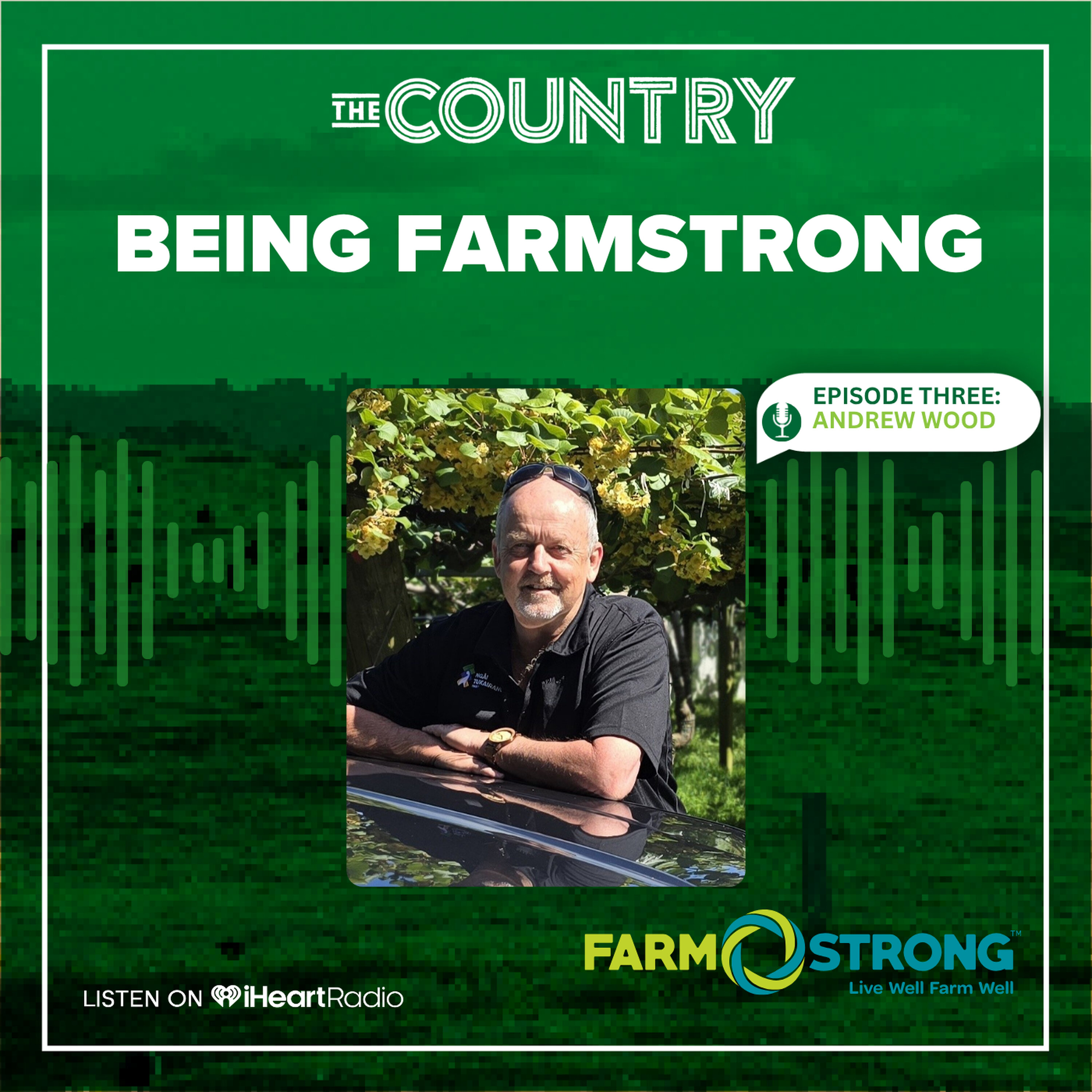
In this episode of Being Farmstrong Hamish McKay chats with General Manager of Ngai Tukairangi Orchards Andrew Wood, who shares why putting people’s wellbeing first is critical for long-term success in farming. He discusses the opportunities and pressures facing the industry, practical ways to support wellbeing on-farm, and how investing in people can strengthen performance, resilience, recruitment, and retention. Andrew also reflects on his involvement with Farmstrong’s Live Well, Grow Well resource and shares his top advice for those starting out in the industry.
See omnystudio.com/listener for privacy information.
Get every episode summarized
Each time The Country publishes, we email you a written briefing from the transcript — the topics, who appeared, and any specific claims, with the ad reads skipped.
Email me new episodesFree for 3 shows. No card needed.
Hosts & guests

Transcript ready
180 searchable segments. Every word is indexed and playable.
Full transcript
The Country — Being Farmstrong: Andrew Wood. Machine-transcribed; use the interactive transcript above to jump the player to any line.
The Being Farms Strong Podcast, Real Farmers, Real Stories, Powered by the Country. Welcome into this farmstrong podcast, powered by the country. I'm Hamish Makao, great to have your company for this series of farmstrong podcast. And of course this is where the conversations going and we start things off really and just look at how we can look after our mental health, your hand being stressed, well being all those things. Being as I like to say in the words of the mortal words of Glen Campbell, being gentle on my mind. Today we're going to look at a few of the new resources released by Farmstrong for growers. Now I guess then we're really looking forward to having a chat. To Andrew Wood, general manager of Nye took on only orchards based in the bay of Plenty
but for the purpose of today all just working down, what do you Andrew, you just down country at the moment aren't you from the bay of Plenty down in the Mottie Hawkes Bay? Yeah Hamish, I'm down in the Hawkes Bay this week working with our staff down here. We've got Kiwi Fruit and Apples about 110 hectares all up down here. My job requires me to travel a few bit around the regions and this is one of the four regions that we're situated at. Yeah and you've made like a contribution in the new book of course there's new resources, fabulous, Farmstrong, I mean I just, you know I don't know, Farmstrong makes the hearstand up on the back of my neck, you know, where I think about what however long it's been going now and I just think about the end of the unsung heroes that are around the country who just do so much good stuff and this book, a live-world, grow-well fantastic resource. Yeah it is, it is, I totally support the whole concept actually, it's fantastic and there's Kiwi Boys and Rural Type Folk, you know, we don't traditionally talk a lot
but this really helps you understand and those of us that have been through a lot in our careers it's, we know that it pays to talk and pays to open up so it's a really cool resource and I know my staff actually enjoyed really reading it as well so and it's good. Yeah these are Hediold days aren't they? I mean you look right across the primary sector, it's a dynamic time, you know, it's almost in some respects a beautiful time to be part of it, it's full of opportunities but the flipside to that, it brings challenges doesn't it particularly in terms of you know, workload and we want to make the most of, you know, make hay while the sun shines kind of thing targets pressure, all that, get all that stuff doesn't it? Yeah sure does, there's a lot of expectations on us these days, I've been in the industry over 40 years now and had various roles throughout the industry but things move fast with the internet
and now AI can't even figure that out yet but I'll get there. But yeah no, we look there's so much expectation on us, there's a lot of money riding on it and we've got to be on our game, we just can't, you know, we can't let it go, we have to produce and be right up at the front of our game so yeah it's very busy, it's not how it used to be, that's for sure. Yeah so where are we at? How are we doing in terms of striking the balance and prioritising people's well-being? Despite the fact that we've got so much going on, where are we at? How are we doing? Out of 10 and give us a bit of an explanation for that. Okay so at Nighthook and Inghealotras we're very lucky, it's a Māori organisation, for a trust, we're very people focused, we have a fantastic work culture which we work on very strongly, people first, even family first, you know, we talk about that a lot, we talk about caring for everybody, we're very conscious of the stress people have, both at work which we try
not to put them under stress, of course, but it does happen, but also in our home lives everything is so fast, it's so demanding, we're very, we're very focused on how our staff are when they come to work in the mornings, we have a lot of staff meetings, we have a lot of meetings in the orchard, toolbox-type meetings and we have a good HR system with people who are there in place to talk to our staff, if they need to fellow staff members who are nominated to work with the staff, so yeah, I think we do a really good job, certainly better than we used to back in the day. Still room for improvement? Always, always, always looking for opportunities to improve, things we can do better, what we can offer our staff for their own wellness, my managers opportunities to talk, I'm constantly asking them what keeps them awake at night, you know, and we work through things as a team, so no silos, we're team members, we're in four
regions throughout the North Island and the something goes wrong in one region, I'm 100% confident my managers will be in that region in a flash. I think we're similar vintage, Andrew, you mentioned in the 40 years previously that you've been in the game and the industry, and I see these things on Instagram and TikTok and things now, where they take you back and you go to life in the 80s and you suddenly realise how much our lives have, and that you talk about on the home front, how things are now going at a million miles an hour, compared to the 80s, which we thought compared to the 50s and 60s was just a whole new pace of life, but in fact, it was so slow and gentle, I mean, we really are going at a million miles an hour, aren't we? Yeah, we are, yeah, and it's just mobile phones, I mean, you can't get away and you now can, you now and are expected to change things in a flash, I often reflect back in the 90s, I ran a contract business with contract workers, we work from the Bay of Plenty
right across to the Waikato, 120 staff, no cell phone, I drove an HQ hold on, and you know, I made my plans and my phone calls that night and nothing changed during the day because I couldn't change anything, so it was a lot seem busy at the time, but not like now, the phones just constantly going and people are wanting you to change things and you're reorganising staff and moving teams, making decisions, you know, in a flash with things that wouldn't have bothered you during the day in the past, but nowadays we just got to keep up with it, it's tiring and it's stressful and you got to have your releases. Yeah, and you've got to recognise that it is tiring and it's stressful because I sort of think back to Shearing Gangs in the 1980s that I was involved in the mental or two, you know, the night before the four stand shed, four Shearers, three Rowsies, press it, they turn up, that was it, there was no sort of like, and I find this thing now with my phone, if I can't change something or do something, I feel a bit guilty, you can't, they can't, you can
do everything you can, but you can't, you know, those late-force changes or things like that, you've got to have the ability to sort of step away and reset. Yeah, and you get a lot of curveballs during the day and you know, I've got to say, you hit the curveballs out of the park, you know, so you've got to step back sometimes, you've just got to hang up the phone and go, okay, well, I'm going to do this, what's important, is it even important? And you just have to deal with things as they come up. When you talk about wellness offerings, what do you, what are a couple of examples that have worked that work really well? We talk a lot, we talk a lot with the staff, we give plenty of opportunities for the staff to come to us, we provide a counselling service, free to the staff, it's completely anonymous, and that could choose a little bit, we've got about over 90 full-time staff that we have, so it does get used from time to time, but
we're very, the managers are very much always talking to their staff, watching, watching their staff, reading moods, trying to work with them if they need some time out, we give them the time out, put them in positions where it suits how they're days are going because not everyone's on the game every day. Yeah, I reckon under one of the things that you need to, as you know, what even a level of the organisation you're at, if you know that somebody that the team or, as you say, you've got a non-sort of silo setup, the backup is there that somebody's got your back and that if you need a bit of breathing space, when you know that, you usually don't need as much, if you know what I mean, because you're kind of like, I think it's okay, I'll get through this and if I need time I'll get it. Yep, yeah, no, totally, and we are all over that sort of thing, we're always watching, always working with our staff, we're nothing without our staff, we know that, it sounds
a bit of a cliche, that we are nothing without our staff, we're very staff focused and it's an industry especially, we're without the staff numbers, it just gets away on you and your value drops very fast. Yeah, I put it like critical to us and we work with them, we have RACs coming from overseas and we work with them very closely, we look after them, we do everything we can for them, they have the odd upset, we do, we've sent a few home because I've had trouble back home as and family members passed and things like that and we just don't hesitate, look after them and they'll look after us. Yeah, what is it with the mentality? And I'm sorry, but it still exists across a lot of New Zealand and I don't think it's a New Zealand alone problem whereby, you know, you obviously have this ability to look after your staff and look after your team and you know, you get repaid and bucket loads, don't you in terms of your ability to recruit good people, retain good people and you get performance out of them? Yeah, absolutely, we've got a very good
reputation within the industries of being good employers, even our contractors like working for us because we look after them and they're external contractors, we look after them very well, we have lots of barbecues and things like that just to create a scenario in a culture where they feel free to talk to us and be nice and open and we invest in them. Our board of trustees is extremely supportive, they go back to a lot of Māori values, which is really cool and they look after us and they trust us and they're there for support, if wherever we need them, I'd no hesitation to any of the trustees, just contact them and they're there and we like that with our staff and it just filters down and starts at the top and it's important to be like that person. We've got staff that have worked for us for over 30 years now and they're happy, they're just happy. Yeah, and do you reckon that those happy staff, you might have somebody who comes in who's young,
but staunch, but challenged by a few things and that in fact your staff and sort of looking at it from a sort of horizontal perspective across the staff actually that that filters through anyway without you having to perhaps the stuff that you implement in a wider sense actually just sort of just flows through the organisation. Yeah, the culture, the culture, home-ish is really important and culture is more than just what you say or do. It's what you can actually feel and you come into our workplaces generally, I mean every day is not a perfect day, but you come into our workplaces generally and it's warm, it's welcoming, it's friendly, we've got good equipment, we've got all the right protective gear, the orchards are kept like parks, that's one of the criteria, we have a lot of pride, we've, you know, the staff have got their night-took at any t-shirts and stuff that they wear and it's just we're proud, we produce very good crops, we drive very hard to get our very good crops but when we pick them the staff
have their chest stuck out and they're proud to work here, which is really cool. Yeah, that's fantastic. What sort of things do you do to look after your own well-being? I do my best, I've got a very good network of family and friends. Yes. I've learned to take the years not to hold it in, if you need to talk, go and talk, don't try to be a hero, it's good to, I find it's good to exercise and walk it off if you need to. When the mount was open, I live at Mount Mononui and going up the mount, that was my release, that now it's closed, it's a case of walking down the beach while on the boardwalk or something, but you've really just got to know, I feel you've got to know that it's never as bad as you initially think, once you start thinking it's through and get out of monks during the day,
it's usually pretty easy to fix the problems, but having a good support team around me and I guess a bit of experience and knowing not to sweat the small stuff, you have to work out what's important, family's critically important, and so is the role we do in the crops we produced with the trash, so somewhere in there you work it out, that you learn not to, as I said, not to sweat the small stuff. Yeah, okay, let's say, look, so you're sharing your story in this great book that's coming out with a famed strong, the live well grow well, what sort of, what will we read there and what sort of thinking behind it? My article of the element. Yes, specifically your article, yeah. I was really quite proud to be asked to do it, and I think, I've always been good with my style and I think at my age, your age, I'm somewhere around the same. I think that, you know,
with experience, you actually learn how to control things a bit better, when you're young, you go hard out and everything gets quite stressful because you don't know how to manage a lot of that stress, but I'm happy to share my story, I'm very proud of the article that was written about me, and we've been through a lot on the business, we've been through Cyclone Gabriel, we've been through ESA and the Kiwi Fruit, had a whole lot of things that we've had to deal with, as rural folks do, with age, you just learned how to cope with that and we didn't wish for anything more like that to happen, but if it did, I feel quite confident that was my ability and my support team and the way we've set out business up, that we can cope so, and we're watching our staff closely, it's really critical. You know, I, it's interesting you talk about the age and stage, we're at and how you deal with things and I think back to Holy hell, how I would have handled things different at 35,
if I had my time again, and I'd say to a 35-year-old now, you're actually just beginning, you know, you can, you can, you at 35, 45 onwards, you can implement the changes, you just need to be, you know, make yourself aware of them and go for it. Yeah, and now, in our roles, there's going to be stress, you're going to get stress points every day of some, some size and you just have to be aware that that's going to happen, it's not something to panic over, it's just, it's a curve ball, you've just got to deal to it. So just take some time, step back, ever think about it, even if it's a phone call, hang up the cell, give you a call back in five minutes and just clear you have a walk around and never think about it and it's surprising how the clouds lift of the same shrines, yeah, again, so yeah. It's fabulous talking to Edwin and the work you do and how you go about your daily business and everything and another of one of the fine farm strong ambassadors who, this, who've been involved in this series of Sam Whitelock, the difference between you and him was
that you instantly chuckled at my reference to Glea and Campbell's gentle on my mind. Sam had, now it showed his age, he had no idea what I was talking about but I think you might have recognised it, but not one of my favourite, not one of you, you're not a big witcher tar lineman, okay, I had really good to chat and really looking forward to checking out this new resource live well, grow well by farm strong, you can find this resource plus any others at farmstrong.co.nz, farmstrong.co.nz and Andrew Wood, thank you very much for joining us. Thank you, Hamish, it's you.
More episodes
More from The Country

Rabobank The Best of The Country: September 19, 2026
The Country
The Country Full Show: Friday, September 18, 2026
The Country
The Country 18/09/26: Hamish McKay and Bruce Weir talk to Jamie Mackay
The Country
The Country 18/09/26: Stu Duncan and Stu Loe talk to Jamie Mackay
The Country