Get every episode summarized
Each time On Point with Meghna Chakrabarti publishes, we email you a written briefing from the transcript — the topics, who appeared, and any specific claims, with the ad reads skipped.
Email me new episodesFree for 3 shows. No card needed.
About this episode
On Point with Meghna Chakrabarti is made possible by:
“Support for this podcast comes from Is Business Broken, a podcast from the Marotra Institute at BU Questrum School of Business.”From the transcript
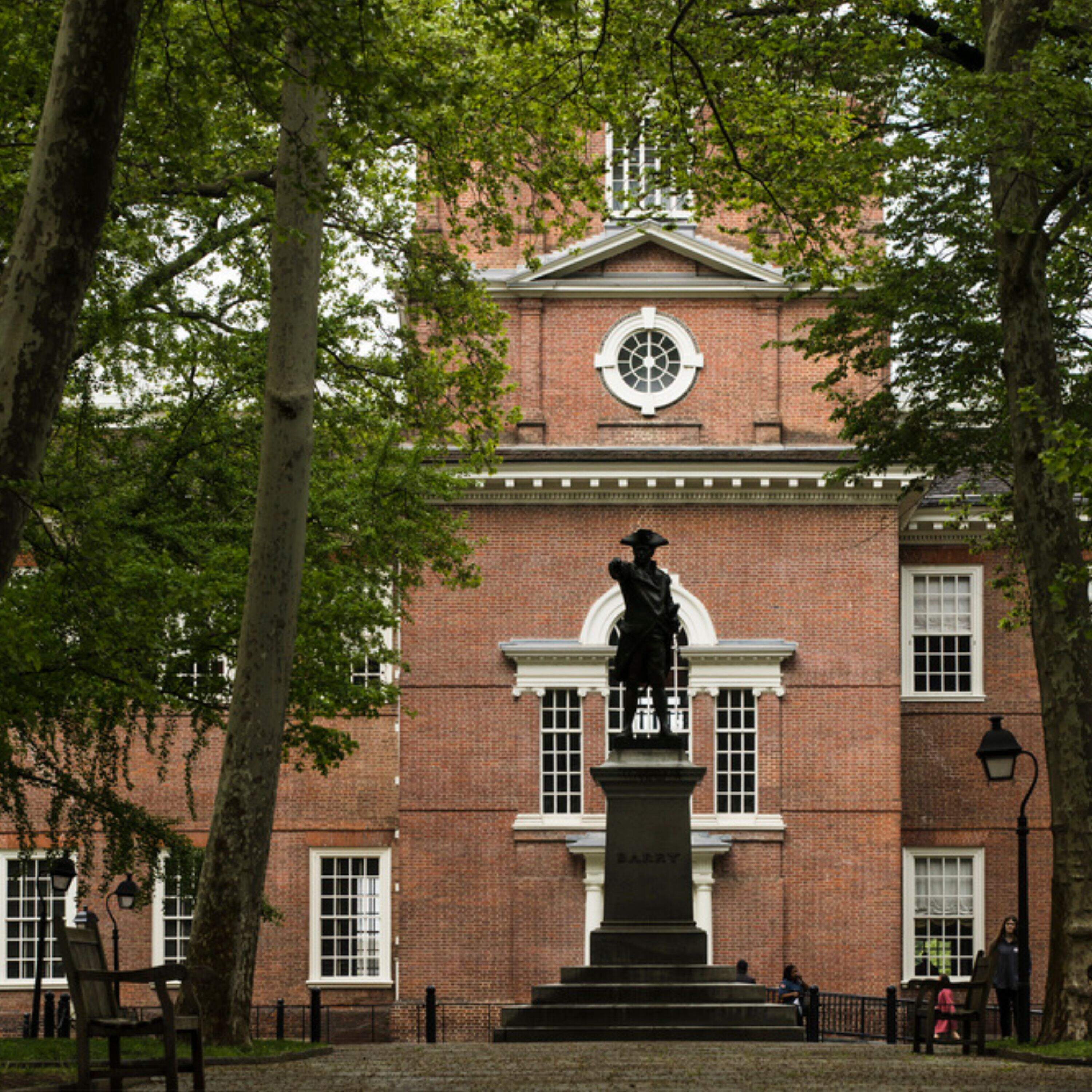
Historian Beverly Gage hit the road to learn about our country's history. She visited more than 300 historic sites -- from museums and battlefields to roadside attractions. What she learned about how America honors its history.
*** Thank you for listening. Help power On Point by making a donation here: wbur.org/giveonpoint
Get every episode summarized
Each time On Point with Meghna Chakrabarti publishes, we email you a written briefing from the transcript — the topics, who appeared, and any specific claims, with the ad reads skipped.
Email me new episodesFree for 3 shows. No card needed.
Hosts & guests

Transcript ready
477 searchable segments. Every word is indexed and playable.
Full transcript
On Point with Meghna Chakrabarti — A road trip through American history. Machine-transcribed; use the interactive transcript above to jump the player to any line.
Support for this podcast comes from Is Business Broken, a podcast from the Marotra Institute at BU Questrum School of Business. In a recent episode, the show explores how artificial intelligence is transforming healthcare and what that means for patients, providers and the business of care. Stick around until the end of this podcast to preview the episode. This episode is brought to you by TicTac. Lay some and get your game on because the TicTac lineup just got a new teammate. Dr. Pepper TicTac, this new double threat puts two of your favorite flavors into one box of mince. And when two iconic flavors come together, the result can only be iconic. Score big. Try Dr. Pepper TicTac today. Hey, it's Megna Chakrabardi. Before we get to today's episode, I want to just take a second to encourage you to join the new On Point Club. For just $7 a month, you get first access to the jackpot every week,
other exclusive content like behind the scenes with our producers, and you'll be the first to know about special live events. And we have got some great ones coming up. That's all just for $7 a month. This is like a couple of cups of coffee these days. So to join, just click on the link in the episode description you're looking at, and it'll only take a minute to sign up. Okay, here's today's show. WBR Podcast. Boston. This is On Point. I'm Megna Chakrabardi. When we think of the idea of America, those ideas are often the ones presented to us via the nation's historians. Beverly Gage is one of them. She's a Pulitzer Prize-winning Yale History Professor and author of many books, including G-Man, J. Edgar Hoover, and the making of the American Century. Well, recently, Gage decided to do something interesting.
She's flipping the script, so to speak. She decided to absorb American history in the way that most of us actually experience it rather than simply receive it. To celebrate America's 250th, Beverly Gage went on a road trip. And the result is her new book. This land is your land, a road trip through US history. And she joins us now. Professor Beverly Gage, welcome back to On Point. Thanks, Megna. That's great to be here. Okay, so tell me the genesis of this idea to road trip it across America. I have always loved doing this sort of travel. And if you ask my son who has now grown up, he would say she'd read it. I'll grow up. He would say she dragged me on so many of these throughout my childhood, although I think he secretly loved it. And maybe would even admit that now. And I was looking ahead to 2026, and I wanted to figure out a way to engage what
even back when I was thinking about in 2022, 23, 24 looked like it was going to be a complicated moment for Americans. And so I decided to put those two things together and make this book. The beautiful thing about American history is that it's so dynamic, oftentimes very idiosyncratic, right? And I'm just wondering if like what was the process that you went through to decide sort of what ended up in the book? It took a couple of years because you went to what more than 300 places? Yeah, so there are 13 places featured in the chapters of the book, but that's often a region or an entire city. And so within that I went to many, many places. I knew when I started out that I wanted the book to cover all 250 years of American history, or as close as I could get to that. I think there's a little risk in moments like the semi-quinsentennial this year that we all spend our time thinking about the founding, and that's great. That's important, but there's a lot of other American history too.
And frankly, I'm really a 20th century specialist. And so I knew I wasn't going to write a book or wasn't going to write a good book about the American Revolution. So I knew I wanted to have this big scope. And so then the question was where to go. And it really emerged organically into these 13 set pieces, each one of which is both a place and a period of time. So it starts in Philadelphia with the American Revolution. It ends in Southern California in the late 20th century. And then in between, I found places all over the country that for some moment in time really seemed to capture people's imagination, seemed to stand in for the nation at large. And so those are the places that I went. Yeah. Well, the road trip is quintessentially American. I don't know of a single person. There's probably somebody out there who hasn't taken some kind of road trip in this country. And one of the reasons why, of course, is that the road trip is made possible only with a car. The car in a sense democratized travel in the 20th century and made
it possible for folks to get out and see the country firsthand to experience it. Not just read about those sites out there, but go see them with their own eyes. So this is Matt Anderson. He's curator of transportation at the Henry Ford Museum in Dearborn, Michigan. There would be no Disneyland without the automobile, without the interstate highway system for that matter. There would be no colonial Williamsburg. No, no, the Henry Ford. I'm sitting now without automotive travel making it possible for folks to come see these destinations. So Professor Gage, as you talk about in the book, when you were plotting your all-American road trip, you knew you had to stop at the Ford River Rouge complex, the birthplace of the American automobile. So here's Matt Anderson again with that story. So the automobile comes on the scene in the 1890s right around the turn of the 20th century. And initially cars are just very expensive play things for the wealthy, right? No one can afford to buy one unless you're rich. There's arguably no practical reason to own one. We have street cars and
most people live with walkable communities and so forth. So a lot of folks thought there was no future in these things, but there were folks who realized there might be something to these cars because of the freedom and independence that they gave people. It took a few years for Ford to develop sort of the perfect automobile for his ambitions, but that became the Model T, which was introduced in the fall of 1908. It sold very well right out of the gate because it was well-built and because it was a bit of a reach, but still within the means of middle-class Americans. What I would ever call a particularly attractive or beautiful car, but beautiful in its design. You know, this is a car where certainly the form follows the function. It's designed for a purpose and served that purpose very well. So we're about 15 million Model T's built over the 19 years it was produced from 1908 right on up through 1927 when the last one came off the line.
Under the old stationary system, the record time for assembling a car had been 12 hours and 13 minutes. Using the assembly line process, it took one hour and 33 minutes. Ford Rouge Plant hit its heyday late 20s, early 1930s. At its peak, just the numbers of the size of the facilities, about one and a half miles wide by a mile long, 93 different buildings, about 16 million square feet of factory floor space, 100 miles of railroad track, just within the plant complex itself to shuttle materials between buildings, and 100,000 employees at its peak working there, building about 4,000 cars each day. Not an overstatement to say at that point that one half of all the cars on the road in the United States were Ford Model T. So it really is the car that hit that sweet spot and turned the automobile from a plaything for the wealthy into a tool of everyday life. Anything you can name is impacted by the automobile where we live,
how we play, what we eat, where we eat, all of that has changed and changed very quickly. By the 1920s, folks, you know, no longer talk about owning cars, they'll talk about owning second cars. You read stories during the Great Depression of folks who are willing to give up clothing, they're willing to give up food, they're willing to give up almost anything, but they won't let go of the car. So it had established itself, certainly by the 1930s, arguably even by the mid 1920s, as an essential tool of American life. And with that came this whole reordering of our lifestyles. People begin moving out into suburbs, driving into work, we start building improved highways, there's just no going back for better or for worse. Matt Anderson is curator of transportation at the Henry Ford Museum in Dearborn, Michigan. Beverly Gage, what was it like visiting the River Rouge complex? It was an amazing experience even now 100 years after it was built. When Henry Ford built that
complex, it was the largest industrial facility in the world and was a tourist attraction for that reason. People came from around the world to see it. And when you go today, it's in somewhat diminished form. You kind of come in on a tour bus and you really are only seeing one building in a very sort of booster-ish story of the Ford Motor Company. But it is still an amazing thing to see because so much of our industrial history really has been lost in these recent decades. And this is one place where it's really preserved. And it's just vast. I had just never been in a historical site. I guess we could call it like that. As you heard, it's a mile more than a mile long. There are so many different buildings. And it's really this testament to that moment in American history that was both about this kind of large scale industrial production, about a certain kind of optimism on that front and of course about the automobile itself. Well, as Matt
said, the automobile really transformed American life, American infrastructure, culture, everything. But also in the rise of the industrial agent, particularly with Ford and his new method of manufacturing, there's a social history there as well. That's right. One of the reasons I wanted to go to Dearborn in particular is not only to see that facility, but to really look at the birth of the American labor movement as we know it today, which happens simultaneously with this rise of mass industry in the 1920s and 1930s. The United Auto Workers is born in great struggle with Ford with GM with other employers during this period. And you can find pieces of that history all over Dearborn, but all over the Detroit area in general. Now, given again the sort of tumultuous truths of American history, does the Ford River Rouge complex today also deal with things like
Henry Ford's rampant anti-semitism? That is not a prominent feature of the way that they self-present. It was in fact a big part of Henry Ford's reputation, especially in the 1920s. He was one of America's most famous and virulent anti-semites. And so there are all sorts of aspects of the history that you can find there, some of which Henry Ford wanted to put on display. He built a whole living history village. He built a whole museum and some of which were part of his making history that you know his fans and supporters might not be so fond of these days. Support for this podcast comes from his business broken, a podcast from the Marotra Institute at BU Questrum School of Business. As AI tools enter the healthcare space, how should we understand
the concept of trust? I don't think that patients necessarily trust a model. I think they trust the care that they receive. That's Microsoft researcher Michael Hanson on a recent episode, exploring how the future of healthcare may depend not just on technology, but on the human relationships behind it. Follow his business broken wherever you get your podcasts and stick around until the end of this podcast for a preview of the episode. Bonjour Compadre, it's the How do I negotiate so many great travel deals? My greatest gadget. The priceline app, it's got hotel deals, flight deals, rental car deals, all of those deals in a bundle, gain day deals, concert trip deals, no one deals more deals than priceline. Hold your horses, there's more. The app that you filter hotels by neighborhood, vibe, star level, and amenities like pools and spas and beach fronts. Wait, I'm not done. Stop cutting the ice line! I'm Allison Aubrey, long time health and science correspondent with NPR, and I've got
a new podcast all about the science and wisdom of Life After 50. It's called Your Turn with Allison Aubrey. We want to take you on a journey to help you explore all the opportunities to make change and feel good as you step into middle-aged and beyond from WBUR and NPR. Your turn with Allison Aubrey can be followed wherever you get your podcasts, presented by AARP. You write about how one of the beautiful draws of these local historic sites all across the country is that it's a place where people are trying to really figure out how to tell the stories of their communities. Also, you say they're trying to sell those stories as well to the rest of America. They're trying to be heard, which is why when some of these sites, the people they are actually trying to really forcefully grapple with the complexity of the history that took place there, do you think that in order for us to be both truly honest and proud of our history,
that we have to do a better job at encapsulating the parts in these very sites that may not be as flattering as we want them to be? Absolutely. One premise of this book was that you can know American history in all of its complexity, in all of its injustices, and still say that you love your country. Those are things that often don't go together very well in our public discourse at the moment. And I think we've really gotten ourselves locked into a situation in which you hear lots of claims that if you are an American patriot, you can only say good things. I mean, this is basically becoming federal policy right now. And then on the other hand, I think there are lots of people who say, oh, you know, this country has such a track record of injustice, of cruelty, of violence, that I want nothing to do with it. And so for me, it really was an attempt to find a way to put some of those pieces together. And I thought that the road trip was a good method for that, not only
because it has this long American history, but also because these sites are places that, unlike the way we encounter each other on screens and such, they have to kind of take all comers. These are not driven by algorithms. They are driven by human curiosity and human conversation. And they have to figure out a way to talk to people. And the people who work in these sites and devote their lives to them are the most remarkable Americans, I think. Honestly, first of all, they know everything. I just always appreciate running into people who are these vast, vast stores of a tiny little niche of knowledge about this country. And their enthusiasm, I find whenever I visit places like this, is on parallel. I remember a couple of years ago, I was up in Alaska and I went to this tiny local museum about the Yukon Gold Rush. And it was actually incredible. And it was spending like three hours there. One of the reasons why is because the person working at the front
desk, it was just kind of letting people in, turned out to be the most amazing storyteller about the trials and tribulations of trying to find gold up in Alaska. So I'm going to be telling us about some of the people you met. I had so many kind of deeply nerdy conversations over the course of this road trip, as you can imagine, both with guides. And depending on where you are, those are sometimes highly trained professional guides with many degrees. In other places, they're just volunteers who have shown up. But I think it's really true that if you start asking questions and you scratch that surface, and often in that kind of environment, you're getting the first draft, the surface story, when you do the official tour. This can go on, as you say, for hours and hours and hours. And so I had those experiences really all over the country. And I should say you did not go as Pulitzer Prize winning Yale professor Beverly Gage who had special sort of insider access.
You just went in just like the rest of us and said, hey, I drove up here and want to just check out your sites. That right? That's right. The idea was to do a road trip that anyone can do. So it wasn't about getting behind the scenes access, although if I was in conversation with someone and they said, you know, why are you taking pictures of everything and why are you taking so many notes? Do you need stuff about every plaque in our museum? I would of course explain who I was and what I was doing. Well, then they should be like, oh, now let me give you the insider's tour. Okay, so let's talk about some more of the places that you visited. You went to a sex commune, Beverly Gage? Well, in 19th century sex commune, that has since been turned into an extremely respectable place. But yeah, I went to this place called Onida, which is in upstate New York. And in the 19th century, Onida was this very famous place as a kind of perfectionist religious commune that had a variety of very strange sexual practices at
its heart. The Onida members believed that you could create the perfect and most enlightened human through what they called scientific breeding. And so there were all sorts of rules and regulations about who could have sex with whom, as in many of these situations that often meant that the guy at the top got to have sex with you're pretty much everyone whoever he wanted to. But it was a place that had all sorts of kind of political perfectionist ideas and also created a silverware company, which many people still know about. So it lasted a long time because it had this very successful business. Wait, wait, wait, the silverware company came out of the same. Oh, yeah, if you've ever used Onida silverware, I am not going to look at my silverware. Same way again. Wow. Okay. So the company, yeah, the company survived. I mean, the commune kind of collapsed in the late 19th century and the company survived for a lot longer than
that. What's there now is a big community center. They built this sprawling building and it is still there and you can go visit part of it as a community center, part of its apartments, but they have some hotel rooms that they rent out. And if you go and stay in the hotel rooms, you can also take a tour of not only the grounds, but of their history. They have a whole museum devoted to the Onida commune in its heyday. What was it like sleeping in that hotel? You know, it was funny. I mean, you can't help thinking about who's been there over a very long period of time. It's also true that the lock on my door didn't work, which I found to be sort of an interesting, you know, I didn't feel nervous about that, but I thought it was pretty funny given where I was. I think that's a curious way thing to do. Okay. Well, let's move to a completely different part of US history. And this has to do with a place that should be better known,
but right now I think it's not well enough known, but it's key to African-American history. It's not Black Wall Street in Tulsa, Oklahoma. It's not Harlem in New York. Those are places that most of us have at least heard of. This place is in the south and it's called Mount Ba'u, Mississippi. In our history books here in Mississippi, when I was taking history a hundred years ago, there were just two lines about Mount Ba'u. They didn't talk about it. As a matter of fact, I just saw last year the travel guy for the state of Mississippi and did not even list Mount Ba'u. Well, this is Herman Johnson, Jr. His family has called Mount Ba'u home for at least four generations, and he still lives there and runs the Mount Ba'u Museum. Mount Ba'u was founded in 1887 by Isaiah T. Montgomery and his cousin Benjamin T. Green. They had both been formerly enslaved. It was an independent self-governing all Black city, the first of its kind in the nation. Here's what my father
says. He says he got here in the 50s. He said, Mount Ba'u was jumping and I'm just saying it the way he says it. We had just about everything that we were need. We needed self-contained. We had our own movie theater. Of course, we were self-contained as far as political government and that type of thing. We had all the stores that we needed here. And so everything that you would need to go to a white town for you really didn't need to do that. Everything was already here. So think of it this way. If you are being treated horribly in Mississippi, so if you live in 30, 40, 50 miles from Mount Ba'u, you might want to come to Mount Ba'u to shop instead of the places that are near you because they're going to make you go to the back. They're going to treat you like dirt. So the store owners here in Mount Ba'u become some of the wealthiest people in the state of Mississippi. Also, a lot of people were sending people to Mount Ba'u sending their kids to Mount Ba'u
for education. And so when we were only going up to maybe the third, four, fifth, sixth grade, in the state of Mississippi teaching Black people or bringing Black people to school, the only way a lot of people were further in their education their choice was Mount Ba'u. Mount Ba'u was a sanctuary city. So if you made it to Mount Ba'u, you were safe. The people that I call them, the Yahoo's or Clue Plus Clan, they get jealous and they want to come burn Mount Ba'u down. The whole sellers or the good white people decided that they weren't going to let that happen. And so they let the people in Mount Ba'u know that they're coming to burn you down. So the people in Mount Ba'u organized, they had guys up on the rooftops and in the window with rifles waiting on them. And then they had a guy that sat on top of the bank building and he was up there with a Gatlin gun. And when these guys, when they rode into town, the guy on the rooftop let that Gatlin gun be heard. He just cranked it up and let it be heard. When they heard the Gatlin gun,
they knew that distinctive sound. They turned around and they fled. When we first opened our museum, there was a collection from a man who had been collecting artifacts all his life. And he had a huge collection of African American memory bill. A lot of it, a good percentage of it was negative. Stereo-typical. And the way we characterized it is that, you know, when we brought people in, we would say, you look at this negativity and this negativity represents the lie that America tells about who Black people are. To justify slavery, to justify Jim Crow and to justify their coolness toward African Americans. But the truth about who Black people are can be accurately told through the story of Mount Ba'u. Herman Johnson Jr. is director of the Mount Ba'u Museum in Mount Ba'u, Mississippi.
Beverly Gage, what drew you there? I didn't initially plan to go to Mount Ba'u. I went to the Mississippi Delta as part of a chapter on civil rights history and civil rights tourism, which is really expanding in a lot of parts of the South. As I was having breakfast in Cleveland, Mississippi, one morning, I saw a mention of Mount Ba'u and the fact that Mount Ba'u had opened this new museum. And I was so excited because I actually knew some of this history of Mount Ba'u. I didn't know that anything was being done with that history. So I immediately redid my itinerary and set off for Mount Ba'u. Now, this museum was not all that easy to find. It hadn't made it into the world of GPS yet. But it's a little town. And so I just stopped and started asking around. The some guys were like, yeah, well, we have a museum. The museum's closed. Oh, wait. But if you go
knock on the window of that car across the street, that's one of the men who founded it. So I went and knocked. It was actually Herman's brother, Darrell. And he very kindly called a Herman. And I spent the morning in the museum really learning with and engaging with all of this history. Isn't that remarkable? I mean, we heard Herman earlier say that even though Mount Ba'u was the first independent self-governing all black city in the country, it wasn't even in the Mississippi tourism guide. You say it wasn't even like GPS hadn't quite located it yet either. But I understand that Herman's trying to change that. That's right. I mean, one of the things that's really remarkable about Mount Ba'u is that it became really a center of civil rights activism in the 40s, 50s and 60s in ways that I think haven't been fully incorporated into either our public history or our textbooks because it was such a sanctuary place. It became a place where you
could learn about voting rights and civil rights. So Medgar Evers, for instance, worked in Mount Ba'u for a long time before he emerged as a civil rights leader. It was a place where people could come and be protected. So Mamie Till, when she came down to find out what had happened to her son, spent a lot of time in Mount Ba'u. So it's got this amazing civil rights history in addition to its broader history. And partly as a result of the civil rights movement, when desegregation started to happen, a population of Mount Ba'u started to empty out a little bit. And there are lots of downsides to that. But one upside is that a lot of the historic structures are still there. They're often unused at this moment or in some state of, you know, collapse needing some repair. But the potential is all there to really turn this into a historic town that would have huge significance. And really would tell us a different set of stories about the United States than we often hear.
LinkedIn is pretty amazing at helping you grow your small business. We cannot make your email response time faster. We can help you sell market and hire in one place. We cannot help you find space for your three desk drinks. Why do you have three? And while we can't help you find the perfect volume for your presentation video, LinkedIn can help you find the perfect audience for your business. Grow your small business on LinkedIn. Learn more at LinkedIn.com slash small business. Letting fingerprints on the door not. Letting fingerprints on the door not. And I can't miss new season. It's my job to make sure that a police do everything right. I'm innocent. You say so. Guess starring Nicholas Braun, Jemima Kirk, Oji Ananobi and Nicole Shersinger. I don't watch television. Well, you should. Some of it's a boy. Ellsbeth, new season Thursday, part of CBS premiere week and streaming on Paramount Plus.
Disappointment. The new motion picture is the social event of the season that has critics and audiences swooning. Does it not move you? Excite your sense, it's still your soul. It's wildly entertaining. A joyous celebration of sisterhood. I request so much. And everything you've been yearning for. Sense and Sensibility. Ready PG. Parental Guine suggested only in theaters October 16th. I wanted to ask you some some fundamental questions about the nature of your road trip. The things that everybody wants to know. Like, what were your favorite snacks? That's very good. I tried to be relatively restrained about this. And so I veered toward protein. And I also would say that even more than snacks, the essential for me really was audio books because I had this kind of immersive strategy where as I was driving around, particularly in places where the distances were vast, I would put on an audiobook that was about
that region at the moment that I was trying to invest in historically. And so I tried to do the full immersion thing. You were very restrained because when it comes to snacks and road trips, the time where I fully allow myself to let loose from any pretence of eating healthy is when I'm in the car. I feel like that's also sort of a, like a fundamental part of the American road trip. You got to pull off to the side of the road, whatever is there, your roadside diner and just eat whatever you have. So I appreciate your maintaining healthyness. When you're doing as much of it as I was doing, it would go south really, really fast if it was all junk food. Okay. And you did most of this on your own, but a little bit with your son as well, right? That's right. Most of these were trips that I undertook alone on my own schedule. And I did bring my son along on some of the trips and my, my husband was also with me very occasionally. Did you play any games in the car when you had family members with you? My son, Nick, and I partly because we've done so many road trips through
kind of vast, relatively unpopulated spaces over the years, we play the cow game. So that is a highly competitive. He gets to look out one side of the car. I get to look out the other side and we see who gets to spot more cows. Who won? Nick won. Now many did he spot. I don't remember the exact number, but we were in Texas. So it was quite a lot. Oh, but my amazing producer page knows the exact number. She hasn't here. Your son counted 677 cows in Texas on one leg. Well, the cows had more than one leg, but it was one leg of your trip. And you came in with a measly 625 Beverly. Come on. I know it was brutal. By the way, I'm so pleased that you guys did play games because I think that's one of the things about the pre-digital age road trip, which was so magical and people have so many memories of is the actually people interacted. You trapped in a little car. You have to do something. And so every family has their own set of like unique car-based games that
they play with each other on road trips. And part of me is a little sad that because of digital technology, maybe that's going the way of the dodo. But one more thing about traveling and especially the times when you were on your own, Beverly, I mean, on your own as a woman, how did that feel? I was very conscious when I was doing this traveling, but writing this book that the road trip is just a very masculine genre. And so our most famous road trip books tend to be about, you know, a swaggering man sort of on the edge of society exploring or declaring about America. And I knew that I wasn't going to write that kind of book. I would say this is sort of like a mom book, you know, mom on a road trip. And at the same time, I was very self-conscious in moments about being a woman traveling alone, not so much because I felt any sort of danger, but because I found that I was a little hard for my fellow travelers to process, you know, who is this middle-aged woman
by herself kind of obsessively going to historic sites? Sometimes people asked, sometimes they didn't and just gave me sort of strange looks. But of course, most people do this kind of travel with their friends, with their family, with their partners. And so I was often, I won't say the odd man out, I'll say they odd woman out in those settings. Well, I have to say nothing gives me more pleasure in this moment right now than to say, move over Jack Kerouac. Here comes Beverly Gage, okay? The mom book, yes. On the road with mom. Okay. So let's talk about this nuclear missile silo that you not only visited but slept it. I went to the southwest to look at the history of the Second World War and the early Cold War and think about the ways that that not only reshaped the world, but had these dramatic impacts in the domestic United States and the southwest is one of the key areas where you can really see that in the landscape, in the historic
sites that are there. So I went to Los Alamos to think about the origins of nuclear war, but then to capture a later period of that story, I went down outside of Roswell, New Mexico, where a local entrepreneur and history buff has rehabbed a former Atlas missile silo and turned it into an Airbnb. So you can go stay in a nuclear missile silo. It's way out there pretty far outside of Roswell and spend the night underground in this very strange but illuminating place. Strange because also, I mean, when it was an active nuclear missile silo, there were people who were working there, who were also staying there. I mean, did it sort of put you in, did you try to put yourself in the minds of those people? I did. These were Atlas missile silos that were put in in the early 1960s. So just as an intercontinental ballistic missiles were becoming a thing,
you know, the idea that you could basically just kind of press a button and turn a key and a missile would fly halfway around the world with great destructive capacity. And so I spent a lot of time when I was there in what is actually a pretty nice underground apartment at this point. But thinking about the men whose job it was to go underground when the missile was there, to spend day after day enacting these routines, conducting maintenance, so waiting for the call that they hoped would never come, but whose whole purpose when they were down there was to be ready to wreak this kind of immense destruction on people halfway around the world. So I thought a lot about what that experience might have been like. So let's take a step back for a moment Beverly because we talked about, well, I guess we talked about three, four really different kinds of historical sites in this country.
But I get the impression from your book that even though they're all telling different slices of American history, that you actually found a lot of commonality between them. That's right. I had an instinct that that might be the case, but I didn't know how I would see it emerge and what I found were that there were all sorts of connections between these places in how they interacted with each other, how they imagined each other. Sometimes I found characters who would show up again and again and again over the course of my travels. One of those was Davey Crockett, and I first encountered him when I was visiting Tennessee to think about the 1820s and 1830s and Andrew Jackson and the process of Indian removal. I learned there something that I hadn't known about him, which is that he was the only member of the Tennessee congressional delegation to vote against Indian removal, but that kind of destroyed his political career in Tennessee or helped to.
So he took off for Texas and I was going to Texas and there I was at the Alamo where Davey Crockett met his death. And so I thought, wow, okay, we've got all this traveling from one place to another, taking experiences and stories and history and connecting these places. And then when I was writing about Disneyland, one of the last chapters of the book, there was Davey Crockett again as this kind of Wild West legend being remade a century after his death for the consumption of Little American Boys. King of the Wild Frontier, I can almost still hear the song in my head. So the reason I asked that is because you have this quote from President Johnson that you saw engraved on the wall at the LBJ Presidential Library, right? And this is obviously in Texas. And the quote is that American history is about quote, the excitement of becoming, always becoming, trying, probing, failing, resting,
and trying again. Is that what you saw on these sites? It is what I saw and I really came to think of American history as, in part, this conversation over time between generations about what this country is, what it's supposed to be, how it relates to its founding legacies, how it relates to its highest ideals, how it grapples with the tensions between ideals and realities. And the other thing that I saw again and again, which I think really speaks to our moment, is an ambivalence and uncertainty in the people of the past about how they felt about the country and how they wanted to engage it. One of the places that the book starts is Independence Hall and there you have George Washington's chair where he sat when the Constitutional Convention was happening. On the back of that chair, there's a half-son and Benjamin Franklin is said to have sat in that room looking at that
half-son wondering if that son was rising or setting on this thing called the United States of America. So those anxieties have been there from the first moment and I encountered so many historical characters during my travels who were really at the intersection of wanting to love the country, wanting to make it a better place, being horrified by some of the things that it was doing, trying to use their own talents to bring about transformative change, sometimes accomplishing that, sometimes being disappointed. But you know, it's a messy history and I think we in our own moment are just in that messy history once again. What's your answer to Franklin's question about whether the son was rising or setting on the United States? I think there's a choice involved in answering that question and so I'm going to say rising because I think that optimism is a choice
and I'm concerned that in this moment though there are plenty of signals that the United States is in some distress, in some trouble, maybe even in a certain kind of decline. Nonetheless, I think that simply going with that is a way of disengaging. It's a way of not being curious. It's a way of not taking your duties seriously as a citizen and as a participant in this society. And so I say rising because I think that optimism is a choice that has to be made in this moment. We have to envision bigger and better futures. People of the past did that and brought us the world that we have today for better and for worse. So you went on these road trips in part looking for hope as well it sounds like you found it Beverly. It's so much better being out talking to actual human beings being actually on the ground in you know living functioning communities as diverse and different
as they all are. Yeah, it was it was heartening. It's a much better way I think to to try to understand where we are or at least it's a very powerful supplement other than our you know kind of algorithm driven screen based interactions. What's one place I should add on my list of places to road trip to Disneyland. No, you've already been there. Give me another one quick quick quick. Okay, then the Ronald Reagan presidential library which is not too far off from Disneyland but was as far as I got into the late 20th century will tell you a lot about how our world was made. Terrific. I'm going to put the Reagan library on my list then next time I'm out in California. So Beverly Gage, history professor at Yale University. We've been talking about her new book. It is This Land is Your Land, a road trip through US history and we have an excerpt of it by the way at our website on pointradio.org. Beverly Gage, thank you so very much.
Thanks, Magna. I'm Magna Chacrabourty. This is on point. Older Americans control more political power and wealth than ever before. So we're kicking off a series called Senior Class, Gerontocracy in America, starting with America's aging politicians. It's confirmed that the older you are you have different and really more self-regarding policy views. Senior Class, Gerontocracy in America, our special series begins on the next on point. Support for this podcast comes from Is Business Broken, a podcast from the Marotra Institute at BU Questrem School of Business. Follow Is Business Broken wherever you get your podcasts. And listen on for a preview of a recent episode featuring host Kurt Nickish in conversation with
cardiologist Eric Topel on one of AI's most surprising traits, empathy, and what it could mean for the future of the doctor-patient relationship. Is there anything that AI is doing today that would genuinely surprise most patients? Well the big surprise to me was empathy. In that book, I had a chapter deep empathy and I said, oh, it will never come from AI. But as I didn't forecast properly, AI with large language models is a remarkable channel. The algorithm's the AI has no idea what empathy is, but it transmits it. And in 13 studies evaluated by physicians, 12 of the 13 studies showed empathy was better with the AI than by the physician. So this is really interesting. And one of the questions it raises is, well clinicians be getting coaching by AI to be more empathic and better communicators. I'm just curious. Is this helping doctors who don't have good bedside manner in the first place or the fact that AI just has not seen so many patients
and actually has empathy for each situation because it just doesn't get tired? Yeah, there's several reasons for this, but probably the biggest one is that most physicians have a lot of empathy, but they're squeezed so much for a limited time. They don't get to express it. And when the AI reviews there are no and say, you know, why didn't you ask Mrs. Jones about this or why did you interrupt her after nine seconds and on and on? Then you start to cue into what could be better. But it really does come back to we got to have the gift of time or we can't rebuild the patient doctor relationship, which has gone through so much erosion over the years. There have been seven studies now that have been published where the AI did better than the doctor with AI in various tasks. That wasn't anticipated, but it may reflect that we're still in the early stages and a lot of physicians haven't gotten grounded in AI or have automation bias. And in fact, these studies were not real world medicine. They were in a way contrived with scenarios and
patient actors and that sort of thing. So we'll have to see, but everybody was banking on that the combination of human and artificial intelligence would be the best of all. Find the full episode by searching for is business broken wherever you get your podcasts and learn more about the Marotra Institute for Business, Markets and Society at iBMs.bu.edu. So do like I did and have one of your assistance assistance switch you to Mint Mobile today. I'm told it's super easy to do at MintMobile.com slash switch. Up front payment of $45 for three month plan equivalent to $15 per month required. Intro rate first three months only, then full price plan options available, taxes and fees extra, feeful turns at MintMobile.com.
More episodes
More from On Point with Meghna Chakrabarti

Senior Class: Old money
On Point with Meghna Chakrabarti

Senior Class: The silver ballot box
On Point with Meghna Chakrabarti

Senior Class: The oldigarchy
On Point with Meghna Chakrabarti

The Jackpod: One war at a time
On Point with Meghna Chakrabarti