Get every episode summarized
Each time Short Wave publishes, we email you a written briefing from the transcript — the topics, who appeared, and any specific claims, with the ad reads skipped.
Email me new episodesFree for 3 shows. No card needed.
About this episode
“This message comes from the Center for U.S. All U.S. citizens abroad may request an absentee ballot to vote in the 2026 election. Visit registerabroad.com to get started. And I am thrilled to say that it is almost fall.”From the transcript
Interested in more science-based investigations? Email us your question at [email protected].
Support public media with NPR+ and enjoy perks for over 25 podcasts like this one. This show’s perks include sponsor-free listening. Learn more at plus.npr.org.
See pcm.adswizz.com for information about our collection and use of personal data for sponsorship and to manage your podcast sponsorship preferences.
NPR Privacy Policy
Get every episode summarized
Each time Short Wave publishes, we email you a written briefing from the transcript — the topics, who appeared, and any specific claims, with the ad reads skipped.
Email me new episodesFree for 3 shows. No card needed.
Hosts & guests

Transcript ready
183 searchable segments. Every word is indexed and playable.
Full transcript
Short Wave — A new investigation shows heat is even deadlier than we thought. Machine-transcribed; use the interactive transcript above to jump the player to any line.
This message comes from the Center for U.S. Voters Abroad Foundation. All U.S. citizens abroad may request an absentee ballot to vote in the 2026 election. Visit registerabroad.com to get started. You're listening to shortwave from NPR. Shortwaveers, Nate Brott here. And I am thrilled to say that it is almost fall. Because I don't know about you, but for me, this summer has felt unbearably hot, like many before it. This summer has seen deadly heat waves across the U.S. I've been caused by severe drought and record breaking heat. Each wave continues to make life miserable. It's excessive heat warning. Extreme heat. More extreme heat. My friend and colleague Alejandra Barunda lives just up the coast from me here in Southern California. And Alejandra, I know that you've been feeling this heat too because we've complained about it together. Yes, we have, Nate. And I can say that I have never been more grateful to have a heat pump that cools our house. I'm grateful that you have that.
As a climate correspondent, NPR focused on the intersection between human health and our warming planet. Extreme heat is squarely in your beat. Yeah. And as I've been reporting on it for the last couple of years, I noticed this problem. We, as a country and as a world, aren't keeping accurate track of how many people are getting sick or dying from heat. And that means that it's been really hard to get people to care in a meaningful way and like do anything about it. Yeah, that makes sense. I'm looking at one of your stories right now and you say the official number from the Centers for Disease Control, the CDC, is about 1700. So on average, 1700 people die each year from heat. That was over the last eight years. But you had an inclination that that number was low. Yeah, I really did. And I want to be clear, a low estimate is not really the CDC's fault. The way that we count and track causes of death in this country vary from state to state and even county to county. And CDC is kind of compiling all of those numbers. So the problem stems from
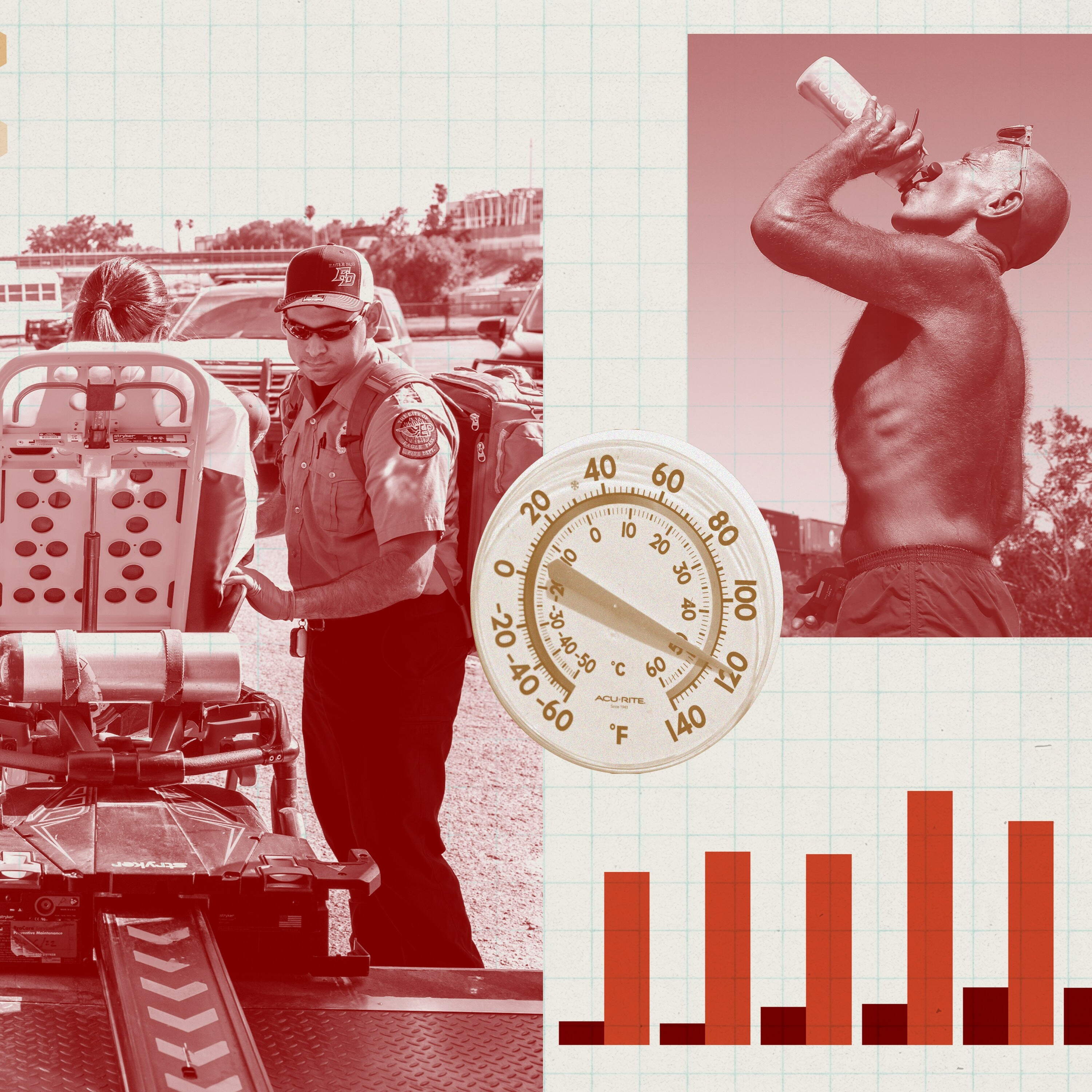
somewhere deeper. This is just really hard to do. But Alejandra, being the enterprising reporter that you are, you decided to come up with a better estimate. Yes. This was a huge, probably slightly over ambitious project. And it took a couple of years. And I really could not have done it without partnering with epidemiologist Quinn Adams at Boston University. And together, we found that we as a country are under counting the number of people that die from heat and heat related issues by a factor of about five. Whoa. So meaning the real number is actually five times higher? Yeah. Our modeling suggests that it's something like 9,000 people that are dying from heat each year. And even that might still be an underestimate. So today on the show, why the US is vastly undercounting the deadliness of heat not just in states like Texas and Florida, but places like even the Northeast. And how some of those places
are trying to do better to save lives. You're listening to Shorewave, the science podcast from NPO. The Artificial intelligence is everywhere. And the public backlash is growing this week on here and now anytime Arizona's Attorney General on why she is reviewing the state's policy on AI powered cameras from flock. And New York City public schools is banning AI for kids until they enter high school. Can you really keep AI out of the ABCs? Find out on here and now anytime on the NPR app or anywhere you listen to podcasts. Tanya, I think you did the best to interview that I've done seriously. Oh, that's a great question. I think I want to think about that question for the rest of my life. Good question. This is Tanya Mosley, co-host of Fresh Air. And the questions are only the half of it. Listen to Fresh Air on the NPR app or wherever you get your podcasts.
The days top headlines, local stories from your community, your next podcast binge listen, you can have it all in one place, your pocket. Download the NPR app today. Okay, Alejandra, I want to get into the numbers and all the fancy statistics that you did, but just from the outset, I want to highlight that these are actual people we're going to be talking about, right? Yeah, and a lot of their stories were just absolutely heartbreaking. And they really stuck with me. And one of the reasons why I was because a lot of them were so so avoidable. Like one thing I heard over and over was about how someone's AC or swamp cooler would break, and they couldn't afford to fix it. And then that turned into an actual death sentence. And that's what happened to Sherry Petty. She was a woman who lived in Tucson, Arizona, and her daughter, Tara Gettner, told me about it. But I woke up, covered her sweat,
I went to the kitchen, it's get a drink, and my mom's laying there on the floor. In front of the swamp cooler, it was blowing hot air, and a rotating fan is blowing hot air. The house was boiling hot, and Sherry Petty died later that day. Tara is still totally consumed with grief. You're later. And I want to be clear here, Sherry's death actually was counted because it was so obviously affected by heat. But there were a lot of other people I talked to who went through something similar and whose loved ones deaths weren't counted. So most of the 9,000 heat related deaths in your analysis, they're not Sherry's, like they're not people that were counted, right? Right. Exactly. Okay. So were you surprised that that number came back is 9,000? Yeah, it's a really good question, and it's been interesting to wrap my head around because it's sort of a small number and a big number at the same time. Like compared to the death toll of something like cardiovascular disease, which is the leading cause of death in the country, it's not
huge. But it's a big number because well, like we said before, it's way more than we knew, five times higher. And it's way, way more than is officially reported for other kinds of natural disasters, like hurricanes or wildfire. Though I will say that there's also a lot of new research showing that those are also likely way undercounted. So what I'm hearing here is that we have an undercounting problem in this country. Yeah. When we were talking about heat though, like why, why is that? Yeah, I mean, I think it's because it's genuinely hard to count well. It's really easy to miss and hard to count heat deaths. And that's mostly because heat isn't usually the only thing that kills someone. A lot of times heat is a part of the story, not all of it. It's the trigger for something like a heart attack or a kidney failure. But if you're not looking for it, it's really easy to miss. This one, Dr.尺rasona, Brian Dremend kind of explained it to me like this.
He's super aware of the problem. And he's still like, it is hard for me to determine for sure that he played a role in someone's death. And he need to be absolutely sure he played a role in order to put it on a death record. And that means that he has to do the kind of like investigative interviews before someone dies. And that's not always possible. So if I never ask a patient, were you exposed to extreme heat or do you have the ability to cool where you live? I'm not asking those questions. I would never diagnose them with heat related illness unless their temperature came in at 105. Oh, that is so tricky. And the other part is that, you know, there's a lot of different people in this country who end up certifying deaths. Doctors do some of them. Medical examiners do some corners do others. But all of those people are trained really differently. And for example, some corners are elected and don't actually need any experience or credentials. And there's also not really a standard way to do a heat investigation. And all that means that I honestly, I don't think we're ever going to have a perfectly accurate number. And that to me is
why these sorts of statistical estimates, like the ones that we did here, are so important. They help us see kind of a truth that is not simply the fact written down or not on a desert certificate. Okay, so let's get into this actual analysis. What was the process you used to figure out a number that's closer to reality? Great question, Nate. So basically what we did was some fancy modeling to calculate something called excess mortality. And you might remember that term because it was similar to what public health officials were doing to estimate COVID deaths back in the middle of the pandemic. And how that works is basically you figure out an estimate of how many people are expected to die in a place in any given week. And then you see how many people actually died. And then our modeling figured out how much that difference was attributable to heat. Here's Quinn Adams. She's our lead partner this and she's explaining the process a bit more. This is a maybe a little bit jargony, but we essentially did this like county specific
model in which we basically come up with an exposure response function where we can say like these temperatures, this is your risk of death at each temperature. So basically we took into account things like where the deaths were because heat hits differently for someone in like Massachusetts than it does for a Texan based on what their bodies are used to. Yeah, that makes sense. Yeah. And people do acclimate to the heat in the place they live like up to a point at least. But I also really want to point out that like I think a lot of times we think that it has to be extremely hot to hurt people like 110. And that's not true. There's a lot of cases in which you know, it can be 85 out and someone is going to have the same impacts. For example, there's a lot of common medications that make you more sensitive to heat or not able to sweat effectively. And all kinds of stuff that makes your thresholds a lot lower. Well, I had no idea about that. I mean, and I get it like I've complained about our temperatures here on the coast
all summer, but the humidity and heated index that we have been having is like a normal summer day in a place like New Orleans or something. Yeah. And different places have different relationships with heat because of that. And also preparedness is different. Yeah. We also looked at something called a leg, say you have a heart condition, and it gets really hot and your body can handle that for a few days. But it's getting more and more stressed over time. It might not be until a few days later that something happens and lands you in the emergency department or even worse dead. Right. Exactly. But it was still the heat that led to something happening. And so our model takes that leg between the heat and kind of the incident into account. Do you feel good about this number? Like is it possible that this is also an undercounting of the true scale of what's happening? This is definitely a solid first step. But Quinn and I agree. This is the best possible estimate that we have given the most up-to-date methods and the best
publicly available data. But it's still an expected under estimate. We were actually in the process of getting access to some finer scale national death data that would help us get an even better estimate. And we think that using that even in finer scale data set would probably end up giving us a higher estimate. But we have not yet gotten access to that. We are still trying. Okay. So stay tuned. Yeah. So Alejandra, I know we're both journalists. We don't make policies or decisions for people. We report the news and we give the public information. But I feel like after spending so much time on this, you have to have some hope that something comes from this. What would that be? Oh, man. Nate, that's such a good question. I thought about this a lot. And I think the first thing is honestly just awareness. I truly think oftentimes people think heat is just a nuisance or an inconvenience. Most people do not see themselves as vulnerable
to heat. They're like, oh, that's someone else. It's not me. But then push comes to shove and it actually is you. And we're learning all kinds of stuff about what heat does to your body. Like it can aid you like smoking does. And these kinds of physiological impacts really make it clear that it can hasten deaths in a meaningful way. And that's for people everywhere. And that leads me to something else that came up when I was talking to this scientist Patricia Siles from Arizona State University. She said we treat heat as a quote me problem. When really it's a quote we problem. I mean, yeah, that that track. Yeah, exactly. Like we tell people, oh, man, like take care of yourself. Go inside. Like make sure your AC is running. Make sure you cool down. But like this is a policy problem, right? And I hope policymakers hear this and agree that it's a we problem. There's so many structural things that we could address that might help keep people safer.
And it's sort of shocking how many cities or counties or states don't have like real solid action plans to address heat just yet. Are there places that are doing a better job than others though? Oh, yeah, definitely. And at the top of that list are places in Arizona like Maricopa County or Pima County. And that makes sense, right? Because Arizona is like in the epicenter of the heat crisis. Yeah. And so they're putting a ton of effort into better tracking heat deaths. In fact, those counties both counted more heat related deaths than our model predicted. Oh, man. But I will say my reporting also found many people who weren't included in those official counts. So to me, that says both the model and the medical examiners are probably still undercounting. But I will say that Arizona and like the counties and cities within Arizona are doing a lot to experiment with ways to keep people safer. For example, there was this rule that was keeping people from having outward facing aircondisters sometimes when their landlords didn't want them to because of like aesthetics.
And the state was like, no, no, if you need an air conditioner, you can have one even if it like, you know, affects how doesn't look great. Yeah, exactly. And I will say like places like New York State and city experimenting, for example, with Mauritoria where utilities aren't allowed to shop people's power for non-payment during heatwaves. Same thing that we have in winter to keep people from dying from cold. Yeah, exactly. And so like now it's clear that we need to figure something out like that for the summer as well. But it's still pretty new approach in many parts of the country. Hearing this list of all the places that are trying to address heat, I feel like it's just like an almost overwhelming problem. It's a really hard thing to fix. Yeah. And you can't fix a problem until you know about it. And you don't know if your solutions are working unless you're keeping track of them. And so I just really hope this work can help with both of those things. Alejandra, I hope so too. Thank you so much for bringing us all of this work and for doing it. Yeah, thanks for talking about it. And just for anyone who wants to look deeper at the model,
we made it open source. You can take a look, we'll drop a URL in somewhere. This episode was produced by Burley McCoy. It was edited by Rebecca Ramirez. Tyler Jones checked the facts. Yadu engineer was Jimmy Keely. I'm Nate rot. Thanks for listening to shortwave from NPR. This week on the NPR politics podcast, democratic socialists are having a moment. What's their goal? The goal being to eventually realign the democratic party to perhaps someday develop an independent party, but we recognize that in the United States, there just is a two party system. How democratic socialists are staking out political territory this week on the NPR politics podcast. On NPR's Wild Card Podcast, musician Sarah Barellis on being a crier. My mom is a big crier too. And she loves to take credit for my crying.
Mom, my crying is mine. Watch or listen to that wild card conversation on the NPR app, YouTube or wherever you get your podcasts.
More episodes
More from Short Wave

Eating alone may be secretly spiking your blood sugar
Short Wave

How much of Earth's life is still undiscovered?
Short Wave

What social media gets wrong about inflammation
Short Wave

A fall mystery: why do only certain leaves turn red?
Short Wave