Get every episode summarized
Each time Dr. Eric Berg DC publishes, we email you a written briefing from the transcript — the topics, who appeared, and any specific claims, with the ad reads skipped.
Email me new episodesFree for 3 shows. No card needed.
About this episode
“No matter how you do game day, on the couch, in the crowd, or manning the snack table, Athletic Brewing fits right in. With a full lineup of non-alcoholic beer styles, you can enjoy bold flavors all game-long.”From the transcript
Get every episode summarized
Each time Dr. Eric Berg DC publishes, we email you a written briefing from the transcript — the topics, who appeared, and any specific claims, with the ad reads skipped.
Email me new episodesFree for 3 shows. No card needed.
Hosts & guests
Transcript ready
147 searchable segments. Every word is indexed and playable.
Full transcript
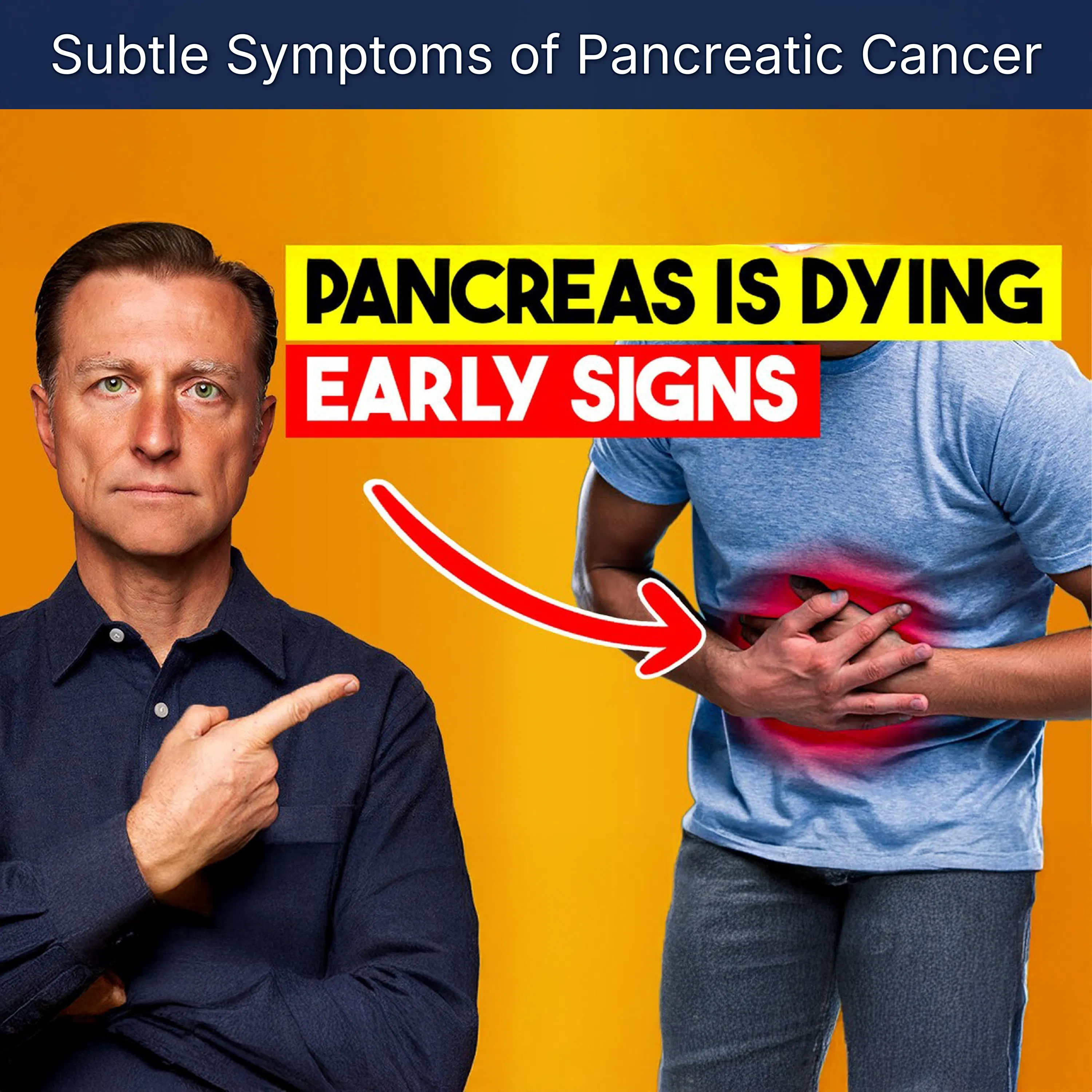
Dr. Eric Berg DC — Subtle Symptoms of Pancreatic Cancer. Machine-transcribed; use the interactive transcript above to jump the player to any line.
This episode is brought to you by Athletic Brewing Company. No matter how you do game day, on the couch, in the crowd, or manning the snack table, Athletic Brewing fits right in. With a full lineup of non-alcoholic beer styles, you can enjoy bold flavors all game-long. No hangovers, no buzz, no subbing out for water in the second half. Stuck the fridge for tip-off with a variety of non-alcoholic craft styles available at your local grocery store or online at AthleticBrewing.com. Beer beer. Fit for all times. Let's talk about the seven early signs of pancreatic cancer that you never want to ignore. The reason I want to focus today on pancreatic cancer is because it's one of the most deadly types of cancer. The unique thing about pancreatic cancer is that a lot of times you don't have any symptoms until it's very far into its progression. This is why they call it the silent killer because by the time you know you have it, a lot of times it's too late. The more you can identify these early triggers, the greater the prognosis is going to be.
I'm going to dive right into these early signs, and then I'm going to explain some very unique things about pancreatic cancer that you need to know. First one is sudden, unexpected weight loss. You're not trying to lose weight, but all of a sudden you're losing weight. Because pancreatic cancer starts in the pancreas, which is involved in digestion and blood sugar, if there's a problem with that gland, it's going to affect your digestion, your appetite, and you could lose a lot of weight. Number two, abdominal pain. The pain is more of a dull, persistent pain that sometimes can radiate to the left shoulder. There can even be radiating pain from your belly button back into the spine because of the tumor on the pancreas could put pressure on various nerves. You're probably going to feel worse if you eat because you're going to have less space in there for things to move around, and more food is going to put pressure on the tumor and put pressure on that nerve. Number three is jaundice, so the whites of the eyes become yellow. Your urine becomes like a darker, rusty color. We're having a problem with bile, backing up into the blood, causing jaundice.
And on top of that, you're not going to have enough bile, so you're not going to be able to digest fat. We have this bile duct that's also joined with the pancreatic duct at a certain point, and if there's sludge in that area, it can back up and cause problems. Not just in your gallbladder, you can have a problem with the pancreas. Just so you know, there's a really great remedy for that. I recommend it. It's called tajka. It's a very specific type of bile salt that you can get, and you take to an empty stomach. Twice a day, and it just opens up those ducts. It's great for all sorts of problems with bile sludge and bloating in this area. Number four, chronic diarrhea, because most pancreatic cancer affects the area of the pancreas, primarily responsible for digestive enzymes. When I was in practice, and I had people coming in with these symptoms, I would always ask questions about the diet. Unfortunately, doctors don't always do that, but you're going to pick up exactly while a lot of people have these problems just because they're on the wrong diet. Just simply changing the diet could clear up all these symptoms if you don't have cancer.
Number five is interesting, diabetes. What potentially can happen is that tumor in the pancreas could be disrupting the cells that produce insulin. They have this overproduction of insulin, and then your body is compensating for the high blood sugar, and it does that for many years, until the point where your pancreas is just kind of just too tired, and it stops producing insulin. Now you can't regulate the sugar, you can't suppress the blood sugar, so your blood glucose goes higher, and that's diabetes. Number six, you feel full really quickly when you eat just a little bit of food. This symptom can definitely come because you're obviously eating the wrong food, and you're getting bloating really quick. If you have pancreatic cancer, that could be one of them as well. Number seven, persistent fatigue. Of course, there's a million different reasons why you can be tired. A lot of people just consider a fatigue normal, and so they just kind of just live with it, or they might drink some more caffeine. Usually with pancreatic cancer, you have this overwhelming persistent fatigue, that's just, it's way more than it should be.
It just doesn't improve with getting more sleep. Let's talk about some of your weaknesses with pancreatic cancer. One thing you don't want to do if you have pancreatic cancer is consume sugar. There's data to show that this type of cancer has some bacteria inside of it, and so now they're experimenting with the microbiome, to see if there's some type of improvement you can make in the microbiome to potentially change this cancer. That's kind of an ongoing research project right now. Also, the problem with this type of cancer is the outside of the tumor is super thick and dense. That's also going to make the inside of it my completely without oxygen. And anytime you have a lack of oxygen, that triggers the cancer to spread more. The other unique thing about this cancer is it's very aggressive. The most important thing that a person should do if they're diagnosed with this type of cancer is immediately start doing prolonged fast. Periodic prolonged fasting is a very safe, effective way,
because as you're fasting, you're starving off the cancer of resources. You see, the cancer not only needs fuel, but it also needs a membrane. The cancer is going after resources to build itself, even making that more of a priority than just getting fuel. The other thing that's interesting about pancreatic cancer is that it usually happens after your 40 or 50 or even 6 years old and even older. The fact that it happens as you get older, it gives us a clue that it must be related to some type of chronic inflammation in that duct, which relates to food and lifestyle. Anything we can do to reduce inflammation will be a very, very good thing. A big risk factor for this type of cancer is smoking tobacco. I think the risk goes up by 25%. Also, obesity and type 2 diabetes puts the person at risk. Usually, if you're overweight and you're diabetic, you're eating carbohydrates, refined carbohydrates and sugar and things like that. A lot of inflammation in the area of the pancreas,
because the pancreas is at the heart of digestion. There are also certain genes that put the person at risk, but those genes are normally expressed more or triggered if the person is smoking or eating poorly. Alcohol is another big risk factor. There's some really good research on vitamin D in cancer in general. Vitamin D does several things related to cancer. It can help to shrink cancer. Number two, it can help increase our immune system's ability to fight cancer. If you have cancer, you want to keep your blood level of vitamin D pretty high. Personally, I would keep mine over 100, maybe up to 150 nanograms per milliliter. But the most important thing is avoiding cancer. Okay, so how do we do that? Well, getting enough sleep, reducing your stress, exercise, intermittent fasting, because it gives the pancreas a chance to rest. Someone's eating three meals or even six meals a day.
You're just hitting that pancreas over and over and over with just repetitive stress. And if you're on top of that eating the wrong foods and creating this chronic inflammation, not good. There's a handful of really good remedies that have very specific targeting effects over cancer. And I'm not recommending taking all of these, but I just want to mention them, cruciferous vegetables, green tea. Another one is Allison, that's in garlic. But the big one is Berberine. Berberine can help mimic certain effects of metformin. And also, metformin has been found to help reduce risk of cancer. And I will put the documentation down below so you can do your own research. This video was about identifying early warning signs against pancreatic cancer. You know, I live in a farm. And all day long, I'm identifying early signs of problems on the farm just yesterday. I'm looking in the air and I'm seeing these very large birds flying around in a circle, like hawks. I could ignore that or maybe just think, oh, well, they're probably just having fun going around a circle
or they could be targeting something. So I walked over there, sure enough, there was a baby sheep, very tiny. They was just delivered stuck in a prick or bush. The mother can't get to it. Of course, I freed up the little baby and the mother took this baby into the woods and birds went away. The moral of the story is you don't want to ignore certain signs or symptoms that your body is trying to let you know there's a problem. But then again, don't be paranoid about these symptoms. I've done a lot of videos on symptoms and talking about the most common reason for symptoms. And that's probably the best thing to go after first. But if it doesn't resolve, you can start looking deeper. Thanks for watching and I will see you in the next video.
More episodes
More from Dr. Eric Berg DC

If You Loathe Exercise, Try THIS Instead
Dr. Eric Berg DC

Why Your Vitamins Aren't Delivering Results
Dr. Eric Berg DC

Breakfast is a Deception
Dr. Eric Berg DC

The REAL Reason Why Your Arteries are Calcifying and Transforming into Bone
Dr. Eric Berg DC