Get every episode summarized
Each time Brad & Will Made a Tech Pod. publishes, we email you a written briefing from the transcript — the topics, who appeared, and any specific claims, with the ad reads skipped.
Email me new episodesFree for 3 shows. No card needed.
About this episode
Brad & Will Made a Tech Pod. is made possible by:
“I was at the park with my friend Norman Chan.”From the transcript
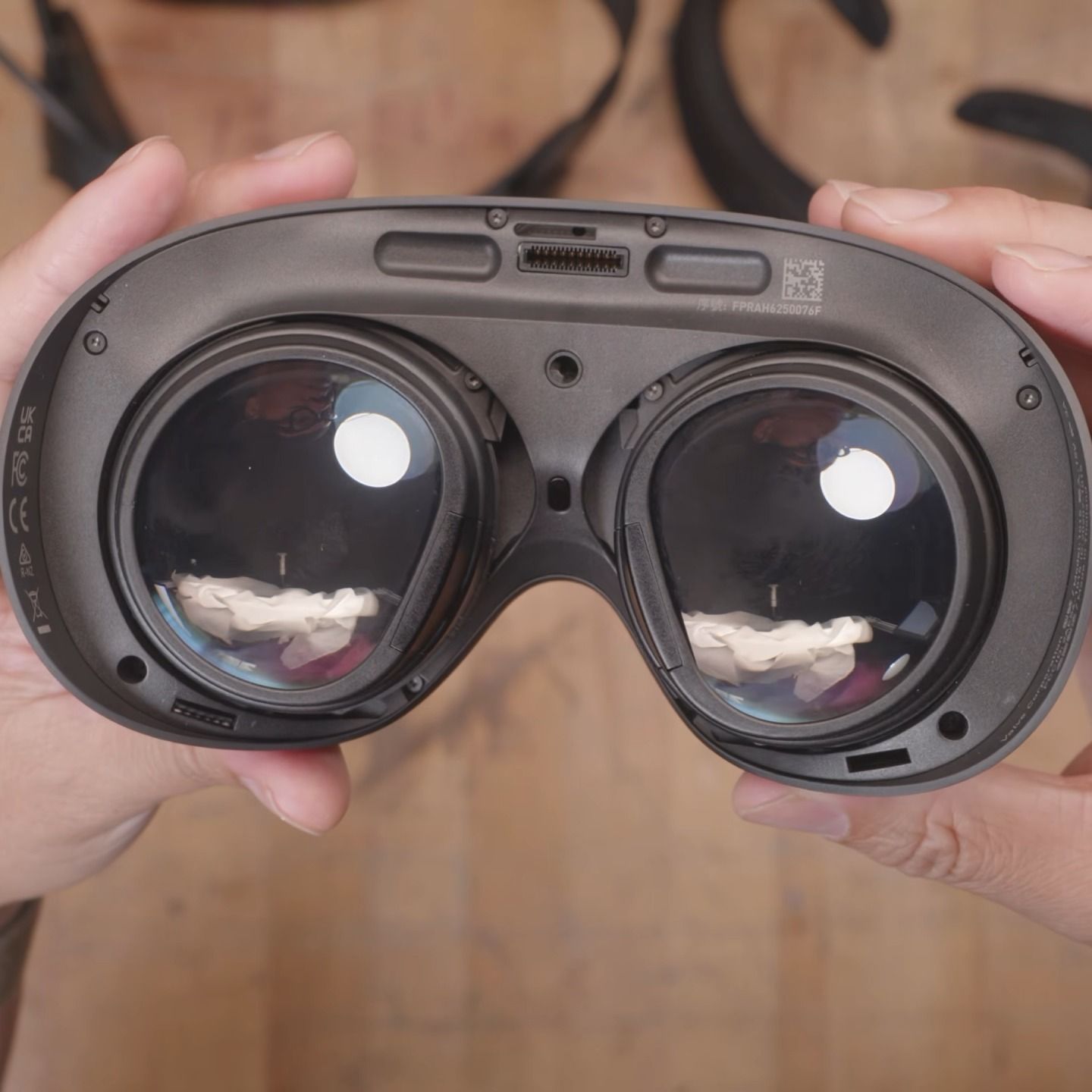
Following up on our bonus Steam Frame episode earlier this week, Tested's Norman Chan stops by to go much deeper on Valve's new standalone headset, unpacking topics like the pros and cons of pancake optics, local Alyx versus streamed Alyx, a headset with hot-swappable batteries, prescription lens inserts, FEX x86-to-ARM translation, and more. We also wrap up with a holistic look at the entire Valve hardware ecosystem now that all the pieces are in place, pondering what it might all mean for the next Steam Deck and beyond.
Check out Norm's Steam Frame coverage on the Tested YouTube channel: https://www.youtube.com/watch?v=C9JyWAVj94E
Support the Pod! Contribute to the Tech Pod Patreon and get access to our booming Discord, a monthly bonus episode, your name in the credits, and other great benefits! You can support the show at: https://patreon.com/techpod
Get every episode summarized
Each time Brad & Will Made a Tech Pod. publishes, we email you a written briefing from the transcript — the topics, who appeared, and any specific claims, with the ad reads skipped.
Email me new episodesFree for 3 shows. No card needed.
Hosts & guests


Transcript ready
1,527 searchable segments. Every word is indexed and playable.
Full transcript
Brad & Will Made a Tech Pod. — 357: Drag Your PC Into the Back Yard. Machine-transcribed; use the interactive transcript above to jump the player to any line.
I think I have a new career goal, Brad. Okay. I was at the park with my friend Norman Chan. Hi, Norm. I will. Oh, I'm here. Hi, Norm. Hi, Brad. I was here this weekend and we were the dogs and the kids were playing and somebody was having a birthday party and a guy came in and set up like a fenced area and a bunch like a fishing pole rack and a whole bunch of poles and a whole bunch of buckets and we were like, what the heck is he doing? And then he started hanging like bubble, bubble making stuff from the fishing poles. Mm hmm. Yeah. Cast a net. Yeah. He was casting a net. He started hanging huge. He started making huge bubbles like 15, 20 foot long bubbles in some cases for this birthday party. And I assumed that he was like the paid entertainment for the for the birthday party. Wait, was he not? I don't, I mean, I didn't go and ask him. I just assumed. Or it was because then he'd set like stations. He set up like buckets for all the adults and families for a part of the party and then
they all got to learn how to make big bubbles. Maybe he's just doing it for the love of the bubble. You know, I, I, I, I, I, I a little bit of PTSD because I didn't want to take a picture. 10 years ago on my honeymoon, I was in Prague and I too saw a fantastic giant bubble making dude in a park. A bubble man. A bubble man. And I said, wow, that's really cool. I took a picture and then it was just like a long distance. Right. So I was like right in his face. I was maybe like 200 feet away. Took a picture, continue walking and then he started walking toward me. What? I'm like, whoa, no, I don't like this. Why are you walking toward me? Hands outstretched. You take a picture of the bubble man. He needs payment. What? The bubble man is going to get his one way or the other. Yeah. Yeah. And he followed us. I'm like, uh, and then we paid him, paid him off. Wow. And then he just leave his bubble stuff back behind to walk away from it. Yeah. It's in high risk. Oh, yeah. Yeah. Big smile on his face. It was like a horror movie. Well, so the kids were totally wrapped by the bubble guy.
And like, I liked that unlike make her fair, whatever. I guess they make her fair. They let the kids blow their blow their own bubbles. I mean, he could have been a fun uncle, you know? Beware the bubble man. Yeah. But I think he seemed like a professional bubble man. Lumbhouse films. That's our next horror movie. Oh, no. Nobody wants that. Oh, Boltoff's welcome to Live Me A Tagb port, I'm And we'll- Hi, Brad. And joining us today for the final release of the Steam Hardware season, one Norman Chan. Welcome back to the show. All right, I thought you were gonna say for the last time, for the finals time. No, no, no, no, no.
That's grim, but no, no, no. The Steam frames out, we did a special edition on Monday of last week now. You did a bunch of video and the world is out. It seems like they seeded these wider than they did the machines because I saw them kind of pop up all over the place. And you got one, yeah. I got one, I got one, you get one, you get one. You get one. It's a like Oprah. Oprah, Oprah and Steam frames all around the world. I did not get one. Brad didn't get one, I'm sorry. Oh, Brad, no, okay, I'm sorry. I offered to bring it by, but we kind of didn't have time. When we were in the same place this weekend, it would not have been appropriate to whip out a pre-release VR headset, because I think it would cost a little bit of a frenzy there. That would have been a weird place to- I guess the embargo was not even up at that point, so I don't know. I, we had a little bit of a pair of notes. Obviously you keep these things discrete and you be careful with them, but like- Oh yeah, no, I'm- No one on the streets gonna know what this is. I'm being flipped, you know, I think the two dozen people with that beer garden probably would have been okay.
Well, I mean, there were 10 people there that were tech journalists that would have been very interested in it. Yeah, yeah. It would have dominated the proceedings. So that's why I didn't, yes, it would have dominated the proceedings. Also, I didn't wanna write on part with a pre-release headset. That seemed like a bad idea. But anyway, here we are. We're talking about the frame a little bit. We're also gonna kinda go over, like valve from that announcement what was the last September, October? They kind of- November. They built a whole ecosystem, right? They built this whole hardware ecosystem. They have a handheld, they have a console type device, they have a VR thing, they have a controller. Like it's in, if they had done this in 2002, we would be talking about this instead of the Xbox right now. I think it's basically everything that A-Sony has. And more, I mean, because Sony doesn't even do a handheld at this point. I mean, I'll really count the portal in that conversation. The streaming count is kind of, right? But it is basically an entire console, like lineup and ecosystem of hardware at this point. Yeah, but before we get into the-
The trick is to start with the store. Yeah, it turns out if you just started selling games and make money for 20 years, then you have money to do all whatever you want afterwards, I guess. Should we start by, like I'd love to get your, pick your brain about this team frame, because while I've spent a lot of time in VR over the last 10 years, I've really spent most of my time in mainstream headsets. I haven't looked at like the big screens and the pie maxes and all the fan, even I haven't really spent that much time in Apple, Apple Vision Pro. And I'm curious what your take is on this compared to those, because this is a kind of more reasonably priced headset than any of those high-end options. Is that right or no, I don't even know. I think he's got to take price out of the equation when talking about this, right? Like the price for this just, it has to exist in a vacuum because we know it's, they're charging more forth than they would have hoped and probably came out later than they also would have hoped. I think, you know, knowing that they had, the hardware was ready, the packaging was all done last November. My instict, my guts as they had this even like done
six months, maybe even a year before that, just based on the components that they chose. So it's mostly getting through either through tariffs or just the software development of it, but outside of the hardware, it's interesting because it's a wireless, it's standalone. It's a standalone headset that is made primarily the best way to use it is connected to a PC wirelessly. So no other headset really does that, right? Okay, because the big screens in the pie maxes are all tethered still, right? They're all tethered and using lighthouses. I mean, the pie max streamer has inside out tracking, but big screen uses lighthouses, a lot of the other big headsets, like Somnium VR1 uses lighthouses. Those all you still use track controllers, like the lighthouse based track controllers, or you're, there may first, you know, either VR chat or, or, or, or similar. Simracers, exactly, exactly. Yeah. And then for people playing standalone, like on the quest side or the Pico side
and those have their own stores, those are playing ports of games, right? Games that are having a, either made for mobile, like you think about like the, in the console world, these are like more like handheld indie games or ported over from a PC version in which they're too completely different, you know, executables and, our version, the X-AX version. Yeah, our man's right. X-AX, yeah. Mm-hmm. So this, this straddles out line. It's, it's the one that walks between worlds. So how does it, how does it live? Like, how does the image quality compare to the high high end? I guess is my, is my first question. Yeah, and actually, it's on the bottom of the high end. Let me, let me bolt on to that question when you, when you answer this. Could you also just give people like me and probably a lot of people listening in context for what high end means in terms of price these days? Oh, sure, sure. Big spoon beyond is $1,000. And they actually just lowered the price by, I think it's like, just a $960. But that's headset only, and that is display only.
You think of it as like buying a monitor. So it's the one that controllers. That's the one that controllers. That's the one that controllers. It looks like, you know, like, speedo goggles. Okay. So where frame looks like snowboarding goggles, right? The big screen beyond uses, and I think maybe the, the dividing line is just tethered and untethered. It's probably display panel technology. So big screen beyond is micro OLED, high max, streamer, micro OLED, saw me him as giant LCDs, and there's, I'm in, and lensing. So the optic stack is the thing that you're, you're talking about, the higher resolution, the higher quality display is going to cost a lot more. And so big screen beyond gets, it's under $1,000, but it's just the display. No compute. You can't run it separately. It doesn't even come with the trackers. Then it's going to come with controllers. They get into the ecosystem. It's going to be like around 1,500 bucks anyway. But that one, when I reviewed it, and that was big screen beyond one and the two, same display panels essentially, 2560 by 2560 resolution per eye, which is on the high end. There's no Apple Vision Pros unique case,
because that's technically standalone. But that's higher than like the Quest III, higher than the Pico IV, higher than the Steam frame. But that's, I think, the baseline quality for standalone, the expectation. If you have a good beefy Sim Rig, and you have like a 5080 or a 4090 or something, whatever the AMD equivalent is, you have enough processing power to get a headset with basically 2.5K per eye, because you're actually going to want to rendering it in a higher resolution, and at a higher frame rate, you want 120 Hertz 90 Hertz as much as possible. Big screen beyond, there's 90 Hertz at 2.5K per eye. Okay. And how do the optics, like this is the first time I've really used a headset at any length of time that has pancake optics. How, everything I guess I'd used before was for no lenses. For no hybrid lenses, yeah, yeah. So pancake lenses, they first showed up in the mass market with the Quest Pro. And just a, I guess a quick explainer of how they work
right, is the goal is to make the optic stack as thin as possible, while maintaining what you need from lenses in general, which is to turn a panel that's, you know, whether it's an inch in diagonal or two inches, like some of the LCDs, to wrap around as much of your field division, right? And the old way of doing it with for no lenses, like the, the first Oculus, you know, prototypes and dev kits and even the first like a Rift and HTC Vive, they're really thick, right? They protrude out from your face. And so what pancake development pancake lenses, which is to collapse that lens into something that's under the exact measurements, but I wanna say it's like, if I less than a centimeter thick, is that it has, it's actually not, like if you think of a camera lens, there are lots of optical elements that are stacked in, right, of different con, curvatures,
the pancake lens has lots of different layers, but the layers are really thin and they bounce the light between each other using polarization, like guns in from the LCD panel or from the world on the outside, then they bounce back toward the outer lens and to the inner lens and they do it a bunch of times and they have polarized coatings so that your eye only sees the final, you know, resulting light photons that have traveled through this path, right, this collapsed path. But that also means that when light goes through a polarized layer, like you think of, like polarized glasses for 3D TVs, you lose light, right? And so one of the costs of doing pancake lenses is, you know, an order of magnitude less light, actually hitting your eyeballs, than what the panel's emit. And so panel manufacturers, and when you go to, and I haven't been, but like when people who are in the analysts go to, or supplier conventions and headset maker,
there are a ton of these conventions overseas now, where panel makers are from Sony to, some of the other ones, they show off their new panels, they talk about like thousands of Nits of brightness, like six thousand Nits. But when they actually hit your eye after going through a pancake lens, it's like maybe a couple hundred Nits and Steam Frame. That is amazing. Massive, it's just it. And that's why, plus three in Steam Frame, you're getting like a hundred Nits at the eye, while the panels themselves may be a thousand Nits. I don't know the exact rating for what's on the LCD panel, the Steam Frame, but it's good enough, but they're not like HDR and brightness is one of those things. Brightness and contrast, balance with, there are things like you want low persistence, to not have ghosting, high refresh rates, all these things. That's the other things. These are the physics and like semiconductor limitations that make all the dreams specs really tough to have in a VR headset. Why feel the view, high pixel density, low persistence, contrast? Oh, well, I was gonna ask,
do you think that brightness deduction contributed to the decision to not use, I'm sure supply chain and costs. Yeah, well, but like OLEDs would be a lot harder to achieve desirable brightness with that issue. And OLEDs are more expensive, right? More expensive to manufacture at that size. So Sony makes a lot of the popular small OLED panels. I think ApplVision uses a Sony, big screen beyond uses a Sony equivalent. I don't think the Sony's are supplier, but those are of a sweet spot. Like, I think Sony makes one start in the X-ray glasses, the display glasses. Those have 1920 by like 1080 or 1200 resolution. Those have been in pretty good supply and the scaling and the manufacturing has made that really possible. But for VR and AR headsets that wanna use like OLED panels really need to have higher than I think 2.5K. And 4K is like a really nice sweet spot. And then you gotta balance like processing power too. So I don't think the supply chain is there for micro OLEDs that are in that like one inch to inch size that can deliver, you know, 2.5 to 4K at reasonable cost.
Like they would be if you look at like supplier websites, like maybe not as a as individual buyer, individual buyer, you can buy an OLED panel for like 200 or 300 bucks. And you got by two of those. And so your bill materials like half of that, half of a thousand dollar headset or more could be just in the OLED panels. And then there's no room for all the other parts that make up a headset plus you're testing your fulfillment, your margin, all that. And so I don't know if one, if the technology isn't even there, right, because I know, I know there are higher than 2.5K OLEDs out there. But I know for a fact that Valve wanted for their Optics deck really collapsed Optics deck close to your face and really lightweight. And then the question is whether they could have solved that with something that, with something like cost like 500 bucks or what that price would have been. So. And the big benefit of having the Optics deck close to your eyes is wider FOV, right? Oh, and also wait, right?
So. And that's how the tradeoff too. And then you have a panel. And so the difference between making a pancake lens for a 1 inch diagonal panel versus 1 to 4, 2 inch, that's changed the entire geometry of what your lensing is. And I don't know again the size, the dimensions of the LCD in the frame haven't taken that apart yet. But the thing that they clearly prioritize to match with this LCD is a short, like a small compact Optics deck that also deliver a really wide field of view. A field of view here, they call it 110 degrees horizontal. I pressed against my eyes even with the, with the prescription data. And I was able to get 118 using like my IPD and a standardized FOV test. That's really wide. That's wider than Quest 3. It's wider than the big screen beyond. It's not the widest of some of the as spherical lens. We are headsets out there that can like wrap over 120 degrees. But that for me actually is really meaningful playing games,
especially 2D games that you want to blow up and have it like not feel like you're looking through binoculars. Because if steam frame isn't just for immersive games, but also putting a rectangle in front of you, the more horizontal space you have in your periphery, that bigger that rectangle can be. Yeah, I was going to say that was the kind of the first thing that grabbed me is where, I mean, the index is a nice FOV for the time it feels like, but it's still feels like you're looking through one of those, I'm holding my hands up to my eyes. It's like a 60s era scuba diving mask, right? Like the round, the round rubber tube. And you definitely have the sense that you're looking down a tunnel a little bit. And I didn't get this as much, even with the glasses in certain. But it definitely when I took the glasses in, sort of out and put my contacts in. I'm curious, did you get the prescription lens inserts? I did. So he makes some 68 bucks. And one of the nice things about these inserts is they don't make the depth of the optic sac that much thicker. It doesn't take away that FOV.
I think they just click in. They just they pressure fit in. So they're not like magnetic attached, not that nice. But there's a shot in an additional video I'll put out on the tested channel, test the team channel where I show side by side of the lens in and the lens out. And it's not that thick of a thing. I think they able to do that because even with the pancake lens, there's a extra little gap that they have. Like it's not concave or convex. It's perfectly perpendicular to the viewing plane. And they need that extra space for the eye tracking camera. So also fit into the optic sac and see your eye as well. So all these things, every each week one thing here, you say, like, oh, I have a slightly new panel. One that a new panel means new lens system. New lens system also means like new like reduced FOV or you need a whole new system on a chip to actually pump those pixels out. So like these cascading effects, I think they just like valve. For all their ambition, I've found that with all these products and maybe this is more big picture stuff we talked about at the end,
they're a very practical company. Like a lot of the things they made are very, it feel like are born out of practicality. I think, yeah, I think that's right. I mean, I think that was apparent starting with the steam steam deck even. Like the, yeah, the choice that they made to make that thing run current gen console games at a reasonable frame rate at 1280 by 800 is an incredibly pragmatic decision, which, you know, isn't, it doesn't necessarily, it's way more Nintendo than Sony or Microsoft, I guess, if I'm putting in console space. What, what a, let's see, I think that's the big stuff. Do you know of any, like I know you're more connected to the VR ecosystem? Do you know of people, one of the things I thought was really neat is that you can just pop off the entire, like the guts of the headset. They just show up and with three clicks. You actually have to do that to put a couple of the, to put some of the accessories on. With the top strap in, yeah. Yeah, yeah. Yeah, the core module design, it's, yeah. This is one of those things I'm, I'm not sure,
they need to follow through to make this actually, like, make sense. Right. Like they split off the speakers, the SD card reader, the head strap, the battery, to, in what's essentially, or eventually replaceable unit. And we know they're making this enthusiast kit, at some point, right, with the index, as a hard strap, with index style, much nicer speakers and a hot swapable battery. And so what I've heard is the hot swapable battery will be actually two batteries. We're gonna have this, essentially, the same battery that's in the Steam frame, this curved battery, 21.6 watt hour in the back, but also have some type of magnetic connection, kind of like the Steam controller, where then you, with pins, that you can then slap another one in the back, that's the same capacity, double the weight, double the battery. And so what's a, like, 52, 55 minute battery life if you're running games full-bore, you get, you know, almost two hours, or maybe up to four hours and actually streaming games.
I don't know that I want extra weight on my head. I think I might just put a battery in my pat pocket and run a wire up. You know, I did kind of the, like, a lot of thinking about this, both on the couch with the headset on and while walking around, the weight of the battery, I like the counterweight of it, right? Like, I don't feel the battery weight in my head. It sits more on the top of my head than like in the back, cupping the back of my skull, 21.6 watt hours. Like, could they have gone with 30? Albo Vision Pro is like a 30 watt hour battery. This 21.6 is like a little bit bigger than Quest III, but like, what is an extra 100 grams, right? Like, to get 15 minutes more of battery life. Like, how do they end up exactly this size? And I think they probably ended up with this, again, being very pragmatic, thinking about what a hot, swappable option would be. And if you stack two of those, going from one hour to two hour, dedicated play time, to a local standalone play time, and two hours to four hours of streaming play time, that feels like that's the extent,
that's the extent of most people's sessions. And if you're crazy, you buy more of those hot, swappable ones. And every two hours of streaming VR chat, you swap one in the back, that works out. Two hours of streaming VR chat, does not sound great to me, Norman. I'm gonna be honest. I feel like it's live and sleep in VR chat, well. I know. I know, I know, I'm not touching. I'm just, it's just, this is not, doesn't seem appealing to me. I started to ask, what are they doing in there? But better not to, let's just move on. They're VR chatting, Brad. They're VR chatting. Let's see, do you know people making, like, that are gonna build, that are committed to building external, like non-valve mounts? Because the connector is relatively straightforward. It's just a planer, like a 10 pin connector or something like that. I don't think they've opened that spec out. The spec they've opened out is the expansion port, the PCI lane, that's under the nose bridge. And so this actually isn't something I really mentioned either, but that, this has a very nice high nose gap. And the gasket here is very flimsy.
You need the ergonomics kit, which has like the deeper light blocker, if you don't want light, but actually I don't mind it, because I like, I have a little bit of light, seeing my phone, seeing my keyboard, having air come in, it's not that bad. But it's also a very high nose design. And so like eating your subway sandwich or drinking a bottle of Coke, you can drink. You can drink. Yeah, you can do that. Yeah, you can do it with the big concepts. Yeah. Yeah. So I put the ergonomics stuff on between the time that we recorded the Monday episode. And now, are you using the top strap out of curiosity? No. I don't need it. Yeah, so I think it's completely unnecessary. I put it on and I think I'm gonna take it off because I don't think it adds anything. It's just a pain in the butt. And then the, I do like the nose blocker though, I will say. And I've been using the grippy straps. Although the one thing I did see yesterday from the community is that there's an enormous community of people that are making grippy straps
for quest controllers, that you can like 3D print or hack together out of nylon straps or whatever, and I assume the same thing's gonna happen here. So yeah. The hand straps, which let you hold, I think those are essential, especially if you're playing like half like Alex, right? To get that full finger tracking, a finger sensing with the capacitive sensors. But that's like the cheapest, easiest third-party accessory make. There are factories in China, the third-party accessory makers requests have already made the tooling and molds to pump out these hand straps that cost them, you know, 50 cents that they'll charge 10 or 20 bucks for, which is gonna already gonna be much cheaper than the 60 bucks that valve charges. I would say don't buy the valve of a ergonomics strap. I think it's way overpriced. The one thing I wanted to add on to the last question about expandability, so the bottom PCI lane. So there's already this RGB camera that our tourist industries is making, they're selling, that's 150 bucks, and they were closely working with valve because they're actually the third-party vendor that did the eye tracking, sorry, the inside-out tracking stack software.
They help you that, they've worked with valve for a long time. And I think there's another company working on a face tracker. Accessory. Okay. So for VRChat, if you want those facial expressions and send those signals through your Wi-Fi connection for more expressive VRing, that's a perfect place to plug the end. That would snap in there, okay. Already more than the index. Remember, index had that front, right? There was a USB-A port with like a cabby inside the index. You put the finger tracker thing in there, right? You can, I don't know who will use it. It was like a weird thing like, okay, no official accessories to launch with this. And then for the six and a half years that index has now, it's really like people, like LED lights, you know what actually fits in there? In the front, the steam frame wireless adapter perfectly fits in there. But you would, and there's no reason. Like, it just like, that just ends up being the right size. Because the height of VR decadences to store your accessories for your new headset
in your old headset. I love it. Exactly. Like, I'll put it in the wall, the bin on the wall over there. I found the, the doctor, the camera to be pretty incredible. Like, I was, it adds, like, so you can reach out in the black and white camera and pick up a drink or stuff like, you can know not to kick the dog, you can know that you're gonna run over a child or something. But having the color one when I was especially playing 2D games was really nice. Although I did notice that it kind of made the UI a little chuggy at times when I had the pass through on and it was doing something that was pretty CPU bound. The interesting thing is, it wasn't consistent and it didn't happen all the time. It was just, it was just occasionally. But I also, like, I really like the choice to let people spend the 150 bucks if they want that and are gonna use that and not build that into the cost of the device. Because there's definitely a world where this thing was just, you know, these were additional cameras
that were built into the headset and, you know, the overwhelming price of components and hardware affords that out of the device. So. That's the right kind of modularity and it goes back to that's a very pragmatic decision because there is like a, maybe it's small percentage, maybe it's only like 20% of the people will not, because I think the monochrome camera suck for a pass through for comfort. I think they're the warping and the, they're a nice, like just like in the Quest 2, the pastor was an afterthought because the primary use for those monochrome cameras is tracking, right? So it makes so much sense from a building of VR headset just for like the bare bones, get it working for VR games to not have the room view be full color. So that modularity makes total sense. Personally, I think it's essential. I think you're putting 2D games who want that full color pastor. You want the higher resolution.
The monochrome camera is actually working the dark because that's the way you can see the IR light. And so I would love a way for them because the IR cameras are still working, right? Those cameras are still on for world tracking when you have the RGB color cameras attached. I would love a way for them to detect, okay, too much of a too low light environment lights went off then switch over to the monochrome ones. I can see the dark or let me have a toggle. Yeah. I will say my wife and daughter both hate it when I use the camera and I'm talking to them and looking at them with the headset on. They're profoundly not fans of that. So maybe they, you need a Appalition Pro where you can see your eyesight working with your brush, rendered parallax eyes looking at them. Norm, did you find any issues with the hand movement range? I found that to be quite good. Like I am old so my shoulder movement isn't as good as it once was, but like pretty much my normal range of movement. I didn't have any tracking issues in. Yeah, this is one of those things that like back,
you know, six, seven, eight years ago, it used to be such like, oh, inside out tracking such a new thing with these standalone headsets, what is the tracking range? Can I do my beat saber? And like, about noises, like there's the predictions also really good. Once these, once the track controllers move out of track camera range, there's a few seconds, they still track rotational tracking, but still a few seconds of like, okay, they can use IK to figure out where your hand is. So yeah, no problem there. Okay. Let's, so I had a couple of weird things that have happened since then. One is that last night I was trying to play Star Wars Squadron, so we'll talk about in a minute. And the fan spun up, it got really loud. And I went from like, I eventually just had to hard reset the headset. And when I came back, I had gone from like 80% battery to like 20% battery. So I guess it was doing some incredible computation during that, during that five minutes, while I was waiting to hard reset it. Like I don't think that's, like this is not a deal breaker, but it's, you know, you wanna talk about the stuff that's weird
and bad that happens. That's kind of the big stuff. I tested a bunch of games. We didn't talk about the local arm version of Alex on Monday's show, Brad, which I think like we talk, the FEX stuff is really impressive and good. And for the most part, it's transparent. That's the arm to X86 emulator. And I was equally blown away by the local version of Alex, even though I don't think I'm probably gonna use it very much. Wait, so did you try the X86, Alex, the FEX? So X86 Alex for FEX is not perform enough. So they don't, it's not an option. That was my question. It was, if it would even run acceptably, which sounds like no. No, but the, so streaming Alex is fabulous. Like streaming Alex, the thing, I don't think we got into it, like when the wireless adapter works with your Wi-Fi, the VR streaming is really, really flawless in my experience. I didn't, I didn't, wouldn't have noticed that it wasn't tethered.
I don't think in most cases. Yeah, I was just specifically wondering if PC Alex could be, even at the lowest possible settings could be playable on this thing. And it sounds like no. I don't think so. I think the amount of assets, so, so, they did 16 gigs of VRAM on this, which is funny because I think the Steve machine is only eight gigs of VRAM, and it's a full-ass desktop PC for all intensive purposes. Well, it's shared, right? So like just by virtue of it being a Qualcomm SOC, like the mobile chipset, you know, your standard memory in VRAM, it's a different type of RAM and it's shared. And so by choosing that, you get more at room. But they choose the partition split, right? It changes dynamically. Yeah, okay. Okay. But anyway, yeah, it's, I was, I was pretty surprised that Alex, Alex is pretty heavy. I don't know, I don't think you, have you ever played Alex Brad? Just a little bit. Okay. Oh my God, Brad. Oh my God, someone gets you a steam frame. And you, I should, you have a gaming PC, right?
I do a very good one, yes. Oh my God, you are like, you are the person. You're the guy. I should play Alex. I should play Alex. This headset has been waiting for you. I have a PlayStation VR2, but I don't know how, I do experiences. No, no, it's not true. No, no, no, no. This headset was made for people who skip the index for whatever reason, skip PC VR because of weight, because of tethered. And the game has been waiting dormant for you. You know, it's a great, where are the frame? Wireless play, you have a great gaming PC. I'm telling you, 120 Hertz render skill at 2X. So you actually render it like 3,000, 200 pixels by 3,000 children pixels. It looks fantastic. Yeah. All right. And so don't play it on the PSVR2, is what you're saying. Oh, no, no, absolutely. All right. Oh, PSVR2 is, it's 2000 by 2000 resolution. And so that, but it's not bad. No, no, no, no, it's not bad. And the controllers are not bad either.
The haptics are really good on these controllers, but it's tethered. Yes, yeah. I don't, I don't use VR. I barely ever use VR, but when I'm sitting with that headset, I always run over the cord on that thing, no matter what I do to try to manage it. Seems expensive with my chair. Well, okay. So the ARM version of Alex, though, they're doing, it's one of the things that I was able to test to use this foviated rendering. Because the foviated streaming, when you're streaming from your PC to the headset, we talked about this a little bit on the Monday show, but we didn't get into it. The streaming, they're just sending the pixels, they're sending the most data where your eyeballs are actually looking. And you can actually go into the developer menu or into the VR settings menu, turn off the eye tracking, and then it locks that foviated spot in the center. So you can see how kind of crappy the rest of the screen is. I had that break once or twice on the first build of the frame software that I had when I was playing, I think Res, and it was hilarious. Because there was like a big smudgy spot in the middle, and then there was no gradation between the edges. You could actually see the spot you were looking at
kind of moving around. They fixed that since then. It was fine every other time I tried it, but that works really seamlessly and it works with everything. The foviated rendering either has to support it on this PC side or on the local software, right, norm? Yeah, and by porting Alex over to ARM and incorporating foviate rendering for their specific tiling system that they use for their buffer, that allows them also to enable foviate writing for games or developers to provide things like motion vectors and depth data. Does that mean if you have a DLSS integration, it's easy to put that in, because those use of the same stuff. I don't know, I assume it's the same information, but I don't know if how easy it is for a developer to port that. I know that that data will allow you then to do better frame of projection. So Alex actually runs at 36 frames per second, and it's available to 72.
And it's like 1280 by 800 prior something. I think 1738 by 1738 is a min spec, but it's very wildly. When you bring up the performance graphs on the bottom, it depends on where you're looking in the scene. But you can notice the foviation when you're in Alex running it locally, because you can kind of see the pixelation, both in the capture and the action. And per full vision is I think norm. And maybe whether you're wearing, like I can't see what my glasses on, I could see it with the context on when I was closer to the screen. But the point is it works. The entire game, they didn't have to remake any asset, they didn't have to scale down. It's low quality, right? So it's scaled to the lowest PC setting, but these are not like they're not making like the quest equivalent. It is that game, all the mods and workshop content that people have made for Alex just works. That's the big thing, I think, to me. I didn't realize how much workshop content there is for whole campaigns in there that are kind of amazing.
I loaded up a couple of the top rated ones, and was like, oh, this is frickin rad. So yeah, I was really blown away that I still, like I went out in the backyard and I ran the local version. I made about a 25 foot circular play area and was just walking around like a doofus in my backyard with the VR headset on. I can't imagine playing a whole lot of the game that way, just because the difference in rendering quality on the desktop version streamed versus that was immediately noticeable. What if you dragged your gaming PC into the backyard? No, that would be on it. I mean, look, I think the real answer is that I'm looking at the steam machine and that's really easy to move. And when they flip on the radio support for that, then it'll be, I think that's the move is to drag that thing in the backyard. I don't think steam machine has enough horsepower. Yeah, that would be my guess. Yeah, so it's really, it's PS5, PS5 Pro equivalents or talking about your style games.
But you know, trying to make big game PC out there, get one of those, like those eco-flow thousand watt portable battery packs. Yeah, that's just like a big backyard, man. Take your PC to the park. That's right, that's right. An unfold, you're, hey, bubble man, look what I got. I got solar panels and charging my gaming PC. I can play for 15 minutes. Take your PC off. I have a good time. I have a full 16 app circuit in the back of my car. I can just plug in everything into that. It'll be fine. So I tested a bunch of games. We didn't talk about all of them on Monday, but like a bunch of old kind of first-way VR stuff, like JobSIM and Rez and Beat Saber and PistolWhip and Super Odd. I also tested some newer stuff like Gorilla and the Arizona Sunshine sequel and the remake locally and streamed. Generally speaking, all of that stuff worked really, really well. The streaming was seamless in my experience. The one place that there were consistent problems
were when you had a VR game that expected to use a controller. The, so like Super Hot, not Super Hot Tetris Effect or Super Hyper Cube or one of those games that you're supposed to sit there with a PlayStation controller and play, not a hand-tracked game. The translation, the SteamVR input stuff and the controller emulation on the Steam, on the frame controllers didn't kind of sync up to the point that Super Hyper Cube thought you had a Vive wand and it was you were mapping your sticks to Vive wand inputs and all that and it was bad. I asked Val about that. They said they were aware of it and it's on the list of stuff that they're not that many of those games. So it's, you know, it was a post-launch priority. Big list small team. Yeah, yeah, pragmatic norm. Yeah. I couldn't get gunman contracts to work right locally which I realized in retrospect that it does not. Yeah. And the performance, like the weird thing about this is they don't,
they don't use the, hey, does this work or not work system to say, hey, this isn't going to be performant for you. They'll let you try it. It's going to be a bad time. And then you're going to be like, oh, I should, I should stream this game. Other things like clever, which is the Plex VR client from 100 years ago won't work because you can't authorize it. So you like it, you, it had a, it would pop up a thing on your desktop in Windows that says, hey, you need to log into your Plex server here where you put your credentials in. And I couldn't figure out a way to do that. I'm sure there probably is a way using desktop mode or something but on the headset alone, standalone, the client seemed to run fine, performance seemed okay, but getting that stuff working wasn't great. And then the last one was last night, thanks to folks in the chat, I tried, I tried No Man's Sky, which was okay, but wouldn't use the, their wireless dongle for no matter what I did. I can't show. I can tell what dongle isn't used. So on the, on the dashboard,
there's a little, a little streaming button that you can click and it says, hey, we're using multi-link, we're using just one, we're using, or we're using the old way, which is just steam link. Most, I didn't ever see the anything but the old way for 2D games, which was kind of a bummer. So like you would, you get a different UI when you're doing a VR game and you're using both radios and they're merged because that's their thing is they provide a second Wi-Fi radio, plug it in with the USB and it's basically a point-to-point connection and then it supplements Wi-Fi with that with Wi-Fi depending on what's the stronger signal. That's a UI issue. It's using the wireless adapter to dedicate one. It's just not presenting it such. And this is one of those things where like this, the steam UI is always a work in progress. This is like, you know, it's, it's steam deck UI that's then turned to steam machine UI. That's then turned to the VR version. The way to get around that well is to do, remote streaming to PC without launching a game. So just a desktop. Because then that presents both of the wireless signals
and then you launch a 2D game from there. Got it. And I will say the 2D desktop streaming is rad because like on my computer with three monitors, it gives me three different windows that I can pop out and put around me and like, it feels like some real huge actmen in swordfish business, you know, without all the standing and dancing while you're typing. And not the other thing with your, Brad's getting ready to, Brad's making a face right now. What? No, I just have to pee right now. Okay, sorry. Yeah, so, so I guess the last, there's a couple of things to talk about last. Chat, a file sec friend of the show, chat did a video yesterday where he was talking about what's going on with games to VR game development. Because it seems like it's pretty more of a bond right now from, from where I said, like the sim people are doing the same thing. But like the mainstream racing games even aren't doing VR supporting more. They're expecting the community to mod that in like with Forza Horizon, which I realize the hardcore sim people don't give a shit about Forza Horizon. But like man, that game's pretty and it looks real good.
VR and you put the wheel on your desk and it feels good. Are, you know, Polly arc just shut down the people who made Moss and those two. Oh, that sucks. Yeah, I mean, those, they made gorgeous, really, really well-made VR games and they couldn't make it work. So, you know, and meta seems to be backing away from VR entirely in favor of data centers and, and spy glasses. So, like I don't, I don't know who's out making VR games these days. It's a lot of people in the community, right? Like it's, you know, it's, it's relying on people to make ports. You know, UEVR is very popular. That's a, a, a, injector that allows stereo rendering and some motion control that basically any Unreal Engine game to work in headset. And whether the developer intended to or not. Yeah. And people can kind of force stereo rendering on, you know, some games like Cyberpunk and, you know, even third person games and get them to work in some way.
Some of the, oftentimes, is janky. But the people who can sit through it, you know, and who've invested a lot in VR and want to play it, can play it. So, backing those supporters or those developers that way. And then the workshop stuff, you know, like I'm in contracts, and you mentioned that like spun off of basically mod, VR mod that now is its own standalone early access product. OK. It's probably, probably worth mentioning. I mean, this is not relevant to the PC market because these games were never going to come to the PC anyway. But like Sony's PSVR 2 development has also flatlined. Like there's really not much happening on that side either, just as a further sign of the times. Yeah. It's, it's, it's, it's telling to me that Valve, this is the first VR headset valve is launched without launching some sort of a bespoke. You know, aperture lab style piece of content around it. Let alone like a flagship game, you know, like the Alex is still the flagship game left over from the last headset. They said three games in development eight years ago.
I look, I think Alex is still the flagship game for VR and other cases. You're wrong. But also that's like that's kind of a backhanded compliment, right? Because nothing that's, that's just, we're just still to raise the point that nothing better has come along in the last six years. Yeah. Yeah, I think that's right. So okay, when you hear this pre-orders will already be live. So they go live, they went live on the 17th. They're doing the lottery thing that they did with the steam machine again for this, right? Whether that needs to be necessary or not, I guess we'll see. But the idea is you, you express interest in a skew or multiple skews, which are you, if you don't care, and then whichever number you get in the lot, they're going to draw all the numbers in the hat on the 17th. And everybody who comes in after that will be put at the end of the relevant lists. And then you get to give them your money in the order in which your lottery number was called basically. And this is kind of their anti-scalper mechanism. It seemed to work pretty well for the steam machine for the most part. I didn't see a whole lot of complaints about that. Although I think the, I think they're going to be fulfilling orders for that for the better part of six months or something.
So it also just seems like an anti-enoyance mechanism because it's, it's no, I mean, yes, it's random, but it's no less arbitrary than sitting in a broken store queue, like waiting for the store page to load or having it reject your payment method because the off server can't work. You know what I mean? Like it's, it's, it's no less random than that experience, but at least you're not sitting there for two hours hitting F5, like trying to get into a store queue. So yeah, 100%. So let's talk about the, the ecosystem, the hardware ecosystem before we wrap it. Do you, normally you have anything else on steam frame before we move on that we haven't covered? Do you think that's important that people want to know? No, I think, yeah, we've got the big picture of your stuff, you know, the VR business is what it is. You know, I think there's still a lot of true believers out there. I think it's still an incredible, you know, incredible interface and way to play games and it's not like it's dead in the hardware world. There's going to be new VR headsets coming from from Meta and other hardware makers. I think everyone's realizes the scope and scale of the market is
just much smaller than we all hoped it would be. Well, and I assume that the same people are going to keep doing some people stuff indefinitely. The thing that surprised me having not plugged in my index more than once or twice in the last five years is that there were a ton of like indie, like $10, $20 indie games that are that kind of blew me away. Like I think the last year I really played a bunch of VR games was the year the last clockwinder came out. And there was a ton of neat stuff after that that I've kind of enjoyed digging into. So the one last thing I guess I'll say is there's, I think it's also a big opportunity for this windowed stereo games. So not every game needs to be fully immersive and there's certainly some benefits of having a fully immersive environment. But even a game like Moss, which was like, yes, you could look around the world, but you could also kind of play it in a window. And there's a lot to be said about playing like a flat screen game, but adding some depth in some way, especially if developers are going to be feeding things to this decay, like, like, like
depth data and motion vector data, there's a way to then inject just a way to see the game and have it in 3D whether it's looking into the window or having something's popped out. That's a really untapped photo ground for use of your headsets. Is that is that happening now or is that just something you'd like to see happen? It's my like to happen. The way it's happening now in other display glasses is kind of as a final pass layer where they're just, you know, adding fake 3D, which works okay. Like rejection one of the I viewports or something? It's literally like on a per frame basis, you know, assuming depth and then and a portrait mode and cinematic mode and everything. Got it. Okay. Can it read a real fast question? Is there a way to watch? I may have asked this on a podcast recently. Is there a way to watch like older 3D blue rays on VR headsets these days? Cause like, oh yeah, yeah, yeah, I'm not going to lie. It is not the biggest factor, but it's a small factor in the fact that my plasma TV is still sitting in the floor behind me because I think can do 3D
because I've always wanted to watch dread in 3D and never actually. It's like a sound set. Yeah. The frame and like the hardcore VR people like, it's a reason I want to get like flex set up in VR. Right. Yeah. Absolutely. People who ripped DVDs and so that works. And 3D arrays and people have these, you know, a bunch of people have servers with 3D movie content and like, Metas and apples will sell you that because there'll tines in the studios and like in the Appalachian Pro, if you have like the Disney plus app, you can watch all the releases that are 3D in 3D. It's and it looks great. That seems worth five grand. Well, yeah, and people who've ripped those blue rays or found other ways to get the most of the media apps that are in VR will let you just will run a stereo. You know, either fully more stereo or a flat screen stereo side by side. That might that might help me get rid of those TV a little bit sooner than. Let's talk about the hardware, the hardware ecosystem.
You know, like we said at the top of the show, they've got a handheld. They've got a console. They've got a VR headset. They've got a controller. Like the question that I got from people early on was, why did Valve do this? Like they didn't have to. They're sitting happily making 10 to 30% on every PC game sold for all intents and purposes. And you know, they're not they're not selling enough hardware to increase their increase their kind of installed base. But they are definitely engaging, I think with the highly, the most highly engaged users on steam, probably would do I guess. Like what else do you think is there anything else going on? Do you think? Um, I mean, just my understanding of the way that company works is the people who work on it, like as long as the money printer keeps working, right, as long as steam is still the top store and like, you know, it survived the epic games, right, push, right. And they there's all bases just only still growing.
So it's making money to keep the people there happy. You gotta let those people do the fun things that they want. And so every product that's come out of their harbor wise, it comes out of the wants of the people who work at Valve. They wanted and they wanted a way to play their games in the living room. And then they kind of justify it by doing the math of like, okay, then how can this cannot grow the ecosystem? Sure, they're doing some foundation of work to get steam OS working on, you know, on desktop computers and in our machines. Like that's that's great for the, you know, from a long term business perspective. And that might be great from a short term. Okay, we can justify this because now we have enough steam decks out there. Surprisingly popular that we can, you know, put more development effort into there. But I think if it only end up being the hardcore weirdo tech people who have these products, they'd be okay too because none of these are really money makers for them. They're like passion projects that find some way to justify their existence. Do you feel like, like you've spent time
in Valve talking to people walking around and, and could you feel like there are still VR true believers that, like, that's why we have the frame. Or is this a gateway drug to another to the next generation arm-powered steam deck? I think yes. I think those numbers are diminishing. And I don't think those numbers are in a game development side. Okay. Number of true believers. True believers. Yeah. Yeah. I think everyone was fascinated with VR, you know, 10 years ago as an input mechanism. And the type of games, but like, I don't think we're going to see another half-life Alex. But like, like, I have friends who started out as consumer VR software developers now have moved on to doing B2B stuff and like business and education. Like, there's a lot of, there's a lot of, hey, I need to train my mechanics how to work on a new engine. And they'll build that tool in VR and then the mechanics learn to work on the engine in VR, right? That kind of stuff. And I feel like there was a moment in like 2016, 2017, 2018 when every game designer I knew was like,
oh my god, look at all the verbs we can give players if we, if we have fingers and hands, right? If you can thing things, then anything's possible. And then nobody bought headsets or not enough people bought headsets or they bought them and put them in drawers, which was the maybe the worst, the worst possible outcome. And also like the fact by virtue of these controllers, these track controllers just having more abstractions by having more buttons. And one of the primary ways of using this is to use them as a gamepad. If the fight's been given up, right? Yeah. The most room scaled enabled device, they've made because when we're room scale is such a big valve thing. And walk around your room. These games would be designed to really be physical and, and, and you have physicality and embodiment, right? The most room scale enabled, he's of hardware they've made because it's wireless streaming, right? It's best use sitting on the couch playing a giant 2D screen in front of you. I mean, it works great in room scale. I'm saying like the vast majority of content is going to be flat-screen 2D, uh, team games.
It's, it's funny because I didn't, I hadn't really thought about this until we were getting ready to do this episode. But like in a lot of ways, the high watermark was that first five announcement. Like when with them when they were at GDC in the base in the room under the escalators and we, you and I went in there and, and they were like, Oh, yeah, we can only do one and I was like, okay, Norm, you go do this and I'll ask you to go afterwards. Yeah. Yeah, I'm terrible at terrible rock paper scissors. And then, and then chat was like, what the hell are you doing? Put them both in. Put them both in, please. Um, and like that, that was a heady moment, right? Like that was, that was a, that was a, my brain has never experienced the things that I saw in that. Room before I would like to do them again. And I, I don't think that that effect is diminished, but I also, cause you know, I did, I did hundreds of those demos afterwards, where I showed people that I demoed my software and demoed other stuff. And I, I just don't feel like we have enough, there's enough people that have bought the headsets to get that, to make that world possible, where people are making a lot of those games and we're seeing that stuff on the regular.
It feels a lot like like mid 90s shooter time in a lot of ways. And the friction of what those headsets actually, the reality of owning a headset, that's exactly it. That's 100% of like speaking as somebody who is maybe less VR committed than you guys are more. On the VR sidelines, whatever you want to say, but like, especially hearing you guys say that the best use case for this thing is to play large 2d games. Like I have a large 2d screen in my living room already. And I can still get up and get a drink in the middle of using it. You know what I mean? Like that's, that's the friction. It's not even just the upfront cost. And it's not the best 2d screen you'll have. It'll be like physically bigger, you know, it'll be bigger, bigger than what the biggest projector you can get in your living room. But the resolution and the contrast, I will still, I prefer, I went through the thinking of this. Like what I prefer playing the latest, you know, if GTA 6 was available, but I prefer playing it in headset and a frame or on my, I didn't, you know, granted I have a nice OLED TV like or the OLED TV. I'm like, ah, I love the OLED TV.
And same with like my widescreen monitor. I'd rather play those games on the 240 Hertz. Yeah. And again, you can still interact with your children while using that TV or get up and get a drink and not have a giant thing strapped your head. And yeah, it's less giant these days, but yeah, for airplanes, but in bed and all other places you can't have that big TV. I mean, I played a lot of zero company laying in bed and then would fall asleep with the headset on my face and be like, oh god, this is so uncomfortable. Why did I do this? What would you guys ever use? Well, norm, you may have with Vision Pro like in the course of testing, like I cannot imagine ever wanting to wear a VR headset and public, like even on like an airplane, where you're stationary. I do an hour of time. I went through, I wear, I, I, it's alternating between the vision pros amazing on an airplane. And it's perfectly so sweet, acceptable now. Well, that one, I guess, if it's, if it's like AR by default, like if it's, if it's pass through where you can see your surroundings at all time with like floating windows, that's a little different. It's, it's more of the sensory deprivation like dark room VR thing, like I don't want to be that unplugged from my surroundings when I'm out in public.
Yeah. Yeah. Uh, so and then those display glasses are, you know, that's the happy medium where they just look like bulkier sunglasses and they have optical pass through, but then you can also put a floating. Really window in front of you. The last time I wore, I took an international flight. I saw a couple of people wearing the, the, the pass through glasses and was kind of surprised, but I mean, I, in that content, when you're on a 17 hour plane ride someplace, it kind of makes sense. Um, one, one I have one last follow up before we wrap up here, which is the idea of the steam deck to on arm, which feels like it is becoming more and more of an accepted, like fate of compley kind of thing, like most, some people seem to just assume that's where this is going, but like, is it? Is it really worth it? I don't know the trajectory of arm chips like laptop. Yes, that's exactly what it is. Who in the arm space can deliver the GPU you would need for a steam deck to like, I don't think Apple is this. Yeah, right. Yeah. Right. Like that's not going to happen. So like, I don't, unless, unless they're like, but, but Valve doesn't have the volume to make this happen.
I was going to say unless they like contracted with Qualcomm or somebody to spin something up for them custom, but they're not going to do that because that's not how valve makes hardware decisions. So I don't, I don't, I don't see where that hardware is going to come from to make that happen, even if it's worth the extra. Headache, you need to make it work. Yeah, they're so tightened with AMD. And remember, even with steam, steam deck, it was, they did a custom AMD chip where they paid for like the layout of the, you know, the, the we could have figured layout of the chip and use AMD's fabsa and manufacturer that. And the drivers are all really AMD optimized and not having to go through that additional emulation layer from X86, I think it's compatibility for software. It makes so much more sense to stick with X86 and their efficiency. I mean, it's meeting halfway, right? The, right. Yeah, the X86 stuff that more higher power is X86 stuff. I think makes a lot of sense. But again, happy to wait until the right tech is there.
Right. Like, again, tell is also getting into that space, even not to say they're going to use Intel, but there's like, there's more competition and more like drive to make better, more efficient mobile, X86 gaming parts than there ever has been. Yeah. I'll say I tested some of the Snapdragon X elite or 10 elite. I can't remember whether it's 10 or X for them, but laptops. I think they have a newer generation since then. Those had really capable GPUs for the games that worked on them. The problem was that the Windows arm to X86 translation layer was kind of shit for games specifically. It was fine for a lot of normal applications. So like there are parts that are off the shelf ish that, or you know, or that, you know, if we're looking at Valve, they're going to do the thing where they take the ones that don't pass spec for the high end laptops like they did with the APUs and they'll and they'll pick a stripped down version. They're definitely more capable than the RDNA two point, whatever GPUs that are in the current steam deck, though. Now the real question is pragmatic valve.
I don't think is going to release a new steam deck until such time as there's a new console generation unless there's like a steam deck light. That's an arm based thing, but I think in the current RAM apocalypse that's not probably likely. So yeah, I don't know. I'm pretty bullish on arm as the next. You know, arm being the next architecture for a frame or for deck rather, at least. How do you guys think that this compares to Sony and Microsoft and Nintendo's platforms? Like their whole ecosystem, Brad made a face. It's a broad question. Yeah, I know. Like does this feel as coherent as an intent, those, hey, you can plug the thing into the dock. You can play it on the on the handheld. They have motion controllers. It's basically having no, I mean, like the people who are buying, I think the market of PC gaming is still. I think much bigger than console gaming overall.
And the people, steam deck showed that the people who want to just works console gaming experience were happy to jump on and buy steam deck because they got exposed to the deep library that steam has and the chunk of the first generation really got figured out with, with by time OLED steam deck OLED came out. I think pricing affects everyone. So the next generation of hardware, if they're going to still make dedicated console hardware being $1,000, that was actually coming in at a pretty good spot of still having that library. And I think it's going to be like a secondary device. I don't like how people think of, you know, they buy, what, they buy an Xbox or a PlayStation and a Switch because you only get some of those games there. They're not going to stop buying consoles because that's where you're going to get GTA 6 or Mario. But I think this, you know, they might buy this instead of buying a laptop or something. Yeah. And I don't, I don't think this is, I mean, I haven't used all this stuff personally, but my sense is it's nowhere near as turnkey as something like the Switch to.
Oh, sure. You probably never will be in terms of in terms of the ease of plugging a dock into your TV and dropping the thing in and pulling it out. And that's kind of the, that's all of the setup required. But I think Gen Z, Gen Z doesn't care. I think Gen Z is more savvy. Yeah, maybe I think younger people. I think Gen Z plays games on steam. I've seen a lot of Steam decks and more, more Steam decks in public than I would say, even Nintendo Switch 2's in public. Listen to airports. Interesting. Young people are old people. I assume steamer was an old guy thing. No, I think young people. Yeah. Okay. Young people are, I mean, they're happy to deal with the chunk. Like if, so when one of my daughter's friends, parents says, Hey, what should I get my kid? I'm like, do they want to play Mario games? Don't pay the animal crossing if they say no. And they're like, do they play Fortnite? No. Then the steam deck is the answer, right? I, I do kind of wonder. Like I wonder because there's still rough edges to Brad's point. Like you still occasionally have to load up and switch the proton version and all that.
But it's relatively seamless, especially the anything with a green check mark just kind of works now in a way that it didn't when this team deck was new, which is, which is nice. So yeah, I think we were younger, right? Like, you know, consoles were plug and play. They had all the quality assurance. And we all had, you know, N64s and PS1s. But when we were in our college years, PCs were the things that unopened up, right? All types of tinkering and gaming and yeah, it required Genx, right? Vardstellations and we didn't have like, we didn't even have a steam store. Right? We were, but we were down to that com to get our patches. It was a nightmare. File play. And it was super satisfying. And we had the time, the extra time and the motivation to like to really dive in that space. And maybe what the scales are different. But I think like today, yeah, if you're like elementary school or middle schooler, that's Nintendo switch territory. You want that plug and play and the reliability and that's how much time and that they'll have. But high school, they're in college.
That's perfect for steam deck. I will say my daughter started asking about the steam deck recently. She's 13 now and she's like, Hey, what is, what can you do on this thing? I was like, we can play all night and she's like, Oh, okay. I mean, you can play all night on the switch too as well. But, but like she's, she's more interested in those kinds of games in a way that she wasn't two or three years ago. Um, the couple of questions from the, from the community after the last week's episode. I think I said this in episode, but I'll say it again. The VR streaming from the steam machine and from Linux clients is not working right with the wireless adapter. They know that it's on the list. I had a, I had a question devalve and they said, they said it's on the post release list, but they don't have any TA yet. The, that's, I think we hit everything else actually. Oh, the last thing I'll say is that the VR radio is kind of janky if you're dual booting because it confuses. It shows up as the same machine, I think in steam on both devices and it causes weird things to happen. Basically, so, um, and that's, that's pretty much it.
Like the, the overall feeling I have on this ecosystem is that they've, they've consolified a lot of the stuff that PCs have traditionally done poorly. Like, like suspend, right? Like, like, suspending your machine. Like if you suspend a PC in Windows while you're playing a game, the game is almost certainly going to crash when you come back in my experience, or at least you'll have to restart it because the performance will be weird or janky or something like that. And that stuff just kind of works. Like you can put the steam deck to sleep and wake it up and it comes right back where it left off, just like your PlayStation or your Xbox does. Um, I feel like feature parity across the board in terms of like cloud saves and multiplayer and all that kind of stuff is just there now. And really, my only question is what's the, like, would I buy a steam machine in 2026 when I know that we're looking at 2027 new console releases potentially from at least Sony. And I like that's the, that's the, that's kind of the end, like the next generation of consoles is kind of the end game for this current Gen Hardware, I think, right?
I don't think anyone seriously considering buying next gen console because they want to play like GTA 6 or something. I don't think that's the right steam machine market right now. Like if you're looking to buy steam machine, you're looking for, you're looking to play your buying games on discount and having so many more games, not just any games, but like you missed that all these exactly. And a lot of PC games that like still went great new PC games that still went great at 1080 on steam machines. So I think like value proposition, you're going to get a lot out of the machine. And we're not going to go into like how compare is pricing to build your own PC, but like to also bring it into the living room. And so there's a guy this, this great intersection of people who want the convenience of, of having something that just works and is like living room acceptable. Right. And quiet, but also are happy to do a little bit of tinkering and going through some junk menus to get the library.
I will say while my wife absolutely does not like this team frame, she's a big fan of the machine. And actually I've caught her playing stuff on it before. So that's that's a first because she doesn't really engage with the consoles in there. So except for the switch. So anyway, I mean, you look at pricing, right? Look at like how cheap like Nintendo never discounts her games. Right. There was some great games like, oh my God, like, had a mario five bucks, five bucks. It's like, it's like think about like like movies that go in sale. Right. It's like, you know, as posted buying $30 blue rays, you're getting the iTunes, you know, $2 discount for movies. And like more often, I'm like, okay, I'll add that to my library. And now it's that big tub at the entrance of fries. You know, like, hey, there's hundreds of discs in here. Just loose, not even stacked. Just you got to dig through it. And it's all yeah, I get it. I guess that'll do it for us norm. What what what should you like you have a bunch of videos for this up, I think, right? I got one long 75 minute video on tested, which you can watch. And then a second on our second channel, another video going up later today as we're recording this.
But still more. Yes, that's a team for a half life Alex mobile. So I did some capture. If you want to see what that foviation looks like, I have some extended sequences and half life Alex, I can watch that's fun. Conversation with with Val about it. Have have you absorbed any of the other folks doing work with the frame yet? Have you watched any of those other videos? Are you still? Like madly turning out your own stuff? Oh, no, no, I spent a barco is yesterday. So yeah, spent yesterday morning kind of serving the field. I love serving the media landscape. That's all say about that. Okay. Okay. Sounds good. Steve's video was great. I love I love gamer nexus gamers nexus video. Yeah, I thought I thought they did a performance of all that was pretty pretty impressive. I thought unmatched. Yeah. Yeah. And like I love the the bloody minded focus on let's see how this thing performs so that then we don't have to make any kind of like I'm not saying he doesn't want to do this, but keeps it for having to make qualitative judgments that make people yell at him. So that's also the emphasis on privacy and the difference in, you know, why you why you would buy into the valve.
Philosophy and and how they treat users versus it was actually really funny. That was one of the things that came up in the comments a lot in the discord after the first our first episode came out. And the number of people saying, hey, I don't give me a my information anymore was really high. I was way more than I was expecting. So good good for the audience. Good job, guys. Well, that'll do for us this week. Norm thanks always a pleasure to have you and hopefully there'll be another season of steam hardware soon so we can. You know, do this again. It's been great having you in what three or four times now, I guess. I love it always love being on and yes, I would love for about to work in more hardware. And hopefully so keep us all included. Taking a vacation now if I had to guess, but I could be wrong. Thanks, Norm, for coming by. That was always fabulous. As always, we are supported by you. The listener. This is the part where we plug the show. I guess. That's right. The show you're listening to. Yeah, if you like the show and you want us to keep doing it, we like to keep doing it. But we also, you know, like food. So.
You can go to patreon.com slash tech pod where four five dollars a month. You get access to the fabulous tech pod discord. You get access to the monthly patron exclusive episode. And you support Brad me, which we really appreciate. It's a patreon.com slash tech.bod. We can't we can't eat podcasts. I mean, we we could, but I think we'd lose a lot of weight, which would be good for a little while and then that after that would be my guess. This is the part of the show where we think our executive producer, tear patrons, including in Felicitis Rips, bunny jerk, David Allen and James Cameron. Thank you also so much. Thank you. Yes. And we will be back next week with another edition of the tech pod as always. Please consider the environment for printing this podcast.
More episodes
More from Brad & Will Made a Tech Pod.

359: Potatoes From the Sky
Brad & Will Made a Tech Pod.

358: It's a DE-rail, Not a DB-rail
Brad & Will Made a Tech Pod.

356 Extra! - Steam Frame Edition
Brad & Will Made a Tech Pod.

356: Small Team, Big Thinking
Brad & Will Made a Tech Pod.