313 – Missing the Copilot Boom? How Top MSPs Are Monetizing AI Now
Get every episode summarized
Each time Ultimate Guide to Partnering® publishes, we email you a written briefing from the transcript — the topics, who appeared, and any specific claims, with the ad reads skipped.
Email me new episodesFree for 3 shows. No card needed.
About this episode
“We are getting to the point where we ask AI questions, we ask Popeye, we ask these sad questions, and we trust the answers that come back. The way hyper-scalers are partnering, how AI is remaking the channel, and what it means to win in 2026.”From the transcript
Don’t miss the AI partnership revolution!
Subscribe to our Newsletter:
Check Out UPX:
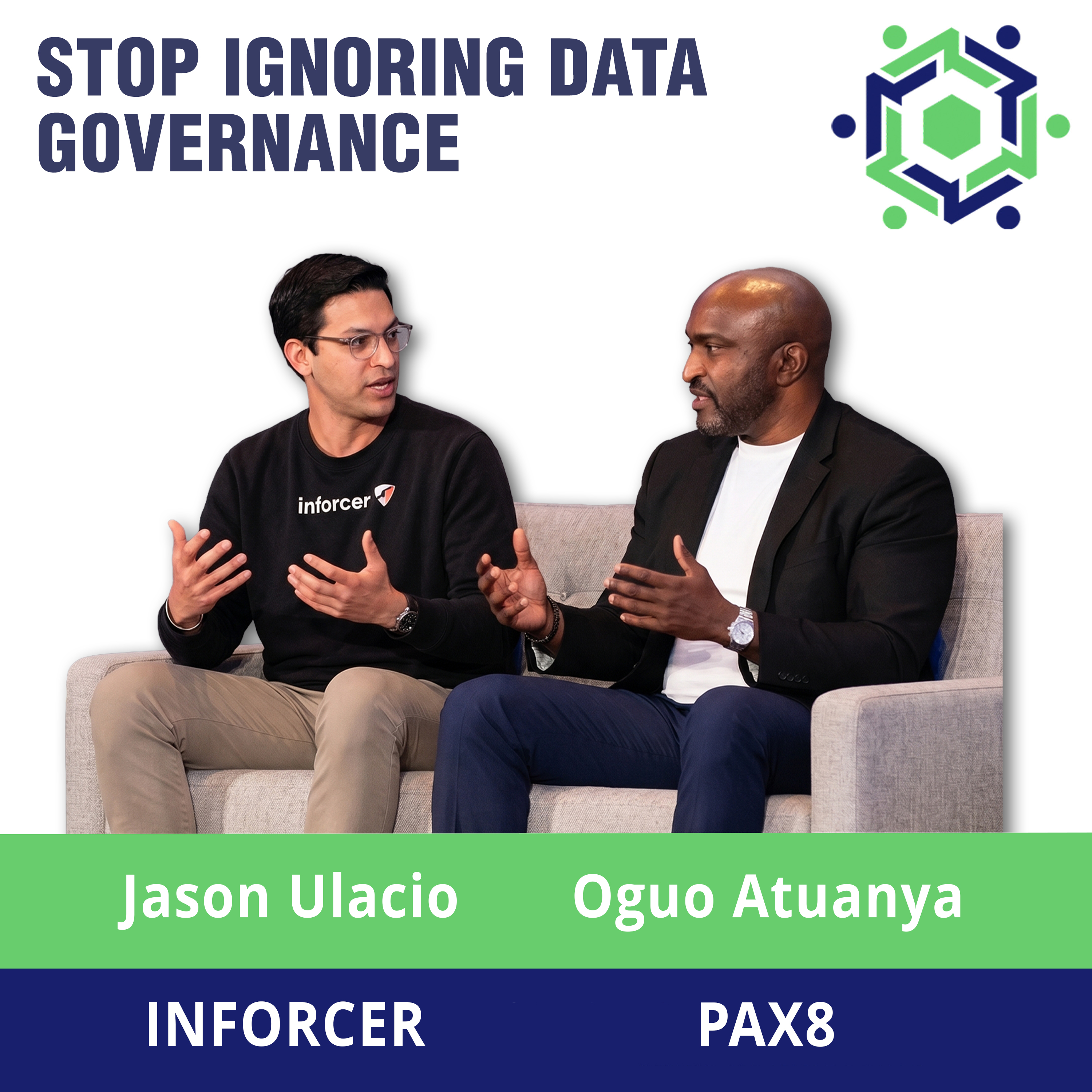
In this episode, Vince Menzione sits down with Jason Ulacio from Enforcer and Oguo Atuanya from PAX8 to discuss the critical ecosystem shift happening as MSPs transform into Managed Intelligence Providers (MIPs). They explore the hidden dangers of shadow AI running rampant in organizations, the absolute necessity of establishing solid data governance before deploying tools like Copilot, and how curated agent stores are enabling partners to drive repeatable, monetizable business outcomes for SMBs.
Key Takeaways
- The traditional MSP model must evolve into a Managed Intelligence Provider (MIP) that focuses on business consulting and driving repeatable growth for SMBs.
- Almost 100% of organizations have a “shadow AI” problem, creating massive security vulnerabilities that MSPs must immediately address.
- Before successfully deploying Copilot, organizations must lay down a foundation of data governance and security to prevent dangerous oversharing of sensitive information.
- PAX8 is bridging the SMB gap with a curated agent store that ensures agents are native to SMB needs, secure, and deliver outcome-driven experiences.
- MSPs must become “Customer Zero” by actively using and understanding AI tools internally before attempting to commercialize them for clients.
- Providing simple, baseline services like monthly shadow AI reporting is an effective first step for MSPs to build recurring revenue streams based on AI.
If you’re ready to lead through change, elevate your business, and achieve extraordinary outcomes through the power of partnership—this is your community.
At Ultimate Partner® we want leaders like you to join us in the Ultimate Partner Experience – where transformation begins.
Key Tags
Managed Intelligence Provider, PAX8, Enforcer platform, Microsoft environments, shadow AI detection, Copilot assessment, data governance, work IQ, sensitivity labels, SMB native agents, curated agent store, vendor built agent, MIP playbook, purview adoption, MFA, HIPAA compliance, F1 engine analogy, trust AI, is AI trustworthy, AI governance, AI regulation, AI compliance
Transcript
Oguo Atuanya and Jason Ulacio Audio Podcast
[00:00:00] Jason Ulacio: We are getting to the point where we ask AI questions, we ask copilot. We ask these stat questions, and we trust the answers that come back.
[00:00:10] Vince Menzione: You can feel it happening. The ecosystem is shifting beneath us, the way Hyperscalers are partnering, how AI is remaking the channel and what it means to win in 2026.
[00:00:22] Vince Menzione: Welcome to the Ultimate Partner Podcast. I’m Vince Menzi. Own your host. And each week I sit down with leaders at the intersection of technology, partnerships and outcomes. The voices shaping how ecosystems actually work. We talk about what’s real, what’s changing, and what it takes to lead in this era where the partner channel isn’t just part of the strategy.
[00:00:44] Vince Menzione: It is the strategy because being
[00:00:46] Jason Ulacio: in the room changes everything. Let’s start.
[00:00:52] Vince Menzione: This is like a Microsoft, uh, alumni meeting.
[00:00:56] Oguo Atuanya: Yes.
[00:00:56] Vince Menzione: It’s an alumni network meeting. I’m gonna have you both come on, introduce yourselves, and then we’re gonna jump into the conversations. Good to see you, my friends.
[00:01:05] Oguo Atuanya: Same here.
[00:01:06] Vince Menzione: This is so fun.
[00:01:07] Vince Menzione: Fun. Please,
[00:01:08] Jason Ulacio: please,
[00:01:11] Vince Menzione: Jason, I’ll let you go first. Yes. Welcome to the stage, ultimate Partner Stage.
[00:01:17] Jason Ulacio: Yes. Thank you. Thank you, Vince. Thank you for having us. Um, hi everyone. Jason CIO here. Um, as we view of business development at Enforcer, um, I joined Enforcer about eight months ago. Prior to that, uh, spent about nine and a half years at Microsoft, um, working with this gentleman and, and many of of the other folks, some of
[00:01:38] Vince Menzione: the other folks in the room.
[00:01:38] Vince Menzione: Yeah. Yeah, that’s awesome. And you live here locally?
[00:01:42] Jason Ulacio: Yes, yes. I’m based here, Seattle. And your
[00:01:43] Vince Menzione: company is based in the UK
[00:01:45] Jason Ulacio: And we’re headquarter in the uk, but we have a couple offices here in the US as well.
[00:01:49] Vince Menzione: Very,
[00:01:49] Jason Ulacio: very cool.
[00:01:49] Vince Menzione: And you have a bunch of people here today, so Yes. It’s so great to be here first time in the room with us and this gentleman I’ve known for a little while.
[00:01:57] Oguo Atuanya: Yes, sir.
[00:01:57] Vince Menzione: Good to. Well, you can, I’ll let you introduce yourself, but you don’t need any introductions you’ve been around for with us for a while. A gula a little
[00:02:04] Oguo Atuanya: too old.
[00:02:05] Vince Menzione: You’re not old at all. He was in the gym this morning, by the way, like four o’clock in the morning pumping iron. I’m like, I come in to do my Peloton cycle.
[00:02:13] Vince Menzione: And you’re like cranking out. Yeah.
[00:02:15] Oguo Atuanya: You are making me blush.
[00:02:16] Vince Menzione: Alright. Yeah, a little bit.
[00:02:18] Oguo Atuanya: Oh, Goya. And, um, I look after the, uh, vendor experience, uh, organization within PAX eight. So that entails, um, our engagement strategy with vendors. Um. How we go to market, how we execute in the regions, and um, how we kind of look around the corner for what’s new.
[00:02:40] Vince Menzione: Yeah.
[00:02:41] Oguo Atuanya: So, um, I’ve been with PXI now for about a year and a half. Prior to that I spent 22 years at, um, Microsoft. One of my last roles was actually, um. Fighting the SMB fight with Jose, which is how I lost all my hair.
[00:02:58] Vince Menzione: Ah, stop.
[00:03:00] Oguo Atuanya: But it’s great to be here. Great to be with all of you. Thanks for coming.
[00:03:04] Vince Menzione: Yeah. And one of those companies that Jose was referencing earlier, one of the top partners to work with for the MSP community as well.
[00:03:11] Oguo Atuanya: Yeah.
[00:03:11] Vince Menzione: Let’s talk about that for a a moment. ’cause it was about a year ago you guys hit you guys. I’m saying PAX eight hit the press. Pretty hard on, you know, this, this changing the, trying to change the terminology.
[00:03:24] Oguo Atuanya: Yeah.
[00:03:24] Vince Menzione: First there was like, we’re not the disty, we’re not, you know, re re redefining who you were and then also redefining the MSP community.
[00:03:32] Vince Menzione: Right. And you came up with a new term at that time, at, at your event last year.
[00:03:36] Oguo Atuanya: Yeah.
[00:03:36] Vince Menzione: Let’s talk about it. You call, you came up with the term managed intelligence provider, so let’s talk about that.
[00:03:41] Oguo Atuanya: Yeah. Really it just is the transformation of, um, the MSB in this. Agentic era where, you know, the MFPs have to go from just, you know, being the IT tools provider and doing a lot of break effects to actually, you know, now driving intelligence, um, driving, driving repeatable outcomes.
[00:04:11] Oguo Atuanya: And, you know. Govern deployment and, um, orchestrated, um, you know, workforce development across or, uh, uh, you know, deployment across businesses. So you are really looking at an era where the MSB now has to really understand the SMB very well. Um, they have to understand what their SMBs. Um, business model is what their growth aspirations are, where you’re now sitting and saying, okay, Mr.
[00:04:46] Oguo Atuanya: SMB, who is my customer? You want to grow x, y, Z percent in three to five years? Um, I’m coming to deploy, um, you know, the, um, you know, business infrastructure that is gonna propel that growth for you. Um, you need, um. A hundred employees, but you don’t have the wherewithal to hire a hundred employees. Right.
[00:05:12] Oguo Atuanya: So you helping them build a, a hybrid organization
[00:05:16] Vince Menzione: Yeah. With agents and other
[00:05:17] Oguo Atuanya: With agents, yeah. Um, you know, articulating exactly how you’re going to make them more productive, reduce cost, and, um, for yourself, do it in a repeat, repeatable, monetizable, you know, fashion. So that’s really what it’s all about.
[00:05:32] Vince Menzione: And really a shift from the way tech, I mean, tech, these smaller organizations were not as technology savvy years ago, but this is, it’s changed. The environment has changed considerably.
[00:05:41] Oguo Atuanya: Yeah. I mean the, the MSPs really have always known the technology, but they, you now gotta understand the business side of it.
[00:05:50] Vince Menzione: Yeah.
[00:05:51] Oguo Atuanya: You gotta become that business consultant.
[00:05:53] Vince Menzione: So what’s getting in the way and what do you do at PAX eight to close that gap? I know we, uh, you were on the podcast. I had you in the studio back in Boca in
[00:06:01] Oguo Atuanya: Yeah.
[00:06:02] Vince Menzione: February. We talked a little bit about this, but for this community, like there’s, there’s a big gap that you’re helping to close.
[00:06:08] Vince Menzione: You’re, yeah. You’re helping enable this or I’ll call it the academy, right? Is the approach.
[00:06:13] Oguo Atuanya: Yeah. Yeah. The academy is, is one of the pillars, but again, it’s what I talked about. They, they understand the technology very well. That’s all they, that’s mostly what they’ve done in the past, right. Um, but now it’s about understanding the business side.
[00:06:26] Oguo Atuanya: So, um, a lot of MSPs know what to do, they just don’t know how to do it,
[00:06:31] Vince Menzione: right.
[00:06:31] Oguo Atuanya: Um, they don’t know how to do it for their SMB customers, so that’s where PAX eight comes in. We’ve got, um, a very prominent enablement infrastructure. I mean, we’ve got the MIP playbook, which, you know, gives you sort of a curriculum driven step by step way of how do you transform from being an MSP to an MIP.
[00:06:52] Oguo Atuanya: We’ve got academy that you talked about.
[00:06:54] Vince Menzione: Yes.
[00:06:55] Oguo Atuanya: Right. Which is essentially university on how to do that. And then we’ve got guided growth, which is a, a targeted, um, um, uh, again, vehicle to drive those changes in the particular, um, scenario or a vertical that your customer might wanna go in. Right. So the infrastructure is one thing, the enablement is actually, um, a big core of it.
[00:07:23] Vince Menzione: The skilling is what Jose was just talking about earlier. Exactly. Is up here. It’s exactly what you’re doing here in your driving. Jason, where do you see it? Where do you see from the enforcer side and where do you see partners stuck today?
[00:07:33] Jason Ulacio: So what we see often is, um, at enforcer, by the way, we work primarily with MSPs.
[00:07:40] Jason Ulacio: Um, so we’re a platform that helps MSPs manage their Microsoft environments at scale. Um, and what we see often is many MSPs, they don’t really know where to start, right? They see AI as a big buzz word. Um, but there’s, they struggle to go and build and commercialize an AI practice with their customers, right?
[00:08:04] Jason Ulacio: Like the like. It’s all good and well to sort of sell co-pilot to your customer. But most of the MSPs you’ll work with out there, their bread and butter is build a managed service and commercialize a managed service out of that platform. Right. And so the sort of, I would say baby steps that we give them or we see, like, we see ’em get stuck, stuck sort of not knowing where to start and the the baby steps we help them with.
[00:08:29] Jason Ulacio: Um, Jose kind of talked a little bit about this. You know, first is. Help those customers understand where AI is already being used in their environment, right? So over 90% of SMBs and and organizations out there. Already using ai. Your employees are using ai whether you like it or, or know it or not. And, and it is a good thing, right?
[00:08:51] Jason Ulacio: It’s because AI is making them more productive, et cetera, et cetera. But one of the things we do is we provide the MSPs with shadow AI detection solution. So for any customer that you have an enforcer, we will give you sort of visibility into what are all the shadow AI products, and for, for our sake.
[00:09:10] Jason Ulacio: When you start shadow AI as anything that’s not copilot, but you can kind of white list things, other products in that this customer, um, allows, but it gives you the ability to, one, show this customer what is all the AI usage that’s happening in their environment? How much data is being put in, and just give them that visibility.
[00:09:26] Jason Ulacio: Once they have the visibility, you can then start a conversation about controlling and managing them, right? So you use tools like Defend of our cloud and block access to certain things that you think are particularly risky and so on, depending on that customer’s risk appetite. And then once you’ve done that, then you really start triggering towards like, okay, how do we help you deliver value on top of this?
[00:09:48] Jason Ulacio: Right? It’s training people, giving them prompt training, starting to deliver and building those agents for different use cases and so on. Well, that’s kind of the roadmap that we, we provide, and it all starts kind of from the visibility that control and management. And then as an MSP, you start building value on that and there’s points for projects, for managed services and sort of revenue opportunities across the
[00:10:10] Vince Menzione: board.
[00:10:10] Vince Menzione: I’m intrigued. What do you think the percentage of organizations that had this shadow IT problem is?
[00:10:16] Jason Ulacio: Oh,
[00:10:17] Vince Menzione: almost
[00:10:17] Jason Ulacio: every organization I say it’s pretty much like a hundred percent.
[00:10:19] Vince Menzione: Yeah. And how many are addressing it with an enforcer?
[00:10:22] Jason Ulacio: So we have about, yeah. Oh, how many are addressing that with enforcer today?
[00:10:27] Jason Ulacio: So we have about 1200 MSPs that work with us. Okay. Those MSPs are managing, um, upwards of 60,000 SMBs on the platform. Um, we, the co-pilot manager and Saudi AI solution that we, we launched. Um, is very new. We actually just launched it this month in ga. Nice,
[00:10:47] Vince Menzione: nice.
[00:10:47] Jason Ulacio: Um, but it’s available in the platform for everyone that, that is a customer.
[00:10:51] Jason Ulacio: Um, so yeah, we’re, we’re hoping to see every, all of our customers leverage that.
[00:10:56] Vince Menzione: Yeah. It, it, the risk is incredible. I just think about taking the, you know, the company’s jewels, basically all the information about the organization. ’cause we use it right where you start. We, we wanna find out the answers, like, how do we grow our business?
[00:11:08] Vince Menzione: And you’re taking, you’re compromising the organization by doing this, and this is what organization, this is to me, is the biggest risks with ai. Would you agree? Yeah, yeah,
[00:11:17] Oguo Atuanya: yeah.
[00:11:17] Vince Menzione: Let’s talk about, let’s talk about AI a little bit though. Walk us through, yeah. Like I want to talk about, you have an agent store, right?
[00:11:23] Vince Menzione: Outcome based solutions.
[00:11:24] Oguo Atuanya: Yeah.
[00:11:25] Vince Menzione: Let’s talk about this curated agent store.
[00:11:27] Oguo Atuanya: Yeah. So what we’ve done with our agent store is, is to make sure that. The, the agents that we actually put in the store. Uh, SMB native agents. Right. So ’cause
[00:11:43] Vince Menzione: And what does that mean?
[00:11:44] Oguo Atuanya: What that means is that you see a lot of instances where folks say they have an agent store that caters to SMB, but you go into the store and these agents are really Enterprise agents.
[00:11:56] Oguo Atuanya: Enterprise agents, okay. That have been tried to, um. You know, force fit into serving SMB, kind of like a hand me down.
[00:12:04] Vince Menzione: Yeah. Yeah.
[00:12:05] Oguo Atuanya: So we have a curation
[00:12:07] Vince Menzione: Okay.
[00:12:07] Oguo Atuanya: Uh, process. And, and there are three elements to that, right? So it’s curating the supply.
[00:12:15] Vince Menzione: Okay.
[00:12:15] Oguo Atuanya: Which is, you know, who do we talk to? Um, what do they do?
[00:12:20] Oguo Atuanya: Not what the technology is all about, but what do they do? Is it the ideal profile, right? For um. Um, SMB, and, and there, there, there are three prongs to that. There is, you know, the first one, which is the vendor built agent, for lack of better term, like a fully packaged product. Yeah, it’s vendor built, put in store and yeah.
[00:12:44] Oguo Atuanya: And then there is also the, um, the parts Built Start, which is sort of a reference platform for. Folks to build on. And then so they
[00:12:52] Vince Menzione: can build, they can build something that’s more s and b focused.
[00:12:55] Oguo Atuanya: Yeah. And then there is a community or partner. Okay. You know, built, which is, you know, uh, in a curated fashion, uh, uh, uh, sourced from ecosystem to put on the store.
[00:13:06] Oguo Atuanya: Right. So we, we, we wanna make sure that it’s, it’s, it’s there serving precise needs and, um, you know, very easy to deploy and use. And then there is a trust. Element of it, which means that everything that we curate and deploy into the store has a security foundation. Right. Because we are now kind of the trust brokers you
[00:13:30] Vince Menzione: Yeah,
[00:13:30] Oguo Atuanya: exactly.
[00:13:30] Oguo Atuanya: Yeah. So it’s the trust. It’s gotta be that way. And then there there’s the experience element of it, which is, um, again, it’s gotta, it’s gotta be outcome driven. It’s gotta absolutely do what it’s supposed to do. Right. So that people get, you know, satisfaction and derive value from what they’ve, you know, purchased to use.
[00:13:50] Oguo Atuanya: So that’s how we kind curate this.
[00:13:53] Vince Menzione: Nice, well, it makes, it makes total sense. Jason, I wanna talk a little bit more about enforcer too. It seems like you’ve published a practical guide for MSPs. Mm-hmm. Um, becoming manager. I, I find like you’re following similar themes here, like how do you help these organizations to follow the path?
[00:14:10] Vince Menzione: That is SMB focus, uh, ’cause everybody’s moving in this direction. Uh, so talk, talk to us through this. Why walk us through it and why?
[00:14:20] Jason Ulacio: Yeah. So I mean, in, in the conversation we’re just having where people are trying to, to of figure out how they monetize, et cetera, et cetera. One of the big challenges and, and risks involved, you just, you know, called out the, the risks earlier is like.
[00:14:37] Jason Ulacio: AI is like giving someone a, a normal driver, a Dayto Day driver like me, an F1 car.
[00:14:44] Vince Menzione: Yeah.
[00:14:44] Jason Ulacio: With I love that. My Toyota
[00:14:47] Vince Menzione: brakes. We just had my, we just had Miami last week, by the way.
[00:14:49] Jason Ulacio: Yeah, yeah, exactly. It was like you gave me, you gave me an F1 engine, but the brakes are still the same. Toyota brakes, uh, of my car and like without proper, uh, going through the proper data governance and security.
[00:15:05] Jason Ulacio: Um, work in advance. Really what you’re doing is you are exposing one, what I would call almost like decision risk, right. The, the, Jose was talking about this earlier as well. The, the main differentiator between copilot and the other platforms that you use out there. Is that copilot has what they call work iq, which is it.
[00:15:28] Jason Ulacio: It is, it has access, it lives within your tenant, it has access to all of your Microsoft data, the data in your tenants, et cetera, understands it. And then the other piece is it follows the same security policies, access controls, et cetera, et cetera, that you set for your organization Now. If your SharePoint and data stack is a mess and your security policy and posture is non-existent, guess what’s the copilot outcomes are gonna be?
[00:15:58] Jason Ulacio: And so what ends up happening is, and
[00:15:59] Vince Menzione: then the risk of knowing, Hey, how much does the CEO make?
[00:16:03] Jason Ulacio: Yeah, exactly. That
[00:16:03] Vince Menzione: information is out in the open.
[00:16:04] Jason Ulacio: Like you find, you find a couple risks that are particularly prevalent. One oversharing. Yeah. What you just called out, right? Like, you know. Someone can access HR files for, you know, HR complaints or, you know, salaries or things like that.
[00:16:21] Jason Ulacio: The other risk is more, I would call it almost decision risk, which is, you know, we are getting to the point where we ask AI questions, we ask copilot, we ask these stat questions, and we trust the answers that come back.
[00:16:35] Vince Menzione: Yes.
[00:16:35] Jason Ulacio: And so we might be getting fooled by data that is stale, data is bad, et cetera, et cetera.
[00:16:41] Jason Ulacio: Yeah. And obviously the third one is things like compliance risk, et cetera, et cetera. Right? Like if you are. You know, a hipaa, um, regulated organization that you suddenly fall, um, into out of compliance with certain policies because, you know, your employees put, uh, customer data, um, uh, HIPAA compliant data into a system that is not contained and controlled and you don’t know where that went.
[00:17:06] Jason Ulacio: Right. Not
[00:17:06] Vince Menzione: following HIPAA policies.
[00:17:08] Jason Ulacio: Exactly. Yeah. Um, and then all the rest of them might come from that. So, you know, those are. Some of the things that can happen if you don’t go through this journey first of laying down a foundation of data governance and security. Um, so we, we see this as essential and it’s what we try to lay out with those copilot ssessment.
[00:17:27] Jason Ulacio: So you do it as
[00:17:28] Vince Menzione: guidelines or do you also do it through software? How do you like guardrails around it as well?
[00:17:32] Jason Ulacio: The way, the way we do it is actually we have an assessment engine. Um, we, we actually, we started with a security assessment engine that would just look at your customer’s environment or at a customer’s environment and be able to track all the different security policies and things that they had in there and show you what’s active, what’s not.
[00:17:50] Jason Ulacio: Okay. And then based on a recommended best practice standard, what you should be doing. We layered, um, the M 365 usage data on top of that Okay. To then look at, so based on that. We’re the top candidates for copilot, uh, and sort of who, who should be getting copilot? Who should, who’s your power user to go talk to?
[00:18:09] Jason Ulacio: What are the then security policies that you should implement? And then what work you should do from a data governance perspective? Like this SharePoint site is stale. No one’s using it. Remove access to that from copilot and so
[00:18:20] Vince Menzione: on. Do you, do you see a common set of themes like gaps? What are the most common gaps that you see?
[00:18:25] Jason Ulacio: The, so the gaps that you most often see, um, are, you know, low adoption of, of purview, right? So, okay. Documents don’t have things like sensitivity labels assigned to them, and therefore. You know, when things that are highly confidential suddenly are at risk of appearing Yeah. In a search result when things Right.
[00:18:47] Jason Ulacio: That’s, um, yeah. So think things like purview, things like, um, now to be fair, other basic things like, you know, people don’t have MFA turned on. Yeah. Um, show up. So we, we go back to some of the basics, but from an A perspective, the most common ones are things from purview.
[00:19:08] Vince Menzione: So you’ve been on this journey now for a while ago with this MSP to MIP model. What is the Ms, the MIP of, of this year or in the future look like?
[00:19:20] Oguo Atuanya: Um, it, it, it, again, it looks like an outfit that’s actually looking at this as, um, a business model.
[00:19:28] Vince Menzione: Yeah.
[00:19:28] Oguo Atuanya: Transformational management for their SMBs. Right. So.
[00:19:35] Oguo Atuanya: Um, again, you’re starting with the outcome in mind and then, um, um, ensuring that you are building, um, an approach that’s repeatable. Um, the governed deployment, you have to treat this as a very serious endeavor. It’s no longer just instances of, um, experiments and hobby, you know, experiences, right? Yeah.
[00:20:03] Oguo Atuanya: It’s a project. Then it’s, it’s, it’s ongoing. Um, and then you, yourself, you gotta think about your monetization, right? So that’s, that’s what an MSP, you know, of the future, uh, looks like. And it’s so much opportunity out there. Um, the, the enablement, not just for more the MSPs, but MSPs to, um, the SMB. Very critical.
[00:20:30] Jason Ulacio: Yeah.
[00:20:30] Oguo Atuanya: And, and it’s really just helping the SMBs manage their business to growth. That’s when you’ve crossed that path,
[00:20:38] Vince Menzione: that’s when you’ve crossed the chasm. Yes. That’s when you become, truly become an MMIP When you, when you’ve moved out of kind of just doing the, I’ll call it running, cranking the wrench kind of thing.
[00:20:48] Oguo Atuanya: And to be fair, there a bunch of, um, folks that are there right now. Um, but really to fully cross that path. And you’re now going from that, you know, tools, orchestrator and, um, a provider to a strategic, you know, business consultant and advisor to your SME. Yeah.
[00:21:12] Vince Menzione: Jason, what do you see from the best of the best?
[00:21:14] Vince Menzione: Like, what are the ones that have made the transitions?
[00:21:17] Jason Ulacio: What we see from the ones that have made the transition? Is they have gone through that journey that we just shared of helping their customers sort of with a governance and security layer, deploy out like co-pilot. And now they’re starting to helping them manage that.
[00:21:36] Jason Ulacio: So they’re helping looking around sort of, are people actually using Copilot? Who’s using copilot the most, identifying champions and helping sort of drive usage around those champions, helping them train other people in the organization. And then almost like. Earning the right to go have the conversations with their customers around agents, right?
[00:21:56] Jason Ulacio: And how to further embed themselves as an MSP in the business of their customers because it, it is a transition from moving of outsource IT provider to a consultant, uh, a s and a, a a business partner that is fully embedded in the business. You kinda need to get to that point. To actually build agents and workflows and things that are productive.
[00:22:20] Jason Ulacio: Um, and there’s not many that are at that point yet, but that is the MIP journey that I think we’re taking on. We’ve
[00:22:27] Vince Menzione: got, we’ve got MSPs in the room today. What should they go do better or different? Right. And I wanna open up, we have a few minutes for questions. We have about four extra minutes. Um.
[00:22:38] Oguo Atuanya: I would say first and foremost, become that customer Zero.
[00:22:42] Vince Menzione: Customer zero.
[00:22:42] Oguo Atuanya: Yeah. Use it like yourself. Become that customer. Zero. Yeah.
[00:22:46] Vince Menzione: It’s huge.
[00:22:46] Oguo Atuanya: Understand how it works. And then secondly, pick on one thing, you know, pick on one thing. Um, could be one vertical, it could be one outcome. You know, get really good at it. Make it repeatable. Then you can scale from there.
[00:23:03] Vince Menzione: Yeah. Get the flywheel.
[00:23:05] Oguo Atuanya: Yes. The
[00:23:05] Vince Menzione: flywheel fly. Yeah. Jason,
[00:23:09] Jason Ulacio: I would say under the assumption here that we’re, we’re, we’re gonna focus on the, on the Microsoft stack.
[00:23:15] Vince Menzione: Yeah.
[00:23:16] Jason Ulacio: It’s give your customer that visibility from a shadow eye perspective. Show them that this is being used in their environment. Yeah. If they’re not ready to pay for copilot, get them started on copilot chat.
[00:23:27] Jason Ulacio: Show them the value that you can provide them from a. Training, security, data management, um, and then just get them on that journey. You know, figure out how do I now offer you a service? Um, it can start as simple as monthly reporting, right on what is happening. And trust me, the CEOs currently are very intent and care about, you know, what is happening?
[00:23:51] Jason Ulacio: How are my, how are my employees leveraging AI or not? Are they actually maximizing the roi? So it could be something as simple as. You know, either free or charge monthly reporting that you provide to your customer and get on that journey to build an actual, repeatable, recurring revenue business based on AI and AI services.
[00:24:13] Vince Menzione: Very insightful. Very insightful. We’ve got two extra minutes. I want to open it up if there’s any questions We.
[00:24:27] Jason Ulacio: Don’t be shy. It was after lunch.
[00:24:29] Vince Menzione: It was, we’re getting, we’re getting that, that like, that lull after lunch thing, Donna. So it looks like we’re ready for a break then, I guess, right? Yeah.
[00:24:37] Jason Ulacio: Yes
[00:24:37] Vince Menzione: sir. Well, thank you. Thank you so much for your support. Thank great to have you. You’ve got your big event coming up, so if people aren’t signed up already Yeah.
[00:24:45] Vince Menzione: Beyond event
[00:24:46] Oguo Atuanya: this coming up, uh, June 7th tonight.
[00:24:49] Vince Menzione: Yep.
[00:24:49] Oguo Atuanya: Um.
[00:24:51] Vince Menzione: It’s,
[00:24:51] Oguo Atuanya: it’s, I think there would be a lot to hear about.
[00:24:53] Vince Menzione: Yeah. Yeah. We’ll
[00:24:54] Jason Ulacio: be
[00:24:54] Vince Menzione: there
[00:24:54] Jason Ulacio: as
[00:24:54] Vince Menzione: well.
[00:24:54] Jason Ulacio: There might
[00:24:55] Vince Menzione: be some
[00:24:55] Jason Ulacio: other
[00:24:55] Vince Menzione: announcements happening, probably. It’s usually quite the event, so I’m excited to
[00:25:00] Oguo Atuanya: join
[00:25:00] Jason Ulacio: you. Yeah, yeah.
[00:25:01] Oguo Atuanya: Looking forward
[00:25:01] Jason Ulacio: to
[00:25:01] Oguo Atuanya: see everybody.
[00:25:02] Oguo Atuanya: Yeah.
[00:25:02] Vince Menzione: All right, great. Yeah. Thank you all it for joining us. Thank you
[00:25:05] Oguo Atuanya: so much.
[00:25:06] Vince Menzione: Thanks for listening to The Ultimate Partner Podcast. If today’s conversation resonated, share it with a partner leader in your network. Subscribe where you listen, and head over to the ultimate partner.com. For show notes related content and the resources for this episode.
[00:25:23] Vince Menzione: And if you haven’t already, now’s the time to register for the Ultimate Partner Live Event in Reston, Virginia, October 26th through October 28th. Until next time, keep showing up in the rooms that matter because being in the room changes everything
[00:25:41] I.
Get every episode summarized
Each time Ultimate Guide to Partnering® publishes, we email you a written briefing from the transcript — the topics, who appeared, and any specific claims, with the ad reads skipped.
Email me new episodesFree for 3 shows. No card needed.
Hosts & guests
Transcript ready
251 searchable segments. Every word is indexed and playable.
Full transcript
Ultimate Guide to Partnering® — 313 – Missing the Copilot Boom? How Top MSPs Are Monetizing AI Now. Machine-transcribed; use the interactive transcript above to jump the player to any line.
We are getting to the point where we ask AI questions, we ask Popeye, we ask these sad questions, and we trust the answers that come back. You can feel it happening. The ecosystem is shifting beneath us. The way hyper-scalers are partnering, how AI is remaking the channel, and what it means to win in 2026. Welcome to the Ultimate Partner Podcast. I'm Vince Menzione, your host. And each week I sit down with leaders at the intersection of technology, partnerships, and outcomes. The voice is shaping how ecosystems actually work. We talk about what's real, what's changing, and what it takes to lead in this era, where the partner channel isn't just part of the strategy, it is the strategy. Because being in the room changes everything. Let's start. This is like a Microsoft alumni meeting. Yes. It's an alumni network meeting. I'm going to have you both come on, introduce yourselves,
and then we're going to jump into the conversation. It's good to see you, my friends. I'm here. This is so much fun. Please, please. Jason, I'll let you go first. Yes, welcome to the stage. You're helping the partner stage. Yes. Thank you. Thank you, Vince. Thank you for having us. Hi, everyone. Jason O'Lassio here. As we view of business development at Enforcer, I joined Enforcer about eight months ago prior to that, I spent about nine and a half years at Microsoft. We're going to this gentleman and many of the other folks in the room. Yeah, it's awesome. I love your local. Yes, yes, and basically in your company is the ICO. Jason to UK. We're headquartered in the UK, but we have a couple offices here in the US. It's very cool. You have a bunch of people here today. Yes. It's a great day. First time in the room with us. This gentleman I've known for a little while. I'll let you introduce yourself, but you don't need any introductions. You've been around for a while. A good one. A little too old.
You're not old at all. He was in the gym this morning, by the way. Like four o'clock and four o'clock. I'm not tired. I'm like, I come in to do my peloton cycle. And you're like cranking out. You're making me blush. All right. Yeah, I a little bit. A good one. I look up at the vendor experience organization within Pax 8. So that entails our engagement strategy with vendors. How we go to market. How we execute in the regions. And how we kind of look around the corner for what's new. So I've been with Pax 8 now and four by the year and a half. Prior to that, I spent 22 years at Microsoft. One of my last rules was actually fighting the SMB fight with Jose, which is how I want to stole my hair. But it's great to be here. Great to be with all of you. Thanks for coming. Yeah. And one of those companies that Jose was referencing earlier,
one of the top partners to work with the MSP community as well. Let's talk about that for a moment because it was about a year ago. You guys hit you guys. I'm saying Pax 8 hit the press. Pretty hard on this changing, the trying to change the terminology. First, there was like we're not the DISD. We're not, you know, redefining who you are. And then also redefining the MSP community, right? You came up with a new term at that time and your event last year. Yeah. Let's talk about it. You came up with your managed intelligence provider. So let's talk about that. Yeah. Really, it just is the transformation of the MSP in this agentic era where, you know, the MSPs have to go from just, you know, being the IT tools provider and doing a lot of break facts to actually, you know, now driving intelligence, driving repeatable outcomes and, you know,
govern deployment and orchestrated, you know, workforce development across, you know, deployment across businesses. So you're really looking at an era where the MSP now has to really understand that SMB very well. They have to understand what their SMB's business model is, what their good aspirations are. We're now sitting and saying, okay, Mr. SMB, who's my customer, you want to grow XYZ percent in three to five years. I'm coming to deploy, you know, the, you know, business infrastructure that is going to fulfill that growth for you. You need 100 employees, but you don't have the world with all to hire 100 employees. So you're helping them build a hybrid organization with agents and agents, you know,
articulate and exactly how you're going to make them more productive, reduce cost, and for yourself, do it in a repeatable monetizable, you know, fashion. So that's really what it's all about. And really a shift from the way tech, I mean, these smaller organizations were not as technology savvy years ago, but this is, it's changed, the environment has changed considerably. Yeah, I mean, the MSPs really have always known the technology, but you now got to understand the bit on the side of it. Yeah, got to become a tourist consultant. So what's getting in the way and what do you do at PAX 8 to close that gap? I mean, you were on the podcast, I had you in the studio back in Boken. Yeah, that'd be where we talked a little bit about this, but for this community, like there's, there's a big gap that you're helping to close, you're helping enable this. So they called the Academy, right? Is the approach? Yeah, yeah, Academy is one of the pillars, but again, it's what I talked about. They understand the technology very well. That's all they've, that's mostly what they've done in the past, right? But now it's
about understanding the business like. So a lot of MSPs know what to do, they just don't know how to do it, right? They don't know how to do it for their SMB customers. So that's where PAX 8 comes in, we've got a very prominent enablement infrastructure. I mean, we've got the MIP Playbook, which gives you sort of a curriculum driven step by step way of how do you transform from being on the speed to on MIP. We've got Academy that I've talked about, right? Which essentially university on how to do that. And then we've got guided growth, which is a targeted, again, vehicle to drive this changes in the particular, each scenario or vertical that your customer might want to go away, right? So the infrastructure is one thing, the enablement is actually a big core of it. The scaling is what Jose was just talking
about earlier. It's up here. It's exactly what you're doing in your driving. Jason, where do you see it? Where do you see from the enforcement side and where do you see partners stuck today? So what we see often is, at Enforcer, by the way, we work primarily with MSPs to a platform that helps MSPs manage their Microsoft environments at scale. And what we see often is many MSPs, they don't really know where to start. They see AI as a big bus word, but they struggle to go and build and commercialize in AI practice with their customers. It's all good and well to sort of sell Copilot to your customer, but most of the MSPs you'll work with out there, their bread and butter is build and manage service and commercialize them and service out of that platform. And so the, I would say, baby steps that we give them, we see them get stuck, sort of not knowing where to start. And
the baby steps we help them with. Jose kind of talked a little bit about this. First, is help those customers understand where AI is already being used in their environment. So over 90% of SMBs and organizations out there are already using AI. Your employees are using AI, whether you like it or know it or not. And it is a good thing, right? It's because AI is making them more productive, et cetera, et cetera. But one of the things we do is we provide the MSPs with shadow AI detection solutions. So for any customer that you have an enforcer, we will give you sort of visibility into what are all the shadow AI products. And for our sake, when you start shadow AI as anything that's not Copilot, but you can go to whitelist things, other products in that this customer allows. But it gives you the ability to one show this customer what is all the AI usage that's happening in their environment, how much data is being put in and just give them that visibility. Once they have the visibility, you can then start a conversation about controlling
and managing them, right? So you use tools like Defender for Cloud and block access to certain things that you think are particularly risky. And so on, depending on that customer's risk appetite. And then once you've done that, then you really start triggering towards like, okay, how do we help you deliver value on top of this, right? It's training people, given them prompt training, starting to deliver and building those agents for different use cases and so on. Well, that's kind of the roadmap that we provide. And it all starts kind of from the visibility, the control and management. And then as an MSP, you start building value on that. And there's points for projects, for managed services and sort of revenue opportunities across the country. I'm intrigued. What do you think the percentage of organizations that had this shadow IT problem is? Oh, I would say it's more than 100%. Yeah, and how many are addressing it with an enforcer? So we have about, yeah, oh, how many are addressing that would enforce it today? So we have about 1200 MSPs that work with us.
Those MSPs are managing upwards of 60,000 SMBs on the platform. We, the Co-Pilot Manager and Chaudy-I solution that we launched is very new. We actually just launched this month in GA. But it's available in the platform for everyone that is a customer. So yeah, we're hoping to see all of our customers leverage that. Yeah, the risk is incredible. I just think about taking the company's jewels, basically, all the information about the organization. Because we use it, right? We start, we want to find out the answers. Like how do we grow our business? And you're taking your compromising the organization by doing this. And this is what we're going to see. This is to me is the biggest risks with AI. Do you agree? Yeah. Let's talk about AI a little bit. Walk us through. Yeah, like I want to talk that you have an agent store, right? Alconvated solutions. Yeah. Let's talk about this curated agent store. Yeah. So what we've done with our agent store is to make sure that the agents that
we actually put in the store, SMB native agents, right? So what does that mean? What that means is that you see a lot of instances where folks say they have an agent store that caters to SMB, but you're going to the store. And these agents are really enterprise agents that have been tried to force fit into serving SMB kind of like hand me down. Yeah. So we have a curation process and the three elements to that. So it's curating the supply, which is who do we talk to? What do they do? Not what the technology is all about, but what you do is it ideal profile for SMB. And they're three prompts to that. The first one which is the vendor built agent,
lack of better term, like a fully packaged product. Yes. vendor built in the store. And then there is also the the Paxid build starter, which is sort of a reference platform for folks to build them. So they can build something as more SMB focus. And then there is a community or partner built, which is in a curated fashion store as a source from ecosystem to put on the store. Right. So we want to make sure that it's it's there serving precise means and you know very easy to deploy and use. And then there is a trust element of it, which means that everything that we curate and deploy into the store has a security foundation. Right. Because we are now kind of the trust broker. Yeah. Yeah. So it's got to be that way. And then there is an experienced element of it, which is again, it's got to it's got to be out come driven. It's got to absolutely do what
it's supposed to do. Right. So that people get satisfaction and derive value from what they you know, purchase to use. So that's how it kind of curates. Nice. Well, it makes it makes total sense. Jason, I want to talk a little bit more about enforcer to you. Seems like you've published a practical guide for MSPs, becoming management. I find like you're following similar themes here like how do you help these organizations to follow the path that is SMB focus because everybody's moving in this direction. So talk to us through this. Why walk us through it and why? Yeah. So I mean, in the conversation we're just having where people are trying to figure out how they monetize this. That's that are one of the big challenges and risks involved. You just you know, called out the the risks earlier is like AI is like giving someone a normal driver a day-to-day driver like me and F1 car. Yeah. I love that. My Toyota brakes. We just had my amy last week,
by the way. Yeah, yeah, exactly. It was like you gave me you gave me an F1 engine, but the brakes are still the same Toyota brakes of my car. And like without proper going through the proper data governance and security work in advance, really what you're doing is you're exposing one what I would call almost like decision risk. Jose was talking about this earlier as well. The the main differentiator between co pilot and the other platforms that you use out there is that co pilot has what they call work IQ, which is it is it has access and lives within your tenant has access to all of your Microsoft data that data or tenants etc as it understands it. And then the other piece is it follows the same security policies access controls etc etc that you set for your organization. Now if your share point and data stack is a mess and your security
policy and posture is non-existent, guess what's the co pilot outcomes are going to be. And so what ends up happening is the risk of knowing how much does CEO make? Yeah, information is out in the open. Like you find you find a couple risks that are particularly properly one over sharing. What do you just call that right? Like you know someone can access HR files for you know, HR complaints or salaries or things like that. The other risk is more I would call it almost decision risk, which is you know we are getting to the point where we ask AI questions, we ask co pilot we ask these chat questions and we trust the answers that come back. And so we might be getting fooled by data that is stale, data is bad etc etc. I know obviously the third one is things like compliance risk etc etc. Right? Like if you are you know a HIPAA regulated organization that you suddenly fall out of compliance with certain policies because
you know your employees put customer data, HIPAA compliant data into a system that is not contained in control. They even know where that went out of the power and hit the policies. Exactly. And I know the risk that might come from that. So you know those are some of the things I can happen if you don't go through this journey first of laying down the foundation of data governance and security. So we see this as essential and what we try to lay out with those co pilot readiness assessors. So you do it as guidelines. So you also do it through software. How do you like do the bar rails around it as well? The way we do it is actually we have an assessment engine. We actually we started with a security assessment engine that would just look at your customers environment or at a customer's environment and be able to track all the different security policies and things that they had in there and show you what's active, what's not. And then based on a recommended best practice standard what you should be doing. We layered the M365 usage data on
double that. So then look at so based on that we're the talk end of this for co pilot and sort of who should be getting co pilot who should who's your power user to go talk to. What are the then security policies that you should implement. And then what work you should do from a data governance perspective is like this show point side is fail. No one's using it. We move access to that from co pilot and so on. Do you see a common set of themes like gaps? What are the most common gaps that you see? The gaps that you most often see are low adoption of per view. So documents don't have things like sensitivity labels assigned to them. And therefore when things that are highly confidential suddenly are at risk of appearing in search result when things accept. Yeah. So things like per view, things like to be fair, other basic things like people don't have MFA turned on.
Show up until we go back to some of the basics but from a namp perspective the most common ones are things where I'm per view. So you've been on this journey now for a while. I'll go with this MSP to MIP model. What is the MSP of this year or in the future look like? It again it looks like an outfit that's actually looking at this as a business model. Transformation and management for their SMBs. So again you start with the outcome in mind. And then you're ensuring that you're building an approach that's repeatable. The government deployment you have to treat this as a very serious endeavor. It's no longer just instances of experiments and hobby experiences, right? It's a project and then it's ongoing.
And then you yourself got to think about your monetization. So that's what an MSP of the future looks like. It's so much opportunity out there. The enablement not just for more CDMSPs but MSPs to the SMB is very critical. And it's really just helping the SMBs manage their business to growth. That's when you cross the cas and that's when you become truly becoming a MIP. When you've moved out of kind of just doing the accolade and running crank and the ranch kind of thing. And to be fair, a bunch of folks that are there right now, but really to fully cost that present, you know, going from that to orchestrator and provider to a strategic, you know, business consultant and advisor to your SMB.
Jason, what do you see from the best of the best? Like what are the ones that have made the transitions? What we see from the ones that have made the transition is they have gone through that journey that we just shared of helping their customers sort of with a governance and security layer deploy a co-pilot. And now they're starting to helping them manage that. So they're helping looking around to are people actually using co-pilot? Who's using co-pilot the most? Identifying champions and helping sort of drive usage around those champions helping them train other people in the organization. And then almost like earning the right to go have the conversations with their customers around agents, right? And how to further embed themselves as an MSB in the business of their customers. Because it is a transition from moving outshores IT provider to a consultant and a business partner that is fully embedded in the business. You kind of need
to get to that point to actually build agents and workflows and things that are productive. And there's not many that are at that point yet. But that is the MIP journey that I think we're taking on. We've got MSPs in the room today. What should they go do better or different? And I want to open up. We have a few minutes for questions. We have about one extra minutes. I would say first and foremost, become that customer zero. That's my zero. Yeah. Use it when you're still. Come back customer zero to understand how it works. And then secondly, pick on one thing. You know, pick on one thing. Could be one vertical. It could be one outcome. You know, get really good at it. Make it repeatable. Then you can scale from there. Good flywheel. Yeah. I would say, under DSM-Chan here, that we're going to focus on the on the Microsoft stack.
It's give your customer that visibility from a shadow-eye perspective. Show them that this is being used in their environment. If they're not ready to pay for, Kopala get them started on Kopala chat. Show them the value that you can quite them from a training security data management. And then just get them on that journey. Figure out how do I now offer you a service? It can start as simple as monthly reporting. Right? On what is happening? Trust me, the CEOs currently are very intent and care about, you know, what is happening? How are my employees leveraging AI or not? Are they actually maximizing the ROI? It could be something as simple as, you know, either free or charge monthly reporting that you provide to your customer and get on that journey to build an actual repeatable recurring revenue business based on AI and AI services. Very insightful. Very insightful. We've got two extra
minutes. I want to open it up. If there's any questions, we... Don't be shy. It was after lunch. We're getting that like that low-after lunch thing going on. It looks like we're ready for a break then, I guess, right? Yeah. Well thank you. Thank you so much for your support. Thank you. You've got your bigger bank coming up. So people are signing up around the end of it. You're on this coming up June 7th tonight. Yep. It's going to be a lot to hear about. Yeah, yeah. It might be some other announcements happening here. Yeah, probably. It's usually quite the event, so I'm excited to hear. Yeah, we're looking forward to it. Yeah, all right. Great. Yeah. Thank you all for joining us. Thank you so much. Thanks for listening to the Ultimate Partner by Guest. If today's conversation resonated, share it with a partner leader in your network. Subscribe where you listen and head over to
theultimatepartner.com for show notes related content and the resources for this episode. And if you haven't already, now's the time to register for the Ultimate Partner Live event in Rest in Virginia, October 26th through October 28th. Until next time, keep showing up in the rooms that matter because being in the room changes everything.
More episodes
More from Ultimate Guide to Partnering®

312 – AWS Partners Unlock the Proven Path From AI Pilots to Profit
Ultimate Guide to Partnering®

311 – Why Deals Aren’t Falling From the Sky in Your Marketplace
Ultimate Guide to Partnering®
310 – Why Sticking to a 3-Year Plan Will Destroy Your Business
Ultimate Guide to Partnering®

309 – AWS Marketplace Co-Sell: 3 Moves Partners Must Make in 2026
Ultimate Guide to Partnering®