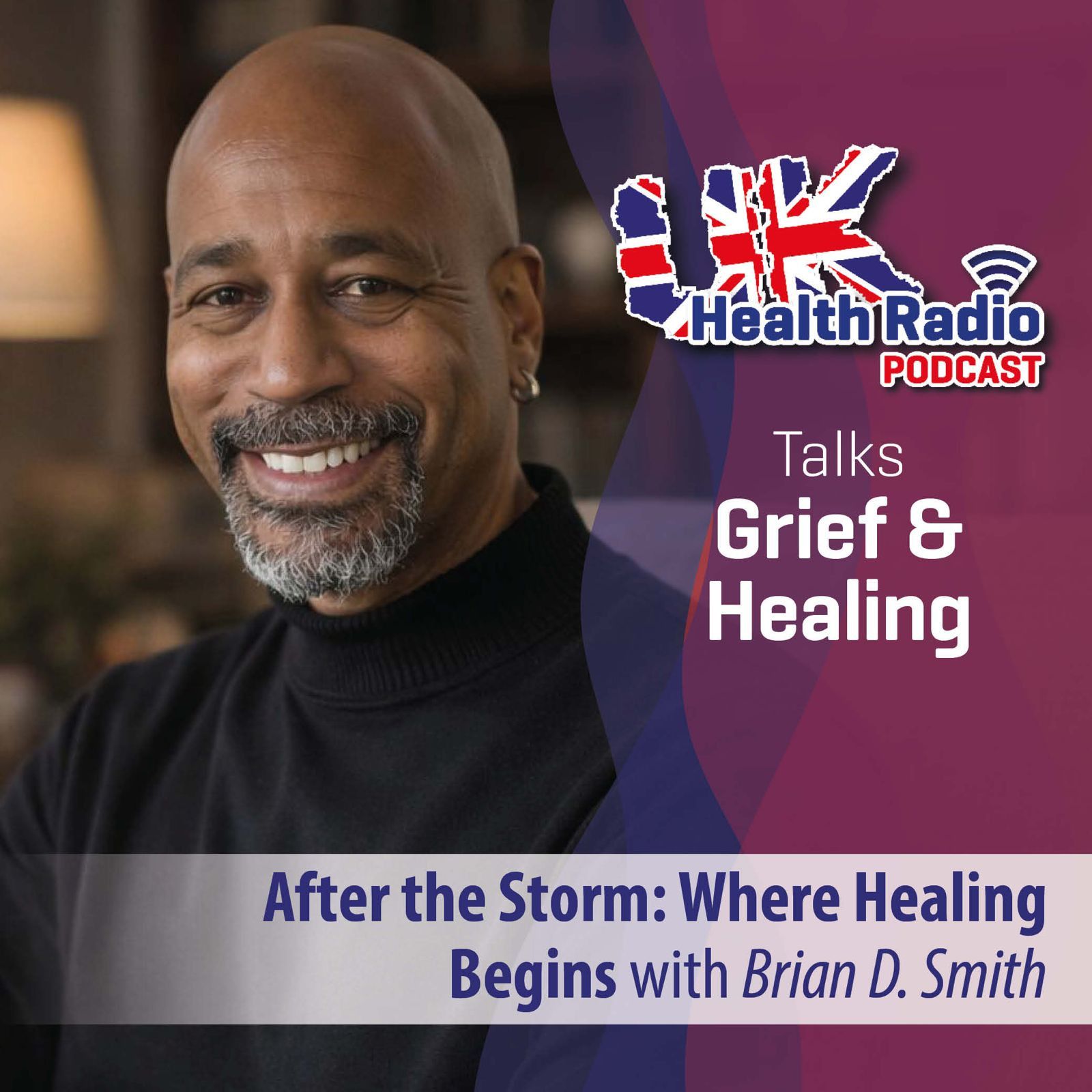
14: After The Storm: Where Healing Begins presented by Brian D. Smith - Episode 14
Get every episode summarized
Each time UK Health Radio Podcast publishes, we email you a written briefing from the transcript — the topics, who appeared, and any specific claims, with the ad reads skipped.
Email me new episodesFree for 3 shows. No card needed.
About this episode
“It's not just electric, it's Toyota Electric, and during Toyota's easy-to-choice sales event, going electric is easier than ever. Right now, save instantly on a new Toyota EV with special incentive programs for first-time EV buyers and prior EV owners.”From the transcript
Disclaimer: Please note that all information and content on the UK Health Radio Network, all its radio broadcasts and podcasts are provided by the authors, producers, presenters and companies themselves and is only intended as additional information to your general knowledge. As a service to our listeners/readers our programs/content are for general information and entertainment only. The UK Health Radio Network does not recommend, endorse, or object to the views, products or topics expressed or discussed by show hosts or their guests, authors and interviewees. We suggest you always consult with your own professional – personal, medical, financial or legal advisor. So please do not delay or disregard any professional – personal, medical, financial or legal advice received due to something you have heard or read on the UK Health Radio Network.
Get every episode summarized
Each time UK Health Radio Podcast publishes, we email you a written briefing from the transcript — the topics, who appeared, and any specific claims, with the ad reads skipped.
Email me new episodesFree for 3 shows. No card needed.
Transcript ready
660 searchable segments. Every word is indexed and playable.
Full transcript
UK Health Radio Podcast — 14: After The Storm: Where Healing Begins presented by Brian D. Smith - Episode 14. Machine-transcribed; use the interactive transcript above to jump the player to any line.
It's not just electric, it's Toyota Electric, and during Toyota's easy-to-choice sales event, going electric is easier than ever. Right now, save instantly on a new Toyota EV with special incentive programs for first-time EV buyers and prior EV owners. Choose the sleek Beasy, the adventurous Beasy Woodland or the Sporty CHR. But don't wait! These special savings won't last. We make it easy. Toyota, let's go places! Thumbtack presents Tile Trouble. Every single time I use my sink, I make eye contact with the uneven grout on my kitchen backsplash. The crooked corners eye me and I'm haunted by more tiling questions than I thought possible. What kind of pro can fix a backsplash? Can I replace one cracked tile or should I replace them all? What?! But if I just use Thumbtack, I can hire top-rated pros, read reviews, and compare prices with a tap, all on the app. Thumbtack knows Holmes. Download the app today.
You're listening to After the Storm where the healing begins on UK Health Radio. I'm Brian D. Smith, founder of Grief to Growth and a certified grief guide, life coach, and author. This part of my journey began after the passing of my 15-year-old daughter, Shayna. So I'm doing the work too. Each week we explore the journey through grief, not just surviving laws, but discovering who you're becoming on the other side of it. This is where the healing begins. I just got back from a conference. Not a grief conference in the clinical sense, not a room full of researchers with slides and citations. Although there are some of that too. This was the Helping Parents Heal Conference, it's a gathering of parents who have lost children. And I've been going since not long after I found the Helping Parents Heal back in 2016. The Helping Parents Heal Conference is a biannual conference. And it's my happy place. Even though it's 1100 parents who have lost children, it is a place that's full of energy, full of joy.
Yes, there's some crying as well. But I want to tell you about why it's so important to me. And I want to tell you what it's like to walk into that room because it matters for everything I'm going to say today. And you would think a room full of parents who bear to child would be the heaviest room you've ever walked into. And again, there are heavy moments. We each wear a badge with our children's photo on it. There are tears, as I said, plenty of them. Mine included. But that's not what the room feels like. What the room feels like is hope. There are people laughing, people are hugging old friends. They only see every other year at this thing. We have people dancing. People who have survived the worst thing a parent can survive are actually living. And not despite what happened to them because of what they built out of it. When you go into the bar area, it's just a buzz. And I remember the first time I walked into a room like that one.
It was back in, I think it was in Scottsdale, Arizona, we had our first one at. And I remember just the energy of the conference. And I remember hearing reports of the hotel workers asking, who's that group of people hanging out at happy hour after the meetings and hanging out late into the night outside around the fire pit and finding out, oh, those are the people whose children are dead. I remember thinking at that first conference, if these people can get there, maybe I can too. No amount of advice or casseroles are well meaning text messages ever gave me that feeling. It gave me something to reach for. And I tell my clients, I want to give you hope to have hope. I want you to believe that you can believe you may not be there today or you have hope. You may not be there today where you have belief. But just the thought that maybe you can get there where you do have hope or you do have belief, that's what I like to do for you today.
And I want to be honest with you about where it was before I found help in parents heal. I was doing what you may be doing right now. I was functioning. I was getting through the day. I was showing up for the parts of life that couldn't wait. And I was privately wondering is this just what the rest of my life is going to feel like? I was functional but I was hollowed out. I didn't have language yet for what I needed. I just knew that everyone around me, the people who love me, the people who meant well, and never lost a child. And frankly, there's a wall between us that no matter their kindness could get through. They might have wanted to express empathy and sympathy and compassion and all those things. And it's much much appreciated, but they didn't know what it was like to be me. I know when you're someone who's lost a child or you lose a spouse, you know intellectually, you know in your head, you're not the only one that's ever been through this, but you feel like you are. What I needed was people who were on the other side of that wall with me.
I didn't know that's what I needed until I found them. And those people gave me hope. I believe this with all my heart, hope is the most important thing a human being has. I think it's more important than food. It's more important than water. It's more important than anything else you can name. You can survive a long time with a lot of things. You can't survive without hope. Without the belief that things are going to get better or might get better. The moment the hope goes out is the moment people stop putting one foot in front of the other. Frankly, it's the moment where people give up. Everything I do, this show, my work with clients, my own life, comes back to that one thing. As long as there's a reason to believe that something good is possible, you can keep walking. When that reason disappears, when you don't believe something good is possible, that's when people are in the most danger. And that's why this whole episode is about hope.
Not the flimsy kind of hope, not that everything happens for a reason, this taped over a wound that's still bleeding. I mean the kind of hope that's backed by research. That's backed by people that you can point to, backed by honest, hard one truth, that grief, as unbearable as it is, can lead somewhere. I've had the privilege of having done 500 episodes plus of my grief to growth podcast. And I've sat down with people who have every reason to have given up, who have had every reason to think that nothing good could come of this, and they're still standing. So today we're going to talk about post-traumatic growth. We're going to talk about what it actually is, what it is not, and why so many of the ways we try to process grief accidentally block it. And we're going to talk about what a handful of ordinary people did with the worst day of their lives. So let's get into it.
There's a term in psychology that gets thrown around loosely, and I wanted to find it carefully before we go anywhere else with them, because the loose version does real damage, and that term is post-traumatic growth. It was coined in the 1990s by two researchers, Richard Tadeshi and Lawrence Cahun. They noticed something in their work with trauma survivors that the field hadn't fully accounted for. We had a lot of language for how people survived trauma and get back to, okay, back to baseline maybe. We call that resilience, we call that recovery, we call that coping. And all that language describes returning to where you were before the bad thing happened, getting back to baseline, as it said. What Tadeshi and Cahun documented was actually different. They found that a meaningful number of people, not all, who go through profound loss or trauma, don't just return to baseline. They report changes in themselves that go past where they started. Not in spite of what happened to them, growing directly out of the struggle with it.
Now I've talked before about this on the show. I've talked about George Bonanno's work on resilience back in episode 11. Bonanno showed that most people are more resilient than we give them credit for, and that a majority of grievers don't need clinical intervention to eventually function well again, without research matters. And it gave a lot of people a permission to stop pathologizing their own grief. But resilience research and post-traumatic growth research are answering two different questions. Resilience asks, how do most people avoid falling apart? Post-traumatic growth asks a completely different question. For the people who did fall apart completely, what could come out of the other side of that? Now both are true, both resilience and post-traumatic growth, both are documented. They're not in competition with each other. Most people are more resilient than they think, and some subset of people who grow through their hardest version of loss end up somewhere new, because of how hard it was, you could hold both of those facts in your head at the same time.
And that's worth sitting with for a second, because it runs against almost everything we're taught to expect from tragedy. We expect trauma to take something from us. And if we're lucky, we get some of it back, some of what it's taken from us. But with Tadeshi and Calhoun found, there are people who ended up somewhere they'd never been before, somewhere they wouldn't have ride that any other way. Now they organized what they found in the five areas. I want to walk you through all five, because I think you'll recognize pieces of your own story, and at least a couple of them. The first is a change in relating to others. People report a new depth in relationships, a willingness to be vulnerable that wasn't there before, a clearer sense of who actually shows up when things get hard. You find out fast who your real people are, and something and you changes in how you value them. Now I know I experienced this. People who I expected to be there for me after my daughter passed, some of them weren't.
But other people really stepped up, and our relationships actually deepened as we each became more vulnerable to each other than we were before. The second thing that they found is seeing new possibilities. A path opens up that never would have existed without the loss. New directions in life, new interests, sometimes an entirely new sense of purpose. And I want to be careful with this, because this one does get twisted, and everything happens for a reason faster than any of the others. But what I'm talking about here is you making meaning from what's happened. You see new possibilities because of what happened, not that it happened to create the new possibilities. But this thing is real. People end up doing things, becoming people they would have never become on the road they were before. And ironically, as I'm recording this, I was just talking with the client right before I got on here, who is doing incredible work after losing his beloved wife to cancer.
And I see him, and the months I've been working with him, I see him changing, I see him growing, I see him reaching ways that he wasn't doing what we first started working together. The third thing that they observed was personal strength. It's a quiet and earned confidence that says, I survived something that I didn't think I could survive. If I got through that, there's very little left that can take me down. And that's not provato, that's evidence. You have lived proof of your own capacity now, and it doesn't leave. It gives you a new sense of confidence, a new sense of walking forward in the world, being less afraid, being more bold, and being actually strengthened. The fourth is a change in spiritual or existential understanding. What happens is big questions get asked that maybe you never got asked before. What happens after we die? What does any of this mean? It's what you actually believe as opposed to what you were told to believe. For a lot of people, this is where the deepest work of the whole thing happens.
Questions that you wouldn't have asked because you were planning for retirement, putting money in your 401k, taking care of your children, doing all the things that we get busy with in life. Suddenly, all those things get put on hold when something major happens, and you start to ask these deep questions that you may have felt like you didn't have time to ask before. And the fifth thing they observed is a new appreciation for life. A shift in what matters. The small things that used to slide right past you start to register. The beauty of a sunset. The nature as you go for a walk. A conversation. Just an ordinary Tuesday with someone you love who's still here. These things start to get deeper and you appreciate them more because you realize that they're limited. Five domains. Relationships, possibilities, strength, spirituality, and appreciation. That's the map to Dutashi and Kalhundru from decades of research for trauma survivors.
So I want to slow down on a third domain for a second. Personal strength. Because I think it's the one people underestimate the most. When you're in the middle of early grief, the idea that your building strength feels absurd. I know this. You don't feel strong. In fact, the last thing you would hear from someone is someone saying, you're so strong. You feel like you're barely staying upright. But strength in this research isn't about how you feel in the moment. It's about what you know to be true about yourself. On the other side of surviving something, you were certain would end you. I remember in the early months after Santa passed thinking I would not physically survive the pain. I mean, literally physically not survive it. This is not in a dramatic, exaggerated way. I mean, I genuinely didn't know if a human body, my human body, could keep functioning while carrying that much. I would wake up and I would like start up, sit upright and bet like someone punched me in the gut.
But then I kept functioning. And then when a different, the hard thing happened, maybe a business problem or something a year later, a health care, a conflict with someone I loved. I noticed that something had changed in me. There's a voice that said, you've already survived the worst thing you'll ever survive. This isn't that. And that voice is personal strength. And you don't have to get it from a self-help book. You get it from actually having gone through the fire and still being here to talk about it. Now, here's the part I need you to hear clearly because it may be the single most important distinction in this whole episode. You don't get post-traumatic growth by avoiding the trauma. The word trauma is in there, post-traumatic growth. I want to say that again because I've watched people get this backwards in ways that can hurt them. Post-traumatic growth is not a shortcut around the pain.
That's what happens when you skip the hard part and jump straight to gratitude. Tadeshi and Calhoun were explicit about this in their research. The growth comes from what they call cognitive processing, the actual wrestling, the rebuilding of your understanding of the world. Peace by peace because the old understanding got shattered and it has been put back together. And it can't be put back together the same way it was before. That process is not optional. It is a process. You can't just say, I'm going to go to gratitude and I know I'm going to have post-traumatic growth so La Di Da, I don't have to go through the struggle. The struggle itself is not a regrettable cost on the way to growth. No struggle, no growth. I was talking with a client just yesterday who was expressing her desire to just get to it, to get to where she needs to be. She can see where she wants to be and she just wants to skip the struggle.
The struggle is the growth and process. That's by design. I didn't design it. I didn't make the rules. I just report them. This is where I want to talk about something I see constantly in this work and it has a name and it's called spiritual bypassing. Even though you always hear me holding out hope, always encouraging you to think about the bigger picture, to take the big zoom out, to understand that we are spiritual creatures having a human experience. I am very, very much opposed to spiritual bypassing. Spiritual bypassing is when someone uses spiritual language or spiritual practice to avoid doing the actual grief work. It looks like forcing gratitude before you've let yourself be angry. It looks like reaching for everything happens for a reason in the first week, using it as a wall instead of something that you arrive at. It's something that you have to arrive at after years of genuinely wrestling with the question.
What spiritual bypassing looks like is performing peace. You have not actually built. These things we have to arrive at through struggle and they only come already. I've talked to people who can recite every insight about growth and meaning and purpose word for word and they've never once let themselves fall apart. And I want to tell you plainly that is not growth. OK, how's the radio? The station, I make you feel good. It's not just electric. It's Toyota Electric. And during Toyota's easy choice sales event, going electric is easier than ever. Right now, save instantly on a new Toyota EV with special incentive programs for first time EV buyers and prior EV owners. Choose the sleek Beasy, the adventurous Beasy, woodland or the sporty CHR. But don't wait. These special savings won't last.
We make it easy. Toyota, let's go places. OK, how's the radio? The station, I make you feel good. I had the opportunity was at this conference a couple of years ago to meet again, Dr. Mary Neal. And I had the chance to tell her that she inspired me, her story, more than any single other story I heard after my daughter passed away. And she had an incredible near-death experience, but it wasn't her near-death experience that really inspired me. When she had her near-death experience, she got to see how everything works together and everything works for the good and all that stuff. She got to see where we go when we cross and she got to come back. But she was told her son, Willie, would live maybe 10 years longer and then he would proceed her in death.
And what really inspired me about her story is when her son did inevitably pass away, she still grieved. She still had to go through this process, even though she knew about where he was going. She had seen where he was going, even though she knew all these things, she didn't get the bypass. She still had to go through. You cannot bypass your way to the other side of grief. I cannot say that strongly enough. You have to go through it. The five domains I just walked through, the deepened relationships, the new possibilities, the strength, the spiritual change, the appreciation. None of that is available to you on the express lane. It's on the other side of doing the actual work. Now I've talked before about the actual work doesn't mean a long hard grind and doesn't mean the way that we used to talk about the dual process model. So you do have to go back and forth, oscillate back and forth. But at some point you have to feel what you feel. You have to ask the hard questions.
You have to sit in this comfort of not having the answer yet. You have to let yourself be shattered before you try to rebuild. I was going to say I work with a lot of clients who are hired tubers. I'm going to amend that. I work with all clients who are hired tubers. I guess it's a self-selected group because first of all they are people who decided they're going to reach out and do something about the situation they're in. And I think like attracts like and I'm one of those kind of people too. So the people I work with have tried everything by the time they get to meet. They've tried therapy, supplements, energy healing, stack of books on a nightstand that working through like a project plan. And again, I understand that because that's me. If grief is a problem and I'm someone who solves problems for a living, I think grief should be solvable the same way. That's what we think. Give me the five steps. Let me execute. And I want to tell you this gently. The way I've had to tell a lot of people that I respect a great deal.
That instinct taking too far is actually spiritual bypassing, dressed up in a business suit. It's still an attempt to get to the other side without going through the middle. The middle cannot be optimized away. It has to be lived through on its own timeline, which is almost never the timeline that you would have chosen. So when I hear my clients and I hear them often say, I'm trying, I'm trying, I've done this, I've done this, I'm doing this. Even though I might give them some suggestions, the last thing I want to do is give them more homework because sometimes we just have to be. Sometimes we just have to feel. And here's a question I ask clients when I suspect this is happening. I ask them, when's the last time you actually cried about this? Not performed a reflection about it, not journaled an insight about it, but when's the last time you just fell apart? And if the answer is, I don't really do that,
I think we found the bypass. Not because crying is the goal. We're not setting another goal here. Crying is not the goal. But usually it's a decent marker of whether the loss orientation side of this is actually getting in the airtime. And if you remember the loss orientation type part of the dual process model, loss orientation versus restoration orientation, loss orientation is when we sit in it, when we feel it. So we want to know whether that's being managed, whether it's being contained, whether it's being optimized around. You can't manage your way to growth. You actually have to feel the thing you're trying to grow out of. And I want to be precise about something else too, because I don't want you to hear this segment, I think I'm telling you, the loss was worth it, or even that it happened for a reason, or you should be grateful for what it gave you. I'm not saying that if I could trade every bit of growth of experience in Shana past, to have her back, sitting across me right now, I would trade it in less than a second without hesitation.
That human part of me still wants her back. The growth doesn't cancel out the loss. It doesn't justify it. It doesn't make it okay. What post-traumatic growth says is something much more modest, and something much more honest. Struggle genuinely face can produce things in you that would not exist otherwise. That's it. That's the whole claim. And this claim is backed by real research or real people. It's not just a slogan, it's not just a theory. Now again, everything happens for a reason. Someone's probably said it to you within the first weeks of your loss. Probably from someone who meant well, and had absolutely no idea how much damage that sentence can do at the wrong moment. I want to draw a hard line between that sentence and what I'm describing today. Everything happens for a reason, said to a grieving parent, and winked to, is a demand. It's asking to locate meaning before you even allowed the fall apart. No, we're not here to do that. When I'm describing as the opposite of a demand,
it's an observation made by researchers looking backward at years of data that meaning sometimes gets built, built slowly, painstakingly by people who did the work. Nobody handed it to them in week two. They built it brick by brick, usually over years. And usually without ever deciding to loss itself was worth it. You're allowed to believe both things at once, that this should never have happened, and that something real can still be built out of what's left. Those two beliefs are not in conflict. Holding them both at the same time might be the most honest place a grieving person can stand. I also want to say something about timing, because I get asked this constantly. How long before growth shows up? And the honest answer is there is no schedule. To deshi and calhouns, own research follows people for years, sometimes decades, and growth in these different domains,
these five different domains, shows up at wildly different points for different people. Some people notice a shift in their relationships within the first year. The spiritual and existential domain, and my experience with clients and in my own life, is often the slowest one to arrive. Because it requires you to sit with genuinely hard questions for a long time before anything settles. This is not the five points of post-traumatic growth. There's no five point plan with delivery dates. There's no order. If someone tells you that you should be further along by now, that's their timeline. It's not a lot of grief. Growth on someone else's schedule isn't really growth. It's actually compliance. So this is what we're building toward today. Not a bypass, a path. And I want to spend some time now on why so many of the past people are handed don't actually work. So let's talk about what doesn't work. I've talked to so many people over the years who tried a grief group
and came out of it feeling worse than when they walked in. Now I want to be careful here too, because grief groups do help a lot of people. And after the grief group that's helping you, please keep going. This isn't an argument against every group everywhere. It's not. Please understand that. But I've heard the same complaint often enough that I think it points at something real and something structural. Now I just bad luck with one particular group. I had bad luck with the group. That's anecdotal. But I've talked to so many people who didn't like groups. And that's what I'm going to talk about today. Something structural. So here's the complaint you sit in the circle. You tell your story. Next week you sit in the same circle and you tell the same story again because that's what the group does. That's the format. That's what everyone is there to do. Sometimes new people come in, other people go. But we keep telling the story month after month. Sometimes year after year. And instead of feeling lighter, you start to feel like you're standing in the exact same spot you started in.
Except now you said it out loud. 50 times. That was something that I've heard that's been attributed to Native American tradition. And I can't say that I know that it's true. I haven't been able to confirm this. But it makes sense to me. And this is that a story of loss is only be told three times. And after the third time, you're meant to carry it differently. And I don't tell you this. It says there's a hard and fast rule that you should never talk about your loss after three times. But what I'm telling you is the idea of repeating a story past a certain point stops really being processing and starts being rehearsal. You're actually just regurgitating. You go over the same thing over and over again. You're not moving through it anymore. You're reinforcing the groove that I already made. So you may tell the story in a different way from a different perspective. That's okay. I think this connects directly to something we talked about last week. So if you haven't heard episode 13 yet, you might want to go back and listen that after this one.
But here's a short version. There's a framework I mentioned called the dual process model. Developed by researchers Margaret Strobe and Hank Schoot. And it says healthy grieving isn't a straight line. It's a nocylation between two modes. Loss orientation is a part of you that faces the pain directly. Crying, remembering, telling the story, sitting with the absence. Restoration orientation is a part of you that faces life. Learning to do things differently, taking on new roles, laughing again, even while missing someone. Healthy grieving moves between the two back and forth, the way breathing moves in and out. So here's my problem with the traditional groove circle format wise. Structurally. It only exercises one side of that breath that breathing in and out. Every week you go back into loss orientation. You tell the story again, you sit with the pain again, and that's important. There's no room built in that structure for the exhale.
If you want to call the loss orientation, the inhale, there's no room for restoration, no room for the laughing, the new possibilities, the living. Now that's not a failure of the people in the circle. It's a failure of the container. If the only tool of format gives you is retelling, the only thing you can build is more retelling. So I want to be fair to the format for a second, because I know it wasn't built badly on purpose. Retelling the story does matter, especially early. Naming what happened out loud to people who won't flinch or rush you is one of the most important things a grieving person can do, especially in the first stretch of loss. The problem isn't that the circle asks you to tell your story. The problem is when that becomes the only tool in the box forever, with no mechanism built for anything else. Decay Health Radial. This station I make you feel good. Decay Health Radial. This station I make you feel good.
There's an organization that I became part of, where I live in Cincinnati called Best Day Ever Foundation. When I found it, they were going to go on a bourbon tour and they had a couple extra slides and they invited us to go with them. I was like, okay, bourbon tour grieving parents. I found out this group is about the restoration phase. Now, we get together and we do things like going on bourbon tours, or they'll go get massages, or we go camping. We have times to share our stories and we know each other well enough. We know each other's stories a little bit. But we also do it while we're having a good time. This is more of a side by side as a face-to-face version of processing grief. I'll talk more about that. There's a question I get all the time right here and I want to answer it directly.
People ask me, is it disrespectful to my person if I stop grieving them the same way I used to? If the group starts to get lighter, does that mean I'm forgetting them? Absolutely not. Continuing bonds of research, the work of people like Dennis Class and Phil Soverman tell us that healthiest grievers are not the ones who sever the relationship and move on. The ones who find a new, ongoing relationship with the person who passed. One that can coexist with a full-lived life. Lightness is not betrayal. Lightness alongside the missing is what the relationship looks like now. This is where spiritual bypassing and the endless circle actually connect to each other. Even though they look like opposites. One spiritual bypassing avoids the pain entirely. The other gets stuck in circling it forever. Both of them are failures to actually move through the process the way it's really built to move. One skips loss orientation.
The other never leaves it. Neither one gets you to growth because growth requires both halves of the breath. Working in rotation, I had a conversation recently with a man who joined a hiking group for grieving people. By the end of that conversation, I realized we'd stumble on something bigger than a nice idea for getting people outside. Here's a phrase that really stuck with me from that conversation and I touched on it a little while ago. I think it might be the single most useful sentence in this whole episode. And that is, side by side, not face to face. If you think about the traditional group circle for a second, everyone faces each other. Every word you say lands directly on someone's watching face. You feel yourself being witnessed and sometimes that's exactly what you need. But sometimes it's a very thing that makes it impossible to speak. Because you're managing someone else's reaction while you're trying to find the words from the hardest thing you've ever had to say. Now, I want you to picture a trail instead.
You're walking next to someone, not across from them. Your eyes are in the path, the trees, the next bend. Your eyes are in the path, the trees, the next bend in the trail. Not on anyone's face. And something opens up. The words can come out sideways instead of head on. There's no eye contact pressure. Oh, your rhythm of walking gives your body somewhere to put the rest of ussas. It's sitting in a chair no, let's go out. And this is literally what this hiking group does. But it's not just a hiking phenomenon, think about the best conversations you've had in your life. A lot of them probably happened in a car on a long drive. Both of you looking at the road ahead instead of any other. Or washing dishes, side by side after a family dinner. Or working on some project together when your hands are busy and your mouths just happen to start talking. The activity gives your eyes and your hands somewhere to go and that's exactly what lets a harder truth slip out. And here's a connection back to the dual process model. A hiking group for griebers isn't avoiding grief.
People still tell their stories on that trail, but the container is different. You're also moving. You're also breathing. You're also at some point going to notice a view or laugh at something that someone says or feel your legs burning in a good way. This orientation and restoration orientation are happening in the same hour, sometimes in the same conversation. There's something else going on here too. Something in the body, not just the format. When you're moving, walking, hiking, even just doing dishes side by side, your nervous system is doing something different than when you're sitting in a chair, fully facing another person, bracing for what they might say or what you're about to say. That gives the body a job, it gives the anxiety, the adrenaline, the whole physical charge that grief carries, somewhere to go beside your throat. That's not me just speculating. Anyone who's gone for a heart walk after a terrible phone call knows this in their body, even without a research citation to back it up. In fact, after my daughter passed away, a good friend of mine started calling me up and asking
me literally to go for walks. And we would go out and walk a trail in a park or something. Same thing with my wife, a friend that became a very good friend while they went for walks after my daughter passed away. The talk only circle as your body is perfectly still while your nervous system is doing the hardest work of its life. That's really a mismatch. The trail fixes the mismatch. So to me, that's what moving forward actually looks like. It's not the absence of grief, it's not the getting over it. It's a phrase I never once found useful. It's people who can hold the missing and the living in the same hand because both are true and because a good container lets both of them exist without asking you to choose. I think about a specific trip with the group I mentioned earlier, the best day ever foundation. It was a glamping trip we take. At first I thought they were, they said they were camping and I'm not into camping. But we go out and we stay at cabins. And it happens to be pretty near where I am. We were around the fire and one of the mothers told the story of the last conversation she'd
had with her son. The one where she didn't know it would be the last time. And the whole group sat with her in that. Nobody rushed her, nobody tried to fix it. We just let it be as heavy as it was. But the next morning that same woman was the one cracking jokes over coffee and breakfast, teasing someone about the games that we played the night before, completely present and completely lighter. Same person, same weekend, both things fully true. Now if you only see her on Friday night, you might think she was drowning. If you don't see her on Saturday morning, you might think that she was fine and maybe she was bypassing. Well she was actually neither. She was oscillating exactly the way the researchers said healthy grief was supposed to move. And the container that we had built gave her room to do both without anyone flinching at either one. So if the group you're in only ever asked you to sit remember, it isn't wrong to have helped you get that far. Okay. I think it's just incomplete.
Maybe what you need isn't a different circle, not different people. Maybe you need a trail or a group that goes glamping or dendered with people who knew your person and can also make you laugh until you can't breathe. I think the format really matters. So either find one or build one that gives both half of the breath, the inhale and the exhale, the loss and the restoration somewhere to go. And if you can't find one, I'm giving you permission to build your own. Even if it's just two people, it doesn't take an organization. It doesn't take 1100 people like we had at our conference or 30,000 people like we have an organization. All it takes is one of the person who has lost someone wanting to go on a walk with you. Instead of sitting across from the table. So ask around. Someone in your life is grieving something too. Even if they never said so out loud. And they're probably just as tired of the circle as you are. Because when both halves are working, that's when I've watched people move from surviving
and it's something else entirely, which brings me with the stories I want to leave you with today. I want to give you four people, real people, not composites, not hypotheticals. Four people who took the worst day of their lives and over years of doing the actual work built something out of that, reaching far beyond their own grief. I chose these foreign purpose and not just because they're well documented. Each one shows a different domain of growth we've talked about earlier in action and at scale. You're going to hear new possibilities and one personal strength in another, a change in spiritual understanding in another, and an appreciation for life running through all four of them. So listen for those as I go along. The first one is Candice Leitner. In 1980, her 13-year-old daughter, Cari, was killed by a drunk driver. A man who'd already been arrested multiple times with drunk driving and was out on bail from a hit and run just days before he killed Cari. Candice Leitner took that unbearable loss and within months, founded on an organization you've absolutely heard of.
Mothers against drunk driving are mad. Now, mad didn't just raise awareness. It changed laws and stayed after state. Forced drunk driving from something treated as a minor offense and to something the entire country now takes seriously. You may not even remember what it was like before. It's credit it was saving tens of thousands of lives since then, and it's not a metaphor. It's people who are alive today driving home tonight because one mother turned her grief into a fight. With a month's of bearing her daughter, nine years after she'd finished processing it, she built while she was still breaking. And that's really worth spending with. Growth doesn't wait politely for grief to finish first. Sometimes it happened in the same breath. The second person I wanted to tell you about is John Walsh. In 1981, his six-year-old son Adam was abducted and murdered. John Walsh could have disappeared into that grief and nobody would have blamed him. Instead, he became one of the driving forces behind the creation of the National Center for Missing and Exploited Children. And he spent decades afterward as an advocate for
child safety and a voice for missing children's families on television and the halls of Congress. Laws changed because of what he built. Children came home because of what he built. And I want to point out something about Walsh specifically. He didn't do this work from some healed, resolved place. He talked publicly for years about how grief never fully left him, how he carried it while he was fighting. The growth and the grief lived at him side by side for decades at the same time, not one replacing the other. The third I want to tell you about is Scarlet Lewis. Her son, Jesse, was six years old when he was killed at Sandy Hook Elementary School in 2012. In the aftermath, Scarlet founded the Choose Love Movement, a program now taught in schools across the country, teaching children social and emotional skills, compassion, and yes, the choice to love instead of hate. She took the single darkest day imaginable and built the curriculum that is right now shaping how children learn to treat each other. Now what strikes me about Scarlet Lewis's
story is where the idea actually came from. Jesse had written the words nurturing, healing, love on a chalkboard at home just stays before he passed. She didn't invent a slogan out of nowhere to cope. She took something her son and Ari left behind and she built an entire framework around it. That's a different kind of growth than the other stories here. His growth built directly out of confronting the bond with her child that she lost, not moving past him but building forward with him. And the fourth one I want to tell you about is personal to me, Elizabeth Busson. Elizabeth lost her daughter Chelsea who passed just two days after she was born in 1991. And then in 2009, she lost her son Morgan, who passed from altitude sickness at the base camp of Mount Everest on a university trip when Morgan was 20 years old. Two children, two devastating losses 18 years apart. A week after Morgan passed, Elizabeth started the Facebook support group
for other bereaved parents. In 2012, she partnered with the man named Mark Ireland to turn that into something bigger and they found it helping parents heal. That's the same organization I found in 2016 when some might refer to me to Mark and I happen to go to Phoenix, Arizona on vacation and Elizabeth lives there and I met Elizabeth there. This is the same organization whose conference that I just walked out of. The one I described at the top of this episode, the one of people dancing and laughing and living. That organization now has more than 200 affiliate groups and tens of thousands of members around the world. All of the traces back to one mother a week after her son passed, deciding to reach out for other parents instead of disappearing. And I serve in that organization's board now. I've sat across from Elizabeth. I've watched her build rooms full of hope year after year out of a loss. Most people can't even let themselves imagine. I've heard her talk about Morgan and Chelsea, the daughter she helped for only two days 30 plus years ago. Neither loss has been
packaged up and put away. She still carries both of them actively every single day and she's built one of the largest organizations for parents who have lost children in the world at the same time. That to me is a clear picture I know of what post-traumatic growth actually looks like I've close. Not a woman who got overlosses, a woman who has spent years walking through them out loud in public and has built something enormous on the way through. I want you to notice something about all four of these stories because it's a thread that ties this whole episode together. None of these people skipped past the pain to get there where they landed. Cadna Slightner didn't bypass her grief or carry. She built mad out of it. Still grieving while she did it. John Walsh didn't bypass his grief. He talked about it openly while he was building the organization that he built. That's a difference between spiritual bypassing and post-traumatic growth. When skips the struggle and calls it enlightenment, the other one does just struggle fully and let something be built on the other side of it. That's what's available. It's not guaranteed. It's not automatic.
It's not something that just happens because time passes. It's available to anyone actually willing to walk through the fire instead of around it. I also want to say this really clearly. You don't have to found a national nonprofit for this to count. These four stories are big and public because they're easy to point to on a podcast. Post-traumatic growth shows up just as often in small quiet ways. Nobody writes an article about. A widow who finally starts doing the artwork that she talked herself out of her 20 years, that's important. A support group of four people who meet at a dining room every other Sunday and have kept each other alive literally through the worst years of their lives. That's it. Growth doesn't have to be allowed to be real. It just has to be lived. So let's bring this all the way back to where we started. Hope. The most important thing a human being can have. More important than food, more important than water. Because as long as you have it, you can keep putting one foot in front of the other. In the moment it goes out as a moment people start giving up. Here's what I want you to walk away from this episode. Here's
what I want you to walk away from this episode believing. Not because I said it, but because the research says it and because Candace Lightner and John Walsh and Scott Lewis and Elizabeth Walshahn lived it. Grief as unbearable as it is can lead somewhere. Not to spite the struggle. Through it. You don't get there by skipping the pain and reaching for gratitude before you've earned it. You don't get there by circling the same story in the same room for years. You get there by doing the actual work. Feeling what you feel, walking side by side with people who let you and letting the struggle do what struggle fully face is capable of doing. When I can tell you from research and from real lives and from my own is that the pain doesn't have to be the end of the story. It can be the raw material for a story you haven't written yet. So if you take one thing from this today, let it be this. Hope is not naive. Hope is not a nice thing you say to a grieving person to make them feel better in the moment. Hope backed by decades of research and by ordinary
people who did the work as a legitimate evidence-based reason to keep going. You're allowed to believe that something good can still come from this because you're going to make something good come from this. Next week on after the storm, we're going to talk about something that comes up and almost every conversation I have with grieving parents and grieving spouses alike. It's the guilt that shows up when you start to feel okay again. If growth is real, moving forward as possible, why does it feel like betrayal when it actually starts to happen? That's episode 15. Until then, you can find everything we talked about today at GriefToGrowth.com or on my substack at GriefToGrowth.substack.com. I hope you'll join me there. It's grief, the number two growth.substack.com. Thank you for spending this time with me on after the storm. If today's conversation resonated with you, I'd love to continue the journey together. You can find more of my work at www.grieftoGrowth.com. That's GriefGRIEF,
the numeral2growth.com. Until next week, remember after the storm is where the healing begins.
More episodes
More from UK Health Radio Podcast

15: After The Storm: Where Healing Begins presented by Brian D. Smith - Episode...
UK Health Radio Podcast

5: Bread for the Head with Mark Sephton - Episode 5
UK Health Radio Podcast

185: The 'D' Word with Pete Hill - Episode 185
UK Health Radio Podcast

192: Yes To Life Show with Robin Daly MBE - Episode 192
UK Health Radio Podcast