About this episode
Part I (00:13 – 10:26)
The Rise of the AfD in Germany: Far Right Party in Germany Wins in State Election, Raising Big Issues and Signaling Political Warfare Across the Globe
- Germany’s ‘Firewall’ Against the Far Right Is Being Tested as Never Before by The New York Times (Jim Tankersley)
- After Victory in German State, Far Right Needs Help to Take Power by The New York Times (Christopher F. Schuetze)
- The AfD Rises on the German Right by The Wall Street Journal (The Editorial Board)
The Right vs. Far Right vs. Extreme Right: Changing Political Titles and Ideas and the Shift in the Political Landscape in Germany (and Beyond)
Part III (17:13 – 25:43)
Low Birth Rates Lead to Looming School Closures in France: The Ripple Effects of France’s Catastrophic Birth Rate is Now Hitting Its Schools – The Birthrate Reveals the Deeper Spiritual Crisis at Work
- French schools face ‘unprecedented challenge’ of accelerating demographic decline by Le Monde (Sylvie Lecherbonnier)
Follow Dr. Mohler:
X | Instagram | Facebook | YouTube
For more information on The Southern Baptist Theological Seminary, go to sbts.edu.
For more information on Boyce College, just go to BoyceCollege.com.
To write Dr. Mohler or submit a question for The Mailbox, go here.
Get every episode summarized
Each time The Briefing with Albert Mohler publishes, we email you a written briefing from the transcript — the topics, who appeared, and any specific claims, with the ad reads skipped.
Email me new episodesFree for 3 shows. No card needed.
Hosts & guests

Transcript ready
431 searchable segments. Every word is indexed and playable.
Full transcript
The Briefing with Albert Mohler — Wednesday, September 9, 2026. Machine-transcribed; use the interactive transcript above to jump the player to any line.
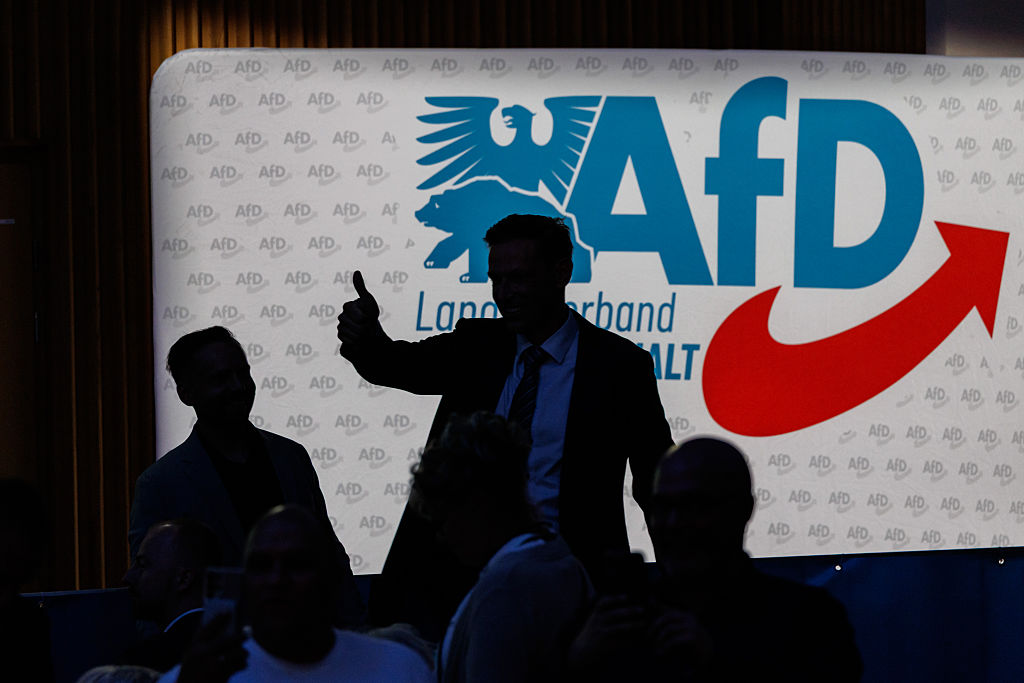
It's Wednesday, September 9, 2026. I'm Albert Moller, and this is The Briefing, a daily analysis of news and events from a Christian worldview. Well, big news is coming out of Germany, because on Sunday, in a regional election, the group known as the Alliance for Germany, in the German initials are AFD, came very close to winning an outright majority. They certainly won a plurality of the seats. And this has led to headlines all over the world. New York Times, Germany's firewall tested against the far right as never before. Also the same newspaper after victory in German state, far right needs help to take power. Wall Street Journal very similarly, Washington Post, big American newspapers. They're telling us this is big news. And furthermore, you have opinion pieces that take it even further, suggesting that this is one of the most seismic political developments in Germany, not only since reunification after
the fall of the Soviet Union, but since World War II and the defeat of the Nazi Empire. Okay, so looking at all of this, you recognize something big is going on here. And the vocabulary itself turns out to be very, very interesting. So the big news here is that the Alliance for Germany, which dates back to 2013, and the AFD emerged as a party on the German right. All right. So what does that tell us? Well, in this case, you're talking about the right left distinction. Where did that come up? Well, it goes back to the French Revolution, where they're in the tennis court. This conservative sat on the right and the liberal sat on the left. And thus the French categories of left and right became fixed political categories. It, well, these days it makes sense in the United States and elsewhere. You say the right, you mean conservative. You say the left, you mean liberal. We also know that these are directives beyond or directions beyond simply the words liberal and conservative.
It refers to a spectrum both ways. And so there is a left. There's a far left. There's a radical left. There's an extreme left. There's a new left and old left. And all of the same combinations work on the right. There's an old right and a new right and a far right and a near right and extreme right, a radical right. The point I want to make is that those terms have largely indeterminate meaning. And that's one of the issues we're going to talk about because what you hear right now is that, well, the New York Times subhead says the far right alternative for Germany. There are others who have said the radical right. You also have one scholar, Cass Moodah, who said you basically have all these different gradations and he offered his own definitions as we're going to see. But the bottom line is that this is a threat to the existing German political order. That German political order and it really was most importantly in shape. By the time you look at the federal Republic of Germany, that was West Germany when the country was divided after the war, you basically had a political consensus represented by two
different parties. Those two parties were the Christian Democrats and the social Democrats. In terms of left right, the social Democrats were more friendly to socialism and thus they were the political left. But they were often described as center left. And that historically is how the Republican and the Democratic parties have been defined through most, say, decades going back to the second half of the 20th century. You'd say the Democrats are on the left and Republicans are on the right, but there is something to the right of the Republicans and there's something to the left of the Democrats. And that's been at least largely true. But on the Republican side, you've had confusion over different forms of conservatism. And now on the Democratic side, you got huge debates, huge questions over the future of the Democratic Party. Now that you've got outright openly declared democratic socialists, not only winning primaries, but in some cases, winning elections right down to the mayor's office in New York City. But let's not talk about New York, let's go back to Germany.
So in Germany, you had this center left party, the social Democrats, and then you had the more conservative party, the Christian Democrats. Okay, that's an interesting thing. A lot of Americans are probably thinking, well, that sounds strange. You have Christian in the name of a major political party. And yes, that is true. And it is because you did have a very clear corporate Christian identity as a part of post-war Germany, and very much as a part of this party. And at least in terms of some social issues, that explains why this party has been more conservative than the more liberal party. But in terms of the German political spectrum, particularly, let's just say after reunification, the course of the last generation or so, you've had a center left party, the social Democrats, a center right party, the Christian Democrats, and they basically have gone back and forth. Currently, you have a Christian Democratic Party government. Friedrich Meritz, who is the current chancellor of Germany, that's not exactly a prime minister, but it's close to being a prime minister.
He's not the head of state. There is still a federal president, but he is the head of government. He's only been in that position as head of the Christian Democratic Union, and thus also as chancellor, since 2025. And he's basically being handled a huge, well, exploding time bomb. A lot of political discontent in Germany. By the way, there's some reasons behind that. Most Germans feel that the nation has underperformed economically. There are other big questions. Some of these questions are similar to those confronted by just about every other modern democratic state. But in Germany, as always, there are some local issues. The election that took place is in Saxony Unholt, and it was won hugely in terms of a plurality by the alliance for Germany. The alliance for Germany, again, AFD. This is something that just wasn't expected. On the other hand, people have seen it coming. So how can those two things both be true? It is because there's a sense in which the political parties in the center want to say,
hey, these are big, big disruptive developments out there, but they don't really think it's going to happen in terms of that disruption until it happens. The alliance for Germany goes back to 2013, and it basically emerged as a party clearly to the right of the Christian Democratic Union. And so it is not posing as just the same thing. It's posing as a clear alternative. Therefore, the word alternative is actually in the title of the party, and there's a history behind that that is fascinating. But you are looking at, in the times since 2013, certain issues becoming really, really important in the issue of immigration is at the top of that list. Immigration was not the cause of the formation of the AFD, but it is a major issue. And so you have people who would define themselves in the political mainstream, again, social Democrats or Christian Democrats, and they're saying this is a real threat to the future of the German nation. All right. So let's just say that Germany has a very, very interesting history.
It's a very problematic history when you think about the middle of the 20th century in World War II, you think about Hitler and the Nazis, and you can understand that history would simply be a heavy burden for Germany to bear. It is such a heavy burden that in Germany, there are actually a couple of political realities that don't even exist in terms of, say, the English-speaking nations. One of them is that there is a capacity held by the German government to basically decertify a political party and say they're outside the political mainstream. They are a threat to the future of Germany and therefore cannot operate legally. But this is the thing that didn't happen when the AFD was smaller. Now it's very hard to make that judgment after AFD has just won in terms of the plurality votes. Now the AFD does not have enough votes to establish a government, but they need less than five persons to break from another party and they can create a government here in one of Germany states. By the way, here's another issue that's important.
Saxony on hold is one of the smaller states in Germany and it is in the former GDRs and the former communist East Germany. And here's one of the things that is so important. You had communism basically wearing down the economy in these regions of Germany and after the reunification, there were huge hopes that East Germany would catch up with West Germany in terms of economic developments. That has not happened. And one of the reasons it hasn't happened is because you can't just make history happen. It's going to take time to overcome a lot of infrastructure deficits, a lot of cultural deficits when it comes to matters of economics. And thus you see a lot of penitent frustration. You also see a very clear idea of German identity and there are people in the political consensus there in Germany and certainly on the political left who say, well, that is reminiscent of the Nazis, reminiscent of fascism. And this gets to a very, very interesting thing. By the way, the second big issue in Germany is not only that you have the government's
ability basically to make illegal certain political parties. It's too late now. But the other issue is that the established political parties have had what they call a policy of firewall. And that policy says if indeed there is any major advance by the AFD, the other parties would refuse to do anything with it to establish a coalition with it to rule alongside it. The problem is right now. And this is where the chancellor of Germany, Frederick Mertz, has a huge problem. His party was humiliated. And the question is now what will happen in this day? And furthermore, you've got other elections coming up in which even at the national level, the AFD is gaining ground quickly. And so it's going to be a fascinating thing to see whether or not the established political parties can maintain this firewall policy because they're facing an even greater danger, perhaps in terms of their own thinking, if they don't join with the AFD and instead someone else does. And that is another party on what would be called, at least in German terms, the extreme
right, the far right, the radical right, whatever. It could be an even worse situation in the view of some of those in the German center. Okay. So I mentioned the name itself is interesting, the alternative for Germany. And I mentioned the fact that it is presented as an alternative. Well, that's that's truth in advertising. Here's that come from very interestingly, it goes back to the acronym Tina TINA. There is no alternative. Who said that? None other than former British Prime Minister Margaret Thatcher. She said in supporting economic policies that moved Britain away from socialism into more of a free market privatization plan. She said simply the way the economy works, there is no alternative. And as a matter of fact, as always, the German language in terms of putting things together has a very interesting combination. Let me just say that the word is rightly translated alternative lessness.
And so there you go, the alternative for Germany and they are saying there is no alternative. In the English TINA. Now it is going to be very interesting to see where this goes. And as a Christian, here's is something I want to raise. I just want to say looking at this in world view analysis, we need to understand there are huge issues that present themselves here. And I think Christians need to think hard about some of this. Not just the alternative and there is no alternative, not just the different definitions of who's on the left and who's on the right. We understand those are real comparisons. They're real comparatives. But we also need to understand that all of this language is a matter of political warfare and world view warfare. So one of the things I tried to point out earlier is when you look at say a word like right or left, what word do you put in front of it? And so I mentioned Kasmuda who has spoken to this and often just tried to describe this. He's written a book on the radical right, the far right. He's basically tried to define it. He says there's a radical right that is beyond what would be something of the mainstream
right. But there's also something to the right of the radical right. And that is the extreme right. And presumably if you just follow the logic of how all these typologies are coming together, eventually there will be a radical extreme right. One of the things I want us to watch is that sometimes these are based in some kind of fair analysis. And other times they are simply journalists or for that matter politicians throwing words together. As I say conservative Christians, I have heard conservative Christians dismissed in the United States by people who said it's the Christian right. It's the new Christian right. There's a radical Christian right. It's the new Christian right. Here's another name and they'll simply add words to it. And of course you can add them together. Extreme radical new Christian right. And this is simply a way, journalistically, of dismissing conservative Christians in terms of their attempt to be involved in the culture. The same thing can happen to the left, which frustrates many people on the cultural left. You can have the same gradations. You know, you look at a particular group.
Is that of the left? Is it of the center left? Is it of the radical left or the extreme left? You can understand all of this as a matter of controversy. And the reason I'm bringing this up is because it should be a matter of discipline for all of us when we are confronted with these words to try to figure out what is it we are talking about. And when it comes to the Alliance for Germany, are there troubling signs? Yes, there are. Some of the troubling signs are that there have been at least some people within the party who have said at least some admiring things about the Nazi era. It is also clear that there is an ambition on the part of the AFD to draw Germany closer to Russia and away from its alliance with Ukraine. So I am not saying there is no validity to some of this language. I am saying you just have to look at what is actually going on here. And then you have to ask the question, if the AFD, this alternative party has now just leapt into prominence in German politics, why?
And this would be exhaustion with the existing parties. Exhaustion with the existing parties has created a vacuum. You see the AFD move into that vacuum. And by the way, you also have other big stories, Georgian Maloney, the prime minister of Italy, and now the longest serving prime minister since World War II. And we're not talking about that long a time. Italy has had so many governments. And by the way, that means prime ministers and the governments they create since World War II. But Georgian Maloney, who was described as being of the far right, that was one of the terms that was used of her, is now being challenged most significantly by someone to her right. There's still time for that race to develop, but it's just very interesting to look at this. This is one of the reasons why I want to say to Christians, you need to look at the actual policies. You need to look at a political party or a political candidate. You need to look at some of this language that's thrown around and say, okay, what is really, really going on here? But there's something else here we need to see. And you could say that the election of Donald Trump is president of the United States in 2016 and 2024 on the one hand.
And perhaps on the other hand, you could say the disequilibrium and the democratic party right now, just trying to figure out what that party is. It is symptomatic of the fact that the political landscape is changing fast. You could say Republican in the year 2000, it meant one thing. You say 2016, the same word, 2024, it can mean something different. There still is, even as that's true in the democratic side, there still is a basic continuation of the party pattern. The big question for both parties is where you're going from here. You also have to factor in the media. And on both sides of the Atlantic, the media basically is very much committed, not only in a more liberal direction, but in what is certainly kind of a center left. So one of the things that's being watched right now in Germany is that some of the journals and newspapers and other media on the left, they're not quite so leftist as they used to be by some definitions. And a part of it is because many of them still have economic concerns. And you know what?
Economic interests tend to make you cut short some of your ideological leftism. It's going to be very interesting to see how this story unfolds in Germany. And by the way, of course, that means we have successive elections. We have other events coming up. I mentioned Italy. It's going to be interesting to watch that. A big story in France is going to be very interesting to see how in the world French politics lay out because right now the fastest rising party is one on the right outside of what has been considered the political center. Marine Le Pen, you know, very well known leader on the right is challenging the political consensus in France. And in a big way, at least at this point, her party is leading in anticipated polls. Okay, in worldview issues that takes us to something else, Le Monde, which is perhaps the most influential newspaper in Paris put out a story in recent days. Here's the headline French schools face unprecedented challenge of accelerating demographic decline. All right, this is the kind of story that in worldview terms is just massive.
It turns out that the birth rate in France has fallen to the point that France is now going to face a crisis of closing in particular elementary schools. Why does it start there? Because quite obviously when you have a birth rate fall, it shows up in annual statistics and it's going to show in the youngest ages and the youngest grades before it's going to show up in the upper grades. Listen to this, quote, more than 5,000 schools have already closed since 2012, including 400 since 2024. And nearly 8% of all schools not only teach one class. The headline again tells us about this unprecedented challenge, demographic decline. Listen to this, quote, France's primary, middle and high schools will welcome about 161,000 fewer students than they did at the start of the 2025 school year. So that's in one year, 161,000 fewer students. Quote, although this decline began several years ago, stemming from nationwide demographic challenges, that means a falling birth rate, the school system has never seen such a steep
drop as this year. And now, by the way, is affecting not only the primary schools, but beginning to affect middle schools, quote, according to forecast, France will lose 1.7 million students, almost 15% of its current total within the next 10 years. All right, absolutely astounding. Now as France and outlier, yes, in one sense, it is ahead demographically of trends in the United States. But our own birth rate here in the United States has been falling to the degree that you already have some city school systems that are having to look not only the falling birth rate, but also families moving out of town as creating a situation in which they're also going to have to lay off teachers. They're going to have to close schools and you already see this in some cities in the north, but it won't be limited just to the north. All right, so now we're being told this demographic decline is threatening to villages and threatening to cities and threatening to the government. And you can kind of understand why. One of the things pointed out, and the article in Le Monde, is the fact that when you look
at the schools in France, particularly in villages and in small towns, these schools have been at the very center of the community. And they are now perhaps going to have to close. You have villages that are having to consolidate their schools, all kinds of things taking place. And so there are some who are saying, hey, we've been hoping for a lower birth rate, so all the political left, ideological left in the 1960s, 70s and 80s, they were hoping for a fall in the birth rate. That's exactly what's happened. They were warning about overpopulation, or the big problem in France, particularly showing up first in the schools is not overpopulation, it's underpopulation. There are those who are trying to say, well, we can use these school buildings for lots of other things. But you know what? That is just absolutely a sign of a civilization in decline in retreat. If you're closing schools, you are shutting down a great deal of your future. And when you look at this, you recognize it is a big enough story that Le Monde has put out massive headlines on this. The numbers are attracting international attention. But I've mentioned the political context there in France.
Here's another headline that emerged just yesterday. This coming from the BBC, the British Broadcasting Corporation, quote, France is Macron, that means Emanuel Macron, the president of France, quote, shifts to right on schools and birth rate. It's very interesting. It turns out that the French president, who identified with kind of a new technocratic left in France when he was elected, Macron is 48 years old. That means he was basically only about 38 when he took office. French presidents can be elected to a five year term and then to a second five year term. So it's kind of like the United States only, but the different culture in one additional year. Emmanuel Macron, even though he's not yet 50 years old, he's going to be leaving office. He wants his party to prosper. He wants to be succeeded by someone from his party. The argument in this BBC article is that looking at the same kind of report here in Le Monde about French schools unprecedented challenge. Now you have the French president who's all of a sudden decided, maybe this following birth rate is a big issue of national concern.
Now is this legitimate? Well, the problem's legitimate. But there are those all over the political spectrum in France who are saying, well, you know, it's a very odd time for the French president to decide this is a major issue. And they are explaining that one political explanation for why the French president at this point with national elections, Lumie has decided to talk about the following birth rate to talk in more conservative terms. They're saying, well, one of the reasons he's doing that is that he wants to take the issue away from the national rally. That's the party headed by Marine Le Pen challenging the French centrist tradition from the right. But there's another big issue here that I think the international media are just missing. And that is something we as Christians have to think about first and foremost. We believe this issue is an ontological issue, which is to say, we believe the birth rate issue isn't just about filling schools. We believe it is a part of a far larger universe of meaning in which God created us in order to have a man and a woman come together within the covenant of marriage and establish a family
and be fruitful, multiply and fill the earth. We believe that that is grounded in creation order. It's not just some interesting sociological practice. It's also not just some kind of theme for a government to pick up and put down. Another way of contextualizing this is to say that if a manual Macron is really concerned about this, well, good for him. It's really late, but good for him. But there is no political reason to believe that he's all of a sudden really come to his senses about this. What will hold together over time is an ontological argument, an argument based in creation order, an argument based in an ought, an ought as in we ought to have more children, which is going to mean there are other decisions related to marriage and all kinds of other priorities that will have to come into alignment. It's one thing to say, oh, yeah, I'm going to take up this issue. It's another thing altogether to do anything about it in terms of policy. By the way, I mentioned the fact that the research about the impending closing of so many elementary schools and other schools later in France.
I mentioned that was published in Le Monde. That's again an incredibly influential mainstream press outlet located in Paris. It's if anything, probably the most important, most authoritative of all the French newspapers. Le Monde then comes out and says, after the president's comments that the president is quote flirting with nostalgia for a France of old. Isn't that interesting? That tells you something about the state of the press and the worldview of the press there. When the president says we need to address ourselves to this falling birth rate and you have the newspaper come out and say that that is evidence that the president is merely flirting with nostalgia for a France of old. End quote. I'm just going to turn that around and say that if you follow the mentality that that's simply nostalgia, then the France of old is all you're going to have. By the way, the France of old is, let's just face the facts, only getting older. This is not a problem just in France. This is a problem throughout much of Europe, much of the world. And it's a problem that increasingly will affect the United States as well.
We're on a slower timetable on the downslope. But you know what? That's a little comfort when you're on the downslope to begin with. Christians also understand, by the way, that this is a demographic problem. It's a school enrollment problem. It's a political problem and economic problem, but we understand more than anything else. It is a spiritual problem. It is a worldview problem. It's something we need to think about and understand more deeply than the world, which clearly is in no position to figure this out. Thanks for listening to the briefing. For more information, go to my website at AlbertMoller.com. You can follow me on xartoyter. We're going to x.com forward slash AlbertMoller for information on the Southern Baptist Theological Seminary. Go to spts.edu for information on voice college. Just go to voicecollege.com. Today I'm in Cedarville, Ohio and I'll meet you again tomorrow for the brief.
More episodes
More from The Briefing with Albert Mohler

Friday, September 11, 2026
The Briefing with Albert Mohler

Thursday, September 10, 2026
The Briefing with Albert Mohler
Tuesday, September 8, 2026
The Briefing with Albert Mohler

Friday, September 4, 2026
The Briefing with Albert Mohler