About this episode
On today’s edition of The Briefing, Dr. Mohler discusses a Colorado school district at war with the Trump Administration over its transgender agenda, Mount Sinai’s shut down of ‘gender-affirming treatments’ for adolescents, and Europe’s struggle of what to do with empty churches.
Part I (00:13 – 10:02)
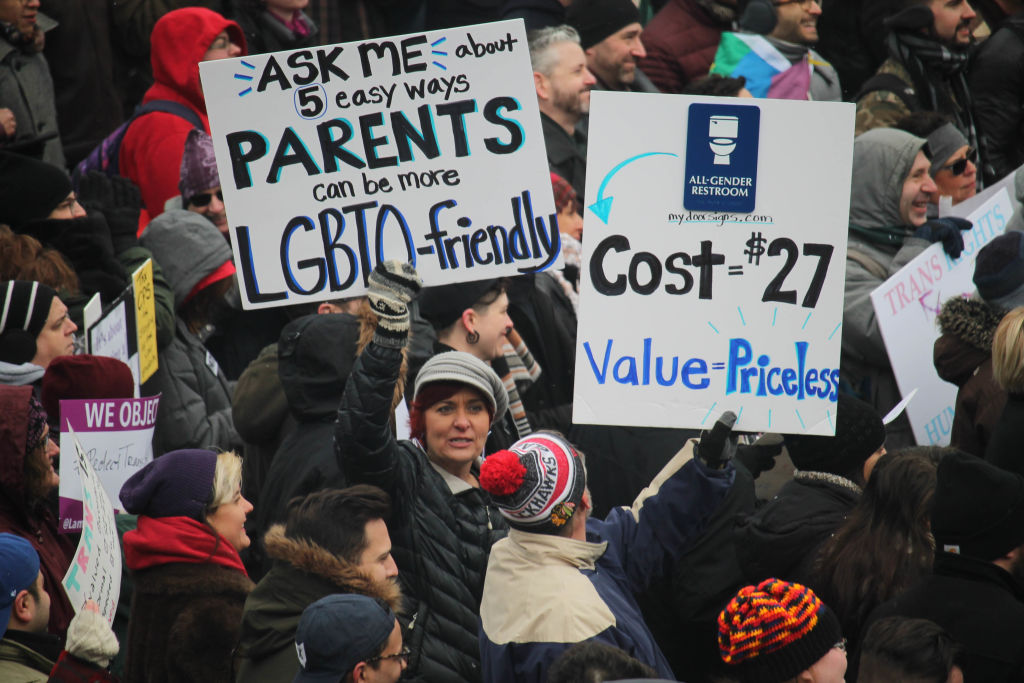
Colorado School District Goes to War with Trump Administration: Jefferson Co. School District is Fighting the Trump Administration’s Pushback Against the Transgender Agenda
- One School District’s Fight Against Trump’s Anti-Transgender Push by The New York Times (Michael C. Bender)
Mount Sinai Shuts Down So-Called ‘Gender-Affirming Treatments’ for Adolescents: This Is Big News and Good News
- Mount Sinai Agrees to Pay a Fine Over Adolescent Gender-Transition Care by The New York Times (Joseph Goldstein)
Europe Wrestles with What to Do with Empty Churches: This is an Unfolding Tragedy from the Devastating Wake of Secularism, and a Parable of Our Times
- What to Do With Europe’s ‘Zombie Churches’? These Artists Have Some Ideas. by The New York Times (Nina Siegal)
Follow Dr. Mohler:
X | Instagram | Facebook | YouTube
For more information on The Southern Baptist Theological Seminary, go to sbts.edu.
For more information on Boyce College, just go to BoyceCollege.com.
To write Dr. Mohler or submit a question for The Mailbox, go here.
Get every episode summarized
Each time The Briefing with Albert Mohler publishes, we email you a written briefing from the transcript — the topics, who appeared, and any specific claims, with the ad reads skipped.
Email me new episodesFree for 3 shows. No card needed.
Hosts & guests

Transcript ready
397 searchable segments. Every word is indexed and playable.
Full transcript
The Briefing with Albert Mohler — Thursday, September 10, 2026. Machine-transcribed; use the interactive transcript above to jump the player to any line.
It's Thursday, September 10, 2026. I'm Albert Moller, and this is The Briefing, a daily analysis of news and events from a Christian worldview. In this second term, President Donald Trump has been pushing back. His administration has been resisting in a big way. The transgender agenda, particularly when it comes to children and young people. I think this is one of the most important developments in terms of this term, and it's a very big issue, and it is clearly one that divides Americans. You have those who are for the idea that young people should be able to receive so-called treatments for transgender identity. And of course, that goes on in terms of everything from forms of therapy to drug interventions, hormonal treatments, and eventually even in some cases surgery. But at the same time, it has become very clear to millions of Americans that this is insanity. It is immoral. And frankly, it is a denial increasingly of reason.
You just look at this and you realize this is reaching the point of irrationality. A very interesting article appeared in the front page of the New York Times, and it comes from the state of Colorado. Here's the headline, funding at risk a school district sues over an anti-trans push. Okay, I'll just stop for a moment. Let's consider the headline. Every once in a while, we just need to look at the media and understand what's going on. Here the term is anti-trans push. So that would insinuate just because of the way the headline is constructed, that being not anti-trans would be the right position. Anti-trans in this sense clearly insinuates a form of antagonism. And of course, that's exactly what the school district there in Colorado is claiming. The article is by Michael C. Bender, who were told this, quote, Rob Stein had been interim school superintendent in Jefferson County, Colorado for 22 days. When he sued the Trump administration this summer over demands to change their transgender inclusive policies. This gets really interesting. Listen to this quote.
Dr. Stein and other district officials say they had no choice. The cash-trapped district, Jeff Co. public schools, risk losing all $50 million of its federal funding for school meals and special education if they refuse. But if they acquiesced, they concluded, they would violate state laws that protect transgender students from discrimination. The school superintendent, in this case, interim said quote, this has been just an enormous distraction. It has added a lot of stress to the system and to the kids who are being targeted here. End quote. Okay. There's a lot of explosive material we need to consider just in those few sentences. Number one, we're being told that we have an interim school superintendent who backed by the school board in Jefferson County, Colorado, is taking action to sue the Trump administration because they say if they did follow the Trump administration's very clear guidelines, then they would be in conflict with state law there in Colorado. Now, here's the thing. Clearly, they are in terms of worldview identified with that state law and against the federal
regulation, the pressure that is now coming from the Trump administration. And furthermore, just notice the language used by this interim superintendent. It says quote, it, meaning this situation, has added a lot of stress to the system and to the kids who are being targeted here. So here you have an open insinuation that the Trump administration and pushing back on the transgender agenda is actually targeting children and young people, children and teenagers. That's just incredibly important. And we need to understand that there would be people who would read this article and say, you know, that's exactly the right way to put it. And that is because on this issue, you have a very clear divide. You either believe that it makes sense. It makes moral sense to say to children and teenagers that you are a biological male, you can identify as a girl or you're a biological female and you can identify as a boy. It makes sense to them. It even makes sense to those who are in this activist mode that there are kids who can just identify themselves as non-binary as if by the way, that's a sensical gender description.
No doubt we're talking about children and teenagers who are genuinely confused. Our sympathy should be with those children. But it's sympathy for those children that leads us to say, this is insanity coming in the form of a lawsuit that takes this Jefferson County school system there in Colorado at war with the Trump administration. Now there's more to it than this, of course. And yet the bottom line issue is whether or not it makes sense. Moral sense, rational sense, sense anyway you want to define it. To say that a biological male, child or teenager can identify as female vice versa. And of course, this gets to the whole issue where many parents and communities get actively involved, not so much just at the level of the violation of creation order. But of the fact that pretty soon you're talking about very concrete questions as to who can be in which bathroom, who can be in which locker room, who can play on which team. And by the way, if you do not buy into the transgender or non-binary issue here, the argument, then you actually don't have those problems.
The answer is very clear. And the answer of course is grounded in reality, ontology, biology. Now of course the transgender advocacy community is all for this. And one advocate for transgender rights identified and the name tells you just about everything identified as Z Williams, also identified as co-director of the bread and roses legal center in Denver. And by the way, nowhere is there any he or she involved here, any kind of pronoun. So we'll just have to say that individual and the Z doesn't tell us really what even to think. That individual says that too many institutions, speaking of schools and other organizations, have responded to the Trump orders with quote, voluntary capitulation. And so this activist is just incredibly glad that the school district in Colorado, and we're told it's going to be joined by others, has taken this position of opposition. In summarizing the article, the time says quote, the dispute has thrust the school district
into the center of the mushrooming culture war that Mr. Trump has led against transgender Americans. It encapsulates virtually every flashpoint of the political struggle between gender identity and biological sex that has become central to Mr. Trump's effort to reassert conservative social values into public schools and universities. End quote. Again, every once in a while you just note that the framing of an issue tells you just about everything about what's behind it. In this case, this New York Times article frames the issue as if the Trump administration is the odd actor here insisting on the fact that biological sex is determinative. Let me just point out that even the people writing these articles or their parents or grandparents, you go all the way back. And when you even look at, say, liberal democratic politicians, just a matter of a few years back, they all would have said exactly the same thing. And so it is not the Trump administration in this case and conservatives who are reframing the issue, the issue, ideologically, is being refrained by those on the left, those who
are the transgender activists. They're now acting as if their position makes common sense, which clearly it doesn't. And so the onus here is on those who would push back on the transgender agenda. You're targeting transgender teens. That's the bottom line in terms of the moral argument reflected here. Sometimes I look at this kind of article and again, we're talking about the front page of the nation's most influential newspaper I look at it and just wonder how in the world does anyone think this makes sense. So for example, there is a young person who is basically cited, even named in the article identified as Ollie Parlett identified as 14 years old identified as well identifying as non-binary. And clearly you have the school superintendent, the interim superintendent and others saying, you know, we're trying to come up with policies that are supportive of that non-binary identity. But then you also look at the article and we are told that this particular child who is now 14 began identifying as non-binary at age 12.
Ask yourself the question, is it just in practical terms? How exactly would that happen? Now this particular child is also quoted. In fact, this child has the closing quote in the article. The child is quoted as saying quote, people hate what they don't understand. But if they would just hang out with someone who is trans or go to a drag show, they would see the healing joy and in about 10 minutes their preconceived notions will not be there. End quote. Let's just take seriously for a moment the fact that here we are told in a front page news story that a 14 year old child has said that if people who don't understand the non-binary or transgender activism claims and they don't understand this child, all they have to do is go to some kind of trans event or a drag show. Seriously, the New York Times has just run a front page article that ends with a 14 year old suggesting that adults should go to a drag show in order to understand what's going on.
I'll tell you what's going on and this is something that Christians need to note. The culture, influencer class in this country has reached the point where they believe that a moral imperative from a non-binary 14 year old that people who don't get it should go to a trans event or to a drag show, they actually believe the argument. It's hard for us to believe, but we need to understand this and this is the really shocking thing. They cite this child because they clearly side with the argument. They come down to a 14 year old suggesting those who don't understand go to a drag show. I think most of us can at least remember a time when it would have made sense, just consider this for a moment, that a 14 year old would even know what a drag show is. All right, now I need for us to go to Manhattan. Another headline, Mount Sinai, will stop providing adolescent gender transition care. Okay, now we're looking at a school system that is defying and suing the Trump administration
but a major hospital center, an extremely influential Manhattan health care center that is basically now agreeing to follow what is now pressure from the Trump administration for them to stop providing adolescent, quote, gender transition care. And actually, the hospital has gone to the point that it has agreed with the administration to put together about a $2 million fund to help children who want to de-transition. In other words, to actually reverse what had been a so-called gender transition procedure, care of one form or another. The article begins by telling us, quote, a man, had in hospital system, struck a deal with the Trump administration to stop providing gender transition care to adolescents, agreed to pay a fine, dedicated $2 million fund for free medical care to patients, quote, the deal which was revealed last Friday resolves an inquiry by federal prosecutors into the Mount Sinai health system. It was one of several health systems across the United States to receive grand jury subpoenas as part of efforts by the Department of Justice to investigate gender transition treatments
for adolescents, and quote, okay, there's a lot more here than may meet the eye because some people would want to say this is just about political pressure. No, we're talking about grand juries. We're talking about having very serious questions raised about the behavior, not only of this, but of several other major medical centers in the United States. And it comes to this so-called gender transition care. Okay, listen to this and this reminds you why who's in the White House makes a difference. Quote, during the past year, many major US hospital systems have stopped offering a range of treatments, including hormone therapy and puberty blockers to adolescents seeking to transition. Why do they do that? Well, it's because of this pressure from the Trump administration. Quote, New York has a significant number of transgender youth with about 3% of 13 to 7 year olds in the state identifying as transgender, roughly twice the national average according to one survey, end quote. All right, that's also very, very interesting. When it comes to this non-binary and transgender identity, one of the things that has already
been identified is what is known as social contagion. And so here you are told that in New York, and remember, this is proportional, it's percentage that the percentage of 13 to 17 year olds who consider themselves transgender or non-binary is 3%, which is about double what is found in the rest of the country. All right, this issue of social contagion comes down to the fact that especially on the side of girls identifying as non-binary or as transgender and identifying as boys, particularly among girls, but in a larger adolescent setting, social contagion means, for some reason, there are sometimes pockets, a groupings, where you have several young people who know each other in a social setting who commonly identify over a short amount of time as either transgender or non-binary. Now that's an indication, particularly when you look at adolescent health. That's an indication that something's going on here that is social rather than medical. Of course, that raises the whole issue. As Christians understand, the fundamental biological issues it's take.
But the fact that it is possible that this be a social contagion tells us that an awful lot of this is not actually driven from inside these teenagers, but from forces and influences outside the adolescents. By the way, some of the very credible research into social contagion points out that if you want to get attention in some social settings as a, say, 13 to 17 year old, identifying as non-binary or identifying as trans or questioning or anything, frankly, on that entire array, it is a way of getting attention because the response of the left and the response of the activist community and the response of so many school systems, and indeed sometimes even medical authorities, is to respond with pure affirmation. Sometimes there are children who, frankly, are obviously hungry and thirsty for affirmation. This is one way to get it. By the way, they also get it from their peers, and that is a huge thing. As one study said, if you are unknown or unpopular, all of a sudden you have an identity
that becomes popular. If you do identify in terms of some alternative sexual identity or non-binary or trans in particular. Now by the way, as Christians talk about this and think about this, we need to back up just a moment and say, well, this makes us even more concerned for these young people. And frankly, this is a need that is common to young people, and this is something that also points to the fact that there are many young people aren't getting enough attention. They're not supported enough. Their systems are not adequately supportive, sometimes in their families and also in their peer systems. That is something that, of course, is in itself of moral concern. But when it turns into social contagion, non-binary, transgender identity, and all the rest, let's just say this is something that has turned toxic. All right, on this story, coming from outside, it's such a well-known and well-identified medical institution there in New York City. Let's just also understand that this article acknowledges that one of the reasons that the medical center has gone along with this is so that there will be no further investigation
in terms of, let's just say the power of a grand jury or an investigation by the justice department. Okay, that also tells us something. When this, all of a sudden, is reached as a settlement, and you understand that a part of the settlement is that there will be no further press for information, data, evidence when it comes to some sort of investigation against these institutions. In this case, a medical center, it tells you something that they entered into this agreement in part to stop further investigation. In worldview terms, that also has to tell us something. On this issue, I want to read to you final sentences in this report. Gender affirming treatments for adolescents are the subject of intense debate around the United States and the world. Some patients say they experience dysphoria and intense mismatch between their gender identity and their births sex, leading to distress. The Trump administration asserts that these children are impressionable and need to be protected because the administration says the treatment can harm them.
The final words quote, but some parents say that transgender treatments have dramatically improve their child's self-confidence and happiness. End quote. I just want us to note how this article ends with an incredibly subjective evaluation. It also, just to say the very least, underlines the fact that in some cases, the parents are clearly part of the problem. Now let's shift to the international sphere. It's also very interesting that a major report has come telling us that Europe's churches are closing fast and that communities are trying to figure out what to do with the abandoned church properties this too. Just a matter of vast significance. We are told in this article by Ninaseagle that in Germany alone about 20,000 churches are expected to close, become inactive and empty over the next 10 years. So that's 20,000 churches. And what they mean in this article is church buildings. Here's how the article begins quote, the St. Mary in Church is a 20th century brutalist landmark in North Essen, Germany with a dark brick facade and handmade stained glass
windows that led in a soft, a few slight. Since June, thousands of art levers, tens of thousands of art levers, a flock to St. Mary and for an exhibition featuring a performance art piece in which two Korean singers translate bird song for the human voice, a sculpture made of overturned plastic shopping carts, and a video installation by the Danish group Superflex titled Sleeping Jesus. And get you following quote, the exhibition part of the biennial manifesto 16 rure is likely to be the church's last hurrah when the manifesto closes in October, St. Mary and is scheduled for demolition. Okay, I gave you the number there in Germany. It comes up again, 20,000 churches to close of that according to the man who's the director of this organization, manifesto quote, thousands more churches across Western Europe are expected to become vacant in coming years as their society's connection to Christianity wanes. End quote. Right, I want to give in this case credit to recognizing that this is a huge story.
And also to understand that when you are looking at 20,000 churches closing in a country like Germany, which was after all, a very thick culture Catholic nation, even as it also was in so many ways the birthplace of the Protestant Reformation, the fact is that something now is very different than everything that came before in terms of previous centuries, and that something is called secularization. Now, the article doesn't use the term, but that's what's going on here. As countries or society secularize, you see church attendance just going down and down and down and eventually cratering. You see churches closing and when it comes to the process of secularization, that's a society becoming less theistic. And that means in this context, less explicitly Christian, it's losing its attachments to Christianity, it is becoming a far more secular community. Well, to put the matter bluntly, secular people don't go to church and secular communities are going to end up with a lot of empty church buildings. Now this process of secularization has been driven ideologically.
It also has a function that's not so much ideological, but just has to do with the functions of modern society. The fact is that secularizing pressures are all around us. The evidence is here in the United States, but not in this terms of scale. This scale is something that is unprecedented in Christian history. And what we're watching is Europe in general becoming a laboratory for this radical and rapid secularization process. We're talking country by country about tens of thousands of churches just ceasing to exist. There are buildings just standing there. Many of them, by the way, near the center of the cities because that was how central Christianity was to the society. And so the abandonment and collapse, the vacancy of this church is, this tells us a great deal about the vast changes that have come in the worldview. And of course, as Christians, we look at this in our first concern, isn't for abandoned buildings. It is for lost ministry. It is for the abandonment of the Christian faith. It is for what will be the inevitable result of the secularization of these societies.
But it is really interesting that the secularization has continued to pace. To the point that you're looking at so many countries saying the big question is, what are we going to do with all these church buildings? In Germany, some of them are being repurposed. You see here as an art museum, but that's not going to last long. They're going to tear the thing down. And by the way, some of the churches being abandoned are fairly new. The brutalist architecture was a very regrettable architectural trend of the 20th century. But many of the churches being abandoned, and as we're talking here about buildings, are actually churches that have existed as thriving communities for centuries. After this from the report, quote, church attendance has been steadily dropping since the mid-20th century because of changing social norms, scandals that drove congregants away, and demographic shifts on the European continent. End quote. Let me just say that they use the term demographic shifts. What this really means is the influx of immigrants, often coming from Muslim and other, well, let's just say, non-Christian backgrounds. They cite a Pew Research Center report last year that found that about two-thirds of Europeans
identify as Christians in 2020, quote, a drop of about 9% from a decade earlier. Many Europeans who said they had been raised Christian also describe themselves now as, quote, religiously unaffiliated. End quote. Now, this is something in terms of secularization that people have been watching over the course of the last several decades. But right now, what we're seeing is a social acceleration of secularization to the point that many congregations have already failed. They're just not able to sustain their ministry. Now you're looking at tens of thousands of others that are almost surely to fail as well. This article, however, is really interesting, very revealing, very concerning. It's in the art section of the times. So this really tells us something. So this is being treated as an art story, and that's because many of these, quote, hollowed out spaces are being repurposed for some kind of, say, artistic or cultural use. They're being used as museums or as display pieces. It is really interesting. It's also interesting to note that this is being presented as an absolute one-way process.
This is something else we need to note. The prophets and theorists of secularization clearly over the course of the last, say, 100 plus years, see secularization as absolutely irreversible. There once was a time when this society and its understanding of reality was overwhelmingly framed by the Christian worldview. That time is no more, and there is no way we are ever going back. You see, because that is seen as an art, it's seen as an arc with an arrow on it, it's seen as a directional. And so far as the secularists understand, the only direction that is possible in the modern age is a secular direction, the abandonment of Christianity. And for that matter, the vacancy of tens of thousands of churches. Now I remind you once again that this is an art's culture section of the paper, and I quote, although many Europeans no longer regularly attend church, communities often want to retain the buildings which are ornate, spacious, and durable for other shared activities. End quote. Now here's a really haunting thing.
By the time you get to the end of this article, there are people there in Europe who are describing these buildings as offering a new quote way to congregate. You know, Christians, you need to pick up on that very quickly, because we're talking about here the recognition that these places offer an opportunity to congregate. This is where with broken hearts and with humble spirits, Christians have better recognized, yes, because what was once in those buildings was what was called a congregation, a gathering of believing Christians. Sadly, sometimes the belief left before the people left, but you're looking at what in theological spiritual terms can only be defined as abject disaster. Also, in this article, you have one person there in Europe describing these churches either in decline and soon to close or already close, they're defined as zombie churches. Just think about that for a moment. It is a reference to the buildings, we understand. But still we're talking here about the pattern described as zombie churches.
This is exactly where the prophets and the leaders in the culture want the culture to go. Overwhelmingly, you're talking about the culture elites wanting to further and push this process as do the revolutionaries, as do the sexual revolutionaries, the gender revolutionaries, just go down the list of those who are pressing for a radical revision of the culture and understand this. They do understand one thing, and that is that they can't achieve their aims if those churches are full. That's why you need to understand that the big point here, as it shows up even in the arts section of the times, is that they think they are winning. Just connect the dots. That means that they think they're winning because the churches are empty. If that doesn't serve as a warning to the church, what would? Thanks for listening to the briefing. For more information good on my website at AlbertMolar.com, you can follow me on xertwitter. We're going to x.com-forward slash AlbertMolar for information on the Southern Baptist Theological Seminary, go to spts.edu.
For information on voice college, just go to voicecollege.com. I'm speaking to you from Beaver Creek, Ohio, and I'll meet you again tomorrow for the briefing.
More episodes
More from The Briefing with Albert Mohler

Friday, September 11, 2026
The Briefing with Albert Mohler
Wednesday, September 9, 2026
The Briefing with Albert Mohler

Tuesday, September 8, 2026
The Briefing with Albert Mohler

Friday, September 4, 2026
The Briefing with Albert Mohler