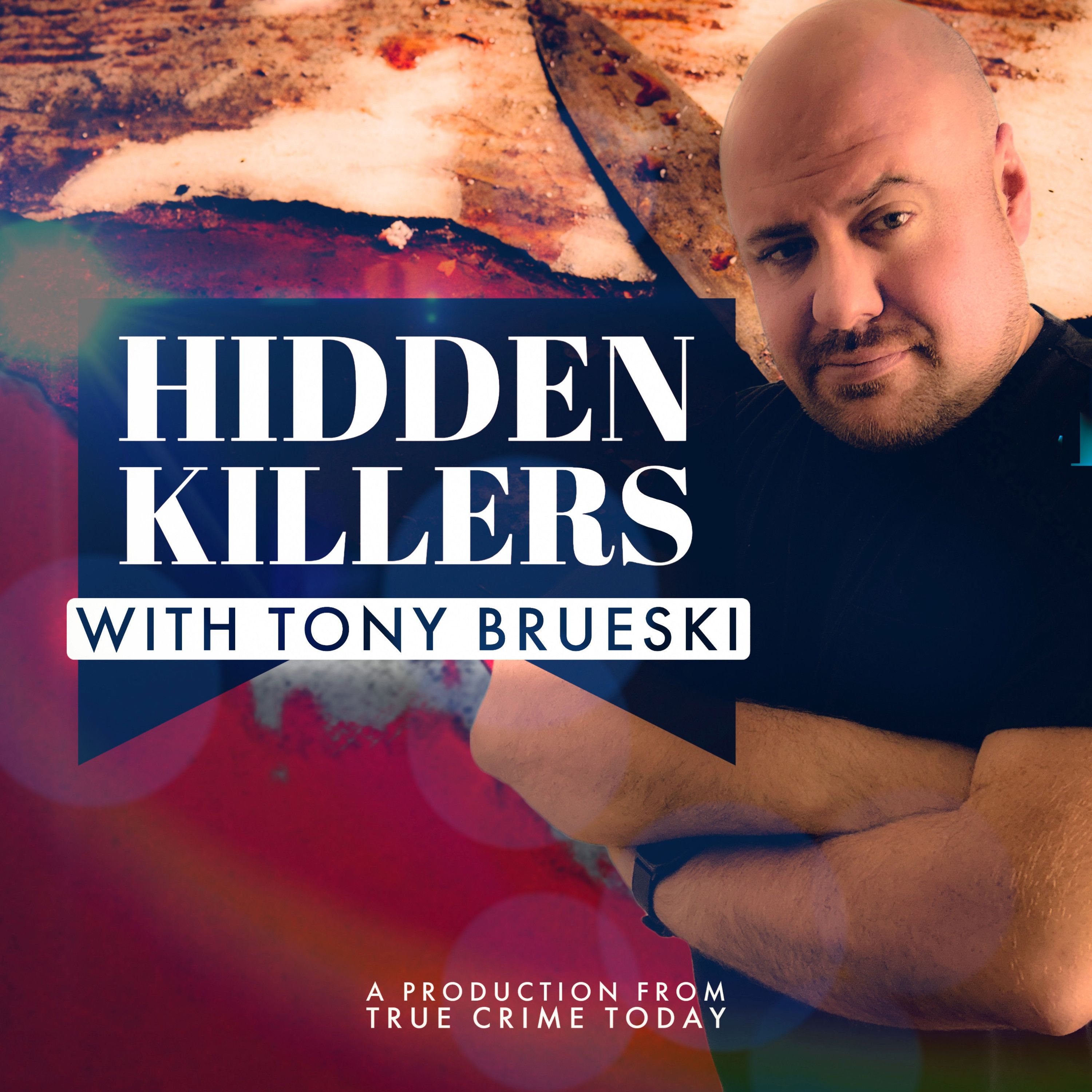
The Shape of Him Finale: What Predicting Bryan Kohberger Would Have Actually Required
About this episode
Hidden Killers presents the series finale of The Shape of Him — an unflinching examination of the certainty we build after catastrophe, and the harder truth about what we actually had before it.
When Kohberger's name became public, many people who knew him reportedly felt not shock but recognition. Of course. Two words that feel like foresight. Two words the brain constructed after the fact from materials that were genuinely there but never organized into that kind of clarity in real time.
Tony Brueski examines hindsight bias — the documented neurological mechanism behind that "of course" — and what it means for how we think about warning signs and prevention. He examines what behavioral science actually says about predicting targeted violence: that the problem is structurally hard, that the false positive rate is enormous, and that no checklist or system has closed the gap between what we can sense and what we can act on.
And he speaks directly to the person watching someone right now — quietly, carefully, without knowing if the watching is necessary. Living in the uncertainty that this series has been building toward for five episodes. That person deserves honesty more than comfort. This episode gives her both. Series finale. The complete Shape of Him series is available now.
Join Our SubStack For AD-FREE ADVANCE EPISODES & EXTRAS!: https://hiddenkillers.substack.com/
Want to comment and watch this podcast as a video? Check out our YouTube Channel. https://www.youtube.com/channel/UC8-vxmbhTxxG10sO1izODJg?sub_confirmation=1
Instagram https://www.instagram.com/hiddenkillerspod/
Facebook https://www.facebook.com/hiddenkillerspod/
Tik-Tok https://www.tiktok.com/@hiddenkillerspod
X Twitter https://x.com/TrueCrimePod
This publication contains commentary and opinion based on publicly available information. All individuals are presumed innocent until proven guilty in a court of law. Nothing published here should be taken as a statement of fact, health or legal advice.
#BryanKohberger #TrueCrimePsychology #IdahoMurders #HiddenKillers #HindsightBias #TrueCrime #MoscowIdaho #TheShapeOfHim #CriminalPsychology #TrueCrimeCommunity
Get every episode summarized
Each time Hidden Killers With Tony Brueski | True Crime News & Commentary publishes, we email you a written briefing from the transcript — the topics, who appeared, and any specific claims, with the ad reads skipped.
Email me new episodesFree for 3 shows. No card needed.
Hosts & guests
Transcript ready
259 searchable segments. Every word is indexed and playable.
Full transcript
Hidden Killers With Tony Brueski | True Crime News & Commentary — The Shape of Him Finale: What Predicting Bryan Kohberger Would Have Actually Required. Machine-transcribed; use the interactive transcript above to jump the player to any line.
Tax season has arrived and doing taxes without the right help can feel overwhelming. Into it, TurboTax is here now to guide you through it with confidence. Match with a TurboTax full-service expert who handles everything for you from start to finish. Your dedicated expert checks every single deduction and credit to help you get the best possible outcome so you can feel confident you're getting every dollar you deserve. And the best part, you'll see real-time updates on your expert's progress right on your phone while you live your life. Plus, you get unlimited expert help at no extra cost, even on nights and weekends during tax season. Visit TurboTax.com. Only available with TurboTax full-service experts, real-time updates only on iOS mobile app. Tyler Reddick here from 2311 Racing. Victory Lane? Yeah, it's even better with Chamba by my side. Race to ChambaCasino.com. Let's Chamba. No purchase necessary, VTW Group, voidware prohibited by law, CTNCs, 21 Plus, sponsored by Chamba Casino. It's tax season, and by now, I know we're all a bit tired of numbers. But here's an important one you need to hear — $16 billion. That's how much money and refunds
the IRS flagged for possible identity fraud. Here's another one. One in four honest, hard-working tax-paying Americans has been a victim of identity theft. But it's not all grim news. LifeLock monitors millions of data points per second for your personal information and alerts you to threats you could easily miss on your own. If your identity is stolen, LifeLock's US-based restoration specialist will fix it, backed by another good number. The million-dollar protection package. In fact, restoration is guaranteed or your money back. Don't face identity theft and financial losses alone. There's strength in numbers with LifeLock identity theft protection for tax season and beyond. Visit LifeLock.com slash iHeart and save up to 40% your first year. That's 40% off at LifeLock.com slash iHeart. Terms apply.
I want you to think about a specific moment. Not the crime scene, not the courtroom, not the arrest footage. A phone, a nightstand, a name appearing on a screen, or a text from a friend that says, turn on the news, or a co-worker stopping at your desk saying, did you hear about the guy they arrested in Idaho? The private moment. Wherever it happened, however it arrived, when someone who knew Brian co-worker found out, and the reaction that multiple people reportedly had afterward, not shock, something a little quieter, something that settled instead of shattered. Something that felt less like new information landing and more like a name finally being attached to a shape that had been standing in the room for a long time without one. Of course, two words, of course. And I want to say,
nothing wrong with this. This is this is humans reacting to information based on the information they already have. And when they heard, Brian co-worker was arrested for this crime. That was the reaction of a lot of people, of course. And I want to stay right here with those two words before we go anywhere else, and I want you to give us your thoughts in the comments section on Substech and YouTube as we work through this. So please do, links are in the description. Because those two words are doing something important and something dishonest at the exact same time. They're presenting themselves as foresight, as clarity that was always there. As the natural endpoint, there's something visible all along to anyone paying close enough attention. As proof that the warning signs were legible and the trajectory was readable and the only thing missing was someone willing to act and what everyone else already knew. But that is not what was happening before his name was on the news. Before the arrest, the people who would later say, of course,
were not walking around with foreknowledge. They were not living in a state of quiet certainty. They were living with discomfort that didn't have edges, unease without a conclusion of feeling that existed without a road attached to it. The certainty arrived after. The brain assembled its materials that were already there and delivered the finished version as something that had always been present in that form. It hadn't. The underlying and the understanding why the brain does that and what it costs the people it happens to is the whole point of this episode. Here is what actually is happening in the brain when this occurred. Not from a textbook version, the real version. When you get the news that somebody you know, you heard of, you got some knowledge of some experience with when you find out that they did something horrible. And you're like,
of course, it's all that coming. But did we, did we really, how much, how much did we see those things coming? Because here's what's actually happening. Your brain cannot live with ambiguity permanently. It is not built for it. It is built for meaning, for narrative, for the sense that things happen for reasons that were there to be seen. When something significant happens, something painful, something that demands explanation. The brain goes back through every stored piece of data and reorganizes it around the outcome and finds what fits and marks it as important. It sets aside what does it. It builds a story, coherence, sequential, inevitable. A story that feels like memory because it's made of the same material as that memory. And it hands you to that story and tells you it was always there. It wasn't. It was built after assembled from real materials, real feelings, real observations, real moments of unease, but organized around
an outcome that didn't exist yet when those materials were being collected. This is where a lot of people feel guilty because it's like, well, maybe if I would have said something, maybe if I would have done something, it's an illusion. It's not to say there's not warning signs and things of that nature, but there's not always actionable moments that one can take prior to something horrible going down. This is why studies on this are so consistent. When people are asked to recall their predictions about events before outcomes were known, they reliably remember being more certain than they actually were. Even when their real predictions were written down and can be compared directly, even when the evidence of what they actually believed beforehand is sitting right there. The memory of certainty is stronger than the record of doubt because the brain has done its work and the work is invisible and seamless and feels exactly like genuine recollection. Of course, I always knew something was off. Did you? Where did you feel something? You couldn't
name live with that feeling without anyone to take it. And now with the outcome known, have the feeling reorganized by your brain into something that looks like knowledge you possessed all along? Those are not the same thing. Intreating them as the same thing caused people in ways that nobody is tracking. Think about how many people are walking around right now, carrying the weight of something they felt and didn't act on. Something they noticed and couldn't name. Someone they quietly moved away from without a confrontation. And then something happened and now they're living with the retroactive certainty of, I knew, I saw it. I should have done something. I should have said something. I should have trusted myself more. That weight is real. The guilt attached to it is real. The experience of carrying it is real and it is heavy and it does not let up easily, but the clarity underneath it, the sense that you had knowledge and failed to use at that part is often the brain doing its job, not lying,
not revising deliberately, just building the coherent narrative it needs in order to function. And the person carrying the result is paying the price of a certainty that genuinely was not available before it was too late to be useful. That is something worth saying out loud because a lot of women are carrying that weight right now, men carry that weight about Brian Cobrager specifically, about other situations in their lives where something happened and the that happened and the course of action changed. Feeling like proof of failure, feeling like evidence that they should have known was there. Most of the time, it isn't that. Most of the time, it is the brain being the brain. Let's be honest about why prediction is actually hard,
not because people aren't paying attention, not hard because the warning signs weren't there. Hard because of what the research actually says about our capacity for it. The number of people who display behavioral patterns associated with risk and never go on it to commit violence is enormous compared to the small number who do. Enormous. If you tried to flag everyone who fit a profile like Cobrager, the isolation, the intensity, the social disconnection, the preoccupation with dark subject matter, you would flag a massive population of people who will live their whole lives without hurting anyone. For every person you correctly identified, you'd be flagging hundreds who were just difficult, just odd, just built in ways that don't translate easily to the surface. The variables that determine whether someone who carries darkness acts on it are not visible from the outside. They may not be visible from the inside. We have no reliable way to look at a person, even a person who gives people that feeling, even a person who documents his own darkness on
Reddit, even a person who studies criminal psychology, because it maps something he feels inside himself and know within a certainty which way it goes. We are not bad at this because we are trying hard enough. The problem is structurally hard in a way that no checklist addresses and building understanding around the premise that the signs were clear that the trajectory was legible and that the right person paying the right kind of attention at the right moment would have seen it and could have stopped it creates a harm that distributes itself quietly across a lot of people. It generates guilt in people who don't predict. It generates shame in people who fit the profile and haven't done anything wrong. It expands surveillance in ways that consistently punish difference rather than danger. And it tells a large audience of people who are already prone to second guessing themselves that they should have seen something coming that the science says was genuinely not
readily able to be seen. I want to talk to the person living in uncertainty right now, not in hindsight today. Maybe there's someone in your life who worries you, not dramatically quietly. Someone to keep a low level eye on without being entirely sure why. A family member whose behavior has been shifting in ways you feel but can't document a coworker. You started to avoid without a specific reason. You could stay out loud if someone asked. Someone you used to be close to and have slowly carefully without any confrontation put distance between yourself and you lie awake sometimes wondering if what you're feeling is perception or paranoia, whether you're being appropriately cautious or unfair to someone who hasn't done anything wrong. Whether the watching is necessary or whether nothing will ever happen and you look back on years of quite
vigilance and feel foolish for all of it. Whether you should say something to whom, in what words, what it would even accomplish, that uncertainty is not a character flaw. It is not evidence of failure. It is the honest accurate response to not having enough information to know. You are not failing to be perceptive enough. You're living in ambiguous risk, which is the only kind most of us ever actually have access to. Actually, I can tell you, you're not responsible for predicting the future. You are not failing by not knowing. If something does happen, if the thing you've been quietly afraid of comes to pass, the certainty that arrives in the aftermath is not the clarity you had before it happened. It will feel like it was. Your brain will build it to feel exactly that way completely, convincingly, with all the emotional weight of genuine memory, but it isn't.
And the guilt that comes attached to it is not evidence that you failed someone. It's evidence that you are human in a situation that human beings are genuinely not built to resolve cleanly. You did what the information allowed. That is all anyone does. That is all anyone can do. The formal apparatus of a legal system moving around Brian Koeberger is not anything that necessarily could have been predicted. Prosecutors and defense attorneys and evidence and testimony in all the machinery of accountability that could only begin to move once the threshold was crossed. Once four young people were gone, once Ethan Shapen, Zanna Cernuttle, Madison Mogan, and Kayleigh Gonzalez were not there to wake up anymore. Once the evidence existed to be gathered and evaluated and presented in court. Everything before that moment, all of it, the years of self-documentation, the social disconnection that followed him from Pennsylvania through disales through Washington State, the delivery driver standing outside a
closed apartment door with something in their chest. They couldn't name the classmates keeping their distance without a reason they could produce the graduate students and the TA sessions and the people who drifted away. The institutions that encountered him and found nothing that crossed a threshold. The academic career spent in the formal study of the very psychology that appears to have been mapping his own interior life. None of it was enough, not legally, not structurally, not practically, not enough to change what allegedly happened in that house. And it's not even alleged what happened in that house. What happened in that house? It's not because nobody noticed. Because the gap between noticing and being able to act is wider than we want it to be. That gap is not new. It didn't open for the first time here. It's existed in every society that's ever tried to balance individual freedom against collective safety. And it will keep existing because closing it, actually closing it, not narrowing it around the edges, but genuinely closing it requires a different kind of society than the one we've decided to be.
A society that acts on feelings rather than fact that restricts people based on who they are rather than what they've done that accepts flagging on enormous population of odd, harmless, socially misaligned people as the cost of earlier access to the smaller number who aren't harmless. A society comfortable with what that error rate is comfortable with what it does for the people that catch us by mistake. We've not chosen to be that society. There are reasons for that choice, real ones, reasons that deserve to be taken seriously, even in the aftermath of something like this, even when the cost of the gap is for young people who are not alive. But we need to say it plainly, out loud instead of leaving the impression that the only thing standing between us and prevention was a better system or better training or somebody paying closer attention at the right moment. We're very good at explaining people after the fact. We reconstruct the arc with precision.
We identify the signs. We say, of course, we update the checklist. We carry the grief and the clarity and we move forward telling ourselves that next time with the clear picture with the better framework, with everything we now know will be better at seeing it coming. And then the next one moves through the gap and the people around them feel something they can't name and the systems do which systems built on thresholds and evidence do and we find ourselves here again. The gap between what we can feel and what we can do between what we sense and what we can prove between who someone is and what we're willing to do about it before they become a case number and a name read into a court record. That gap is not a failure of attention. It is the cost of the world we choose and until we're willing to say that honestly and look directly at what closing it would require and who else it would close around, we will keep standing in the aftermath saying, of course, meaning it in a way we absolutely could not have meant
the day before. He was right there. And the words he wrote about himself in the shape those years in Pennsylvania built him into in the feeling he left in every doorway in every classroom and every room he moved through right there. Right there was never quite enough to do anything about it. It almost never is. Your thoughts in the comments section. Information is power, you know. We think it is and in many ways it can be but it also doesn't predict the future. The more we study these people, the more we understand them, the more we try to get there to figure out how the brain works, it still can't predict the actions of these individuals. So what do we do? I don't have the answer.
We'll continue our conversation in the comments section. The link is in the description. Substack in YouTube. Look forward to continuing it right there. Until then, my name is Tony Bursky. We'll talk again real soon. VTW Group. Voidware Prohibited by Law. CTNC's. 21 Plus. Sponsored by Tromba Casino. Hi, this is Alex Cantrowitz. I'm the host of Big Technology podcast, a longtime reporter and an on-air contributor to CNBC. And if you're like me, you're trying to figure out how artificial intelligence is changing the business world and our lives. So each week on Big Technology, I bring on key actors from companies building AI tech and outsiders trying to influence it. Asking where this is all going. They come from places like Nvidia, Microsoft, Amazon,
and plenty more. So if you want to be smart with your wallet, your career choices, and meetings with your colleagues, and at dinner parties, listen to Big Technology podcast wherever you get your podcasts. Tyler Reddick here from 2311 Racing. Game night's fun, until someone spends five minutes lining up one shot. Chalk, breathe, re-chalk, still aiming. While they figure it out, I fire up Tromba Casino. I can spend anywhere, anytime, and there's always a new social casino game every week. Spins happen way faster than that shot. Play now at Tromba Casino.com. Let's Chomba. Sponsored by Tromba Casino. No purchase necessary. VGW Groupport, where prohibited by law, 21 plus terms and conditions apply. Hi, this is Alex Cantrowitz. I'm the host of Big Technology podcast, a longtime reporter and an on-air contributor to CNBC. And if you're like me, you're trying to figure out how artificial intelligence is changing the business world and our lives. So each week on Big Technology, I bring on key actors from companies building AI tech and outsiders trying to influence it, asking where this is all going. They come from places
like Nvidia, Microsoft, Amazon, and plenty more. So if you want to be smart with your wallet, your career choices, and meetings with your colleagues, and at dinner parties, listen to Big Technology podcast wherever you get your podcasts. Let's Chomba. Sponsored by Chomba Casino. No purchase necessary. VGW Groupport, where prohibited by law, 21 plus terms and conditions apply. Every day the world gets a little weirder, and a lot more awesome. Cool stuff daily takes a look at everything from mining and space to the latest in the fight against cancer to how AI is basically changing everything. It's all the cool stuff you didn't know you need it to know. Join us for cool stuff daily as we take a quick
look at science, tech, and the wait what stories that make you sound way smarter at dinner. Subscribe to cool stuff daily now because the future is happening fast and it's way too fun to miss. I'm the host of Big Technology podcast, a long time reporter and an on-air contributor to CMBC. And if you're like me, you're trying to figure out how artificial intelligence is changing the business world and our lives. So each week on Big Technology, I bring on key actors from companies building AI tech and outsiders trying to influence it. Asking where this is all going, they come from places like Nvidia, Microsoft, Amazon, and plenty more. So if you want to be smart with your wallet, your career choices, and meetings with your colleagues, and at dinner parties, listen to Big Technology podcast wherever you get your podcasts.
Tyler Reddick here from 2311 Racing. Another checkered flag for the books. Time to celebrate with Chamba. Jump in at chambacasino.com. Let's Chamba. No purchase necessary, BGW Group, voidware prohibited by law, CCNC, 21 plus sponsored by Chamba Casino. Do you love romcoms? Do you wish you could talk about Christmas movies year round? Then we have the perfect podcast for you, Holmarke's podcast. Throughout the year, we cover all things romance, holiday, and Holmarke, including recaps of every Holmarke show, like when calls the heart and the way home. You can also get loads of bonus content covering shows like Bridgerton, Sweet Magnolia, and just like that. We are an all-female group of friends who are passionate for these shows and movies and give our honest opinions as well as gosh over what we love so much. But that's not all. Every Monday there are interviews with all your favorite actors, writers, directors, and more. Check out Holmarke's podcasts on all your podcasts providers and on YouTube. That's Holmarke's podcasts wherever you listen to podcasts.
Tyler Reddick here from 2311 Racing. Another checkered flag for the books. Time to celebrate with Chamba. Jump in at chambacasino.com. Let's Chamba. No purchase necessary, BGW Group, voidware prohibited by law, CCNC, 21 plus sponsored by Chamba Casino. Hi, this is Alex Cantrowitz. I'm the host of Big Technology podcast, a longtime reporter and an on-air contributor to CMBC. And if you're like me, you're trying to figure out how artificial intelligence is changing the business world and our lives. So each week on Big Technology, I bring on key actors from companies building AI tech and outsiders trying to influence it. Asking where this is all going. They come from places like Nvidia, Microsoft, Amazon, and plenty more. So if you want to be smart with your wallet, your career choices, and meetings with your colleagues and at dinner parties, listen to Big Technology podcast wherever you get your podcasts. It's tax season. And by now, we're all a bit tired of numbers. But here's an important one you need to hear. $16 billion. That's how much money and refunds the IRS flank for
possible identity fraud. But it's not all grim news. Lifelock monitors millions of data points per second and alerts you to threats you could easily miss on your own. If your identity is stolen, they'll fix it. Guaranteed. Save up to 40% your first year. Visit lifelock.com slash iHeart. Terms apply. Here's the truth. You could literally be adored by everyone and then come home and still get completely ignored by your own cat. It's classic cat behavior. But new Shiba Premium puree is a lickable treat that changes all that. Their protein rich made with bone broth and have the smooth creamy texture cats go crazy for, especially when it's hand fed. Yeah, it's more than a treat. It's a fast pass to favorite human status. So feed your cat Shiba and go from totally ignored to truly adored in just 12 days, guaranteed, or your money back. Learn more at Shiba.com.
More episodes
More from Hidden Killers With Tony Brueski | True Crime News & Commentary
Lindsay Clancy’s Providers Now Face Two Lawsuits
Hidden Killers With Tony Brueski | True Crime News & Commentary
Why Lindsay Clancy’s Verdict Came Down to One Person
Hidden Killers With Tony Brueski | True Crime News & Commentary
Barry Morphew Put What Price on the Car Damage?
Hidden Killers With Tony Brueski | True Crime News & Commentary
Lindsay Clancy’s Trial Turned Into a Judgment of Who Else?
Hidden Killers With Tony Brueski | True Crime News & Commentary