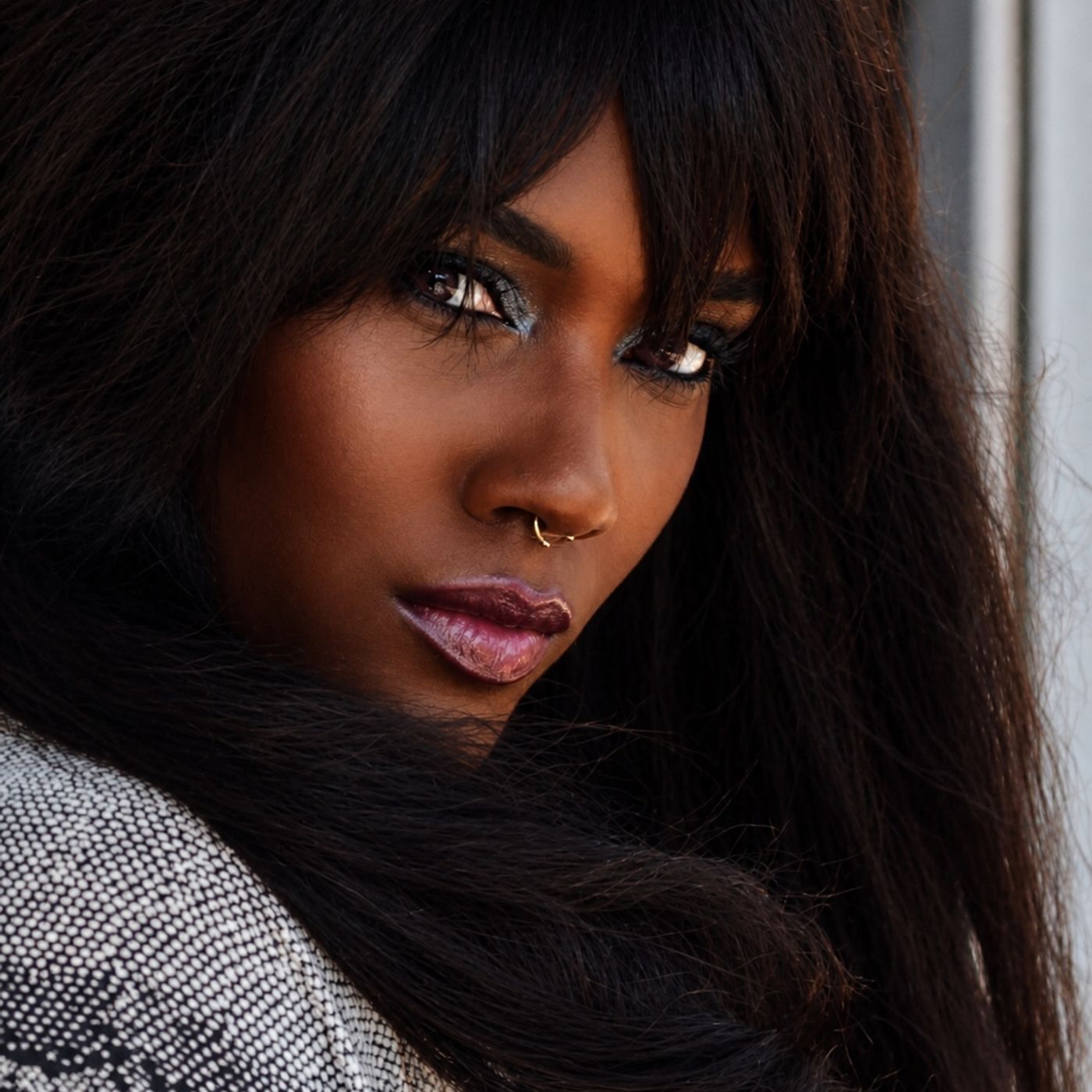
The Black Feminine Paradox: Beauty, Erasure & Power
About this episode
Dr. Melanie-Penny Harrison—known professionally as Bella Maori—joins Gwenm Carsley for a raw examination of beauty: not as an innocent ideal or a matter of appearance, but as a machine that rewards, wounds, seduces, excludes, and keeps us hungry for the next hit of approval.
Through her memoir, Ugly: Philosophy, Beauty, Absurdity, and the Black Feminine Paradox, Bella traces the contradictions she has lived as a Black woman, philosopher, filmmaker, actress, model, and adult content creator. They speak about pretty privilege and objectification; the pressure placed on Black women to alter themselves in order to belong; the shame imposed on women who choose to be seen erotically; and the exhaustion of keeping the scholar, artist, and sexual woman in separate rooms.
At the heart of the conversation is a harder question: What happens when achievement, visibility, and desirability still cannot prove that you are enough?
Bella speaks about reclaiming authorship of her own story, the drive born from feeling invisible, and the one place beauty no longer asks her to perform—the music she makes with her guitar.
An unflinching conversation about beauty, race, shame, identity, body autonomy, and the freedom of refusing to hide.
Get every episode summarized
Each time The Transformation Network™ publishes, we email you a written briefing from the transcript — the topics, who appeared, and any specific claims, with the ad reads skipped.
Email me new episodesFree for 3 shows. No card needed.
Transcript ready
469 searchable segments. Every word is indexed and playable.
Full transcript
The Transformation Network™ — The Black Feminine Paradox: Beauty, Erasure & Power. Machine-transcribed; use the interactive transcript above to jump the player to any line.
Welcome to Skin and Soul. I'm Gwennem Karsley, a transformational body, sex, and soul coach. And I'm inviting you on a bold, unfiltered journey into the heart of our humanity through the lens of arrows. This is where we strip away the shame, dive into the unspoken, and embrace the wild, raw truth of our desires. Together we'll crack open the taboo, uncover our deepest intimacies, and awaken the pulse of our sexual essence. Because real transformation, it's thrilling, and it's oh so delicious. Buckle up loves. Skin and soul beyond the pale starts in three, two, one. Let's go. Hello and welcome to I'm Gwennem. I'm your host of Skin and Soul Beyond the Pale. And the topic today on the table is beauty. Beauty is one of the most worshiped forces in the world, and one of the least most honestly examined. It can open a door and then have us disappear inside the room, give a woman power, and then keep that power conditional. Make her visible without making her feel safe,
desired without being loved, copied without being credited, and admired without ever being truly fully known. My guest today has lived every side of the paradox, Dr. Melanie Penny Harrison, who's also known professionally as Bella Mayori, and I'm going to call her Dr. Penny. Dr. Bella today is a philosopher, filmmaker, and the author of her memoir, Ugly Philosophy, Beauty, Obserdity, and the Black Feminine Paradox. It is a memoir that refuses to make beauty innocent or survival simple. She doesn't stand above this contradiction. She walks us straight into it unapologetically. So I'm so pleased to welcome here Dr. Bella. Hello. Hi. Hi. So I can be here. Yeah. I read your book and it is incredibly intelligent. It's smart. It's raw. It still left me a kind of speechless and flabbergasted because it challenges everything that we know
about beauty. And I'd love it if you could give us just a little bit of context because you've had such a colorful life and world. Okay. Thank you. And thank you for reading my book. I really appreciate it. What a great introduction. I'll just say I wrote the book because I live in worlds where a parent is constantly shaped opportunity, right, in acceptance. So instead of asking whether beauty is good or bad, I became fascinated by why beauty has such power over us. And so my memoir is part life story and it's also part philosophical exploration of beauty, uglyness, shame, identity, and just the contradictions of wanting something that can both elevate us and wound us simultaneously. So how do you define beauty because I know that most of us have this exquisite ideal of beauty and you define beauty in a very different way? Right. The way that I define it is it's not just a physical appearance and I just want to make that first clear. Beauty is
anything that captivates us, right? And it convinces us that becoming or owning or achieving achieving it will make us feel complete, right? And a lot of times as women, we we fill those things. It could be face, fame, youth, wealth, status, success, or just the perfect life. You know, beauty is a promise. That's kind of how I look at it. It's a machine and all those things are kind of like wound up in there. So you're in it or you're out of it. But are you really out of it? And so that's the contradiction that I think it's a the central contradiction. You know, it's not a it's not a poor pretty girl memoir, you know. I'm not a hero who escapes beauty or just so beautiful for this world. It's more of questioning the very system that I was participating in, right? As a model, as doing playboy, cam girl. I don't complain about beauty yet. I stay inside of it. And so a lot of
times I've seen just in my studies that especially as the content creator, era has evolved, there's a lot of women who often complain about, oh my god, you know, all this attention and it's sometimes it could be negative, but then in the same voice, you're also feel like actually like it. You know, I feel like this is part of who I am. So I don't know, it's just sort of this thing. I stay inside of it yet I could critique it and I can't get out. And so I think that beauty rewarded me and it wounded me at the same time. And so my question is not how to escape beauty, but why do we continue to chasing something that we know can hurt us, if that makes sense? It does. And so for you, what do you think some of those rewards were for being beautiful and then and also the setbacks? I think that we're of course, it's a given when you model, you know, you're,
you get income, you get financially rewarded for that just by looking a certain way. Also, when you're in the adult industry, whether you're doing playboy or you're doing cam work or whatever it is that you're doing, you're getting some type of reward, you're getting attention. People are looking at you, you know, people want to be like you. And then you're also getting compensated for that. And so there's just this this tug and pull that I just describe as a machine. It just it rewards us just enough to keep what's inside of it. It opens doors, offers validation, and promises and belonging, but it also creates a comparison, insecurity and just endless striving for just that thing that you really just can't explain what it is. It gives in one hand and then takes in the other. So I don't stand outside the machine criticizing it or anyone else. I just admit I remain to stay inside of it, even though it's hurting me. And I just can't get out. And I think it's fascinating in
a way. It is fascinating because I think we have this reward system that says, oh yeah, I'm going to get paid, which we put above I take oftentimes payment as self worth, right? And there's a cost on the other side, particularly when you're objectified, where the cost is you can be degraded. People find it in their right to to criticize to put in their input. So there's that cost element. And you say it. You say most people think of beauty as a gift and you call it a beast, a dealer of parasite. I believe you say beauty is my metaphysical heroine, the dealer who confronts you, who fronts you that first hit for free, then watches you crawl back begging. It's a really powerful statement. Yeah. Because it, I asked when you think about it, because I know when people just automatically think about beauty, I guess this is where I can kind of incorporate the word ugly in there.
Because they kind of coexist together. And so I just feel like ugly. It's not an appearance, of course, because beauty is subjective, right? But I think ugly symbolizes rejection. It symbolizes when women feel invisible or they fear that they're not enough. And so I think that's why that's how I use ugly and deconstructed within this this realm of this idea of what's beautiful, right? And you can't get out. It's like, for example, I was doing, you know, I was doing content for Playboy. And so, you know, of course, when you're in those type of spaces, you get people telling you things that are rude or they're, you know, they're really telling you bad things, you know, I wrote some of it in the book, you know, there's a lot of things that go on when you're in those in those worlds. And it's like, okay, so you'll say, oh, I'm not doing this anymore. I can't take it anymore. But then somehow you just end up right back in because you long for it. And so I think I'm just being honest and transparent in that
way because some people don't want to admit that. And I feel like that's okay. It's okay to like it. It's okay to want to feel beautiful or it's okay to be empowered in that way in your body. And so, I feel like I'm not attacking beauty. I'm just examining it and my relationship with it. And maybe other people can kind of look at it like, oh, you know, I never really thought of it that way. Because you really can't define beauty if you think about it. It's not just a woman. It's not just a face, you know, it's a machine. It's a thing that's driving something somewhere. Like when you mentioned about the drug reference that I put in my book, for example, you know, there's people who are gamblers right and they go to a casino. And then they're gambling, they're gambling, they're gambling. And then sometime they're winning and then sometimes they're not. And sometimes the not is really bad. So they're like, I'm not going back in there. But the next day they return. And so they're trying to figure out what,
I mean, of course, it's an addiction, but I'm just trying to get it so you can understand like what I'm trying to say about about this fascinating word and and all that it encompasses. I feel like it's just I need it to just talk about it because I was submerged in this in this beast. And I feel so lost in it, but it was I felt good in it at the same time. And I just wanted to kind of express those things because I want to know if anybody else is feeling those as well. So that's why, you know, the book is really important to me because I like to know other people's reaction to that. And their experiences in that beast of so-called beauty, right? Yeah. And I think for me beauty changes and it is constantly in change depending on, you know, what the era of our time it takes in is beautiful. You know, for for me, it was growing up. It was, oh my gosh, what was that model's name? I'm having one of those moments. Just basically the very, very thin heroin look. Boy bodies,
at that time. And then beauty has been changing and evolving. And we're sucked into this idea that that beauty is something that is objectified that somebody else has to validate the beauty instead of something just being beautiful in and of itself. So I love that it makes you reexamine how beauty shows up in the world, but also how it was beauty showing up within ourselves. So for you now, how do you define beauty for yourself internally? That's a great question. I feel like for me, it's sort of like anything that shapes my choices, right? Or relationships. And a sense of worth, you know, and how I view myself in the spaces that I'm in. So for example, as a scholar, right? There's beauty in that because of your mind, right? There's people who
say, oh, you know, your mind is so beautiful, the term of beautiful mind, right? And then in contrast to that, you have, if I'm doing, because I'm also an actress, right? So you're doing maybe actress work or something like that. And then people are fine-beating your performance, right? So I look at it in that aspect. And then also with the adult content, I think there's beauty in that as well, because I think the woman's body is beautiful. And I think being having autonomy over your body is beautiful. So I think in that respect, is anything that shapes those things and how I just kind of navigate through those? And also I want to mention, it's more of a reflection instead of saying, oh, you know, this is what I'm imposing upon something. But I really, at this stage of my life, I've really been looking at how, how all of these things are affecting me and I'm reflecting
instead of projecting, if that makes sense. Yes, it does. It does. And looking at its opposite, which is ugly, which we've also put huge stigma on, but oftentimes convert ugly into beautiful. That often emerges now. It's almost like we've objectified these terms and made them their polar opposites. But they're really really long and the same mere coming together. So for me, looking at, so I've been in these industries as well, not in the same way. But I've had that experience being in dance or being in film. And you say that, you know, these, that beauty can open up doors that there's a privilege to beauty. So I just wanted you to explore just a little bit of that. That's a, that's a great question. And I'm really, when you
told me that I have so many things in my mind that are coming up, so let me see how I can grab something. Okay, so in every industry that you're in, right, or a person is in, you require to send some type of like headshot or a representative of you that when you're not speaking, right? And so I think when you come, when it comes down to you being an image, and then like, let's look at, let's look at Instagram for example, everything is about what you look like. You're posting pictures, everybody is looking at you, you know, the pictures are so beautiful, but they don't know who you are, right? So I think that with beauty in terms of opening doors, of course, if you're trying to get a certain job and you look a certain way and you fit the part, you're going to get it. That's just what it is, you know, it's really nothing you can do about that. But I feel like that's sort of like a
surface level of it because that's more superficial. And so yeah, you can get things, you know, they have a certain privilege, there's a certain privilege to that. But I sort of look at it as a way of just how society works, you know, even even when you're trying to get just a regular job and you sitting in your resume, you have your business portrait there. And so that may not be like a modeling photo or anything, but it's still something that is enough to get you in the door and you can get a get a job or you can get something for what you're looking like, right? So I kind of look at it that way. I think of, you know, we are propagating the fantasy. I want to whether Instagram, whether it's how we approach interviews, it is a natural part of life. And what came up for me is, is how we've created
a world around beauty that pits women against each other more than anything instead of coming together whole, we tend to have that mirror of, oh, she's got that thing. And so now I'm going to be jealous of that thing. But it's exacerbated out in the world with Instagram, with creating those false vineyards and veils and cleaning everything up and expecting every women to show up that way. I completely agree. And I was also thinking about beauty in terms of, it's about how, sometimes it asks us to make some type of sacrifice, right, in order to be long. So it's like when you talk about, you know, pictures or, you know, how people view us in terms of getting something for something, I think in everything that we do, there's some type of sacrifice involved. Whether you're a mom or a year when I have a full-time business career, you're going to
sacrifice, you know, being home with your kid all the time. Or, you know, if you are doing, you know, anything that involves you spitting time away from your family or just things that, mostly things that you really want to accomplish, you have to put in some type of sacrifice. And so, yeah, I think that, yeah, it's just this feeling of, you just want to belong to something. And it feels good, right? But then there's also a feeling of shame to it as well. And I also wanted to bring that in because a lot of times women feel that and that it kind of goes with beauty. So if you're looking at beauty in terms of adult work, right, they're shame with that, but it's still beautiful. You can have, you know, you could be pulls in your bikini or lingerie. And it's, it could be seen that's beautiful. It's beautiful. But in the same token, you have people saying,
oh, she's objectifying herself, you know, she should be ashamed. She should put some clothes on. So it's just, it's just a really weird dynamic, I think. And I was just stuck in all those different little parts, you know, and it was driving me crazy. I think there must be some intentionality to it. You know, I think, you know, when I look at, let's say like Erica Laszwork, who brings in pornography with consent or just how we how we enter into being seen. And I think most people are quite exploitive being being exploited versus being able to see the beauty. And you're right, there is that dichotomy, which then you describe yourself as having so many different names and so many different faces, which are cut off from each other. I'm separate. I think you talk about there. They have different places in your chest. Yeah, I'm glad you brought that up because that's like the main focal point of the whole book, right? And I promise you, I even put
that in a book. I'm not schizophrenic. But um, so the way I kind of break it down is, you know, Bella Meori is my creative identity. Um, everything I do under that name is, is in the Hollywood, some type of way, you know, if brother, I'm screenwriting, I'm acting, um, you know, doing things like that, I carpet, all those things, that's, that's my creative identity. With my academic work and my artistic work, they speak differently. And this name represents the artist, you know, asking philosophical questions, do my memoir and my film. But when I talk, when I talk about Dr. Melanie Penny, um, of course, that's the scholar. And that's all the things that I use to interrogate what Bella's doing, you know, so I sort of look at it as a philosophical lens. And it's like I'm, I'm, I am the experiment that I'm critiquing all in one thing at the same time. And so, um, yeah, I think they all, and they all need to, I don't like to combine everything
together because I think they all have their own space. And I like to keep them that way. Even though I can approach each one and it's like I can approach my creativity with a philosophical lens, or, um, I can approach my scholar, scholarship with an artistic lens. But for the most part, I like to just keep everything separate in that way. Is there a place within you where they all exist? Oh, for sure. Yeah, for sure. Yeah. Of course. Of course. Yeah. I'm glad you brought that up because, yeah, it really does. Um, yeah. Yeah. It's so interesting because there's, there's a, from my experience reading the book, I felt that there was almost a coolness, like that distance of watching everything, um, being able to, to see and witness everything that each, um, part of you was experiencing. And you do take us inside, but there's always that feeling that there's,
that you're just one step behind. And so, um, I guess one of my questions would be, you know, how, what happens when you step in fully in, in your embodiment to experience and not just be watching, but being in the experience. I think what's interesting about that question is that when I'm actually in the experience, I'm just in it and I'm not really paying attention until I'm out of it. And then once I'm out of that experience, then I do a lot of reflection. And I'm able to reflect on it. It's hard for me while I'm in it to, to be doing all that, if that makes sense. Like, I don't really critique myself until I'm away from that part of me. And then what spawned you then to start questioning or, or to start reflecting, whether it was about beauty or, or anything? Um, can you, can you give me an example? Well, I'm thinking about,
because you just start to describe each character and you say, you know, these are all my different faces. I'm wondering at what point in your life you started to observe, like, how did you become um, the one looking at the Playboy Bunny? Was it while you were in the, or, or as a hooter? At, at what point did you start to look at your experience from that, from, um, the lens rather than being in the experience? Right. Okay. I see what you mean. You know, what's crazy about that is I didn't really start to realize it until I think the last year of my life now. Um, and I feel like it's, I find there's a beauty in that because it was like I was living a story that I was going to tell later. And I just didn't, um, it was just things that were happening. And then I had like this epiphany. And I said, wow, you know, I have all these different identities and all these things that I've done and doing.
Um, it's interesting. And how was I, what was my relationship with myself when I was going through all these things? And I think me writing this book allowed me to do that. I wasn't able to do it at the time, but it's allowed me to now be more introspective and going forward. I'm able to do it now, but I don't think I was able to do it to do it before. I think this is what the book is trying to say. Okay, when you look at the word beauty now, has it changed from when you started writing the book? Um, I would say no, it's the same. It's the same. Mm-hmm. You say that, um, ugly was never your enemy, that beauty was when at what point did that flip for you? Um, I would say I think when I realized how those two words work together and what that meant to me. So like, I'll use, uh, I talk about
in there about, um, like black women in our features, right? Um, and how I can remember growing up and I was told, like, oh, you know, you look funny, you know, you have, you know, you, you have high cheekbones, you look weird, like it was all those things that I was told that made me ugly. I realized now that it's not, you know, and so I was so fixated on worrying about, do I fit in or do I fit this ideal of a beautiful woman in America, like the, you know, I guess, a white woman who's then and, you know, just everything appears to be perfect in place appears, right? And so I think once I just growing and learning growing pains, I realized that ugly wasn't something bad, it's not, it's, it's, it's, it's when you don't have control over
how you feel about yourself. Yeah, it comes back down to self-worth, brought it up and you just reminded me that you talk about, you know, having these features that people described as ugly or, or different and now it's the thing that white people, white women go after, right? It's the injection of the lips. It's, it's getting ourselves tanned and so this, to me, that's kind of where I was going up before, which is this unfortunate dance that we have as women to seek something other than ourselves. And it's, it's almost in ridicule of who we are organically and just being able to recognize, like the beauty of, you know, one race over another and owning what we have rather than trying to copy something else that doesn't really necessarily belong to us. Right, oh my, that is so, I'm so, oh my, you've been of such a great point about the copying because I can't remember and I talk about this in the book,
from the Orges of Hooters, right? And being the only black girl in there, it was one other girl, just her and I, but I was just so confused about what I was supposed to look like. You know, I wasn't allowed to be authentically myself and I even put that in the book where when I got hired the manager said, you can't wear your hair and braids. And so automatically I was told, you can't be black because that's part of my culture, braids, you know, so I'm looking around, I'm looking at all these girls, I have to get like weave and constantly straightening my hair, it was exhausting, you know, and then, you know, trying to just stay thin and, you know, not embracing my curves as a black woman, it was just a lot and just like you mentioned earlier, just now in my life I'm starting to reflect and realize how crazy that was and how now I'm more at peace with myself, my body, even though I'm still in that machine of beauty and I'll probably go never get out.
I feel so much more empowered in myself and I don't feel ashamed of myself because I also talked about that in the book as well, you know, there were certain people who would make me feel ashamed. There's a little snippet in the book where a girl actually paid for some of my content so she could shame me with it. I don't know if you remember that part. Yeah, it's crazy. Yeah, I'm sure with everyone what someone actually paid so that they could shame you, yeah, paid for something. Yeah, it was just a lot and just I think experiences like that and other experiences where, you know, maybe a ex-boyfriend was trying to, you know, I'm going to expose you to academia, you know, things like that. That's what really made me want to write this book. So now I have control over my story. I'm telling my story the way they want and everything is out
there. I'm not ashamed of anything that I've done and no one can control my story but me and so I just put it all out there. Here you go. And I want other women to feel empowered by that as well. You don't have to be ashamed of anything that you do in your life. Don't let people put you in a corner and all of these different identities. I think they make me who I am today and I wouldn't change it for anything. Do you, do any of those identities because you were talking about, you know, it was exhausting always putting up changing yourself but you are working in different identities to start ever getting exhausting. Yes, absolutely. It is very exhausting. But now I think I'm able to manage it better because I know what's going on and I sort of just accept it all these different parts of me. But I think it was more difficult when I was trying to hide certain parts of me. Like, for example, when I was getting my PhD, I didn't tell anyone in the school in the program
or any of my friends anything about my other parts of life where I was doing Playboy or Camerick or anything like that. I didn't tell anyone that and I always felt ashamed and distant. And so I think now that I'm just putting it all out there, I don't care. And I'm okay with all these different parts of me because they are who make me who I am. Then, yeah, I may be able to handle it better. But it is exhausting. It is, I will say, but not so much now because I feel free. I feel that I've just let it all hang out and there's freedom in that. And it lets up some of the tension. It lets up some of the stress because I don't have to hide behind anything. Do you think that there's other parts of you that still want to come to light? Oh, girl. But different that still have different personas? I don't think so. I think this is pretty much it. I think this is pretty much it.
Yeah. And you know, I also think when women, when you were kind of reflect on yourself and you aren't ashamed to express yourself in any, any forms, right? Whether it could be embarrassing to other people or make you feel shame. I think you learn a lot about yourself. You learn that you have new talents, you learn certain things that you didn't know that you were good at that you are now. And so, I say just explore, explore everything about yourself. And don't care. And it makes you feel so much better in your body. And I think that's beautiful. And then going back to, you know, again, again, that woman who made comments or or men that would try to exploit you, I think that goes back to what does it say about our society and how people are actually feeling about themselves in order to show up that way with you.
Yeah, I think I think that comes from this whole this era of everybody has an opinion, right? Everybody has something to say and it's okay because everyone should have a space and there's enough room and space in the world for everybody to have an opinion. But on the downside of that, people can be mean and they can be projecting things onto you that they may feel or, but yeah, it could be difficult in that way. But I try not to go on social media too much because, you know, it's not very healthy for me to see things like that. I had an experience one time on social media where I put a comment and I was in a room of men, I'm just going to say, there were men that just turned around and attacked my comment in a way that was so accosting and so violating. I was mortified. I got myself off and I vowed never to go back on. And I think people don't understand the power of their words or how
they show up in confronting someone or in giving their opinion, as you say, everyone's got an opinion and they have a platform to say it and there's this sense of entitlement these days of just because, and I think you say it in your book at some point where, you know, that just having you in front of them has given them some kind of leeway and entitlement to your inner world. That craziness of I now own you and possess you just because I have paid for you. For this place. I want to say sorry, so sorry that you had to go through that. That's very traumatic. I mean, you feel when that happens to you, you just start feeling like in your stomach it feels like, oh god, it's like somebody punches you and you're good, you know? So I can only imagine what you went through when that was happening. I'm sorry about that, but yeah, I totally agree with that. I feel like if people see you all the time or they see you in a way that they're paying for or something like that, they do feel like they have some type of
ownership over you and that gives them permission to, you know, attack you. And yeah, it's a strange error we live in now, you know? You just never know when you're going to get attacked. So you just have to be ready, you know? And everything is out there and you put everything out there under your terms and there's still a sense of things being glossed over because somebody else is going to take an image or whatever it is, and skew it in their own fantasy or in their own perception. And that's, I think that's just the cost of when something goes out into the world. Right, right. Yeah, I mean, I agree with that. Yeah, it's very interesting. It's a topic beauty, I think it's a topic. It's just so layered. And I think that's why it's so fascinating because there's really no one way to look at it. And it's how it's the relationship that you have with yourself with that. You know what I mean? Yeah. Okay. Yuline on chemo and fennel.
And mentheorizing on hunger, you ask what they actually know about hunger that begins in a little black girl's bedroom. So who out of the two got it right about you? Both. I think I put that in there, but yeah, I think both. I think both. Yeah. Yeah, I think one of the examples that really stands out is I think I put in there about pushing the boulder up, right? Yeah, boulder, yeah, going up the hill and going up the hill. And then that's out again. And then you just keep you keep doing it, right? And so I think that that is just the perfect description of of what how I describe my life in this beauty machine. Do you still think you're pushing up the boulder? Oh, absolutely. Yeah. Absolutely. I mean, I'll do it for the rest of my life. I can't stop. I don't know. It's so hard. Yeah. Absolutely. Absolutely. Yeah.
Oh, so interesting. He's watching from this seat. I would say you've gotten up to the top of that hill and now you're climbing another. Yeah. Yeah. I can't because it's I don't know if you feel the same way, but it's I'm like a overachiever. And I just have to keep doing things. I just have to keep keep going, keep going, keep going. I just can't stop. And so I think that's why the paradox, right? When when you stop, I won't. And so yeah, or maybe like maybe some years down the line, I'll come back on and say, you know what? I am no longer pushing that boulder up the top of the mountain. What do you attribute that drive for or two? Oh, wow. I would attribute it to being a little girl, right? And feeling invisible, being a little black girl, feeling invisible in society, in spaces, and not ever feeling like I was good enough. And so I always told myself, I'm always good. I
want to succeed. I want to accomplish my goals. I'm driven because I used to feel like I had to prove something because I was a black woman. And I had to have a voice, right? To take space up in the world. But I think that's where it started. But I'm just a driven person anyway, but I think that's where it started. And just always feeling like you're in the shadows because being black woman, it's like you're always seen as inferior. And so I think that caused me to be more driven in my life because I felt like I had something to prove. But now I know that I don't, but I think that was just the genesis of it. And so I think there are, I mean, just not black women, but I think just women in general, there are women that feel like just being a woman and you don't feel like you have space in this world because you're a woman. And so that drives you. It pushes you forward to keep succeeding and keep doing well because you feel like I have to have a space. I have to tell my story. I have
to be important in a world that looks at me like I'm inferior to that makes sense. Yeah. And then in terms of self-worth, then that that piece never gets filled just by going out and doing the next greater thing. Do you feel like you've found peace in that self-worth and then how did you find that? Yeah, I did. I did because I said, you know, you can, you're going to kill yourself trying to prove something to who, you know, I think I found that piece when I started to realize I want to enjoy the accomplishes that I made because so sometimes you're so fixated on that hustle, like I got to do this. I got to get better, better, better, better. You don't even enjoy your success. And so I think now this point in my life, I'm just enjoying the things that I've worked hard for. And so I think that's that's how I kind of look at it now. Now I'm just like, are you out of still working hard because that's just me, but now I don't feel like I have to prove anything. And I'm
enjoying the space that I'm in. I'm enjoying my accomplishments. I'm enjoying all the hard work that I put in to get to where I'm at. And so what do you think those sacrifices work? Because you talked earlier about not being able to have, you know, everything that there's always cost to something. What were some of your costs? Oh, girl. Yeah. Do I have to? Well, I didn't get to party and all that kind of stuff because I was always in school or studying or writing or working. So I gave, I sacrificed a lot of having fun. I think I'd see other people having fun. And I was just always head in the book doing something that was going to get me to a certain point. And so, I sacrificed a lot of that. But it's okay. Now are you having fun now? Have you, have you learned how to have fun? I think I'm starting to learn how to have fun. And that's a great question.
I'm starting to learn how to have fun because I wouldn't even look at comedies because it didn't have anything that was intellectual or, you know, I could examine. And so now I'm actually starting to look at movies that are funny. And I'm like, oh, this is great. You know, I'm enjoying things like that. Yeah. I think I'm learning that. Definitely intellectual. I think people under a great comedy all the time. Right? Comedy has all of it in it. I think I've been watching like old movies, like old comedy movies. And I'm just cracking up. I'm like, this is great. You know, things like that. And I'm an introvert. So I'm not like the type that always want to be around people and go out. But I am starting to do things that I love to do. I like to travel. I like to go places and see nature and stuff like that. And it feels good, you know, I think in that respect. Yeah. There's something else in your book that really struck me in terms of discussing beauty. And
it comes about, there's a reference that really reminds me of Maya Angelou's, I know why the Cagebird sings. I don't know if you, if that was on purpose or if you've ever thought about it. But I think of I know why the Cagebird sings and has a lot of hope in it. And your version of the song is what? You mean how Maya Angelou, how she... Yeah, she describes the Cagebird as... Yeah, I read the book. Do you mean like, what do you mean? Yeah. I'm talking about, I'm talking about beauty as a Cage. Okay, okay. Where, where is the song? Where is the sense of freedom in my, in my beauty machine? In your beauty machine. I think it is me playing my guitar and music, just music, because I talk about that.
So I guess I can kind of compare that to how Maya Angelou talks about the Cagebird. But for some reason, I look at it as the guitar, I taught myself how to play and it just changed my whole life. I always tell people the guitar saved my life. I know this song is dramatic, but it really did. And so, I think it has, because when I'm playing and I talk about this in the book and I'm feeling, you know, the pain in my fingers and then with the pain in my fingers, I'm hearing like beautiful sounds come out. There's so much, there's just so much freedom in that. It's honest. You know, I don't know, because instruments tell the truth. You know, it never asked me to perform or be attractive or desired. Music reflects exactly what you give it. And so, I think that's why my look ends with the guitar,
not because I found it as an answer, but because I found one place where beauty finally felt authentic. And do you write your own music? I sure do. I compose it and write it as well. Well, there's something really, as you say, there's real in, in playing the instruments. There's the calluses. There's the vocal coming through your body. And it sounds to me that in those moments, you get to actually live very deeply inside your truth and in your body. Yes, I agree. Yeah. I don't know if you play any instruments before, but it's just, it's just a freedom in that. It's sort of, I always look at it, it's like, it's just like some type of spirit, spirit comes over you. And you just, you just gone, you know, and I didn't, I never really knew what that was like, because I see people playing and they be making all these weird faces and stuff. And I say like, what is wrong with them? They look like they're under a trance. But now I get it. Yeah, that, and I find them on all of the identities that I have and all of the things that I've done,
I feel like music is my freedom, like the Kagebird in my Angela. Thank you. Thank you. I'd love to ask you my 10 questions, which are based on James Lipton's The Actors Studios 10 questions. They are mine. They're not his. Okay. So what is one truth your body has always known that your mind took years to catch up to? You have such great questions. I love it. Okay. Okay. Can we skip that one and go on to the next one? I have to think about that. Absolutely. What's the most intimate moment you've ever had that had nothing to do with Sucks? I think when I wrote my book. Thank you. If you could be remembered for one sensation, you gave someone what would it be? To make it more laugh.
Thank you. If pleasure were a language, excuse me. What would your first word be? I think this is such great questions. I love it. If your erotic life had a title, like a novel or a film, what would it be called? The intellectual, the intellectual kitten. Love it. What is one thing that you've never said out loud that you wish someone would ask you about? Oh, wow. They're so thoughtful about bokeh. I mean, take it one time. These are just such great questions. How do you feel today? Thank you. What part of your erotic self are you still afraid to bring to the light?
I'm not afraid to just bring it into the light. What dies in you when you pretend and what comes alive when you don't? Passion when I pretend and was the second part of the question? And what comes alive when you don't pretend? My spirit. It's beautiful. Thank you. Let's go back to the first one. What is one truth that your body has always known that your mind took years to catch up to? It's honest and everything that it does for me. Thank you. I want to say something to you. Finish this sentence. When I leave this life, I want my skin to remember.
The sounds of my guitar and the way that I love life. And if the soul has a scent, what does your smell like today? Thank you. Thank you so much for answering everything. Honestly, today I think I have one more question, which is around. We didn't even touch on desire. We'll just get to just hair grace it. I think as we wrap up beauty and desire, how would you want to experience beauty and desire as you go forth now? Truthfully, without shame and without being hidden. Thank you. So for anyone who wants to read your book, I'm going to just invite you to share with anyone anything, any pearls of wisdom first, anything that we didn't get to touch on that you'd like to add.
I hope readers leave with better questions, but not easy answers. Yeah, I just, I want to ask questions. I want someone to ask themselves more than answering. Yeah, when they read my book. Beautiful. And where can they find your book? It's all in the place. They could find it on Amazon, Barnes and Noble, Apple Books, Cobal, and the list goes on. I'm trying to think of all the places. It's everywhere. Vivlio, libraries, book funnel. Great. And your website is a bellamayoree.com? Yes, it's bellamayoree.com. And on there, you can go to bella the writer, and that'll lead you to my book.
Thank you. Thank you for joining us today, and thank you everyone for watching. We will be back next week. Thank you so much for being here. Thank you so much for having me. It was lovely. Thank you for listening to Skin and Soul with me, Gwynem. Join me Fridays at 10 a.m. pst on Transformation Talk Radio. Catch the podcast anytime on your favorite platforms. You can follow me on Instagram at Louvology. Ready to take the next step? Book a compatibility call with me at GwynemCarsley.com.
More episodes
More from The Transformation Network™
You Can Unlock Your Spiritual Powers
The Transformation Network™

Lightning in a Bottle: Entering the Infinite Game of Joy
The Transformation Network™

Cosmic Matchmaking: Follow Your Pleasure, Find Your Power
The Transformation Network™

198. 90 seconds. That's all it takes
The Transformation Network™