About this episode
In recent weeks, The New York Times broke a story spotlighting accusations that influential labor activist Cesar Chavez sexually assaulted and groomed young women and girls in the movement he led. Latino USA's Maria Hinojosa and Mónica Ramírez, founder of Justice for Migrant Women, discuss how the allegations factor into the legacy of Chavez's activism.
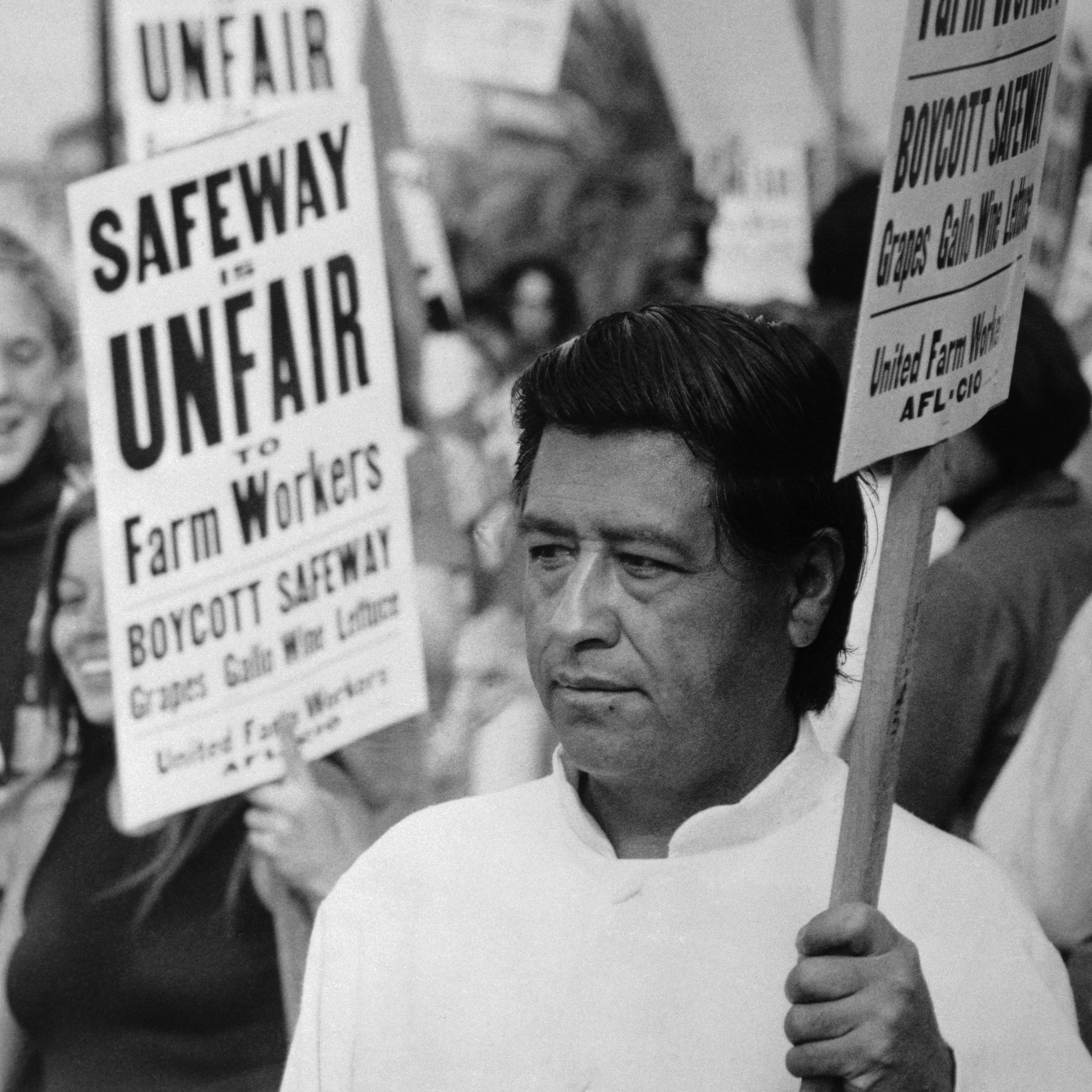
Photo via Bettmann/Getty
Hosted by Simplecast, an AdsWizz company. See pcm.adswizz.com for information about our collection and use of personal data for advertising.
Interactive timestamps
Jump to segmentGet every episode summarized
Each time All Of It publishes, we email you a written briefing from the transcript — the topics, who appeared, and any specific claims, with the ad reads skipped.
Email me new episodesFree for 3 shows. No card needed.
Hosts & guests
Transcript ready
275 searchable segments. Every word is indexed and playable.
Full transcript
All Of It — Revisiting Cesar Chavez's Legacy. Machine-transcribed; use the interactive transcript above to jump the player to any line.
0:00United Health Group is simplifying health care by investing in tools to help patients know more and pay less. These tools help patients find providers and compare costs and save hundreds of dollars annually. Learn more at unitedhealthgroup.com slash commitment. Businesses who use LinkedIn are 24% less likely to reopen a role in the next 12 months. Higher write the first time, with LinkedIn Hiring Pro. Post a free job today at LinkedIn.com slash Pandora. There's a difference between liking a house and actually getting it. Redfin is built to close that gap. Redfin agents close twice as many deals as other agents, so when you find a home you love, you're not a step behind when it's time to make an offer. That means less watching
1:00great homes disappear and more zeroing in on the one you'll actually end up calling home. Redfin helps turn saved listings into real addresses. Get started at redfin.com. Own the dream. This is all of it. I'm Allison Stewart live from the WNYC Studios in Soho. Thank you for spending part of your day with us. I'm really grateful that you are here. On today's show we'll learn about an exhibition at the Brooklyn Museum that focuses on the work of influential photographer, Saduketa. We'll also hear some of my recent Get Lit with all of it Book Club event with mega Majumdar, the author of a Guardian and a Thief. That's our plan, so let's get this started with a conversation about how to reckon with Caesar Chavez. And listeners, please note, the next conversation we'll discuss sexual abuse and rape. It has been a week of deep reflection since the revelation
2:05that a revered civil and immigrant rights figure was accused of abusing and sexually assaulting women and girls. Last week the New York Times reported that at least three women had come forward to say that Caesar Chavez had sexually abused and or raped them. Two of them said they were minors when it occurred. Caesar Chavez was a labor activist celebrated for securing protections, benefits and better wages for farm workers a hero to many. In 1962 he co-founded the National Farm Workers Association with activist Dolores Huerta. The women also included Huerta herself, who had said Chavez raped and impregnated her. One of my guests, Latino USA host Maria Inohosa, interviewed Huerta now in her 90s just after the release of the story. In the interview Huerta said this. I didn't want to disclose this to anyone, anybody because I just didn't want to hurt the work that we were doing for farm workers. My other guest is Monica Ramirez, founder of Justice
3:07for Migrant Women and an advocate for farm workers. In the wake of the news organizations have pivoted or canceled plans to celebrate Chavez and his work and many are wondering what to do with a legacy that include such important achievements alongside horrible acts. Maria, welcome to the show. It's great to be here with you, Alison and with Monica as well. Monica, very nice to meet you as well. Thank you. It's great to meet you. Hey, Maria. Let's start by getting into a few details. Maria, I mentioned that several people have come forward saying that Cesar Chavez abused them. Who are they? What do they describe? The two women are now in their 60s. Cesar Chavez, according to them, started grooming them when they were children, little girls, and it was pretty disturbing because at least one of them was taken by car with a security detail
4:09after hours to a hotel room in California where the assault happened. As I have said, and it brings me no joy to say this, but you know, Cesar Chavez was a brilliant strategist, right? He along with Dolores Huerta, and really it was the tens of thousands of workers who made the movement what it is, but he was a brilliant strategist. Unfortunately, he was also a brilliant strategist in terms of planning and executing his grooming and abuse and rape of women, little girls, young women, and then Dolores Huerta herself, who was his partner. You know, she, people may not know this, especially in New York. We don't even have a street named after Cesar Chavez in New York. The one closest, I think, is in Yonkers, but Dolores Huerta is the person who created that phrase, Cesar Puede. Yes, we can, that a certain president used in his campaign. That would be Barack Obama.
5:12Dolores Huerta is a feminist icon. She's a labor rights icon. She's a Latina Chicana icon. She's 95 years old, about to turn 96. One of the most energetic and optimistic women who I know, and in my first interview with her after she read the New York Times report, and again, it breaks my heart to say this, but she sounded broken and that was really devastating. Monica, what reactions have you seen and heard within the farm workers' rights community to this news? I mean, just hearing Maria recount it breaks my heart, and I think that, you know, people across the community, not just within the farm worker community, you know, as Maria mentioned, and the women's rights movement, civil rights movement, so many communities that Latina community, there's just been heartbreak pain. It's, I keep saying it's like a rollercoaster, right? Because
6:12people are going through shock and sadness and rage and, you know, confusion and, you know, one of the overwhelming things, sentiments that I've heard from people is there's just feeling like a hero has fallen, and people don't know how to react to that, and at the same time, people are extraordinarily sympathetic and empathetic towards the survivors, including Dolores who've come forward and want to know how to support and help, but there's just a range of emotions, and I honestly, I think the emotions change hour to hour day to day depending on who you're talking to. Maria, sometimes there are secrets that are out there in the open, sometimes there's news that is shocking. Was this an open secret among people in Shavas' inner circle? Was it talked about? Was it rumored about? I mean, that's that's the question, right? Look, Cesar Chavez was a
7:19complicated human being we all are, right? But he amassed a lot of power over the years of organizing with the United Farm workers, and a lot of people, I hate to use this word, idolized him, including Dolores Huerta, and so, you know, and also I've been talking about the fact that I too am a survivor of rape, and so I'm kind of putting this within the context of like Dolores, which is when it happens to you, you're convinced you're the only one who this happened to, and that you made this happen. So did Dolores know, did she perceive something and maybe put it in the back of her mind because it would have just been inconceivable considering that, you know, he was such a revered human being. I think we will again probably see other women coming forward, although Dolores said
8:19the reason why we don't come forward, she said one of the reasons why I didn't come forward is because I knew that I would be attacked, I would be questioned, and so there are people who are questioning, you know, why didn't you come forward? Why didn't you say anything? What did you know? You too should be held responsible, and I like to take people back to the 1960s when I was a little girl, but I was alive, you know, this notion of rape, rape among people who you knew, just a woman coming forward to disclose that she had been raped, it was a very different time. We didn't even know if we could use that term. Again, when something happens between people who knew each other, and so if Dolores had come forward at that time, she would have been canceled, she would have been disappeared from the movement, she would have been ostracized, criticized, and people need to remember, and Monica knows this really well, Dolores is about el movimiento, the movement of farm workers' labor rights in the United States,
9:24and she was, again, I asked her this, was it worth it to keep her silent, to keep her silence, because the movement was able to grow, and she said it was. Monica Cesar Chavez has been dead for over 30 years now. You would have thought this might have come out in 2017, 2018 during the Me Too movement, but why is it happening now? I can't answer that question. That's a question that has also been, on people's minds, many people have asked, why now? I don't know why now, but I do know that now that we know about it, the question is, what are we going to do to address this issue? What are we going to do to support the survivors? Because they should be the first priority right now to your question related to whether people knew before. I don't know the answer to that either, but what I do know is that since the late 80s, farm worker women have been
10:25organizing and taking action to sound the alarm about sexual violence against farm worker women and farm worker children. This is a long-standing issue that many of us have been working to raise awareness about, to provide support and resources to the survivors, and so the question to me that I think that we all have to focus on is, now that this is out in the open, what are we going to do to get serious about addressing this problem, to provide services and resources, and prevention so that it does not continue? I'm speaking to Latino USA host Maria Inohosa and activist Monica Ramirez. We're discussing the recent sexual assault allegations against farm worker rights icon Caesar Chavez. Just Maria, for people on the east coast, or maybe people who aren't old enough to really remember, could you give us a reason why people would call Caesar Chavez an icon, a hero? What are some of his accomplishments, his movements, the movement's
11:25achievements? I will answer that, but also, you know, everything that Monica just referred to, right, is happening within the context of Donald Trump sitting in the White House amidst the Epstein files and the questions and the fact that, you know, no one except for one person has been charged in the United States. So I think we have to put this all within that context. Why now? Also, it took five years for the New York Times journalists, Manifin Nandiz, and his partner to get confirmation and be able to go public. So those are some of the reasons. Look, Caesar Chavez in the 1960s was able to organize farm workers, really, morning guys, the one who should answer this, but because the farm workers back then in the 1960s had no rights, you know, no shelter, no water breaks, no bathrooms on site, no protection from the heat, the wages were horrible if they would get paid. And what Caesar Chavez and Dolores
12:30were that did was that they started this strike. And, you know, one of the things that I remember from the 60s, right, is our family, a Mexican family in Chicago. We stopped eating grapes, period. That was one of the things that they organized. It manifested the power of a boycott, which, again, for me, as a kid growing up in the 60s and 70s, the power of a boycott could actually bring the growers to the table. I didn't eat grapes. I don't know for like 30 years. I really missed them. But he and Dolores really changed the labor issue in the United States. I mean, they were, Dolores was with Robert F. Kennedy the moment when he was shot. She was somebody who was front and center in terms of like her level of political activism. Again, Caesar Chavez, and I don't know Monika and I haven't talked about this. I mean, for me, he fell from grace in the 1980s. I have to be honest. When I heard that he was involved with Sinanon and he was very aggressive to reporters and
13:33didn't want to answer questions. And I think the big question is, what do we do about men with power who are perceived as icons? Again, we're living through it right now in our country with a president who again is perceived as an icon for many and yet is unable to answer to these allegations. So the question that Monika raises like, what do we do now? It's a huge question. My role as a journalist is to try to keep on reporting this and give visibility to the issue and again to the survivors. We're discussing the recent accusations of sexual assault against farm worker rights icons. Caesar Chavez, my guests are Latino host Maria Nojosa and activist Monika Ramirez. After the break, we'll talk more about Dolores Huerta. This is all of it. This is all of it on WNYC. I'm Alison Stewart. Last week, the New York Times reported that at
14:34least three women had come forward to say that Caesar Chavez had sexually abused and or rape them. Two of them said they were minors when it occurred. I'm speaking to Latino USA host Maria Nojosa and activist Monika Ramirez. Maria Dolores Huerta spoke to you in her first interview after these revelations were published by the New York Times. Why do you think Huerta wanted to be heard? Well, there was no way for Dolores to stay silent. Dolores is an icon for many, many people, many women. I mean, she had to speak and I have said that I was honored and also horrified to get the first interview because Dolores Huerta is this person and I know Monika Nojosa is Dolores Huerta is the person who was like always optimistic, always would say every crisis is an opportunity to organize. She had more energy than I have, right? And she's above me by like
15:4030 years, you know, loves music, loves jazz, loves to go out dancing, loves to be with the people, and so to see Dolores or to hear her because Dolores on that day, on that Wednesday, week and a half ago when she, along with everybody else, is reading the New York Times piece, she didn't get an advanced copy. She had been crying all morning and then agreed to speak with me would not go on camera. That's very rare for Dolores. So I think, again, as Monika said, it is a roller coaster ride. Dolores is having to come to terms and she struggled with this. When with me, the first interview, she was like, well, there was a rape, the second time, but the first time I was coerced by the time my colleague, John King Yunus interviewed her 24 hours later, she was prepared to say, okay, I was raped both times. She is processing what it is to be a survivor of rape. None of us likes to, wants to accept this. She's processing the fact that Chavez's murals are being painted over
16:46as we speak. So it's not only this personal crisis for Dolores, she does not want the movement to be painted over as it were. So she's struggling with how to process her own trauma and also how to keep, again, the movement, the movement alive and moving forward. Monika, what is Dolores? Where do I mean to you? Well, first I want to just acknowledge that Maria is a great leader in our community and I'm not surprised at all that she, that Dolores chose you to do the first interview Maria because I know she respects you greatly and knew that you would be able to handle the conversation with care. So deep as gratitude, Maria, for thank you. And you know, I was an eight-year-old little girl when I first learned about Dolores Huerta and says her Chavez from my father. I come from the farm worker community and when I asked my father who was fighting for us, he told me that
17:47Dolores Huerta and says her Chavez were fighting for us. I have looked up to Dolores Huerta almost my entire life. She is incredible and the fact that she chose to speak at this time really in solidarity with the other survivors who came forward, you know, that is, that is, that is the hero that I've looked up to my entire life because even in disclosing at this stage in her life, she was disclosing so that she could support the other women. And I don't think people should take that lightly. It speaks to who she is and who she's always been as a leader and how she's always thinking about what the community needs, even when it comes at such great cost and harm to herself. You know, I just, I cannot imagine what she must be feeling right now and I think that many of us wish we knew how we could show our love and care because many of us have spent so much time
18:53with Dolores over the years, you know, in my own work fighting against sexual violence, against farm worker women. From the very first time that I asked Dolores to getting involved, she's always said yes, she's always shown up. You know, I've known Dolores since I was a 20-year-old college student when I invited her to come and speak at Loyal University Chicago. So, you know, I feel like I'm watching, I'm watching my hero in great pain and distress and that really breaks my heart. Maria, I want to play a clip from your interview with Dolores Wertha and we can talk about it on the other side. I just want to say that I think the fact that the women survivors who had this happen to them as they were girls, that they have had the courage to come out and God knows I really applaud them so much because I think they their courage has given me the courage also to be able to come out because and many instances they will want to blame the girls.
19:57Some people will try to blame me and but they don't realize that in Caesar, I often report to him as a genius because he did so much, you know, in terms of inspiring leaders and leading the movement, etc., etc. But I don't think anybody knew that he would even do this. Maria, what surprised you from the conversation that you had with Dolores Wertha? I mean, I think what she just said right there, right? He's a genius. I'm like, actually, Dolores, he's a mad genius. And this is what you need to understand about Dolores, right? Is she, she did idolize Caesar Chavez? I think it's one of the differences that, you know, I've been bringing up as a journalist. Like, I'm not a part of a movement, I'm not a part of a of a party and I don't, my role as a journalist is to be always critical. So it is hard for me to hear her say this about
20:59about Caesar. And so she's having to process this too, that she as a powerful woman in her own right, a national leader would continue to kind of differ to Caesar continuously in her career. There is something that I learned, I've learned a lot from Dolores Wertha and Monica actually has this too and I am a great admirer of Monica as well. Look, Dolores has symbolized for us holding power, being powerful, standing up to power, owning our voice, you know, challenging the powers that be. But Dolores has always also modeled humility, right? And that balance of power and humility is the thing that, in my view, Caesar Chavez did not have. And it is, again, raising the question, so what do we do about these men? As far as I know, we have yet to hear of a woman leader at this level
22:01abusing sexually children, right? So it is the question of what happens to these men. I, I'm not a psychologist, but it's almost like they, like Caesar Chavez had a lot of women in his circle. So he was prepared to share the power as it were, but almost like he hated them too, and had some level of self-hatred that he would then take it on, take it out against the most vulnerable. So men in power, what is up with that? And I would like to see our country, if we can, try to make great strides to take that issue on. Maria as a journalist, you'll appreciate this. The Times reported that Chavez's surviving bodyguards have, quote, declined to comment on the reporting. Others told the Times, quote, that Mr. Chavez has not engaged in any sexual abuse and rejected the women's claims as incompatible with the man that they knew. Monaco or Maria, whoever wants to answer, how do these examples help us understand
23:06how allegations like this can go ignored for so long? Who wants to take that? I mean, I would just say that it is about, again, you look at someone and you're just like, oh my god, this person is a genius, is an icon, is so powerful. And therefore, even though you see it right in front of you, in the case of a security guard who took a child to a hotel room with Caesar Chavez at night, I mean, he was what convinced himself like they were going to have a teaching or he was going to give her classes on how to be a good leader. I think that there is this, again, this obfuscation of the truth that can happen when you have men in power. So again, I can't separate all of this from what is happening in our country at the same time. We are all victims as it were of men in power who believe that they can use that power to abuse. Unchecked. Monica, you're the founder of Justice for Migrant Women, which advocates for farm workers
24:12and migrant women. How could these revelations serve as a moment to spotlight the work you do? Well, again, our principle goal is to make sure that survivors are supported and that they have what they need. So right now, our focus is on making sure that people are getting information that they need. People started to come forward and disclose the same day that the news broke around this. The Lord has gave other people courage. She talks about the survivors giving her courage. She and the other survivors who came forward, they gave others courage and now we need to be able to provide those individuals with information, resources, referrals and things of that nature. We need to talk about the broader issue of sexual violence against farm workers and sexual and gender-based violence in society as a whole and what we're doing to resource it and address it. And I really feel strongly that we have to spend time talking about this issue of heroism
25:13and movements because the truth is that every single farm worker who goes to work every day and is putting food on our tables, they are the heroes and have always been the heroes of our community and our movement. And having a singular hero, I think, is dangerous and I think it's we're seeing that. And so how do we have a broader conversation about the many people that make movements possible and the importance to invest in and uplift many leaders and not just one or a few? Maria, if I can pull out a little bit beyond farm workers' rights, how are you thinking about these accusations against the backdrop of the political moment where immigrants are being used as scapegoats? Well, immigrants are being used as scapegoats, but I can't the reality, Alison, is that if you are Latino or Latina, Latinex, Latinex, Hispanic in this country, basically this Supreme Court has said that ICE agents can target you. So it's not just immigrant
26:21workers, it's the fact that our entire country is living through a moment where Latinos and Latinas feel and we know that they are being targeted, whether it's in Minneapolis or Ohio or Chicago or LA or Seattle or Iowa. And Latinos and Latinas and Dolores and Monica know this super well, like like we are the fastest growing group of new voters in the United States. Our population is the youngest per capita per capita. No, we're the youngest, we're about our medium ages about 11, 12 years old. So we are turning 18 at about every 30 seconds, another Latina or Latina turns 18 years old, becomes possible to vote. So we have a tremendous amount of political power. And so I think that that's also the bigger context is so now what happens with using this political power and not to see ourselves as victims, but to rather rally and hold up who we are. I mean Dolores is as long as
27:27we're saying no heroes, but she is a hero. And she believes in political power and she believes in democracy and people going to the polls and organizing. So I think that's part of the conversation that needs to happen is what do we do with the power that we do have, the actual factual power in believing our real stories as opposed to the narrative being put forth by the Trump administration and his campaign previously, which is that we are the enemy of the people. Monica, the city of Phoenix has moved to rename Caesar Chavez Day, which is a holiday that falls on next Tuesday of next week. Seattle's renaming Caesar Chavez Park, California's renamed Ming Caesar Chavez Day to farm workers day. How should people approach this day? Well, we should name that this week is National Farm Worker Awareness Week. So for the entire week, all many of us who work in the farm worker movement are uplifting farm workers across the country and there are many contributions. I mean, I think it's going to be an individual decision about
28:28how people approach the day, but the entire week is about celebrating the the farm worker community. And I really hope that people will continue to celebrate the the fact that farm workers literally sustain us every single day. And we should not stop celebrating that. We need to continue celebrating that. We need to talk about the many issues and problems that still exist in the farm worker community. Farm workers are still being cheated out of their wages. They're still being sprayed with pesticides. Sexual harassment is still rampant for farm worker community members. And for our worker communities are rising up using that power that Maria talked about to confront those issues. And we will continue in that way. And I think that's what this this week, and including next week's day of celebration should really be focused on. And in this moment, I'm really trying to hold the survivors who've come forward to talk about the violence against them. I have been speaking to Latino host USA host Maria Inohosa and activist Monica Ramirez. Thank you
29:28for your time today. Thank you. Again, if you need help or someone to talk to, the national sexual assault hotline number is 800-656 hope that's 800-656-4637. LinkedIn Hiring Pro can't predict the future, but it can help you feel confident about future hires because hiring pro combines real-time insights and candidate data from the LinkedIn network with the criteria you've set for your role to deliver you a list of top 5 candidates. Businesses who use LinkedIn are 24% less likely to reopen a role in the next 12 months. Hire right the first time with LinkedIn Hiring Pro. Post a free job today at LinkedIn.com Slash Pandora.
30:44Combined with any other offer.
More episodes
More from All Of It

The Cast and Creative Team of 'The Outsiders'
All Of It

Full Bio: Malcolm X
All Of It

Braille Readers Hold the Camera in New Documentary
All Of It

Ashe Performs From Her Forthcoming Album, 'The Girl of Your Dreams'
All Of It