About this episode
All Of It is made possible by:
[REBROADCAST FROM October 19 2020] Investigative journalist Les Payne spent 28 years working on his biography, The Dead Are Arising: The Life of Malcolm X, but died before the book could be completed. As part of our Full Bio series, we spoke with his daughter Tamara Payne, who was his chief researcher on the project and finished the book.
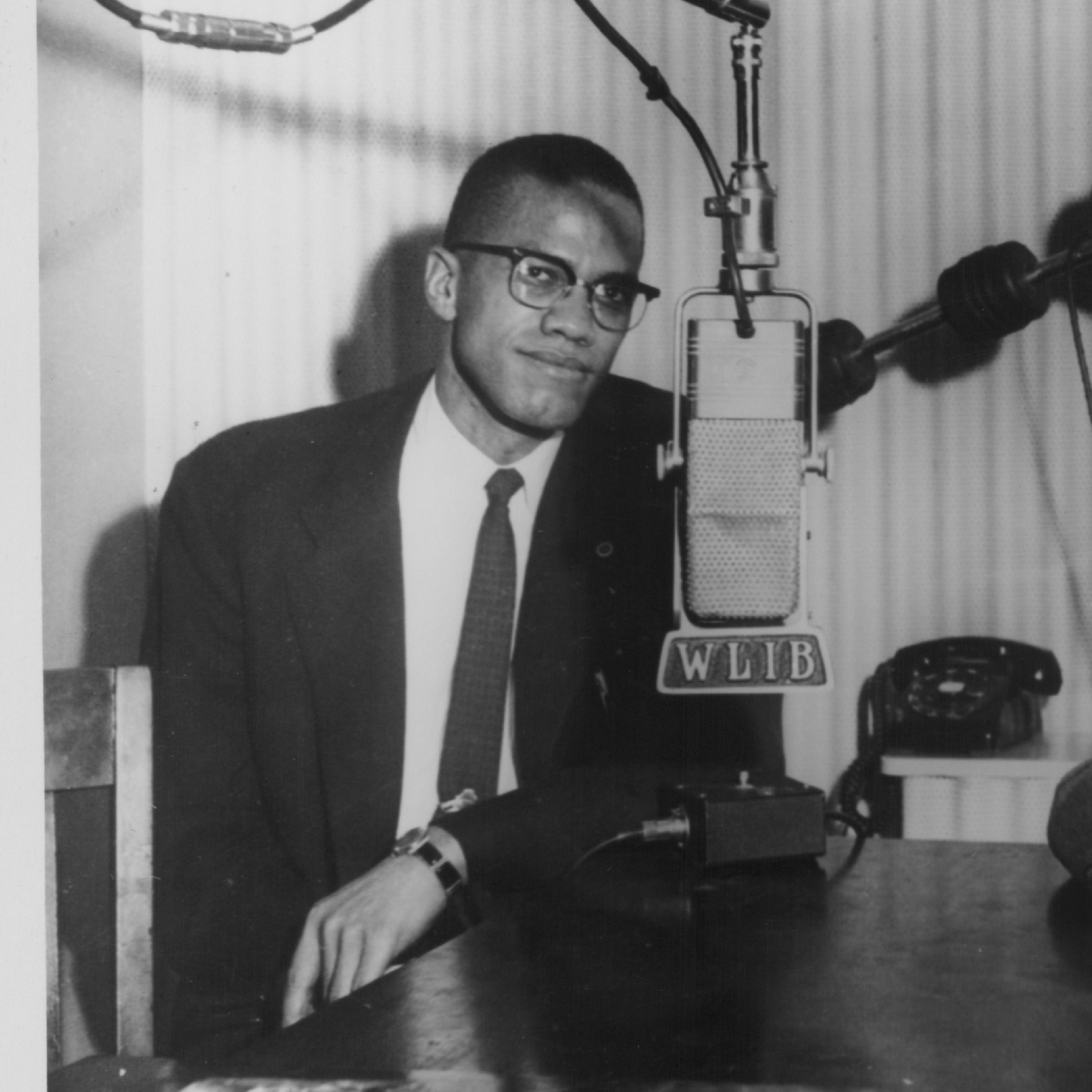
Photo by Lloyd Yearwood/Three Lions/Getty Images: Human rights activist Malcolm X at Harlem Broadcasting Station, WLIB, expressing his views on the radio, with editor George S Schuyler, circa 1960-1965.
Hosted by Simplecast, an AdsWizz company. See pcm.adswizz.com for information about our collection and use of personal data for advertising.
Interactive timestamps
Jump to segmentGet every episode summarized
Each time All Of It publishes, we email you a written briefing from the transcript — the topics, who appeared, and any specific claims, with the ad reads skipped.
Email me new episodesFree for 3 shows. No card needed.
Hosts & guests
Transcript ready
389 searchable segments. Every word is indexed and playable.
Full transcript
All Of It — Full Bio: Malcolm X. Machine-transcribed; use the interactive transcript above to jump the player to any line.
0:00WNYC Studios is brought to you by Progressive Insurance. Insurance isn't one size fits all. That's why drivers have enjoyed Progressive's Name Your Price tool for years now. With the Name Your Price tool, you tell them what you want to pay, and they'll show you options that fit your budget. So whether you're picking out your first policy, or just looking for something that works better for you and your family, they make it easy to see your options. Visit Progressive.com, find a rate that works for you with the Name Your Price tool. Use Progressive Casualty Insurance Company and affiliates. Price and coverage match limited by state law. Anybody can make jeans, but you can't dope true religions. That famous thit pockets you recognize instantly stand out stitching. They try to get the full package, but only we have the legacy. Shop the iconography capsule now at True Religion. We've been the trust in experts since 1960, because nobody knows tires better than we do. With over 90 tire brains, we have an abundance of options in stock for your vehicle. Buy and drive today at americastire.com.
1:00Let's get you taken care of. This is all of it on WNYC. I'm Allison Stewart. All throughout the summer, we've been running a series called American History Fridays. And today, we returned to our inaugural full bio selection, The Life of Malcolm X. Investigative journalist Les Payne spent 28 years working on his biography. The dead are arising, The Life of Malcolm X. But he died before the book could be completed. His daughter Tamara Payne, who was his chief researcher on the project, ended up finishing the book, which won the 2020 National Book Award for Nonfiction and the 2021 Pulitzer Prize for Biography. Tamara Payne joined me for our first full bio conversation. And for the next hour, we'll hear excerpts of that interview. For History Fridays, here is The Dead are a Rising, The Life of Malcolm X.
2:03So let's talk about Malcolm when he was little. When he was a little, little. So what adjectives would you describe? How would you describe a very young Malcolm little? He was, well, for a while, he was young. He was smart. His brothers described him as very smart. He was, pretty much said he was a good kid when he was younger. He and Philbert, when closer an age, his brother Philbert was two years older than him. So they had more of a kind of sibling rivalry and, and, Wilford was a bit older. Wilford was born in 1921, and, Malcolm's born in 1925, so there's a little bit more of it, span in their ages. And, and it's funny because, Malcolm and Wilford were best friends.
3:03And Wilford always saw Malcolm, he said he was smart, he was a good baby, but it was when, you know, as he gets older, that you see some of the other personality traits come out that people are talking about where he becomes. They describe him as selfish, attention, meeting attention. Wilford didn't describe him like that when he, when Malcolm was younger, and when his father was around. Malcolm definitely had the attention as father. And, as did the other kids, but Malcolm had a kind of special relationship with his father too. On the day that his father died, he had had a fight with their mom, Louise, and he left the house later, a white police officer shows up the door around midnight. What did the officer tell Louise? Well, he told her, unfortunately, that
4:05their father had died. You know, he explained in really real detail about the accident. They were called onto the scene. Earl had been under the, was on the tracks trying to get up, somebody had called the police to check it, check on him. And they said that he was in bad shape, but they knew he was going to survive the, the injury, see every seed. And he explained that, he explained to the police officers what had happened. He slipped under the wheels of the street car, and he slipped and fell, and the car ran over him. And he made no mention, you know, that it was nightriders or the local chapter of a clan, but he just said it was, it was an accident. And Wolf, it was there to hear the story. He looked at the police officer, and he could see, you know,
5:09he didn't think he was making it up. He thought he was sincere, and then he also saw his father's body, too. The story, though, sort of took on a life of its own. There was this sense that perhaps it had been white supremacists who had been responsible in some way for Malcolm's father's death. Why did you think that story took hold? And why was it significant when we think about Malcolm's whole life? Well, there were whispers and rumors as we often hear, and some kind of aftermath girls passing, people still whispered and they talked about that there were white supremacists. And they, I think there was even, we mentioned that there's a, someone had whispered that, you know, some of the white people are saying that they had responsibility, but there was no proof of that.
6:09And, you know, these were whisper campaigns. And when you had that during a heightened time, it's easy for them to fall into these lines. I mean, look at what we're dealing with now, with all this information's coming out. And we're saying, we don't even know who the real terrorists anymore are. So rumors take on that kind of light. And from Malcolm, this was his father. He was very close to his father. He misses his father. And the idea, I mean, if the clan had already visited the house, their house had also been burnt down, you know, because they were on land that should not have been sold to a black family. And they were thrown off at that. I mean, this is, these are the circumstances that, you know, they're living under. So that may be something that might impule to a younger person's ear to say, this is what was really going on. Because it was, it's not far from what's already happening.
7:15And Malcolm clung to that. He's, he's, he's, they believing that. The second part of the book covers from 1939 to 1946. And as part two of the book begins, we, we've learned what, Malcolm's mother has been committed to a state hospital. Once his mother, it was hospitalized, the older siblings were able to stay at the house, but the younger kids, including Malcolm, at about 13 were taken to live with foster families. When he was in, was there one particular foster family that had an impact on his life? Well, there, the other foster families, this key, that also knows that they were West Indian families in town that we also have relationships with, we least the mother had relationships with the fellow West Indian families. And so they knew each other, the, the employers and the lions in particular. They, they all knew each other.
8:19They went to each other's homes. So even when, when Malcolm is sent to basically, you know, punishment, right? In Mason, like reform school, as they call it, reform. He goes to like this reformatory with the Swerle and family. And that is the way family. He, he's still in touch with these other families. My guess is Tamara Payne. We're talking about the dead are arising, the life of Malcolm X. We're talking about part two right now, which are the teenage years with Malcolm. In the book it says Malcolm was opposed in principle, the work ethic that Earl and the West had successfully drilled into their other children. As you mentioned earlier, he stopped going to school. He was growing and selling marijuana every day. His education was downplayed in his autobiography. Did you ever figure out why that was?
9:20In other biographies, what you'll find is people don't necessarily remember things as they were. Also, there's a, there are different stories that they're trying to, to support. So, yeah, Malcolm, he didn't stick, he didn't say that he repeated that clap that year when he went to, to Mason, but he repeated the year. And he didn't talk about his grades. But I know a lot of people who would not talk about their bad grades. And if they had a repeat, if they would talk about the good grades instead, or the exams they did well on. So, to me, it's not unusual, but it's good to know that that had happened. You mentioned this that he was in this detention situation. And he moved in with his foster family in the smaller town in Michigan that was mainly white.
10:22He lived with the Swellens. How much did living with them affect Malcolm's ideas about white folks? He, he actually not just in living with that, the Swellens, but he befriended a lot of white students in his class. And it was a new world for him, you know, but it was still, you know, there was still segregation going on, but he, it was a new world for him. And he became friends with them and it opened his eyes to, you know, how they play and how they do things. But there was still, you know, even with that, there was still issues for him. Like we talk about the scene in which he's with Rowan Dart, who's one of his classmates in Mason, right? And they're in the fight. He's very supportive of him and in this fight, he's trying to beat this bully, right?
11:23And Malcolm can torture himself and to show Rowan how to get out of this hole that his opponent has in him. And the fact that he just totally contorts himself on the one hand Rowan Dart was amazed that he did that and was grateful that he did that. But in Malcolm's that he's like the whole idea of contorting himself, the, it's, it's, it's an interesting, you mean, it's an interesting tank on like what we, what you have to do in your relationships with white people. You explore both things. You explore it. Yes, you can be friends. You can get to know people. And yes, on one level, we can be friends. But then there's always going to be this other side where they don't go. There isn't this full understanding of who we are as black people. It's different because the society still holds these ideas about who we are. And that still exists. So yeah, it opened his eyes to see what was going on and he became friends with them.
12:26Absolutely. And that definitely did happen. But there were also other, you know, there was also a level where he couldn't relate on. And that happens. You know, a lot of us experienced that. My guess is Tamara Paine. We're talking about the dead are arising the life of Malcolm X. And we're talking about part two right now, which is the year is 1939 to 1946 during Malcolm little teenage years. And Malcolm's father had had another family. And so he has steps siblings. And his sister Ella, his step sister Ella, he met her at his father's funeral. And she lived in Boston. And she ultimately extended an invitation to him to come up to Boston. So why did he decide to go there when he was he was just 15. Um, he wanted to get out of it. You know, he just, you know, he wanted to explore, he wanted to travel. He actually had visited his sister.
13:29You know, on the trip, he went to visit her and then he wanted her to just kind of take him on. Especially what happened after, you know, the experience with living in Mason. He was in the swirling home and he was doing well. Then all of a sudden, you know, the bus stand in family. I think it was the lions had requested him. And he went to live with them in Mason. And he wasn't happy about that. And he really, you know, he wanted to get out of that situation. So he, he pled to, he pled to his sister, his older sister Ella. And she agreed she didn't like the idea of him being away from the family. He also did not like the idea of him being in, in with the Swarland family. So she, um, she worked to make that happen. While he was there, he got himself a gig. He buys a shoe stands, a shoe shine stand and a men's room at a nightclub. He gets to see the who's who of jazz and the 30s, Ella Fitzgerald, Glenn Miller, Count Basie, Kev Calloway, Lionel Hampton, Duke Ellington, Billy Holiday.
14:37What was, what was formative about this period for him? He's still a teenager. Yeah. He's keeping my still a teenager. He's not young 20s. He's still a teenager. And I mean, it's fascinating meeting these artists at the time who are huge. Boston is like no other place he's been to. And it's just open again, opening up his eyes to what's what's in the world. What's out there? Stratian in his own. Hey, but he can become sort of conscious of clothing and his manner at this time. How so? Well, Boston's different than the Midwest. So yes, the juke suits and it's a big city. So when you're in the big city, you're feeling more sophisticated people, different classes of people who have more money.
15:37And so there, you know, you want to keep up with the keep up with the times. He's also he's dancing, he's doing lending hopping and yeah, so I mean, he really embraces the environment. He sets his sights on New York. And here's how his time in Harlem is described in the book. Hellbent on flirting with depravity. He narrowly escaped death several times. The quasi-pemp, petty thief, cocaine hustler and traveling, reaper peddler for musicians on the road and junkies on the street. So he's he's figured out a life for himself. Can judge it if you want or not. But how long did he last in the city with this avenue of business? Well, I mean, first of all, we're skipping over the whole point where he gets the job on the railroad. So he had a job and so and he gets a seat go up and down the East Coast. He's going down a DC.
16:41He's going up to Boston and so he gets so that's kind of really his build up to what he's seen. So he gets to explore DC. He gets to explore Philadelphia. He gets to explore all these towns. And that's why he's he sets a site on Harlem. And but keep in mind, he's he's kind of visit these other these other cities and he gets the way from his sister because, you know, she wanted him to be a certain way and, you know, being upwardly mobile, right? And he had a different. He had a different idea and again, with the idea and what we're dealing with these clashes, we're talking about when he's a teenager teenagers are developing their own personalities away from their parents. It is not unusual for teenagers to do these types of things. And these are growth spurts. These are our status. We all kind of go through and maybe not everybody selling drugs or taking drugs, but it is not an anomaly.
17:47And so this thing of, you know, being able to explore the world and see it. Again, opening his eyes to see what is out there and he's smart. He's got he's got the street sense and he's, you know, he's making a work for himself. And he's got this, you know, the side hustles, which keep it's also look at what's going on at the time in history. This is how people are living. It's, you know, I have to say I found his the descriptions of him trying not to get drafted kind of amusing. That he, you know, he was determined, but that's time the war was going. He turned 18. He'd be eligible for the draft. And he was one. Why was he so determined not to serve in the military? Let's start there. He was young. He didn't want to, he didn't want to go and fight, you know, for this country.
18:50I mean, he, I think that he didn't want to go to war. I mean, his, this is just, and he was also young. He'd rather do what he was doing here. Picking up a gun and fighting in the war was not, that was not what he saw for himself. So he went to some pretty interesting lengths to convince them that he couldn't serve. Would you describe what he did? Um, yeah, it's he, um, he put on an act basically. He put on the wildest suit he could find. And he put on an act. And he wanted to, he said that he was going to organize a Japanese and, you know, and fight against the Americans. He put on an act basically. And, um, he, and he took it to a very, he took it to an extreme. I mean, and, and it's also mean you kind of wonder exactly how he did it because you don't get to see that side of him.
19:56But yeah, I mean, it's he, he put on an act to do that. And I'm, you know, he didn't come up with this idea by himself and he was talking to other people and they were telling what they did. So. My guess is to Mara Paine. We're talking about the dead are arising the life of Malcolm X. So as we start a wrap up part two, Malcolm returns to Boston. He gets involved with a burglary ring. Um, and he gets caught. And he ultimately winds up getting concurrent sentences eight to 10 years. And he's just 20 years old. And enters prison. Who did he meet in prison initially that really sort of changed the direction of his life? And he met this person named Benbury, who was a reader.
20:59And, um, you know, and he had a very, he was older and he had a very calm sense about himself. And now he looked at Malcolm. He kind of took him under his wing so that he could. Because Malcolm was, you know, again, all this young energy. And he was angry. He was fighting. Um, some Benbury kind of, you know, he, he took him under his arm and he helped him with giving him books suggested books for him to read. And, um, you know, and really just moving his mind away from being so active physically and more active with the mind. You're listening to my conversation with Tamara Paine, co-author of the book, The Dead R Rising, The Life of Malcolm X. We'll have more of our conversation after a quick break. This is all of it. This is all of it on WNYC. I'm Allison Stewart. We're listening to my conversation with Tamara Paine, co-author of the National Book Award and Pulitzer Prize winning book, The Dead R Rising,
22:10The Life of Malcolm X. The book was begun by Tamara's late father, Les Paine, and she served as its chief researcher. Here's more of our conversation on The Life of Malcolm X. Malcolm X joined the nation of Islam while in prison. How was he introduced to it and what appealed it hold for him personally? It was his family. His family joined the nation of Islam first, starting with Wolfrit, who was living in the Detroit area in Michigan. And he was looking for something to be involved with outside of work. And he kind of came across this group of nation of Islam. And the other thing was that an incident happened at his job. And this person was up for, I think, getting a raise.
23:11And Wilfred went in and went to back for this person and demanded that this person be paid what he should be paid. And this person was impressive, Wilfred. And he said, are you a member of the nation? And Wilfred didn't know anything about it. And that's kind of where Wilfred starts to go to the meetings to see what this group is about. And he sees the possibilities, basically. And again, it's kind of like in childhood of what the rearing that Wilfred and the siblings in Malcolm received when they were younger was when you don't want to be idle, you want to be active, you want to build community. And he wants, and he's interested in doing that. And he tried to go to the local and UNIA group in the area. And he said they were, the members were older and they really weren't doing anything.
24:12But the nation, they were actually doing things. They were a bit more organized. They were having meetings and they were, you know, he saw, he saw the possibilities there. He saw the energy. But the other thing to understand is that the nation uses a lot of garbage items in their organization as far as building businesses, building their community, sticking together. That's, you know, that's all garbage. So it appealed to Wilfred and Wilfred, you know, wanted to bring the rest of the family in because of something that they could all, they could all, they were all new. They were familiar with because of what they're upbringing. And he also knew that they could help, you know, they could help the organization. While he was still in prison, Malcolm wrote to Elijah Muhammad, who had been the leader of the nation of Islam since the early 30s. And he was known as the messenger, his predecessor was a man named Farad Muhammad was the prophet.
25:15What kind of questions did Malcolm have as a new member of the nation of Islam? His mind when Malcolm's hearing about the nation is, you know, he's, he wants to be free. He's in prison. He wants to get out. And, you know, he's restless about that. And so the conversations that he has with his brothers about that, you know, is interesting. When his brother explains to him, you know, that, and he used to the term, the white man is a devil. Malcolm has a problem with that. And they had to actually work on him about that. Because Malcolm believed that through his hustling days when he was doing these, running these errands for, you know, for example, the numbers runners, you know, that he was in charge of this cash and white and was white men who were in charge of the whole operation. They trusted him with it. So they couldn't be all that bad. And, and the brothers like, now it's you are taking a chance for them. And, but can you imagine the money that they are earning and profiting off it? And, and if they really value, they would have given you a cut.
26:30But they didn't. They just trust you and gave you, you know, gave you enough money to be happy for a few days. So that was the thing that will for it, you know, Malcolm's older brothers said that they really had to work on him on this whole trusting of, you know, the accepting this idea that white men is a devil and how the white men has used black people. Almost as soon as Malcolm's released from prison in the summer of 52, he goes to Chicago to meet Elijah Mohammed. What was his relationship like with the messenger in his early years in the nation of Islam? He was very grateful. And he, he, he saw him as a father figure. You know, right away, he saw him and he saw him as a savior. Malcolm knew that he needed a place to land. And this was a good place for him to land.
27:34It was like an extended, you know, family and something he could grow. He could see himself growing into it and, and growing with it. So he was very grateful for that. My guess is Tamara Payne. We're talking about the dead are arising the life of Malcolm X. We're sort of in the middle of part three, which details from 1946 to 1963. So he has this, this rise within the nation of Islam. You said recruiting a lot of people, the organization, different kinds of people to the organizations are revitalizing temples that got, that becomes stagnant, it becomes a national spokesperson. Did, did he understand that this made him possibly a target for jealousy or even worse? Yes, because it started early. You know, as soon as he was in a group, as soon as he had joined the group, there were issues that came up.
28:41You know, when he was, he wasn't even a minister yet, but he was recruiting people and, and people were targeting him and complaining to the, to Elijah Muhammad. And Elijah Muhammad was saying, well, he's bringing new people and, and he's growing the temple and he the, the, the people he was staying with who were working with them also, the, the husband and wife, you know, they Elijah Muhammad asked them, he said, asked them, how do you, how are you finding working with them? And the husband said, I like it. He's great. He's bringing these people. He said other people are having problems and they're talking about it in a negative way as if we're trying to work against the nation, but we're not. And Elijah Muhammad, you know, he told them that if this is what you're doing, this is where everybody should do it. But, you know, this, I mean, but Malcolm had to get, he was sat down because, you know, his discipline, you know, because he won everybody discipline and lived and lived by the book and, and not everybody was willing to do that.
29:42And he was very strict about that. And it was, he came, he came against that early on. And he had a face that he, you know, he had a talk to Elijah Muhammad, Elijah Muhammad would sit him down, have lots of conversations with him about that. How, how do relate to the people and Malcolm was saying, but I, I just really want this to grow faster and Elijah Muhammad's like, that's not how we're in with these people. So eventually, you know, he gets sent out to, to the east, to northeast and, you know, and it's a better fit there for him. In the book, there's this incredibly detailed section. And I know we can't get to all of it, but I do want to touch on some of it about a meeting with the KKK. It's a meeting between the KKK and Malcolm X and the Atlanta Nation of Islam, Minister Jeremiah X took place in the fall of 1961.
30:43How much of historians known about this meeting? It's been mentioned, Malcolm talked about that at the end of his life. He regret that he regretted that meeting. But I, so it's, it, people have talked about the immense, but I've never seen details of it. Until, you know, we actually, my father spoke with Jeremiah Shabbat as an interview to him. And, you know, he was able to get the details of that meeting, as well as, you know, what the, the, you know, with the Southern strategy for the nation of Islam was, I mean, Jeremiah is very important in the nation too. But as far as details, I had never heard of the details of this meeting before. It's amazing. You know, I'm for broad strokes. What was Elijah Muhammad hoping to get out of a meeting with the KKK? And what was Malcolm X hoping to get out of a meeting with the KKK?
31:46I think again, and the important thing about this book and I want just reiterates that you need, we need the context of what's going on at the time. When 1961 in Georgia, Martin Luther King and the Southern Christian leadership conferences, you know, they're doing their thing and then, core is also, you know, there are civil rights organizations that are, you know, they're organizing against segregation. The clan is pro segregation. The nation of Islam's their position is, you know, they just want to be separate. They don't want to be, they want a separate state. And if you got, and they want to separate state with access to water, and they want to have their own farms. And in order to do that, you're not going to do that in the Northeast, but in the South is probably the best place to do that. So, you know, Elijah Muhammad felt that, you know, they were going to, they wanted to get land in order to do that.
32:47If the clan was going to help them get the land, but at least, you know, not get in the way of them getting their land. You know, and they weren't asking for land for free. They were willing to pay for it, but they're saying don't, you know, don't harass our people when they're trying to do this. Don't do anything to us terrible things to us when we own the lands, you know, and we want to be separate. And for, you know, that's, that's what Elijah Muhammad was looking. He wanted to one have a way to get the land for the separate state to start setting that up. And also to find a way to work and negotiate with the clan so that their members could move around the South without being harassed by clan members. And so he was trying to negotiate that Malcolm didn't like the idea, obviously, of having this discussion even.
33:47And he had, he did not feel good about having it. And he didn't like having this kind of plea, you know, bargaining with an agent. He didn't think that that was an unholy alliance in his view, obviously from these his family, his upbringing has, you know, the clan visited his family when he was in utero. The clan burnt, you know, white supremacists, you know, burned down their house and when they were in the Lansing. So he doesn't have good feelings about this at all, but he's not the leader of a nation of Islam. So he has to take orders. And so he's going to, you know, he's going to work his way through that with Jeremiah Chabaz. See what, see what comes out of this. Was that a turning point for him within the nation of Islam? Yeah. Yeah. Definitely. Definitely. You know, it's, it's clear that Malcolm did not feel good about going to this meeting, except that he wanted to be a part, yes, he did want to be a part of the meeting because it is a plan, but you kind of want to have a face off with them, you know, he wanted to tell him where to go.
35:02Yeah, the order to bring it back to do that. So now he had to find another way of doing it and maybe take shots, I guess, you know, and that I want to minimize that. I mean, this meeting is important. To see the personalities and how Malcolm maneuvers this, I think it's brilliant. I think the, yeah, it definitely sets up, you know, it starts to tear at Malcolm, you know, about your life, about your life from a Hamid. And he wants to take action and he starts to see that, you know, you like from a Hamid is not going to do that. And that frustrates him. But this is kind of the beginning of that. So as part three rounds out, we get, we start to get a window into Malcolm X and Martin Luther King Jr. and the culture around civil rights at the time. And this is from page 327. So despite Malcolm's aggressive nationwide promotion of the honorable Elijah Muhammad as the affant terribly of Negro liberation, it was Reverend King who caught the fancy of the Negro masses and he struck fear and loathing in the hearts of white southerners and even the murderous clan.
36:17Did Malcolm X view Martin Luther King as a rival? Earlier on, there is because he was more about self defense in that he was a whole up in opposition to the peaceful protesters. What he's starting to do in this chapter is, in that, to me, this is one of my favorite chapters of the book of talking about the Martin Malcolm the media is that he's starting to say where I'm really an option. So it's like, you should negotiate with Martin Luther King because the option is, you'll have to deal with me and I'm not about to turn the other cheek. I'm going to stand up. And so, you know, white America, you should, you should negotiate with Martin Luther King. But in the beginning, you know, I think it, you know, they did see them as they did see them as in opposition, but I think as time grew, especially after, you know, meeting with the clan, seeing what's going on around the country.
37:29He really sees them more as as choices to the same goal. They have two different ways of approaching the goal for black, you know, for the civil rights struggle, right. And yeah, so you see that evolution happening in the chapter. And the other thing was really about the chapters, the, when you're looking at the media, because during this time television, you know, opens up and Malcolm and Martin being on television and this whole idea of how they're able to use this medium, you know, to promote their, you know, their programs is very interesting. How Malcolm does that and great creating sound bites. It's the way he's looking to the camera, both of them use it differently, but it's a real, it's really interesting way of looking at what was gone at that time and it provides a real context for that.
38:29You're listening to my conversation with Tamara Paine, co-author of the book, The Dead Are Arising, The Life of Malcolm X. It's American History Friday on all of it, we'll have more of our interview after a quick break. This is all of it on WNYC, I'm Allison Stewart. Now we return to my conversation with Tamara Paine, co-author of The Dead Are Arising, The Life of Malcolm X. From American History Friday, here are the final excerpts of my conversation with Tamara Paine about the later years of Malcolm X's life. Part four of the book ranges from 1963 to 1965 and the first chapter in this section is chapter 15 and it's called The Split.
39:30We talked about Malcolm's growing frustration with the leadership of the nation of Islam. Was he outgrowing the organization or was there something else going on? There are a lot of things for happy Amy. He was feeling more restricted because he wanted to stand up. He wants to stand up to the plan, he wants to stand up to the brutality against black people, whether it's the police coming into the temple in Los Angeles or police shooting a Muslim in New York. He wants to stand up and have a direct response. Elijah Muhammad is like, you cannot engage with them that way. You know, and Malcolm is just feeling very restricted by that. Malcolm found out that Elijah Muhammad had not really been living his faith in the way he put out to the world that he'd fathered children out of wedlock.
40:40There were rumors about how he behaved in his life that he was leading a cushy lifestyle. Of all the revelations that Malcolm learned about Elijah Muhammad, which ones really shook him? I mean, the babies is bad for him. I mean, all of it's, I can't say which was more important than the others because I think this has grown over time. It's not as simple as, you know, because, you know, the messenger who preaches, you know, you should not be formed, you should not fornicate, right? And has thrown people out of the temples for doing that. But yeah, here he is doing it. That's, I mean, it's upsetting to him, but I think the other things are more upsetting is when you look at the fact when, when things are happening to members of the nation.
41:41And I think the other things that I think are not as simple as the babies, are as simple as the babies. And that's why they're not standing up. And that's what they preach. And that, that was also problematic. And I think for me, it's not, when I look at it, it's not as simple as it's just the babies. It's all of these things together. Really just building up this pressure where you're just like, wow, what's going on here? I speak with Tamara Payne. The name of the book is The Dead Are Arising, The Life of Malcolm X by Les Payne, Father and Tamara Payne. So once he leaves the nation of Islam, Malcolm X established the Muslim mosque Inc, as well as the organization of Afro-American Unity. Most people know this part of the story that he made the Hajj to Mecca. How did it change his relationship to his faith? And his views on race? Well, at this point, you know, when he's splitting and growing, he's growing away from Elijah Muhammad, obviously.
42:46And as he's becoming more educated and focusing on Sunni and Sunni Islam, yeah, he sees what the nation's teachings were religious wise, what they were. And he's disappointed, you know, with the mythology of it. But he said, you know, there were things that they were trying to do that were definitely worthy. So he didn't want, in my view, to totally like destroy the nation of Islam, I don't think that was ever his view. I mean, he still had love for Elijah Muhammad, because he just saw that there were things that they were trying to do that was good. He still saw the good in them, but there were just other things that he couldn't reconcile. So when he's now searching for another place, he doesn't have an organization anymore behind him, that he can represent. He's on his own, now he wants to organize on his own.
43:47And to me, this is also why the harbour chapters is really important in part three, because you really see Malcolm develop and organize as an organizer a temple. He has permission to do it for Elijah Muhammad, but Elijah Muhammad doesn't really have an interest whether it succeeds or not, or he's just like, if you get them great, you know, the more the barrier. And Malcolm, you know, he doesn't, you know, he's not, and he's, Malcolm's not faced with the same kind of jealousies that he had to face when he was in the Midwest. And you kind of get to see how he would organize on his own. And what I like about that too is that Hartford is a through line, even for my family, and that my father grew up there. And so that's part of reason why he spent so much time on Hartford. He grew up there, so he knew it. He knew it intimately.
44:48And he knew some of the people and some of these people that were part of that temple that, that Malcolm organized, you know, worked with family members, you know, my uncle. And so there was a connection, but to us to see, so to relate to these people, there's a real humanity going on here of who all of these people are. And see a side of Malcolm that you just don't really see, you know, you see what he was trying to do and what his motivations and how he's organizing the group. And he wasn't doing it at a selfishness. He was doing it because he really wanted to help this group and stand on their own. And so I went back to really to just kind of talk about Malcolm as an organizer. So when we see him at the end, after he splits from the nation of Islam, you know, he still wants to organize. And also what's interesting is, we come across this, this point where he's actually meeting with some of the social media.
45:54And there's also the rights groups, right? Members of the civil rights group. And there was a meeting in which they're discussing where they're going and what was going on with the struggle. And Malcolm throws out this idea of internationalizing the struggle and stop, you know, okay, we're going to call on the civil rights, but let's make it a human rights issue. And he's internationalizing that. And so he's, when he's on this hot, he's also caring for our cause of civil rights in America as an international issue to the UN. But in doing that, he's also connecting with African culture, African countries, leaders of states, African countries to support this. And so he, he still cares about the world. He's got the group here, and he's just still organizing and trying to find ways and is still in, and like another option to what Martin Luther King is doing, you know, or building on that.
46:57And it's, it's important to kind of see that. Now the issue on what he saw as what white people are doing and what he has experienced with white people in this trip. And the biggest thing about this is that in America, we know he knows what America is about. He knows what white people are about in America. He grew up here. The laws, the attitudes throughout his life, right. What people are saying, how, how they write about us, how they continue to misconstrue how black people in America are. And he's also a question all over the country, not just in the South, but in the Northeast, in the Midwest, everywhere. And he understands that well, when he's going abroad, he's coming in contact with people who, not, they are Islam, some of them are not. Some of them are also just struggling in their own country, and they're not black. They're white, and they understand what our struggle is over here.
48:04What kind of opens them up to is like, people can identify with us, but they're not black. He wanted to explore and see what that was about and what he was doing at that time was listening to what that perspective is, what he says is, I am open and let these people show me who they are. I've not made a decision about them. I'm open to listening to them. In the book, we get a very detailed account of Malcolm X's assassination. We know that a week before his home in Queens was, was set ablaze in the three o'clock in the morning. We, but there's some very interesting details, and I want people to read this whole section. So I'm just going to touch on a few that we, we, in the book, we learned about a man named Jean Roberts, who was one of the bodyguards at day, but who was also an undercover New York City police officer. And he's convinced that he witnessed a dry run of the assassination the day after Malcolm's house burned down. Why did he think that?
49:14It's really interesting to, because the, what he says in that, what he says in the, what he says in the interviews is that he believes he saw a dry one, because the way that there was a disturbance, the somebody that comes down the aisle, and he's on security detail. And he greets them. Well, he doesn't greet him goes them to because they're coming down the aisle while Malcolm is speaking. And then there's something else is going on, even though he says to us in the interview, he didn't notice that promotion, but there is a tape of that lecture. And you kind of hear this commotion in the, in the audience and Malcolm kind of briefly pauses and he asks, you know, is everything okay? Okay, cool down, cool down. So he, that raises his suspicions and he writes a report about that and reports it to his superiors about, you know, that he really believes that they were the dry run and that this thing's going down, but part of the reason why we also already know that he's been he's infiltrated because they, they want to know what's where the movements, but they also want they want, you know, they have an interest in seeing this happen.
50:37So as he says later on is that in the, in his reports is that that happened and then he says that there's a fallback on the police coverage. And that kind of that surprised him. That was my conversation with Tamara Payne, co-author of the book, The Dead or a Rising, The Life of Malcolm X. And that is all of it for this week. I appreciate you listening and I appreciate you. I'll meet you back here next time. We're living through one of the greatest shifts of wealth in history, whether you're building wealth, exiting a business or preparing to pass on your wealth, the decisions you make today can shape generations. A UBS financial advisor can help you with personalized advice, global capabilities and long-term planning to help you move forward with confidence. This is a new era of wealth. Find out what's possible at UBS.com slash new era. UBS Financial Services Inc. Member Finra SIPC.
51:38Looking to refresh your denim lineup without breaking the bank, that's where all they become then. Their denim collection has styles for everyone with great quality starting at just $22. The arc gene features a modern silhouette with a relaxed attitude. The extra high-rise wide leg defines the waist, visually elongates the legs and creates an effortlessly chic look. Shop old Navy jeans now at olnavy.com or visit your nearest old Navy store.
More episodes
More from All Of It

The Cast and Creative Team of 'The Outsiders'
All Of It

Braille Readers Hold the Camera in New Documentary
All Of It

Ashe Performs From Her Forthcoming Album, 'The Girl of Your Dreams'
All Of It

Michelle Buteau on the Final Season of 'Survival of the Thickest'
All Of It