
About this episode
Get every episode summarized
Each time World Today publishes, we email you a written briefing from the transcript — the topics, who appeared, and any specific claims, with the ad reads skipped.
Email me new episodesFree for 3 shows. No card needed.
Hosts & guests
Transcript ready
337 searchable segments. Every word is indexed and playable.
Full transcript
World Today — Panel: President Xi in India: the BRICS message and beyond. Machine-transcribed; use the interactive transcript above to jump the player to any line.
Daily News and Analysis We Keep You Informmed and Inspired This is Well Today Chinese President Xi Jinping has attended the Brics Summit and met with the Indian Prime Minister Narendra Modi in New Delhi. Beyond headlines would be her message as President Xi sending to the world. Welcome to World Today a special edition on Brics with Mika Anna in Beijing. President Xi Jinping has caught on Brics countries to stand on the right side of history and play a pioneering role in maintaining peace and stability. Speaking at the 18th Brics Summit in New Delhi, President Xi said, Brics has become the world's most influential platform for cooperation among emerging markets and developing countries, safeguarding the interests of the global south. In a keynote speech at the summit, he also outlined four areas where Brics should take the lead, innovative development, common and sustainable security, mutual learning among
civilisations and a fairer global governance. China will assume the Brics Presidency next year and host the 19th Brics Summit. To explore this and more, we're joined by Dr. Joseph Mahoney, Professor of Politics and International Relations at East China Normal University. Great to have you. Glad to join you. Dr. Yao Shujiye, Chang Kong Professor of Economics at Chongqing University. Welcome to our show as always. Professor Yao, Evan New Delhi's Brics Summit, President Xi Jinping caught on Brics countries to stand on the right side of history and play a pioneering role in maintaining peace and stability. He also outlined four areas where Brics should take the lead, that against the backdrop of global fragmentation, rising protectionism and frequent geopolitical conflicts, how should we understand this for areas for the new cooperation framework of the expended Brics? The four areas including technology, innovation, security and peace, also civilisation, corporations,
as well as the national governments. The Chinese government represented by President Xi Jinping, have opened speech at the Actions Brics Country Summit in New Delhi, central and fully clear signal of what the Chinese wish to contribute to the international peace and stability and common post-politics. Given the backdrop of the international conditions, we have regional conflict only in the middle years, but also the conditions in Ukraine still unfinished, as well as the international trade and technological embargo conflict between some countries against other countries is still going on, which present a lot of complications and challenges to the global peace and development. The Brics Nation is now expanded to 11 member states, which cover about 40% of the global GDP and well over half of the global population.
This is a significant force of multilateral dialogue and platform, which potentially could play a fairly important role in global stability in keeping the peace and development for the international economy. And this concept of a frequent dialogue, especially this annual summit, which gazed that they had of the 11 countries together, they could have opened discussion, express what they could do, what they wish to do, and what they can do to co-operate, to provide a powerful stability force, given the complications and difficulty of the external world at a particular junction. Professor Mahoney speaking of this for areas, President Xi also said, Brics has become the most influential platform for cooperation among emerging markets and developing countries, and is historical expansion has opened a new stage of high quality cooperation with all
of this compared with traditional Western-led multilateral mechanisms. Where do you see the greatest distinctive value and advantages of this expanded Brics in global governance today? Well, the biggest difference is that Brics doesn't ask countries to sign onto a single ideology or security block where they can co-operate economically. Traditional Western-led institutions, whether it's NATO or some other economic groupings, whether they're based on security or economic relationships as well. And then we could point to the G7, for example, they tend to bundle value, security, alignment, and economic access together. Now, Brics deliberately doesn't do that. It's explicitly non-aligned, consensus-based, and opened to countries with very different political systems as long as they share an interest in development and a more balanced global order. Now, the other advantage is representativeness. Brics countries are now something like 45% of the world population around a third of global
GDP by purchasing power, but that weight isn't reflected in the voting shares at the IMF or World Bank. So, you know, Brics functions partly as a pressure valve and partly as a genuine alternative, building things like the new development bank, the NDB, exploring local currency trade settlement. So, countries aren't entirely dependent on institutions where they have a limited voice. So, it's not framed as anti-Western, so much as post-Unipolar. Professor Mahoney, buting on that, we know China will take over the Brics' chairmanship next year and hosted the 19th Brics Summit. So, looking back, China has hosted the Brics Summit three times before. What were the key contributions of those summits and what foundation have they laid for the next year? Well, in 2011, Sadiya, you know, China hosted the summit that brought South Africa in, turning Brics into Brics. And that was foundational.
And in 2017, a Shaman president-she introduced the Brics Plus format, opening dialogue sessions to non-member developing countries. Now that laid the intellectual groundwork for the expansion we've seen since then. And in 2022, sharing the meeting virtually during the pandemic, China pushed for a more comprehensive, close, practical, and inclusive partnership. That summit is widely seen as having set up the big membership expansion that happened the following year at Johannesburg, when Egypt, Ethiopia, Iran, Saudi Arabia, and the UAE joined. So, each of China's chairmanship has coincided with a structural shift, first widening the founding group, then opening the format to outside partners, then setting the stage for the largest expansion in the block's history. So, taking the chair again next year, after this 20th anniversary summit, perhaps it puts China in a position to try to consolidate all of that, turning rapidly grown, more diverse
Brics into something more institutionally coherent. Professor Yal Wester take asked next year's Brics cheer, Chinese expected to further advance high-quality Brics cooperation, beauty on president-she's call for AI cooperation and open and mutually beneficial development. Would practical initiatives could China put forward, and next year's summit in areas such as the digital economy, artificial intelligence, and a margin industries? There are a number of key aspects that we need to understand the next year summit to be hosted by China, because it will be consolidated on the last 17 years of development in the Brics countries and also the e-sort of what the Brics country was to do. I think it would enter the so-called third decade of the Golden Age for the Brics countries. And this third decade of the Brics country will be highly dominated, principally by the
AI technology and also by the peace and security at the international level. This makes it by President Xi Jinping at the New Delhi summit. China already signal-walking what it was to do for the next championship in China next year. Now AI, I have to emphasize the importance of AI. Artificial intelligence is relatively new phenomenon. And I think it represents a new industrial revolution, probably starting from 2010, when the Brics country was formed. This concept technology is evolving rapidly, is changing the way we live, the way we produce, and also the international development in terms of the involvement, the ethical issue of AI and the security of digital economy. This is a fairly important wave of industrial revolution.
What China is to do is not to develop the AI technology by itself, to be benefited by itself, but also to prepare this technology to benefit the poorest countries, especially the South country in the world, in Africa, Latin America, South Asia, and so on, to have a really common possibility for the human being. I think what distinguishes from the Brics country and the G7, for example, is that the Brics country is comprising a mix of countries, including the rapidly industrializing economy like China, India, and also the oil-rich country in the Middle East. But there are some poor countries like Ethiopia, and also some countries which are in july, in secure security in the Middle East. So there are two major issues that China want to emphasize. One is to make sure that this technology will be assessed as cheaply, relatively low-cost
and a significant benefit to promote the economy and prosperity in the next decade. The second is that the Brics country should work together with close cooperation to prevent risk spill over from one part of the world to another part, and make sure that people respect each other's civilization, culture, diversity, and also people to people's exchange. So that more and more people feel more secure and stable in the world, led by the Brics countries. Professor Mahoney, a list of deeper into Brics growing a role on the world stage, the New Dallas Declaration has addressed the Middle East conflict, global trade disruptions, and institutional reforms. This is also highlighted by President Xi calling on Brics countries to uphold a common comprehensive, cooperative, and sustainable security vision. So what do you make of the Declaration and President Xi's remarks here?
With conflicts and a block confrontation on the rise, how can Brics move beyond the old modern of major power rivalry and offer a new approach to global security governance through the collective trends of emerging countries? You know, this common comprehensive, cooperative, and sustainable security language isn't new. It echoes a security concept China has been developing for years, but it's being pitched now as an explicit alternative to block politics. The core idea is that no country security should come at the expense of another's that security threats are interconnected, economic, environmental, and traditional military threats all feed into each other. And that lasting security has to be built cooperatively rather than imposed through alliances and deterrents. Now, in practice, what that translates to for Brics is a preference for dialogue based conflict resolution and opposition to what Chinese officials call cold war mentality, meaning
alliance systems built explicitly against a third country. Now, it's an ambitious vision to be sure. And Brics members don't always agree among themselves. You know, India and China have their own unresolved border issues, although they are making some progress on this now. So it's more a shared aspiration and diplomatic vocabulary at this stage than a fully operational security architecture. But, you know, the appeal for a lot of global self-countries is real. They don't want to be forced to pick sides in great power competition. Professor Yao, what's your take? Because we know you've ran a UAE, are also backing the joint breaks, the statement, urging the restringing war. Earlier during the summit, President Xi said, China will work way the fellow Brics members to, you know, play a dual role in bringing peace and tranquility to the Middle East. How do you interpret the message behind this statement and why was it important to make this point at the Brics summit?
Yes, despite the UAE and also the RBA, Iran are the members of the Brics. China is a signal clearly that we have to discuss with the members to bring peace and stability, so I'm querity in this case, particularly in the Middle East. But the major trouble of the Middle East is actually not the member within the Middle East. The major trouble is Israel and the United States. So by making this statement, Audrey doesn't mention the name of the keeps country which are making the problem. I think it does have an implication that the Brics country would be happy to cooperate to form a voice. This voice is clearly against the concept, you know, has meaning in terms of invasion, activity, in terms of barbarian bombardment of one country or another.
This concept is discussed and was sent, hopefully, clear signal to the dominant power which is creating this concept problem. I think in order to tell the dominant powers, I think the Brics country have to have a consensus. For example, China, India, Russia, they should be able to convince Iran, so the RBA and other enabling countries in the Middle East to sit down and talk and make sure they are willing to have this peace deal. And how they actually have the relationship with the dominant power which we just mentioned. And this is a fairly important step forward for the Brics country in the New Delhi summit this couple of days. Professor Mahoney, let's move to another hot topic has drawn a lot of attention at this summit. During the summit, President Xi met with the Indian Prime Minister in Iran Jamodi. So what do you make of their meeting and a future China India ties?
Well, you know, this was President Xi's first visit to India in seven years, if I remember correctly, and it comes after, you know, there were several years of real strain following the 2020 border clash. The fact that this is now the third consecutive year that the two letters that the three leaders have met in person after Qazan and Tianjin. I think it indicates both sides have decided that sustained regular engagement is worth prioritizing, even if underlying issues are still being resolved. And as I noted before, they did come up with a new mechanism recently for advancing that. So I think there's there's cause for optimism now. Now, Prime Minister Mahoney's welcome in the language both sides used. For example, President Xi used the term dragon elephant tango, this framing describing India and China as partners rather than rivals. I think this points to a deliberate effort to keep the relationship on a stabilizing track. And also reminding everyone that these are two of the ancient civilizations that have
lived together for thousands of years in various ways. And so that's always a nice historical callback. Now, Rix, China, India cooperation is close to existential. They're the blocks to largest economies and populations. So if they're constantly at odds, it drags on everything, Rix tries to do collectively. And when they're managing differences reasonably well, it frees the block to focus on substantive cooperation like AI, development finance, reform of global governance, instead of being consumed by interblock tension. It also matters well beyond Rix. Stable China and India relations are a precondition for any serious regional stability across South and Central Asia. And for the broader idea that large developing countries can cooperate as partners rather than being pulled into a bipolar contest between US and China. Now, the one thing that I would ask, this is that I recall several years ago, President
Xi made it clear that he was convinced that security, global security, while it is a global problem, that it can begin and should begin in Asia, including greater Asia. And I think that that emphasis is something that we continue to see in what he said this then Professor Yang was your assessment, with being the Briggs framework, where Ro can China, India, cooperation play, instead of alive in the core of breaks and driving development and contributing to over-race the ability in Asia. Well, my call is right. India and China occasionally have some difficulty, especially on the border issue. And sometimes even ideological issue or policy issue with the rest of the world. But when they come to APEC, when they come to Briggs, when they come to G20, both countries in most of the time, they come to a very common and useful consensus. They are big countries, the most popular two countries in the world.
Each of them have 1.4 billion people, adding together is well over 30 percent of the global population. In China, it's number two. India is probably number five, number six economy in the world. There's GDP putting together a country of fairly significant proportion of global GDP. And the effort together would bring only peace and stability in the Asian region. But more importantly, it would bring peace and stability at the global level. So both countries are fairly aware. I think the common interests are much greater than the occasional conflict. So when they come to the summit meeting, both leader, Modi or Xi Jinping, they are highly aware that they have to negotiate, discuss with the fruitful issue, laws that have made them the difficult issue. In the Chinese way, they put the issue, maintain the differences.
But they are trying to work out the commonality of how to cooperate productively, efficiently and also beneficially to only to the two countries involved, but also to the BRICS block, as well as the rest of the economy in the world. Professor Yao looking forward from China's previous BRICS presidencies and its contribution to the global self, to the New Delhi Declaration and considering China taking over the BRICS chairmanship next year, how would you assess China's overall role in the BRICS mechanism going forward? In order not to be inzebularity, I think China is probably a fairly leading role in the blocks of formation, infrastructure development and also for the future directions. The third BRICS summit was held in San Daya as my colleague just mentioned. It actually quickly brings South Africa into the block.
The BRICS idea was provided by a economy in the United States, who mentioned that this country was developing fairly far and with a large population. So it's going to have a big influence, so an impact at the global politics, economy and also stability. Now, while China and also the other members stay was fairly keen to bring South Africa into the block, it's South Africa is one of the most advanced countries in Africa. And by now, China in 2017 in Shiamen also proposed this BRICS plus to include other countries. And by 2022, in the virtual meeting, China segmented this concept discussion. And now it is why it's expanded into 11 member states. And there are another 10 countries which are fairly happy to cooperate with the risk
country. And some of them may be potentially joining the BRICS. And this concept inclusiveness actually represent the consistency of China's idea for a common possibility for the global people, cooperation between civilisation, culture and people. So the world would not be divided as it was done by the G7. And the world would become one global economy and human being. So each other would help, especially in the AI and other technological areas. This signal is consistently clear. I think over the last three summit, hosted by China, China consistently have a vision to be realised. More inclusiveness, more open discussion, and more common prosperity, and selling of technology and selling of the future for common civilisation as well as people to people
peacefully living together. And this is why in the 18th summit in New Delhi, China proposed that some piece deal got to be discussed seriously at the block. So that the middle is an even in Ukraine, the piece would be discussed. And the books blocks would be able to play an important role in this process. So I think this is the general law contributes in China as one of the biggest economy and also the most popular economy in the world. Thanks for the thorough explanation. Professor Mahoney, how would you assess China's overall row in BRICS going forward? Well, again, looking back at the art, Sanya expanded the founding group, Shaman, opening the format outward, the 2022 virtual summit setting up the biggest expansion yet. And now we'll have the 20th anniversary summit consolidating four pioneering roles at BRICS,
11 members in 10 partner countries. I think China's role has consistently been to push BRICS from being a loose acronym toward being an institutionalized platform with its own development bank, its own diplomatic vocabulary, and increasingly its own initiative, some things like AI. Now the honest complication of course is that this expansion might also make consensus harder. More members means more diverse interests. And while this could include existing friction points, we do know that there are certain malign actors in the world that have targeted various BRICS members in ways that have tried to frustrate relationships between, maybe have the intentional or unintentional consequences of frustrating relationships between BRICS members and partners. So I think the challenge for China's chairmanship next year isn't really about adding scale anymore. It's about deepening coherence in a block that's grown quickly and now needs to prove it can deliver concrete outcomes, not just symbolic solidarity, to justify its claim to
be the world's most influential platform for the global South. Now I think there's just a couple more points to add to this. I think one of the key things to keep in mind is that China does not put itself at the head of BRICS. It's not leading from the front. I would argue that it's leading from the middle. This is about people working together under the rubric of mutual recognition and respect. At the same time, I do expect China to continue to play an instrumental role in the development of the organization as it has done throughout its history. And I do think China, institutionally, as well as in terms of its demonstrated capacity within its own domestic framework and certainly the capacities it's built from working with other countries through its various international initiatives, multilateral and bilateral, that China is in a strong position to lead from the middle but help innovate some of those coherence seeking or ensuring that there's that deeper coherence in a block.
I think China is well positioned to lead that type of governance innovation and I look forward to seeing it. Indeed, opportunities and challenges go hand in hand. So we look forward to seeing how BRICS develops in the year ahead. Thanks to all of our panelists for those valuable insights. Dr. Joseph Mahoney, Professor of Politics and International Relations at East China Normal University. Dr. Yao Shujiit, Hong Kong Professor of Economics at Chongqing University. That's all the time for this BRICS special edition of World Today. Coming up next, it's our regular program where my colleague will take a closer look at a key question. How can better China India ties in power BRICS? I'm Guana. Thank you so much for listening. Bye for now.
More episodes
More from World Today
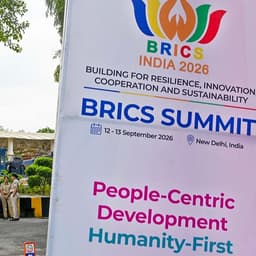
Panel: How can better China-India ties empower BRICS?
World Today

China's services trade fair showcases the value of openness
World Today
What's needed to restore China-UK relations to their "historic high?"
World Today
What to expect from a "next golden decade" for China-Qatar ties?
World Today