About this episode
Get every episode summarized
Each time World Today publishes, we email you a written briefing from the transcript — the topics, who appeared, and any specific claims, with the ad reads skipped.
Email me new episodesFree for 3 shows. No card needed.
Hosts & guests
Transcript ready
431 searchable segments. Every word is indexed and playable.
Full transcript
World Today — Panel: How can better China-India ties empower BRICS?. Machine-transcribed; use the interactive transcript above to jump the player to any line.
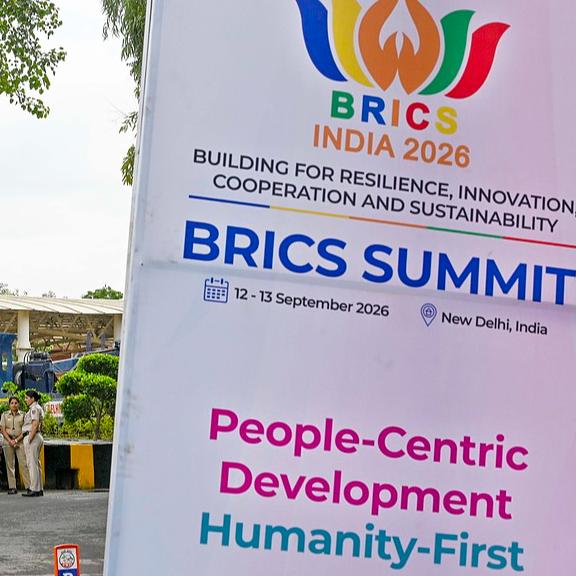
Hello and welcome to the panel discussion of World Today, I'm Dinh Han in Beijing. Over the past few years, the China-India relationship has been warming with gradual restoration of dialogue and mechanisms aimed at managing their border issue. China and India are two economic heavyweights of BRICS. One is the host of this year's BRICS summit, while the other is set to take over the BRICS presidency next year. How is the BRICS mechanism adding momentum to the further improvement of China-India ties? And how can greater China-India cooperation benefit BRICS in return? These questions and much more in this edition of the program.
To listen to this episode again or to catch upon on previous episodes, you can download our podcast by searching World Today. So joining us now on aligning our professor Matt Hath Das Nalapath, director of Geob Politics and International Relations and UNESCO Peace Chair was Manipul University in India. Joe Bo, senior fellow of the Center for International Security at a Strategy at Qing Hua University and Peter Chum, former Deputy Director of the Institute of China Studies was University of Malaya. So thank you very much for joining us, Peter, Mr. Joe Bo and a professor Nalapath. Professor Nalapath to start with you. We know it was a meeting between President Xi Jinping and Prime Minister Narendra Modi at the 2024 BRICS summit in Russia that set the ball rolling on the reset and warming
of the China-India relationship since then over the past two years or so. In terms of the China-India-Balajor relationship, how would you assess the convening power of the BRICS? Well, I'd like to say that I think the meeting of President Xi with Prime Minister Modi will be a great significance in terms of the future trajectory of India-China relations. You know, we have not had a very small trajectory. We have been ups and downs. And hopefully the future will be a little more smoother. And this relationship has to be done at a personal level and the highest level of government, which of course, we didn't see, and Prime Minister Modi. And I think the future of the world, Eurasia is a new hot land. And in Eurasia, there are three very large countries, India, Russia, and China.
And all three are meeting on the same stage at BRICS. So I regard this as a very, very important meeting. Mr. Joe Bull, turning to you. Jim O'Neill, the British economist who forced the coin this term BRIC back in the year 2001, he has repeatedly said that China and India need to cooperate seriously if BRICS is to become a genuine economic force across the world. So before we are to explore how China-India relationship and cooperation might increase the global influence of the BRICS, what do you think are some of the aspects where the BRICS is yet to become more influential internationally? Well, just now, Professor Manapard, the director correctly about importance of a three major powers in this organization, that is China,
India, and Russia. But the economic speaking, I don't believe that Russia is of equal weight compared to with China or even India, which would become the such a large economy by 2030. So therefore, economic speaking, China and India matter more, or the Russia is still very important. I think that talking about BRICS, we need to understand the background, as you have mentioned, if we compare it to the SEO, SEO was founded because of the common need to counter-terrorism. But I believe that this BRICS is more reflected in the collective economic stress over the new emerging economies. So they are just moving in two different directions. But now,
we are actually seeing something in common, that is SEO is also becoming more and more focused or economic cooperation. But the BRICS also talks about the counter-terrorism. But actually, I believe that, or the necessary, it would not be the real focus, just because the geographic speaking in BRICS countries are more scattered, in different continents. So you have to consider on such issues of counter-terrorism, what is the real glue that is actually buying all the countries together, right? And even in SEO, counter-terrorism is very much talked about, and then join the exercises down every year. But as I have argued, actually, the real focus of SEO is to address the security issue among the member states. It's not about the really counter-terrorism. Terrorism, yeah, it is a genuine issue, but it can be addressed more easily than the conflicts
between countries, among SEO countries. Yeah, SEO and BRICS, they are parallel to each other, but in the meantime, they also share a lot of similarities, that's for sure. So Peter, going to you, in a recent media interview, Jim O'Neill, this British economist, he caught for greater cooperation between China and India in opening up their bilateral trade barriers, seriously considering a BRICS-wide payment system, and other areas, such as infectious diseases, management, global energy requirements, and climate change, carbon emissions reduction, I guess. So in your opinion, what are the areas where you think China and India need to and should cooperate more deeply in order to empower the BRICS? As Professor Joe Puer has already said,
mentioned earlier and also Professor Nala Pat, both India and China represent some two of the biggest economy in the region, if not in the world. And if there is even greater synergy between China and India in terms of economic cooperation, which at the moment is still hampered by certain trade barriers and others, the energy that comes out from the synergy between these two Asian giants will be enormous. And it will have a lot of downstream effect on the rest of the region BRICS and for us here in Southeast Asia as well. If the two Asian giant economies come together, they will be enormous food, certainly at the general level. But then I think most specifically India and China could really work together to counter the kind of weaponization of the trade system,
or specifically the US dollar currency system that we are seeing right now. We are seeing the fall out from the war between Ukraine and Russia, how America uses its trade to fully sanctions Russia, could sanctions Russia's economy on its knees, how vulnerable we are when the financial system or trade system is monopolized by one country. So it is ongoing effort to diversify our currency exchange and trade. I think it is absolutely critical and China and India could really work together on that. And thirdly I think really both China and India could really help up with leading on global public goods. Global goods such as infectious disease, sustainable developments, climate change, so in the like of what's happening in Nepal over the last man, these are issues
that are absolutely critical and China and India could really try and try and force us together and to really bring not only the breaks but also the global community towards generating the global public goods. Okay. We understand the breaks was established some two decades ago. As a reaction to cows for a great of voice for the global sales in multilateral institutions and there was definitely an absolute focus on development and a governance. Professor Nalapat, I'm not sure whether you would agree with this point but it looks to many people that the focus of New Delhi's presidency this year seems to be reaffirming breaks this original agenda as we can see from the endorsement of strategy for breaks, economic partnership of 2030. What is your what is your observation? See I would like to quote the old Chinese saying
that is you surveyed the world from the high mountain and then look down the world and see a clear view. And so looking down the mountain at more you don't get a very clear view. So my mind there is another saying which is very important that can only be friendship between equals and that means frankly equality for example and trade relations. In this context I would say in which you know both sides agree to buy goods in the other's currency that would be a great step forward and secondly we have to reduce the trade deficit. The trade deficit with China is immense by India's concern and it is becoming very difficult for our currency to manage because of the trade deficit. So I think our Chinese friends must definitely agree that there has to be a more equal relationship and that have to be greater imports from India to China. That is we are importing
a lot from China. China also got to import a lot from India and I would not ignore the contribution of Russia. Half of the continent of Asia is Russian and the Eurasian continent is a new heartland. You remember that Halford MacKinder when he began geopolitics taught about Eurasian heartland. Now that prediction is coming true and in this heartland you have got these three very big countries. Now each of them is big in a particular way. The Chinese are very big. If I may say so in gross domestic product, Russians are very big in natural resources. India is very big in human power and talent. In fact at the moment now what we are speaking about six million Indians are working in the United States on matters relating to I am talking about the Indian Americans and also Indian Indians and they are working on matters
relating to artificial intelligence. They are working on matters relating to other matters regarding the way cybernetics has been developed and various other studies. You go to any college campus in the United States and you will find professor there who are Indian ethnic origin or who are from India. So that close kind of relationship that we have with the United States is something that even hostile president like Donald Trump cannot affect. I think it's going to be very important for Chinese friends to ensure that there is a more equal relationship where trade is concerned because we have got a very large youth population. We got 700 million people who are youths. Now they need jobs so the way they can provide the jobs is through ensuring more industry, more commerce and I am sure that our Chinese can come up with ways in which this can be done in
India as well. You cannot have to have a human body. One part of it is doing very badly. One part is doing very well. The part that is doing badly will affect the part that is doing well rather than vice versa. So I think it's important for Bricks to understand that Bricks is an organization where there is no hierarchy. In the UN for example you got the P5 which is a hierarchy. In the EU the US is trying to impose a hierarchy by saying that we are superior to the other countries in the G7. Bricks are so we've seen in a more equal way and every country in Bricks is equal. All the members of Bricks are equal. They're all special in their different ways and if we utilize that specialization properly for the benefit of the common goal of everybody in Bricks it is better for the entire Bricks family. So let us think of ourselves as one family, as Prime Minister Modi said Vasudeva Kuttumma come the whole world in role of humanity is one family
and if you look at it from that point of view there's a lot to be done to ensure that there is cooperation and a more equal relationship especially in trade and I think that is something that we need to put stress on. Thank you. Okay thank you for sure I guess promotion of common developments in a shared prosperity that's a very important aspect of China's vision for Bricks as well. So Mr. Jobo what does this strategy for Bricks economic partnership 2030 mean to China in your opinion as China is going to take over the presidency of the Bricks next year? Well I know how important that such a summit are but I would not replace too much hope in quick breakthroughs on all the difficult challenges and issues. While we're by the the factors that organizations new institutions
like SEO and the Bricks are direct reflection of the change the international order but there's there are actually big you know challenges for for example Bricks such as how people could actually make a detailed realization as this is reflected in President Lula's remarks you know every night he said I would think why people would trade with each other using an American dollar and then there is of course you know political conflict so now I'm saying two major powers that is Russia and the United States having war in different regions and then of course we have another issue that is how we actually could you know make this organization more economically the vigorous because the consensus is that yeah we do not need to adopt a kind of IMF and World Bank financial system and we all agree that the Brettonwood financial system is inadequate
but how about you know what we should do in the new emerging markets right there is no consensus and finally of course there is a problem whether we would accept those other countries who are burning the door to enter because Bricks is like SEO is becoming more popular so therefore there are more countries waiting to join and just now Professor Nanopart has talked about how this organization is good in that all members are equal that is certainly true but on the other side of the coin it is also a challenge because when you get more popular and all countries want to join and they could eventually have a equal voice that actually would make a decision making more difficult so that is why I believe Bricks is somehow suspending to us as a new members
right now we have 10 partner countries so I don't believe well okay this is probably the same with SEO right because you are popular so more countries want to join and the both organization would adopt this consensus process which actually could make things more difficult in a way so your popularity is actually becoming a problem um Peter data on the Indian side show that Indian China trained in goods reached more than 150 billion US dollars in fiscal year 2025 to 26 an increase of more than 18% from the previous year India's exports to China rose more than 36% while imports increased to some 16% during the year um apart from the warming of the broader relationship over the past two years or so what other factors do you believe have also somehow
contributed to this strong momentum in two-way trade I think I just want to reduce it down to the pragmatism of our two leaders the two leaders from presence-eaching pain in China and also Prime Minister Modi they realized that you know despite someone resolve for the disputes despite some differences in terms of global outlook and ideological positioning they are there is a bigger picture both China and India represents the global South there is so much more at stake than just the bilateral relationship and both leaders could see step back and could see the big picture and decided that maybe this is the way to go to focus on the big picture the historic moment where global South are emerging to replace retake out place on the center stage and both the two
leaders saw that and they were able to set aside the differences and to focus on the common group not only for the common good of the two countries but also for the global South. Professor Nellipads um I mean compared to trade we are actually seeing a rather different scenario when we talk about investment um in 2015 China's investments in India state at hundreds of millions of US dollars last year however they were merely 6.5 million US dollars and um here in in the case of China foreign investment um actually has played a key role in how the country became a global manufacturing powerhouse now some say India needs to accept more investment from China if India wants to turn its manufacturing ambitions into reality what is your
take on this and what role can the bricks mechanism play in terms of facilitating investment between China and India well look in my view there are a lot of items in which Chinese could profitably import from India I was talking about the way the United States is using India talent and I'm sure that that doesn't have going to flow even to China if necessary and if there are job opportunities for that now in all now the future is going to belong to the people who saw the technical problems of artificial intelligence and I'm not one of those who go for those doomsday at scenario I saw one of my TV show yesterday which is saying that the whole human race can be wiped out by artificial intelligence I mean I heard for example long back if you remember that when the age of the laptop came and and the age of the internet came that employment will
become zero on the contrary the internet of increased employment internet has actually done great work in ensuring that there is greater access to information I believe are in frankly a horizontal view of society rather than a vertical view in a horizontal view everybody in no matter in which continent no matter which country no matter which human being they have all got strong strengths and it's very important for us to identify those strengths have workout task forces that can identify strengths in the collective bricks family and Africa for example it's a continent which is full of promise Latin America is very much a country of promise and you've got the largest country in Latin America coming to bricks that is Brazil and there again for example if there is a flow if there is a most move the flow of manpower then you can see the the benefits for
even for Brazil of having sufficient manpower because they have a situation which schools are hospitals are under man and that situation is not a very good situation as far as India is concerned we have a total of 700 million youth many of them are very highly trainable they have shown for example the same Indian youth who was considered as no good in India once he or she migrates to Europe America or even to our country like Singapore that person becomes highly productive so I stick to my stand which is that we need a more humanitarian approach to these issues we cannot look at it only from a technological point of view because ultimately technology is to be driven by humanity and I'm a firm believer that bricks can be a forum by which you have a humanity-based technology framework a framework where technology serves humanity so I think that should be the
bricks motto what Mark Gandhi said look down look at your memory think of the poor as most wretched person that you saw and think whether the policy that you have adopted will serve that person and from that point of view again I think bricks can set a pattern in showing ontodia themselves in all the different countries thank you your points well taken well let's take a very short break here and a coming back our discussion will continue stay tuned you your back was world today I'm dinkhan in Beijing today we are talking about China India relationship in the context of the bricks cooperation joining our discussion professor
Madihaav Das Nalapagd Director of Geo Politics and International Relations and a UNESCO Peace Chair at Manipule University in India Joe Bo senior fellow was the center for International Security and Strategy Ching Hua University as well as Peter Chum former Deputy Director of the Institute of China Studies at the University of Malaya um Peter going back to you India may worry that a deep or economic relationship was China could have worsened its trade deficit and the lead to reliance on China in certain sectors um something we heard from professor Nalapagd earlier how can this concern be addressed in your opinion within the framework of the bricks cooperation mechanism can China and India find a way to address this particular concern well I must say that this is not only an Indian concern it is also a Malaysia concern the
Southeast Asia concern and the Asian concern but it is not necessary China's fault it's just by virtue of its size China is so huge and for us in Asia in Southeast Asia and Malaysia as well we are overwhelmed so there is trading balance here there is a lot of sidedness in terms of its investment and partnership and there is concern that there's become we are becoming over reliance on certain sectors and also for some countries the national security issues emerge as well so I will just bring the Malaysian so situation as a lesson perhaps for how we could address the the issue that relates to India per se a Malaysia for example we have found a way in which we could we begin to realize that we got to move beyond just trade by a seller it's as it is there's deficit and there's imbalance we are constantly urging finding ways in which we could get into
the the Chinese market it's our ongoing negotiation it has to we got to continue to work on that in terms of investment we certainly need Chinese capital and Chinese technology but we negotiated a equal partnership a win-win partnership let me give you an example of the motor industry Malaysia has a national car called proton proton has been losing a lot of money because it just could not compete on a global stage then Gili came in Gili decided to have a joint venture proton retained 51 percent so it is still our national car but China Gili has put in a lot of investment and help us to get through it so this is a very good example of a kind of a win-win joint venture and I think that that could be a blueprint for for moving ahead for for India and for Bricks as a whole as we succeed in China thank you very much for this very interesting and vivid
example from the Malaysian side so mr. Jobo both China and India aspire to promote the international use of their own currencies in the case of China the central bank PBOC has just a recently pledged that China would increase bilateral currencies swamp arrangements agreements and local currency settlements and expand cross-water use cases for the digital yuan and QR code payments etc so how much room do you think Bricks will provide for the realization of this aspiration of China and India and how will internationalization of the yuan and Ruby benefit Bricks in return well I think that you are talking about the chain which is definitely but I don't believe the very near future yuan would become as strong as the US dollar
because among Bricks countries the truth is China and Russia have a natural trading through the own currencies which is nearly 99 percent so that is a reality but between China and India and China and Brazil Chinese currency actually is used in owning limited amount of a planetary trade so I don't believe we can realize that the dollarization very soon although that looks very much as a prospect in long term so when we talk about the economy of Bricks countries the disparity is so high while the Chinese yuan certainly is dominant to currency but let's look at what has happened in EU. EU currency actually the euro is based on the common
similarity or commonality of 60 percent of the economies of these countries so this is certainly not the case where the Bricks countries. So Professor Nalapad in what way do you think the Bricks cooperation mechanism can enhance or empower the internationalization of the Indian and Chinese currencies? Well look I want to point out that Bricks is one organization where there is absolutely no Western privacy so any Western influence coming in and that's a very important thing that we should keep in mind at the same time Bricks is definitely not hostile to the Western world but China and the West have got a very mutually profitable relationship. India and the and the West have got a very good relationship. India and EU we are a free trade agreements have
been there and we are likely to work on a free trade agreement with United States also and fortunately we are finding some problem because of the present leadership there so I would again say that as far as Bricks is concerned and if we are talking about a new unit of replacement or a new way of payment well once you start it and if it is good people will automatically come to it. If you try and say that you have to work in that then it's a different matter but which if you started and it good and it takes off people will automatically come to it so in India we believe in natural selection people will automatically why have they used the Western system because they find it's a useful system so in my view Bricks can be a test-built different countries can use it testing of their own methods of having a fairer currency kind of situation as far as India is concerned
we are perfectly neutral on that score and we are definitely not hostile to any currency be it the US dollar or any other currency we don't want to follow policy of hostility we would like to follow policy of what the Russians call Druzba friendship and in India Russia you can see friendship is very much there so that countries can realize that mutually benefit for me the key word is mutual so we in Bricks want to look for win-win situations and win-win solutions and I'm very sure that our leaders are wise enough to come up with these solutions and I think and hopefully I am hoping as a comment citizen that we'll have a lot of win-win solutions on the table that are not hostile to any other block or anything of the kind that are not competing in other blocks except in terms of quality because if your quality is good you don't need to do anything about it automatically it will become spreading and it will become more popular so we believe that
Bricks is a very important forum and we are very happy that we are getting a very very large number of people coming from all the major delegation we are very happy to welcome our African friends, our South American friends very happy to welcome our international friends and we are very happy to see that of the three big powers of Eurasia, India, China and Russia are all coming together same platform in my view, the consolation and cooperation of the way forward but it has to be equal consolation and cooperation it has to be win-win and if it is win-win it is win-win for the whole of humanity because if we develop the whole of humanity will develop thank you so Mr. Jobol we know Beijing and New Delhi just the hell they are the latest round of border talks in Beijing last month was the two sides basically agreeing to
continue dialogue and seek a fair reasonable and immutually acceptable settlement of the border issue so over the long term or longer term do you see potential for the bricks to become a more constructive platform for for Beijing and New Delhi to build trust for managing their border issue no because this organization however useful would not be that relevant to trust the building between China and India just imagine for a moment both China and India countries proud of their own strengths history whatsoever and we certainly do not want to bring this issue that has nothing to do with the bricks or discussion because I believe well I believe India would also believe that this is a bad battery issue but as to how we can solve this problem I don't believe again frankly
speaking that this issue can be resolved very quickly because I myself was a negotiator with the border issue and I have been a desk office for a sausage for 10 years in the Ministry of Defense so I know how difficult it is and we actually couldn't even agree on the list of the border for China is just 2000 kilometers per India is 3,488 meters so you can imagine how difficult it is even if we can we can resolve you know dispute of the of the lens that China believes in so the priority on the border issue is management you know to make sure that it is manageable so there is no conflict so that is the realistic priority yeah people in the past they're talking about early harvest even in the intersection which is sick in section because it
is the shortest section but even you know agreement on that has failed let her know the so-called package settlement which would include all these three sections of the whole border it is a very very difficult for us to to have even you know agreement on the modalities of resolving this issue China would have a kind of a top-down approach that is kind of a swapping of land yeah while even there would insist on a kind of a bottom-up approach that is to verify where the actual line of action control lies so we can avoid this as a problem so you see we don't even agree on the approaches yeah but I guess to keep the dialogue going on and continue to talk to each other to help consultation and to try to keep this issue manageable that's
achievable to say the least now um Peter um in terms of jointly empowering the industrialization and in a bigger picture sense modernization of the wider global styles community in what ways do you think China and India can work with each other and complement each other I think I will refer to what Professor Nalwhat mentioned earlier which is artificial intelligence that is the future there is our 21st century the industry of the future that we define the next generation the industrial revolution and I think here India and China has a lot to contribute a couple of months ago there was a AI submit in Shanghai presidency Jinping came forward and say AI is not going to be the luxury of the West or the luxury of the Silicon Valley China would want to make sure
that AI will benefit the world it will be a global public good and that is the vision that he sets out and I think China and India has a lot to contribute towards that to making sure that the benefits of AI is global is towards all humanity and not only to the rich country as Professor Melapa has already mentioned there are a lot a lot of Indian talents in the AI in the big tank high-tech industry they are at a cutting edge of the research and we know very well how China has gone ahead so far in terms of developing their own model as well so I think there is some complimentary China could provide the digital infrastructure the data centers and others while we and others have set it up and India could complement at a software level so I think this is at a
arena where both India and China could really work together to benefit the global self and this is very future looking it's very forward working and I hope that two countries would be able to look at a big picture and there's so much promising cooperation ahead of us. Professor Nalapads frankly speaking at the current stage do you see any elements of China and India competing for a leadership role in the global South why or why not. Look I want to tell you again that leadership is a natural process leadership is not something that you work for because we do not know the elements of leadership leadership it's one other country is willingly accept that you have got something to contribute and they willingly accept you as a kind of a role model.
Now in the case of Malaysia for example you've got Prime Minister Anwar Dibrahim Heze and I agree Malaysia is a great example of prosperity and progress the Malaysian UAE United Arab Emirates as we speak the UAE official in charge of economic development is in Europe signing a 15 billion dollar deal with Europe on matter of much of their money could have also come to India or to China or to both of our countries so I but again you know this is Germany quite an powerhouse in my view the lot of changes are coming politically in Europe you are seeing for example the alternative for Deutschland come up in one state that's a Saxony unhalled and I think you're seeing Marine Lappan doing very well in her election as I see I foresee a very
good showing by her the next French presidential election you're seeing the reform party in the UK which I think is likely to be the new the new party taking over and in Italy we already have Georgia Melloni who by the way is a very close friend of India and and forget some very good terms with the Indian leadership as we do with her leadership so I think these old constructs like right and left conservative hard line all that should be abandoned in favor of a very important thing are we helping each other are we helping each other to grow are we helping each other growing away which is fair to both sides and from that point of view India is willing to work with any country that is capable of providing that kind of help but as I said our fundamental belief and I think that fundamental belief is shared by all countries with very ancient tradition civilization
and that I mean even the Korean people for example are very ancient traditions the Egyptian people the very ancient tradition I think the ancient tradition is also deadly so the again I would again read it I am hopeful that our leaders can find ways of getting around this situation and I perfectly agree with Peter about AI AI is very important you know you have to control the machine the machine cannot control you but ultimately I have no doubt AI also is controllable but don't forget the H.I. built AI human intelligence built artificial intelligence and H.I. is much superior to AI in terms of creativity so we have to provide an environment whether creativity flourishes like it or not the environment in some parts of the United States at the Silicon Valley have been providing that kind of an ecosystem so we need to have that ecosystem in different other parts
of the world and so we need to have these modern technologies come up and flourish in different parts of the world there is no you know thousands of companies whether Indian Chinese or or Brazilian or South African or whichever of the many countries coming for for the biggest conference all of them can work together they do not only the leaders that are important it's also the large number of companies the large number of delegates who are coming there and each of them needs to be trying to work out solutions with his or her counterparts on other sites on other countries and I look forward to that kind of friendly cooperation that friendly kind of feeling and most importantly avoiding any kind of a big brother attitude by any one delegation about other delegations there is no room in the world of big brother as human beings we are all equal and I said we are all horizontal there is no vertical situation and I think that is
I mean if I may say so if you look at the traditional doctrine of the Chinese Communist Party that doctrine is also very clear that it's a horizontal situation between different people and you cannot have a vertical situation so I'm hopeful about this bricks becoming kind of well that bricks and looking at it because we are looking at a world with AI we are looking at a world with joblessness we are looking at a world with their population explosion in some parts of the world and a population explosion in other parts of it we're looking at a very complex reality and it also makes sure the next generation does not suffer but does well because decisions we take in this particular generation this particular generation of leaders I'm very hopeful about our leadership of different countries doing that and I'm very hopeful about a successful conclusion
to bricks and I would like to welcome everybody in bricks Indian people 1.4 billion people would like to welcome all the friends who are coming for bricks and I like that Chinese expression very much lap on your old friends and being old friends the idea of being a friend is to be of mutual assistance again I said the word mutual assistance and again I go back to our Chinese saying win win forget zero sum make it win win and if we try hard enough we will get enough win win solutions thank you thank you yeah that's of course a very ideal scenario that we shit that we out to envision for the future but in the meantime Mr. Jobboa some say India and China are investing in the same institution while imagining different futures for the bricks do you agree why or why not and also would you would you believe in this idea that New Delhi's signature
policy of pursuing strategic autonomy could somehow end up preventing India from becoming too much or too deeply involved in bricks cooperation why or why not well I think India and China basically have the same goals for this organization that is none of us wants this to become a anti-West club because if they want they could not succeed primarily because this should be more beneficial for them to focus on economically you know integration and development of this organization looking against a bigger picture actually China and India are all beneficiary of the existing international order yeah Russia doesn't necessarily think like India and China because Russia believes it is a victim of the existing international order that is why President Putin would say
what is the use of the world without Russia sometimes India wants to strike a difference and sometimes India want to maintain a distance from China's position I understand that because China is too big and India just wants to become somehow strategic need you know autonomous but look at our position toward the world in Ukraine basically our position are very similar so when Indian friends say what different I say yes what different but is this the difference between two apples it's not the difference between one apple and one pair so Peter finally the last question goes to you I guess by steering the India-China relationship in a positive trajectory both Beijing and New Delhi currently hope to offer a model whereby countries do not necessarily need to resolve every strategic issues strategic dispute
before they can cooperate on issues of common-consuring common interests so how important is this model to bricks at a time when the grouping has expanded into a into a grouping spanning Asia Africa the Middle East and Latin America and if this model can somehow become a wider consensus within the grouping do you think it will have the potentials to reshape the global geopolitical balance absolutely I think while bricks is this is much the 20 year anniversary of bricks you know only recently is that Asia has become part of it Indonesia is called for member Malaysia Vietnam Thailand are waiting to become for member so asian is beginning to identify with bricks we see asian bricks is part of as part of us let me give you an example of asian how we could leave
and cooperate in spite of the differences that we can the South China Sea is an absolutely good example Malaysia has got territory disputes with China but we are willing to set it aside for the common good asian as a whole are willing to set aside these bills that we cannot resolve so that we could focus on the broader good and I think that that spirit should emanate bricks as well I'm sure it is emanating bricks that we have to despite our differences even ongoing conflicts that focus on the bigger picture and I think that should really apply to the global community as well not only to asian to bricks but to the 21st century global community a community or shape future for humankind that despite differences and the challenges and resolve that we can still shape
a common future for humankind well a big thank you to our panelists professor Madhav Das Nellipads from Madapul University in India Joe Boon from Qiwai University's Center for International Security and Strategy and Computer Chan joining us from Malaysia that's all the time for this edition of World Today I'm Dean Honey Beijing thank you so much for listening bye for now
More episodes
More from World Today

Panel: President Xi in India: the BRICS message and beyond
World Today

China's services trade fair showcases the value of openness
World Today
What's needed to restore China-UK relations to their "historic high?"
World Today
What to expect from a "next golden decade" for China-Qatar ties?
World Today