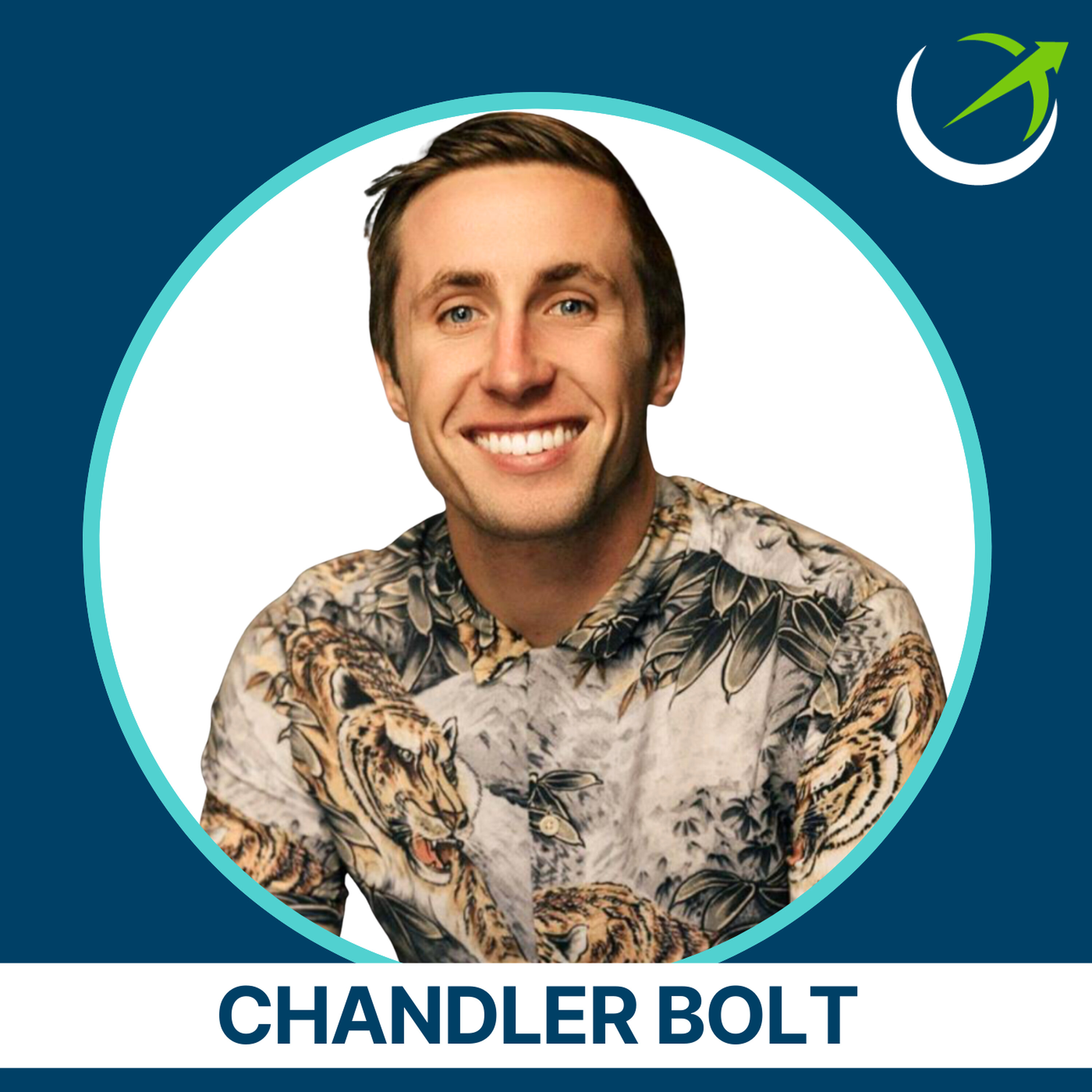
How To Build An Ideal Workday With Power Naps, Email Delegation & Deep Work Tactics, Featuring Chandler Bolt
About this episode
Full show notes: bengreenfieldlife.com/bolt
In this episode, Chandler Bolt and I talk about how we've each landed on almost identical daily systems for running a company, and the one place we still disagree. Chandler makes the case that a book is a business asset rather than an income stream, explains what it actually costs to buy your way onto the New York Times list, and then walks through the routine underneath all of it: a nap he hasn't skipped in years, a morning he refuses to let anyone schedule over, and a phone that geofences itself into work mode the moment he arrives at the office.
You'll also hear why he self-experiments relentlessly yet refuses to wear a tracker. We get into the two metrics worth watching if you track nothing else, why the 30-minute nap ceiling is weaker science than you've been told, why a hot tub is harder on fertility than a sauna, what overhead LED lighting does to your afternoon and the BlockBlueLight bulbs I use instead, and why a manual WALKOLUTION treadmill desk beats a motorized one. Chandler also shares the airplane movement trick that got him mistaken for a lunatic by a stranger who later became a friend. Then we close on communication: being a default no, replacing calls with voice memos, and using SocialSweep to surface the connections already sitting in your phone.
Episode Sponsors:
TruDiagnostic: TruDiagnostic is an advanced at-home test that uses epigenetic analysis to measure over a million biomarkers, giving you personalized, data-driven insight into your aging, energy, and overall health. Visit TruDiagnostic.com and use code BEN20 for 20% off.
Fatty15: Fatty15 is on a mission to optimize your C15:0 levels and help you live healthier, longer. Get an additional 15% off their 90-day subscription Starter Kit by going to fatty15.com/BEN and using code BEN at checkout.
Young Goose: To experience the transformative power of Young Goose's cutting-edge skincare products, visit younggoose.com and use code BGF10 at checkout to enjoy a 10% discount on your order.
Larine: Larine's better-for-you chewing gum uses nano-hydroxyapatite, the same mineral your tooth enamel is made of, to support stronger, healthier teeth while freshening your breath. Visit BuyLarine.com/BEN for up to 50% off your order today.
Sunlighten: Sunlighten's patented infrared sauna technology delivers the highest quality near-, mid-, and far-infrared wavelengths to reduce inflammation, boost mitochondrial function, enhance detox pathways, and optimize recovery. Save up to $1,600 at get.sunlighten.com/ben with code BEN.
Nuchido: Support healthy aging at the cellular level with Nuchido TIME+, designed to optimize your body's NAD metabolism across multiple pathways rather than relying on a single ingredient, for healthy energy, cognitive function, and recovery. Visit BenGreenfieldLife.com/Nuchido and use code BEN20 to save 20%.
See omnystudio.com/listener for privacy information.
Get every episode summarized
Each time Boundless Life publishes, we email you a written briefing from the transcript — the topics, who appeared, and any specific claims, with the ad reads skipped.
Email me new episodesFree for 3 shows. No card needed.
Hosts & guests

Transcript ready
766 searchable segments. Every word is indexed and playable.
Full transcript
Boundless Life — How To Build An Ideal Workday With Power Naps, Email Delegation & Deep Work Tactics, Featuring Chandler Bolt. Machine-transcribed; use the interactive transcript above to jump the player to any line.
My name is Ben Greenfield and I'm this episode of the Boundless Life Podcast. A lot of people think they can become a millionaire with book sales on the side. But the book can't make you rich from customers. Most people decide to write a book for a specific reason and it's probably connected to their business. So why not just get a bunch of customers instead of getting totally distracted chasing some vanity list that doesn't move the needle. We do a lot of business development. So it's partnerships, it's speaking, it's all that stuff. And so we have these podcasts that we're trying to get on and that maybe be a six or seven million dollar on them in the company this year. Welcome to the Boundless Life with me, your host Ben Greenfield. I'm a personal trainer, exercise physiologist and nutritionist and I'm passionate about helping you discover unparalleled levels of health, fitness, longevity and beyond. Most of us just guess when it comes to our supplements, which can make expensive pee.
But your body deserves better. So there is a form of testing called epigenetic testing. Epigenetic testing goes deep, deep. Analyzes over a million different data points to create a simple actionable plan for your body, including what kind of supplements you should take and a lot of other deep insights into your health. Test way more than just the average blood test, even though it's a quick at home finger prick. True age measures 180 plus biomarkers and then provides you with personalized actionable steps to improve your health, to boost your energy and to slow aging. You get digital results with a 90 day actionable plan. You follow the recommendations on your plan for 90 days, then you retest to see your progress. So again, this is advanced epigenetic testing to analyze a crap ton of biomarkers. This is used by top longevity clinics and help professionals not
just at home users. So easy. Just prick your finger. You don't drive to a lab. You don't have to go a bunch of tubes of blood. Drink all your coconut water beforehand. Right now my list just can get 20% off at truediagnostic.com using code Ben 20 at checkout. That's TRU, TRUdiagnostic.com and use code Ben 20 for 20% off today. You get to choose their true age kit, their true health kit, or my recommendation, the combo kit, which gives you both true age and true health as a one time purchase or a subscription. Check them out. Truediagnostic.com use code Ben 20. C15 from fatty 15 is the first emerging essential fatty acid to be discovered in more than 90 years. That's a long time. Took them almost a century to get there. Jaze, it's an incredible scientific breakthrough to support long term health and wellness. So fatty 15 co-founder. She's been a podcast. Dr. Stephanie Venn Watson. She discovered the benefits of C15 while working with the US Navy to continually improve the health and welfare of aging dolphins. Based on over 100 studies, we now know
that C15 strengthens the cells to key healthy aging nutrient. It helps us to little biological aging at the cellular level. In fact, when your cells don't have enough C15 to become fragile and they age faster, and when your cells age, you age faster too. So then they discovered that this is actually called cellular fragility syndrome when they were studying up on this nutritional deficiency of C15, and as many as one in three people worldwide may have low C15 levels. So fatty 15 is a science-backed award-winning patented 100% pure C15 supplement. Vegan friendly, free of flavors, allergens, preservatives. So by replenishing your cells with crucial C15 nutrients, fatty 15 effectively repair cells and reversees aging at the cellular level. Clinically proven erase C15 levels, resulting in lower cholesterol levels, healthy liver function, improved up microbiome health and improved red blood cell health within three months. So here's how you can get started. Go to fatty15.com, FATTY15.com slash Ben, and use code Ben at checkout.
That's fatty15.com slash Ben, and use code Ben at checkout. I dropped in to see one of my buddies in Austin who is actually big in the publishing industry. He's the CEO of selfpublishing.com. He's a Forbes 30 under 30 honoree. He's the author of seven best selling books, including one called Publish. That's really good. Me and my sons have read that as a guide for self publishing. And actually a fun fact. His brother Seth plays in the Grammy nominated band Need to Breathe, big rock band. So he's an interesting guy. And we talk about Chandler's productivity tactics, his day to day routine. There's a very interesting discussion. He's a super inspirational guy. All the show notes for this interview with Chandler Bolt are going to be at bengreenfieldbif.com slash Bolt. That's bengreenfieldbif.com slash BOLT. Let's go talk with Chandler. So Chandler, I like briefly introduced you, but it's kind of weird. We haven't spent like a lot of time together. I played the football at your house. Yeah. Just like Randall, like last year and
then jumped off the your doc into the lake. And we've never actually sat down and had a conversation. But I'm very successful in what you do in the self publishing industry. And you also take care yourself and I've heard a lot of good things about you when you do that. What would you, how would you describe to people like what it is that you do in the publishing world? I like to say self publishing is entrepreneurial publishing. It's betting on yourself. You know that you've obviously published a bunch of books successfully. We got a book around here. We're going to give to you because I know you're working on something. So we'll make that happen here a bit. But predominantly our bread and butter is helping people grow their business using a book or grow their practice. Get leverage to what they're trying to do. I love people think they can become a millionaire with book sales. This but the book can make you rich from customers. Exactly. Unless you're like James Claire or Mark Manson or yes. Yeah. Yeah. Even those guys, I think they probably make more from speaking. Rather than they do from books. Likely. Yeah. How important just random. What do you think it is
to be a New York Times bestselling author anymore? It's not important at all. It's just like I mean, you are, which is pretty impressive. But I mean, I hear increasingly that people aren't impressed by and you'd probably know if this is true. You can like buy your way in. Yes. You can definitely buy your way on. I mean, it's a couple hundred grand because you got to buy 10,000 books basically and you got to filter them through small books, stores, books, stores, bulk, all the things. But I just think it's really it's a really dumb pursuit. Most people are or it decided to write a book for a specific reason. And it's probably connected to their business. Yeah. So why not just get a bunch of customers instead of getting totally distracted chasing some vanity lists that doesn't move the needle. I've always wondered. I've been like with the speaking thing I did here before the people are like, well, you could you could get paid more as a speaker or if you're able to say New York Times bestselling author. But even now like, I get invites to go speak at places and I guarantee like at least 50%
of people who are invited to speak like have no clue. I'm a New York Times author. But yeah, I think they're more interested now. Like what would they do on YouTube and yes. Yeah. And you know, what can they speak to and do they fit our profile? I think really yeah. Really what they're asking is are people paying attention to what this person has to say? Yeah. And if I bring them to speak in my van, are they either going to add a ton of value or move tickets or both? Yeah. I think early on, maybe the New York Times calling card is a little bit important, but to your point, what's you've done? All the stuff that you've done. Most people don't even know. Like I didn't even realize that until I was doing research for interviews today. Like, oh, cool. I hit them New York Times. You mean that I was New York Times. Yeah. Yeah. It was like, oh, okay, cool. Yeah. I know you've done a bunch of books, but I mean, it was just kind of buried in the research. Yeah. Yeah. Well, thank you for bringing that to light. Digging that up on my record. It's official Chandler Verify. I speak down to Onwukipedia. So like your office, obviously, you're up to a lot because you're working with all these authors. I know you work hard. I recently started following you on social. The imp to this interview.
I just kind of like see what kind of stuff you get up to. He just flew across the world so hard. Did you? Italy. Yeah. And one of the things that I learned that you like me are a nap ban. Yes. It's a non-negotiable. People make fun of me. I'm on the train of we've got to make naps cool again. Yeah. It's every day. And since I started working in this office, it's been harder because I'm napping in the office. So I have kind of like this little contraption where I just had a little pillow where I can kind of do a face down. You might not know that they sell for being on the sleep with the airplane train. Probably. Yeah. Yeah. Yeah. Yeah. Very similar. But I mean, I haven't missed a nap for years. Yeah. My people make fun of me because it's my wife says I'm like a toddler. It's just like if she ever doesn't get a chance, it's not good. But you know, I do the same thing. Yeah. Yeah. Yeah. I'm on the napping van ligand and like the way I think about it. And I don't know if this is similar for you is I do like get up earlier than what
would be ideal for me to get like the perfect eight hours of sleep. So my logic is, well, I can at least get stuff done before the world expects me to have my phone on and before like slack and a sauna and everything or blowing up saying like get deep work done and do my morning routine. And then so that like my immune system doesn't suffer and so I recover, you know, at that point, well, I need to actually get a sleep cycle in somewhere. So then I for me is usually like 2 p.m. You know, my team knows, you know, unless it's like a totally wrong. Oh, I don't schedule anything on Ben's calendar, which is two and three. And I just fuck away. How long? I do not set an alarm. I am unless I know because usually like I don't have important calls and stuff again until four. So usually it's like two to three, but then there's like a buffer zone for being catch up on emails and stuff. There's like guaranteed. There's no, I'm going to nap two hours. Yeah. Right. So the longest I go is like maybe a little over an hour and a lot where and usually more like 30. Okay. So you wouldn't know more about this than I do. I always heard that 30 minutes was a
threshold where if you go longer than that, you get into deeper REM sleep. And then it's tough. And then you wake up groggy. So I always kind of like I started at 22 minutes maybe and then I've now it's the 16 minute nap. But I don't know this. It depends a lot. So those studies are done in sleep boards with untrained individuals, meaning people who are in like a tightly controlled sleeping environment where they're measuring circadian, with misity. They've got all like the drugs attached your head to measure deep sleep and REM sleep. What stages that you're in. And then these people are also not like during that time either training hard or running a business hard. You know, might sleep. Let's say six and a half hours take 40 minute nap. I'm still tired at night and I get really good sleep scores because I'm still like waylipsing for an hour in the morning and you're pushing my body way harder than I would if I were in like a metabolic board study in a hospital. And so I think the idea of like napping, messing up your sleep is it's a new,
it's like it's a nuanced discussion. I think the other piece is timing, right? I think it's a bigger mistake like nap too late in the day. Yeah. Generally, the rule is you should be done at least five hours before bedtime. Yeah. If you're napping, you better be up from here now by five. Like if you're gonna go to bed 10. Yeah, I'm kind of subscribed to that where I'm more in the 12 to kind of range. But basically I eat and then it's almost like for better or worse, sometimes I wish I wasn't this way on the weekends because there's had the same thing happens and it's like, well, I just stay and then now I have to take a nap. Yeah. Or else like on a Saturday, sometimes you are for the afternoon friends and like it's like your brain starts to go 100% episode. And I'm like, when you guys go in, I'm gonna stay in the car. I'm just like taking a few minutes and it's trainable for people listening. Yes. Well, I can't sleep. Like I didn't use spills. We've done an airplane or a car under a desk and then what you start and yes, certain things like I have over your headphones. Yeah, I've called new calm. I got like an I mask. Like if you have like an happened kid. Yes. Yes. I'm just I'm asking earplugs. But I mean, and then the pillow, but when I
was at home, I would go, I would actually go in my when I went home, I would go to bed. Obviously and just get in the bed. Do you do a lot of like email worldly whole idea of like self-quantification? Self-experimentation, like trying different wherever supplements or epic methods or whatever. But it's something a lot of people are into now, right? Just like, yeah, as track, quantify, are you much of like a self-experimenter? Or you just have like your set of routine? I think the big difference between self-experimenting and then tracking, I definitely self-experiment with the ton of stuff. And I feel like I've kind of doubted and said like, I'll do challenges like the whole 30. We're I'll do that for a month. They're all do we do a health challenge as a company in February. Well, everyone chooses their own adventure and like this this year, I had 4,000 pull ups and 4,000 push ups and sit ups and all this stuff in a month. Yeah. And so I'll do stuff like that. Not a morning. What's that? Not a morning. No, no, no, no, no, I wasn't a morning jockey. Yeah, no, that was basically like 200 pull ups, push ups, sit ups, no alcohol, no, like,
so I'll do like challenges. I love challenges. I love, I mean, I have got my morning routine kind of that I do a nap, eating, I mean, intermittent fasting. So that's kind of for me what works and then a light lunch and then bigger dinner. But but then the tracking, I think, which is so funny because in every aspect of my life and in every aspect of my business, I track everything. But my I've just never gotten on that side for health. I kind of ignorant. You're probably going to hate this, but I kind of think ignorance is bliss with some of that stuff where I don't want the confirmation bias of, oh, my sleep source sucks. Right. Therefore I'm tired. I'm like, I feel great after that perfect night of sleep until I looked at my 100% and now and so I just feel like, okay, it's not going to be all that helpful for me. And unless I do it for a short period of time, just to figure out what works and what it doesn't. But I think for a lot of people doing ongoing all the time tracking, it's like marginal utility. And it's just more stimuli. Yeah, I don't know what you take. Yeah. I think and then there's actually a whole book about this called
unplugged. And the idea of being so married to a wearable or sleep diet or self-quantified diet or step counter to the point where it's stressing you out or becoming such a distraction. That for example, I know people who will like workout for 45 minutes and then spend 10 minutes, just like pouring through their data and logging. And I'm like, you probably could just like workout for a few five minutes. Just 10 minutes. We consider just like collecting all the data. Let's talk aging, skin aging. It's more than what you see in the mirror, meaning that if your skin is or is not looking good, that reflects how you're doing in the departments of things like cellular energy and mitochondrial function and how well yourselves repair and communicate. That's why I treat skin care pretty intensively because I take care of all my organ systems and the skin's a pretty darn big organ system that reflects the quality of all the organ systems underneath it. That's a mouthful. So one of the brands that I use for this is called
Young Goose. Let me tell you about these steps. So you start with their blue peptide spray. It supports cellular energy directly at the skin level. And then you move on to the vampire exosome. So with this layer, you're supporting regenerative signaling, cellular communication, and repair. I was not responsible for naming it vampire exosomes, but it's like millions and billions and dare I say, good, billions of exosomes in one single product that you smear on your face. And then you can finish with their youth daily moisturizer. So that brings in NAD support through your face, along with sperming, which is associated with autophagy, meaning you're not just reinforcing long-term cellular resilience. You are also reinforcing short-term appearance. So you layer these things. You target multiple biological pathways of aging at once, energy production, repair, renewal, instead of one single product. It's a super powerful stack. And you can get that in any of their other really cool anti-aging stacks and packages for cutting edge
skin care. If you go to younggoose.com, just like it sounds, younggoose.com, and use code BGF10 at checkout to get another 10% discount on your order. Let's talk gum. A lot of gum is crappy. It's got our official sweeteners and sugar and colors and chemically labels. And I like to chew gum. I think it looks great or does great things for the jaw. I think it's wonderful for the teeth. If it has the right stuff in it, it keeps my appetite shaded and keeps me from eating a bunch of dark chocolate and nuts and between meals. I chew on this stuff called lorene. L-A-R-I-N-E. They make a chewing gum that's designed to do more than just fresh in your breath, another advantage of gum. Lorene uses nano-hydroxyapatite. That's a mouthful. Literally, it's the same mineral that you're enamel. Your teeth enamel is made of and that helps support stronger and healthier teeth every time
that you chew. Lorene. It's a really simple habit. You could chew it after meals, after coffee, you know, whenever you're traveling and can't brush right away. The flavors taste great. They last a long time. That's one thing I hate about healthy gum is like if the flavor goes away quickly. This doesn't happen with lorene. Your mouth feels fresh afterwards. You feel good because you're doing your teeth a favor and giving them extra support. I still brush my teeth, of course, but this gum is awesome and it's like the perfect size. Everything about it is awesome. They're offering my listeners up 50% off. Lorene is when you go to buylorene.com slash ben. That's buylorene.com slash ben. L-A-R-I-N-E by lorene.com slash ben for up to 50% off. So I pay attention to certain metrics, if especially if I don't feel all right on how much energy like I'll check my blood glucose monitor or or you know because it's very common if you wake up at like 2 a.m. you're not waking up because it's too loud or the room's too hot or the bed isn't firm enough or whatever. A lot of times
between above midnight and two, you wake up. It's because of low blood glucose. And then I just know I'm like, oh, I probably didn't eat enough for dinner and I should go downstairs and just like have a banana and go back to bed. So it's useful for that. And then the hurry variability, which is basically your measurement of stress or readiness. If that dips, I kind of like, because I take a glance at that score every day. And if it dips, I'm not concerned but then if it goes for like three days and it's lower than usual, that is highly predictive of injury or illness. Like it's see and so if you know that, you can nip it in the body but you're gonna take it today and it takes some straight-wellness for vitamin C or go get an IV or whatever. So it is kind of cool that you can have a little bit of a crystal ball into, you know, am I going to pull my back up a jam if I hit it today or am I getting a sick? But then I used to do a lot of endurance sports like Trafton and we would just like have all this stuff. Like the
like the the like the cadence meter on the bike, the power meter and the heart rate monitor and the accelerometer and the GPS. And I had to the plumber of polysharm running computer. Yeah, the last two years of racing, I just got to get cheap ass clinics and heart rate monitor and that was it. And just the best because you're less distracted and you feel like you're less tied all the technology that's like running your life. It's kind of like with morning routines where people the running joke of early on in your career, you have the three hour morning routine and as you progress, it gets to like answer something because you realize I don't need to be doing all of these things. I kind of just need to wake up the internet. Yeah, the 80 point. Yeah, yeah. Yeah, do you have like a like a morning routine? Yeah, I mean, I kind of I'm a miracle morning guy. Hello, Rod is one of his sinister probably more authors than anybody ever. And I don't even know if how a little bit on the podcast, he might have been gem second guests. You know, he might have
been like years ago, but for people who don't know what the miracle, we got to make we got to make that happen. How's one of the most inspiring guys I've ever met the miracle morning. Basically, he has this Savers framework, right, which is silence, so meditation, A is for affirmation, V is for visualization, E is for exercise, R is for reading, S is for scribing, so journaling. And so he had multiple, he died in the car wreck, he got pronounced dead multiple times in his life. Car wreck, cancer, and he found this Savers kind of mantra of a miracle morning. And so I think early on I subscribed to all of that. Now I kind of have an abbreviated version of that. But either way, it's liver died by my morning routine. If I don't do my morning routine, my day is kind of off the rails. If I do it, it's, which is 99.9% of the time I do it. And so it's pretty basic. It's just waking up. It's taking vitamins and stuff. It's basic workout, like body workouts, like push ups, pull ups, sit ups, all that stuff. It's reading. So I got an
audio book in the audio counts. I sat count it personally. I counted it like if I was a few audio lotion a month and read it. Oh yeah. I tell people like I did 10 books. Yes. 100%. I'm very much in that count. So I'll tear it through an audio book and then I'm getting back on the meditation train. Like I used to do the whole thing. It was like I would listen to my affirmations. Yeah. I would do my visualizations. I would, you know, I would, I had affirmations that my brother recorded me and I would listen to those. And then, and I would do a meditation all that. And I just kind of paired it back a lot. But I've noticed as of late, I haven't meditated in years and I need to bring that back. Yeah. It was just too much. Just breath word count for you with meditation. I think so. Yeah. I don't really do it unless I'm in a setting where someone's leading it. Like I don't have an average. I was out of work out this morning and we like finished with breath work. And I did breath work religiously for like eight years. And I like it because you are meditating, but you're also doing a lot of like, gasex change, pulmonary stuff. So I almost
feel yes, meditation with extra benefits. I feel I feel the same relaxation and peace. I'm so that visualized, for example, on the exhale hold. But it's almost like instead of just sitting there and maybe, you know, meditators would just absolutely hate this description. But it feels like more productive meditation. Totally. Yeah. That is the end. Yeah. It's like, I don't know. I was like walked, it's like walking prayer. It's like, yes, I'm praying, but I'm also on a hike, my body and getting sunshine and nature. And so I like that. And honestly, I feel like breath work is almost better than meditation because it's what you're doing anyway. Yeah. In Med it's again, like probably the meditation experts would would hate that as well. But I think it feels like it's what you're doing anyway, which is getting yourself to focus on your breath. Yeah. But more productive. Are you a like like a water guy, a cold plunge, float tank, like, any other stuff? Yeah. It's so funny. I feel like I don't know if you've experienced this, maybe less so because it's more of your job. But I feel like I had, I was like, downed in on all of these things. I've floated away from those
things. And now I'm introducing a bunch from back. So like I got a cold plunge and son at the house. We're in kind of a baby making mode. So the son is off the table for now. Oh, man. Even if you get like the ice balls everywhere. Yeah. You know, you know, hot toes worse though. Hot toes worse because the screw it's issues just like closer to the water. But yes, on his, he is also terrible. He's packed full on fertility in a negative way. So you're not trying to do. Yeah. Doing cold plunge. I need to get back at it. But I used to do a lot of cryotherapy and a lot of flow tanks. Yeah. Like I mean, and I still do float tanks sometimes. But it's more, okay, there's a big thing happening in my life or big decisions that I need to be making or an offsite coming up where we're going to have strategic stuff. Let me float tank ahead of that. So I can both relax, but then also clear my mind on some decisions I need to make. So kind of kind of strategically positioning. Now where it needs to be. Yeah. Do you like having float tank? Or you go, no, let's go.
Yeah. I love my love. I did. Do you have one? No, I had one. And it's just a whole lot of work. Right. The basement gets all salty and there's water everywhere. It's a cool concept. The last time I did one was when I was here in Austin, the place called Kuyah. So that, but thanks and my wife and I did it a couple of school. And as soon as I get in there within like 15 minutes, I'm dead to the world. Yeah. It's like snoring and crashing. Yeah. And she hates it. She literally just like listening to me snore and thrash. You always follow. Yeah. And like saying anything sensory deprivation for me because I don't know if you're this way. Like like, maybe if I am not in a sensory deprive scenario, I'm just pushing and thinking and analyzing and planning the whole time. But as soon as you like put me in somewhere where I'm just like not allowed to do that, right? Yes. For Barric Chamber or you know, sometimes an airplane counts. Yeah. If you decide to keep the Wi-Fi off or float tank like massage like yeah, like that. Although for massages, I do have like a voice recorder under the table like a like it. Okay.
So that's the worst like it like a marina massage. And they do make float tanks now with the orders and the ceiling. But yeah, if you're in that scenario and you do want to relax, but you have a brilliant thought and then you get the thought to just like just worm and your brain. Yeah. So I've learned that having a recorder handy for sessions like that is good. And I have it right in more time. But yeah, if I get sensory deprive, yeah, I'll be out like the light a lot of times like I'll combine that with an app like a hyperbaric. That's smart. I love the voice recorder idea because you're totally right. You get an idea and then you you're like, well, I can't forget it. Right. And there are voice activated voice recorders too. Cool. So yeah. Like you go to Amazon voice activated voice recorder. And then like rather than running at the whole time and then you say something and you don't remember was that like the 35-minute marker or whatever, like you just like got your audience nice. That's cool. I like that. I always fall asleep in the float tank. I only I got a funny story on a one time I was living in San Diego and I started the Sanctuary Norah House. And it was kind of a way for me to optimize my health and the business and all this is just move a bunch of people into a house. And so I was
taking a buddy to the child with the float tank for the first time. And we got stuck in in traffic because it rained and then when it rains in Southern California, people just lose their mind and forget how to drive. And so we finally get to the float tank place like an hour late. And they said, hey, the only thing we got your pasture appointment, we can't let you go in. But only do we got is a couple's tank. Yeah. Yeah. That's like the heart shaped hot tub in dumb and dumb or yeah, speaking of trying to have babies. So you guys are on like a fertility quest. I'm glad to be on this. I'm actually on this side. To herbs and oh really, okay, maybe we should pay not them. How long have you been married? Two years married. Okay. We've been maybe trying for six years and months. Yeah. Yeah. And was your wife into like fitness helps biohacking? Yeah. It comes to both of them.
Blessed biohacking, but basic fitness health. Yeah. Yeah. Yeah. Yeah. Cool. You mentioned like all these different steps that you're going through in how Elra's Miracle Morning. Did you say that visualization is actually one of the steps? It is. Yeah. As I was called visualization. Yeah. Visualization. What was the acronym that you used? Stavers. Stavers. Yeah. The VN savers. What's that look like? Yeah. You know, so funny. It's been a long time since I've done that specific stuff. But it is, it's literally, I mean, he would probably say it differently than this, but it's just sitting there visualizing your ideal life. You're doing something just like your day. It's like your life. Yeah. Every single day. At least that's how I remember. Yeah. I was more on the affirmations. Yeah. That was more my thing. Now I would do some visualization, but it was like, you know, like I would have a 60 second track that I listened to. Hey, I'm Taylor Bohn. I'm this. I'm this.
I'm this. I'm this. And I'm listening to that. And then I would pair that with my brother recorded it for me of like him speaking kind of speaking life into me. It's like, okay, I'm hearing that first thing in the morning. Yeah. That was really. So with affirmations, are you like repeating those? I actually don't do a lot of these myself. But are you like looking at yourself in the mirror? Like in a book and you're reading them, you said your brother recorded them for you. So obviously you're listening to some of that. How's it working early on? It was it was I had a note and I would say it out loud. It's I would read the note and I would say it out loud. And it would be things that I'm, you know, I'm speaking to life for the things that I'm wanting to embody in my life. Yeah. And then later on, it became just listening to them. Yeah. I recorded it. And so then it's almost kind of like hearing that. So typical work day for you. Are you into anything related to like biomechanics, ergonomics of the workplace? Like are you doing a stand-up desk or groups or anything like that as far as like yeah, like things physically that affect your mental
game? You name it as it relates to work productivity and I've probably tested it, try or do it. Yeah. I don't know. I feel like we're very alike in this where I think, early on in my life, I was blue collar worker. So I mean, my parents met working nice shifted a factory. I'm from the middle of nowhere, South Carolina, all of my jobs growing up were manual labor. Yeah. And it was sling and mulch. It was running landscape of businesses. It was painting houses and running house painting companies. And then when I moved over into white collar work, I said, holy cow, I think it's people were going to think this is crazy. I think it's harder because for me, I'm like, cool, you drink the night before you do whatever. Yeah. Blue collar working. Yeah. You like roll out of it at 6 a.m. and you're like, I don't know, that's by patient all through college. You know, you're like, okay, I'm out there and I could go work a 13-hour day. No problem. Yeah. And it did not matter how I slept, what I put in my body. I was not thinking about any of those things, but then as soon as you switch over to white collar work, it's all between the years. Yeah. And then I realized, oh, if I have a beer at the end of the day,
I am groggy the next day. Yeah. Oh, if I am sitting all day like this. And so then I started down this journey of just testing basically everything. And so it started when my work from home set up. Obviously, now we launched the office a couple of years ago and have built a build nut up, but stand up desk, little wobble thing under my feet. Yeah, like a balance board. Balance board elevated stuff, like elevated computer, the napping, just like a bajillion things like that. Yeah. You messed around much with like lighting, like circadian. I haven't. No. That's a huge one for me now because it's big in the documentary. I love that. Yeah. We do, we do, we talk about red light in the documentary, which is good for like mitochondrial stimulus or like paying information, recovery stuff like that. But if you look at modern overhead LED fluorescent lighting, it's like this liquor that it creates a little bit of extra electromagnetic field that it produces. So interesting. Like a Wi-Fi router, for example. Yeah.
So if the entire office is equipped with those kind of lights, you're just basically creating like low level irritation to the redness that I think chords, especially like the end of the day, like mid afternoon, yeah, starts to impact things like bring fog alertness and just cognitive performance in general. So in my office, I have only what's called full spectrum lighting. Okay. Instead of just like concentrated blue LED fluorescent light, all the bulbs, we're with a company called Block Blue Light. All the bulbs can switch from like red for nighttime to orange for by light bright for day, but more like full spectrum bright. And then there is like another lamp like right by my like writing table. That's just like as close to the semi spectrum as possible. Nice. It's I think it's underrated. The idea of like switching out the lighting scenario in the home or the office to be basically like as close as possible, what you find in nature. And then have the ability to have like when you're working in the morning,
if it's dark, like have it just be red light or if you're working in the evening when it's dark, have it just be red light. So you kind of got it sunrise, sunset, sandwich in between like bright full spectrum light. Light is one of the most powerful biological signals we can give our body. And most people massively under use it, just like sunlight, specific wavelengths of infrared, and red light interact directly with your mitochondria and your circulation and your detox pathways and your nervous system. So it's not just about sweating or relaxation. It's about using light strategically to improve how your body performs, recovers, and adapts. Now infrared and red light are foundational performance tools. Light therapy is probably one of the more underrated levers for longevity and recovery and resilience. That's because infrared is absorbed deeply into the tissue, supporting mitochondrial efficiency and blood flow. Now, a sauna is a good way to get infrared light, but not all saunas are created equal. Light dose and delivery matters. I have a sunlight in
sauna. This is patented heating technology that delivers the highest quantity and quality of infrared light, meaning more usable photons reach your body during each session. With more than 25 years in light based wellness, sunlight also prioritizes non-toxic materials, ultra low EMFs, which is important and thoughtful engineering. They have a really cool dashboard, where you just push the button for what you want and go. It feels great. It's like a warm teddy bear hug for your whole body. You get to save up to $1,400 on your sauna purchase at sunlighten.com slash Ben with code Ben. That's su and l i g h t n dot com slash Ben and use code Ben. A lot of people think about NAD the wrong way. The typical approach is a bunch of IV infusions to top levels up or precursor compounds like NNN and NR that provide the raw materials for NAD. Then you hope the body does something useful with that downstream. The replacement mindset doesn't necessarily address
the big question, which is why is NAD declining in the first place. That's what makes Nuchito time plus very interesting. Instead of just trying to pour more NAD precursors into the system, Nuchito takes more of a systems biology approach by supporting the actual cellular mechanisms involved in NAD production and recycling. Specifically, it targets NAMPT. That's a mouthful, which is one of the key rate limiting enzymes in the NAD salvage pathway and it also helps address CD38 activity, which is one of the major drivers of NAD depletion as we age. So instead of just replacing NAD, you're supporting yourself's own ability to maintain NAD. This is not just theory. If human clinical data showing significant increases in cellular NAD levels along with improvements and markers tied to inflammation, glycation, and biological age, that level of clinical validation is uncommon in the longevity supplement space. On a podcast, I recently sat down with their
founder, Nicholas Conlon, who has spent more than a decade researching NAD restoration and cellular aging and we went deep into the science on that podcast, which you can find wherever podcasts are found. So it's less about topping off the tank when it comes to NAD and more about restoring the machinery that keeps the system functioning properly in the first place. Right now, you can get a 20% discount at nuchito.com using code Ben 20 at checkout. That's NUC H-IDO.com news code Ben 20 20% off today. It's a game changer for me as far as like a learning medicine productivity during the day. I'd be curious, how would you think about that for an office like this? Would you just have you done some of this? No, you've got like obviously you have like the big people watching or being able to see this, but like the big handle based lights that probably would those probably have like tube based LEDs running through them. Those are a little bit more difficult to replace, but in a
scenario like that, you can take like a typical lamp stand like this lamp stand bond. And just like put a few of those in each room and then block blue lives, one company, bond charges, another company, and then a company called ROP, it just came out with a really good one, but you put those bulbs in the stand alone lamps so it any given room where someone's working, they have the option not to flip on the bright overhead LED for us and lights and can just use those. Yeah, spectrum lighting. It's something where this is a temporary space, but it's something that it's so interesting working from home for so long and just kind of perfecting and dialing in that set up and then switching to the office. It's disrupted a lot of that obviously, but then now it's got me thinking, okay, we've got a whole team here. How can we optimize this space? Not just my space. And it's a whole team. So our offices for EON, my self-managed company, are in Boulder, and we just replicated as much as possible in terms of just like the movement's part of things, like less on how geeked out I've been in my office with like air, light, water,
the mic hardwiring, the electricity or hardwiring to ethernet, who would wifi it, but there it's more like movement in my opinion, trumps a lot when it comes to staying fit through the day or interestingly metabolized, elevated or whatever. So we've got the stand up desk, we've got like pull-up bar, kettlebells and version table, like jungle gym type of things. So basically in the same way that you don't want a bunch of like clear glass jars of M&M's everywhere in the office. It's like insight in my people more likely. You know, like if people are like creeping over exercise equipment in your office or like having to walk under. You'll get your peas or pull up or whatever, like you're just creating an environment where people move and also sending the message of like it's acceptable to move it work. Like we're not going to like brown on you for lack of productivity if we find you crank out if you pull up. Yeah. On a Zoom call or whatever. I like that a lot. And I saw this in the documentary and and so I know you do this sometimes. I'm assuming you're a treadmill desk guy too. Do you like that
or not so much? There's levels though. So I used to have just like a normal treadmill, like to put your on the left find the gym. Like the motorized belt and everything and then there's kind of two things. Actually three. One is the motor makes noise. So if you're on calls, I'm like I'll even record sometimes while I'm walking. Yeah. Like that gets in the way. And the treadmills are actually really really high source speaking of EMF of EMF. So it's like now just like an extra Wi-Fi router in your office. And then the ones that move they kind of keep your feet moving, but you don't have to really activate your glutes to push off. So like biomechanically you're just using less of the muscles that kind of help support the body and shrink below back. So then I had a manual treadmill. Now I got this one from this company called Wauk illusion. It's a solution like Wauk illusion. And it's like this foam surface that's super whisper quiet that you can walk on. Just like barefoot or with your shoes on. And then there's no motor. And then
if you've seen those treadmills that they use, possibly games were like curved like with like goodmills, it's like that. And so the curve makes it so you actually have to use your glutes like push off and we're cool to move the belt. And I probably did it for me like 10,000 steps plus a day. Oh wow. Just working. Yeah. I just do calls or I've got to the point where I can read a book or just walking on the treadmill, which is super nice because I don't know about you, but like for my job for the podcast, I read a lot of books. Do you do stand up sit down? Do you ever sit down during the night? Seeing none right now, dude. I don't sit that much. No, no, I don't. Like usually for me, it's alternating standing and walking. And then I am building out a new studio right now. But we're putting in a chair that's kind of like a saddle chair. That's difficult to describe. People can like Google it and look it up wherever but it kind of like splits your pelvis and it fills it. You're sitting on a horse saddle and you don't really have back support. So it's kind of like
the old school method of like sitting on a stability bowl. Of course, strong, but it's like that's like a chair without a back. So you're still kind of forced to use the muscles to keep your posture up right? I got a funny story about you that I learned recently that's about not sitting. I ran into Josh Fizzoni at your documentary premiere. And so people were saying Josh is like, oh, he's like OG and like the stuff on the industry. Yeah, super successful. I would try to expect him to be a listening. Him and Joel Marion and some I'm just like, hey, you know, talking about that you and how do you mean them? How do you know how many people the first time I'm on this plane? Do you remember the story? He said the first time I've ever met this guy, I didn't know him and I was on a plane. And this guy keeps pacing the plane. And he's like, and then at some point the store is is like, hey, you've got to sit down. He said, he said, so I'm like, okay, I know this guy and then I go to this conference and then there's this guy next to me squatting in the
yeah, and he said, no, they're like, and bring it welcome to this. He jumped on the seat. And I'm like, oh, that's that guy from the point. So your reputation for you never sit down. So, so that I put this on Instagram. And for some reason, people, I thought it was hilarious or rude or inconvenient or odd, but if you get up as soon as someone, let's say you're going to be on a long flight, you know, on a stretch or whatever do air squats. And as soon as the seatbelt light turns off, which is at whatever how many thousand feet, you get up and you go to the back. Even if you're in first, just like go go to the rear laugh and you like go on the rear laugh, whether you have to go or not, just like whatever, just like the crown your phone, whatever. And then shortly after that seatbelt sign turns off, they bring all the carts out from the rear of the airplane. And the stewardesses for like the next 20 minutes are just serving people and you have an empire like rear of the airplane to yourself when you
come out of the bathroom, just like do squats, you legs, wings, stretch out. So it's like you're a little yoga room back. And then nobody cares because the stewardesses, you're not in their way. They're asking their face to an air squat sort of because they're like off serving. And that's it's the best airplane movement hack ever. So PV got hate for that a little bit. So we use the night we go to the bathroom. Yeah, but it works every time. I never backfire. So are you traveling a lot for your job also? Decent amount. Yeah, try not to, but I'll end up speaking at 10 or 15 events a year. We, I mean, we've got a speaking team. So we'll speak at 50 to 70 events a year, but most of the time it's the team. Yeah. And then I go to the big ones. Yeah, how much of the routine like the napping and the miracle morning stuff and cold plunging or anything else? Do you try to maintain some semblance of hunger? I would say, I don't know, maybe 60% of it, the nap for sure. I mean, no matter where I'm at, the nap is the non-negotiable.
Now, when I'm speaking, the big thing for me is peak energy. And so I try to always speak in the morning. I will almost never eat before I speak because that brings my energy. Usually morning, are you like eight, nine, 10, like do you know? Preferably. I'm going to be on sage. Yeah, I mean, yeah, definitely before 11 if I can. Now, it gets a little weird. If I have to do in the afternoon, because then I try not to eat before. So then there'll be like some VIP lunch. And so then maybe I'll try to push some things because I just as much as, yeah, unless sure, I'll have, if I'm speaking in like two or three, yeah, sure, I'll do a normal morning. And then I will have, I will eat and I will have an app. And then, yeah, and then you'll speak. That's funny. We're so similar. Yeah, I like, if I'm asked to speak some more, I usually tell people, I'm time for me, put me on stage with number 10 and one. Yeah. So you're done before lunch. Hen allows me like, get up, get the sleep, I need a lot of times, these events have like evening parties or whatever. And so I'm not going to give them a 5 a.m. And then get a workout in,
you know, be fresh, get down, give the talk. And like the food thing, I'll do like a light meal, or I'll do like some ketones or amino acid, yeah, or yeah, but very, very similar for me. It's like empty stomach, get some moving in, get a good nutt asleep. And obviously sometimes they can't accommodate that where you're speaking. But yeah, perfect, perfect scenario. That's the perfect setup. Otherwise, you got a coffee nap or something. Yeah, yeah, exactly. Gary Bruckett talks about this too. He's big and like the human physiology and, you know, biomechanics and health space. And you know, when he's traveling, and this is raw material, but even if they're not like a speaker or whatever, like he tries to set up the schedule so that no matter what kind of meeting is happening during the day, he is able to get his morning routine and just work out in prior to that meeting. So like my team knows like anytime I'm traveling by podcasts, you know, meetups, meetings, Zoom calls, whatever, it's fine to schedule any of that stuff, even without running time by me,
as long as it's after 10. 10 a.m. is like before then, it's all protected. And it makes life so much better. But when you're traveling, like when you get up and you don't have to be rushed, and you know, you can get your training in. Do you do the same at home? At home, typically, it's about 930 or 10. Is your kind of? Yeah, we are very similar because for me, it's 8 to 10. No means before 10 p.m. It's kind of, or it's a 10 a.m. It's kind of my thing because that's prime time. Yeah. I mean, and let's it, and let's it is on my number one thing. So I've got, hey, okay, this is maybe I'm on a podcast tour or I'm doing something like, okay, we'll get that. But other than that, no, you have to protect that sacred time. And then yeah, a lot of people, like, well, if you don't start work till 10 and you're doing that, like, well, you're actually working, driven. But if you think about it, so, well, let's say you're starting to work at like 945 or whatever, I don't know about you, but like once it starts, like I am not like watercooler chatting. No, like, you know, I am like, course with blinders. If you come up and talk to
you during that time, I'm likely going to totally ignore you. Yeah. I'm not an asshole to my family numbers because I'm a home office. But yes, I'm pretty guarded with that time. Right. Lunch, same thing. Like I will have a lunch, but I'm doing stuff at time. 100% and then there's an app. And then as soon as the app is done, it's like just more work required. All the time. I think a lot of people just like, like when they're at work, they don't actually work. No, if you actually do, you can afford like a morning routine. Yes. And even like a afternoon CS, I feel like we're having like a kids these days discussion. Like, yeah, people just don't work hard during the time they do have. I'm of the same opinion. I mean, it's been very eye-opening to actually start working with people in an office. Yeah. It's like, this is, you almost realized some of your weird tendencies. Yeah. And when you're writing, we are very, very similar. And it was, you kind of feel like you're being a dick all the time because I remember when I work from home, I just tell my wife or whoever, or you got a mailman or contractors coming to do
a cycle. Yeah, I know it looks like I'm at home. I'm actually not home right now. I'm at work. Yeah. So I'm not here. That has happened to me with concerts literally looking in the window and seeing that I'm home and they text me and they're like, so this is a good time for us to, you know, meet up suddenly on projects. I'm like, no, I'm working. Yeah. I'm actually not home. I think I'm literally like see me inside like, whatever, in my office on a Zoom call or whatever. Like, you don't understand like, this is a highly protected time for me. Yes. And it sounds like it's very rigid and unforgiving, but I think being protective of that time, it's very similar to the gym, right? Like there are so many people that I hit the gym and they're just like, digging around their phone for three minutes in between sets. I'm like, you can get double the amount of work done or be done in half the time. Like if instead of like scrolling through Instagram after a set of bench press, like go to your planks, go to your branches, we'll never do some core work, come back, bench press, bench press, like compress it all together. Yeah. But yeah, at the time wasting in general, I don't know about you, but like it's one of those annoying things for me.
We're very similar. And I think we probably share a similar methodology or kind of mantra, which is just, I'm all in and I'm all out. Yeah. Like if I'm at work, I am at work and I am not doing anything else, but then also if I'm not at work, I am not at work. So I don't have slack, a son on my phone. I'm not tethered to email. I don't even have email on my phone. I don't even really check. You don't have email on your phone at all. I mean, I technically do, but I you could if you had to. Probably been three months since I've checked my email, maybe longer. I just don't know how do you know that the content of email the people are sending to you, do you know, like an assistant who? Assistant. Yeah. Do you? She kind of just handles it. Yeah. I don't. Yeah. I don't really. I don't know. I'm probably missing opportunities, but in just my mind, like, what if I sent you an email and it was like, Hey, and there, you know, whatever, that this is super important. I got some reservation. The best place in town, 7 p.m. tonight. You're in. Oh, yeah. As you could reply for me, like, yeah, you're just saying it like text you would ever be like, yeah, she was just slapped me or put it on my calendar. Okay. But we're like,
hey, you got this for Ben. Like are you in? Cool. I'll put on your like, it was just coordinate that. Yeah. And usually that's like a text. Slack. Yeah. So because similar to you, actually, there are maybe maybe we have different workflows. But for me, when I show up at this office, within a 500 foot radius, it just turns my phone into work mode. Yeah. So then I don't get any notifications unless it's from my life. And then I just put my phone over here. And so I'm not, and I don't have text on my computer either. So I'm just like, when I am at work, slack. Because the people who have access to me or the people who need access to me when I'm at work, which is slack. So in the end, it's this my assistant would just slack me because I'm there. So if people were texting me during work, like, I'll batch look at it every couple of hours or something. But I mean, it's not like, um, Heather to to it in its own my computer or whatever else. And so I'm just kind of locked into that zone. But then for everything else for her for email, she'll just get it to the right person. So if someone's like, hey, let's do some partnership stuff. It's like, oh, hey, this is a channel. This is not I got to where he could. Let me loop you
with Pedro and we'll talk about that or just kind of yeah. Part about the 500 square feet. So you can like, do you like a G like a location specific disabling of apps or notifications? Yes. Of notifications. Yes. Yeah. It's kind of crazy. I mean, it's like, I know. It's a you know, like when you swipe down and you look at the do not disturb or whatever, there's a there's a work mode. Yeah. And so that you can just say until I leave this location. And then you can just program it in your set. And so then for me, it's just and then you can choose the people who, you know, so for me, it's like, yeah, I do that occasionally for sleep because I my phone's in an airplane mode typically for at least, you know, one time I go to bed to at least an hour after I get up. But there is like if I know something's happening or like, let's say my sons are on a trip away from home. And I know like if shit hits the fan, like I'm I need to help them with like a flight change or something. Yeah. Like sleep mode, you can literally put it in sleep mode notifications is disabled. And then like only allow a phone call from said river. Yeah. Cool. Yeah.
We're just pretty cool. Yeah. I love that. And I think a lot of people in real life, like come virtual. The that do not disturb function. Technology is more advanced than most people's thinking of how to use it. It's like just just by using it to change a couple settings. And then you don't have to be a default yes to the stimulus, which I think I know you're you're a big proponent of I am too. It's just like think so many people just default yes everything. They default yes every notification. They default yes to all of this stimuli. And then you wonder why at the end of every day, you're just so fried boys because of decision fatigue. And you've got a limited brain. Everyone who is paying a notification. I know. Six plus time is X. And if it's quick, they begin to rely on that. Yeah. And begin to think something's wrong if you don't. You communication, yeah, the I tend to use a lot to avoid phone calls is not called boxer. You hear this one. Yeah. asynchronous communication is like a walkie talkie. And it saves me probably like at least
five or six phone calls a day because rather than going on a call before just sleeping it quick. Yeah. What's what's your your time management method way? How does to communication? inevitable email or text that says like you know what I call that's really tough. I because I'm a people pleaser, but I also care a lot about wasting time and I know one of ways time. And so for me, I'm kind of default no, I'm a default no to coffees, to lunches, to to quick calls to whatever else. So I've had to try to learn how to tactfully redirect of through, oh hey, let me connect you with my right hand guy and they'll chat about that or whatever else. So I just kind of try to offload that or I've got to think this is more for internal employees, but it's basically a communication guidelines document. It's like, hey, this is how to communicate with me. Communicate with me in writing. Don't hop on a quick call. If you need a decision since something in writing ahead of time, if you even need a call, you know, it's just like stuff like that to try and teach people
the preference because I think in the absence of communicating your preferences, people will just throw their preference on you. And so that's where even with boxer and stuff like that works for them. Yeah. And so that's why this kind of seemed, I don't know, this is a, people probably won't like this, but I'm a big fan of boxer or not necessarily boxer. I just use voice like voice memos, but one way, I, because I know if I send you voice memo, it's going to be a minute or two and it's going to be punchy. And nothing pisses me off some more than someone sending me a five minute voice memo. And they're just like, that's why boxer is good for exit. Oh, that's nice. That's nice. Like if you're transcribe it to, but probably these are like five minute boxer and I'm in a meeting and I just want to read and not play it on the literally. That's nice. And then with with calls, I'm very similar. And I find myself a lot more these days when people ask for a quick call, I literally say, I don't do calls anymore. Just fill me in via email because it's a way,
like I can read through process and think about and respond to an email. Yeah. Way faster than like again, not to be an asshole. I'm sure you kill like this sometimes too. I understand. Yeah. And I think there's a, hey, a hard time for a while or for like two minutes in the, yeah, call, there's nothing that's happened. It takes two minutes to get off the call. Yeah. And you actually have to schedule it. It's just this giant whip latch effect. Like I, is it's not that I don't do calls because I actually do sometimes, but my gut requires typically like I just don't. I'm the same way. It's like it's like in health where I like you could just say, I don't do dessert. Yes. I do. So like, don't fight with me. No person. Yeah. I will never identify with that. I love dessert. But I, yeah, I mean, I'm kind of a similar way with communication stuff. Just default. No. Defal send it to me in text because I think this is the important thing for people to hear if that, if you choose to do that again, you don't have to be a default. Yes. To everyone's request. You don't even have to reply, which that was a weird one for me.
I've got probably, I don't know, 500 unread text messages. And that, and early on when the business started taking off, I realized that there's this book I love, who guy here in Austin, actually Jay pop is on the one thing. And he talks about fear of, or he was the one thing. The, it's the two of them. So basically Gary Keller, Jay wrote the book. And, and they work together with, um, uh, uh, killer Williams. But he, he talks about the four horsemen are like the four sabbatos of success. Yeah. And one of them is the fear of chaos. And I realized that was totally me. And, and because what would happen is things would start getting busy. There would be chaos. And then I would slow down how fast I was moving things forward because I felt like I had to calm the chaos. A, K, I have to have zero unread text messages. That was a story that I was telling that so I have to respond to everybody. And then eventually I just said, Hey, this is not serving me. I'd be, people do not, it's like, I was a default yes to I have to respond to people. And I realized that you can just be a default. No, you can just, yeah, we were looked at this. I,
and I don't know if this is possible. I hadn't found a solution for this yet. But it's pretty easy to outsource to an executive assistant. Most notification based apps like Slack, Sona, um, boxer, maybe not a little bit emailed definitely with text messages. Have you figured out a way to actually like give someone access to your text messages? Maybe not a few people who you don't want them. Yeah. Let's say your wife and literally have someone building text free without them actually having your phone. Yeah. I mean, there's definitely a way it's on your computer through iMessage. You can just have them log in your iMessage. But I sure that's a weird one for me because I've been on the other end of that. And it pissed me off. Like I was texting someone. And then they're like, hey, it was like clearly an assistant. And then I'm like, but what are they pretending to be the person in their killer assistant? Or it was just murky. It was a little murky. And then it was this person who I'm like, well, hey, I don't have any other way to communicate with you. And now the last way that I can communicate
with you is even not you. I was like, what's going on here dude? But that's the one that that's for me. Like if I like to hunt and sometimes like if I go hunting on it was like gone for a week and put some money on the email inbox and I can yeah. You know how it's like the text messages are still looking that matter what we come out of the wilderness. It's like there's 500 and I don't know which ones are important. So now I have to just like go check them all out. I'm not saying it's like a blanket no. I think if you're tackful with it 100%. And you can, but what I have found which is kind of interesting is with Claude, you can connect your text. And so for me, a big use case, I don't know if this is the same for you. We do a lot of business development. So it's partnerships, it's speaking, it's all that stuff. And so we have these podcasts that we're trying to get on or stages that we're trying to book. And I've got my whole team that's doing that. And that maybe be a six or seven million
dollar arm of the company this year. Then over here, I am texting with people who could easily open doors over here. But then I just will either forget or it's just, you know, so I'm not connecting the dots. And so what I found is I just have Claude review my text and then send a weekly report or you could do this on any cadence. Like you could even do this to your assistant of, hey, there's a daily cadence, like, say you're in the woods, like, hey, here's all the text that been got. Yeah. Can you reach out to them being in, anyways, there's like, for me, the use case is review this and then connect the dots over here. I get idea because a lot of times, those same text, we would have an email associated with them if they had access to like, I use contacts plus, for example, for contacts, management software with the Claude. And is it like a Claude iMessage? Yeah. And so you would just like go into connectors in Claude exactly that up here as an option. It is an option and you connect it and that could send you like a daily digest. It could. Yeah. Someone. The use case that is for me is there's a weekly roundup of like
partnership stuff that we're doing. And then it'll, and it sends this in Slack to my business development team. And then it'll say, Oh, hey, Chandler, you were texting Bing Greenfield. Well, Bing Greenfield has been on Chris Williams since podcast. You're trying to get on Chris Williams since podcast. Here's the text that you could send to whatever. And so it just like it'll, it'll go a level deeper of like, Hey, who are all the contacts? And then it'll tie that to these partnerships that we're doing. And then they'll say, Oh, by the way, Dean Grassiose was on Lewis House podcast four times. You should probably reach out to him this week and ask him whatever. And you were just texting with him. Yeah, he's kind of like a six degrees of separation that a decoder. There's, you know, Dan Martell. They would. Yeah, he did some good stuff. And especially the AI world now and has incubated a lot of companies in that space. And one of the main is I'm gonna point, it's either social sweep or social swell. It's social sweep. Yeah. That that can ask crazy. And I have it. I don't use it. My team uses it. But it will pull in all
of your connections like your contact list, your Rolex, everybody follows you on Instagram. It's work. X and it, they're like, you can technically import. If to export your LinkedIn connections and import them as an Excel file, it's a little wonky. But then once you get all of that imported, you can inquire and be like, Hey, like I'm traveling to Dallas. Yeah, telling me the top 10 people in Dallas, who specialize in what let's you have a health and health and health. Yeah. It's podcasts you might be likely to want to interview me or, who owns a biohiking recovery facility. I could reach out to you. I can get a nap in a hyperbaric chamber or whatever. And it will go through and just like scrape every day. It's super smart. We're following you on Instagram or notable. We got to do that connected to or could be connected to because there's like one degree of separation. I think I don't think it's been explained. So I think the software like
posted 10k. But as far as like being able to value or you like relationship mechanism. I remember I was up in Cologne in his office. I think when they were in early development on this and he was joining us. And I'm like, this is crazy. But with, so is this how you, is this how you remember doing by me? Do you do documentary? Probably because I was thinking I'm like, wow, how do you remember that I live in us? So contacts plus is what I use for the longest time. And so we got social sweep. Is it social sweepers and social swell? I think it's social sweep. Okay. Yeah. So until I started using social sweeper until we got access to social sweep, like maybe five months ago, I would use contacts plus because that pulls in Michael World at XM and I can search by Tag City. What contacts plus is missing? No, is anybody on Instagram or X or Facebook who you might not even have a connection to, but there's a couple of degrees of separation or whatever or they already follow you. But you wouldn't know that.
And when you have the ability to reach out to them, they're technically a warm lead if they follow you probably. Yes. Yes. Like, like, Tony Robbins, for example, like I reached out to him and actually got through to his team and invited him out to one of the shows, I didn't even know that he follows me on Instagram. Yeah. But social swabs like pulled him up as one of the people and like, oh, like, he's a good one. Connected. Yeah. For you, what probably happened with social sweepers, I know we did like a by city tag search. So you probably came up on the on the Austin few and I have ever been connected via phone or via Instagram or what. And how does it do that? Well, what's it like? Are you manually tagging or it's auto-sending database? All of my contacts are typically tagged when I put them into my phone. I don't know if social sweepers smart enough to also do a bi-area code if they're not tagged. Right. And then I'm not sure what kind of mechanism,
whatever AI back engine that they're using. Yeah. He's doing as far as like Instagram goes. Like it, it feels very basic. It's like because Instagram obviously you're able to share a location. But it especially linked in like LinkedIn has basically LinkedIn is the place. I look if I want to find out where someone lives. Yeah. Because it's like it's right there. And so it feels like pretty basic to just connection that but say, all right, I've got a channel phone number. Let me go look to this link and okay, now let me tag his phone number according to the city that it says that he lives in and yeah, let's read for that. I mean, like the way that I would manage relationship capital. And whatever influencers roll at X or whatever is I had a giant spreadsheet and it was categorized by medical clinics doctors, hillie fitness, you know, when I do parenting book, we did a parenting list and like a spiritual faith list. But you just basically have all your influencers on a spreadsheet that's managed and now like I don't need that. Yeah. Because AI can pull that and also constantly update it and then import all the contacts from my phone. So that's what we use now.
It's cool. Yeah. Yeah. Which is, I mean, it is. We're learning now and stuff that feel like maybe. Yeah. Look at I think relationship capital though is so really is like, it agreed so underplay. Like like my my contacts list on my phone is probably as valuable as any bank account. But like as far as being able to look up anybody, say and call and ask for a connection to somebody or get a podcast or whatever like it's it's really difficult and time consuming. I'm realizing this as we've, you know, we've got our dream 100. We're doing our kind of starting to really I'm starting to talk about this on my show. But I'm starting to get go pro in the media world. And so I'm realized as we're doing media tours and going to cities, I'm like, man, this is a lot of work just to find the people in the podcast in that specific city and connect the dots to them. So I'm starting to realize, okay, I need to find tools like this. I found some people book like three months ahead 100% I'm not going to like dox him. But there's one guy in town here that I'm
doing a podcast with and he will literally be texting me like five hours before the podcast starts and doing okay, so let's do it at this time. And this is just the way this guy works. This is very type B and like I know I'll do a show. I know I'll do it that day, but I don't know if it'll be five or six or seven or size to do it. So I'm though. I'm not going against it. Yeah, it's still in the in the comedy. Okay. The Grobe, though, because he's just common with that whole yeah, like yeah, with the business marketing crew like their booking six months ahead. Ben Greenfield Life.com slash bolt is where I'm going to link to all the stuff you're doing or so. Cool. Anything else new that you're working on that you want people to know about? We're building up media. So if they want to learn book stuff, sellpublish.com, Instagram, YouTube, that content there, building out the personal brand. I have an Instagram for the first time as of nine months ago or so. Sell publishing or that's the channeler role. And then YouTube and then they go to sellpublish.com forward slash
bin. If they want to check out book stuff, if they think we made one for you. So if they're working on a book and more our help, then that's kind of what that's the place to go. Cool. I think a lot of you're going to be on a book who wants to know. So that's going to be at thengreenfieldlife.com slash bolt. Chandler, dude, thanks for doing this. Appreciate it. It's fun. Do you want free access to comprehensive show notes? My weekly round up newsletter, cutting edge research and articles, top recommendations from me for everything that you need to hack your life and a whole lot more. Check out bingreenfieldlife.com. It's all there. Bengreenfieldlife.com. See over there. Most of you who listen don't subscribe like or rate this show. If you're one of those people who do then huge thank you. But here's why it's important to subscribe like and or rate this show. If you do that, that means we get more eyeballs. We get higher rankings and the bigger the bin green fieldlife show gets, the bigger and better the gasket and the better the content I'm able to
deliver to you. So hit subscribe, leave a ranking, leave a review if you got a little extra time. That means way more than you might think. Thank you so much.
More episodes
More from Boundless Life

This Guy Healed Knee Arthritis *Without* Surgery (& Chest-Pressed 555lbs For 14...
Boundless Life

How to Replace Sauna, Fasting, and Cold Plunge With a Pill (WARNING: Proceed at...
Boundless Life

The BIGGEST Step You Can Take To Reduce Microplastics, How To Get Rid of Back Pa...
Boundless Life

The Myth Of The Perfect Health Routine: How To Raise Your HRV By Giving Up Contr...
Boundless Life