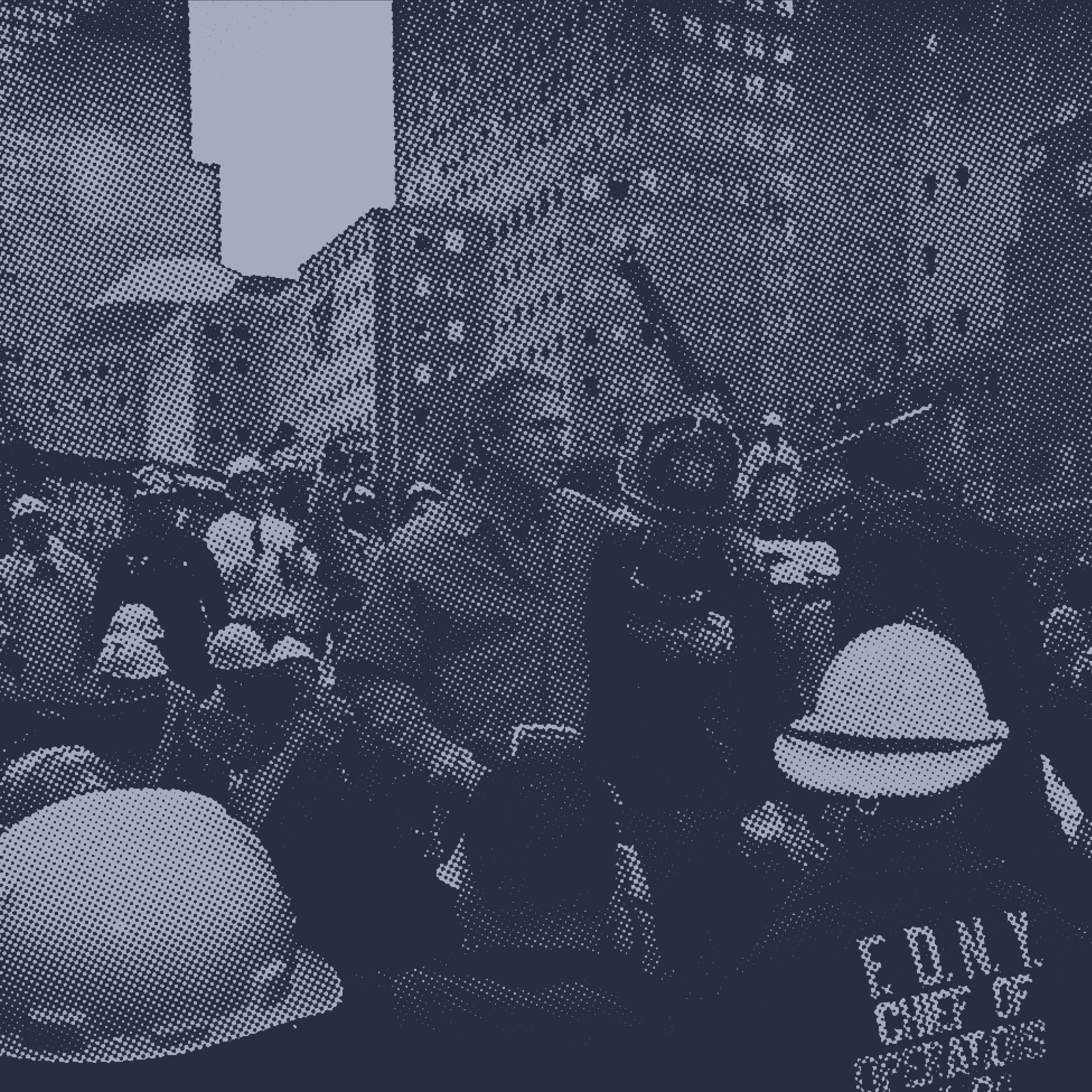
How 9/11 reshaped U.S. intelligence | Sources & Methods
About this episode
The NPR Politics Podcast is made possible by:
This special episode from Sources & Methods, the national security podcast from NPR, host Mary Louise Kelly and former top intelligence officials discuss what happened behind closed doors on 9/11, and how the events of that day are still shaping global events.
Those officials were Stephen Hadley, Jane Harman, John Mclaughlin and Michael Morell. At the time of the attacks, Hadley was serving as deputy national security adviser in the Bush White House. Harman was a Democratic member of Congress representing California. McLaughlin was deputy director of the Central Intelligence Agency. Morell was also at the CIA and was President Bush's CIA briefer that very day.
This episode was recorded in front of a studio audience at NPR headquarters in Washington D.C. on September 9.
Support public media with NPR+ and enjoy perks for over 25 podcasts like this one. This show’s perks include bonus episodes and sponsor-free listening. Learn more at plus.npr.org.
See pcm.adswizz.com for information about our collection and use of personal data for sponsorship and to manage your podcast sponsorship preferences.
NPR Privacy Policy
Get every episode summarized
Each time The NPR Politics Podcast publishes, we email you a written briefing from the transcript — the topics, who appeared, and any specific claims, with the ad reads skipped.
Email me new episodesFree for 3 shows. No card needed.
Hosts & guests

Transcript ready
560 searchable segments. Every word is indexed and playable.
Full transcript
The NPR Politics Podcast — How 9/11 reshaped U.S. intelligence | Sources & Methods. Machine-transcribed; use the interactive transcript above to jump the player to any line.
Looking for love? One New York event promises to find you your perfect match using Palantir, though not affiliated with the actual software company. They can sue me. I could lose everything, but it would all be worth it if at least two people here have a spark. So no pressure. The facts, myths, and dark jokes surrounding Palantir. Listen to a plan of money on the NPR app or wherever you get your podcasts. It's the NPR Politics podcast. I'm Miles Parks. Here with a special episode today from NPR's National Security podcast, Sources and Methods. It was recorded in front of a live audience here at NPR on Wednesday. They gathered former top intelligence officials to talk about 9-11, 25 years later. What happened that day behind closed doors at the highest levels of government? And how 9-11 is still shaping global events today? Here's Sources and Methods from NPR. It is really hard to overstate how worried we all were in the immediate aftermath of 9-11 that
we were going to be hit again. A day that began with a brilliant blue sky, a day that ended in horror. The 9-11 attacks presented a new kind of national security threat, so a new national security architecture was built to confront it. Has it worked? Are we safer? This is Sources and Methods from NPR. I'm Mary Louise Kelly bringing you a live taping of a special episode on the biggest national security story I have ever covered. We're going to talk it through with the four of you, and we have picked the four of you carefully because you each had a front row seat to what happened that morning and then the days that followed. But very different seats, really different vantage points to give a slightly more detailed introduction. Stephen Hadley was serving as Deputy National Security Advisor in the Bush White House. Jane Harmon was a Democratic member of Congress,
representing California on the Intelligence Committee, which you went on chair. John McLaughlin was Deputy Director of the Central Intelligence Agency, and Michael Morrell was also at CIA and was President Bush's CIA briefer on the plane with him that morning. Welcome to you all. I'm going to start with the where were you and what sticks with you, and I will share that I was in the NPR newsroom. Quite a few of us had turned up for work on that beautiful Tuesday morning, and we didn't go home for four days. We stayed here till Friday. They rolled in cuts, and we slept in the hallways, and we just worked. And I remember thinking this is the biggest story I will ever cover. And that has proven to be so. Having covered wars on a pandemic and an insurrection and elections. I have never covered a single day that changed the course of a country, the way that 9-11 changed this country. So I want to hear briefly from each of you what that morning looked like from where
you were. John McLaughlin, you start. You were at CIA headquarters. Can you share where exactly and how you were tracking what was happening? I was on the 7th floor at CIA. The Director George Tenet was downtown in a meeting. I was in a staff meeting, running a staff meeting. We were talking about budget, including budget for counterterrorism. We were talking about the Balkans and some other problems we were struggling with at that moment. And the first plane hit, and like everyone else, my thought was could be terrorism, but let's see what is going on here. And how did you know the first plane hit? I walked into my office after the staff meeting, and maybe five minutes later it was 846 that first plane. I recall. The next plane was at 903. And of course the second plane left no doubt in our minds.
I thought, and I think everyone there thought, we are under attack. The other thought was in my mind and in the mind of many people at CIA, okay, that's it. Because we had been anticipating a major attack. We had, did not have no time target or method, but we had been receiving that summer a giant spike in reporting about terrorism, something that the Director subsequently characterized as the lights were blinking red all summer. And so that's it. And so that's where I was, you know, we could all go on about it. At the end of the, at the end of the, and I very vivid memories of that whole day, I can recount, but at the end of the day, I did write on my computer, nothing will ever be the same. And I have interviewed quite a few people who were at CIA headquarters,
that day, who it was evacuated as was every other major building in Washington or in the DC suburbs. Except for the counterterrorism center. Except for the counterterrorism center, which didn't leave. But I've interviewed people who said they, these are senior CIA spies with a great deal of experience who spent much of 9-11 sitting in the Langley parking lot trying to get out because of the major traffic jam. Well, we did dismiss the workforce, but the counterterrorism center chose to stay. We said, you can go, co-fer black, the head of the center said, if we have to die, we have to die. And you said the next day. And you said, on remaining, because that was our window into what was happening through their reporting coming in and so forth. Throughout the day, we immediately, I was thinking of a plan we had put together at the end of the Clinton administration for how to respond to a major attack. So we reached for that plan. We had a meeting on video with the president
around three o'clock, I believe. That day. And I just give you one line from that because, again, what sticks in my mind is the president said, form a coalition, a worldwide coalition, we will find them and destroy them. So at that moment, we had our mission statement. The gloves are off. Steve had the, you, as I mentioned, you were deputy national security advisor, Kundaliy Zareyes' deputy. You were at the White House the morning of 9-11. Where? I was in the situation room. First plane hit, we had reports of the plane. Thought it might be civil aviation accident. It was just strange. I had to understand. We went down then to the situation room for the NSC staff meeting. And at 9-03, they had a live feed of the second plane hitting the second tower. We stayed in the situation room. Dick Clark had
a group in the back room. He's kind of the White House counterterrorism chief at the time. Trying to figure out what we knew, what happened, whether this might be the first of successive attacks, more coming. We had a group outside of the situation room trying to support the vice president who was down in the P.O. for what to do to manage the crisis. And then the White House evacuated. We saw these people running down west executive avenue. So I asked the group in situation room, do you want to leave? Do you want to stay? Everybody said, we've got to stay. It helped the president manage the crisis. So we did. And then I got a call from kind of Lisa Rice saying, Steve, I need you down here in the president's emergency operations center to help me down here. And I said, I can't do that. I've just got to stay with the folks here who've agreed to run some risks to help manage the crisis. She said, I need you downstairs. Click. So down we went. I think one of the things I remember most was Norman and of the secretary of
transportation, getting thousands of airplanes in the air over this country, on down under the ground. Yeah. Because we did not know how many might be been taken over by terrorists and become weapon against this country. I was reading through the official report from the 9-11 commission that investigated and held public hearings into what happened. There's a section on you and what you were up to at the White House that morning. It describes you as being on an air threat conference call at 10.33 a.m. Exactly 30 minutes after United 93 crashed into a field in Changsville and you'll know that it had crashed but you didn't know why. You didn't know if the the US government had shot it down to prevent it from hitting the Capitol. And it describes reports coming in of a fifth plane. What you all thought might be a fifth plane.
Happily was not. But you were on a call conveying orders from the vice president to the Pentagon which boiled down to shoot it down. We if the instructions given by the vice president on the authority of the president was that if there is a plane it is not responsive. There's a good chance it has been taken over by terrorists and is headed for another target. You are authorized to use lethal forces. Shoot it down. What's that wanted to give the orders that maybe he's going to take down a civilian airliner in US airspace. That is correct. That is correct. A big lift. And we all held our breath for the rest of the morning that that order would having been given would never need to be used. And it was not. I think one of the things that impressed us all is and we can't really epitomize as the national response is those folks on UA United Airlines flight 93 that
went down to Shanksville who sacrificed themselves to make sure that that plane would not hit another hit the United States Capitol for example. And really disable our government. Those folks are heroes and they're probably the best example of a heroism that was shown throughout the country over the course of the day. Really Americans were courageous and resilient in a very tough moment. Amen to that. Congresswoman you were at the Capitol that morning you were walking across the lawn and your cell phone ring. Yeah if I could back it up just one day on 910 2001. I had lunch with someone named El Paul Bremer, a bastard Jerry Bremer who later became what was called the Vice-Hoy in Iraq. But at the time he had shared something called the National Commission on Terrorism. I was a member of that commission which was one of three commissions predicting based on
studies we had made that there could be a major terror attack on US soil. And Jerry and I were having lunch near the Capitol, bemoaning the fact that no one was paying attention to us. So 12 hours whatever 20 hours later guess what. And I yes I had had lunch I had breakfast on the hill and I was walking to my office on the way to a meeting of the House Intelligence Committee. I was then co-chair of something called the Task Force on Terrorism with Saxby Chambers who was then a member of the House and later became a senator. And I was going to my office and then I was going to the Intel rooms which were in the dome of the Capitol at the time. And later most of us thought that the target of that plane that went down in Pennsylvania was the US Capitol. So my office called and said the office buildings are evacuated a plane or maybe two planes but I think it was just one has hit the World Trade Tower and we're not sure what it is but the office buildings are closed
and guess what the Capitol just closed. And so a lot of us I mean I would say hundreds of members were milling around outside the Capitol and thinking about it we would have had a continuity of government crisis. If that plane had hit the Capitol and what I heard I'm not sure this is true is that it left late that plane 93 and had it not left late it would have been in flight before we got real news of what happened to the Trade Towers and it might have hit when the rest of us were around. And that video you just showed is sobering and what is even more sobering to me is that a generation of Americans weren't born on 9-11. A huge percentage of our population. Pretty much anyone under 30 has no clear memory. And they have no clear memory and some of us of a certain age have no clear memory either except I do. But my point is that we lose this memory
at our peril and I know we're going to discuss that. Michael I've saved you for last because you were traveling with President Bush on his plane that day as his CIA briefer. Did the briefing that morning the PDB that you delivered to President Bush mentioned Al Qaeda? Did it mention terrorism? Contrary to what you read on the internet it did not. I remember distinctly that it focused on the second intifada which was then raging in the West Bank which the President was very much focused on. No mention of terrorism, no mention of Al Qaeda outside the intifada. There was a piece in the PDB that caught the President's attention and he called Kandi Rice to ask her to follow up on something. I think the briefing lasted about 20-25 minutes, started at 8 and then we left the briefing and got in the motorcade to go to
Bogartiala, elementary school. And up on Air Force 1 how were you getting information? What was the traffic going back and forth? I wasn't getting any information. Communications were difficult. The President did say to me that he wanted me to call Director Tenet and tell him that if he got any information as to the perpetrator that he the President wanted to be the first to know. So it took me actually some time to get through to the Director's office. I'd never talked to him. I talked to Kofra Black actually and passed on the message. To you for the counterterrorism center at the time. But I didn't have another communication with CIA until we landed it off at Air Force Base in Omaha where the President did his the National Security Team meeting that John talked about. And just briefly, how was the decision made? When was it made? The President needs to come back
to Washington. President made that decision in the meeting. I remember I said in the meeting the President invited me to join. And I remember distinctly the head of the Secret Service telling the President that he needed to stay away from Washington. And I remember the President saying the American people want to know where their President is. I'm coming home. We're going to take a break. When we get back September 12th, September 13th, all the days and months that followed how did the US respond to the attacks. That's ahead. On sources and methods from NPR. On the next through line from NPR, let's listen to Josh Redick's new walk-up song. Whether you love it or you hate it, walk-up music has become a huge part of Major League Baseball. The need to secure the attention of the fans is relentless. I thought am I hearing things? I mean, I realized everybody's singing a lot. Listen to NPR's through line in the NPR app or wherever you get
your podcasts. How did we get here? That's a question we have been trying to answer a lot here at NPR. We are exploring global histories on through line. We're hearing from national security experts on sources and methods. We're watching the markets with planet money. You can support this work across all our podcasts with NPR+. Find out more at plus.npr.org. We're back. Jane Harmon, Congress did reconvene that night. Congress passed the AUMF, the authorization for the US military force. Three days later, September 14th, the next month, October 2001, you'll pass the Patriot Act, which vastly expanded surveillance and law enforcement powers. You created the Department of Homeland Security, the next year, 2002, merging 22 federal agencies into one huge bureaucracy. We're going to try
to get to whether that was a good idea, but you did it. The point being Congress acted with a speed and bipartisan unity that feels as though it's from a different universe looked at from 2026. How were you all deciding what do we do and in what order? Well, it was a different universe. As you mentioned, Mary Louise, Congress, I thought it was outrageous that the Capitol and the office buildings were closed. As a member of Congress, you've taken oath to provide for the common defense. Here, our country was under attack and we were out of session. That made no sense to me. And Saxby Chambliss, whom I've mentioned, and I spent much of the day trying to find a landline that would work because the cell towers had crashed. By the way, I had a daughter in high school in Washington at the time and couldn't reach her. That was also terrifying. But we tried to get the government reopened and it's kind of amusing. We went to, he had a little apartment on Capitol Hill
with a landline. We walked in the door of this basement apartment, which fit his golf clubs and probably had a bedroom. But it just looked like a golf storage shack. And there we were for hours. And finally, God agreement that the government would reopen around five. And there is a wonderful video that I happened to see yesterday of the members of Congress who were there standing on the steps of the Capitol holding hands and singing God Bless America. And a point about that is what we thought and what powered what came next was not those darn Democrats, those awful Republicans, we thought our country is under attack. And all of the video and footage after that day said that America is under attack. And that was so different. And so yes, Congress came back in session. What was impressive, the most impressive, I think, is that within days we passed the authorization to use military force against those who attacked us. And it was a very short-
Almost unanimously only one dissent, Barbara Lee who voted California, who was a pacifist and had the right to dissent. But the Senate passes. She said, didn't she, this is going to give the executive open-ended vast unending powers. And with the benefit of hindsight, she had a point. Well, she did have a point. And I respected her view. I mean, we don't have to all agree. And she was articulate about her point of view. The Senate passed the AOMF 98 to zip. And oh, by the way, since then, in case you missed this movie, we've only Congress has only passed one other one on a rock, which turned out a longer story, but not for today, to be based on, I believe, cherry-picked intelligence. And that AOMF has been repealed. And the reason to mention that is the threadbare AOMF that passed virtually unanimously in 2001 is the only piece of paper that has
been used by every president since to justify all forms of military action and detention and interrogation and etc., which is kind of disturbing. I think we'll get to the other laws. So why don't I subside? Because I think Steve wants to say something. I will set up John and Michael with this. But I think it's hard to understand the actions that were taken without a sense of the mood at the time. We had been attacked. We were surprised. We did not really know from whence it came. We did not know as much about Elkida as we needed to. And the intelligence community was saying at the time that their thought it was likely, or at least highly probable, that this was the first of a wave of mass-casual attacks, some of which might involve weapons of mass destruction from this enemy that we felt we did not know well enough. So it was an all-hands-on-deck moment
to get the country in a position so that that reality would not happen. And all the things that Jane talked about, all the steps that were taken to change missions, organizations, and the light, you can criticize individual pieces of them, but the country pulled together and that prophecy did not come true. And that's a great tribute to what this country did at that moment of crisis. And just to add the Congress functioned, which those under 30 may have missed this. It doesn't seem to function much anymore. It probably has to do with the fact that I don't work there. But more seriously, it functioned and we did pull together. And everything that passed wasn't unanimous. The AOMF was the only exception to that. But nonetheless, with bipartisan majorities, we passed a wave of legislation, some of which hasn't held up too well, but the intention, I think Steve is exactly right, was to do our best to protect our country.
Yeah. In other words, can I add something? Please, because I think Steve made a really important point. It is really hard to overstate how worried we all were in the immediate aftermath of 9-11 that we were going to be hit again. There were many days when George Tenet and I walked from the old executive office building across West Executive Avenue to the West Wing where we said to each other, I wonder if we're going to get hit today. And these weapons of mass destruction that Steve talked about, we learned an awful lot about Al Qaeda's efforts in that arena in the immediate aftermath of 9-11. We knew they were talking to Pakistani nuclear scientists trying to get their hands on a nuclear weapon. We had reporting that maybe they were going to sneak one into New York City. It is really hard to overstate the threat that we all felt. So I think it's easy to criticize some time that we might have overreach, tear, overreach there, but that context is everything. I'm going to get to some of the overreach. But if I could just,
I just want to quote you and then I invite you to get in here, John, because you and I have talked about this over the years in various interviews. And you told me something, I was pushing you on some of the actions that the CIA took after 9-11, which we're about to get to. You told me in 2018 something that will stay with me and I'm going to quote you. You said, if you were a CIA officer back in 2002, you were torn. On the one hand by the sense you might be doing something in conflict with basic values that you hold dear. On the other hand, failure to get that information might put the blood of Americans on your hands, which is about as pure distillation I have heard of what y'all are describing. Yeah, listen, difficult decisions were taken in those days. And we often say we hope that no one has to make those decisions again. And what I can tell you is they weren't perfectly executed. But on the other hand, the United States was not attacked by El Cade again.
The gloves did come off. We had a plan that was formulated actually at the end of the Clinton administration and refined it during the Bush administration. And when the president gathered us together at Camp David on September 15, which was a Saturday, he listened to all of that. And then on Monday, he said, I want you to go ahead. I like your plan. I want you first into Afghanistan. And we had teams on the ground in Afghanistan within 15 days of 9-11. We had been building contacts there over years, but had refreshed them, invigorated them in the two years before 9-11 with the Northern Alliance in the Tajik group that was at war with the Taliban. And we got new authorities from the president. That means that the president signs a piece of paper that gives you what they call a finding, which authorizes you legally to do certain things that we had not been authorized
to do before. Among them was to capture terrorists, to detain them, and to kill them if we, in certain cases, if we had named individuals that we could use lethal action on. And remember, we had developed in this period of time an armed predator, which is the progenitor in many ways, as you were talking of what today would be a revolution in warfare, drone warfare. And we were the first to develop and employ that with the Air Force, working with the Air Force. So that period of time is one where we embarked on a whole series of things that we were not empowered or authorized to do before 9-11. But which then unfolded in a program to basically wrapped up, essentially, destroyed the 9-11
air-a-leadership of Elkator within a year or two. Stephen, I know you want to jump in and then I have a follow-up. There's measures that John and Michael talked about. They were kept secret because if they were disclosed to the enemy, they would be their purpose and usefulness would be lost. They were kept secret. And we knew at the time that we were going to authorize and do things and establish programs that when the crisis of the moment and the concern of the moment had died down, the American people might be at the safe space after we'd gotten after Elkator, after we reduced the threat, the American people may be uncomfortable with them. We knew that was a possibility, but we thought these were measures we had to do to get on top of the threat to prevent the country from being attacked again. And I think that was the right trade off. And ultimately those measures became public. They were debated in Congress. They were debated in the
courts. And under the Obama administration, we reached the national consensus of what we would do and what we would not do to keep this country safe. That's a strength of our democracy, I think. But so I was a young journalist covering my intelligence speech in those years after 9-11. And I reported from Afghanistan on the war and then from Iraq on the subsequent war and on abuses at Abu Ghrib and on waterboarding. I remember when we finally got to see the 2005 Justice Department memo that documented the CIA waterboarding, Khalaq Muhammad 183 times, prompting the famous question from Daya and Feinstein if something works. Why do you have to do 183 times? We were debating in this newsroom, and I imagine every other newsroom, what do we call this? Is it enhanced interrogation? Can we just call it torture? John and Mike, can you just take me inside those conversations as they
unfolded at Langley? How uncomfortable were you with what was happening? Well, I think you quoted me from 2018, which was the dilemma that we were struggling with. How do you how do you get information that you know will protect the lives of Americans? And if you don't, you've got the blood of Americans on your hands. And this is a this could be at our discussion, of course, because we we tried lots of things, I will say that there was excessive focus on the issue of waterboarding. Waterboarding occurred only a small number of times in the first year of the program, and it stopped after that. Only three people. Three people. 183 times on one of them. If you look at the Red Cross interview with Khalaq Muhammad and ask him how many times were you waterboarding? He says 10 times. So that's a whole theological argument about 183 versus 10.
So the the thing that kept us continuing on this program, and there's controversy about this, but I tell you where I stand. Day after day after day, we saw that this program yielded results that allowed us to then capture other terrorists, capturing a terrorist stops operations. It disrupts them even before you've talked to them. And and it led us, for example, one terrorist, fellow named Ramzi Ben Oshib, was spotlighted by someone named Abu Zubayda Ramzi Ben Oshib, combined with other things, led us to KSM, Khalaq Muhammad KSM in term led us to Majid Khan, Majid Khan led us to two other people ultimately to Ismahuddin, Hombali, and the architect of the Bali bombing. And from that to his brother
who was putting together the second wave attack, this is the point I want to make. The second wave, the anticipation of further attacks was not made up. They were planning further attacks. And we stopped a number of them. We stopped all of them as far as I know. I certainly respect the fact that the CIA and our whole intelligence community was worried about a second wave of attacks. But I would say as someone who was in the chairs in Congress, I became the ranking member on the House Intelligence Committee during that time, and who struggled to get information that the information was not adequate at the time. I remember being briefed finally after begging by the General Counsel of the CIA on the so-called Enhanced Interrogation Techniques about which I knew nothing. And I remember writing a letter, this is not classified, because this has become public. To him, saying, I want to know what the policy guidance was
for using these techniques. It turned out that these techniques were in the so-called Army SIR manual, which is how we trained our people against tactics that could be used on them. And best I can tell, and I wasn't inside, but I was very focused on this. We didn't have a plan to interrogate these folks, and someone picked this up and hired an outside contractor and paid this person millions of dollars. I'm not saying that's necessarily bad, but I think that's what happened to come up with a method for doing this. And that's what we did. And later, John U, who was ahead of the Office of Legal Counsel in the White House, wrote a memo about this, saying these techniques were not torture because torture is only organ failure or imminent death. And someone else in that office, a guy named Jack Goldsmith, whom I am very much
still in touch with, who now teaches at Harvard Law School, said that memo was really poor scholarship, and Goldsmith ended up getting fired. And I think I've got this right. I mean, some of you were there, so this is just my memory from decades ago. But I thought this was not in spite of everything we cared about. I think there was a way to do this differently. I remember asking someone, why did we open Guantanamo Bay Prison in Cuba in a piece of Cuba that's US soil because we rented, have rented it from Cuba for years. I assume we still do. Answer to be beyond the reach of US law. Now, I'm a trained lawyer, and I knew that made no sense. But I thought maybe there's something I don't understand. Well, guess what? The Supreme Court agreed with me. And now Guantanamo Bay has to employ the protections under our Constitution. So my bottom line is there were others who were
trying to get on top of this story, who really cared, as everyone did, about doing this the right way. And I'm not sure we got there fast enough. Mayor Louise, I just want to say yes, you're going to get last word on this. We briefed the senior leadership of Congress. I remember one democratic senator who would later become an opponent, a vocal opponent. His response when he was briefed on EITs was, is that all you're doing to protect the country? My constituents would expect you to do even more. Because he knew the context of the moment. And then fast forward to Dave Patreus' confirmation hearing, which John McCain attended as the ex officio member of the Senate Intelligence Committee, and Patreus and McCain had a soliloquy about EITs. And at the end of that, they talked about the ticking time bomb situation. There's a nuclear weapon in New York, and you've got the guy who
knows where it is, and he won't tell you what do you do. They agreed that in that moment, you would do extraordinary things. The point is, to all of us, after 9-11, it felt like a ticking time bomb situation. Every day. Every day. I need to add one point here since you've opened this. I said, first Michael has spotlighted something very important, which Steve also mentioned, which was the atmosphere in the country at that time was such. When we captured Colin Chake Muhammad, my officer who briefed the Senate Intelligence Committee came back to me in a state of shock. She said, you won't believe the reaction I got, which was, do what you have to do. That was the signals we were getting. Plus, on the legal thing, CIA doesn't get to pick its lawyers.
We have the lawyers that are there. And on that issue, at any moment, when the Justice Department raised the slightest concern about this program, we suspended it twice, suspended it twice. I would also say something that very people understand, both the Inspector General and Congress did various investigations. We held six accountability boards. 30 people were examined, 16 were sanctioned. So this was not a rogue program. It was not abograble. Jane, one sentence. It was John McCain, who after all this, authored a law to require that the Army Field Manual had to be followed with respect to enhanced interrogation techniques. And the Army Field Manual does not authorize waterboarding. Correct. The last question just to try to wrap this up and I'll throw this to you, Mike, about trade-offs. And from where we sit now,
I'll weave an audience question in here. This is coming in from Adam. The Patriot Act was passed to address urgent intelligence requirements and knowledge gaps after 25 years, just the Patriot Act particularly, fies that remain necessary to fulfill national security objectives. This is the key piece. Should we still risk privacy for the sake of security? To bring it back to what we've been talking about, I understand that hindsight is 2020. But the trade-offs that America made, I take the point. We didn't know what was coming next. And we didn't know what Ben Laden was. I take the point of what the atmosphere was at the time, but the enhanced interrogation techniques, the torture, whatever intelligence they produced of value, how do you weigh that against the damage to America's reputation as a country that believes in the role of law? I have to say one thing. Please. The President's guidance was,
do everything you can to protect the country within the law. And we have an argument about whether the lawyers got it right in these opinions that were written. But the guidance was, we were going to stay within the law. And the response to John McCain that the President had was, great, do whatever it takes. I'm supposed to present the United States, the chief executive of the country, ignore the law and torture somebody to find out there's a nuclear weapon in New York. I don't think that's where we're going to head. So we can debate the issue about whether we got the legal opinions right. But the policy was, do everything to protect the country within the law. But the law kept changing. We kept changing it. The law kept changing. And that was an evolution as we decided, what we were and were not comfortable in doing. That's a strength of our democracy. That's not a criticism of our democracy. I promised you last word, Mike.
I was just going to say that Steve mentioned earlier our concern about how the American public would react at the end of the day. You know what? They supported everything that we did. The American public and every poll that's ever been taken, it was the elite who grabbed this as an issue. The American people thought that we did the right thing to protect the country. Okay, Jane, you cannot the last one. I supported the Patriot Act. Congress worked on the Patriot Act. I supported the whole goal of this, which was to go after those who attacked us. We made mistakes after that. But what I did want to say was Congress is an independent branch of government. We have an oversight role and it was a struggle. Notwithstanding the good faith of everybody sitting here and how intensely you and I wanted to get the bad guys, it was a struggle to get
the information and the last sentence is I've said this forever. Security and liberty are not a zero sum game. You get more of both or less of both. And we did make a big effort, for example, when we did the law that set up the Director of National Intelligence to set up a privacy and civil liberties oversight board called the P-CLOB. It's one of the worst acronyms ever. And it never functioned very well, but the intention was there to put both things on the policy track so that we could protect both. Time for our last break. Still ahead, 25 years. After the 9-11 attacks, which reforms are worth keeping, which have outlived their usefulness. This is Sources and Methods for MenPR. We'll be right back. On Deer Life Kit, our team answers your listener questions with time-tested advice from past episodes. But we don't always agree. Opposite! No! That's not what we thought. What if he's the one?
Oh my god! What? Listen to the latest juicy episode of Deer Life Kit on the Life Kit podcast in the NPR app or wherever you get your podcasts. Hey, it's me, Peter Seggel, host of Weight Weight Don't Tell Me. It's leaf-peeping season. So why not peep our weekly news quiz while you're at it? We got comedians, celebrities, and games to help laugh about the week's news. And you can listen while you're spicing your pumpkins, whatever people do. Listen every week to Weight Weight Don't Tell Me in the NPR app or wherever you get your podcasts. So where are we now? 2026. Speaking of bad acronyms, I remember as reporter covering the debates on Capitol Hill over should we create some kind of intelligence supremally? Supreme spy leader and Senator J. Rockefeller,
who was on the Intelligence Committee, chaired it first part of these debates, was backing calling it the National Intelligence Director, which seemed like a really great idea except that that it would be the NID. And that was overruled wisely. But, Gene, ODNI was controversial when it was created. It is possibly even more controversial today. Should we keep it? Absolutely. The point, first of all, the whole concept of a joint command across the Intel agencies was the top recommendation of the 9-11 commission, which I did not serve on, but which other just like Tim Romer, who still a former member and former ambassador in India is very active, talks about it quite a bit. But at any rate, that was the concept some of us took on a bipartisan basis to set up this National Director of Intelligence. Yeah, I was the one who said the NID sounds like a bug. Can't we come up with a different name? And it was a bipartisan group that pushed this.
And principles were Susan Collins in the Senate and Joe Lieberman in the Senate. And sort of kind of- To make the CIA and the NSA and the FBI and all the others connect the FBI. But the goal was to take our intelligence community agencies. The FBI is separate from that. It's domestic intelligence. And coordinate them. And to use the coordinating mechanism that had at that point been part of the CIA called the Community Management Service, which was small. And the CIA was not able, witnessed 9-11, to coordinate all the agencies, notwithstanding the talent that was there sitting right here. But didn't have the capacity. And so we wanted to take this CMS and add to it detail ease from other agencies who would on some kind of rotating basis learn about the whole community, but advise a commander across the agencies just like the chairman of the Joint Chiefs of Staff that we borrowed the concept from Goldwater Nichols,
which was the bipartisan group that had formed us. So that was- That was- Let me just say one thing. It was very controversial what we were doing. And it was opposed. This idea was supposed by the vice president Dick Cheney and opposed by the Secretary of Defense Don Rumsfeld and opposed by the chairman of the House Armed Services Committee Duncan Hunter. However, as time rolled on, it was supported by George W. Bush. And that was the reason we were able to get it adopted. Although it hasn't worked perfectly, I still believe it was and is a very crucial concept. I mean, has it worked at all? CIA wasn't- A lot of people at CIA were not big fans of this idea either. Is it worth keeping it at this point? Is it working now? Absolutely. I mean, among other things, there was dissent, so I understand. I think it was around Iraq, not- not Afghanistan, but the State Department Intelligence piece was- did not think that the actions we took there were justified.
The rest of the community didn't know that. And under the- the- uh- Ertpa, which is the acronym for this law, the intelligence reform and prevention- preventing terrorism act, I think, under Ertpa, we require that national intelligence estimates be basically red teamed and reviewed by others and dissensed featured. And after that, I remember reading these things. They're classified and- and thinking how much better they were. And thinking how, you know, we have prevented another major terror attack on US soil. And I think the law had something to do with it. Stephen, I'm coming to you, Onasek, but Michael, you look like you have something to say. I was just, you know, fax matter. Um, fax matter and, um, the 2002 NIE, on Iraq, WMD, really said three things. Um, it said Iraq had chemical weapons. Every single agency, including INR, agreed. It said that Iraq had a biological weapons production capability.
Every agency, including INR, agreed. It was only on the question of the reconstitution of Iraq's nuclear weapons program where INR disagreed. They didn't say they weren't. They said they didn't know enough to make a judgment. So fax matter here. Thank you. Stephen, go back to the question of, uh, effectiveness of the- the DNI. I can tell you now, I testified against the idea, but I testified in the following way. If you're going to create this organization, empower it, empower it. And I don't think it was sufficiently empowered. In fact, a little known is the fact that the head of the National Security Agency, the head of the National Geospatial Agency, and the then acting director of the CIA, that was me, wrote a memo to the president and the Congress saying, we're willing to have, we would recommend subordinating our- subordinating our agencies to this individual. Should this be a director, uh, and to create a kind of secretary of intelligence. And, uh, as Jane pointed out,
there was too much dissension in Congress to go that far. So it was not sufficiently empowered, and its effectiveness depends on one thing. Agreement on a personal basis between the CIA director, the director of national intelligence. And most importantly, the president of the United States. If the president chooses to empower this individual, as, uh, I think President Bush did and President Obama did, uh, and President Biden, uh, that can be a useful office. And, uh, I'd leave it at that. It's very useful for gathering people together on some hard issues where you need voices from all over the community. It's not functioning well if you don't have that conjunction of personalities that I mentioned. Steve Quickpoint on this. Before the DNI, the, George Tenant, for example, was both the CIA director and the DCI, the director of central intelligence. I think that's the right acronym. He had both the job of running the CIA and running the community. And our judgment was
that no person is, uh, as the capacity to do both jobs. You needed to split them. And the one of the advantages of splitting them is it would make sure that in the briefing to the Oval Office, all the elements of the intelligence community would have a hearing. I think there's still important things to keep in mind. So a quick yes or no, we're going to go down. Should we keep the DNI today? Yes. Yes. Yes. Yes, but it needs to be managed much more effectively. Yes, but better. Okay. Guantanamo Bay. Still open today. Still housing detainees, including some who have long been cleared for release. A recent development to note, which is that a trial for college, McMahamid, a large 9-11 mastermind, college, McMahamid is now set for June, 2028. However, the military judge just, uh, what two weeks ago, August 28th throughout the key piece of evidence,
which was his confession, saying it was obtained under torture. So it can't be used against him at trial without getting into that again. The broader question, how do these cases end? I don't think we know yet. This is the college, McMahamid dies and Guantanamo will age. How did this even come about? Would be my question, but let me take you back to what I think is the answer to that question. When the president authorized the CIA to detain, to capture and detain individuals. First, we'd never been asked to do that before. That was a whole new task for us. So we had to figure out how to do that, which we did. Then the next question was, if we did capture them, what would we do with them? And no one wanted them. No American prisons wanted them. The military didn't want them. We even proposed putting them on a ship. We had all kinds of ideas, but no one wanted these people. They ended up at Guantanamo because I don't know exactly
why, because that was doable. How you end that has been something that people have struggled with. What I do know, just keeping track since I've been out of government, is that population has been thinned out to the point where there's only a handful of people left there. They are among them the toughest murderers that Al-Qaeda had on the street, no longer on the street. How we ended, I do not know. I've been there four times. I went there when we first put these prisoners in basically cages in wire, a little square cubicles. And in orange jumpsuits, and that's when a kind of prison culture was developed, which was, was, is to the extent anyone's still alive there. Very pre-nicious. But I mentioned earlier that there was a Supreme Court decision that said that the
original idea that this would be beyond the reach of U.S. law was unconstitutional. And so now these people are entitled to some constitutional protections. And there are different camps there. I don't know if they're all still there, but KSM was in the super camp and I actually saw him through a two-way mirror. And these prisoners sit there all day, do prayers. I mean, they are religious and they watch videos. And I remember they had gained a huge amount of weight because they do nothing. And I think the whole thing was a mistake. We should have come up with a better system. And we now have one, which is we do take these people on ships, whether that works perfectly or not. And give them rights, but at least they're not in a corner of Cuba. And on a bogus theory that they somehow can be protected from any legal rights. Given that we are where we are,
is there a better scenario than letting the southern district of New York try these cases and bringing them to a close? Anybody have a better idea? I don't think that's doable. I think the problem is that because of torture, the evidence that against them, their confessions and whatever other evidence can't be used. And so we set up something, the Military Commission theory, which is what seems to be happening. And KSM agreed to a plea deal. I think about a year ago and the courts threw that out. I don't see an end to this. I don't know how old these people are now. But I, you know, I well end of middle age. Yeah. But I think it is a tragedy. I think what they did is heinous. And there's no excuse for them. And they're the worst of the worst. So I have no sympathy for them. But I think we should have thought of a process ahead of time and didn't.
It's interesting. It's interesting that no one was more critical of Guantanamo and most of the methods of the Bush administration than President Obama. And it's interesting two things. One, at the end of the day, he adopted and continued. Most of the methods that were developed in the Bush administration. And secondly, his administration struggled mindfully to close Guantanamo and was not able to do so. It's an unresolved problem. I think a logical thing is to put the American prisons on American mainland. Work that out politically. There's legislation, I think, that will be the same. It'll never pass. I mean, nobody wants them in their districts. So, Henry Louise, can I? I think we're talking about a whole bunch of issues here that result in us losing the big picture. The big picture is that despite
intentions, plans, plots to attack America again after 9-11, it didn't happen. Your government, right, we're talking, we're talking to the people in the room here, we're talking to your audience. Your government and your intelligence community protected you after 9-11 and deserve a tremendous amount of credit for that. I appreciate that point and I appreciate you making it. And I'm raising questions in the interest of asking, what are the trade-offs that were made in terms of America's moral standing that Guantanamo is still open? I go back to something I said at the very beginning, which is, in one sentence, difficult decisions were made. They were not perfectly executed. America has not been attacked again. Great. And may I just add the word yet to that? I mean, I think the intentions were excellent. So, I don't disagree there. But I think mistakes that we have made, I just wrote an app
add on this, were egregious and have metastasized since. For example, now we have short-changed totally our soft power. Bob Gates, the former Secretary of Defense, wrote about over-militarizing our response to 9-11. He's right. We did. And we're still doing that. We are pushing away our partners and allies who were crucial then. NATO invoked Article 5, Canada, let our planes land in their airspace. These are people, groups of people, countries that we are now pushing away. And I think that because of new technology, the threats are much more difficult, including cyber and AI. And we have hollered out some of the leadership of our intelligence community now. So, while we all tried our hardest, and I think we would all do it again, try our hardest, I worry that our country is more vulnerable, not less. This brings us to a last question,
and I'm going to get a quick answer from each of you. This comes from Julie in the audience. Thank you, Julie. How confident are you with the current administration's focus on terrorism? Not so confident. The one can say, I think, that terrorists today have a larger safe haven than they did at the time of 9-11. When you add up the openness of the Sahel, Afghanistan itself, other parts of the Middle East, parts of Syria, the tribal areas and so forth. So, the question is, are terrorists planning another attack, or are they just laying low and trying to recover from all the pressure we put on them? And frankly, no one knows. Everyone has an opinion on that. I would say it's prudent to not lower our guard at this point.
And I can't say that the administration in my office has lowered its guard or not lowered its guard. I know the priorities publicly are on other things, and I would worry that we're not giving this sufficient attention that it needs. Steve, I'd make a point, Jane made. The new technologies available could potentially really empower terrorists in a very sobering way, and we need to get on top of that. I would just add one thing. The qualification for picking leaders should not be total loyalty. The qualification should be enormous experience and loyalty. And this group right here, those who were in the executive branch on 9-11 had enormous experience. You're talking, I take that as a reference to some of the people running things like ODE and I, or CIA, or the Pentagon. Well, some are good. Some are picked only because they are loyal and are inexperienced, and I think that is very dangerous. Michael, last word, how confident are you with
current administrations focused on terrorism? I would just say that I focused on terrorism for the entire second half of my 33-year career. And one of the things I learned is that if you have intelligence, if you have the right military capability, and you have a president who's making the right policy choices, it is fairly easy to degrade a terrorist organization. If you're missing any of those things, it's not. And not only is it easy to degrade if you have those things, but if you don't have those things, it's very easy for them to bounce back. So prudence is absolutely required. I have no idea what the Trump administration is focused on this or not. I just have no insight information. We're going to need another panel next year. Michael Morrell, John McLaughlin, Jane Harmon, Stephen Hadley, thank you. I want to say a big thank you to the many and peer colleagues who have worked tirelessly behind the scenes to pull this off, including the
biggest thank you. Imaginable to Karen Zamora, who you saw at the very beginning, who pulled this off and not only that, but made it look easy. Thank you. Thanks to all of you for watching, for listening, for being here with us today. Thank you for being with us for this special episode. Remembering 9.11.25 years later, I'm Mary Louise Kelly. We're back next week with our regular episode of sources and methods from NPR. On the latest code switch, 25 years after 9.11, Americans have gotten real use to being watched by the government from doorbell cameras to AI powered license plate readers. If you put anyone under a microscope or any community under a microscope, you're going to find reasons to harass people or to ticket them or to arrest them. Listen to codes switch in the NPR app or wherever you get your podcast. This message comes from Wise, the smart way to manage your money
around the world. With Wise, you can send, spend, and receive money in over 40 currencies at the Mid Market Rate. Learn more at Wise.com. Teas and CsApply.
More episodes
More from The NPR Politics Podcast

The legacy of 9/11
The NPR Politics Podcast

The young conservative movement post-Charlie Kirk
The NPR Politics Podcast

How Trump's immigration policy has evolved
The NPR Politics Podcast

What is the GOP convention happening this week?
The NPR Politics Podcast