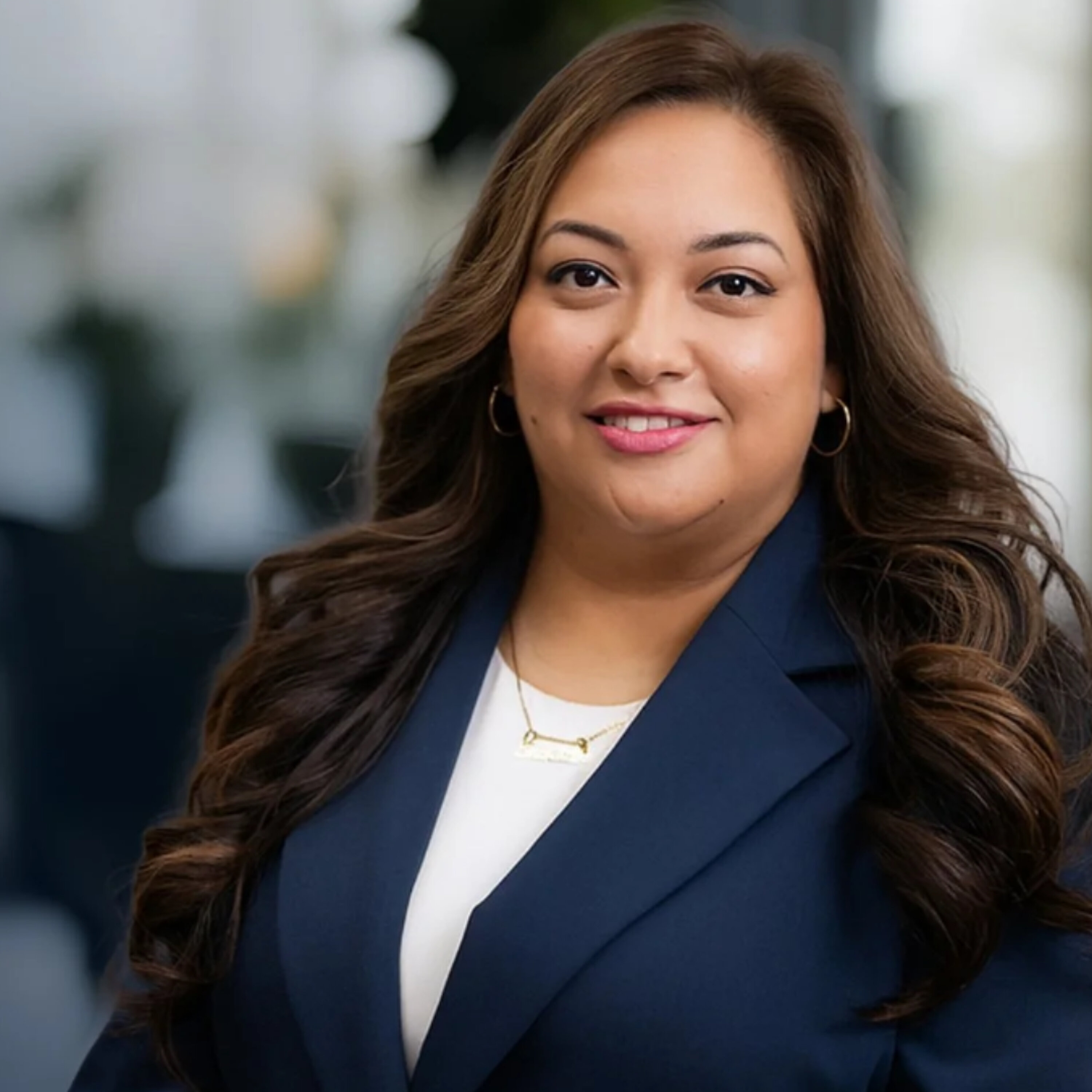
WCPT 820 Candidate Interview: Patty Garcia
About this episode
Richard Chew is joined in studio by Patty García, Democratic candidate for Congress in the 4th District of Illinois. She discussed her congressional campaign, policy priorities, and the need for accountable government and community organizing.
Overview
- García identified labor rights and passage of the PRO Act as her top priorities, including the right to organize, overtime protections, safe workplaces, and protection from retaliation.
- Her other priorities are immigration reform with a pathway to citizenship, protections for DACA recipients, and environmental justice.
- She expressed interest in serving on the House Transportation and Infrastructure Committee to address aging roads, bridges, and transit systems through an environmental-justice lens.
- García argued that data centers and artificial intelligence require regulation that balances jobs with long-term effects on water, infrastructure, and communities.
- The campaign has racked up over 160 endorsements, including more than 45 labor unions.
Catch "Chew's Views with Richard Chew” weekdays from 6:00 to 8:00 a.m. Central on WCPT (heartlandsignal.com/programs/chews-views).
Follow us:
Website: https://heartlandsignal.com
WCPT Facebook: https://www.facebook.com/WCPT820
Heartland Signal Facebook: https://www.facebook.com/HeartlandSignal
Tiktok: https://www.tiktok.com/@heartlandsignal
Heartland Signal X: https://x.com/HeartlandSignal
WCPT 820 X: https://x.com/WCPT820
Instagram: https://www.instagram.com/heartlandsignal
Threads: threads.com/@heartlandsignal
YouTube: https://www.youtube.com/@heartlandsignal
See omnystudio.com/listener for privacy information.
Get every episode summarized
Each time Chew's Views with Richard Chew (Featured Interviews) publishes, we email you a written briefing from the transcript — the topics, who appeared, and any specific claims, with the ad reads skipped.
Email me new episodesFree for 3 shows. No card needed.
Hosts & guests
Transcript ready
492 searchable segments. Every word is indexed and playable.
Full transcript
Chew's Views with Richard Chew (Featured Interviews) — WCPT 820 Candidate Interview: Patty Garcia. Machine-transcribed; use the interactive transcript above to jump the player to any line.
Patigarcia for Congress, y'all. She is running for the congressional seat here in Illinois that has been one that she has been fighting like heck. I can say the other word for. Good morning, Patty. Welcome back to the show. Morning, Morning. Thanks for having me back. You're welcome. She was telling us during the break that she's been out campaigning hard. So I'll ask you the big broad question then we can get into the specifics. But how is your campaign going? Tell us what's been going on since we had you on a few weeks ago. Where we're feeling great. We're out there adornocking, hearing from voters, excited to come out in November. I think people are really listening to what's going on and they're feeling the pressure. And so they're looking at what's going on in their neighborhoods, whether it's while they're pumping gas or going to the grocery store. And they're feeling that pressure in their pocketbooks. And so they know that we've got to send a message to Trump that this is what you do in a November midterm, that is a referendum on the president to let him know we're not happy what was going on. And we're going to come out and droves.
And I think that the more that we remind people that, and I'll say it all the time, Patty, when Democrats are in control, we get stuff done. And I'll juxtapose that with a clip I played earlier, Larry Cudlow, that's on CNBC and under financial shows and was part of one of the voices in the premiums Trump administration called out Senator James Langford what are your plans? You guys said you were going to do all these things. You haven't done any of them. They've had, they've got the three offices, the three branches, plus the, yeah, what's the deal? You're not getting things done for the American people. There has to be a price to pay for that. And so I've talked to people, a number of folks who are running for office that have said we're going to get in and we're going to fix the economy, et cetera. How, let me ask the question this way, what will be in Patty's mind? You're elected to this fourth congressional scene, Illinois.
What are going to be those top things when you walk in the door that you say, I'm going to be relentless about making sure that we get these things done? Look number one, and on my mind, in number one priority because I'm a daughter of a union member, sister of a union member, and we're about to celebrate Labor Day weekend, we have to pass a pro act, right? We have to be able to make sure that in every state you have the right to organize, that you're paid for the money, that for the work that you're doing, and that you get paid over time, and that you have safe working conditions, and that if your boss is treating you badly, that you have the ability to say something back and to file a complaint without fear of retaliation, regardless of what your status is. And so I know for me, that's number one, right? That's how we bring up the working class community, that's how we bring up and create economic opportunity, right? Good jobs, good union jobs. So that for me is number one. We're lucky in Illinois that we've got a good model here, but we need to replicate that and federalize the right to organize. I think that's number one for me. Number two, immigration, of course,
daughter of immigrants, this is a large immigrant district. One out of three people are foreign born, so a lot of big status families, right? So we're talking about DACA recipients, people's lives right now are on the line. We're hearing from people who have been here since they were two years old, who are working, they're professionals, they're doctors, they're teachers, they're engineers, and right now their life is in limbo, because their DACA is either expired or about to expire, and they have the own homes, right? They own vehicles, they have families that they take care of, their caretakers or their parents. So, you know, for me, immigration is a priority, thinking about pushing for a pathway to first citizenship, right? It's been over 35 years since we've had any type of immigration reform. So I think about all the families that are living in the shadows and have gone back into the shadows, because this administration chooses to spend money on enforcement rather than our families, even though those same families are paying for all the programs that we get to use, and they can't even benefit from. So those are two of the big bucket issues for me,
and I'd say the third piece for me, environmental justice, with all the rollbacks on these companies, I really am afraid, right? I'm afraid of them, we've seen it, whether you're going outside and you smell the air, and you're like, what is that? It's hazy, right? We've seen the reds, hazy air out here in Chicago, there's a reason for that. It's because they've rolled back all these regulations. And so we deserve to live in a community where you know where your water's coming from, you know that it's safe to drink right out of the faucet. You can step outside and breathe the air and not have to cough or have asthma, or that you have these like 30, 40-year gaps between the north side and the south side of Chicago. And that's because we're giving these tax breaks to these corporations, we're not holding them accountable when we know they're filing federal laws and state laws. And it's important that we restore some of those protections for our communities and even strengthen even more. So I know for me, you know, yes, I'm a supporter of things like the Green New Deal Environmental Justice for All.
And one of the big things I want to champion in environmental justice is cumulative impact. We don't really talk about that. You know, this administration doesn't believe in science. So they're like, what do you mean, a cumulative impact? That means look at the compounding combination of all these polluters in the area before you introduce something else, right? It's not just the introduction of one, but the combination of all of that. So that's what happens when you get educated folks. Yeah. Yeah. You take some time, you learn a few things, you retain them, and then you put them back out there for the greater good. Patty, I want to kind of do a little bit of reverse order with regard to the environment. So I went down an interesting path. I'll call it interesting. The bridge on Lakeshore Drive, acted up on Wednesday. Oh, yeah. And people, I waited to see how many people were initially going to say they're going to dread a blame the mayor or blame Governor Pritzker or blame our Chicago Democratic politicians. And I said, let's take a different approach. Why in the heck is it 97 degrees on September 2nd?
To your point about the cumulative effect of the environment and our climate, maybe that has something to do with the metal not being able to function properly when we are lowering a piece of, you get my point. Yes, yes, absolutely. So I think two things that come to mind, of course, one, we have to recognize climate change exist, and we have to be intentional about addressing that impact. And we have right now this administration doesn't believe in science, doesn't believe in climate change. And so that's one thing that we want to make sure that we redirect our country and making sure that we're addressing some of those changes and getting ready for what that means for also aging infrastructure. Yep. One of the committees that I'm interested in seeking membership is the Transportation and Infrastructure Committee, not only to continue the legacy of Congressman Garcia, but to ensure that we're combining environmental justice, health care, housing, jobs, all these things
in their intersection with transportation and infrastructure. Right? I'm a commuter, but I also drive. And so looking sometimes at these aging like viaducts and these roads and these bridges, that's dangerous. It poses a risk to people. And so making sure that we're investing in the modernization of these systems, making sure that we're upgrading the system so that it's safe for our communities, so that whether you're using public transportation or you're driving or riding the bike to work or school, you have access to all of that. Patty, let's take a quick break. I want to talk some more when we come back. The number 777-766-39278, keep it locked in. I'm Richard Chiu, this is Chiu's views, and we'll be right back. All right, guys, welcome back to Chiu's views. If you were just tuning in, I'm Richard Chiu, and we are talking with Patty Garcia, who is running for Congress, Democratic Canada for Congress, in Illinois's fourth congressional district. Good to have you back with us in the studio.
Before we went to break, we were talking about environmental justice and how we bring all this together. Everything's connected with a dotted line. And sometimes those dotted lines, those dots emerge in the line or on the line. Environmental justice, I think, ties so directly to our healthcare. And not so much our healthcare, but the healthiness of our society. And when we see what's happening with data centers right now, it is a topic. I saw an interview on one of the cable stations, cable shows talking about how that's gonna be the thing that Democrats, if they take control of Congress, and I believe we will, both the House and the Senate, I have to believe that. I have to think big like you said during the break. But we're gonna have to deal with that because Republicans have no clue of how to deal with it. And I don't think they want to take it on. Is that too big of a thing to promise? One of the listeners said Democrats don't over-promise. Is it too big to think that Democratic leadership,
House and Senate, if we have it, can take on the conversations that everybody's having around data centers and the quote unquote, fast-moving train of AI. We have to because our lives depend on it, right? And it is not just a political matter. It's literally a life and death matter. We've seen the impact in rural communities, I think even in red rural communities, right? We've seen the impact it has for the water, the impact that it has for the livelihood of people. And so it's important that we re-regulate the industry. And I understand it's gonna be a balance between the creation of jobs with labor interest, but also we have to think about the long-term impact to the communities, right? What agreements are we making with these companies and what will they give back, right? Right now it seems like it's very one-sided. So we have to make sure, I think, you know, for me, again, that's why I go back to whether you're looking at healthcare space or, you know, infrastructure, whatever it is, whatever industry,
it's about, are the right now is a battle between corporations and people. That's the bottom line. Indiana is a governor, Mike Braun, and I've got some details on this, but when you said this, it came to mind real quickly. Basically, create a pathway for some $700 million of resources to go to big tech companies. And they're already at a $60 or $70 million loss in terms of money that's not coming back to the state. Those are the kinds of things. And if it's, so if it's a 10-year plan, okay, great. Let's redirect, and the same energy, 10-year plan, but directed toward things that are gonna provide relief right now. The 10-year plan, people can't see that. And I think you probably would agree with this, or certainly you'll correct me if you think I'm wrong. We have to do things that are right now things, and still have an eye on the future, the five-year plan, the seven-to-ten-year plan. On all fronts, am I way out there on the ledger?
Absolutely not. I mean, we have to think about every action that we take right now. What does that mean for the next generation, right? Our current generation, you know, as a millennial, I'm a millennial. I'm dealing with the impact of the generation before me, right? And I think the future generation is gonna continue, they're gonna feel the impact of the generation before me and my generation, right? So we have to start thinking in those terms, right? Thinking about what agreements we make now, whether it be with corporations, right? Because oh, there's a short-term agreement, but what's the long-term impact, right? What's the consequence of this? And how can we think through the pros and cons of everything? So yes, I do think that we've got to think big, right? And there is an opportunity as we take back, because I'm confident that we'll take back the house and we'll take back the Senate and in two years, we'll take back the White House, right? And I might be even sooner than that. I think we're gonna sign the big referendum this November and say, we're stopping from whatever you're trying to do. We're gonna stop you now. But I think it's important that we demonstrate that we've got a vision for the future and that includes ensuring that we're holding
these corporations accountable and that we're not gonna give them these blank checks and deregulate them at the cost of our community, at the cost of our country, and the cost of our humanity. Yeah, one of the things that I refer to a lot, and I can only, I can't take credit for it, but only in the fact that I speak to it a lot, is Amy McGrath, who's run for Senate in Kentucky, a couple of times speaks about affordability and accountability. It can't, I mean, shouldn't be just the affordability side. The accountability is a big part of this because of many of the things that have been allowed to happen have been because elected officials have not been held accountable. And people that are everyday folks, and I know you talk to them, they're following the rules, they're making sure that everybody around them is following the rules. You remember when we were kids, you didn't want your friend to act up because if they acted up, then that was a bad knock on you. So we've got people who are holding the line, but there's elected officials that are not being held accountable.
Where do you sit when it comes to that? We know we're used to it with regard to affordability and fixing those things, but talk to us about where you are there. Look, I think it's important that we make government more accessible. And I think that's one thing that I've realized is someone who went from Southwest Side Chicago, raised navigating politics as a teenager and having worked in Congress and the halls of Congress where decisions are made, yes, I get frustrated with some of the decisions that are made, but also the lack of decisions that are made. And oftentimes I think it's because they feel like they're immune. There's this bubble that some of these members and staff live in, that they're not impacted by the decisions day to day, the fact that they can't grapple with the reality that we have to raise them in a wage. They're like, well, why? All that's going to cost them a money for the corporations. The cost of living has gone up. People can't afford to pay their rent. They can't afford to pay their groceries. They're completely out of touch. You know, and I keep seeing that.
I think we need to make, when I say we government more accessible, is remind people that are in positions of policy-making roles and power that they represent their constituents. But I think it's the other way around as well, empower constituents and empower our community that end of the day, you pay for their jobs, you pay the salary for those members of Congress and for those staff. You have a voice and you have a say in what decisions they should be making. And so you should be calling them. You should be showing up at their office. You should be faxing or whatever for me wanted to. You should be tweeting at them, sending messages. It works. When you inundate these members with calls, I'll tell you, as a staffer, I know it. They will pay attention. And I think that that's what it's going to take. I think, you know, as an organizer at heart, we've got to organize in the House of Congress. And that's been to me as one of the skills that I'm looking to bring into the commercial progressive caucus. I know there has been doing it, but into all the other caucuses and DC,
that it's important that we're organizing our communities. And so when a bad vote is coming up, we can activate our friends in labor, our friends in the immigration sector, our friends in reproductive justice, and environmental justice in the state. Hey, they're about to vote on this terrible bill that's going to cut people's programs and it's going to give a tax break to their corporations, right? And so you're going to be able to get a tax break to the state and the simplest terms. I'm like, you know why you're not getting health care? Always because Trump's buddy is getting a nice little paycheck. Yeah, that's right. And I appreciate you saying it that way in terms of making it plain, making it simple. I used to phrase a lot, Petty. Bite-sized morsels said that people know, and they're being reminded of it. And I said this dozens of times. It's real simple. Here's what it is. Here's who's going to do it. You've got this huge benefit from it and just keep our messaging that simple, but very practical to everyday folks in the community and whatever that community might be. Let me ask you a question about support.
You've got some great endorsements. We talked about this last on, and I know we'll talk about it again. Give us your sort of temperature read of the support that's not just coming from the organizations. I mean, one organization says, yes, we got Petty or we got someone so. What are you feeling from the ground? Because I know you're as an organizer. You're one that stays in touch with what's really happening on the street. Not just in your district, but more broadly, the city of Chicago, the congressional folks here in Chicago, Cook County, Illinois, and throughout the rest of the country. Is it real, Patty, or is it, are we being excited for no reason? No, look, it's real, it's real. And I think that there's a real movement building up it's unfortunate that it's taken this moment, right, of people being off of programs, of people seeing mass stations, killing their neighbors, of people seeing seniors cut from food programs.
But I think it's woken up something in people that was always there, right? I think it was always there. And people are feeling like they've got to do something. And I know that's what I'm feeling that we've got to do something. And so I know for our campaign, we're feeling great that we have at this point over 160 endorsements, we can't keep up with putting them up at this point. Over 45 labor unions, and for me as a daughter of a union member that means that's personal. That means a whole lot. And we've got endorsements from the progressive caucus, from the Latino caucus. I'm seeking support from the black caucus, because that's important for me, from the Asian-American caucus as well, because we've got to work across multiracial lines, across generational lines. It's the only way that we're going to bring change to this country and monumental change, right? When we talk about the big ideas that we want to do, it's going to take all of us finding that common ground on what we want for our communities. But something is brewing. I know something is brewing. And we're right there at the center of it. Well, and I've asked everybody that I've had on the show
that's running for office, is it real? Because I think that sometimes, and I believe that it is. But I ask because I want to know from those who are actually out campaigning and on the ground, and not just my opinion of it, because people are frustrated. People are beyond tired. And that is been, there's an attempt to depress and stunt that by the powers it be. And it's good to hear that you are doing the work to outreach. What can people, I guess, expect from you? What's your going away present for everybody for Labor Day? Is it when we come back? It's all hands-on deck. So real quick, as we wrap up. So for Labor Day weekend, we're going to be out there with CFL, that's called Federation of Labor, with our labor brothers and sisters celebrating the right to organize, having our weekends off, the eight hour work day, and ensuring that we continue to protect that, as well ensuring that people have the right to retire with dignity. And so for me, I'm going to continue to work hard to get to November, ensuring that we can take back
the house, and after that, ensure that we can take the White House back, and that we're going to fight hard for every single community member across the Chicago land region in our country. Hattie Garcia, who is running for Congress in the Illinois Congressional Fourth District, is great to have you with us again. And we'll probably have you back again before we get to that date in November. But thanks for being with us this morning. Thank you.
More episodes
More from Chew's Views with Richard Chew (Featured Interviews)

WCPT 820 Interview: Chicago Mayor Brandon Johnson
Chew's Views with Richard Chew (Featured Interviews)

WCPT 820 Interview: Amy Rasmussen of CAPE
Chew's Views with Richard Chew (Featured Interviews)

WCPT 820 Interview: Karen Hunter of SiriusXM
Chew's Views with Richard Chew (Featured Interviews)

WCPT 820 Interview: Kristen Crowell of Families Over Billionaires
Chew's Views with Richard Chew (Featured Interviews)