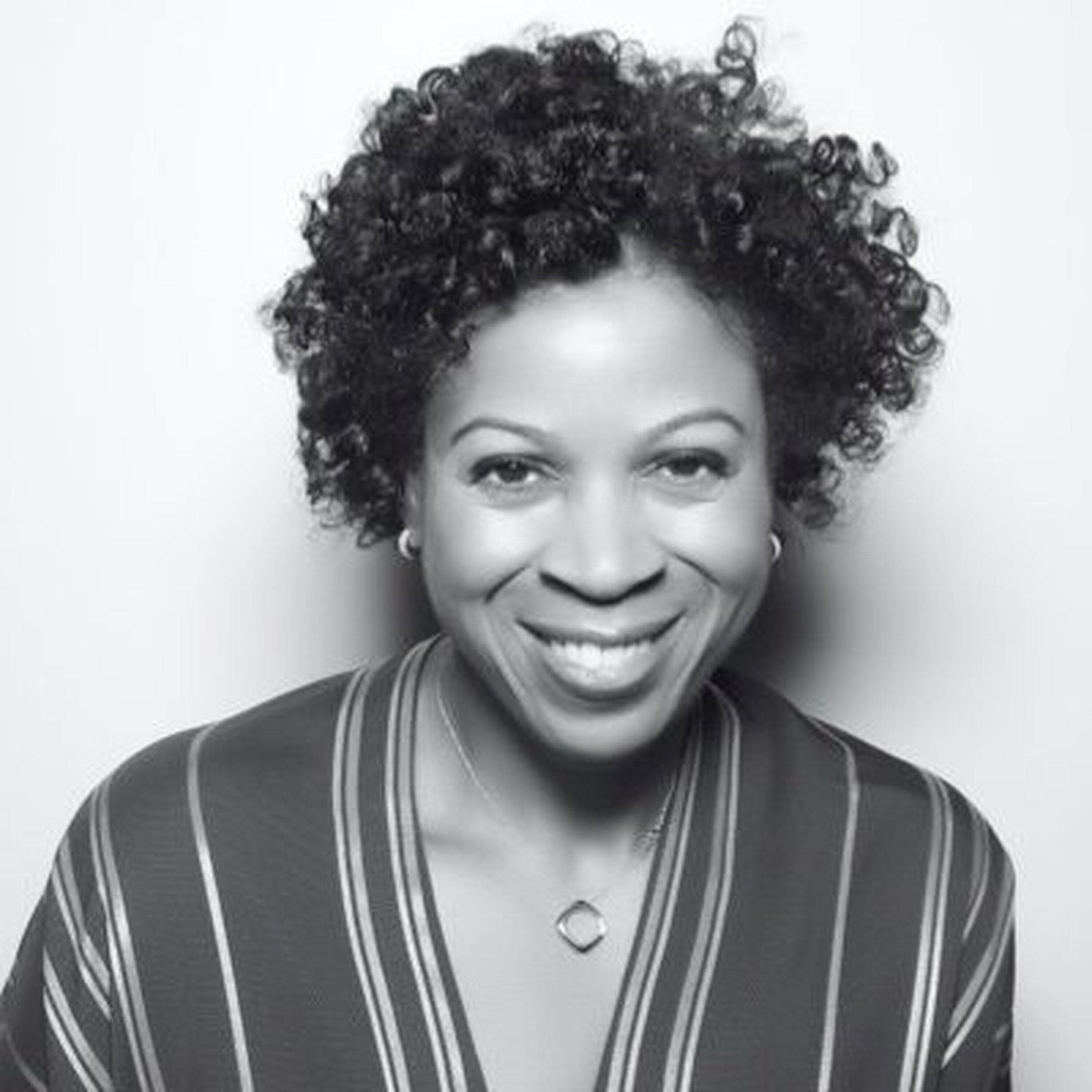
WCPT 820 Interview: Karen Hunter of SiriusXM
About this episode
Richard Chew is joined by Karen Hunter, host of “The Karen Hunter Show” on SiriusXM. They talked about community-centered programming, racial justice, the impact of AI data centers on communities of color, and more. The conversation also addressed racist remarks made by Laura Loomer, the silence of white allies, and U.S. Senate candidate Angie Nixon’s response.
Catch "Chew's Views with Richard Chew” weekdays from 6:00 to 8:00 a.m. Central on WCPT (heartlandsignal.com/programs/chews-views).
Follow us:
Website: https://heartlandsignal.com
WCPT Facebook: https://www.facebook.com/WCPT820
Heartland Signal Facebook: https://www.facebook.com/HeartlandSignal
Tiktok: https://www.tiktok.com/@heartlandsignal
Heartland Signal X: https://x.com/HeartlandSignal
WCPT 820 X: https://x.com/WCPT820
Instagram: https://www.instagram.com/heartlandsignal
Threads: threads.com/@heartlandsignal
YouTube: https://www.youtube.com/@heartlandsignal
See omnystudio.com/listener for privacy information.
Get every episode summarized
Each time Chew's Views with Richard Chew (Featured Interviews) publishes, we email you a written briefing from the transcript — the topics, who appeared, and any specific claims, with the ad reads skipped.
Email me new episodesFree for 3 shows. No card needed.
Hosts & guests
Transcript ready
382 searchable segments. Every word is indexed and playable.
Full transcript
Chew's Views with Richard Chew (Featured Interviews) — WCPT 820 Interview: Karen Hunter of SiriusXM. Machine-transcribed; use the interactive transcript above to jump the player to any line.
You all know that this is person out there who really hits it out of the park every day. And I have the blessing, the luxury to be on her show recently and she's back again to hang out with me on here on Choose Views. And that would be none other than the host of the Karen Hunter Show, Karen Hunter. Good morning Karen, welcome back to Choose Views. Wow, I get to come back. Look at it. Karen, you gotta see. You gotta see. You know, it's like that, you know, don't go in the front room. Don't go, that's Karen's seat. Y'all don't, that's her spot. I'm the partner. Yes. Good to see you, dear. I'm glad you're doing well. And it was a joy to be on your show a couple of weeks ago and have you back on mine. We made the commitment that we were going to support each other and be on each other's show. And I promise you, I'm going to keep a mind of the bargain on that. I got it. I just say, it's rare to have people who just want to have honest conversation.
You know, everybody's looking for that. Got your moment or that viral moment or, you know, the talking points. And so it's a pleasure listening to you. And it's an absolute pleasure talking to you. So thank you for taking the call. I feel the same way. I mean, I get asked this question a lot, Karen. And I really do. I get asked this question face to face. I get asked this question online from people that listen to the show and follow the show. And it's always a good question to get, but my response is consistent. People will say, well, true, how come you didn't ask the hardcore question, the hard punching question, and really get them? I'm like, because I'm not a gotcha guy. If I got something to say to you, I'm going to say it to you. I don't need to play and warm up. I'm going to say, yo, why did you do that? What were you thinking? Because I would hope that somebody would come at me the same way. You know what I mean? And I know you roll the same way. And it's like, I don't need to do gotchas. I just need to, let's talk. What's going on? And so I hear that, and I'm thinking, that's what everybody else is doing, or not everybody.
But too many other folks that are, quote unquote, in media, you're broadcasting or radio or whatever, they're just trying to get the gotcha. And that to me, first, it's just not who I am. And it's also to me, I don't think it plays well when you're trying to have a conversation with somebody. And to your point, you know, I just trying to have conversations about things that are important to us. Now, I know you know this too. If a person needs to be got, we're going to get after them, right? Yes. Yes. Yes. I mean, I think also because they started tying commerce to the clicks, to the numbers, kind of forces people if I want to be seen, or if I want to make more money, I have to kind of peddle in this thing. And I'm just grateful that I'm on a platform that doesn't really count numbers. So we don't have Nielsen's to, I mean, quite often. But we don't have to worry about the Nielsen's. We can just have conversations. And you're right. Don't come in wrong because you will get gathered. But that will happen in person as well. Like I rolled in my real life. So yeah.
If you show up late for something, you're like, wait a minute. Did you not know when we were starting at 7 o'clock? You know, you know, it is. And we're going to be late. It happens. But we don't need to box people into a corner for things that happen in real life. I want to come back to something you just said about the environment that you're in. And you guys, if you don't know this, I'm going to take some a little bit of time and put some real flowers at Karen's doorstep. She's part of a group of people, a team of people. These are some of the names you should recognize y'all. Reverend Al Sharpton is on Urban View, the Clay Cain Show, the Lurie Daniel show, Lou Hout, Lou Hut rather, and Wilmer Leon. These are folks that bring it. And Karen is one of the leading voices in this team. And the late Joe Madison, you know, as part of Urban View, talk Karen about what it's like to work with that caliber of folks in the programming that you have with Urban View.
I actually am the programmer of Urban View. So not only that, but we have Urban View mornings with Joe Madison's daughter, Shana Rene. She hosts a morning show in honor of her dad two days a week and then we have Dr. Gray Car, the people's professor. He's on with the Mon King, a comedian. So I paired them to which seemed unlikely, but it is working. OK. The reaper favors social justice warrior, Center for Law and Social Justice, you'll actually be with Reverend Dr. Frederick Haynes this weekend, I think, at the Friendship West. Clay Cain, two-time New York Times bestselling author, journalist, who literally, when I used to do radio 100 years ago at an AM station in New York, WWRL, he followed me. He became a guest on my show and I thought he was so incredible that I offered him a show as well on Urban View. And he brought along Wisi Cobra. I mean, to me, I feel like it's important for people with platforms to not just share their platforms as we are doing, but for lanes to flourish and grow their own
because we are trying to reach as many people as possible with goodness. And some people don't like how I deliver. That's fine. So take it from the reaper, take it from Clay, or take it from Lou Hud, or you're going to get this information one way, one way, the other. And it's going to be different forms. And that's the way I think about putting together platforms. But yeah, it's the longer to be with all of them. You're going to get fed one way or the other. So just sit down on the table and enjoy the meal. There's going to be something there that's on that platter that you will enjoy. And I think that that's one of the blessings and the opportunities that we have. We aren't going to say it right all the time. And frankly, that's actually good, because then it gives us space to figure out where we can grow and grow with meaning. And I think that as we expand and we're talking to more people, that we find out where we have some blind spots and then say, OK, what can I do to make that better for the people that I'm reaching? I'm going to give a shout out to myself into our station and our platform.
We just expand into Atlanta with WMLB. So I'm excited about that. He folks down in Atlanta, make sure if you don't, if you're not paying attention to Urban View and Karen Hunter, OK, this is your warning. Make sure that from this point forward, if you're in Atlanta and you don't know, then now you know and you have no further excuses. I think it's snippets of all of us on YouTube. We put clips out. So there's a YouTube channel devoted to Urban View. Karen Hunter show also has a YouTube channel. So you can get clips, but you're not getting a full meal. You may get some front fries. Yeah. But you can't live on a front fries. No, you can't. You need some sustenance. You need some protein in that diet and a little bit of roughage and all the rest. So Karen, I got to get to this one because I did a little, I do this little thing called something that you want every day. And I did this the other day and I'm going to post something on Substack probably today or tomorrow. I'm not offended when someone says something racist or racial
that's negative because that's the life. And it's a reality of the costume that you and I wear to use a phrase. It's not going to really get offended when somebody says something like that. But what I draw down from it is people are the people that are around it, that heard it, and how did they react and respond to it. So where am I going with this? I'm talking about Laura Lumer. I don't, what she said was highly offensive to me as a person that happens to be a black man in America going after black women like that. It was highly offensive. And what was said and how was said? I also look at the people around it or the people that have not stood up and said, this is wrong. And I'm talking about this, our so called white allies, Professor Kevin Schultz here in Chicago, in the University of Chicago, he's the chair of the department of history.
And he wrote a book, The New York Times Best Seller, that's called Why Everyone Hates White Liberals, including white liberals. And this is coming from a white dude. And it's a great book. But this is one of those moments where, you know, I'm not surprised that Laura Lumer said what she said. I just want to know where the other folks who are standing up and calling it out across the board. I said all 535 members of Congress should have something to say about this because this woman apparently has the president's ear. What are your thoughts, Karen? Well, first I would not mention her name again. Okay. So I kind of drill in differently. What's the goal? What is her goal? Right? You say something. And then of course, people are going to react because we have a visceral reaction to horrible things like that. But is the goal to make people upset?
Is the goal to irritate black people, black women? Is the goal to get us off our square? So we're looking over here, looking over here and not looking at what we need to be focused on. And is also this the signal that this is okay. Let's see what we can get away with. Let's see what they do. So I assess, can I stop her from saying things? Do I have the power to shut her up? Do I have the power to shut her up? Do we have power to shut her up? And what the shutting law, what method can we start our oxygen, first of all? Because if you don't respond, it's something our parents taught us. It's hard. You know, we're not on the school yard. So I think one method, if I want to school yard, she would be quiet. But then there would be close proximity. You know what I'm saying? You know what you could go? Yeah, there would be close proximity and she wouldn't say it again. But with Twitter fingers now. We're on Twitter fingers. We can't do what we were doing.
We can't do what we were doing. How do we do that in real life, right? How do we do that in real life? I think we double down on community. We double down on focusing on what we need to do is show up in November and make sure that there's a louder message. But I think what you hit on is that this is more prevalent. This is how people talk when no one's listening. Hey, with it. They're familiar with it. They're comfortable with it. We're shocked that they're not saying anything. Richard, this should be a wake up call that maybe we have no friends and only the friends of the people who show up and if no one's showing up, then we only have ourselves. Mm-hmm. Yeah. And that's okay, because we're enough. We're enough. My sister tells me that all the time. Karen, let's take a quick break when we come back and we're talking about some of these other national issues. The number is 7737639278. I'm Richard Chiu. I am talking with Karen Hunter, the host of the Karen Hunter Show, and we'll be right back.
All right, guys, welcome back to Chiu's views. If you're just tuning in, I'm Richard Chiu. Thanks for being with us this morning. I am talking with the great Karen Hunter, who is a host of the Karen Hunter Show on Urban View. We were talking before we went to the break about a topic that is crazy and that is the statement made by a particular person with lower-enter first name and Lumer in her last name. But we also want to get into the conversation about what's happening in communities of color when it comes to data centers. Oh, we back. We got Karen on. We got you back. Yes. Okay, cool. Karen, I'm sure you saw heard about the NAACP's lawsuit filing with the folks down in Memphis and Northern Mississippi as it relates to this AI data center that's tied to Elon Musk.
But the broader conversation, at least let's chat about this a little bit, in terms of data centers going into communities of color, black communities specifically. And even as we're starting to see now, some white suburban and rural communities. So let's talk about this from the standpoint of resources. I refer to the other day as a redistribution of wealth. People say that, well, wait a minute. You know, we always, we hear this. We can't tax the rich. No, we can't do that because that's a redistribution of wealth. Okay. Well, going into communities any kind, but specifically those of color and black communities specifically, using the land, using the other natural resources, that's a redistribution of wealth because they're not bringing any jobs. Talk to us. Well, this is a playbook, whether we're talking about New York and Robert Moses and the vision of the Rockefellers or Mound by you, you know, you drive, you can't burn it down, so let's drive a highway through there and cut people off.
And now this and now this. Yeah, this is not just redistribution of wealth. It is a destruction of a community. I think Flint, Michigan, how do you redirect the water that people need? And, you know, the motor company is okay with it because they, you know, I think this is a wake up call, another wake up call. We are finding out how, how much people don't know how people. And I'm so happy. I was driving in my neighborhood, which is not necessarily, you know, in Congress. And I saw a sign on the lawn, no data center, big giant sign. And I was okay, people were getting it. I think we have been duke for so long caught up in these cultural wars that we don't realize that our pockets are being picked every day by very scared fewer people. Few small numbers, but it's always been this foundational for America, whether we're talking about the planter, the slavers, very small handful got a lot of people to go fight in a war for something that they would never do, which is own people. This is playbook. So yeah, I'm glad people waking up, but you're absolutely right.
It is all of that and then more. Yeah, the redistribution of wealth is a part of it, but it is the destruction or the suppression of growth in communities is definitely part of the playbook. And they just wash, rinse, and repeat. Same thing that we've seen all of our lives, all the lives of our parents and other ancestors. And the part that makes me chuckle is the people who say that they're plugged in, they know what's going on, they hear what they get it. And I know you get this a lot, I get it, that they understand, they know what's happening. And I'm like, well, then if you do, then there's something wrong with your discernment, because why aren't you involved in fixing it? Do you know what I mean, Karen? You talk to people, they're like, yeah, Karen, I get it. Do you really? Because you see what's going on around you, but you keep driving on down the street, not stopping going, that doesn't make any sense. I need to go back and check this out. Talk to it. That is also part of the, you know, they have taught us to accept this kind of behavior.
Over the last, I want to say 30 years, social media has adult us, it has sucked us into something where we have an outrage mechanism, we can yell into the void on, on social media. And then settle into our discomfort at home and the, we're being boiled one degree at a time, but we don't really feel it, because it's, you know, it's a nice soft boil. And it was too late. And to your point, I think the too late is here. And, you know, I just think about stripping a community of resources, then calling it a ghetto, stripping a community of all of the resources, our country, Haiti, Congo, strip, and then call it an issue of country after you are there, taking everything. So how a horrible country, if you were there, if they had something for you to take, you know, and you took it. And you took it and check this out, Karen, people, you'll remember when Donald Trump said, if I were, you know, I would talk going back to the war in a rock and Afghanistan, saying, we should have taken the oil.
Really? Well, I didn't see you rolling into Russia and telling Putin, oh, you'll do it. We go snatch your oil. Guess what's unique about Russia versus the Middle Eastern folk or folks down in Venezuela? People understand what's happening with what's going on in Venezuela? Is that to taking a resource from a community that's got a better tan than the folks that are taking. And I roll in Russia, then I roll in the UK, and I roll it into Sweden or Austria or the Netherlands and saying, let's take their resources. But people don't pay attention to that. Go ahead. It's race with you people. It's right. Karen, why is it always race? I mean, why are you, why are you going to pull the race car, Karen? Why are you bringing it up? We're going to pull the talk about, you know, don't want us to talk about the source of the problem. And so, so you build all these other mechanisms for us to, you know, be outraising and you demonize people. And then we say, hey, finger church finger, there's a problem over here. Oh, you always talk about race. You're always bringing up race.
It's exhausting, but we can't stop. I had Angie Nixon on the show who was running for the Senate from the great state of art. I just love the heck out of her. The way she responded to the question of being called ghetto and the B word was so human. And anybody who was raising children, you should lean in. You know, this is the way we should be expressing ourselves. But she said to me on the show, you know, Michelle Bob says, when they go low, we go high, she said, no, when they go low, we get loud. So she talked about bullhorn into her, her state house, the pink bull. Yeah. When they, we have to keep talking because they want us to shut up. So we have to keep talking. But yeah, this is, you know, and what's interesting, in case you guys, anybody, let's listening anywhere. Through any source, the moment that Miss Nixon started to read about this after she won, handily. And now that she's getting to that next level, not just in terms of the race, but in terms of how people are seeing her and going, yeah, I want to link up with this is this is what I've been wanting people to say.
Guess what the state of Florida decided to do that old trope once again of arresting her for speaking her mind. Now, you understand that she's speaking her mind to the governor about some shenanigans that the governor's office has put forward on the people of Florida. And she gets arrested and, and they're trying to threaten her with two years in jail. That should tell you something about the persons that speak up and what happens to them. But guess what Miss Nixon is still doing Karen. Yes, she's still speaking. She's not she is she's she's unapologetic about it. And, and I think that the people who have run around pretending that they were the smartest, strongest, bestest people in the room are scared as hell. Yet once again, of a person who's educated, who's experienced and is willing to fight for everybody. Because Miss Nixon's fighting is primarily for the community that she comes from, but she's fighting for white folks in Florida too.
And that's the part that scares the hell out of folks who can't deal with her strength. She's fine for everybody. I'm sorry that my mic is horrible. I thought it was connected and I apologize for that. Can you hear me? Oh, yeah, we've been good. It's a little muffled, but that's okay. It's live radio. I hate that. And I should know what I'm looking. I was like, why isn't the mic moving? Let me just say this notion that somehow if a black person, I saw somebody recently say, you know, I didn't vote for how I was going to vote for someone who would hate my white son. Historically, you people who self-segregate and who don't know anything about other people other than what the media feeds you or movies or rap music. Your baby suckled at the breasts of my ancestors. We were in your home for 200 years. And what for a handful of things you didn't get poisoned, murdered mass murder. You would think, right, with the brutal conditions of inspected that there will be this rampant uprising because that's what happens.
This notion that somehow Angie Nixon is only fighting for black people, Barack Obama. Oh, we're afraid to have a black president. What happened? You had a flourishing economy. They saved the auto industry. People felt good about themselves. You could travel the world and people didn't look like you like you or a pariah when you had a black president for two terms. Angie Nixon is going to fight for everyone because this is the notion when black people win everybody wins. You have full programs in your school, lunch, free lunch. You have public school because of black people. You have an ambulance because of black people because when we fight for things, everybody wins. So you've been fed alive. You've been bamboozled. Hood, wing, set it. Let us try. Let's go. Karen Hunter, y'all didn't get any better than that. Thanks for hanging out with us this morning. Check out her show on Urban View. Karen, thanks for being with us. I'll see you in a couple of weeks.
More episodes
More from Chew's Views with Richard Chew (Featured Interviews)

WCPT 820 Interview: Amy McGrath
Chew's Views with Richard Chew (Featured Interviews)

WCPT 820 Interview: Ron Insana
Chew's Views with Richard Chew (Featured Interviews)

WCPT 820 Interview: Melissa Toufanian of Navigator Research
Chew's Views with Richard Chew (Featured Interviews)

WCPT 820 Interview: Leaving MAGA's Rich Logis and Addy Leugers
Chew's Views with Richard Chew (Featured Interviews)