About this episode
Get every episode summarized
Each time Today in Focus publishes, we email you a written briefing from the transcript — the topics, who appeared, and any specific claims, with the ad reads skipped.
Email me new episodesFree for 3 shows. No card needed.
Hosts & guests

Transcript ready
244 searchable segments. Every word is indexed and playable.
Full transcript
Today in Focus — US-Iran ceasefire: has Tehran played Trump? – The Latest. Machine-transcribed; use the interactive transcript above to jump the player to any line.
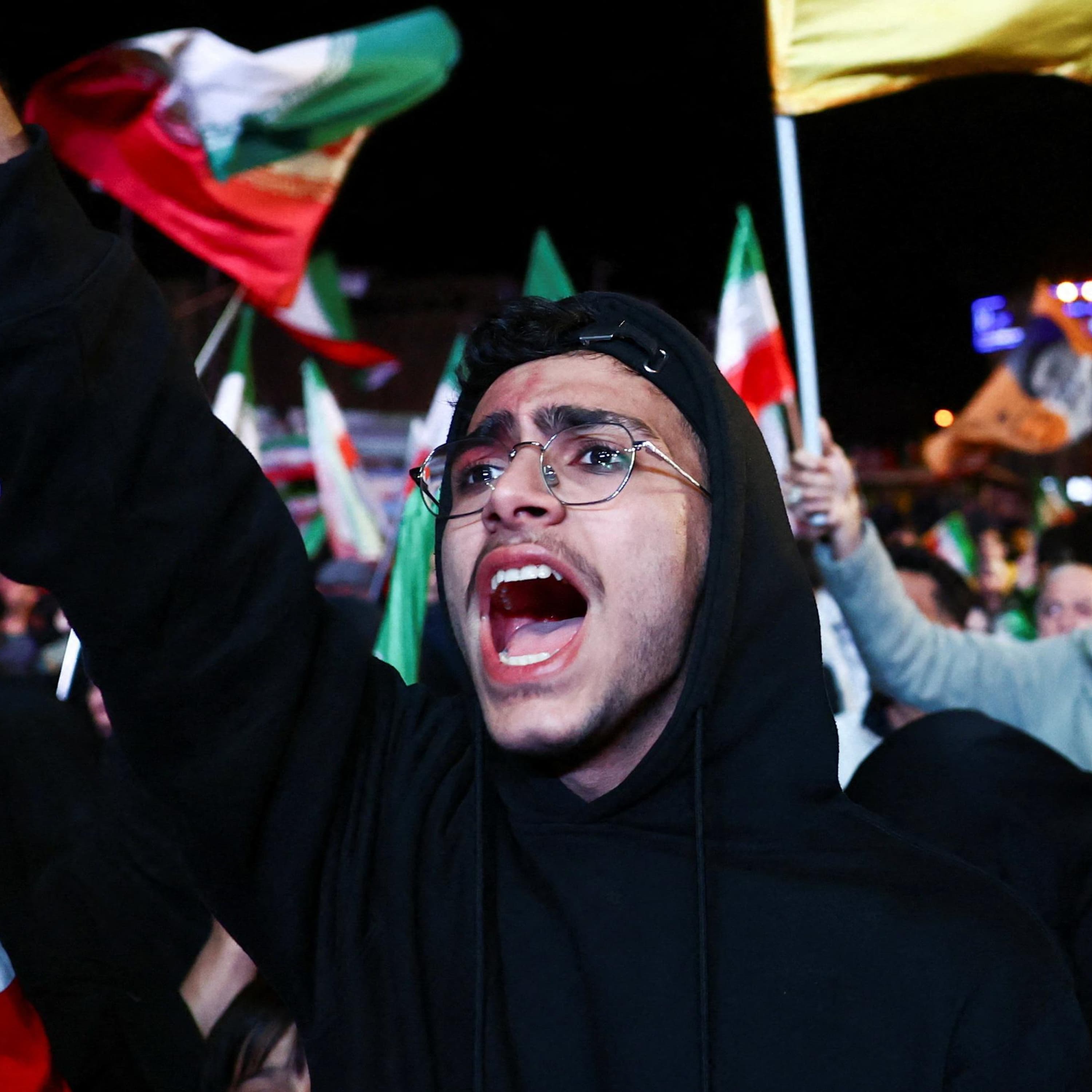
This is the Guardian. Trump has damaged diplomatic relations across Europe and the world, and what has he got out of it? Operation Epic Fury was a historic and overwhelming victory on the battlefield. I think it's been a massive strategic failure. This is kind of the definition of madness. This constant repetition of these kind of same strategies that never actually make the Middle East more stable. The US President has abandoned a threat of destruction for Iran as a last-minute two-week ceasefire is agreed, but does Iran now have the upper hand and how much of a mess is this for Donald Trump? From the Guardian's today in focus, this is the latest with me, Lucy Hoth. What I'm joined by Peter Beaumont, who is a senior international reporter at the Guardian. Peter, thanks for joining us again.
So I don't know about you, but when I went to bed last night, I was sort of going to bed with this sense of doom of this threat to obliterate a civilization of 90 million people from the US President towards Iran. I woke up several times in a kind of cold sweat during the night, check my phone, see what happened. And obviously, we're working up to news of a ceasefire, agreed at the 11th hour, two hours before the deadline. What on earth? Yeah, I mean, what on earth? I mean, it kind of like last night felt kind of Cuban Missile Crisis Territory. I think everyone I know woke up at one o'clock to check their phones, and then when I woke up again at four, it's, oh, okay. Oh, yeah. You know, he's a taco. He's, he's done it again. He's kind of... Trump always chickens out. Trump always chickens out, exactly. So what happened? Well, I mean, it looks like there's been... There was a lot of pressure even sort of running up to his genocidal remarks, which I guess he thought
with some kind of clever and negotiating tactic, although I suspect it will haunt him for the rest of his political career. But yes, I mean, between the Pakistanis, quite diplomacy from the Chinese sort of an awful lot of dashing around and sweaty palms. I mean, I think what I find super surprising about this is that the sort of starting point for this seems to have been the kind of Iranian ten-point plan, which Trump today has already begun to go on there, not that bit, not the bit about enrichment, which appears in the Vasi version. And so it's quite clear that he was looking for an exit ramp. And it looks like the Iranians were happy for him to look for an exit ramp. I mean, you know, if you're looking at Axios' reporting this morning, it looks as though Hamanai was involved in this in some way, which seems to kind of dispute the claims that he's in a coma. So yes, I mean, just kind of usual mad chaos
with everything to do with Trump. So talk to me about this ten-point plan that the Iranians have put forward, because Donald Trump has said that he's happy for it to be the basis of negotiations moving forward. But kind of outline whether two US and Iran are and what the fault lines might be. Yes, I mean, one of the things on there is that the Iranians are suggesting this, so there needs to be a recognition of enrichment. Again, that was kind of going back to nuclear enrichment. Nuclear enrichment to a certain level that kind of goes back to all the talks around the big nuclear agreement that Trump pulled out of talk about sort of control for the straighter formers. I mean, it's clear that whatever has been talked about so far that they don't see eye to eye on kind of the retention of highly enriched uranium. I mean, Trump has said that they want to dig it up and that there is no question of continuing enrichment going on. But that is all now these big issues.
It's kind of been, you know, punted down the road for the talk, starting in Pakistan if they happen on Friday. You know, between events and the Iranian prime minister are like, gee, I mean, it's all really back at the fire packet stuff. I mean, it all feels super half baked. But at the end of the day, the big takeaway from it is that there does seem to be a desire on the American Iranian part to kind of like dial back hostilities. And crucially, I mean, obviously what we've talked about on the program a lot is the straighter for moves, the blockade that's been imposed there that has caused such chaos in the oil markets and global supply chains. Ships have now started passing through. But under this terms, the Iranians are now in control of the straighter for moves along with Iran, right? You know, in the sense that Iran is claiming control of it, it's always claiming control of it. It's claiming more control of it and that it seems to be suggesting this toll system where ships pay, you know, for a right of passage.
And it's not, that's quite a sizeable sum, isn't it? It's going to be good for Iran's economy as well. Yeah, I mean, they're talking about, I mean, I just saw one estimate that it'd be something like, you know, a dollar a barrel on the oil that goes through, which is a lot, which will, you know, if it happens, it will have like, you know, significant, you know, on top of everything else, the significant economic effect, you know, transporting oil is kind of, you know, business is quite, quite tight margins, you know, that's going to get passed on, we're going to pay for it. I mean, and we are paying for it anyway. So, so Donald Trump posted on on truth social, this is a big day for world peace. But I mean, ultimately, it feels that he and the US have been hugely weakened internationally. Trump weakened internationally and domestically by all of this. There was a post on X from our colleague, Patrick Winter, which was really striking. He says that the US was urged by Israel to start a war. Trump refused to listen to experts who were cautioning him
against doing so. And it admits that there's been this ruinous, regional conflict that has killed thousands of civilians. Add to that, the market turmoil, the disruptions to oil markets and supply chains that mean millions of people, millions of consumers, the lives and livelihoods of people around the world have been impacted by this. I mean, has Trump accomplished anything through this? Or is this just a massive failure? It's hard to see that he's accomplished anything. I mean, I agree with that. I think it's been a massive strategic failure. If you look at the way this war has been conducted, I mean, he was warned by, you know, the intelligence community that, you know, Netanyahu, his claims that he could somehow sort of bring about regime change in Iran, where we're a fantasy essentially a bullshit. If you're looking at the United States today from, you know, North Korea or China or Russia, you're going to come to the conclusion that, you know, despite all the violence, despite all the expenditure, a pretty sort of low to medium-sized military power
with a bit of will has been able to stand up to the biggest military power on the planet. I mean, it will not have been messed certainly in Moscow. The NATO has been terribly, terribly damaged by this. I mean, you know, Trump has damaged diplomatic relations across Europe and the world. And what has he got out of it? I mean, you know, despite his claims that there is a more reasonable and less radical regime. You know, it's Ali Hamani's son. It's kind of, you know, the Islamic Revolutionary Guard Corps. They seem to have consolidated. It doesn't feel as though this has done anything except damage. And there's a wildness to it. And I kind of think that, you know, one of the most important things is that no one is going to be looking to the US and particularly to the Trump administration and game, well, there's kind of, you know, global peace and security and stability. Yeah. And ceasefires are always, almost by definition,
very, very fragile. And the role of Israel, it's also very important here, who do say openly that they support the ceasefire, but clearly have their own interests in the region, at least in Lebanon. And certainly with that, there are images of Lebanese people trying to work out whether to return home, continued confusion about that their safety there. I'm just wondering what some of the other risks in the next couple of weeks are of this very fragile ceasefire? Well, as we're speaking now, I mean, Israel is launching one of the largest acts series of erstrikes against Lebanon over the war. I mean, there's dozens of strikes going on in the back of Ali and Beirut at the moment. I mean, Netanyahu said this morning that they're not, the ceasefire doesn't, you know, bind them to kind of ceasing a conflict against his fellow in Lebanon. But I mean, you know, there was a theory doing the rounds, the, you know, the bone that was likely to be thrown Netanyahu in Israel in the event of, you know,
Trump backing down was that we would see sort of an acceptance that they continue their campaign in Lebanon. But I mean, it's more of the same. I mean, you know, I covered the 2006 war in Lebanon, you know, it was in Lebanon last year. I mean, Israel keeps doing the same thing and we get the same results, you know? I mean, whether it's the endless wars against Gaza, I mean, Hamas is never destroyed. Hamas is still in Gaza. Has Bolas still in Lebanon? The regime is still in Iran. I mean, this is kind of the definition of madness, this constant repetition of these kind of same strategies that never actually make the Middle East more stable. They never make Israel more secure. And you have to assume that in all of this, one of the biggest sources that Israel will be a spoiler, the point of these air raids that are going on right now as we're speaking is that it will somehow push Iran to kind of do something that then brings the US in because it's quite clear that Israel didn't want,
and Netanyahu in particular did not want this war to end. What a complex mess. Yeah, no, it's terrible. Thank you for helping to clarify what we can. Thank you for your time. Thank you, too. That's it for today. My huge thanks again to Peter Beaumont, the Guardian Senior International Reporter. You can keep up with his reporting and more rolling coverage of the ceasefire over at TheGuardian.com. Thanks for listening to this episode of the latest, the new evening edition of Today in Focus. Today in Focus will be back in your feeds as usual tomorrow morning. The latest will be back tomorrow night. This episode was presented by me, Lucy Hoff. It was produced by Brian E. Moore. The senior producer was Ryan Ram Gobin and the lead producer was Zoe Hitch. Chicago, 2011. A cop is murdered. Police and prosecutors swear they have the trigger man.
He swears he didn't do it. How far will each side go to prove their right? Like it's just one bombshell after another. You know where you're like, what, what? The story of a PlayStation, a brain eating amoeba, and the relentless pursuit of justice. Off duty, out now. Listen wherever you get your podcasts. This is TheGuardian.
More episodes
More from Today in Focus

Is Trump trying to buy votes? – The Latest
Today in Focus

The young and healthy Dutchman who moved into a care home
Today in Focus

Why is Trump silent on UK sanctions against Israeli West Bank settlements? – The...
Today in Focus

Inside Reform UK
Today in Focus