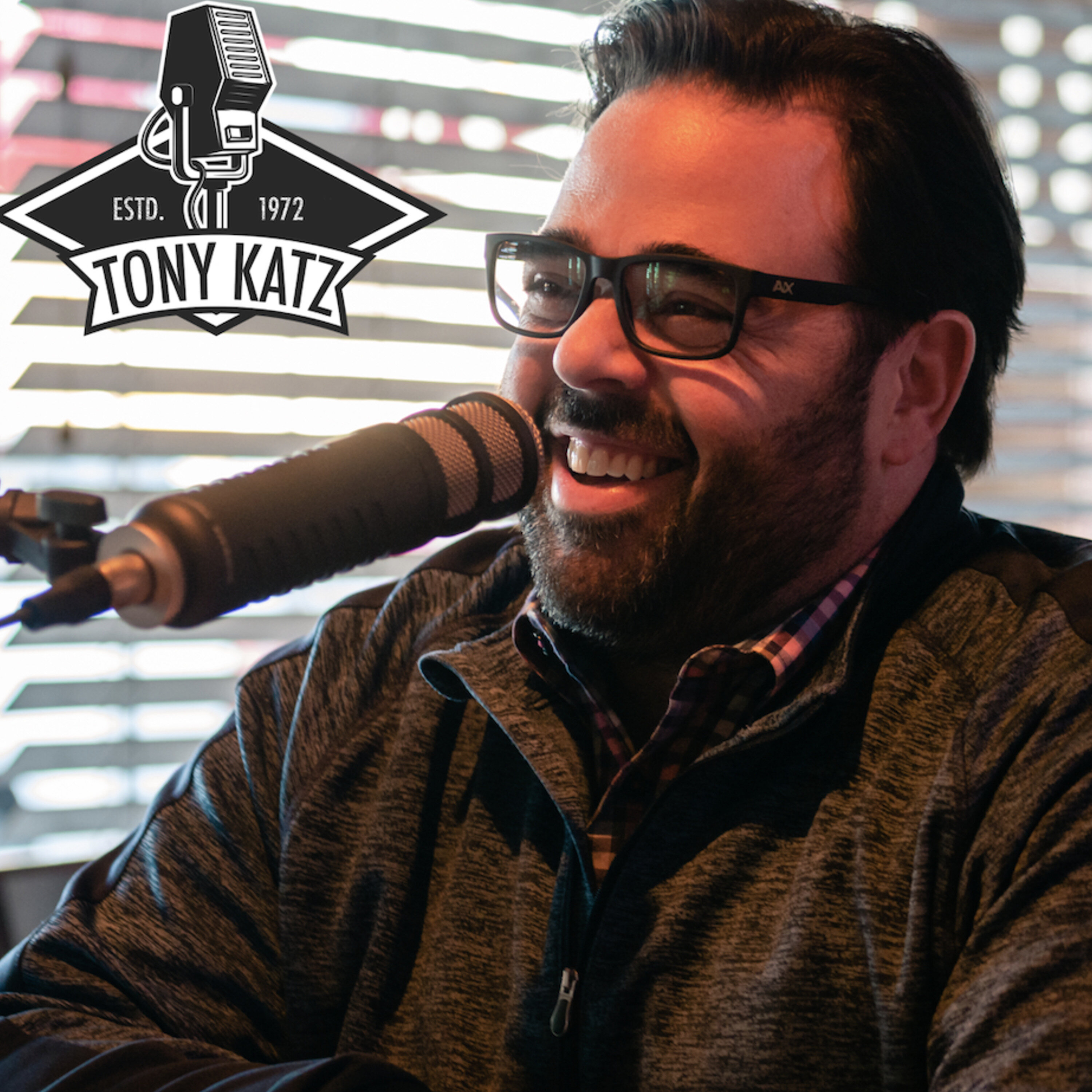
About this episode
Tony is joined with Major Mike Lyons to talk about the conflict with Iran and if Chinese weapons were involved.
See omnystudio.com/listener for privacy information.
Get every episode summarized
Each time Tony Katz Today publishes, we email you a written briefing from the transcript — the topics, who appeared, and any specific claims, with the ad reads skipped.
Email me new episodesFree for 3 shows. No card needed.
Hosts & guests
Transcript ready
278 searchable segments. Every word is indexed and playable.
Full transcript
Tony Katz Today — Tony Katz & Major Mike Lyons on the Conflict with Iran. Machine-transcribed; use the interactive transcript above to jump the player to any line.
The Toyota Tundra and Tacoma are built to keep going, blending rugged muscle with precision engineering, all supported by Toyota's time-tested legacy of dependability. Step into a Tundra and feel the unyielding capability. With the available iForce Max engine, Tundra puts out impressive power, torque, and towing performance. And the Rumi high-tech cabin keeps you connected on the go. Or take a look at Tacoma, made for drivers who push past the path, agile. Tough and relentless, with available features like crawl control, a powered rear window, portable JBL speaker, and a power lift gate. So gear goes in fast, and the adventure keeps moving. The Tacoma and Tundra are engineered to endure, season after season, mile after mile. So drive one home today, visit toyota.com for deals and local inventory, or stop by your Toyota dealer to find out more. Toyota, let's go places.
So the war in Iran continues. And yes, I say war. And yes, other people are going to say conflict because no war was declared. You need Congress to declare war. The president has not violated any laws nor the constitution by engaging in this action. The War Powers Act gives him every right to do so. Tony Katz, Tony Katz today, good to be here, good to be with you. But it's just like in the same way that the White House and the Israelis won't refer to this as regime change. Rather, it's setting up the conditions for regime change. It's regime change. And I don't think we should lie to each other about anything. It is what it is. The question is, what is winning? Now, I believe it is the full annihilation of the Iatola and the regime until there's nothing less. And the people instituting a government that I might disagree with. But that is indeed theirs and not Islamic. Others may see it differently. How does the United States continue to maneuver? And do they have to be considering getting out? And what have we learned on the world stage? Major Mike Lyons joins me in right now.
We're tired. The United States Army military analyst does work with West Point. And sir, I appreciate you taking the time. It's good to see you. I think that there have been a lot of questions on, will we see boots on the ground? What is the exit strategy? I'm not so sure one needs an exit strategy at the moment. But it's never a bad question. Is it the feel that this was a rushed operation by the Trump administration? Or is the feeling amongst the people you speak to and the connections you have, that this was always the plan. There was a plan pulled out of a drawer tweaked. And if someone said meaning the president, okay, let's go do this thing. Hey, Tony, thanks for having me. Let's you and I today coin a new phrase. Not regime change, but regime compliance. Because that's really what we're trying to do here, okay? Look at Venezuela. Maybe that is the model here. And it happened so swiftly and so smoothly. We found the right individual within Venezuela that was of that same regime,
but is looking to comply with what the United States is trying to do. So in this particular situation, the United States uses wars of extension of foreign policy. Can't get the Iranians to negotiate off their nuclear capability. Recognizes that they're at their weakest moment in history with regard to any kind of military capability. And uses it as a leverage to try to get regime compliance. And so while the president said that he would be involved with anybody who takes over, maybe somebody from this current regime will be that person that stands up and says, we surrender. That would be the smartest thing they could do because putting America on your side is always good for your long-term interests. So again, this was always coming six months ago, Operation Midnight Hammer was the beginning of it. But we're settling old scores, right? This president, remember at the end of the Godfather when Michael Corleone took care of all family business. That's what's happened in the last year with the Trump administration. Venezuela, Iran, Cuba's next. And I think this is all part of a plan that they're executing on, frankly, brilliantly.
Quick offshoot on the Cuba question. You don't subscribe or ascribe to the idea of military adventureism when we talk about the friendly takeover of Cuba. Well, it's not military adventureism. If the military is used as the the the cudgel and as of the the effect to get the kind of behavior we want out of the administration, again, regime compliance. That's all we're trying to get Cuba to do. Trying to kick out the Chinese, kick out communist partners that they have. And so that's the purpose of the military. It serves as again a distinction of our foreign policy. It's finally being used. I mean, I've watched the last 40 use Republicans and Democrats alone fail miserably at it. A rock, for example, a rock was about regime change. Siram Hussein's got to go. In fact, the regime changed so much. We fired everybody and completely destroyed the army. We'll look with that. Look with that ended us with a terrorist operation. Look with that ended up happening. So we don't necessarily regime change.
We want regime compliance. We'll have a deal with Cuba that likely doesn't mean a single soldier or a single shot is fired. But it's just in their best interest to comply at this point. Talking to major Mike Lyons, retired United States Army military analyst. Now, let's we're going to debate this idea of compliance versus change in the future. But let's head back here to what we're seeing in Iran. And you're saying that this was started with Operation Midnight Hammer. The argument amongst the social media sets, whether you've got the political left or you've got the woke right, is that Israel dragged the United States into this? That's their continual argument. So let's say you to that. Yeah, no, not a chance. Some Iran, we've talked about greatest foreign policy failure. Post-well work to 47 years. They've been at war with us. Have killed Americans in the past. And we've just put up with it. And I think this administration looked at this situation on the ground right now, saw Iran at its weakest.
We were going to have a conflict with Iran at some point. It's just a matter of when. And so the fact that we're aligned with Israel, who's at its strongest now. Look at the tactical and strategic mistake Hamas makes attacking October 7th. And look where we are now. Two years later with the situation with Iran. How Iran has sponsored that whole situation. So this is the time, again, to settle all scores and bring the Middle East back to some level of peace. It's waiting with the Abram Accords. Everything is on the doorstep. So no, Israel did not drag us into this. We were eventually going to have a conflict with Iran at some point. And if we're going to have that conflict, we might as well do it when Iran is at its weakest. Talking to major Mike Lyons, retired United States Army, military, analyst. Let's talk about China. And you know, one of the things that's true. And you were one of the first people to bring this up. The Chinese saw what we did with Nicholas Maduro. And they said, uh, that's impressive.
The world saw exactly what the United States can do when it applies itself. Now you see what's happened with Iran. Does China say the same thing? It's in their best interest that they should. And you know, Donald Trump, when he meets with the Chinese leaders, I guess on the end in this month or next month, they'll have a lot more leverage considering that the United States, when the situation goes in Iran well and will control a lot of more than that we have right now. Really has China's energy security in the palm of our hands. Hard to say that is that would have happened six months ago. But the fact that we've stopped these ghost shipments coming from Venezuela, then unsanctioned oil that they were taking from there. And then plus 20% or whatever they're getting out of the straight of Hormuzan and the Middle Eastern spot. Now again, that's got to be fixed. We understand that this commodity is very volatile and shutting down the straits hurts India, Japan hurts some of our Eastern allies as well.
But China now is really coming to grips with the fact that when the United States says it's going to do something, it's going to do it. And so it should pay attention. It's proven its military equipment is not up to speed. And that's because it's likely copied from US factories, but they didn't get the whole thing and then they try to improvise. Now wait, you're jumping ahead of me, but you brought it up. So let me go with you. The talk was was that the Chinese dropped off a lot of missiles to the Iranians, helping them gear up in case this moment would come. The talk after that has been that the Chinese missiles have failed spectacularly and that this is an incredible embarrassment for the Politburo, for Xi Jinping. What Chinese weaponry of any has been used and what is the take on its efficacy? Well, they have had some missiles deployed there that have not gotten through, not failed
in that regard, but mostly their air defense systems. In the last six months, the air defense systems that they deployed were used to reestablish what they had prior to that midnight hammer attack along with what Israel did back in June. And they failed, miserable. They were out in the first 48 hours. I mean, it's just not heard of. Unheard of. If you want to be a superpower, you have to be able to project power. And if you can't project power to your proxies like they've tried to do, then frankly, you're not a superpower. You know, for whatever reason, we've given up this century to the Chinese. You've just asked and said that because of the billion people they have or their technology, their manufacturing, they tried to get upstream in all our supply chains and that's over now as well. So to me, this is such a pivot point within our history, in the history of our country, to 150 years, young United States is, but we're not giving this century up for one second to the Chinese. And so I think that's the message that they're going to get received. So I don't know if it was John Yu or Gordon Chang. And I agree with this and I have said this before
that I believe China is a paper tiger. There's a lot, a lot of bluster, a lot of screaming, a lot of tough guy. Can they actually take a punch to the nose? They build aircraft carriers. They can't take off from an aircraft carrier. They can't necessarily land on aircraft carrier. This is hard technology. They steal a tremendous amount, as you were mentioning. They don't create a tremendous amount of things. They only take, so if you're the rest of the world watching this and you are looking at things and believing as you are, that China has shown themselves to be a little bit incapable here and not as strong. And they are now behind the eight ball. And now they're looking in that weaker kind of position. What is the effect on, for example, Taiwan's safety and security or security of the Pacific room in general? Well, the Chinese could learn a lot from Russia.
And that is they can influence Taiwan without taking it. I don't understand this desire, this need to necessarily do that. And what I mean by Russia is, Russia decides to invade Ukraine. They really didn't have to. That area in the Dombas, they controlled all the politicians. They controlled a great portion of what was going on inside the Ukraine governments. But that wasn't good enough. Well, I'd give the same advice to the Chinese. There's no reason to start a conflict over that. Destroying Taiwan doesn't do any good. And then take it a step further now back that I'm not sure they can do it now. Anyway, without the energy security that's required. You want to start a war, you better have oil reserves and you better be able to support this conflict if it goes for a long time. So I think the Chinese, which are passive anyway in terms of how they think, are going to really rethink about all of their actions when it comes to projecting power on the Pacific. But before I let you go, Major Mike Lyons retired United States Army. You talk about regime compliance. If that is indeed the case,
there's a real question about boots on the ground because in order to get regime compliance, are we making the argument that the IRGC gets to stay and terrorize these people because that doesn't seem to be something that Americans would be super keen on. Do you see a situation where in order to get that compliance, I still don't know if I've totally buy into the term where we see American boots on the ground or would this be NATO boots or are there any boots on the ground? So yeah, regime compliance, meaning that we're not going to parachute some leader in from the outside, like happened in 79 when Comini came back and took over. So I think that's what I mean. This person will come from within is what's important. But boots on the ground, right? There's an implied task there. No one wants to talk about this. But there's an implied task of having troops, US troops, somebody to go and check out these nuclear facilities to make sure that they've been destroyed to make sure that that that capability is gone. I think that's going to be insisted upon, whoever again, finally does surrender.
That'll be part of the deal that we'll have to make with that person. But again, boots on the ground doesn't mean large formations. The first armored division, 360 main battle tanks, Bradley fighting vehicles, air defense platform, that's not what that means. But I do think that there's going to be small unit troop, JSOC, level special operators that are going to have to go check to make sure that they're in compliance for what we want them to do. US, Israeli, NATO, who? All of the above. And you know what? This is going to be victory has a thousand fathers. Defeat is an orphan to quote JFK. Once this victory has been established, everybody will be in the game. The bridge will be back. The French will be back. Everybody's going to want a piece of this. So the buckle up, we'll have to see what their actions are going to be. Maybe not the, maybe not the breads. Maybe they can, maybe they can sit this one out. Major Mike Lyons, retired United States Army military analyst. I appreciate you being with us more to come. I'm Tony Katz. This is Tony Katz today. The Toyota Tundra and Tacoma are built to keep going. Blending rugged muscle with precision engineering,
all supported by Toyota's time-tested legacy of dependability. Step into a Tundra and feel the unyielding capability. With the available I-Force Max engine, Tundra puts out impressive power, torque and towing performance. And the roomy high-tech cabin keeps you connected on the go. Or take a look at Tacoma made for drivers who push past the path, agile, tough, and relentless with available features like crawl control, a powered rear window, portable JBL speaker, and a power lift gate. So gear goes in fast and the adventure keeps moving. The Tacoma and Tundra are engineered to endure season after season, mile after mile. So drive one home today. Visit toyota.com for deals and local inventory or stop by your Toyota dealer to find out more. Toyota, let's go places.
More episodes
More from Tony Katz Today

Tony Katz Today Full Show - 09/11/26
Tony Katz Today
Tony Katz & Steve Yates on Iran Moving Houthi's
Tony Katz Today
Episode 4729: Tony Katz Today Hour 3 - 09/11/26
Tony Katz Today
Tony Katz & Senator Todd Young on RNC Midterm Convention & Micro Modular Reactor...
Tony Katz Today