
About this episode
Like most solo pursuits, the artist’s life is one that ceaselessly tests one's mental fortitude. Steven Pressfield likens it to dragon slaying. The dragon being what he’s coined the “Resistance”—that voice that questions your abilities, your worth, your sanity. “Resistance never sleeps,” Pressfield says. “It never slackens and it never goes away. The dragon must be slain anew every morning.” Anyone who sets out to make a career in the arts is confronted with this reality quickly, if not immediately.
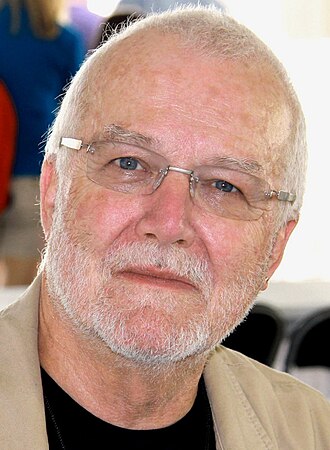
The two-time finalist for the Pulitzer prize, Russell Banks, was in his mid-twenties—just married, an apprentice plumber, living frugally—when he took the leap into the dragon’s den of creative expression. It was then that he happened upon a plaster angel statue in the window of a used furniture store. It wasn’t the angel that caught his attention. “I was pointedly irreligious and whatever the opposite of puritanical is,” as he puts it. It was the words carefully carved on the angel: Remember Death.
Something about this particular reminder got through to me, as if I had never linked the two words together before, had never probed the meaning of either one alone or truly considered the imperative mood, and I had to own it, had to bring it home to our little apartment and hang it above my writing table, so that every time I looked up from my struggle to write my first poems and stories, I would see it, and I would remember death...On a profound level, beyond the purely personal, beyond pop-romanticism, beyond politics, beyond history, beyond even genocide and terrorism, it’s saying, Never forget. I took it as a command, not a mere reminder.
In the half-century with his memento mori, Banks has lived all over the world, he’s written some two-dozen novels, and received widespread acclaim, but “Wherever I have set up my desk and sat myself down to write, my angel has looked down and murmured, Remember Death.”
No one becomes immune to the evil inner-voice that makes us doubt ourselves, that tells us we’re inadequate or incapable, that puts us in a rut and tries to keep us there. What separates those who do great things is the ability to quell those voices before they swell. That’s what we see in Marcus’s routine writing of his impending death. He said, “Do everything as if it were the last thing you were doing in your life.” When we do, we’re freed from the Resistance, inspired into action.
That’s the power of memento mori. It isn’t morbid. It isn’t dark or depressing. No, it pulls us out of the dark and depressing by transcending those petty doubts and fears. Whether it’s an angel statue on your desk, a medallion in your pocket, a pendant around your neck, a statue of Marcus Aurelius himself, or a sticky note on your computer—memento mori.
And use it to propel you.
See Privacy Policy at https://art19.com/privacy and California Privacy Notice at https://art19.com/privacy#do-not-sell-my-info.
Get every episode summarized
Each time The Daily Stoic publishes, we email you a written briefing from the transcript — the topics, who appeared, and any specific claims, with the ad reads skipped.
Email me new episodesFree for 3 shows. No card needed.
Hosts & guests

No transcript yet
This episode has not been transcribed. Request it and it moves to the front of the queue.
More episodes
More from The Daily Stoic

You Must Read To Lead | 10 Stoic Strategies To Deal With Anxiety
The Daily Stoic
BONUS | 3 Life-Changing Lessons From Seneca in 3 Minutes
The Daily Stoic
You’re in a Hurry and Don’t Know Why | A Hard Winter Training
The Daily Stoic
The Moment Ryan’s Italy Trip Went Sideways
The Daily Stoic