About this episode
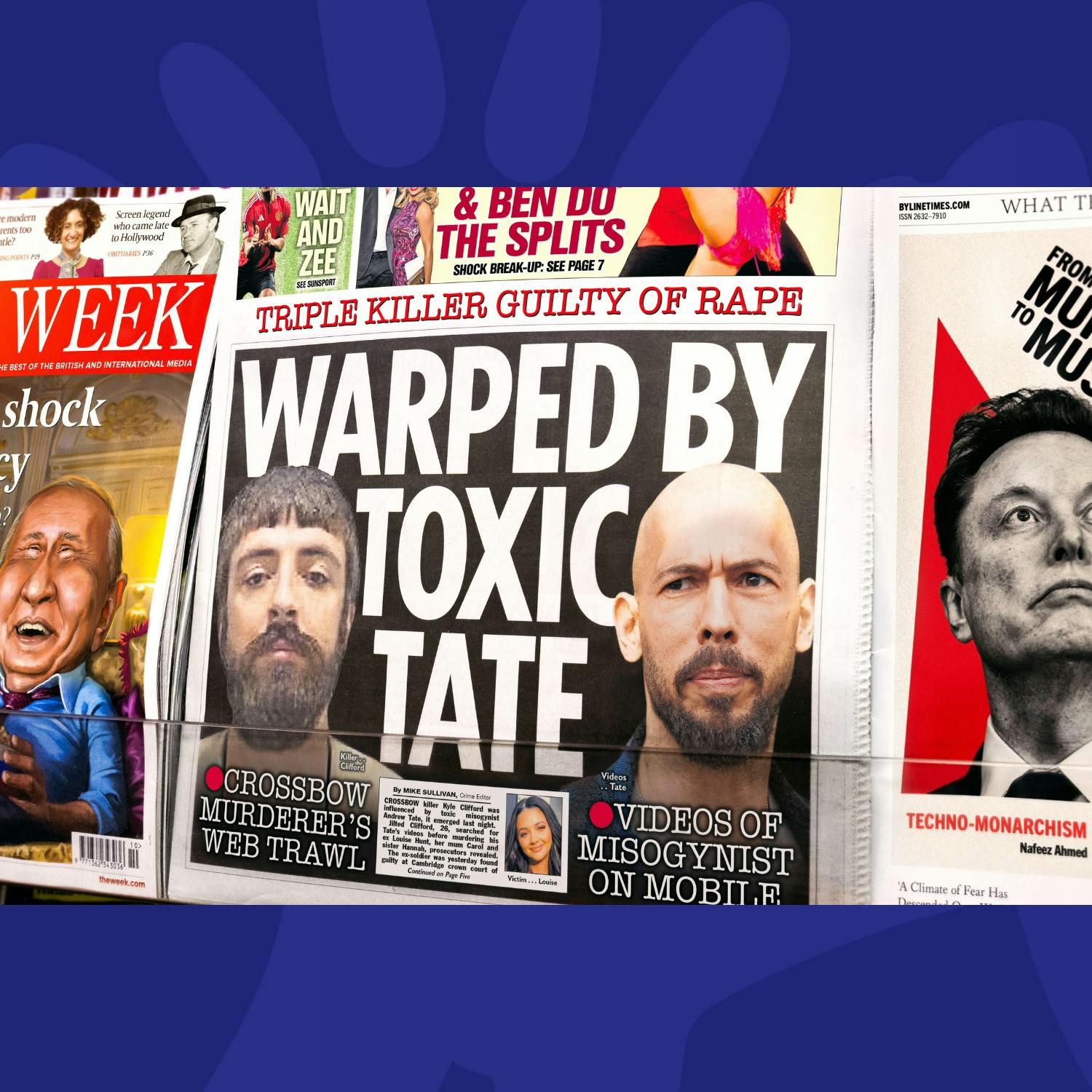
Professor Ian Robertson, Neuropsychologist and author of How Confidence Works, explains why we are experiencing a rise in displays of toxic overconfidence and what parts of society are being affected.
To catch the full conversation, press the 'play' button on this page.
Get every episode summarized
Each time The Last Word with Matt Cooper publishes, we email you a written briefing from the transcript — the topics, who appeared, and any specific claims, with the ad reads skipped.
Email me new episodesFree for 3 shows. No card needed.
Hosts & guests

Transcript ready
185 searchable segments. Every word is indexed and playable.
Full transcript
The Last Word with Matt Cooper — The Rise Of Toxic Overconfidence. Machine-transcribed; use the interactive transcript above to jump the player to any line.
The last word with life pharmacy over 100 local pharmacies nationwide that are always here to help life pharmacy live better together. It was a fascinating piece in the Irish Times over the weekend by Professor Ian Robertson, the neuropsychologist and author of How Confidence Works about toxic overconfidence. Ian Robertson, who possibly could you be talking about? Isn't he remarkable? And he's a brilliant, well, we're talking about Donald Trump, of course, and of course he is the epitome of that. And look where it's leading us to this week. Well, hopefully not, not hopefully as bad as it could possibly get. Not, I hope not. Right, hopefully we'll be proven wrong and add he back off. But just to find for us toxic overconfidence, explain what you mean by that. Well, first of all, let me just quickly explain what confidence is. Confidence is the belief that you can do something and that if you do that thing, the outcome you want is more likely.
And that's the, if you like the normal confidence, it's doing something that you're not certain you can do. You do it and you get an incredibly powerful boost to your reward system by achieving something in spite of anxiety and spite of uncertainty. But that's about small goals, that's about getting through light, that's about grit. And that kind of confidence is incredibly powerful. It really leads to success and better performance because of its effects on the brain. However, one of the effects of confidence is to make you more persuasive. Because if you're confident in the external manifestation of it, other people give you status and listen to you. You could persuade people to come along with you, isn't it? Yeah, that's right. And that's, if you like, so it's very easy to fake the externals of confidence. And it's very easy to pretend knowledge or skills or abilities that actually are objectively you don't have.
But the awful and wonderful thing about confidence is once you get into the position of being able to get people to listen to you and do who you want. That actually generates its own success. And, but it can be quite a, I'm a line successive because, because if you like, it's, it's fake. And that's why we can have influencers who pretend and understand medical understanding who sell terrible skin products to teenagers. For example, or people who profess an understanding of immunology and then makes also the statement of a vaccination that are wrong. So we live in a world where it's possible to pump yourself up, fake confidence and get huge benefits as a result of that. But could it also be in, it's precisely that, not a people who are extremely confident. Sometimes they get lucky and things work out for them. But they think it's because of their own brilliance rather than actually acknowledging external circumstances such as luck.
And then they come to believe that everything that they do will be a success. At what stage can that overconfidence turn toxic? Well, ask, ask Napoleon, ask Hitler, ask Vladimir Putin. And we hope eventually ask Trump because that kind of toxic overconfidence, which you beautifully described there. And that dynamic leads to, what does that lead to in the brain? It leads to narcissism. It leads to a complete lack of empathy so that you start underestimating your opponents. It leads to a lack of self-monitoring so you don't realize how ridiculous you look and how ridiculous the things you're saying are. And that blinds you to the world. But the power you hold means you have sycophants around you whose careers depend on sucking up to this bloated and distorted image of yourself. And it becomes a self-perpetuating bubble until it bursts.
Indeed, I took the touch from reality because it often struck me in, can it be with some of these people that secretly deep down they know they're engaged in this most gigantic bluff, which is why they surround themselves with sycophants to reinforce their belief that they are right. But it may reach a tipping point at which they forget that they've been engaged in a bluff. And they have become so overconfident, they actually do believe everything that they say. And they do believe that every action they take is the correct one. I think you've got that in a nutshell, Matt. So Donald Trump's biographer said that when he was, this was many years ago before he was present first time. Said interviewing him. Trump said to him one time he said, I don't like to look at myself. I don't like to think about myself too much because I might not like what I see. That was this rare kind of glimmer into a kind of semi-subconscious awareness that he was doing stuff that he realized
that in some part of his brain, maybe because his mother wasn't a psychopath, his father probably was. But now, here he is in the middle of a press conference, suddenly looking up, apropos, nothing, looking at the sky, dreamily and saying, I think I'm the chosen one. So he has, he's getting really these dangerous delusions, all tyrants start to believe they're godlike. And then they feel omnipotent, they feel all powerful, they feel all knowing. And the other thing that he said to New York Times was he said, I haven't globally, there are no constraints on me except my own mind and my own morals. But we know the man's because of short and morals. So that means there are no constraints on them. That means he is the law. And who is that but God? So he thinks he's God. And I do believe you're right. I believe he's now in a deluded state where he actually feels he can do and say literally anything.
Why is it that so many people fall for this and support it? What does it say about people who believe in those who display toxic, toxic overconfidence? And I nearly said toxic masculinity, which you would, Andrew Tate as an example, something like Elon Musk as well. What is it about Trump? Musk Tate, which means they get these supporters who are just always believing. Celebrities, why do people want to be besides celebrity? Why do people crowd-round famous people? Because there's this primitive instinct to get, if you can be near them, if you can touch them, you'll get a bit of the mana. So it's like I want a bit of that. So if you're a follower, even one of a 30 million US followers of Trump, you probably have not felt very good about yourself or your life before Trump came along.
And suddenly, your life objectively is probably no better, maybe worse in fact. But you're getting a bit of this celebrity mana, which is basically a lift of your self-esteem and a little bit of mood-lifting, anxiety-reducing, motivating power, which you put, what are these things? What that, if you like, if you have that confidence, that confidence you get from contact, someone who's super confident. If you, to the extent that you identify with them, then you become a little bit of that stuff. And that is biological effects in your brain. It's like a mini-anti-depressant, a mini-motivator that makes you more persuasive and even makes you a little bit smarter because of the increased dopamine in your prefrontal cortex. Let's come back to these overconfident individuals or celebrities. Are they nearly always men rather than women? Because I've given you just a short list, Trump, Mosque, Tate.
And I can't immediately think of any women who should actually be on that list. No, you're absolutely right. There are women, there are women influencers on the web who are becoming very rich by pretending. But usually, most of the time, well, some of them are pretending abilities or knowledge that they don't have. But yes, it's largely men for the same reason that are... It's a similar cause. It's mainly men who are compulsive gamblers. It's mostly men who are in prison for violence. Men of this competitive hunger, that when thwarted, can feel very painful. And that's why the Androtates of this world can make men who feel if you're like thwarted, you feel inferior when they want to feel superior. That's the other thing about toxic confidence is it's a kind of confidence that you get from beating other people,
from being better than other people, or feeling you're better than other people. It's a kind of competitive confidence. It makes a very... But that's very vulnerable and fragile because there's always someone better than you. So yeah, so you're constantly having to fight the anxiety that maybe you're not the best. And so it's like drug addiction. You're in a hiding to nothing. You can never really rest. Assured you need more and more to try and keep yourself in position. And that's been true of Trump. I mean, he's so thin skinned. He's even now pursuing anyone who dared cross him in his last. He's using the Justice Department to get revenge on them. Because anyone who has crossed him, it's a threat to this grossly grotesquely deformed ego that he has as a result of... He wasn't a good businessman. As you well know, Matt, he failed. Many, most of his businesses failed. But he got a big bailout from the Deutsche Bank from sources that are very, very dubious indeed.
And may explain his affinity to... Well, let's not go into what he would probably call as the Russia hoax and any of those what he would describe as conspiracy theories. But a couple of things. As a neural psychologist. And this may be slightly different from what you've written about in this Irish Times piece which prompted us to ask you to join us on the program. But his speech patterns are present. They continued rambling, the incoherency of much of what he's saying. And then the early morning, true social media posts that we get. What is that telling you as an observer? And I know you're not doing, you know, sort of sit down with him for substantive analysis. But for what you can see from his many public displays, what do you think is going on in his head? He has always been a complete, a disinhibited man without moral constraints and without who has... Essentially, he's a man who, with a different background, would have been in jail.
You know, but he's really... He's really... The way, honestly, is a bit of a hood. Everybody in this city consistently getting worse at the moment. Isn't this something for us to really be able to... Well, the truth is that the man with the access to nuclear codes seems to be getting even more wild and incoherent in his behavior. Absolutely right. And what I cannot tell you is to what extent that is a new, neurodegenerative condition. And to what extent that is the neurological effects of unlimited power on a human brain. We have very, very few studies of the effects of power like that. Many powerful people have gone, gone a bit crazy. Because if there are no constraints on you, if you can do anything you want, then you don't care what people think of what you're saying or how you're saying it. So normally, what the... Normally, most of us go through our lives. And there is a bit of an audience there.
We take care of what we say. We anticipate we better not say that because... Or some of us... Maybe after a few pints, maybe some of us will just blurb our thoughts out. Rather incoherently in a kind of drunken way. Well, if you have no constraints, there is nothing. There are no inhibitions on you preventing you do that, doing that. So Trump doesn't care. He can say anything and do anything. He was tweeting in the middle of the night in his first presidency as well. And so I am very cautious about saying the man is suffering from stress. He is suffering from some degenerative condition. But what he may be, he may be. But what I can say for sure is brain is hugely further distorted and damaged by the lack of any constraints or inhibitions. One final thing.
I'm anticipating that there are lots of messages coming in as have accused me previously of suffering from Trump to arrangement syndrome. I suspect they'll be saying that you are too because of this. What do you make of the people who show blind loyalty to Donald Trump? And who, when they hear what we've just been discussing, are similar reports immediately trying to dismiss it by using what Trump himself uses the phrase, Are you just suffering from Trump to arrangement syndrome? Well, diagnosed me. He was a man who just today said he was planning to erase a civilization. He was planning to bomb the desalination plants, the power plants, and bomb a country of 90 million people into the Stone Age. If that's, if saying that and if regarding that has disordered dangerous, terrible behavior in the most powerful man in the world, then yes, I have Trump to arrangement syndrome.
Thank you, Ian Robertson. The last word. With life pharmacy. Over 100 local pharmacies nationwide that are always here to help life pharmacy live better together.
More episodes
More from The Last Word with Matt Cooper

Culture Club: Kyla Cobbler
The Last Word with Matt Cooper

The Real Nigel Farage By John Sweeney
The Last Word with Matt Cooper

GAA Representatives Insist The Association Is “Not Ready” For Integration
The Last Word with Matt Cooper

Personal Finance: Bord Gáis Hikes Prices For 700k Customers
The Last Word with Matt Cooper