About this episode
Book Shelter is made possible by:
You can listen and download our episodes for free on more than 10 different platforms:
https://linktr.ee/book_shelter
Get the Book now from Amazon:
https://www.amazon.com/dp/0374534446?lv=shuf&channelId=500&plpRedirect=mhFallback&linkCode=ll2&tag=cvthunderx-20&linkId=5161089cfda93924d34e8ef2629057bf&language=en_US&gaOptInStatus=true&ref_=as_li_ss_tl
Produced by Podcai Studio:
https://www.podcaistudio.com/
Get every episode summarized
Each time Book Shelter publishes, we email you a written briefing from the transcript — the topics, who appeared, and any specific claims, with the ad reads skipped.
Email me new episodesFree for 3 shows. No card needed.
Hosts & guests
Transcript ready
240 searchable segments. Every word is indexed and playable.
Full transcript
Book Shelter — The Rainbow Troops: A Novel. Machine-transcribed; use the interactive transcript above to jump the player to any line.
Meet the Red Bull Dragonberry Emergizer. It's one of the many new drinks out now. Who knew ice cold drinks could be so fire? Try them all only at McDonald's. Your path to pharmacy can be closer than you think. West Coast University's hybrid doctor of pharmacy program can be completed in as little as 33 months, and no bachelor's degree is required to apply. If you've started pharmacy coursework elsewhere, WCU may accept eligible transfer credits to help students keep moving forward. Learn online, train hands on at our Center for Graduate Studies in Los Angeles, and prepare for real-world pharmacy practice. West Coast University, as real as it gets, visit westcoastuniversity.edu. WCU cannot guarantee employment. Earn your Farm D in as little as 33 months with West Coast University's hybrid program, no bachelor's degree required. eligible transfer credits may be accepted. West Coast University, as real as it gets, visit westcoastuniversity.edu. I'm not guarantee employment.
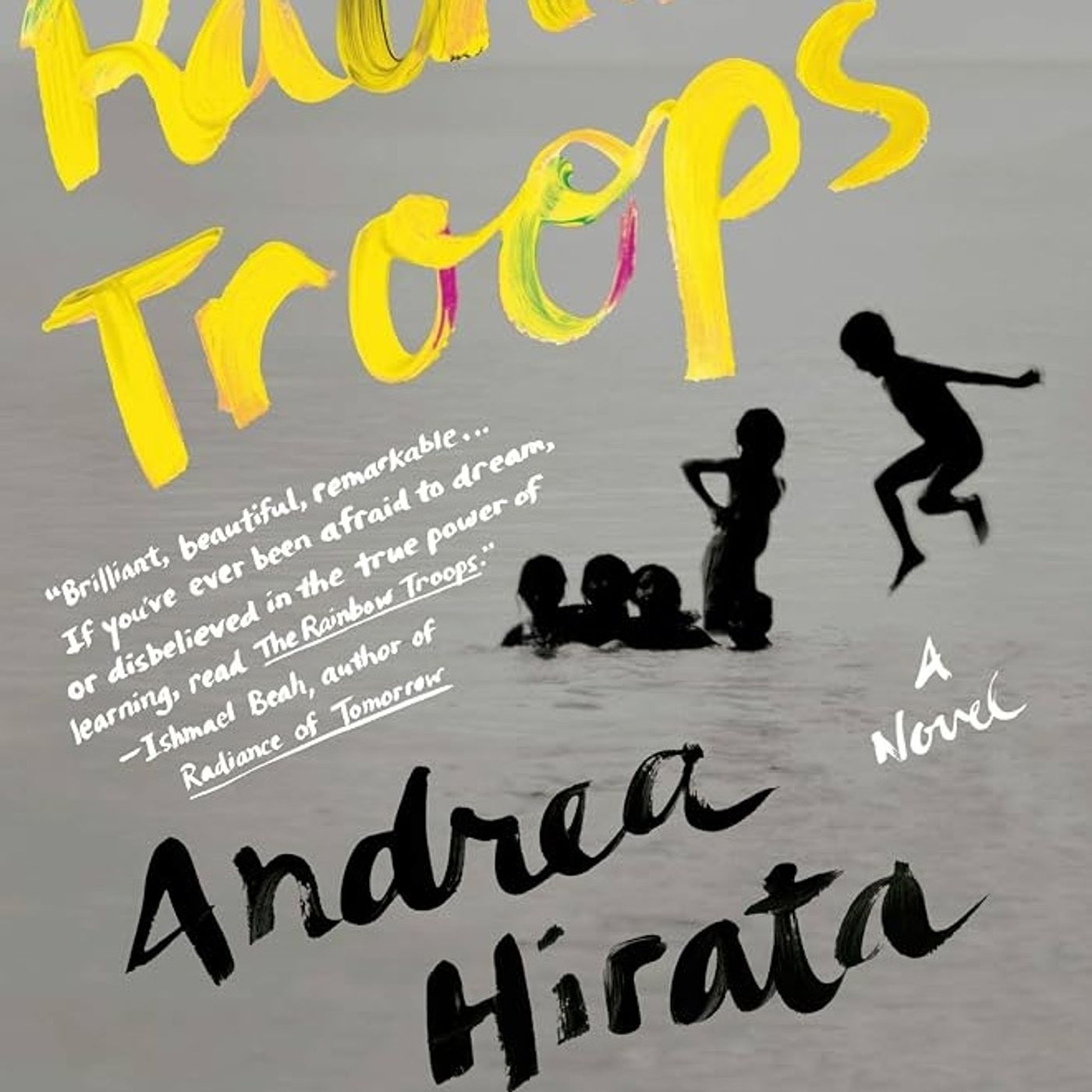
If one more student does not walk down that path before 11 in the morning, a government bulldozer is going to wipe her school off the map. And not just the school, but the futures of the kids sitting inside it completely erased. It is wild. Welcome to the deep dive. Today per year request, our mission is to step directly into that tense, vibrant, and honestly heartbreaking world. It really is heartbreaking, but also incredibly inspiring. We are unpacking the story of the rainbow troops or Alaska arpeologi. It is this globally acclaimed, deeply moving Indonesian novel by Andrea Herata, which was translated by Angie Kilbane. And we are going to walk through this narrative chronologically like a story. Yeah, we really want to explore the lives of these 10 marginalized students on the island of Belatong. We will look at their fiercely dedicated teachers and this fight for the right to an education that just completely redefines what resilience looks like. And setting the context here is super vital for you as a listener. We are on Belatong,
which is an island rich with tin run by a massive corporate mining entity. Right. So the wealth disparity is just staggering. Exactly. Staggering. What makes this story a master class in resistance is that these oppressed people do not protest with violence or like fiery political rhetoric, which you might expect, honestly, right? You would, but they protest with humor with the absolute innocence of childhood and with sheer intellectual brilliance. It is a completely different paradigm for fighting systemic injustice. So let us get right back under the shady branches of the old philisium tree on that very first day of school. We are at Muhammadia Elementary. The poorest village school on the entire island. Yeah, the building is 120 years old and it is visibly leaning to one side. Standing in that doorway is Pockar Fawn, the principal and boom, who's she's the 15 year old girl we mentioned earlier, facing her very first day as a teacher. Oh, less. I mean, can you imagine the stress? Oh, it is agonizing. The South Sumatra Department of Education has issued them a terrifying
ultimatum. If they do not enroll a minimum of 10 new students by 11 a.m. the school gets permanently shut down. And as the morning drags on, they only have nine children sitting on those long weathered wooden benches. Yeah. And the parents standing outside did not even really believe in this education. Right. They are miners and laborers. They're out there actively calculating in their heads how much more money they would have right now if these kids were just working at the morning market. But inside you have this eclectic bunch of nine kids who desperately want to be there. You really do. You have the narrator, you call, who is agonizing over his ugly new plastic shoes. Yeah, the plastic typical kid stuff, right? There is Tripani, this handsome neat freak perfectionist. You have Sahara, an incredibly headstrong girl who establishes a lifelong rivalry with a boy named Ake Young within minutes just by knocking over his water bottle. Yeah, exactly. And then there is a small curly haired boy from a coastal village who smells strongly of burnt rubber.
Yeah, Linteng. That would be Linteng. He was brought there by his father who is a poor coastal fisherman. And the book has this amazing description of him. It does. The text describes his father as looking like a pine tree struck by lightning, withered and thin, but possessing a very gentle face. It is such a poetic way to describe him. It really is. He speaks softly to boomos, admitting he does not even know the year of his own birth. He cannot read or write, but he is completely determined that his son will not become a fisherman. He wants to break that cycle of endemic poverty. Exactly. Even if it means Linteng has to pedal a bicycle 40 km every single morning starting at 4 a.m. 40 km just to get to a crumbling school. Right. And he wears sandals made out of old car tires, which explains the burnt rubber smell you mentioned. So it is like betting your family's absolute last dollar on a lottery ticket, but the lottery ticket is this 120 year old collapsing building. That is a great analogy. He is risking his entire livelihood on this gamble. But the clock ticks to 11.05. Pocker fund is preparing to give a speech
to send everyone home. The school is basically dead. But just before he can speak, Tripani yells out, down the dirt road comes this tall, skinny boy half running his knees knocking together in an awkward X shape. This is her room. Yes. He is 15 years old. The exact same age as their teacher, boomos. But her room has a mental disability. His mother is dragging him along completely out of breath. She's basically begging the teachers to take him in, right? She is. And her reasoning is not some grand philosophical stance on education either. She just practically explains that the special needs school is way too far and too expensive. So she just wants him to, you know, sit in a classroom rather than chase chicks around her yard all day. Exactly. Her room flashes this big beautiful smile. And Pocker fund says the magic words. It makes 10. It makes 10. Her room's arrival literally saves Muhammadia Elementary, which fundamentally rewires how these kids understand education from that minute onward. For most students around the world, school is a mandatory sometimes boring chore. But for these 10 children, they literally had to sit
on the knife edge of losing it before it even began. Right. Bimolus later nicknames them the rainbow troops. And for them, education becomes a hard one privilege. They understand viscerally that merely being allowed to sit on a wooden bench and learn is a total gift. And that reverence for learning, it carries directly into the classroom. We immediately see the stark reality of their poverty, colliding with the absolute wealth of the human mind. Take Lintang, for example, the very first day, Eagle watches Lintang hold a pencil for the very first time. But because they have nothing, his father accidentally bought him a red and blue tailor's pencil. The thick kind used to mark fabric before cutting it. Right. And his notebook is the three-line kind meant for second grade cursive. He grasps this giant pencil like a knife. It is such a vivid image, but the mechanism of his mind is extraordinary. Remember that 40 kilometer commute? The one through the crocodile infested swamps. Yeah. He rides through those swamps just to get to this leaning school. And at home, in a dilapidated
shack by the dim light of an oil lamp, he discovers a photocopy book on astronomy and geometry. While the rest of the class is struggling to grasp basic coordinates, Lintang is absorbing the theories of Copernicus, Galileo, and Isaac Newton. He even masters concepts like tetrahedral decomposition. Which for those of us who aren't math prodigies is basically the process of taking a complex three-dimensional pyramid shape and breaking it down into smaller manageable geometrical pieces to calculate volume and space. Precisely. He applies advanced logic to spatial realities without any formal foundational training. Let me push back on this a little bit, though. A kid with a Taylor's pencil mastering tetrahedral decomposition by an oil lamp in a swamp. It feels a bit like a fairy tale. Is the author romanticizing poverty here, you know, suggesting that true genius is forged in suffering? It is a very fair question to raise, but Andrea Herada is actually doing the exact opposite. He is not romanticizing their struggle at all. Okay, how so? He is highlighting the devastating criminal waste of human potential that poverty creates. Lintang is not a genius because
he is poor. He is a genius despite it. Oh, I see. The tragedy the text presents is clear. Think about how many other brilliant minds are locked away in impoverished communities, unable to contribute to human progress simply because they do not have a proper pencil or a safe road to a functioning school. That is a crucial distinction. It is about the sheer resilience required to let that intellect bloom. Exactly. And if Lintang shows us the tragedy of untapped logic, his classmate Mayhar shows us the sheer force of untamed imagination. Mayhar is such a great character. He really is. He is obsessed with the paranormal with the idea of aliens coming to Billetong, disguised as soccer referees. And he absolutely idolizes Bruce Lee. He brings a profound artistic soul to the rainbow troops. And Mahars defining moment comes during the August 17th Independence Day Carnival, right? Yes. This is the major social event of the year on the island. Historically, the heavily funded corporate school, the PN school, just dominates the best art performance
category. We are talking about an 80-piece marching band. Professional choreographers flown in from Jakarta, major ets and miniscuits and high heel boots. And the poor Muhammadia school usually just shuffles along and sad, basic traditional outfits. But Mayhar completely upends the board this year. He decides they are going to perform his African cows. Yes. He has the boys painted light brown, wearing dark red shorts with faux horse mains made out of cheap plastic twine. And they wear anklets with bells that jangle violently when they stop. But his secret weapon is their necklaces, which he crafts out of fern fruits, sugar palm fruits. I mean, they must look completely absurd. They do. From the back, they look like donkeys and from the side, like turkeys. But here is why they win. Mahars taps into raw, uninhibited passion. While the PN school bought their sterile, perfectly choreographed performance. Exactly. Mayhar conjures his from sheer imagination, tribal energy and local flora. The judges in the crowd are completely swept away by the visceral authenticity of these ragged
kids dancing with absolute fury. It proves that creativity and spirit can outshine infinite resources. It really does. And that same raw authenticity bleeds into everything they do, even when they are just trying to be kids. Amid all this struggle, e-cyle, our narrator, falls head over heels in love with a girl named Alang. It is this beautifully innocent subplot. He volunteers to buy chalk for the school at the local Chinese grocery stall every single Friday. And he does this just so he can catch a fleeting glimpse of her hands handing him the cardboard box. It provides some really necessary levity. He even writes her a poem about chrysanthemum flowers. But to deliver it, he has to use his friend Akiyong as a courier. Right. And Akiyong, being incredibly pragmatic, demands that Akiyong do his math homework in exchange for passing the notes. The economics of a playground romance. But this temporary shield of childhood innocence is quickly pierced by the realities of their academic battlefield. The regional academic challenge arrives. This is the ultimate David versus Goliath moment.
It really is. It is the crumbling Muhammadia school against the rich state schools and the elite P.N. school. And the climax of this competition centers around Lintang going head to head with an opposing teacher, Drs. Zulfikar. Zulfikar's arrogant, heavily credentialed and tries to use complex terminology to intimidate the poor village kids. Typical bully tactic. Yeah. He posits a theory regarding optics and the color spectrum, specifically focusing on rings of light and concave lenses. But Lintang does not just disagree with him. He completely dismantles the teacher's foundational premise. Completely dismantles it. It's like a street fighter stepping into the ring with an Olympic boxer. But the street fighter just happens to know the exact flaw in the boxer stance. How exactly does Lintang corner him? Lintang cites the philosopher and scientist, Rinne Dekart. He explains the mechanics of light refraction. You know how light bends differently when it passes through various mediums. Okay. Zulfikar's formula assumed a uniform behavior of light. But Lintang
points out that the density of transparent particles in the air actually changes the angle of dispersion. Wow. By breaking down the very physics of how light travels through a concave lens versus dense air, Lintang proves mathematically that Zulfikar's challenge question is flawed to its core. The imagery of this is incredible. The opposing teacher, physically slumps in his chair. His glasses slide down his nose. He has been completely intellectually defeated by a coastal boy with curly hair and tire rubber sandals. And boom moves their teacher snatches the school flag and waves it wildly, crying out to panela, meaning God is most holy. This victory is paramount. It is not about bringing a plastic trophy back to a leaning building. No, it is the ultimate validation of boom moves and pacharfon. These unsung heroes taught these kids how to build bamboo houses. They literally sucked snake poison out of their students' legs and the swamps. They instilled a profound sense of intellectual dignity that the corporate school's money could never buy. Exactly. But you know, the universe has a cruel way of balancing the scales. The narrative brings
us crashing down. You call, retreats to his favorite spot up in the Philecium Tree and watches a Falker 28 fly away. A large commercial passenger jet, right? Yeah. It is flying away into the clouds, taking a lean away to Jakarta. His first love is gone. And that emotional fracture is just the prelude to a much larger existential threat. This is where the true antagonist of the story emerges, the PN corporate mining company. Word arrives via Mujis, a local mosquito sprayer. He informs them that PN's massive tin dredges, specifically units IB95 and 2, are pointed straight at Muhammadia Elementary. The company wants the tin buried beneath their classrooms. The audacity of the PN company is chilling. It is. In a darkly comedic, the poignant scene, PN Foreman actually walk into the classroom. They do not ask the school to move. They ask Bumuz to take down the official state symbols. The framed pictures of the president, the vice president, and the national emblem. Right. The Foreman No Indonesian law protects those
state symbols from destruction. And they do not want to be charged with a federal crime when their dredges crush the building. They care about the legal liability of a wooden frame, but have zero regard for the 11 human children sitting underneath it. It is maddening. But the kids respond by orchestrating a hilariously defiant coup. They take down the official symbols, but they replace them with posters of Bruce Lee, John Lennon, and Roma Arama. Roma Arama, who is a legendary figure in Deng Dutt, a very popular genre of Indonesian folk music. It is brilliant peaceful sabotage. And when a severely near-sighted school inspector named Mr. Sematican comes for an evaluation, he squents at the wall, nods approvingly at John Lennon and Bruce Lee, and gives the school an A for properly displaying their sovereign national symbols. It is such a clever use of humor to mask a creeping dread. It really is. But the true tragedy that ultimately breaks the school is not the massive metal dredges. It is something much smaller, much more personal. Lentang's father. Yeah. The man like a withered pine tree
who sacrificed everything to break the cycle of poverty, he suddenly dies. It is a shattering blow. Lentang, the genius who just defeated the region's top educators, the boy who fought through crocodile swamps every morning is forced to drop out. As the eldest son, he must become a manual laborer to support his family. And the cruelest part. This happens just three months before their final exams. There's a quote from Andrea Hirata in the text that just stops you cold. Today, a little mouse died of starvation in a barm full of rice. That is so powerful. Belacong is this incredibly wealthy tin island, a barn bursting with riches, and yet its brightest, most capable mind is starved of opportunity. The emotional devastation of Lentang packing up his things is palpable. His classmates hug him, completely sobbing. But Bull Moose refuses to shed a single tear in front of them. She forces herself to be a pillar of stone, remaining strong as the absolute pearl of their school is ripped away by systemic failure. His departure remarks the death of a localized renaissance.
It really does. It is a stark reminder that sheer brilliance and hard work are sometimes not enough when the economic machinery around you demands cheap labor over human flourishing. So we have to ask what happens to a community when the system wins? The narrative fast forwards 12 years. And the physical Muhammad Dia School, which had been propped up by a carved wooden beam for years finally collapses. It falls to the ground like a badly injured animal, collapsing shortly after a legendary seven layer rainbow appears in the sky. The physical structure dies and the fates of the rainbow troops are deeply bittersweet. Take Samson, the boy who was obsessed with bodybuilding. He is now a copra-coolie. Copra is dried coconut meat used to extract oil. It is grueling back breaking labor. He forces himself to carry impossibly heavy hundred pound sacks of it just to maintain his macho self image. And he ends up working at a shop owned by his former childhood rival Akeon, who actually ended up marrying Sahara. So we have a funny enemies to lovers outcome there. We do. But then there is
Trapani, the handsome perfectionist who dreamed of becoming a teacher. He suffered a severe mental breakdown and ended up in a psychiatric institution called Zalba too. But the beauty within that tragedy is Haroon. The boy whose arrival saved the school on day one, he visits Trapani faithfully at Zalba too. Haroon's mind remains trapped in childhood. He tells the exact same stories over and over, but his loyalty to his friend never, ever wavers. Meanwhile, Mahar is still out there chasing patents for white magic, completely unfazed by modern reality. And Bemos did eventually become a state school teacher. But she openly admits she never, ever encountered students quite like Lintang or Mahar again. Despite the incredibly difficult adult lives they lead, their childhood bond remains completely intact. On that first day, under the Felishium tree, they made a pledge to be faithful brothers of light and fire through lightning and tornadoes. The building collapsed, the dredges took the land, but the dignity they forged in that classroom survived.
As we wrap up this deep dive, I want to share a note from the translator Angie Kilbane. She spent seven months working on the English version of this book, traveling from Java to Singapore to the US. She pointed out that the greatest challenge was preserving the specific emotional resonance herotic captured. Right. The book became a massive cultural phenomenon, precisely because it does not protest oppression with divisive anger. It protests by showcasing the profound humor, love, and unbreakable innocence of these children. It demands that you, the listener, look at your own community differently. Who were the rainbow troops in your city? The brilliant, overlooked minds sitting on the margins, working in gig economies or mourning markets, possessing the intellect of a lintang, but lacking the basic resources of a tailor's pencil. And that leads to a much larger question to leave you with today. We have talked a lot about that collapsing 120-year-old building. When the physical structures that hold our greatest communal triumphs disappear, when the school falls, or the neighborhood is gentrified, or the local center is bought
out by a corporation, what happens to the institutional memory of that place? That is a tough question. If the building is gone and the system ultimately won the land, does the fact that boomas and lintang fought so hard even matter? I would like to think it does. Perhaps the true legacy of education is not the institution you leave behind, but the permanent imprint you leave on the minds of the people who sap aside you in the dark, figuring out how the light works. Something to mull over. Definitely. Until next time. Finance leaders know this. Growth is expensive and spend flexibility matters. With the American Express Corporate Program, you can manage spending and payments in ways that help protect your working capital. Learn more at americanexpress.com slash corporate. Terms apply. Kitchen and bathroom professionals know what goes behind the tile matters. That's why trade pros trust Fiber cement, party backer board to keep tile firmly in place, resist cracking, and help block moisture. Chosen in over 40 million kitchens and bathrooms,
party backer board, what the best build on. Shop now at participating Home Depot, Lowe's, and floor into core stores. For more information, visit jameshardy.com slash hardy backer.
More episodes


