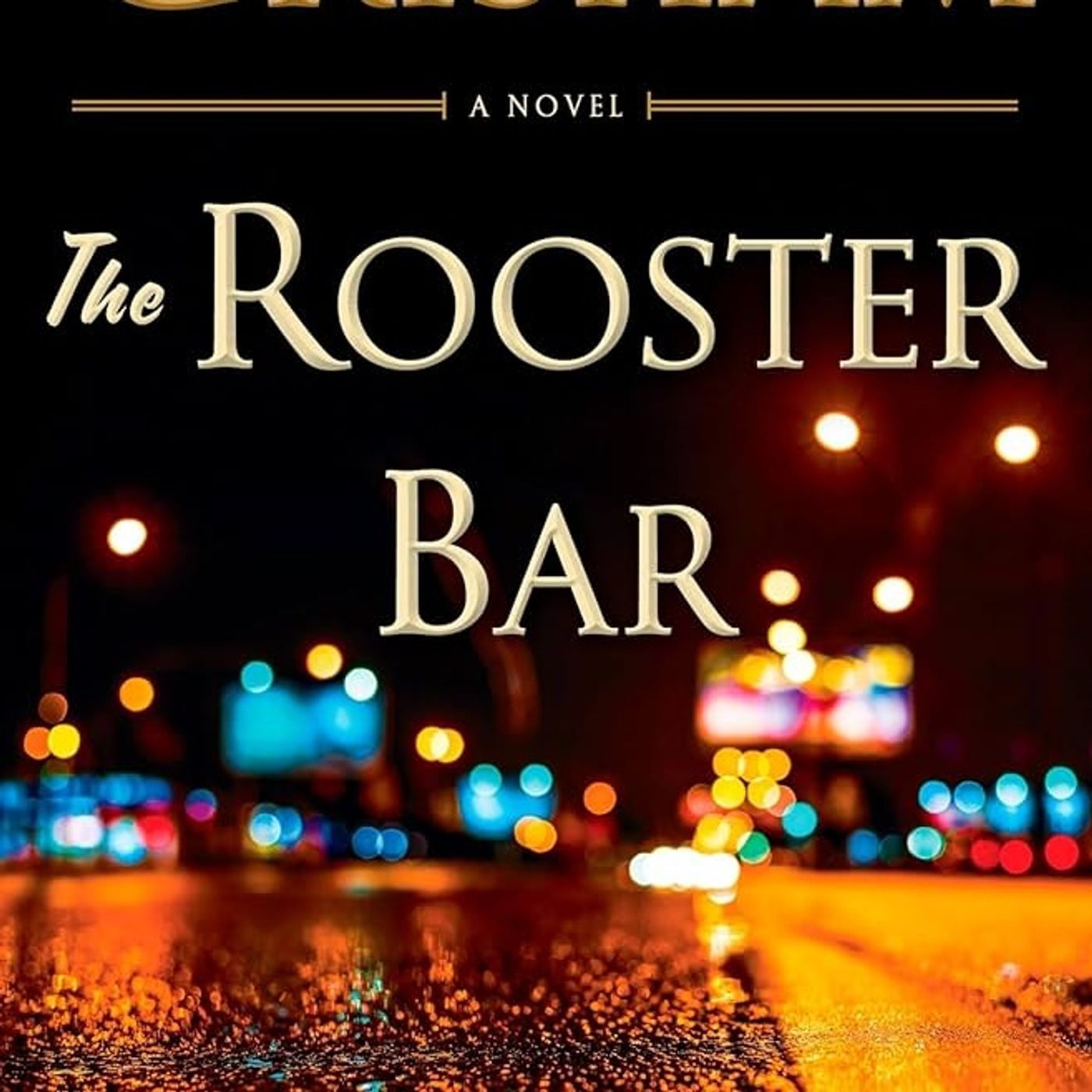
About this episode
You can listen and download our episodes for free on more than 10 different platforms:
https://linktr.ee/book_shelter
Get the Book now from Amazon:
https://www.amazon.com/dp/0385541171?lv=shuf&channelId=500&plpRedirect=mhFallback&linkCode=ll2&tag=cvthunderx-20&linkId=b6327161e3e5c9ccafdbdf09ba553643&language=en_US&gaOptInStatus=true&ref_=as_li_ss_tl
Produced by Podcai Studio:
https://www.podcaistudio.com/
Get every episode summarized
Each time Book Shelter publishes, we email you a written briefing from the transcript — the topics, who appeared, and any specific claims, with the ad reads skipped.
Email me new episodesFree for 3 shows. No card needed.
Hosts & guests
Transcript ready
561 searchable segments. Every word is indexed and playable.
Full transcript
Book Shelter — The Rooster Bar. Machine-transcribed; use the interactive transcript above to jump the player to any line.
Imagine looking at a piece of paper that says you owe a quarter of a million dollars. Yeah, that is terrifying. Right. And you don't own a house, you don't have some like thriving business. All you have is a degree from a third tier school that employers openly laugh at. Just a worthless piece of paper. Exactly. You bought into this whole promise of higher education. And instead, you basically bought a lifetime of indentured servitude. The walls are closing in, your bank account is overdrawn, and the realization hits you that following the rules is exactly what ruined your life. Right. So what happens if you just decide to stop playing by them entirely? It's such a phenomenal premise. I mean, it taps into a very real, very prevalent anxiety today. Oh, absolutely. Because millions of people are suffocating under student loans right now. Most people just grit their teeth and they sign up for these decades-long income-driven repayment plans. Yeah, they just deal with it. But exploring what happens when that psychological pressure cooker finally explodes,
yeah, pushing otherwise, you know, ordinary people into spectacular, brazen fraud, it just makes for a fascinating character study. It really does. So today, we're taking a deep dive into John Grisham's legal thriller, The Roolder Bar. I am so ready for this. Our mission today is to unpack this entire story in detail. We're tracing the path of three law students who realize their education is a complete scam. And they decide to beat the system by orchestrating a multi-million dollar fraud of their own. It's quite the right. It is. So let's sit the scene in Washington, DC. The winter is harsh. The job market is basically non-existent. And we really need to understand exactly who we are dealing with at this place. The foggy bottom law school. Right. The infamous FBLS. So the story centers on this core trio of third year law students. And Grisham goes out of his way to establish just how precarious their lives actually are. Like they are on the brink. Totally on the brink. Sure with Mark Frazier. He is $266,000 in the hole. Oh. Yeah.
He drives this ancient Ford Bronco with an odometer that's permanently stuck at like 187,000 miles. Sounds reliable. Oh, very. And he is grinding through this miserable, completely unpaid internship at a mid-tier firm called Nest Skeleton. And he's not even doing real legal work. No, not at all. Yeah. He's in the learn to have a litigator or anything. He basically spends his days in a windowless basement alterating a copy machine. That is just soul crushing. I mean, spending all that money to be a copy boy. Exactly. Next up is his good friend Todd Lucero. And Todd is an interesting case because he actually really enjoys what he's currently doing, which is bartending at a local pub called the Old Red Cat. Right. He likes the bar scene. He does. But he has this painful realization that he only went to law school out of like societal expectation rather than a genuine desire to practice law. Right. That pressure to get a professional degree. Yeah. And he looks at his towering loan balance and realizes, you know, if a bank had just handed him that cash,
he could have opened his own successful pub and been incredibly happy. Which is such a tragedy. It is. Instead, he is trapped on this career path. He absolutely dreads. And then we have Zola Mall, whose situation adds an entirely different, really heavy layer of systemic pressure. Yeah. Her story is intense. It really is. She's a senator, Lee's immigrant carrying $191,000 in debt. But her financial burden is almost secondary to her familial anxiety. Because of her parents, right? Exactly. Her parents and her brother live in Newark, New Jersey. And they are undocumented. They were just quietly working menial jobs until this random, stupid office dispute led someone to call ICE. Wow. Just over an office dispute. Yeah. ICE swept them up and now Zola's family is facing active deportation. So she's dealing with all of that on top of law school? Right. She's desperately trying to finish her degree and secure a job at the Department of Justice. Basically, hoping a federal position might give her some kind of leverage to save her parents.
So we have these three deeply, deeply stressed individuals. And the environment they are studying in is actively making things worse. I mean, foggy bottom law school is essentially a predatory institution. Oh, 100%. They lure students in with these glossy brochures, promising starting salaries of like $150,000. But the reality is that the school's bar passage rate is a dismal 56%. Barely over half. Right. So half the graduating class won't even be legally allowed to practice law. I look at this setup like a rig casino where the house takes zero risks. So that is a great way to put it. The students take on the staggering debt. The federal government just blindly guarantees the loans and the school caches the checks. If the degree turns out to be worthless, well, the school suffers no consequences. That analogy hits the nail right on the head. And it highlights a crucial real world mechanism. Because unlike credit card debt or, you know, a mortgage, federal student loans in the United States are notoriously difficult.
And in most cases, completely impossible to discharge in bankruptcy. You are just stuck with them forever. Exactly. And the Grisham is drawing heavily on real controversies, surrounding for-profit law schools from the 2010s here. These institutions realize they could capture millions in guaranteed federal funds simply by admitting students who couldn't get in anywhere else. Right. They didn't care about the quality. Not at all. The school's profit model relies purely on enrollment, not the actual success of its graduates. So Foggy Bottom is an active predator. And when our protagonist finally realized that they are the prey, that sense of betrayal fundamentally shifts their entire world view. And that shift really goes into overdrive because of a fourth member of their friend group, Gordon Canner, who goes by Gordy. Right. Poor Gordy. Yeah. When you corner someone, their mind handles that stress in unpredictable ways. And Gordy just breaks. He does. Gordy is undeniably brilliant, but he is also bipolar. And the crushing way to the debt, the bleak job prospects,
and this looming marriage he doesn't really want, it pushes him to stop taking his medication. Which never ends well. No, it doesn't. He spiles into a severe manic episode. But this mania channels itself into a hyper-focused investigation of Foggy Bottom law school itself. Right. He goes full detective mode. Exactly. He turns his apartment into this frantic, string theory evidence board. He's tracking LLCs, property records, corporate filings, everything. And the crazy thing is he actually uncovers the hidden architecture of the scam. He really does find it. Yeah. He figures out that FBLS is owned by a billionaire Wall Street lawyer named Hines Rackley. And Rackley doesn't just own the diploma mill. He operates this whole vertically integrated exploitation machine. It's so insidious. Gordy discovers that Rackley also controls a network of sweatshop law firms. You know, places operating under names like Quinn and Verdolia, King and Roswell, Span and Tata. And the mechanics of Rackley's scheme are just diabolical. These sweatshop firms intentionally hire a handful of Foggy Bottom graduates every single year
at those mythical high starting salary. Just to use them as props. Yes, exactly. The school then uses the smiling faces of these newly hired grads in their marketing materials. It legitimizes their claims and lures in the next wave of students. What's a total bait in switch? A massive one. Because once the graduates are actually working at the sweatshop firms, management relentlessly slashes their pay, they increase their billable hour quotas, and they create a toxic environment until the young lawyers are basically forced to quit. Wow. So Rackley profits on the tuition going in, and he profits on the cheap labor coming out. He's double dipping on their misery. That is wild. Uncovering that level of systemic corruption just destroys Gordy. The injustice of it combined with his untreated bipolar disorder is too much. It's way too much. He gets a DUI. Mark and Todd bail him out. But the downward spiral continues. And shortly after, Gordy takes his own life by jumping off a bridge, which is just heartbreaking. And Gordy's suicide serves as the primary inciting incident for the entire novel.
It shatters Mark and Todd. Understandable. It forces them to look at the undeniable reality of their own situation. If they stay on their current path, they're going to end up exactly like Gordy crushed by this inescapable system. So they make a radical pivot. They do. They drop out of law school in their final semester. And rather than face their loan officers or their landlords, they decide to become the lawyers they were studying to be just, you know, without the degrees. The ultimate fake it till you make it. Literally. They flip open a local phone book, pick out some generic names, and create a fake law firm. Mark becomes Mark Upshaw, and Todd becomes Todd Lane. Upshaw Lane is born. Right. They set up shop in a dusty storage closet on the third floor of a building owned by Todd's boss, who is this bookie named Maynard. The building happens to sit directly above a dive bar called the rooster bar, and they just trade bartending shifts for rent. But we have to remember practicing law without a license is a serious felony. Oh, major felony.
Every single time they file emotions, speak to a judge or take money from a client, they are committing a crime. Which naturally makes me wonder about the logistics here. If their ultimate goal is to hide from the people they owe money to, stepping into a criminal courtroom to act as defense attorneys seems like an incredibly risky strategy. It sounds totally insane. Right. Why aren't they asked for their credentials the minute they walk through the double doors? It sounds counterintuitive, sure. But it actually prays on the specific vulnerabilities of municipal court systems. Okay, how so? Well, Grisham vividly describes these lower courts, the venues handling DUIs, simple assaults, petty thefts, as an absolute zoo. These courts operate purely on volume. Just churning through people. Exactly. A single judge might turn through dozens of cases in a morning session alone. The prosecutors are overworked, the public offenders are overwhelmed, and the administrative staff is really just trying to keep the files moving. So everyone is just exhausted? Right.
In that environment of relentless chaos, the system just relies on institutional trust. If a confident guy in a suit walks up to the bench, speaks the correct legal jargon and says he is representing the defendant, nobody has the time or the inclination to halt the whole proceeding just to demand a bar card. Wow. So they are literally hiding in plain sight by exploiting the system's own exhaustion. Precisely. They weaponize the bureaucracy against itself. That is a fascinating loophole. So the hustle gets underway. Zola eventually reaches her own breaking point after a disastrous interview with the DOJ. Yeah, that door completely closes for her. With her family's deportation fears intensifying, she reluctantly drops out and joins the fake firm as the third partner, Zola Parker. Now it is upshaw, Parker, and Lane. The trio is complete. Yep. They start taking cash from petty criminals, often holding their initial client consultations downstairs in the booths of the rooster bar, you know, just buying their prospective client's beers. It is a very scrappy operation.
And for a brief period, they actually manage to make a living. But the inherent danger of practicing fake law is that you don't know what you don't know. Right. They skip the actual education part. Exactly. A lawyer's education isn't just about learning how to argue. It is about understanding procedural rules, hard deadlines, and liabilities. And that lack of foundational knowledge catches up with them pretty fast when they get greedy. It really does. They decide to step out of municipal court and take on a medical malpractice case. A cousin of one of their petty criminal clients, a man named Ramon Taper, comes to them with this tragic story. It's awful. Yeah. A botched hospital delivery resulted in the death of a baby. Now, Mark and Todd have zero experience litigating complex medical negligence, so they try to execute a standard industry maneuver. The referral. Exactly. They plan to refer the case to a specialist and just collect a hefty referral fee. They pack up all the files and travel to meet this wildly successful Charleston attorney named Edwin Mossberg.
But this is where they're a lack of genuine legal training proves fatal to the case. In civil law, there is a concept called the Station of Limitations, which is a very strict legal deadline for filing a lawsuit. And you cannot miss that. If you miss that window by even one single day, the claim is permanently barred, regardless of how strong the evidence is. Oh, man. And while the files were just sitting on the desk at Upshot, Parker and Lane, that deadline quietly passed. They didn't even notice. Yep. Mossberg takes one look at the dates, realizes they incompetently allowed the statute of limitations to expire. And he furiously throws Mark out of his office. They squandered a multi-million dollar case. You know, I'm listening to explain this. And my perspective on these characters is really shifting. How so? Well, early on, they have this fun, anti-hero energy, right? They are sticking it to a corrupt system. But missing that deadline isn't just some victim-less clerical error. No, not at all. They destroyed Ramon Tapers only chance at getting justice for a deceased child
simply because they didn't know how to read a legal calendar. I mean, that feels like a hard boundary cross. They aren't just scrappy underdogs anymore. They are actively hurting vulnerable people. That is a very sharp observation. And it's definitely a deliberate choice by the author. Grisham is injecting a heavy dose of moral ambiguity into the narrative here. Yeah, they aren't the good guys anymore. The trio might view themselves as Robin Hood figures stealing from the rich, but their incompetence has devastating collateral damage. You cannot just fake your way through a profession that handles people's liberties and livelihoods without causing real harm. That is so true. That botched medical malpractice case ceases to be just a missed payday. It becomes a ticking time bomb. And while that bomb is ticking, Todd has a whole other layer of risk. He starts a romance with Hadley Caviness, who is a young prosecutor working in Division 10. Talk about playing with fire. Seriously, she is sharp. She does a little digging, runs their names through the bar council database, and discovers they are total frauds. She finds them out.
Yeah. But in a strange twist, she finds their audacity amusing. She agrees to keep their secret just for the entertainment value, warning them to steer clear of an notoriously strict judge named Witherspoon. It provides them a temporary reprieve, sure. But it really underscores just how fragile their entire operation is. They are literally relying on the amusement of a prosecutor to stay out of federal prison. It's insane. Well, the inevitable collapse finally happens when their former client, Ramone Taper, finds himself in trouble again. The guy with the botched malpractice case. Right. He gets arrested for a DUI, and he hires a seasoned legitimate street lawyer named Darrell Cromley. And Cromley's no fool. He reviews Ramone's file, starts asking questions about his previous legal representation, and very quickly unravels the truth about upshaw Parker and Lane. He puts the pieces together. He does. He discovers they botched the medical malpractice suit, and immediately slaps the fake firm with a $10 million legal malpractice lawsuit.
The wall is just closed and fast. Tapman Gronski, who is a relentless investigator for the bar council, he starts sniffing around. Processed servers descend on the rooster bar, aggressively trying to hand them lawsuit papers. Complete chaos. Yeah. And Maynard, the bookie who owns the bar, is furious about the sudden police presence and all the unwanted attention. He fires Mark and Todd on the spot and literally kicks them out of the building. Their grand illusion just totally shatters. Stripped of their fake glasses and their cheap suits, they retreat to Zola's apartment. They are broke, terrified, and completely exposed. But rather than surrender, they decide to double down. Oh, they go all in. Their fake firm is burning to the ground, surrounded by investigators and lawsuits. So before the authorities can put them in handcuffs, they decide to execute their largest, most brazen federal fraud yet. It is an astonishing escalation. It really is. They decide to insert themselves into a massive, national mass tort case against a corrupt financial institution called Swiftbank.
They partner with a huge Miami mega firm called Cohen Cutler, offering to provide a roster of injured clients for the settlement pool. The only problem is, Upshaw Parker and Lane doesn't actually have any clients who are wronged by Swiftbank. Not a single one, so they manufacture them. That is thin air. They sit on the floor of Zola's apartment with a Bethesda phone book and invent 50 fake plaintiffs. They want a massive slice of this settlement pie, so they take real names from the directory and just alter a single letter. It's a subtle tweaks. Yeah. They change a name like Mike Newman to Mike Newman spelled with a U. They need birth dates for the files, so they actually use Robert Redford's actual birthday for multiple fake clients. Which is just so funny and arrogant. But the mechanics of how they get away with this highlight another massive flaw in the legal system. Oh, so. In these massive class action or mass tort settlements, a firm like Cohen Cutler and Miami is processing tens of thousands of claims. They simply do not have the manpower to perform rigorous,
know your customer background checks on every single individual plaintiff. So they just trust the referring lawyers? Exactly. The mega firm relies on the referring attorneys, in this case, are trio, to have vetted the clients. Upshot, Parker and Lane submits the fraudulent paperwork and the claims processing center simply adds the names to the master spreadsheet. The profound irony of this moment really stands out to me and think about it. Mark Todd and Zola began this journey feeling victimized by a predatory mass volume paper pushing machine run by a Heinz Rackley. Oh, absolutely. And now in their desperate bid for survival, they resort to the exact same predatory tactics. They invent people on paper just to siphon money out of a system. To escape the machine, they basically became the machine. It is a really dark evolution. They have fully adopted the ethics of the billionaires they despised. And surprisingly, the audacity actually pays off. The Miami firm settles the case with SwiftBank. And millions of dollars are wired directly to the accounts of
Upshot, Parker and Lane. I'm building. Fearing assets, Ezure, the trio immediately wires the funds to a secure offshore bank account they set up in Senegal, taking advantage of international banking blind spots. So the money is secure, but now they have a physical problem. They need to physically get out of the United States and the law finally catches up to them. The cops arrive. Yep. Detective Stu Hommark tracks down Mark and Todd and slaps the cuffs on them. They are hauled into Judge Abbott's courtroom and the scene is utter chaos. Everyone wants a piece of them. The room is completely packed with people holding grudges. Ramone taper is shouting angry landlords are waving broken leases and scammed clients want their retainer fees back. And the prosecutor demands that the judge sees their passports and set a very high bail arguing that they are obvious flight risks given the scale of the fraud allegations. So how on earth do they get out of that? I mean, the room is literally full of evidence against them. They lean into the chaos and execute one final brilliant con right in front of the judge.
Mark and Todd play the role of the pathetic broke students. Perfect. Ah, they play the victim. Totally. Yeah, they adopt this humble defeated posture. When asked about passports, they lie directly to the judge, claiming they are far too poor to travel internationally and have never even owned passports. Oh, they spend this whole sympathetic tale about needing to visit sick, elderly relatives and neighboring states. And judge Abbott looking at two young men who appear more pathetic than dangerous and frankly dealing with an overcrowded dog. He buys the act. Elex and the go. He declines to set bail, releases them on their own recognizance and just orders them to return for a grand jury hearing in a month. They exploit the system's exhaustion one last time. Exactly. Free for the moment, they waste zero time. They head straight to a high-end professional forger they located in Bethesda. They hand over a thousand dollars in cash, sit for photos and purchase pristine fake passports. And then in a display of just sheer arrogance, they decide to take a victory lap before
it's appearing entirely. This detail is wild. It happens to be the weekend of the foggy bottom law school graduation. Mark and Todd crash an impromptu graduation party at a Georgetown sports bar. Just rubbing it in. They are drinking with all their former classmates and they hold absolutely nothing back. They openly brag about the fake firm, the lawsuits, the arrests, and the millions they stall. And how do their classmates react? Instead of being horrified, their classmates treat them like instant legends. They are celebrated as the guys who actually found a way to beat the rigged game. It is their final moment of glory, you know, a fleeting celebration of their rebellion before the reality of permanent exile really sets in. They leave the party and flee the country. They make their escape. Yes. Yeah. But to avoid leaving a direct flight pass for federal investigators to track, they take a very convoluted route. They fly through Brooklyn down to Barbados before finally crossing the ocean and landing in Senegal. And Zola is waiting for them there. Her family situation in the state stabilizes just enough for them to relocate safely
and they are living nearby. So everyone made it out. They did. The trio sheds their old lives entirely, assuming the names on their forged passports. Mark becomes Christoph Fidel. Todd is Thomas Didier. And Zola takes the name Aleema Allitende. And they have millions of dollars sitting in the bank. But Todd soon realizes that a life of endless leisure on an African beach is kind of unfulfilling. Right. He gets bored. He reverts his original dream. The one he had before law school, derailed his life. They find a cranky old German woman selling a thatched-roof beach bar for $80,000. A steal? Yeah. They buy it. They sink money into renovating it and turn it into a thriving local hotspot. And in a nod to the wild journey that brought them across the world, they name their new establishment, the Rooster Bar. Which brings us to the ultimate question. Did they actually win? That's the million dollar question. I mean, they successfully stole the money. They avoided federal prison and they are drinking on a beautiful beach.
But the cost was their homeland, their real names, and literally any chance of a legitimate professional career. Right. Calling it a victory requires a lot of asterisks. They escape the predatory debt trap, which is their primary goal. However, they are living in a state of permanent exile. They can never go back. Never. They can never return to the United States. They can never see their extended families again. And they will spend the rest of their lives basically looking over their shoulders, wondering if an extradition treaty or even just a sharp-eyed tourist will undo them. So it's freedom, but a very compromised freedom. Exactly. It is a highly compromised freedom. It is a remarkable story. We just traced the frantic evolution of three debt-saddle law students who went from being the victims of a corrupt educational system to running a fraudulent law firm in a storage closet, to pulling off a massive mass tort scam and finally becoming international fugitives running a beach bar in Africa. Russian really uses this fictional high-stakes thriller to examine the extreme lengths people might go to
when they feel hopelessly boxed in by a broken financial system. The suffigating anxiety of inescapable debt is a reality that you know millions navigate every single day. That leaves us with a compelling thought to ponder. In his author's note at the end of the book, Grisham explicitly states that while he fictionalized the legal procedures and court rules to keep the plot moving, the student debt crisis he describes is entirely real. Very real. The diploma mills, the predatory lending, the ruined financial futures, those are facts. So if an economic system is legally designed to trap citizens in unbreakable debt while wealthy individuals profit off that misery, at what point does the social contract break down? See, every question. When the law actively protects the predators, should the institutions handing out those toxic loans be viewed as the actual villains of the story? Keep that in mind the next time you see a glossy brochure promising a bright, shiny future.
More episodes
More from Book Shelter

The Science of the Craft
Book Shelter

The Raven Boys (The Raven Cycle, Book 1)
Book Shelter

The Psychology of Money: Timeless lessons on wealth, greed, and happiness
Book Shelter

The Rainbow Troops: A Novel
Book Shelter