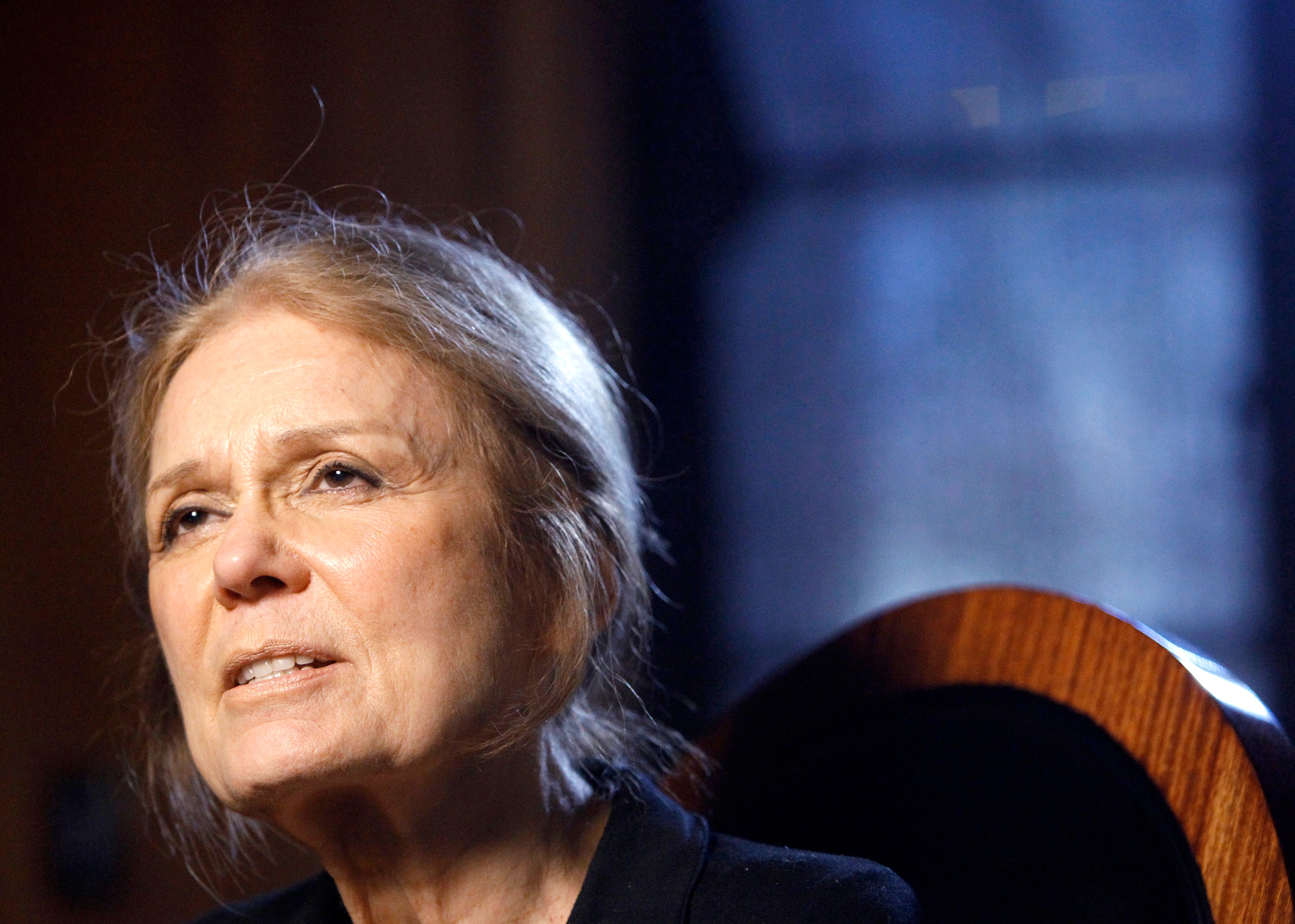
About this episode
How did Gloria Steinem help bring New York Magazine to life, and forge her own path with Ms Magazine?
Get every episode summarized
Each time Radio National Breakfast publishes, we email you a written briefing from the transcript — the topics, who appeared, and any specific claims, with the ad reads skipped.
Email me new episodesFree for 3 shows. No card needed.
Hosts & guests
Transcript ready
80 searchable segments. Every word is indexed and playable.
Full transcript
Radio National Breakfast — The life of Gloria Steinem. Machine-transcribed; use the interactive transcript above to jump the player to any line.
The face of the women's liberation movement in the United States, Gloria Steinem has died at the age of 92. Sally, the trailblazer activist, journalist and author, who famously said, don't think about making women fit the world. Think about making the world fit women. Gloria Steinem, she's died at a home in New York City. She first got published in her 20s in the 1950s. She was travelling India. She wrote this travel guide for the Indian government. But it was her work in the 60s that really turned heads. She went undercover in Hugh Hefner's Playboy magazine, getting a job as a bunny to report on the conditions those women were facing. So I ended up under a different name with false identification. So did you, they have to go in and line up? How did you go play? Well, they were taking anything that moves. I mean, it's... LAUGHTER It was... I'm telling you, it was the worst job in the world. Really? It was, you know, a disaster, as a job. Some of her reflections of the Hudson Union a couple decades back.
She said that the women were poorly paid, often less than what was advertised. They were overworked. And many of them left after a month, unless they were promoted by dating some of the men in the house. It was a few years later, though, in the 60s and the 70s, when Steinem, who earlier had an illegal abortion in London, started becoming a really vocal campaigner for women's reproductive rights. Over the years, male-dominated legislatures and courts have tossed around women's rights like a political football. The current threat to the right to abortion in New York is the most serious and the most stark example of this kind of maneuvering with women's lives. Sally, one of the many events that she spoke at that one in the 70s in New York City, when she really started considering herself an activist, particularly on abortion rights. And Luke, her part of her activism as well was blazing a trail for women in media. Tell us about how Ms. Magazine came about. So she found it this in 1971. It started off as this end-year end supplement in the pages of New York Magazine.
Around that time, she actually explained to her thinking to the BBC. The kind of foundation of this magazine and makes it different from others is that it simply considers that women are human beings. That doesn't sound very revolutionary, but it is. Because the other magazines are still arguing about it. I spoke with Christopher Benanas. He is a New York magazine's city editor. He's worked with Steinem. He's actually interviewed her and he explained how she helped actually get New York magazine off the ground and then later on her own projects. In 1968, when New York Magazine was founded, she was there from issue number one. And in fact, not only was she involved with our editorial operation from the beginning, but she helped make it happen. Our founding editor, Clay Felker, used to take a couple of writers to lunch with potential investors. Gloria once said in an interview that their role was tap dancing for rich people. Anyway, this magazine got off the ground. Over those three years, you see her sort of evolved from columnist into burgeoning activist.
At the end of 1971, she came to Clay Felker with a proposal. She said, I want to start a magazine for women. You need a year in this year. How about this? You get, I think it was 32 pages, that you can run as a sort of pull out center of section of the double issue at the end of the year. And that'll launch us. And he said, okay, I'll do it. Without any pushback. You get your going. No, no, he needed something. And she had a good idea. And he also, like, I think, you know, understood that she had something there. She clearly did. Really fun chat with Christopher that you'll be able to hear on ABC Listen Later on. After at a clock, Sally, we will be hearing from the National Women's Political Caucus, one of the organizations paying tribute to Gloria Steinem this morning. There's also the former US Secretary of State and First Lady Hillary Clinton. She has called Gloria Steinem one of the architects of the entire structure of women's equality. Also, tributes being made by Kamala Harris, Nancy Pelosi, Megan Michael, and other prominent
US women as well. I'll have plenty more on that across the program, Sally.
More episodes
More from Radio National Breakfast

Breakfast Wrap: How unified is the Pacific?
Radio National Breakfast

The Friday Political Panel
Radio National Breakfast

Gloria Steinem's legacy: reflections from the National Women’s Political Caucus
Radio National Breakfast
Palau President defends turnout at Pacific Island Forum
Radio National Breakfast