Loading...
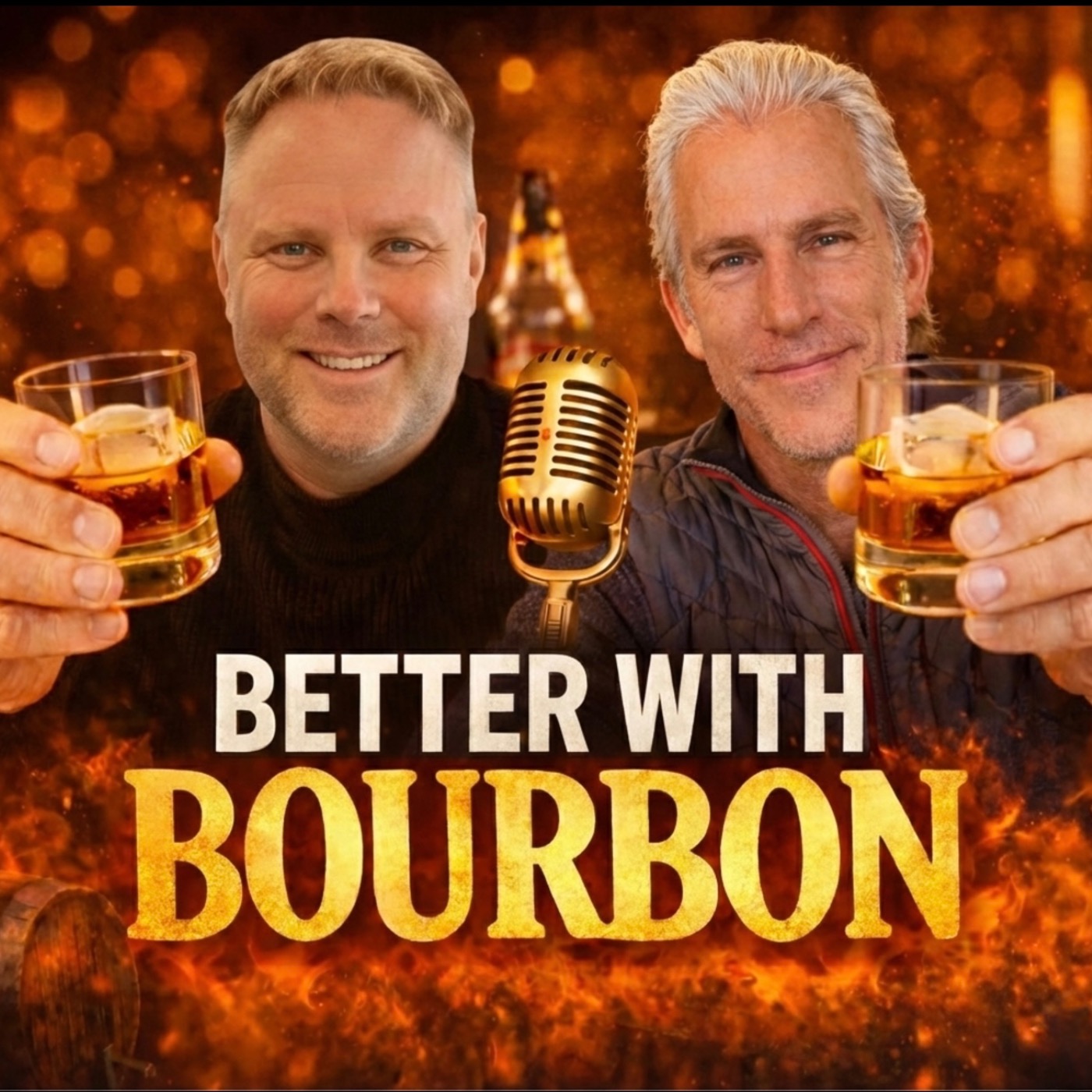
About this Episode
A smooth first pour to kick off the show. Brad and Deken introduce themselves, share why they launched Better with Bourbon, and dive into this week's biggest headlines across finance, AI, and sports. They are joined by Dave Brocious, Managing Partner of Sky Point Crane, for a sharp conversation on building in high-stakes industries and his take on the stories of the week. Grab a glass of your favorite bourbon, and settle in as the conversation starts here.
Also, be sure to listen to the very end and check out the Out-Takes at the end where we discuss the negative comments we have gotten so far!
Legal Disclaimer:
The views and opinions shared on the 'Better with Bourbon' Podcast are our own and those of our guests. Nothing we discuss should be taken as financial, legal, business, or gambling advice. Don’t make investment, business, or betting decisions based on our conversations as you should always talk to a qualified professional. Listeners must always drink responsibly, never drink and drive, and only consume alcohol if you are of legal drinking age.
Disclosure:
Some of the images in the 'Better with Bourbon' Podcast were AI generated and/or edited with AI. The 'Better with Bourbon' cover image was AI generated. The voice overs are original AI generated voices. And the 'Better with Bourbon' theme music is an original instrumental song that was created using AI.
Advertising Inquiries: https://redcircle.com/brands
Privacy & Opt-Out: https://redcircle.com/privacy
Transcript
And now, it's the Better with Bourbon Podcast, with Brad Martinot and Deakin Palmer, fast thinking and smooth drinking.
The views and opinions shared on the Better with Bourbon Podcast are our own and those of our guests.
Nothing we discussed should be taken as financial, legal, business, or gambling advice.
Don't make investment, business, or betting decisions based on our conversations as you should always talk to a qualified professional.
What's up, Mitchell? Welcome to The Better with Bourbon Podcast. I'm your host Deakin Palmer.
And with me is Bradley J. Martinot. He found me in Creative Mastermind behind this endeavor.
Bradley, this is our first episode. We have some stuff we're going to do tonight. We're going to run through a couple stories.
We're going to talk a little bit of sports. We're going to talk some public policy.
We're going to do some business and finance, a little bit of technology. We have a first guest of our first friend of the pod.
And we're going to open a bottle, do a little bit of drinking. Do a little drinking.
Yeah, but since this is our first run, why don't you give a comment or two? What led us to be here tonight? What led to The Better with Bourbon Podcast?
What are we trying to accomplish with this thing?
The same thing we've been accomplishing, I don't know, the last year or so when we meet every Wednesday.
And we talk sports, ball, takes, and tech. Especially A.I. has been a major force that's going on right now.
And somebody very wise said maybe you two should get in front of a camera and do this. So we said why not?
We'll just take our Bourbons and move them in front of a camera. So here we are and we're going to do it.
Yeah, who would suggest such a thing like we need to do more talking.
But yeah, we're going to introduce friends of ours. We're going to talk about our lives. What we're doing, we're going to talk a little bit about business.
But big business around here, we're coming to you live from Indiana, Pennsylvania.
And there's no bigger news right now here in our little town than what Coach Signati and the IU, Indiana University from Bloomington, Indiana.
What they did the other day, not Kurt Signati. Kurt Signati is one of the Indiana's finest and favorite sons.
Brad knows them well. Where did you watch the game? What did you think?
Well, we started the pre-games at our Martini Monday familiar spot, of course.
Martini Monday. Yes. But then I ended up just watching the game right here by myself. I wanted to take it in every moment of it.
All your best friends. Yeah, exactly. Everyone.
Yeah, I had to watch with the lady in my life. I'm a little bit asleep there toward the kind of the first part of that second half.
But she woke me up because she is a rapid football fan. There's a lot of yelling and jumping around.
And she got me back in ball. Right in time to see my nose would do that fourth down.
I play where I hold myself over there. You know, play for the ages.
Yeah. I mean, those aligned was crossed. Yeah. Well, clearly jokes like that.
We're going to be stuck doing some drinking. Well, I hear you. I mean, we need to, we need to get to the bourbon sooner than later.
But, you know, let's start a little tech to what's going on.
And obviously, Davos and Switzerland right now is where everybody's meeting.
Yeah, Davos World Economic Forum happens every year.
For those of you who may be.
It's a new idea. Davos is basically a giant economic meeting full of global leaders, politicians, policy makers, CEOs from all of the fortune.
100 global think tanks, lots of large nonprofits together to talk about how they are going to save us across the next year.
What we need to be thinking about what scares them.
So there's a couple of big obvious headlines coming out of Davos this year.
It would be impossible to talk about this without talking about what's going on with Greenland and kind of the political ramifications.
Obviously, the European leaders are with an arm.
Showing some solidarity against the President's ideas about what we would do with Greenland.
If we get a hold of it, Bradley, jump in here and give me some ideas.
What are you thinking? Before we get there, did I miss the memo that we're not doing our hair for the podcast?
I just want to make sure, because right now, I feel like between the fire and the, and the, and the frog one,
we got the heat minds are walking on to stage and then just taking over.
It's my homage to the Icelandic people to show solidarity.
So let's get back to Greenland.
You know, I don't know.
Obviously, I think it's mineral rich.
The tech, the big tech companies are investing heavily into it right now.
So I think there's, there's more at play than what meets the eye and it's not as altruistic as it looks.
Yeah, I, you know, I think of this thing.
I think big picture.
We've got to take a step back from the obvious objection that we can make to everything that the boss is doing these days.
And remember, we got Alaska in a particular way that called that stewards folly because it was so stupid when he did it.
Long the holds greatest acquisition of land our country remained.
We acquired Texas, Tejas from, from Mexico years ago, both of these really strategic purchases.
So I, you know, I'm not sure whether right now it's necessarily the time for us to be making big plays, but it's certainly not unprecedented.
And there's a lot of economic justification for why something like that would make sense.
So we're tracking it. We're following it.
Jerry's still out on this one now.
What's it going to cost?
Right? So I just put it on our tab.
Yeah, but that's actually a good question.
If you were, if you were a resident of Greenland, there are 50,000 of them.
What, what would the number, what would the number be for you?
Like what, I mean, let's assume that, let's assume that you would have in Greenland what you have here.
Okay. Which, I mean, I would imagine that your spread in Greenland would probably be acres large.
Oh, I have a castle built out of my cubes.
And I would think, and it's mineral rich and another, but not we know it's mineral rich.
So being over the number before, well, I think the number in my background coming from the oil and gas, you know, attorney and me, I'm saying it's not a one-time number.
It's not front number.
And I want to roll you on everything that's taken out of the ground.
Say, now you're talking, right?
Yeah, now you're talking.
I mean, that's, that makes a lot of sense.
You know what? This actually makes, makes for a great opportunity for us to maybe take a quick time out, but then bring in our first ever guests.
With, uh, dear friend to show.
Dear friend.
And also on, yeah, this company is, uh, our first, first sponsor.
For sure.
I'm sorry to have him here and we'll come back with some bourbon.
He's bringing it back and he's brought a bottle of bourbon.
And we're going to talk about that too.
Yeah, right.
So you mentioned oil and gas.
Maybe you can chip in on a little bit of this.
Okay, but quick time out.
We'll come back soon.
Our sponsor, Skypoint Crane.
Their crew is trusted with the biggest lifts in America, power plants, stadium builds, and even the NFL.
Honestly, they can probably hoist a full bourbon barrel before breakfast.
Alright folks, we're back.
Better with bourbon.
We did a little bit of, uh, kabootsing, covered a couple topics.
Definitely needed to drink at this.
Yeah, I went.
So, uh, we got a bottle out, but before we get into the bottle, um, want to introduce the gentleman that brought it our first ever,
Gaston Butter with bourbon.
Dave Brochus, Dave, join us.
Welcome to the set.
Thanks for having us.
Thanks, Bradler.
Thank you.
Thanks so much for bringing the drinks here.
We got you one here.
Yeah, absolutely.
We just do a quick tour.
Let's just do this first time number.
Absolutely.
We're making, we're making, making drafts on your podcast.
Thanks, bud.
Thank you.
It's good to be here with you.
Appreciate your reaching out to, uh, you know, it's, uh, you know, you know, I've been friends with quite some time now and, uh, you know, we met back in the day.
When the kids are playing ball, uh, and haven't looked back since.
I mean, we're in a normal text chain every day.
If we don't see each other, we were certainly staying in touch, you know, that way.
But, uh, you got big things going on.
Uh, you know, let's get right into it.
I mean, with Sky Point and Crane and everything else going on.
Yeah.
Uh, you're in the right spot at the right time.
Uh, amazing.
Good moves.
Tell us a little bit about it.
Yeah.
Um, um, just from an entrepreneurial standpoint is just one of those things where you try to position yourself at the right time and fade.
And sometimes you make a decision and you're not sure that you're going down a right path.
And one of them was, um, you know, when we decided to start Sky Point Crane late 2016, early 2017, coming out of, uh, you know, working in the Marcello Show industry and different clients and stuff that I've met with my partners.
You know, that we were talking with one of my best friends, Brett, we sat down and different folks.
You should start a crane company.
I'm like, you're out of your mind.
Why would we do that?
And Marcello's industry was down gas prices were down and, uh, didn't right?
No, you were quarterback in high school.
Yeah.
You want to receive a redruption.
Right.
Exactly.
Exactly.
That's crazy.
How do you, how did somebody get into the crane business?
Did you have like a starter crane before you got into the crane business or if somebody is like, yeah, you should just go buy a crane.
Like, how does that, you mentioned, how's that conversation play?
How, like, why?
Uh, it was, it was wild.
Um, I was in a bunch in with, uh, one of our clients in the Marcello industry.
I worked for the regional trade association and he was a CFO at a major crane company at one point.
Now he was a service provider in the oil and gas in a Marcello.
And we're just having lunch, just talking just like we are here.
And, um, he goes, you should start a crane company.
I'm like, you're out of your mind.
Right.
Didn't thank anything of it two or three weeks later.
I mean, my friend Brett for lunch, he's a general contractor.
Been in construction for 25 years.
And we're, um, and just like everybody knows, what were you doing before that?
You were digging pitches, taking photographs.
I mean, I, yeah.
No, I was working at a regional trade association.
Second tolerance.
Yeah, exactly.
So it was the Marcello Shell Coalition.
They were one of the founding trade associations when the unconventional oil and gas hit.
Brad, you're ultimately familiar with that with the law firm that you came out of.
One of the early pioneers in oil and gas.
And, you know, we used to represent that association back in the infantry.
Infant days.
Yeah.
So, um, anyways, work there, you know, previous to that was in the automotive industry of PPG.
So I had a lot of industry background.
So I didn't, you know, really register, you know, the guy that told me they're at lunch.
So what Matt with Brett had a lunch and he was just talking about his challenges.
General contractor, small business, you know, he was growing and saying, hey, I'm having problems.
The micro story is not enough electricians, not enough plumbers, not enough crane companies.
I can't find vendors and contractors and kind of drawn on a map or a little map.
And hey, these are some niches that I think are going to develop even more from a construction standpoint.
We should look at starting companies in these very snitches around the construction side.
We should start a crane company.
And I'm like, that's weird.
I just started that two weeks ago.
And then it just kind of like your podcast, like, well, why not?
You know, we don't live once.
Got to take some risk.
And I've been hearing that.
Completed risk.
And then when you're hearing it, I think, you know, there's something to it, right?
And especially when you're hearing it from, you know, people in the industry.
People in the industry that are familiar with it.
Yeah.
Long-term contracts.
It has a nice thing to it.
Yeah.
There's no heavy industry you don't touch.
And you've done some really fun stuff, too.
Tell us about some of the fun stuff that you found yourself.
Yeah.
So some different events that we've been involved in as well as customers.
Probably one of the most memorable was back in 2020.
You know, we got, I was exposed to some of the folks in the political world, you know,
with the trade association we were.
It had Donald Trump in one of our, you know, chill forums in Pittsburgh.
He came as a speaker.
And so I got to meet different folks that were in the political, you know,
side of the business, which I had never been involved in before.
So it was a learning experience for me.
Tell us when you had coffee with Nancy Pelosi.
Oh, that was never.
That was.
That must be.
Not being from oil.
Yes.
Yeah.
She's not a local oil gas industry.
So we, so anyways, 2020 election comes around and somebody that I had met
through my own gas days had my fellow number and said, hey, we're going to rally
with President Trump, we're coming to Butler airport.
So this was his first trip to Butler, all right, before this past summer.
So this is not the one where he was.
It was shot at.
Right.
So this was the Butler airport.
And he said, hey, we need cranes to fly the flags behind the stage at the presidential rally.
I thought it was to bring his ego in.
Yeah.
Great.
That's what.
So you got your cranes.
All right.
All right.
So you were just the flag up behind.
So your crane company was the ones hoisting those legs that is still memorable.
And in fact, I think it's still on some of these social media sites.
Yeah.
If you go to Donald Trump's personal Twitter ex profile, the background of his ex profile,
and this is just something that I feel honored by and I tell my kids about, like, you know,
what, this is something that you can never have taken away from you.
And I feel proud of what we've done and the employees and the folks in our company.
But his background on his ex profile is of that Butler rally.
The sunset was spectacular that night.
It was an ock.
It was Halloween night, October 31st, on a Saturday, beautiful night.
They were bringing in helicopters flying in.
It was a spectacle.
It was, it was an entertainment show.
It was unbelievable.
This isn't the first time you've been honored with something like that.
You know, your picture was my back and screen saver on my computer for a buck.
I'm sure it was.
For a buck, two years.
I'm sure it was.
Making all the memes that you did.
This is going to be recurring your fame.
This makes you want to say thank you, Pennsylvania, for taking such nice care of us somehow.
If I may make a Pennsylvania.
No, here's your Pennsylvania.
It's Pennsylvania.
We are very fortunate.
And we will be talking about a lot of the cool things that come from Pennsylvania, including Mr. Palmer here.
I'm not originally from Pennsylvania.
I think you are going to do that.
Yeah.
You grew up right in the city.
Yeah.
In a county.
Yeah.
Right up.
And then you graduated with how many?
120 in our class.
Wow.
Small school.
Well, it's the troubles here.
You know.
Yeah.
It was funny from over in La Trobe.
You know, closer to the big city where I'm from.
We used to make funny, you guys.
It was like a small school.
Some day when we talk about the glory days, we can talk about when we came over and used to play Indiana.
And you can talk about the basketball.
What was your sport in high school?
Your football.
Yeah.
Your football.
Yeah.
We didn't have a lot of options at the school.
I think we're ready to go.
Yeah.
Yeah.
Yeah.
Yeah.
That's great.
So you did a little bit of work with the US Open this past year.
And you're going to be involved with some of the setup and the heavy stuff associated with the draft coming up in Pittsburgh in the spring.
Yeah.
Yeah.
Man, who'd ever be in the crane business for so sexy?
I mean, not.
I mean, it's very sexy.
Next thing you're going to do, so good, Brad's going to be writing a book about how to make use AI and make crane work.
That's awesome.
I would welcome you out next week.
Yeah, absolutely.
Yeah.
The US Open, I actually have to thank Brad and my other buddies, Tucker, it really kind of got me exposed to that.
My son, Drew, is an avid golfer.
I was not.
We didn't have golfer in my high school.
So he's, you know, a golfer here at the club that you guys are all sort of members of.
And Brad and Tucker, like, hey, you need to get him involved in the Western PA Golf Association Tri-State Golf.
Absolutely.
He would play tournaments.
I was totally unaware of all of that.
So, hey, you guys say, hey, sign them up for it.
So I sign them up for it.
I start getting emails.
Hey, Tri-State Golf is doing a youth night at Oakmont.
All right.
Drew, this is an awesome opportunity.
I've been there, played there with clients when I worked at PPG.
So we go down, you know, buddy of his, his dad, we go down, have a fantastic night at Oakmont.
Hup and you know, the kids never been there before to walk through the halls of Oakmont.
It's a museum, right?
And just, those kids are just in awe.
So while we're there, you started, this was in 24.
You started to see there was paraphernalia around the club.
The merchandise shop was populated with, you know, US Open 2025 in Oakmont.
So, didn't think anything of it other than telling it was,
always, hey, you need to sign up as a volunteer and be a great experience.
You're both on a high school golf team.
This would be awesome.
Go home, take in the night, think, hey, this is awesome.
Next morning, wake up, I go into work mode, I'm sitting down in cup coffee,
and I'm like, well, heck, they're going to be cranes.
They're literally, because I've been to the open for four, what it is they open on.
They're going to build a city around the school course.
So I start thinking like an entrepreneur, they're going to need cranes,
they're going to be offloading equipment, they're going to be building hospitality,
tensed, everything, generators, HVAC units.
So I'm thinking, all right, a lot of it is.
So I literally went, the card that I took head, like info at US Open 2025.org,
a generic email box that I just sat down, wrote a cold email in five in the morning.
That's too good.
That's amazing.
Hey, local companies, was it this event at Open on last night with my kid,
saw you're coming, we'd like to offer our services, you know,
please give us a call, we're fans at golf, just made it like family friendly.
Nine o'clock that morning.
Next morning?
No, that's same morning.
I'm excited at five in the morning.
I get a call from you.
You don't open five.
I need to go back to the coffee.
Yeah.
You get older, you have.
Yeah.
So I get a call.
I see the summer come out of Philly.
Hey, it's so-and-so.
I'm the operations manager for the US Open with the USDA.
And I bought, literally, I bought my chair.
I'm like, that is so awesome.
And then I just snowballed from there.
And we got in.
Here's to that.
That's awesome.
That's a great story.
Great take away.
Thank you.
Thank you.
Thank you.
Thank you.
Thank you.
Thank you so many pictures as you're working on the biggest of the grandstands.
And that was on number 13.
And that was quite the feet because of the elevation changes.
Yeah, it was called the sweets on 13.
So it was a par three.
And the hospitality building basically that they built started at the front edge of that
tee box at the par three went clear up to the right edge side of the green.
So it spanned the entire length of the fairway.
And it was a double-decker sweet.
So he said, we've built a double-decker sweet earlier at Pinehurst.
And no, I think they had like 20 sweets in it under 15.
And he goes, the USDA is just like, keeps getting better.
Hey, can you build it better?
Because they kept selling the sweets out.
So they had 42 sweets, two levels.
So that was the only two level double-decker sweet on all the vote on 42 sweets.
And then, you know, he showed me what the price was saying, hey, the entry price,
the year, whatever, 30 some tickets a day, Wednesday, Thursday, Friday, Saturday,
Sunday, Parking, whatever.
I think the starting price is like 180, 190,000 times 42.
So you started doing the math and you're like amazing.
And people were just so excited because golf is just such a great sport.
We were there Sunday and made great use of the structure that you built.
Thank you, Rod Grantler for having a ride down.
But yeah, that structure, the one that was horrible and the finish.
But the fit, yeah, the absent that sort of set up, be in there for the finish, never would have happened.
Because it just wasn't, you know, just being out and watching when you could be home watching.
Just it was a, the calculus didn't make sense unless you had a building like that to go into.
So we were there and we could see it.
We actually finished it in Permanis down at the bottom of the hill.
Perfect.
I mean, you should have seen the crowd in Permanis.
I mean, it was great.
I mean, watching in Permanis, it would be actually green side because of people that were there.
We were there that day, but we were one of the folks that went and bought another shirt out of the merchandise tent.
That got wet too.
And I'm like, all right, the whole family is like, all right, we're going to finish this up.
Thank you, Pennsylvania.
And I regret going home because I think that was one of, if that is one of the top major finishes.
That was on the final cut without going into any kind of, you know, sudden death play.
Yeah, and who thought they would ever get the course trail?
Like, we were there.
I was there with my son and his buddy, you know, so we got tickets of being a vendor there.
And when you see crews with squeegee, squeegee in the fairway, squeegee in the greens.
And it's four o'clock, five o'clock, and you're facing dark.
I'm like, there's no way they're going to get this course ready to finish it, which is amazing.
And it was beautiful.
It was competitive.
It's unreal.
It made some incredible changes to open on over the last few years.
Yeah.
Just make that course so great.
Guys, we got to take a break.
We'll come back up, finish it up a little bit more business.
We'll talk a couple of current events.
Maybe you can ship that into us your phone.
A couple of things.
Absolutely.
All right.
All right.
Our sponsor, Skypoint Crane.
Their crew is trusted with the biggest lifts in America.
Power plants, stadium builds, and even the NFL.
Honestly, they can probably hoist a full bourbon barrel before breakfast.
The Fnx, it's the biggest lift ever.
Sponsor, Skypoint Crane.
Their crew is trusted with the biggest lifts in America.
Power plants, stadium builds, and even the NFL.
Honestly, they can probably hoist a full bourbon barrel before breakfast.
Okay, we're back.
We're back.
Better with bourbon, the fires, rage in, our ice cubes are mountain, we're doing a little
bit of drink.
And so we're going to talk a little bit through, we're going to talk through a couple of
topics.
We're going to, you know, we have, we have some local expertise here on this show when
it comes to all things AI.
So let's touch on AI, Bradley, what's going on in the AI world, what are you seeing?
Well, what are the major headlines this week is open AI?
Say I'm Altman, the concerns are there with open AI, chat cheap, GPT is, they're going
to run out of money again.
I'm going to have to go back to their investors for more money.
So let's, let's, let's, so when we say they're going to run out of money, what are they
doing with the money?
What do they need more money for?
Well, they're investing heavily in everything, infrastructure, especially building data.
So building it out, right?
So I don't see that being a problem, personally, Microsoft's a 28% owner in the company, they're
not going to let it fail.
Then you got Softbank being the next biggest, and then you get down the line of a few others
that are very notable, they're all in, and chat GPT is the standard in generative AI
right now.
So it's just like you're too big to fail, I do think so because it's, it's getting better
and they made some great improvements.
One of the things they're just announcing the other day that I thought was really cool
is that there's a wearable device that allows you to basically have AI interacting with
you, not on the screen, not through voice, just in presence and being with you.
Hmm.
I could think of some things that I would like AI presence to help me with throughout
the day.
More or more.
Okay.
All right.
So what you're saying is, what you're saying is to support these sorts of futuristic applications,
we need a ton of compute, which means we need a lot of data centers, which means we've
got to move a lot of shit around any input, any insight on this process.
Yeah, I've heard the same, you know, when you look at what they're trying to do is it's
going from just having an AI tool to getting into devices similar to Apple, having that
strategy of having AI enabled hardware.
My wife's a nurse, she told me they're looking at like a chat GPT that's geared towards the
medical side of things and then I've even heard the enterprise stuff where they're trying
to take chat GPT and take it to countries, not just corporations where they're taking
their model and saying, hey, we want to take it into a corporation.
We want you to take this as part of your national strategy, which is interesting.
What do you think about that?
Just big picture, good, bad, indifferent, what do you think?
Well, I think every country is trying to figure that out when you look at the military side
of things, the economic, strategic play, you know, just, it's a different one.
When you speak about that, our country just adopted rock with Elon in the military and
I think Elon gave him, I don't think it's for free, but it's a pretty good enterprise
price.
Yeah.
It's very recent in the last few weeks, so AI is definitely getting embedded into all
the geopolitical atmosphere.
It's moving on so fast at some really cool meetings this morning about what's happening
in the AI agent world and the mesh world.
There's great things to come.
Well, so there's two things.
So if you talk about open AI offering chat GPT as a tool to a country, there's two things
that immediately come to my mind, what are they giving, what are they getting, right?
So they're getting the ability to train, right?
There's two things that'll allow large language model does, right?
It's the training, it's figuring out how to interpret what humans want from it, and
then there's the inference, which is telling humans what to do, right?
So, and why is the inference important?
Because that is all the knowledge they've gained.
And they're now using that knowledge to give them the next answer.
Yeah.
So why would they give it away to a country?
Robust training data, every time that model interacts with a kid in school, somebody
at work, somebody at home trying to cook a recipe that they don't know, it's more training
data.
So it's not just a one-way relationship and there's just some interesting questions about
like when we're talking about age data, like that data that's coming off of our phones
and our appliances and our cars and stuff that we interact with every day.
Like right now the assumption is that the technology provider, the vendor, the LLM owner owns
that data, and you know, I'm a big believer that someday we as individuals have to own
that, like we own our own healthcare data in the hemisphere.
I mean, they're going that right now.
Well, that's optimistic.
My latest book that I get into, I forecast a whole different future in 10 to 15 years
data, it becomes a new currency, and data is it.
So by doing that in embedding big tech, and I call it big tech, because it's the top
five to ten technology companies that are embedding their data sources and everything
we do.
Whether it's this podcast, whether it's your crane company, whether it's any company,
schools, government, it doesn't matter.
Every little bit of data registers and becomes so important in the algorithmic state that
...
Well, and that's from what I've understood of looking at it is the GPTs, right?
So you have chat GPT that's used by the everyday user, you know, the common, you know, everyday
individual user, but you can get the enterprise version of chat GPT for, let's say, better
with bourbon, becomes its own corporation or skypoint crane.
And what they're saying, if you sign up for those enterprise models, is that you own
that data, and it says explicitly on the screen, because I've signed up for some of them.
We are not going to use your data if they connect to your Google Drive, and they want to
look at your internal requirements, that's what they say, so this is the trust part.
No, but this is, you don't sit, look what they say, you look what they're giving you
in your vendor agreement, your third party agreement, and as a lawyer, I'm saying, that's
where you have to look at is where is your data going.
So if you're on the enterprise level, where you're going not just for the free mode, which
most people are, but you're going to the enterprise mode, usually it is a closed system,
and it's going to be...
But that would be the same for these countries.
Yeah, might be the same.
You're not going to want their data on the end use, and they're not normally going to
be.
My understanding is that it's anonymized.
That data is used for training, but it's anonymized, and it's never attached back
to the individual with which...
But if they break a sacred vow, they're done, their brand is destroyed.
And one of the things that Sam Altman has asked for at OpenAI, and I actually wrote an
article about six or eight months ago, six months ago, is that there needs to be a uniform
privacy law applicable to AI, so that the user that is inputting and thinking that they're
just talking one-on-one with the chat, GBT's, or the co-pilots, or the Gemini, that their
information is going to show up on Google.
It's not going to be used in a civil or a criminal case, God forbid, they're doing something
wrong.
Right.
But that's a confidential information going back and forth.
It's like that.
It's like that.
And if Apple can be compelled to unlock a phone, what would stop Google and Gemini or
OpenAI and GBT from reverse engineering, somebody's comments before they went on a murder
spree, and that's going to be tested by time.
Yeah, of course, of course.
Yeah, this raises some really interesting questions about what I think really drives this.
This is no longer a technology question.
This is a question of the delicate interplay between individuals' rights to their own data.
Then national rights, when you talk about what AI, and we talk about how AI and edge data
could create mobility and bring costs down for freight and some of the economic boom associated
with that, how that conflicts with states' rights.
And when we have a situation right now where we have one party in charge of all this stuff,
there's some inherent conflict that's keeping progress from happening on the AI, particularly
when it comes to AI across state lines and the right to regulate AI, is that a state's
rights issue?
Should it be a national strategy?
Should it be like banking?
Where we have kind of a half-see, half-see approach?
I don't know.
I think the answer.
But something has to happen.
It's going to be.
Oh, we're at a breaking point.
Yeah.
And the Trump administration put down just a few weeks ago with their executive order
that they're going to take control of this, and it is a national security issue and
the AI race.
It is not a state issue, and they're going to litigate it.
So we'll see what comes.
Yeah, this is definitely something we're going to come back to big time, because this is
a topic that we have a lot of our own personal irons, we do fire on.
I got some work, Brad's writing a book a day on the topic, so let's take a quick time
out.
We'll come back and we'll sew this up with one more topic and some send-offs here in
our inaugural Better with Bourbon podcast, baby.
Cheers.
Cheers, boys.
For sponsor, Skypoint Crane.
Their crew is trusted with the biggest lifts in America, power plants, stadium builds,
and even the NFL.
Honestly, they can probably hoist a full bourbon barrel before breakfast.
All right, we're back, better with bourbon.
We're going to make a fast and furious sprint to the close, Brad's got some announcements
he wants to make about just general show notes, Bradley.
Yeah, I think there's a couple people we need to definitely shout out that are very special
near and near to our hearts and to our feet.
To our feet, no.
Yeah, to our feet.
We got bourbon infused socks.
Bourbon infused socks.
Yeah.
Can I find the bourbon infused underwear?
Yeah.
Maybe later tonight.
But the socks are here.
They do smell very nice.
They smell like bourbon and kind of like the no-large.
Is that you?
Between the socks and the fire and the feet of Toasty and you guys at home listening might
have just heard a voice come from the ether.
What was that?
What was that?
Well, that's the third part of our crew and we would not be where we are without him.
He is the guy behind the lights.
Behind the film.
That's Perry Mirror and you know, one man production.
And you're beautiful, Perry, just as you are.
That's right.
Yeah.
That'll have more meaning later on, I'm sure.
Oh, it has meaning right now.
Yeah, we're going to get Perry infused speaking of infused into the conversation here
in coming weeks.
We're going to have him give opinions, hot takes, you know, reaction, yeah, reactions
on what's going on in the world.
So, okay, so now we got, let's finish with a little bit of a little bit of happiness.
We're happy.
We're drinking.
We're going to start off.
We're going to do start fun team.
We're going to fun buddy here.
Let's talk about the market.
The market's fun.
Brad, let's go on the market.
The market's been incredible, right?
Just every time you think it's going to be a bubble, it just keeps going up.
And one of the areas that have gone up and up and you called it a year and a half ago
and I got to get a credit where credit is, dude, commodities, especially silver.
Commodities are flying.
Yeah.
You were spot on with silver and clearly silver has a very special need.
Now more so than ever, with the AI world, there's a lot of need for silver, as well as
copper.
You get into all the different commodities, platinum, palladium, they're all, they're all
tingling.
Yeah, silver is really interesting because it's the most conductive of all the metals.
It's the one that carries electricity the fastest.
And it should be a sponsored silver with that silver here.
You've had this since junior year in college at Wake Forest, but yeah, I'm conductive.
But it carries a dual role, right?
So it's a monetary model.
We used to use it in dimes and quarters.
We don't do that so much anymore.
And all of my old ones, though, I think they're worth more than they used to be.
Yeah, right.
If you melt them down, but see that's the problem.
That was the first time we started printing money, so to speak.
And we took 10 cents of silver and turned it into 7 cents of silver that we allowed to
represent 10 cents.
And now there's no silver or silver anymore.
So they call it a monetary model, along with gold, but at the same time, it's very conductive.
It's used in solar panels and everything.
But yeah, if only somebody had told our friend, we're appearing in the end of a buy
silver back when it was, you know, trading at 13, 15, 25 bucks, we might hit a hundred
bucks an ounce here coming up now.
Here's something we're going to do some predictions here because we're going to come back
next week.
We might talk a little bit more about what we think is going to happen over the next year.
Right now, the silver to gold ratio is stretching down toward historic lows.
It was at historic highs about two, three years ago, and it had to revert.
So gold is stretching out, too.
Yeah, gold, yeah.
Well, gold for obvious reasons.
I mean, everybody's afraid if we're going to take Greenland, if we're going to take Venezuela,
if we're going to take all the chips out of China, which I think will be next.
Right.
You know, who knows, I could be ahead of us to take.
That's a cool take.
Yeah, right.
Yeah, we might just go take a take on ourselves.
Yeah, right.
Maybe we can buy China.
Yeah, right, man.
Right.
So it's good.
But yeah.
So we're going to talk a little bit about what we think might happen for the year next
week.
And maybe we could tease a couple of other future kind of topics.
We're going to talk about NIL and we do have NIL coming up because you and I have some
hot takes on that.
Yeah.
We got a good body.
We're going to bring on.
You know, in light and all of us, can you just farm more about it than any of us who
are speculating.
We're going to have more of the NIL collectives in any way in the nation.
So we're going to definitely have one.
Yeah, that'll be, that'll be fun.
So with all that said, here's to Beirut Bourbon because everything that we talk about
is always chairs.
Beirut Bourbon.
Absolutely.
In Beirut friends.
Absolutely.
Cheers.
Until next time.
Thanks for watching.
Like and subscribe.
The views and opinions shared on the better with Bourbon podcast are our own and those
of our guests.
Nothing we discuss should be taken as financial, legal, business, or gambling advice.
Don't make investment, business, or betting decisions based on our conversations as you
should always talk to a qualified professional podcast with Brad Martino and Deacon Palmer.
New episodes drop weekly.
Be sure to subscribe.
You know, you're making an impact across America, not America, we haven't recorded an
episode yet.
We already have four episodes.
We're really going to comment.
You do.
Oh, yeah.
Bad one, it doesn't fuck hold to you.
And you're on.
You're on what?
I should reply.
Where you on what?
I should reply.
Where you on what?
I should reply.
Where you on what?
And then it wins.
I didn't know Beirut's and Bud has done a podcast.
But I mean, is it on the...
It was on a few.
It was pretty tough.
Yeah, probably better with Bourbon.
It was on the one I advertised for Deacon when he was a...
It is...
I think Deacon midnight runner is all good.
Considering...
First each worldwide.
What is it?
We gotta do a beep.
We gotta do a beep.
I didn't know I had a one most really.
I didn't know Jeffrey Epstein's song for doing something.
You know what?
I didn't know I had a one most really.
I didn't know Jeffrey Epstein's song for doing something.
You know what?
You know what?


