About this episode
Get every episode summarized
Each time Clare FM publishes, we email you a written briefing from the transcript — the topics, who appeared, and any specific claims, with the ad reads skipped.
Email me new episodesFree for 3 shows. No card needed.
Hosts & guests

Transcript ready
175 searchable segments. Every word is indexed and playable.
Full transcript
Clare FM — Tesco Community Fund Backs Ennis Taekwon-Do’s 37-Year Community Legacy. Machine-transcribed; use the interactive transcript above to jump the player to any line.
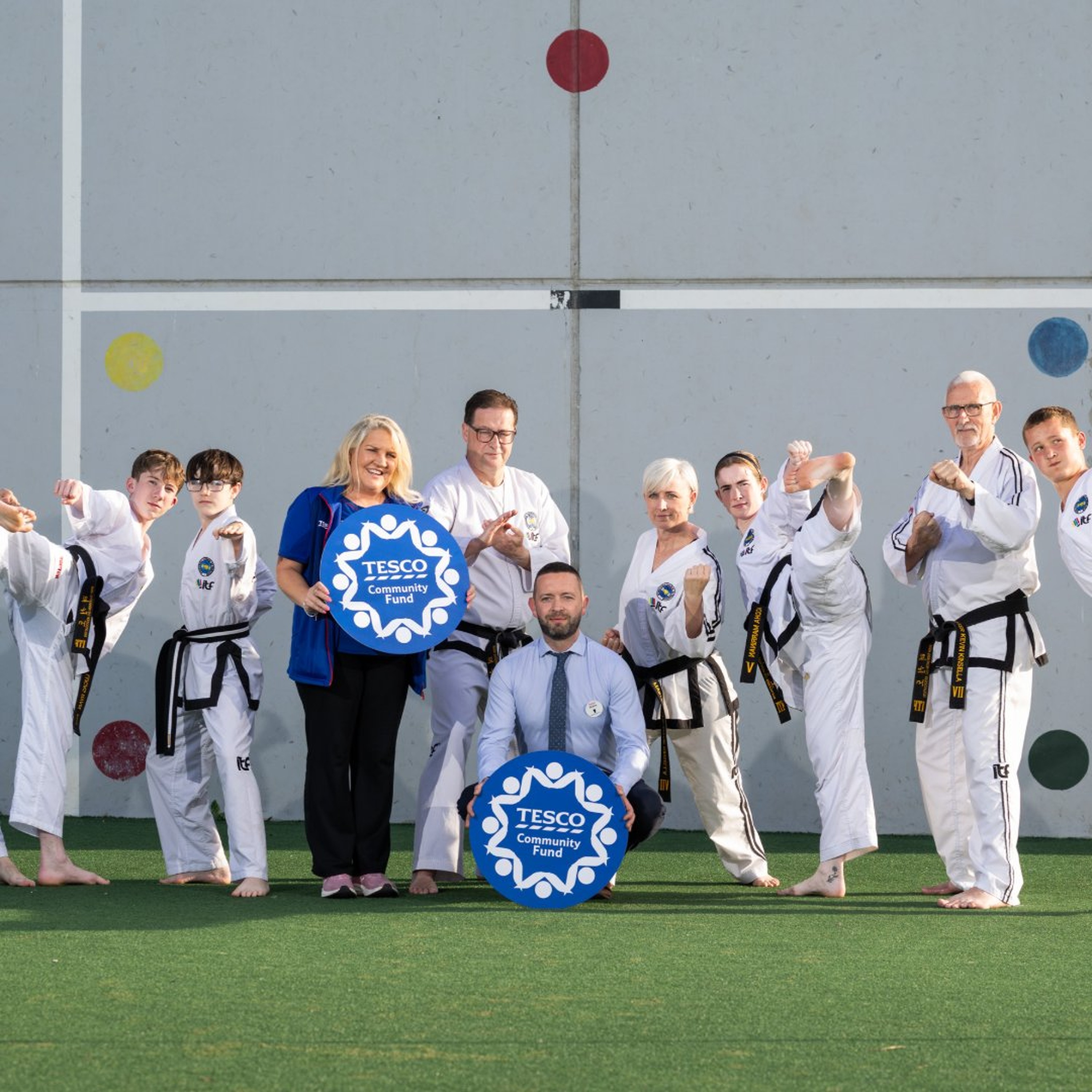
But we're turning to Ennis Taikwondo now, which has been part of the local community for 37 years, helping generations of children and adults build confidence, discipline, and resilience. The club has also benefited from the Tesco community fund, which has helped members with competition costs and fundraising for international events. Joining us now on the line is Ennis Taikwondo's Aida Marinin, a fifth degree black belt and patterned European champion to tell us about her journey and the impact the club has had on her life. Aida, are you great to have you joining us? Good morning to you. Thanks a lot, and morning. Thanks very much for being with us. Can you talk to us a little bit about how you got involved in Taikwondo? What first attracted you to it? And did you ever imagine when you started out that you could reach the levels that you have? Yeah, so well, I started my first five, so just me wasn't imagining where I would end up. But the club is run by my mom and my granda. And they are both masters in Taikwondo, so they're Kevin and Anne-Marie Tinslow.
So I think it was a big part in the household and my cousins also do it. So becoming a master means you have seven out of nine black belts. So I don't think a lot of people know that there's nine black belts. So it's been a lot of dedication over the years, and you see that, and you obviously want to be part of it. So yeah, so there's five of us going teaching in the club and it's a tight stay out of it when it's that close. Yeah, it sounds not only like it's hard to stay out of it, but that with all the family connections, it was kind of inevitable you would get into it. But it's not like it sounds more like an organic process that you weren't pushed into it. You kind of just naturally grew a love for it yourself. Yeah, there was never any pressure to join or stay going or anything like that. When I was growing up, I did do other sports and I was involved in competing in other things, but it comes to a choice when you start going to high level. And it was always going to be take on for me, but yeah, so just worked out that way well. And for people listening who, you know,
I'm sure a lot of you will all have heard of Taekwondo, but maybe they don't know the differences between the various martial arts, you know, either Brother of Jiu Jitsu, there's obviously karate, Taekwondo, what are what are what are what are what are I'm sure there are similarities, but what sets Taekwondo apart from those other two disciplines? Well, the main thing is the kind of the region. So Taekwondo is a Korean martial art, where it's karate, Japanese. So a technique they take, Taekwondo is kind of a mixture of karate and a old Korean martial art called Taekyeon. So the person who made Taekwondo General Choi, he had trained in both of these and he brought them together for the military to make a new martial arts and kind of a tactic. So with Taekwondo, we have two different kind of versions. So there's the one that's in the Olympics that you would see and then that's WT and then we have R1, which is ITF.
So in R1, we do the fighting more like kickboxing styles and then you have kind of the pre-arranged movements that you have and then we also do the parts where you break boards or jump a pie and try and hit targets that are two meters in the air so yeah, that's the kind of where it stands out. Okay, and it's an interesting invention, the kind of military angle of it because the values of Taekwondo are things like courtesy, integrity, perseverance, self-control and endometable spirit sounds like the kind of things they would say to you in the military as well. For you, what does it take to reach the levels you have, your European champion in pattern? So what exactly is a pattern's competition? So pattern specifically will be a pre-arranged set of movements you learn as you go up through each grade. So when you start off, they might have seven or 19 movements as you move up along and they go all the way up to have 72 movements. So you need to know them, the arrangement off by heart
and when you step on the floor, you're doing it besides someone else. So the judges are watching if you do something wrong, if you wobble, if you do something wrong, height, bring it from the wrong direction and looking for who kind of has the most fluid movement and power with it. So that's kind of what you're up against. So it is different to set more boxing, kickboxing, sparring styles. Okay, and the club, as I mentioned earlier on, it's long established, it's been part of the end of the community for the last 37 years since 1989 and I'm sure it's been a great place for, regardless of whether young people who get involved go as far as you or just with it for a few years and it's a great interest and pastime or lengthy passion. But even with clubs that have been around that long, needs help to keep it going. Obviously financial assistance is great and the Tesco community fund a support of the club with things like competition entry fees
and fundraising towards members traveling to events like the World Cup in Spain. How important does that kind of financial support aid particularly when competing at national and international level, which I'd imagine comes with with some expense? Yeah, it's hugely important because from competing personally, like you know the cost of associated competitions, travel, entry fees, that are really quickly for families especially when the young people are competing regularly. So support from the Tesco community fund really helps ease some of that financial pressure and encourages more children and young people to take part. And I think as well for the younger athletes, like there's often added costs of a parent or family member traveling with them. But I really think that family support is really important because like from my own experience when I won European championships, the first person I looked for was my mom. So when you're thinking about the younger athletes traveling internationally, it's really important that they have the opportunity if their parents or family they're with them because these are huge experiences for a young person and having someone that they know and trust can, I think it makes such a difference.
So like the funding has helped more of our athletes represent both the clubs and the community international stage and then even within Ireland. So hopefully for the World Cup in Spain and we're incredibly grateful for that because the support makes them opportunities accessible for more families. And I think it really shows like when you're going into Tesco, you know, like you see the kind of basket, you can put them in and stuff. But like, you know, every blue token does actually make a difference because those small contributions collectively are helping a young athlete kind of get to a competition, have their family, they're supporting them. And you know, it's going to be an experience that does remember for the rest of their lives. So it's nice to have that with them. Yeah, there you go folks. If you're in Tesco, something as seemingly simple as putting a blue token into the voting box as Ada has well outlined there can make a huge difference to a club like Ennis Taekwondo. Look, Ada, I appreciate having you on this morning on morning focus and great to get a bit of background on yourself and how your journey's gone and continued success to you. And indeed, Ennis Taekwondo and I look forward to seeing
what you're doing in the future and having a chat with you again. But for the moment, thanks very much. Thank you. Thank you. That's Ada Marin and their fifth degree Black Belt and Patterns Reppin' Champion in Taekwondo with us on morning focus.
More episodes
More from Clare FM

Conditions Not Dampening Spirits On Day 1 Of Amgen Irish Open
Clare FM
New Ennis Chamber President Optimistic Crusheen Rail Stop Will Be Reopened Durin...
Clare FM

Clare Adventurer & Charity Advocate Volunteers With Hell’s Kitchen In Ukraine
Clare FM

The Future of Disability Services - Week 1 - Disability in Clare – An Overview
Clare FM