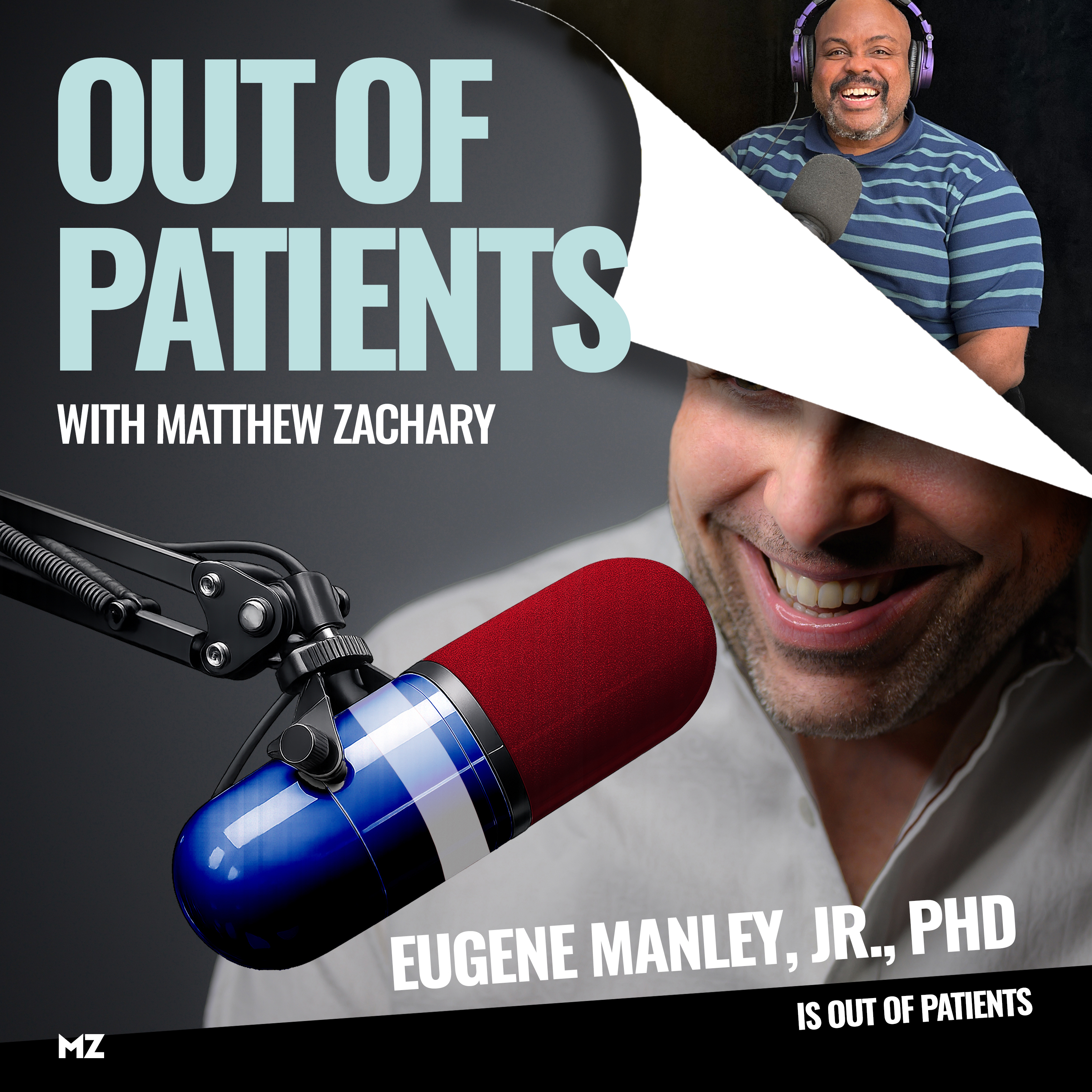
About this episode
Dr Eugene Manley grew up in Detroit in the 1980s cycling through emergency rooms 20 to 30 times a year with asthma and anaphylaxis while hospital staff talked past his family and buried them in paperwork they could not decode. He responded by earning a BS in mechanical engineering an MS in biomedical engineering and a PhD in molecular biology cell biology and biochemistry. Along the way he tore his ACL training for a jiu jitsu black belt worked 86 straight days in a lab during his doctorate and learned how academic and clinical systems punish people who refuse to shrink.
In this episode Manley walks through a recent post surgery ordeal at Mount Sinai Queens where staff falsified records attempted an illegal discharge and nearly sent him home on the wrong blood thinner. He explains how medical racism shows up in charts staffing and decision making and why measurable equity fails without accountability. Listeners hear how his STEMM and Cancer Health Equity Foundation builds pipelines for underrepresented students challenges clinical trial design and teaches patients how to protect themselves when institutions lie.
RELATED LINKS
• STEMM and Cancer Health Equity Foundation
FEEDBACK
Like this episode? Rate and review Out of Patients on your favorite podcast platform. For guest suggestions or sponsorship email [email protected]
See Privacy Policy at https://art19.com/privacy and California Privacy Notice at https://art19.com/privacy#do-not-sell-my-info.
Interactive timestamps
Jump to segmentGet every episode summarized
Each time Out of Patients with Matthew Zachary publishes, we email you a written briefing from the transcript — the topics, who appeared, and any specific claims, with the ad reads skipped.
Email me new episodesFree for 3 shows. No card needed.
Hosts & guests
Transcript ready
481 searchable segments. Every word is indexed and playable.
Full transcript
Out of Patients with Matthew Zachary — STEMM Cells and Broken Bones. Machine-transcribed; use the interactive transcript above to jump the player to any line.
0:00Hello friends welcome back to the show my guest today larger than life Dr. Eugene Manley stop by the show he grew up in Detroit with asthma anaphylaxis and a healthcare system that pretty much treated his family like a nuisance and then he answered all of that by becoming a mechanical engineer a biomedical engineer and a molecular biologist this man has earned three degrees before most people know what they want to be when they grow up he built something called stem with two M's science technology engineering math and medicine stem pipelines for kids who never get a break he fights for equity in lung cancer he launched the stem and cancer health equity foundation and he's currently dragging institutions into
1:05reality Eugene has survived medical racism academia and Mount Sinai Queens with a horror story that's totally worth listening to and unsurprisingly real he also earned a black belt before blowing out as ACL mid throw he loves throwing people we'll get to that later in the show and now he runs national summits he rewire systems he mentors kids and somehow still considers that a normal week in his life Eugene is the rare guest who arrives over credentialed over prepared and ready to shame the entire industry with work ethic alone my name is Matthew Zachary and this is out of patients fun fact you are I'm 51 years old my second Eugene ever what yes and I'm not that
2:09much younger than you no my first Eugene is a PTSD story from first grade that no one really knows why would they know that and I made a best friend in first grade name Eugene home we call them Oriental back then because that's what it was there's the fucking 80 so he's like I'm from the audience okay great Eugene home I don't know if you listen I haven't met I've seen the guys is 82 but you you make a best friend at a brand new school in first grade and then he fucking moved along island and I never saw him again I was heartbroken that this kid I met my best friend Eugene home went to his birthday came to my birthday I was vivid weird like memories of Eugene home and I grew up on Stan Island in the 80s when you it was habitable so just for the exterior like the island yes stench island and he moved away so you're my second Eugene do not disappoint me well I hope do not have give you PTSD we have something common which is asthma
3:18as a kid yeah mine was it excuse because I grew up on said statin island and the garbage dump the infamous garbage dump was a magnificent I don't know let's just the incubus of plague yeah I don't know what triggered mine I mean I grew up in Detroit I mean it was we were poor but but that was a chronic smoker and I knew where he was but he was out of the house when I was time I was three but I think we still saw him but it would I think maybe the smoking exposure just somehow overreacted in my body because I'm the one who had all the allergies in the family I had the anaphylactic allergies I had the asthma and you know when you have asthma anaphylactic it is never a fun combo no and these are the days away before Epipen yep yep and so I was in the hospital probably 20 to 30 times you were my asthma just so I was about 10 and I still have my asthma thank goodness it's under control now well I mean modern medicine right yeah yeah
4:21it took 40 years yep because the because the asthma medication we have in it was not great slow slow feeling how you how many of them I remember these names but when you're a kid and you have to take the puffy thing yep the um from goonies I'll be the raw self the kid from goonies with the puffy thing but when you're a kid you know when you have to take so many meds people don't realize a kid you remember everything because you have to edge your life your routine but yeah you don't have to take you don't think about it right now Detroit in the 80s right that's its own that's Robocop shit yeah that was um it was rough it was rough I I mean it's rough now but comparison yeah but at least downtown is booming is we from when I grew up like downtown is a night and day like you actually can go down there and stay and it's like it's own little man hat in the downtown I mean it's not welcome to yet but it's getting there but I mean when I saw bike lane I was like huh bike lanes I saw bike lanes maybe 10 years like what city am I in it's like when they changed the street lights the lamp posts I live in Hoboken for a stint in the late 90s
5:27after I was sick and they didn't have like lamp posts yet they'd street lights and then they started like paving the pedestrian walkways with brick and then the lamp posts went up and you knew right away something's going on yeah but uh yeah so Detroit grown up was very interesting because we were all over there poor it was everyone was collectively poor and you just my goal was just to get through I think maybe only three or four other people out of my neighborhood got out of it you just saw a lot of crime you heard a lot of shooting you saw a lot of drugs it was the crack pandemic the house next door burned down with a hot plate so it was it was it was it was crazy time yeah I hear you and the movies reflected a two at the time yep yep and sometimes art imitates life or whatever that saying as well yeah and uh I mean I feel like you've had like a sort of a variant of needle-degressed Tyson in your DNA since we were a little kid is that accurate yeah but I maybe Carl Sagan back then I wouldn't say I'm not gonna talk about space that's not my space oh god
6:32that was such a cool thing I slipped into saying you did a good job that wasn't even intentional but I mean like just this pensioned for curiosity and the sciences but I think part of that was because I was always sick in in the hospital and you know and I got used to needles and nurses I probably be the only kid in the hospital when they were come with a needle I'm like okay the only thing you could not do to me was um if you wanted to take blood with the prick the the metal prick yeah that's all then nope then you'd get me acting like a fool like nope don't touch me everything else nah no problem but that that but you went numb to everything but the what the pin prick yep it was oh you could not still yeah still did is that nope I don't ever want to be a diabetic like no please let me not ever ever get there no no one of my favorite things about what I discovered in my speed licking of you was your village voice article and for those that don't know besides look it up kids the village voice was like the de facto cultural touchstone
7:32rosetta stone of Manhattan culture for like 40 years and it's long gone it's I mean it was like if you know you know how first of all did you get yourself in the village voice because that's got to be a story there there is a story I was working with a marketing group and they said well let's see if we can pitch us get you in something some publication so there's a fee but you get you know and they they try to find articles um different places to get you in and so they've village voice let's pick up an article and so we wrote it and they edited and then went back of orphaned there it was I mean it kind of really spilled the tin on your entire back story but it really did it was a well-written piece even I was shocked by how it came out and it was my story and like who is this person you're writing about yeah I've seen those but you know when you sometimes when you're so busy doing the stuff you don't really think about what you do it as odd as that sound you're just right what I'm like well you know one more thing is what can I do
8:35what can I learn what can I do this different and then other part of me is how can I help people and you know that and I've always just traveled through different paths and no one told me to make these paths but also when you're ADHD you just you never fit in the box anyway back then that those those four letters weren't an acronym in the 80s or the 90s and we were just like kind of I don't know gift it I guess yep and then or you were the troublemaker or noisy and you just there was no meds there was no you didn't have anything walk it off breathe some air play with a stick eat some dirt yep then so and then you know when you finally get diagnosed and college you're like oh it makes so much sense well it's also quite nice to know that there's nothing wrong with you good good yeah who you are and but it's so tricky when you work and go through different spaces whether academic or nonprofit or or industry in there do you know you they want you to fit in this box of what is normal but when your brain is already 10 steps ahead and then you are
9:35so hyper focused it's like my my job is like tell me what you need done when you need a done and then just let me be do not come in and try to put your spin on it and micro meant the worst thing you do the ADHD person is micro managed no because you got to be you we will fight silo yourself yep so just tell me what you need to win and we're good but when you come and gotta do this and this and I'm like I don't need adult babysitters I'm pretty good when I'm reading how you been informed by you know shit you couldn't control as a kid meanwhile my first science project was like the typical baking soda vinegar volcano and yours was based on nicotine and tarco so you're upbringing yep and it may have been even early that was the first real science her project I submitted but I think we what was your hypothesis that that smoking is bad for you no it was actually even more subtle my my question was like what really which cigarettes had the greatest amount of time nicotine in them and you know and in the 80s
10:39no you could go to the corner so right they knew which kids are actually smoking a wish more and they knew I had no lungs today by here take your cigarettes do your little little study I have no idea where I got this kit from I ordered some kit because you know it was 80s we didn't have internet yeah so some kit with the bulb in the apparatus and it had this like filter and then you get the single cigarettes and then you do so many puffs with the bulb and then you see how much residue was on the pad and then you're trying to quantify this and I think it was like camels had the most and then it was so interesting I guess I was a scientist before I even know I was going to be a scientist did you could I feel like there's a sitcom moment here like a freshman's a belly moment what like your your your mom sees the cigarettes and thinks you're smoking no she know that was no that was not even it is my my house was so bad we they knew I was not smoking that was was there any like what the hell are these doing in the house now because she knew I got the kid and knew what I was doing they know this they sort of just yeah they knew I was they they knew I had no lungs and smokes that was not even remotely yeah good good good get that out of the way
11:40but uh but I think the earliest thing you know and when I grew up we had encyclopedias and I remember I'm sorry what was that word again I know well you know not Wikipedia it was in a cyclopedia physical three-dimensional books that live in your shelf yeah world book in cyclopedia and um maybe let the whole set yeah we did and I think it might have been my third great we had to buy them by letter yes yes and then you couldn't buy the house if the buy them buy the letter and my third grade I think science teacher made us we had to do something for science let's have no deal what but I was reading I don't know randomly where I found this encyclopedias and I'm the first project I ever did was I think I made an electric motor with just instructions from the encyclopedia and I'm I'm not sure if that's one why you do your hazard as well and I don't know if I use to pick up magnets and I but I definitely remember the shoe box in the wooden dowel and the the big old I think it was a five-voter whatever the big argument batteries was yeah I don't believe I had okay but that was actually part of the first science thing I did but
12:43you never when you're doing you don't think you're going to be a scientist you just you think okay curious divergent yeah no I'm always sick in the house so maybe I wanted to do something medical but I just didn't know what yeah so we both had asthma as kids we were both curious rabble rousing diversion I guess we're those that didn't know what to do with ourselves but we're ahead of our time we both went to college from mechanical engineering oh yes you went for Emmy oh my god I gave up though you didn't oh man I my was supposed to go for bio engineering and that's what my school recruited me for but my school you you you graduated with either a BS and mechanical electrical blah blah blah you didn't do a BS in engineering you know yeah you do BS in the missing and tech you don't so you usually get of you know a formal track but when they recruited me they said oh well we have bio engineering but when I got there they hadn't had their program established yet so it would have been a BS in engineering right but you can't leave Michigan tech with the BS
13:47in engineering and get a job so I said fine I will opt into mechanical and so I slaved well and I got through it but I was like and you know and Detroit and Detroit is all automotive and I couldn't care for a car to save my life so so I was the rabble I said well I'm fine I'm gonna do biomedical research every some so every summer I did some kind of biomedical research that was my engineer but you made it through yeah I did and then I ended up doing the masters in biomedical engineering and that's where the mechanics coming in to bone and ligament that made so much more sense to me and then I was like okay I got this and then I decided to go torture myself and go do the PhD and then that was nine years of molecular biology yeah you make everyone feel really lazy with all these degrees well I would say it was not it was hard it was a lot of work a lot of long long hours I remember the one summer I was cranky because I
14:48think I was in the lab I think 86 straight days that was that well I was a very very cranky person because I had no time because I was doing a study where I was giving a drug and one drug had to be formulated like every six to nine days and then you were given another drug every three days so it was it was not a lot of fun yeah I don't know how you do that shit like we will look back and like how the hell did we get through that stuff right yeah and and I almost quit my PhD like three different time I was like I'm done with this cravin and I was like god I'm so far in I'm like so just and then I finally just like let's just get it done you push it out like a kid yep yep and you held your degree in your hand and say what the hell am I going to do with this yep I got that because you know because I I tore my ACL right before that last year that PhD so I I had surgery it was doing rehab and yeah it was rough we hike in Himalayas like give me a fake story while you broke your ACL you have to fake story of the real story well it surprised me I will guess
15:51whether it's fake or real make it up or don't or tell me the truth well the real story I'm not going to guess then if you tell me it's the truth yeah well the real I'm definitely not hiking real story we were I was doing at Jiu Jitsu practice and we were getting ready to prepare for my black belt exam which was gonna be like two weeks later and like for the previous year I had been here and like just my knee just wasn't feeling right but I couldn't figure out what it was and then we were pretty much almost done with practice like two weeks before the exam and I had like we were doing one throw and I'm like and I have to I can't even I have to jump put both my feet on the other person's hip and then you know sit down and then throw them over behind me and roll over and choke them but I never finished the jump because as I started to jump I heard this pop in my knee and I went down on the ground and that was a tour ACL but I didn't realize it was torn and so I went to my friend's house we had you know just some food and then I tried to get back to be used campus then whatever that I think the adrenaline wore off and I'm like I can't walk
16:56and then I'm like I can't even get in my lab and I tell them can y'all go grab a chair I just feel like this is a taxi and this was this before and everyone had a phone to tape home embarrassing pretty much it just pre-instagram hilarity and I'm like uh call my friend to go in the main building to get me a chair so I can sit outside and wait till we got a taxi for me to go to the hospital that was so sick I feel like this is like the best store you could possibly go I could and I think I can be really notorious and that's just thing and it was like and they could believe I was leaving and I was like I didn't know I tore it but all right all right so Olympic judge here that's a good reason to tear your ACL like getting your black belt to kill a man nine ways from Sunday with science and physics at the same time good job man it was but oh I just stumbled on a curb no that's a lame excuse and getting your black belt but sadly I never finished and never got the black belt because I had a year rehab and then
17:59I left Boston to go to Ann Arbor and then there was no place really near me so yep so it's a dream deferred but now I'm too old and lacks ligament so I haven't I can't really do any marsh I can't do just any but it is okay I do miss throwing people I was gonna say like that must be that's crazy adrenaline I've never been in the fight in my whole life like the idea of martial arts just kind of scares that my body could be capable of these things if I spent the time to train but I really really miss throwing people I know that sounds crazy but I got a friend who's uh he worked for the WWE so he just loved the like for real like I know it's acrobatic entertainment whatever but he there's nothing like the adrenaline of throwing a guy yep and you just get used to it and you know and then you get used to getting thrown um but yeah it's it's a feeling it is fun it's like that's when you can let the stress out yeah and you you know you when you get really controlled you can do it without breaking them so we were talking before the show that you live on uh the the elusive but now ultimately too well known or Roosevelt
19:04island yes yes ironically when I was doing my PhD in Boston I used to try to escape the city whenever I could it so I would either come down here where I had friends in Brooklyn or go up to Montreal and um that's a culture shift yeah and I was trying to work on my friend so it was kind of okay but um we when I was when I knew I after my postdocs I had a job in Philly and then I got the job that was up here and so I asked my friends where should I look at living in the city because it was they were about to start making us go back to work because it was sort of the back and the main part of COVID and then my friend I said I was looking at you know Long Island city queens and I said well why don't you look at Roosevelt island I had never heard of it even though I had come a lot when you there's one of the things if you don't go over to that part and routinely go that you just don't know it's there yeah but um I'm glad that's like governor's island like there's a thing down there yep but they I'm glad my friend saw me so I when I came and looked
20:09I looked at three places on Roosevelt island and five out and queens and and the place in Roosevelt island was about the same price as the stuff further out but it was much nicer so I said what we'll just pop down here so that is in essence how I ended up on Roosevelt island and I I've been there we were discussing for the show my grievance with for people who live there is that you can only get to Queens by walking yeah or a bus you can't there's like no land bridge to Manhattan yep you either walk or drive or scooter it so the way office to Queens so even if you need to drive to Manhattan you have to go to Queens go all the way down and come back I think it's the uh FDR it's at the FDR bridge the one up there at 60 yeah they they catch bridge yeah that's the 59 street yeah that's the one the Queens barter but yeah but if you back out there is no fast way so if you have to get it over like I had cut my thumb once and that was like and then there's no more um what you call it there's no more um urgent care on Roosevelt island no nope that seems
21:12like a miss yeah I think that place was a maybe two plus years ago it's like well better than that all like pox hospital down the way too oh that is that's still hanging on by the three degrees the geese hang out down there in the cat shelter yeah that was the I mean we're drifting for the listen if there's one person listen just your your Zagat guide to Roosevelt island I wouldn't encourage people to just if you're in town it's one of the secret fun tourist places but people who live there hate the tourist so try to think go during tourist season they will throw things at you but they had the south end of the island is really nice as FDR part but also from the south end of the island you can also see the United Nations so you can see really great pictures from the south all right let's take a quick break I want to come back and talk about why the word stem has two M's so we'll be right back with Dr Eugene Manley
22:20so I wasn't kidding um you you uh in your your bio your credential stem has two M's I've heard of steam which my kids are in in high school I boy girl twins they're they're sophomores they do steam stuff what is stem with two M science technology engineering map and medicine medicine okay wow okay so in essence there are similar variants of the same thing it's you know you're just trying to get kids engaged in science and other aspects so do you need the other M know do you need the A yes you know depends on what you're doing but that's really what the second M means it does not nothing the farrier so we're trying to change norms it's just you know medicine and so but a lot of the work I do with the nonprofit is trying to get more diverse kids into stem fields well let it want know they can go in in these fields to helping them navigate those degrees and degree transitions through mentorship and training so we can get them into workforce so then we can have more people that can do work the impacts underserved and marginalized populations because they
23:22often are the ones that are most excluded from the workforce and care delivery and care decision I mean I wasn't surprised by what I read on some of your content medical racism it's there I mean it's one thing to have toxic masculinity yep with with all the white guys I think they know better than everyone I work a lot with nurses nurse navigation and social workers and child life specialists in my space and I don't want to cast a broad brush but it's still quite that sentiment and then you toss in you happen to be black I was going to say a a larger than life individual which is true we are both in that sense but I mean I wanted you on the show not for that obvious reason but it's definitely something that is another level of ether that shouldn't exist at all that affects the way patients experience medicine and the next generation trusts medicine yep and then I saw this so from even before my own experience of medical
24:24racism I just saw how my mom and family simply mom was treated navigating healthcare as I was growing up and you know and she died in January of this year but she had diabetes she was bed ridden she had had to have a series of amputations but the hospital staff particularly the night staff were so just mean condescending like they wouldn't give her her phone so she could call my sister and you know and you know and she wanted her lights left the one night because she had this a verse fear of darkness because you know she had trauma probably from getting chased by dogs where she was getting you know and all of a sudden the 60s she dealt with with the police and dogs and so but she just they would just so condescending and rude and and you know and they just would take no accountability I remember one day there was someone apparently in her room feeding her that was not hospital staff and I'm like huh who is that don't know what yep some randa was feeding your mom in hospital yep yep feeding her what I guess her breakfast I was like and you know
25:28my mom was you know partially blind or pretty much all I was like what and like they have no control and they didn't really want to address the issue that was one thing I did elevate up at the hospital but it's only so much you can do when you are over here and your family's in Detroit but she dealt with so much discrimination and racism and then with my own foot surgery at Mount Sinai which I will never set foot in that hospital again not a sponsor that is that I'll never set foot in that hospital because you know I had a slip-in for a fracture at the end of December just going in the side entrance of my apartment building it was heavily raining and and I'm just walking and I don't know out of blue I just went down and I the way I was going to fall it was your ACL here by then oh my cell was here was that ACL was like 2011 okay so that you're fine I'm just trying to correlate yep that's like just a double it wasn't a double so but I fractured it and so I was in a boot for like the first six seven weeks and if the boot the fracture here and
26:29then orthopedic surgeon was like okay now let's take care of the rest because there was a lot of damage in the foot part of it was from so before but there was a lot of other residual old damage in it so he had to do reconstructive surgery what were you taking seriously is this a situation where a black man walks in and they assume X Y and Z no the the fracture was fine it was after the surgery tell me yeah so the surgeon loved them chair but I just he was awesome him and his residents I have no issue with them and all we had a comprehensive plan he knew I had a biomechanics background so I said look all I asked after my surgery is can we get me skilled nursing because I live alone I just can't navigate my apartment because when I was in the the the cast well the split for the first week without the boot and two crutches I could barely do anything so now you're going to have me non-weight bearing with extreme pain in this foot I said I can't be in my house because I can't cook I can't clean I can't navigate because if both hands are on a
27:31walker or a scooter or a scooter hand was then I have the other one on a on a either dangling or on a scooter that means I only have one leg with with all the pain so I said yes for like in-home help so I asked actually for a skilled nursing for the first three to four weeks just so I could actually just live your life and do your things yeah he'll and then get to where I could go home he was okay with that we had no problem with that I didn't get done research to break maybe 9 30 p.m. which means I didn't get out of step down so almost midnight so nobody caught my proxy which I had a proxy list who lived in Florida and then I got to room around one a.m. and he said before you go say we can't get you a place him on by tomorrow which is Friday because you know no one's going to do a placement on Friday so we'll work on it on Monday and he said well we'll get PT to come in and do an assessment to make for a skilled nursing and that's where it all went
28:31downhill because that PT came in Saturday morning had horrible bedside manner could tell she didn't want to listen and then I could tell she was wanted to be racist I was going to hold my tongue but then she's just you got to use this walker and you got to stand up and do this and it was a scary thing I'm like it's what I'm non-weight bearing so why are you trying to make me use a walker while I'm non-weight bearing but she had horrible and she was like you have to do this and then she lied to my face because she said you got to do this and then in the charts she wrote I read this three and a half week like patient has no pain and can ambulate oh god now mind you I'm in this hospital the nerve block hasn't even worn off yet and I'm supposed to be non-weight bearing for six weeks but you say and I have no pain and can ambulate so you want me to hop on this walker which means this leg that has surgery is dangling unguly amounts of pain every single step but because I did you do so I'm not saying it but I'm an unguly high amounts of pain but I verbalized this but she
29:33just didn't want to listen so she made whatever up she wanted it was the most horrible thing and then they kept lying in my charts in that hospital I had a nurse that evening come through at 6.30 pm on Saturday try to give me a discharge notice I said I'm not signing this because you know when you're a Medicare they try to get you Medicaid you try they're trying to get you out fast right but the go they wanted me to give me this notice I'm supposed to sign it and then if you sign it though you have to notify you have to do an appeal with insurance by 12 p.m. the next day now it is Saturday at 6.30 pm there's no way I'm going to reach insurance on Sunday at noon and then there were three different numbers for sure it was like which one of my supposed to call right you didn't circle these I said I'm not signing this and then she signed it patient reviews the sign and then put the relationship itself in a date and then I called my proxy then my proxy card and bitch that or it's like nope this is not happening like that's illegal like he's in no shape to do
30:34this Mike he's not seeing a case worker or social worker you're not you can take that back he's not nope you're not giving that to him like that is not acceptable so I'm glad she's up because I was I was not evenly thinking they were going to listen to me yeah what are the odds of that happening um because I just have never experienced it I'm like they're completely ignoring every single thing I've said uh making shit up yep and so she gave this to me at 6.30 pm but you look at the papers she gave me it was written as they given it had given it at 11 am so yeah that day I'm like so all of this just further informed you yes and then you know we have the hospitalist Monday morning comes in ask about my ability to pay for skilled nursing I'm like that's not your job at all and at this point I'm frustrated angry you're also a liver patient too and they hate that yeah and I'm in so much pain like I had lost my voice which is almost unheard of yeah but I had no voice so I really couldn't even speak up and argue like I
31:36wanted to and then I'm glad I stayed long enough because ended up spiking a fever and then that was allowed me to see that the initial blood thinner was the wrong thing because apparently my liver enzymes went way out of whack and if they had sent me home I would have been dead because it took us two days to figure out what was going on they had to do ultrasound and all the stuff found out it was a blood thinner so we switched the blood thinner I was fine but you know one day they came by bump my leg three times that's the only day I yelled at them and then they wrote in a chart patient's aggressive and I'm like oh god oh god so yeah and then when I discharge they said oh well you were denied skilled nursing the reason it was denied was because the PT and OT wrote in a chart patient can emulate even though the surgeon clearly said patient cannot because he did the surgery but because PT wrote that and wouldn't change their mind because they apparently can make the decisions in a hospital I lost and then the insurance person asked the doctor why didn't you appeal sooner than five days he said well I've tried to get
32:41PT to give me another consult for five days and they never answered them so they iced the surgeon out of the medical records so he could even get in the records he had to have his residence show him what was being charted so yeah so they were really trying to make some kind of example out of me but they epically failed well good on you and all I can say is it taught me you know if they did that to me who knows how to advocate how many poor black underserved patients are getting pushed out of the hospital unnecessarily saying they're you know alert when they are of clearly not of salmone and then it's getting lied in their records and they don't even know it's happening yeah this is a real thing that happens a lot and people don't believe it like it happens a lot and I'm sitting there like I'm really experiencing this and I'm this is my part not literally I'm still in pain for a good six weeks but finally around week four is when I could read the charts and I was like oh we so we started teaching people like you got to file with the hospital system you got to file with insurance you got to file with office and professional standards you have to file with
33:46the joint accreditation you so so there's a whole bunch of stuff and I made a series about the whole thing on YouTube there's only YouTube thing I have and I made a couple blog posts about you know how do you address medical racism well we will link to all of it in the episode north but that's a good pivot to some of the narratives I've what I've seen you write about is something called measurable equity right so the question I have is like what is one metric if there could be even be one of measurable equity that everyone kind of pretends exists but really doesn't well there's well when you think of equity it's a broad word these days yeah so so here's so many people mistake but two things happens people mistake that when you're doing health equity you have to do every single thing no that is not reasonable that is not rational but you can do you have to figure out what the problem is you can't address and then develop a solution for that and then
34:47measure if you made an impact so that that disparate group and disparate disparate does not mean poor or black or underserved it could be any difference as a disparity but can you bring that disparate group up to the same outcome as the majority so it could be we have differences in you know black skin versus white skin for pole soximeters so then you have to redo the pole soximeters it could be we want to get more black patients in our clinical trials which is often what they say and we still see horrible representation and then what steps are you taking to do this are you do you have a diverse clinical trial staff almost guaranteed it is not well that I mean a rep because that's a question that I've been sort of circling for 20 years now is that representation in the conversation is just as important as trust in understanding what they're getting themselves into exactly and so if you don't have people from those communities at all the levels of longer trial why would people come to your trial and just based on my own
35:52experience in this hospital system claims there you know a joint commission of credit hospital why would I go do a trial in your place when you treated me like detritus when I was at my worst we think about you know Henrietta Lacks and the other stuff but when people have lived experience to this day with hospitals and why would I ever go do a trial at your place right so your solution has to be related to what you can fix or I would say fix what you can address so is it you want to get more diverse trial staff or you go upstream and lung cancer we did some stuff where we looked at the the the cell lines we have that really formed a basis for our clinical and translational stuff we found 800 cell lines 390 were Asian 200 were white 31 were black numb were Hispanic Native American Alaska Native and of those 31 black cell lines only one was a non small cell lung cancer so if you this is the only thing you have that basically sets the basis for most of your biomarker and your translational stuff and your trials and we don't have
36:57representation there is no way that anything you create is going to work in these patients that have the higher incidence and more talent yeah and we have a lot of friends in common I'm reading here you're with the longevity I'm in front of the longevity Andre Andrea for like 20 years ACR been involved with with Rick and Sam for 20 March for 20 years I was on a PCORI survivorship thing through Hopkins for a couple of years the national lung cancer roundtable health equity like you've been I would say appropriately kind of poached to be part of all the I mean do you feel like your voice is heard in all of these consortiums or is it all a lip service bullshit veneer let's put it like this if you aren't in the room you can't advocate for people that aren't there well done so you still whether you believe stuff is moving or not you still have to be there advocating because no one else is necessarily going to take the mantle for them I have a
37:59horror story learned about it's something of cardiology years ago that they were bringing a new cardiology drug to market and it was so proud of the diversity in the trials and was like they had like 11 European countries I'm like you fucking kidding me that's not diversity that's geographical diversity and it was so proud of it and like then there was a whole uproar because clearly it didn't work in the black community and I had all these adverse events because you weren't part of the process it's just it's befuddling that this is still something that goes on but I completely understand why yep but if you look at who was doing the research who gets funded which populations are studied and then who's making the decisions it sort of reflects what you see and and unfortunately the people that need to help the most are the ones that often are left behind and then they're scrambling post market analysis or oh how do we get in the community if you come in only for your trial that's the only thing you do you're not getting the community right you have to make flip how
39:04you think about what you're doing you know if you just want the quick win equity is never a quick win it is not a sprint it is a it's a a sled and you are really trying to take pick axes and crawl to make incremental progress but you have to go in those communities and not just talk about drop you have to talk about other things you're doing try to educate them on other things make them feel like they can trust you and see you if you can't spend that time doing that and if you can't give them the results of the trial why would they ever want to trust you damn straight I want to spend the rest of the show talking about the mentorship you're doing now with like the eager going minds of tomorrow I'm just inherently curious about the receptivity to science you are clearly a trust bridge for these community members to believe that this is something they can aspire to or or leap into give me some success stories well part of this is for we do an annual lung cancer intervention summit that brings together patients caregiver survivors that are often
40:12black but also diverse but we bring them in a space that they can learn more about the disease learn how to advocate and learn who is actually working on their behalf either locally or nationally so they can refer someone but the other part is that we bring in researchers clinicians public health nurses payers hospital systems some farmers talk about interventions that they are actively doing or have done that are actually reducing disparities reducing inequities and or improving outcomes so every year we have a session on mentorship and training program so this year we had someone from Henry Ford Hospital talk about the high school program they had we had doctor price from the National Medical Association talk about the cop scholar program and then we had a doctor from UIC talk about oh my god I forget what the topic it's a name physiotherapist I believe is what I trust yes yes I don't know why I knew that but it's physiotherapist and so you know how and there are very few black people in that space and
41:14they're slowly getting more but just how you can do that but but that's one aerosol how do we show the different layers of mentoring but often because I have a lot of friends or teachers I get asked to speak it's dumb events and I love doing this so we I spoke at the NYU College in career lab last year and they asked me to do a little like 20-minute presentation on like my background 15 minutes on my research and work with the kids on a project and so I had them work on a project where sort of like my lung cancer someone I said okay let's say you're going to develop an event so I've really talked them through event planning business development marketing said you know where do you want to have it what's the topic whose audiences what kind of speakers do you want think about the three locations what's the price what you kind of report out and then it was very interactive and they loved it the most interesting thing I did is some kids in Wisconsin they anatomy teacher asked me to speak to their kids about biomedical ethics and yes that's a that's
42:17an issue and it was very interesting because I had never done a talk like this so I did part of this background and these were a lot of intercity well they were diverse high school kids and they understood the part about my background they really found that fascinating but when I gave them the story of why we technically have medical protections in place I talked about it was the flexner study that basically closed five of black med schools way back in the early 1900s and he was not really a medical doctor but because of those five clues closing we have a massive deficit of black doctors and we would have the day we talked about you know syphilis studies the Guatemala STD studies we talked about Homesburg prison we talked about some deeper anthropology there yep even a stuff in Texas just happened last year or year before University of North Texas their will body program and so I took them through a story chronologically these are just things that we know we know
43:20talked about the Mississippi appendectomy and these kids like this stuff actually happened I said yes have you met this country and they were so shocked because you know so young they're not used to really getting told this would we glance over a lot of stuff and I said these are things that actually happen they said what because I'm going to want to go into medicine I said that's fine but just be aware of what you are going into and that they're still a hierarchy and structure unfortunately you have to deal with to get your degree to get to finally do the stuff that you think will impact your community yeah well we have to wrap the show but I want to end with my what I call the bonus round what I do is I feed my chat GPT which I fully trained and tamed for almost a year now with information about my guest and then I opine a wax poetic to it about how I feel about the show and what I want to get out of this conversation by the way you need to come back we need to do a show just on Roosevelt Island but the question that I asked Chad is if my guests were a a Netflix series oh lord who would play you as an amalgam of three pop culture Gen X Gen Y
44:24individuals fiction or nonfiction you don't have to answer like I have the answers you're not going to guess you might guess I mean I can't let's hear let's hear these guests well Neil the Grest Tyson oh my god but it gave a reason why it's not listen it said you are a science communicator who translates complexity into something the public can actually use yep I'll take that you are Georgia the Forge which I think is the greatest of our burden of all time there are many love our burdens but Georgia the Forge is the best love our engineer problem solver always scanning for the flaw no one else sees that is and you are morpheus from the matrix a mentor who teaches people to see the world behind the world I I can't disagree with any of those wow yeah so I I say that's it that's an a plus right there wow I would take that I would take that gladly well all right I have nine thousand credentials to outro doctor Eugene Manley but the least of which stem and cancer health equity foundation founder and CEO creator and host of the lung cancer intervention and health
45:31equity summit links all these in the episode notes former director of community engagement longevity former director of scientific program at lung cancer research foundation for assistant director of corporate alliances at the American Association for Cancer Research there's 11 teen more but I think you really make me feel like a poser and I want to I just want to say thank you for braving the waves and it's like swimming and shit but doing it because if you didn't do it wouldn't get done yep my whole philosophy is it's not what can I do for myself or what can I do for others and maybe it's just because I've seen what it's like to not have anything or be excluded so how can I make sure you can learn or advocate or know where you can go in your life so doctor Eugene Manley everyone thanks for coming on the show my friend thank you for having me out of patients with Matthew Zachary is a production of Matthew Zachary worldwide the executive producer is Matthew Zachary it is mixed and edited by Kyle Moore if you like the show ratings
46:36and reviews are always welcome wherever you get your podcasts if you have guest suggestions or would like to learn more about sponsorship opportunities email podcast at Matthew Zachary.com for more information about Matthew Zachary and Matthew Zachary worldwide visit Matthew Zachary.com you
More episodes
More from Out of Patients with Matthew Zachary

Not Today, Life: Teresa Baglietto
Out of Patients with Matthew Zachary

Standard Deviation S2 EP1: Gatekeepers of the Ivory Tower
Out of Patients with Matthew Zachary

Neuro Spicy on the Front Line: Dr Pamela Buchanan
Out of Patients with Matthew Zachary

[BONUS] Eczema, Exit, Repeat: Dr. Barbara Paldus
Out of Patients with Matthew Zachary