About this episode
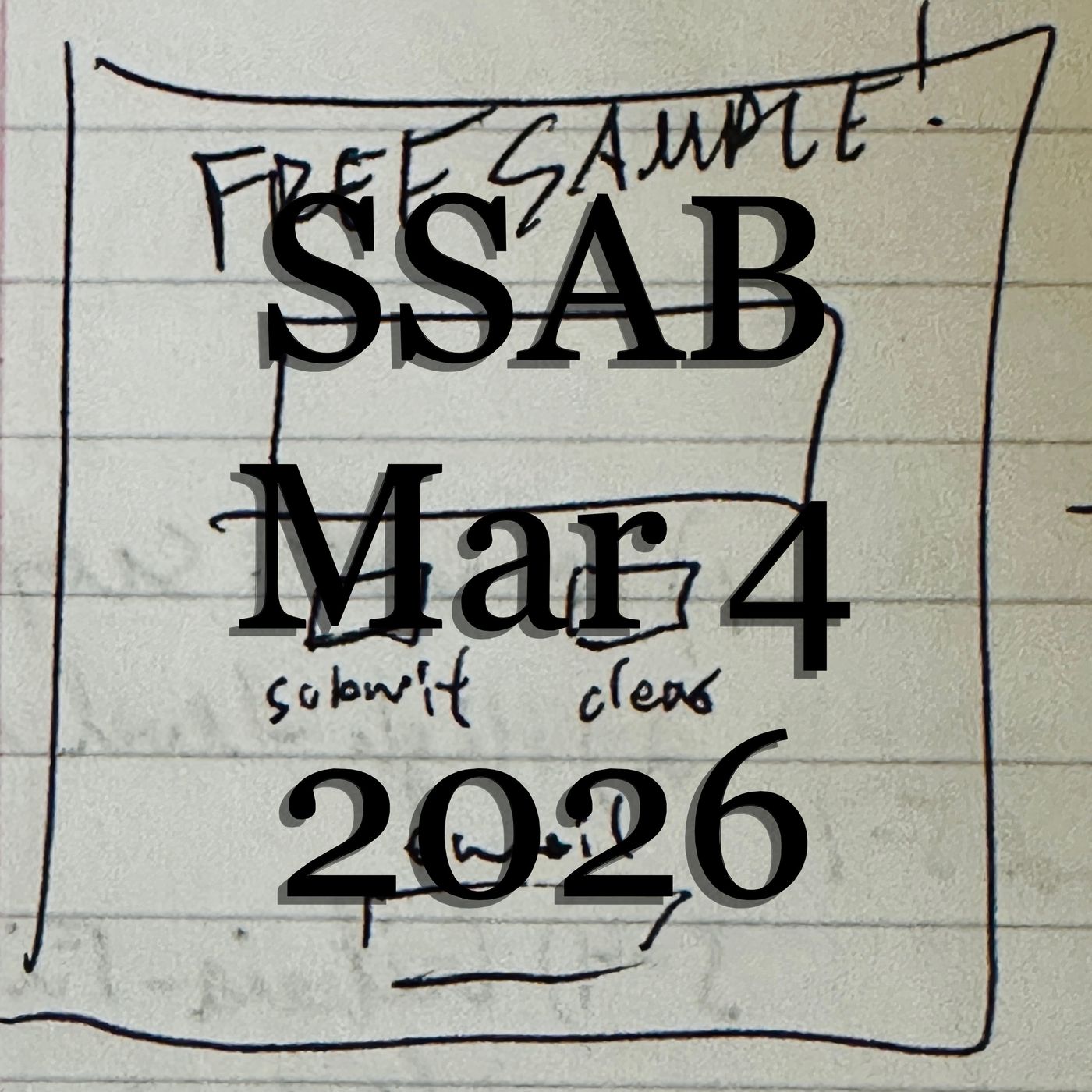
Got another rough website done with a form submission. The goal is a landing page where people can submit their speaking or writing and then that gets processed with OpenAI, then sent out as an email. Not sure if I want a full blown mini-lesson doc to be sent, or just a little email.
Working on a podcast transcription workflow. Getting closer. Monday’s episode sounded terrible in that box. Might try again with the Shure microphone later, but not too much of a rush to do it since my office subscription expires soon anyway.
BC drops Daylight Savings Time! Will stay the same year-round, same with Saskatchewan.
And Beijing gets snow! In February!?! Oh and the Two Sessions started last week!
Donate to the show! PayPal link below!
https://www.paypal.me/stevensirski?locale.x=en_CA
***Show notes n tracks up on stevensirski.com
And on Notion: https://stevensirski.notion.site/SSAB-The-Audio-Blog-of-Steven-Sirski-00acfe344e164bfab191d3cddf6952b2?pvs=4
Newsletter over at stevensirski.substack.com
Language vlog on http://www.youtube.com/@stevenslanguagevlog
Hope you have a great one!!
00:00 Studio Check In00:45 Audio Gear Troubles02:45 Podcasting Origins04:06 Gym Schedule Shift06:17 Goggins Motivation10:34 Rethinking Circuits14:08 Hundreds Attempt19:24 Morning Work Routine19:50 New ESL Website26:05 AI Transcript Workflow28:13 BC Ends DST31:06 Beijing Snow Two Sessions34:13 Wrap Up Links
Interactive timestamps
Jump to segmentGet every episode summarized
Each time The Audio Blog of Steven Sirski publishes, we email you a written briefing from the transcript — the topics, who appeared, and any specific claims, with the ad reads skipped.
Email me new episodesFree for 3 shows. No card needed.
Hosts & guests
Transcript ready
346 searchable segments. Every word is indexed and playable.
Full transcript
The Audio Blog of Steven Sirski — SSAB - March 4, 2026. Machine-transcribed; use the interactive transcript above to jump the player to any line.
0:00So over there, oh my knackered, did my circle work out today and feeling it. Got another rough website done with a form submission, interesting developments, working on a better podcast transcription workflow. GC drops the daylight savings time, and Beijing gets snow, and oh yeah, the two sessions started last week, folks Wednesday, March 4th, 2026, I'm Steven Syroski, often a Canadian expat living in up overseas, but currently in the middle of Canada. And if there's one thing I have to note right at the beginning of this episode is that if you've been listening to this week's episodes, today's episode is recording back in my studio, the home studio as it were, not in Beijing, but here in Canada, here in Winnipeg.
1:01And Monday's episode was recorded at the office, and if you go back and listen to that, I will say it does not, does not sound as good. However, in listening back to yesterday's episodes and some of these episodes that I've recorded with this sure microphone, there seems to be a bit of vocal fry going on, and if you don't want vocal fry, as vocal fry is that sort of that, that, that grimy, gruff sound in the voice where it sounds like someone's going, like that, it's very slight, it almost sound actually a better description would not be, would be a digital distortion, it would be as if it's clipping the entire time. And I am currently one, two fists away from the microphone, which is typically what it's supposed to be, but it still seems like it's coming in a little bit hot, so not entirely sure on how to fix it. And I have been using the AI mastering tool built into logic or the mastering plugin built
2:06into Logic Pro, so I'm sure the audio engineers that listen to this are going to go, that's the reason, I don't know if that's the reason, it seems like it's hot going in to the board as it were, rather than simply hot coming out or clipped as it's coming out. So anyway, something to pay attention to, to think about while you're listening to this, I hope it's coming in loud and clear that you are able to enjoy the listening experience, it doesn't hurt your ears or anything. I know that maybe it's not the sound that is, I've worked on the sound over the last couple of years, and everything I, this podcast is produced and recorded by me, all by me, I've basically, six years ago, back in January, when COVID kicked off, January 2020, I remember I was in Beijing, I took my laptop and my, what else did I take, in my laptop, and I went to Wages, which is like a western style sandwich shop in Beijing
3:07and in China, and I was like, I'm going to learn how to use Logic Pro, and it was actually one of the reasons I started this podcast, we started podcasting in general, was to learn how to do audio post production, so that would actually feed into my video work. Now, as it has happened, I tend to do a lot more audio production than I do video production, but that's mainly because it was, video production requires more editing, and my previous computer, which was a 2017 MacBook Pro, only had 256 gigs of space on the hard drive, which meant I need to have external hard drives, and it just was not possible to hold many projects at one time, so things, things, things took a while back then, so anyway, that is a bit of an update on the production of this here podcast, Nackered Wednesday Circuit workout, and I was kind of feeling it, so I've changed my routine a little bit a couple
4:07weeks ago. I was typically going to the gym at around 7, 30, 8 o'clock in the morning, even earlier if I could, but I've now started to push that awful little, opting instead to stay at home to have coffee with my mother, but then heading to the gym around midday, just after lunch or something like that, so I can, and just to pick up, not only that is in the morning, it was actually a lot busier than I thought it would be, I mean, there's always like six or seven people, which doesn't sound like a lot of people, but when you put two people in each of the major areas of the gym, it gets crowded, so you have, you know, two people or one person on the free weights, and then one person on the treadmill, you have two people using the universal area, and then you have two people on the squat racks, or using different squat racks, that's only six people in the gym, but it feels like there is all of the equipment space being used, and then you add me in there doing my circuit workout, and it can be a bit of a, a bit of a loud and noisy and crowded atmosphere as it were, but
5:13I did get my circuit workout in today, again, just after lunch, I've pushed it off again for, it's, there's fewer people at the lunch time, so in the middle of the day, there aren't as many people in the gym as maybe only two or three, so I don't feel like I'm interfering with people's workouts, and people aren't interfering with my workouts either. You'd be surprised at how many times I'm doing my circuit workout, and someone pulls out a mat, a mat to start stretching, and I'm going, all right, I'll, soccer, doing the slam ball workout around this, I really, I mean, I feel like I'm back in China, because in China, I would not pay attention at all. In China, I would just keep going, because they would do the same thing to me, but in Canada, yeah, there's always sort of that, you should have a bit of an awareness of people around you, so, but I did get the circuit workout in today, I changed it up a little, I did not do rounds of the circuits, instead actually the initial idea.
6:14First of all, I was going, I feel kind of knackered, and I don't really want to, I'm not looking forward to doing the circuit workout, but I'm kind of going, you know, what would David Goggan say? And then at the same time, like, if you're getting tired of me saying, what would David Goggan say? There are people, let's just put this in perspective. If you've missed this episode, because I've mentioned this in times before, but David Goggan says, one of these is a former Navy Navy SEALs. He does ultra marathon, he's known for writing a couple of books that he tells about how he went through Navy SEALs Buds training three times. He failed the first two and then got through on the third time, because someone died, actually, in the wet and sandy part of the training. He also set the pull up record, but he does these ultra marathons, like the Moab and either, I'm not sure if he does the hurt 100 or something, but like 240 miles just running all the time. He's also famous in my mind for doing the four by four by 48, which is running four miles every four hours for 48 hours, which I have done before. It's not easy. So his style of workouts and his
7:17video of all things, it's not just his workouts, because you have to read about the workouts, but you see his Instagram videos and they are funny. And they're not funny for like, they're like funny, because he'll basically sit there calling you a little, a few words, few choice words, F, the B, the SH, the F word has dropped quite a bit. So he has a way of getting his message across and speaking to people, which can be comical because you're going, who else would talk like that while they're running shirtless outdoors and then in between pull upsets? Not many people do that. And so he's kind of known as being the hardest guy in the world. And so as a result, he has a lot of people looking up to him and following his sort of motivational lead in like to put your mind, call us your mind, and I get your mind over your matter. So on days like this where I'm kind of going,
8:17ah, you know, I really don't want to be working out, but at the same time, you know, there are other people out there who are able to do it. Also, another way to sort of justify is to think that, you know, I am able bodied and there might be one day, there will be a day later on that I won't be able to do it. The problem with that argument is that, well, okay, so if that's going to happen anyway, then why do it today? I mean, you don't need to. The third sort of style of argumentation for or against this, like what would David Gogans do, or this type of, you know, motivational workout type of psyching yourself up to go to the gym, is simply, there are other people out there who do similar things, but aren't as crazy, you know, there are people who run ultra-marathons who don't go on Instagram calling you a little bit. I mean, these people exist. Not only that, there are people who do pull ups who don't drop the effort every second word. There are black people who are athletes or who have done hard things
9:20and don't talk about how, like they're growing up as well. So likewise, there are white people who do the same thing, who run ultra-marathons, who are doing fire jumping and stuff like that. So to think of putting this guy on a pedestal in an effort to motivate yourself and that you can't live up to his sort of training, it's kind of like, whoa, whoa, and finally, you have to keep in mind that even he has dropped out of races, he has not finished races before. So in that, there must have been days where the Instagram, like the camera wasn't going where it was six o'clock, the alarm goes off and then all of a sudden it's seven o'clock or whatever, you get up at 4.30, but then all of a sudden it's 5.30 or 6 o'clock and he's late. So there's got to be something else like that where when the camera's off, no doubt the guy puts the work in. I'm not questioning that at all. What I am saying is that when you feel like shit and you're kind of like, I don't want to go to the
10:21gym today, but if this person was next to me, would they sort of force me to go do it or would they basically call me a bunch of names until I agreed, until I acquiesced, maybe. So my change and challenge to today was, I'm not going to do the circuits. I actually a little a little bit more to that. Typically, if I don't feel motivated, I'll say go do half. So if the, if originally I'm supposed to do three circuits, like an hour and a half or 70 minutes of a hard workout, go do half, do 35 minutes and just do half the number of reps that you typically do. So that's usually one way to motivate, motivate myself. But today, I was thinking, well, instead of doing like the crazy three rounds, basically, it's 22 different workouts or 22 different exercises repeated one after another. So from 45 pound, 90 pound, farmers carries into rope work, into
11:24the kettlebell swings or ball slams or step ups or tire flips or sledgehammers or hammers, pull ups, dips, et cetera. But it's the idea is to keep on doing it continuously in order to prove, improve, improve endurance under duress and that sort of, that's sort of what the goal was. But if you have been listening to last week's episodes, I'll remind you that or you'll recall that I was talking, I'm chatting with Chatchee PT about my super sets and it's like you're not doing what you think you're doing. It's a good workout. You're doing something and it's good that you're working out, but you're not doing and you're probably not hitting the goal. You think you're hitting because of the way you're doing it. Basically, what I was doing was doing super sets of the same muscle groups with the idea that you'd fatigue the muscles and sort of push on through. As a result, I've talked about this numerous times where I don't lift as much as I think I can and I don't want too often because I work out by myself, but also because I'm simply doing super sets one after
12:30another very quickly in the idea of compressing the workout so I don't get bored, so I keep things moving and so I can also use the equipment when it's available. Now, Chatchee PT fired back and said the better idea would be to simply do the heavy sets first, then do the circuit style training. So if you're doing a squat, you do a heavy squat and then go into do your leg extensions, your leg curls, your bulgurian split squats, your air squats, your weighted squats, et cetera, your weighted, weighted air squats. So you don't have to or your calves, et cetera, so you don't have to do all of that at once. You do the heavy squats, you rest, heavy squats, rest, you do three, four sets of that or five as the case may be. Then you go do the sort of lighter accessory circuit style workouts to further fatigue the muscle and it's a little bit safer, I guess, as well. Now, this contrast is what I was talking about last week or a couple of weeks ago where this guy at the co-working space that I'm going to right now, his trainer is actually having him do the flip.
13:36That is, he does all the light accessory stuff first and then does the heavy squats, but isn't pushing for PRs. So he's not trying to increase the amount of weight every week with his squat. And I think that's key is that if you are trying to lift more weight and build more muscle each and every week, then you have to lift more weight. And as a result, you should be doing that rested and in a state where your body isn't fatigued from the other accessory work. Up to you, how you want to challenge yourself? How does this relate to the circuit work? So today, my challenge to me to myself was actually, well, I'll just go do the 100s. And it seemed like a good idea in theory. And then as I start working out, I'm going, you know, 100 seems like a lot to do of these things. And the idea was, was to do a hundred of each exercise, do 100 straight rest, and then do 100 straight on the next. I guess I could have done it, but I didn't because the only
14:38even the easy hard one, the double Londoners, I'm thinking like how hard can be due to, to do a hundred double lunges? I've done them before, but even try to get through a hundred double lunges, which I ended up doing towards the end of the workout. That's kind of difficult. So thinking about doing a hundred tire flips, Mike, oh boy, that's a good challenge. Might need to work up to it or simply, I think the other thing is take away the time expectation, because doing a hundred of 22 different exercises, you're doing 22 hundred sets. That's a lot. I think it's a lot to be doing. And if it takes you five, six, 10 minutes per, and you have 22, how long is your workout going to be? Now, going back to David Goggins, he's known for doing like extreme long, never-ending workouts. He's also known for not really having a day job most of the time. Now, there's, I don't really know the exact circumstances. I'm guessing he's still on the pay, the payroll of the US Army in some way.
15:43He might also just have a day job that he doesn't talk about. When he was doing fire jumping in BC last year, like helping to put out the fires, he was just helping out. So I don't know the financial situation. He does have a couple books, so he's got some money. But he's stated before, I was doing this before. I was doing this all the time. You don't just show on up, write a book, say you're going to do these things and then do them. You do them a bunch. Then you publish a book grudgingly. You have everybody follow you and then you have to prove yourself or at least someone asked you to prove yourself. And so you do, and you show people that you're actually doing these things. So all that is to say is that when you're doing these workouts, I mean, doing hundreds, 100 reps of one set in one set of one exercise is, all right, double lunges doesn't seem like it's a big deal. Battle ropes, 100 battle ropes, probably not a big deal. 100 sledgehammers, all right, 100 sledgehammer, like swings, okay, 100 kettlebell swings,
16:44yeah, doable. I mean, it'd be tired. 100 ball slams. That's going to take you a few minutes, 100 tire flips. That's going to take you a few minutes, 100 step ups. Good luck. I mean, it's 100 wall balls. That might be a little bit easier. So there are different things I was thinking about doing it, but I'm going, oh, boy, it seems like a lot of work. And that's actually what I think held me back was simply the mental blockage of going, I don't want to suffer through 100. I don't want to have to spend the time. It's a suffer. I don't want to have to spend the time of doing the 100 reps. I just don't want to do it. So I used to do 100 reps of pull ups every Friday, usually every Friday for the last like year or so, a couple of years. I've been doing something called the Murph workout. It's a CrossFit style workout where you run one mile, then you do 100 pull-ups, 200 push-ups and 300 air squats, and then you run another mile or 1.65 kilometers.
17:45I haven't been doing it 1.6 kilometers, whatever. I haven't been doing it lately because I've been lifting more weights at this gym instead. But to do 100 pull-ups, I mean, I guess I could do them in 10 minutes, maybe. But then to do 100 push-ups and then 200 squats, I mean, mentally, I just like, no, I don't want to do that, not today, at least. Maybe next week, we'll see, but going into today's workout with that sort of mentality of, I'll do 100s. That was the idea to get out of the gym, to get me away from the circuit workout, but then in reality, in practice, I ended up doing 40 to 50 reps each. So maybe I did a half, but it was more like I was doing sets of 10. So I wasn't really counting. It was anywhere between 20 and 50 reps per exercise. So I did 40 sledgehead slammer sledgehammer slams or whatever it is. I did 40 sledgehammer swings. I did 50 or
18:4960 kettlebell swings, no burpees, no push-ups, no dips, no pull-ups, 100 double-landers, maybe 20 tire flips or something like that. So there's variations. It wasn't a strict 50, 50, 50, 50 all the way through. Maybe next week, we'll see how that goes. And tomorrow, if I'm able to, thinking might hit the back for tomorrow and get that pump on. Can you get a pump on in your back? Good question. But got it in. And as a result, feeling a little bit knackered overall. Now, in pushing off going to the gym a little bit later, one other thing that I've been able to do, not just sitting down to have coffee with my mummy in the morning, but I start working, I start working a little bit earlier, a lot earlier, like seven o'clock or so. So basically I get up, go downstairs, clean up a little bit, get coffee going. Then I sit down, I basically start working on the different things that I want to get done prior to going back to Beijing,
19:52probably in a couple of weeks at this point. Today, spend some time working on a new website. So I've launched one website before that I've had a relaunch that I should say, that's kind of like maybe, but what if I just relaunched, like try to rebrand something. And so how much would it cost me to start another website? Well, turns out that this hosting or plan, this hosting or hosting website, thing website platform that I bought for Boxing Day, a couple of months ago, includes one free domain. Okay, so I'll take that one. So they gave me a free domain. I booked it in. I have this other idea for branding that sort of centers more around standardized, standardized testing in the English teaching world. So I go all right, so I'll do that. And this morning, one thing that I've been thinking about doing that I think is just a no brainer at this point is to set up a website where students or language learners specifically
20:52of the English language can go there to get a free assessment. Now, the catch, of course, will be that they have to submit an email address. If there's one thing that anybody and everybody online says to do is to build your email list, I will tell you, it has not worked for me. All my attempts to build an email list just have not worked. It's actually more of a complete sort of distraction from doing anything else. I think of the language log, I think of the sub-stack column I try to write. It's just a complete distraction from actually producing anything that I would consider of value. However, with this ESL business or this sort of idea of doing an English website, the idea would be to automate a lot more of it and I'm thinking since I have been worked like the Stevens language log my language channel has been going on for years. I have a lot of content there that I can repurpose to specifically English learning, like English teaching
21:55and English learning. So there's number one, but the number two is that what student feedback is something that helps generate content. So having somewhere or someone be able to go to a website, upload an audio file or a writing script with the understanding that it's going to be analyzed. It's going to be passed through these, what do you call it, large language models. It's going to be gone through the internet. So don't put in a person I identify that identifiable information and also don't expect your information to be 100 percent secure because these things are vulnerable to any other type of attack just as every other company is. Do a lingo or what's the other one, cathoven.ai. I mean, they do have, there can be security issues. If not with the platform, then simply by the fact that they're using OpenAI APIs or something along those lines. So of course, I'm going to have a terms of conditions that you have to check before you submit. So I was building that. And in doing that by automating not just the intake of this
23:04upload, this file upload, I automate the analysis. I'm not sure if I'm going to offer it like a deck, sort of a free PDF deck or an HTML deck where they can read through a 10 page report on what they could do or what they should do where they sort of fit and stuff like that. But then also with that, in taking the transcript and the lessons learned from it, I then have another content pool from which to draw from. This is of course like what Facebook and Instagram and Twitter all they will use your content. You're publishing on their platform. They will reuse your content for marketing purposes. And you can do nothing about it. It's the agreement that you signed the terms of conditions when you first sign up for your account. So I'm thinking like, that's not a bad idea. But how do I do it? So that I am at the very beginning at that stage. And this thing, I think, I think now back to two years ago, I think when I want to change EPT to become,
24:092023 was 2024, that it really took off. And I remember talking about the how the how English teaching will become a lot of a lot of language learning in general, will be that you can use AI. But then you can submit your writing or your productive, your writing and your speaking, your productive skills. Your teacher will probably automatically have it transcribed, analyzed. And then you're only going to interact with your teacher maybe once a week. But after having access to an online repository, an online 24 7 freely available, or a subscription based website or endpoint, where you can submit your work constantly and get feedback in line with what your teacher and you have discussed in class. So you're going to be taking fewer classes, but you're going to be getting more out of the service from the teacher.
25:11And this is what that website is trying to do. We'll see if it works. It's not impossible. I can see how it's going to work. It just takes time to build it. And I will say, I mean, maybe this is because I'm an old man. I don't think so. It just takes me forever to methodically go through all of these different notes because I'm also still learning the N8N platform. And as much as it's awesome to think that just get AI to program it, the problem is that it leaves a lot of holes in it. And I'm trying to make it as as simple as easy as effective as possible. If I can do that, then I think I actually have a system that would work. And I won't have to spend all my time updating it much like the sub stack article transformer or the cleanup pass that I've been working on as well. So that actually brings me up to the next point here, working on a new podcast transcription workflow. This is something that I've been working on
26:15for the last couple of months since I got back here in Canada. I've often mentioned this sub stack website that I have. And I don't publish to it very much because I find it very bothersome to sit down and try to retype all the things that I've talked about on my podcast. It seems very ineffective. A waste of time, basically. And so over the last couple of months, I've been developing an AI workflow, basically powered by OpenAI, Cloud and Thropper Cloud, N8N, and creating a workflow wherein it chooses the best portions to publish, does a cleanup pass, and then sends me a telegram message or an email. Now, I don't have it all together just yet, but very soon, I would say within the next couple of days, hopefully, if I have time to sit down and do it, I should have this all done wherein as soon as this transcript is like this podcast is done, it gets transcribed, it gets dropped into a Google Doc. Once that happens, it kicks off a whole series of nodes in N8N that then summarize it, pick out the best parts of the transcript,
27:23cleanse them up, formats them properly, creates new Google Docs for each of them, emails me each one so I can see what they are. And then from there, I'll be able to copy paste into sub-stack or wherever I'm going to put it. And that would be the new podcast post-production workflow all automated. And for pennies on the dollar, compared to like paying someone else to do this, and it just wouldn't even make sense to hire someone to do anything like that because they'd be using AI to clean up pass. Anyway, so I'm already talked about Monday's episode. So I am recording this here at the homestead using the Sure M7, Sure Mv7, whatever microphone this is. But I think this one sounds a lot better than the DJI mics that I used on Monday. Finally, some Canadian and international news. BC drops daylight savings time. WTF, what is this TV? Well, while Alberta wants to separate
28:24from Canada, so does Quebec. British Columbia is like, you know what, we're kind of tired of changing our clocks back and forth every twice a year. So spring ahead and fall back, right? So spring ahead, this will be the last time this Sunday that British Columbia, the western most province in Canada, will set their clocks ahead for daylight savings time. And instead they will remain the same clock throughout the same time zone throughout the year. This is a point of contention through it's every time it comes up at a twice a year in the spring and in the fall when the clocks move. I can't help but agree that it doesn't make sense to be changing the clocks anymore. When like, first of all, when does our workday start and end? It's curious. I mean, we're very connected globally. There's, when do we have free time anymore? There's a lot of free time, but there's a lot of work time as well. So like switching clocks like this, this,
29:26or anywhere else, do this on such a regular basis, or is this like a North American thing? Beijing doesn't Beijing China tried to do it years ago. Actually, no, sorry, China tried to have time zones before and that just didn't work at all. So these days, what they have, they have Beijing standard time, which is like the national standard time, but then every province or every time zone, every respective time zone has their own sort of local time that they know to be working sort of things. So now if you work in a national office or something, you have to go by Beijing time, but if you work in a local office, that is, if you run a mom and pop shop, that opens at nine o'clock, you don't open nine o'clock Beijing time, you open nine o'clock locally. So that means that sometimes things will open up a lot later and be open a lot later as well compared to what it would be according to Beijing time. So BC drops it. Well, Manitoba probably not. I think
30:28Saskatchewan doesn't go with daylight savings time either Alberta does Manitoba does Ontario is talking about eliminating as well. And there's a few other time zones throughout North America. The eastern so Ontario is eastern. Then there's also like maritime and then there's like Nova Scotia, which is half hour off from the maritime one. I don't even know what that is, but they're like yeah, we just don't want to want to be different. So so they are there half an hour off from whatever time that maritime is maritime time is how's that finally Beijing got snow so I'm told and so I see the pictures on WeChat quite a bit of snow too like an inch or two inches or something like that enough to make snowman and enough to like actually make it white on the ground and kind of like wow why is that and then you realize it's the two sessions. Now the two sessions are what is it
31:29I just to remind myself here the two sessions in in China people's Republic of China is the term for the annual plenary sessions of the National People's Congress and the National Committee of the Chinese People Political Consultive Conference which are held every March at the great hall of the people in Sichuan in Beijing basically so around the same dates they last for about 10 days total I think it's six days and six days I can't remember it's one after another I think it is I don't think they happen at the same time held at the same administrative level and around the same time I guess maybe it is the same time it's about 10 day period where they just talk about a bunch of stuff which kind of makes almost makes sense why some of these Chinese stocks that are trading in New York by do comes to mind Jingdong Neo what's the other one I was watching Alibaba all of them are oversold so they it kind of makes sense that they they got sold off into
32:33the two sessions and if I will say that there are two times when Chinese stock markets start rallying it's in the fall when the annual plenum is in place or taking on going on in November and then the two sessions which happens in March now what does this have to do with Beijing snow just makes you kind of wonder if maybe that's what they're like you know what well soften people see emotions a little bit by allowing there to be snow in the capital maybe it's also a a reminder and a showcase yes you can run heavy industry close to a city then move it away change the climate or the temperature once again in the city because Beijing for a long time had a lot of pollution but very little moisture very little snow and now in recent years it does seem that Beijing does get a little bit more snow than it did before now that might just be me waxing nostalgic waxing
33:35philosophical waxing nostalgic but it did they did it the city and they Beijingers did get snow just yesterday or the last day or so and a couple inches so I see some of my former students are posting pictures of them making snow inches and stuff like that I'm kind of surprised that they're not in class yet I thought they would be started by now but as it is what are you going to do what are you going to do two sessions is in Beijing get snow and Canada heading towards daylight savings time this weekend if it's daylight savings time what are you saving I mean if it's just time it just have daytime that's it all right with that folks I'll leave you leave you to think about that one thank you very much for listening I appreciate it the show notes and tracks will be available up on my website stevensersky.com there is a notion database there that tracks all the podcasts that have been published and might be home to the upcoming cleaned and polished transcript portions from this year podcast the newsletter is over on substex stevensersky.substex.com
34:39language log is over on youtube at stevens language log and finally folks if you are so able and willing to contribute to the ongoing production and maintenance costs of this year podcast whether it's the end subscription or the different API calls that I have to make and the other type of tools I use to make this a seamless and wonderful effervescent efficient and energizing listening experience there's a PayPal link in the show notes for this episode thanks again folks we'll do this again have a good one bye bye
More episodes
More from The Audio Blog of Steven Sirski

SSAB - March 9, 2026
The Audio Blog of Steven Sirski

SSAB - March 6, 2026
The Audio Blog of Steven Sirski

SSAB - March 5, 2026
The Audio Blog of Steven Sirski

SSAB - March 3, 2026
The Audio Blog of Steven Sirski