About this episode
1Dime Radio is made possible by:
Get access to The Backroom (100+ exclusive podcast episodes) on Patreon: https://www.patreon.com/OneDime
This is an older bonus episode originally released exclusively in The Backroom. I’m releasing it publicly in part as a reminder of the kind of longer, less filtered conversations Patreon supporters get access to.
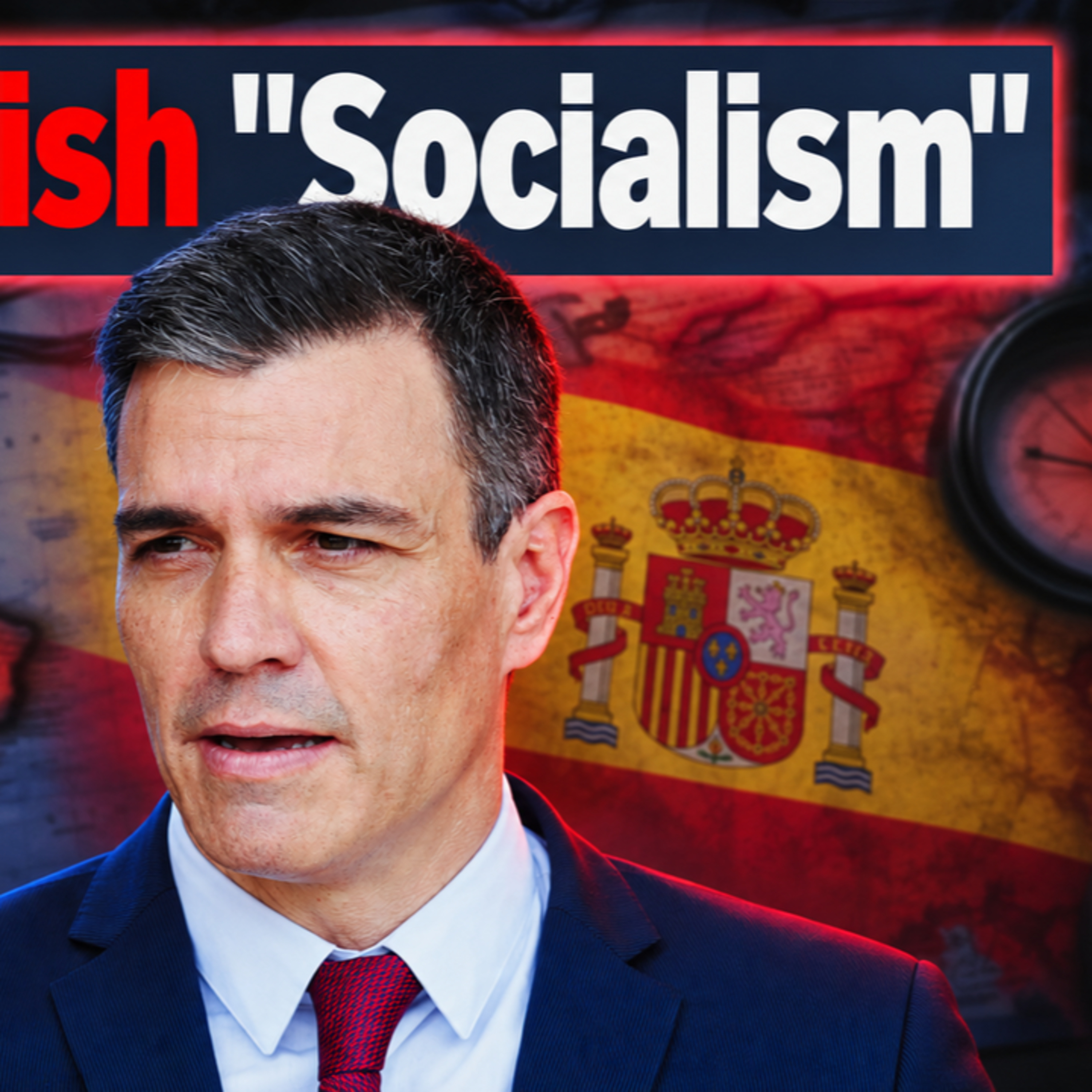
In this episode of 1Dime Radio, I am joined by political theorist Benjamin Studebaker to revisit the idea of the “neo-left” and ask whether Pedro Sánchez and Spain’s Socialist Workers’ Party represent an alternative to neoliberalism or a left-wing way of administering it. We discuss immigration and labor power, borders and imperialism, the constraints imposed by the European Union, Spain’s tourism and property-driven growth, and why the Spanish model may not be the blueprint for the left that some imagine it to be.
You can listen to 1Dime Radio on Spotify, Apple Podcasts, or wherever you get podcasts.
Timestamps:
0:00 Preview: Immigration, Borders & Imperialism
3:02 Intro
4:02 What Is the “Neo-Left”?
14:50 Migration Policy
22:24 Immigration & Imperialism
35:13 Nation-States vs. Globalization
44:19 Spain’s “Success” Story
49:22 Sánchez and the EU Fiscal Rules
58:21 Why Spain Isn’t a Blueprint
65:19 Property, Demographics & Migration
GUEST:
Benjamin Studebaker — Political theorist and author of Legitimacy in Liberal Democracies
- Website: https://benjaminstudebaker.com/
- Substack: https://bmstudebaker.substack.com/
- Political Theory 101: https://soundcloud.com/benjamin-studebaker
FOLLOW 1Dime:
- 1Dime Radio YouTube channel: https://youtube.com/@1dimeradio
- Substack: https://1dimereview.substack.com/
- X/Twitter: https://x.com/1DimeOfficial
- Instagram: https://www.instagram.com/tonyof1dime/
- Main 1Dime YouTube channel: https://www.youtube.com/@1Dimee
Leave a like, comment, and subscribe. Give 1Dime Radio a 5-star rating on Spotify, Apple Podcasts, or wherever you listen.
Get every episode summarized
Each time 1Dime Radio publishes, we email you a written briefing from the transcript — the topics, who appeared, and any specific claims, with the ad reads skipped.
Email me new episodesFree for 3 shows. No card needed.
Hosts & guests
Transcript ready
1,731 searchable segments. Every word is indexed and playable.
Full transcript
1Dime Radio — Spain's "Socialist" Government (Ft. Benjamin Studebaker). Machine-transcribed; use the interactive transcript above to jump the player to any line.
And there's some like, maga people are funny enough, like being like, you know what, Bernie would have been better in immigration than Trump. But it's really sucks that the left can't like make a case of immigration from that standpoint, instead of us to take this sort of opposite position of the right, which is to say, no, it's not an issue, no, there was no border crisis. I mean, I used to think there was no left thing that the left is doing with regard to this. So acting as if we live in a post-nation state world where the world is integrated at the level of politics. If you want to have an open migration system, then you're going to end up with imperialism because you're going to end up with these nation states trying to influence things that happen in countries that send people to them. Because those countries are going to be in relation to those states in a way that's going to give those states an interest in what happens in the territory. So if you say United States has to take anybody who comes from Venezuela because otherwise it's acting in human
and the United States agrees with that. The consequence of that is that the United States has to create what it regards as stable, prosperous order in Venezuela to prevent too many Venezuelans from moving to the United States in too short a unit of time. And this is what people don't get. You can't have global integration without global integration. If you say you got to take all the migrants who come from the Middle East, then the Europeans and the Americans are going to want to control what happens in the Middle East to shape the number of migrants they get. That's the logic. So it encourages for an intervention to have an open migration policy. Now, maybe there's a type of for an intervention that you want or that you think is acceptable given that attitude. But people don't think through how these things are connected. You can't, why is it that the Europeans have to go and meet with Haftar even though they don't regard Haftar as the legitimate ruler in Libya. They have to meet with him because Haftar
is able to influence the number of people who cross the Mediterranean sea. And Haftar runs without formal sanction from the European Union, boats around in the Mediterranean sometimes to intercept migrants. And when he does this, he sometimes treats the migrants he intercepts in ways that the Europeans can't endorse. But nevertheless, many Europeans want him to help them stop. People from crossing the Mediterranean sea. They'd like him to do it in a way that they consider human and keeping with international law. But they might look the other way if he does it in some other fashion. They want to have dealings with him and relationships with him, but they don't want to acknowledge those relationships. And this all comes out of the fact that the attitude is once people make it to the European shores, they have rights as refugees. So if that's the case, then there's going to be an interest in shaping how many people come to European shores. And that's going to require European involvement.
You are listening to OneDime Radio. Become a patron at patreon.com, slash OneDime to support the show and get access to extra content. I'm not saying I'm going to rule the world or I'm going to change the world, but I guarantee that I will spark the brain that we'll change the world. And that's our job. We might not be the ones, but let's not be selfish and because we're not going to change the world, let's not talk about how we should change it. By moderately conservative, I mean simply before you act, think well about all possible consequences. Last but not least, someone a relativist, which I mean it's a person that holds that any views as good as any other views. No one believes that every view is as good as every other view. You want to do politics. You got to fucking understand the issues. It's not all just emotions and fantasy life. Remember my friend, a wise man can learn more from a views question and a food can learn from a wise answer.
So welcome to the back room. I'm here again with Benjamin Studebaker to continue a conversation. In this episode is entirely dedicated to the neolash. Now revisiting this concept which we've been discussing, you could even say it's one of your nasian theories maybe. Yeah, you could say that. It's inspired a few people. It's inspired me to think about it. It's inspired another sub-stack writer who goes by the name of, I think the ghost of Christopher Lash or something. He's named Edmund, but he's a listener of this show. I know that because he was writing that today on the neolash and I think as far as I'm aware, the only place you've talked about the neolash prior to your recent sub-stack article on it was on this part. Yeah, this is just something I came up with as we were talking really, you know? And it seems to have kind of turned into a thing which I think is pretty cool. Yeah, it's like, you could, that's why I think it's kind of
like a nasian theory. And it resonates, because it makes sense. I mean, basically the crux of it is neolaptism is, you know, political parties and movements that sell neoliberalism in practice, but using leftist reasons. And had this in the Zoran episode about how now it's spicy up a zord that people might not fully like that. And it's like, for example, childcare can be presented as a socialist policy, but what is its function and what is its effect to send more people to the workforce and to outsource work that parents would do to, third, yoften women from the third role to do. Commodify childcare. Commodify childcare, right? So further commodification of more areas of life and then raise the labor force participation, right? But in a way which subsidizes the cost of that, so that businesses don't have to pay higher wages.
So it keeps the wages down and competitive, competitive labor markets. And then also you've got the commodification of childcare. And neoliberalism, what is it? It's commodifying more and more areas of life and it's keeping those labor markets flexible and competitive so you can have a dynamic economy. Yeah. And that is what is different from, you could say postwar social democracy in the sense of compromise between capital and labor. The Neal left project is about accepting the kind of global capitalist system as it is. And the neoliberal imperatives of raising economic growth at all costs. But using all the competitive implications of globalization, of economic integration without political integration, having nation states as the political unit but an international system of global trade, it accepts all of that. It takes all of that for granted. So once you've accepted the frame in which politics occurs,
then the incentives that that frame imposes become felt by you and you end up acting in accordance with it. If you want to change the way politics works, you have to change the frame. Right, by using the leftist activist, Codre, the giant Codre of professional managerial class leftists who might believe sincerely in a lot of progressive causes, but using them as a shock troops for capital, which is where I think like shock troops for capital, which is more of a theory, Dave and I kind of came up on a fly, like a sort of nascent theory. I think kind of like overlaps in many ways with the neo left. In the sense of, you know, the word shock troops comes from, not to equate these people with fascists or anything, but like in the sense shock troops was what, like the black shirts were called and, you know, muslinies black shirts and they didn't see themselves as fighting war for the billy for the capitalist elites. They didn't see themselves as what they were doing. Like they thought that they had their own political vision,
their own objective that was Republican, it was anti-church, it was anti-chamious, but it was socialistic in its own weird way. But in practice by policing the workers movement, they function to help the working, the capitalist elite. That's what it like, the term shock troops comes from and it's like, doesn't have to be violent, but yeah, like kind of about it in medieval terms. I was thinking about shock troops as you're, yeah, you're extremely offensive oriented front line medieval troops with your great big two handed why-hander, your great big two handed weapon that you use to smash into the front line. So it's the thing that makes first contact, that's what shock troops are. The thing that makes first contact and tries to punch a hole. So if you're trying to commodify some new area of life, there's gonna be also it's a resistance to that from the existing structures that currently handle that area of life. So the shock troops are designed to punch a hole into that.
And so how would you do that in this case? Well, if you make an argument that it's actually left us to commodify something and you're able to get some part of the left confused about whether it's left us to commodify that thing, then this disables one of the parts of the society that would be most likely to resist commodification. If you were to just present it to the left as we're gonna commodify childcare. Hey, you know, many parts of the left would go, well, we don't necessarily wanna commodify that. But if you say, this is gonna help families, this is gonna help people who are in need because we're going to, you know, currently we have all of these people who are struggling to have children or struggling to have families because they don't have enough hours in the day. You know, where their kids are getting neglected or not watched out for you. You make the argument in humanitarian terms, then some parts of the left will accept this. And instead of saying, hey, we have to prop up and defend or work on sustaining the, you know,
mechanisms by which we provide childcare or transform or revolutionize those mechanisms to make them much better in some further fashion. What you will instead get is a part of the left that thinks that it's the only decent kind thing to do is to commodify but not in those words, childcare. Yeah, so the literal sense of the word, shock troops, I mean, yeah, that makes complete sense in that you provided justification for a process which has a very different function than the rhetoric that it reports to be have. Like, you know, helping, it's like, if, you know, if you object, that's why you get such bad backlash on your childcare critique because it's like, well, this is helping families. Are you against helping families? Or for example, if you're against mass migration, you know, that's usually justified from the leftist angle as in the humanitarian internationalist angle while from the Koch brothers, it was justified
in the sense of quite literally curbing unions and, you know, lowering bargaining power. But from the leftist view, it's like, well, now, if you want to advocate against a kind of neoliberal immigration policy, you'll be criticized for saying, oh, are you, so you want to deport immigrants? You want to shoot them at the border if they try to cross? And you know, it's a very powerful thing because this is like effectively shutting down what historically was usually the biggest opposition to capital that is the left. And probably why I would, why I am, and I think by extension you as well are harsher on the left than the right. It's because what was supposed to distinguish the left from the right is precisely that it imagines something else that other than what exists. I mean, Kalakowski, you know, Lisa Kalakowski, who is an interesting figure I wrote about in the article out of on Substack on my favorite books there. Kalakowski has this separate essay on the concept
of the left where, you know, he defines it in a way that I think captured what the left thought it was at the time. Like, you know, still when there was a new left, which was basically like imagining that there's something else other than the status quo. So you believe that there's something beyond the status quo that could lead to that's guided by maxims like equality, right? So that's why there's a part of leftism that's driven by change and inambitous towards equality. I don't think this conception of left makes sense anymore in capturing what left and right are now. And that's why I reached at the time people who listen to this, I'll have released the article on my substack called the Concepts of Left and Right today, which is very much deconstructing like, you know, this sort of binary in the way it's evolved in how it obfuscates more than it clarifies. And that's why I think it is important to be harsh on the left because, you know, I don't expect the right to offer something other than what exists.
I mean, that's kind of what their selling point is, is that they want to keep things. I mean, now it's changed to because the radical right wants to change things within a way that goes backward, ostensibly, right? But the left is now not really has kind of accepted the current horizon. It has more function to, on the one hand, yes, inadvertently justify unwittingly, justify neoliberal functions and I think above all, and you alluded to this in our last talk on the neo-left, it's really like keep the right out. It's a way for the liberals to find something to sell people so that they can keep the right out because right now, maybe that's changed a little bit, but the right was the principle threat to a lot of the global institutions, like, especially the European case, but the EU, I think that's changed a little bit with, you know, the Brexit, no longer really,
really being that big of a threat anymore, but I think at the level of nationalism and immigration and the kind of effort to combat, like the declining labor force, that was the neo-liberals really wanted mass migration to combat that, that's what they always say, that we need more migration because people, we have a aging population, but then the left will go and repeat that same talking point. It's a really strange thing because it's like, you know, what it ends up doing is it fuels neoliberalism but also fuels reaction because it's basically to elements of political. Because it's basically to elements of political. Immigration has become an emergency policy. And it used to nap be that it used to be that the European Union would deliberately after thinking about it, admit certain countries, and then those countries would supply inflexes of labor, but only so many people because those countries were only so large and the European Union would decide when and how many states to admit, and then this meant that you would have some supply
of labor coming in from outside, but you would have some ability to regulate that. As a consequence of the Iraq war in the Arab Spring and to some degree climate change, there's been a loss of control over the migration mechanism. And it's a very different proposition. We should bring in some migrants from Eastern European countries gradually in a thoughtful and deliberate way, versus people who are coming because they are in danger or afraid and not because they have some plan to make it in a Western European country because they've been offered a job in a Western European country where they have social relations. They know from friends that there are opportunities for people with their skills in a Western European country. Yeah. Coming in large numbers in an uncontrolled way, it's a very different argument. And the left was not able to deal with the fact that it's a different argument. A refugee crisis is very different.
And to be fair, you know, at the time, I myself said, how can you have a refugee crisis? You've got to do something. You've got to do something. The thing that they should have done is not create the refugee crisis in the first place by not bombing the Halada Libya and by not invading Iraq, but you know, once you do these things and you kick this stuff off, then it becomes very difficult to find a way of navigating it that's politically tractable. Yeah. So it's a tough not to crack the immigration issue because at this point, there's so much instability that's been created in so many places. And there's no capacity or willingness to stabilize those regions. Yeah. Because that would require serious resource commitments on the part of Western states. And the Western states are always trying to do it cheap. Where they're doing its stupid, in the case of Iraq, where they do the expensive and still caused a lot of trouble.
It's very hard when you are making interventions that are too cheap or too stupid to have a migration policy that makes any sense. Make sense, but also to whose interest? Because with this Iran situation, if it leads to a protracted conflict that could become a civil war-like situation that causes more people to leave, that's bad for Iran. But Iran has, you know, for relatively poor economy and very robust education system in which men and women are actually both educated. And they have a quite a skilled labor force from the standpoint of some countries. All those refugees could be good for their economy, even if it's not great for a social interaction. But even for the tech sector. Yeah, the tech sector wants there to be lots of migration of people who have the skills they want to hire.
But they also don't want a bunch of people who put in a lot of pressure on the government to build additional infrastructure for a much larger population of people who have skills that they're not interested in. Part of what goes on in the United States, for instance, with the tech sectors, that they have this great desire to have lots of high-skilled people coming in through a point system. But they don't necessarily want many of these tech billionaires, large numbers of people coming in and uncontrolled ways through refugee crises from Central American refugees. Now they like to be as a... Who want migration, often want some level of control over it. And there's gonna be efforts to try to get the technological and military apparatus that's necessary to control it. But it's gonna be expensive. And it's gonna be... That's kind of... And Rill is gonna sell those border immigration towers to a lot of countries. Well, that's the difference really between what I would say is like Trump and Farage and Bernie Sanders.
And that Trump and Farage, they say that, you know, they're anti-mass migration, but really, they just kind of want to control it in a way that... Like, they like... They're perfectly fine with the H1B visas. And well, Trump doesn't want to alienate his base so you know he has people like Elon Musk or in Vivek, from a Swami advocate that on his behalf. And well, he himself also even kind of defended it. He was... he said, there's not enough skilled people in this country. We need more skilled people there. But in Steve Bannett, he has to play a bad cop for Maga to, you know, be against that inside with Bernie. But the... And that's why they're also opposed to illegal migrations harder to control. They like what they like most, the right, is these like very exploitable visas that allow people to come in in a controlled way and also be deported if they do this slightest thing. Like, organize and the employers can just let them go and then they have to leave. Right. If you're right to get in a country that depends on having this visa and the visa is tied to the employer sponsorship,
it gives the employer incredible leverage. And this is what's very important. The... in terms of overall net migration, a lot more of it in the case of especially Europe, but also US, more of it is driven by legal migration than illegal migration. A lot more. And even parts of the Macapace who interestingly like took the immigration issue very seriously, maybe if there were not for leftist reasons for like demographic reasons, have started to observe that Bernie is 2016 in migration policy. And really, I would just say prior to that entirely because Bernie has a track record of opposing reencard programs and foreign worker occupancy programs dating already from like Bush, Reagan type programs. To say, I understand, it damages that leverage of... Laborers. Of course. He was against that and there's some like mega people are funny enough like being like, you know what Bernie would have been better in immigration than Trump. But it's really sucks that the left can't like make a case
of immigration from that standpoint, instead of has to take this sort of opposite position of the right, which is to say, no, it's not issue, no, there was no border crisis. I mean, I feel... You know, I use the thing that there was no left thing that the left is doing with regard to this. Of acting as if we live in a post-nation state world where the world is integrated at the level of politics. The world is integrated economically to a substantial degree, but it has not been politically integrated, which means there's no capacity at the level of the planet to take decisions on controversial issues where there's intractable disagreement in a way that's going to be regarded as legitimate by large parts of the world's population. If you persist with trying to take these decisions in the absence of a political apparatus that can legitimate them, you're gonna run into the limitations of the nation state's capacity to manage stuff that happens in other territories, in other places. If you wanna have an open migration system, then you're going to end up with imperialism
because you're going to end up with these nation states trying to influence things that happen in countries that send people to them. Because those countries are gonna be in relation to those states in a way that's going to give those states an interest in what happens in the territory. So if you say the United States should take anybody who comes from a central American country or South American country, you're giving the United States a very strong interest in shaping the conditions in that country so as to influence the number of migrants it gets from that country. So if you say the United States has to take anybody who comes from Venezuela because otherwise it's acting in human and the United States agrees with that. The consequence of that is that the United States has to create what it regards as stable prosperous order in Venezuela to prevent too many Venezuelans from moving to the United States in too short a unit of time. And this is what people don't get. You can't have global integration without global integration.
You can't have this kind of anti-imperialist sovereign nation states that do their own thing narrative which both the right and parts of the left engage and the left only likes to engage in it on behalf of post-colonial states or perhaps China. Right? But this idea that you're going to have nation states that are going to be independent or autonomous or able to make their own decisions, blah, blah, blah, blah, you can't have that in an integrated global system. And the more integration that you have, the more states are going to get involved in each other's territorial affairs. If you say you got to take all the migrants who come from the Middle East, then the Europeans and the Americans are going to want to control what happens in the Middle East to shape the number of migrants they get. That's the logic. So it encourages foreign intervention to have an open migration policy. Now, maybe there's a type of foreign intervention that you want where that you think is acceptable
given that attitude. But people don't think through how these things are connected. You can't say that you want unlimited migration from North Africa and then expect these states to not take an interest in the economic and political conditions of North African states. Like, why is it that the Europeans have to go and meet with Haftar, even though they don't regard Haftar as the legitimate ruler in Libya? They have to meet with them because Haftar is able to influence the number of people who cross the Mediterranean Sea. And Haftar runs without formal sanction from the European Union, boats around in the Mediterranean, sometimes the intercept migrants. And when he does this, he sometimes treats the migrants, he intercepts in ways that the Europeans can't endorse. But nevertheless, many Europeans want him to help them stop people from crossing the Mediterranean Sea. They'd like him to do it in a way that they consider human and keeping with international law.
But they might look the other way if he does it in some other fashion. They want to have dealings with him in relationships with him, but they don't want to acknowledge those relationships. And this all comes out of the fact that the attitude is once people make it to the European shores, they have rights as refugees. So if that's the case, then there's going to be an interest in shaping how many people come to European shores. And that's going to require European involvement in North Africa. Yeah. It's not like Europeans just get involved in other parts of the world for fun. They do it because they have reasons to do it. And one of the reasons to do it is international commerce. Is international migration? When you have free movement and you have con-comers, you're going to end up with cases where a state needs to influx events that are not marked as being in the territory that has the right influx. And when that happens at scale over and over, states will take less interest in their territorial borders.
They'll say, if I can influence events on the other side of the world in a way that benefits me, I'll do it, regardless of the territorial, who's been assigned sovereignty over that territory. So I want to make a point regarding the foreign intervention and mass migration. But first on the US case, part of why in 2020, where I was really like 2020 to 2022, and really like the period where, the opening up of the economy, and you had this period where there was the narrative over the media that said, why does no one want to go to work anymore? How come people don't want to go to work? And really, what people didn't want to go to work is they didn't want to go to work for the same wages in an inflationary environment. It's like people didn't want to go to work in those shitty conditions or the same wages. They want, you know, if you raise wages, you probably would have got a lot of people returning to work.
And there were pandemic relief programs too, which made it easier for people to decide that they'd go off to work. And part of saying no one wants to work anymore is to say, make people want to work by taking away the sources of support to give them a decision about that. Exactly. And so what was the kind of solution, part of the solution to this why does no one want to work anymore? Migration. It's why under Boris Johnson, you had the Boris wave. You know, in the post-Brexit environment, England had, you know, stagnant economic growth, you had pressure from the bond market. And what was it to do with the supply of labor, right, for businesses who did not want to raise wages? So you had, you know, like this, the Boris wave, as they call it, a huge wave of migration. I'm a Russian under. Yeah. Well, huge waves of migration, yeah, in Ireland too, huge waves, just, wages, levels of migration in Ireland as well. But under Boris Johnson, it's interesting, right? Because Boris Johnson was so new kind of like campaigned when he was running against Corbin
as like the guy who was skeptical of mass migration, get oversaw like the biggest increase of any prime minister since Blair. So that's interesting. Then you had Biden, you had the, you had the border crisis, which I was told by all the leftist media at the time that there was no such thing. That this was just a panic on Fox news. You know, little, it didn't take me long to do some research on overall how much net migration, both legal and illegal. It was under each presidency to see that Biden had really like surpassed just about everybody. You know, so it's like, Part because we abandoned the effort during the Biden administration to do the regime change in Venezuela because during the COVID pandemic, we wanted to buy Venezuela in oil. Yeah, during the pandemic and during the Ukraine war to try to offset inflation, right? So we had a soft on Venezuela policy during that period of time. And there were all these people who were expecting us
to overthrow the government, who were hung out to drive by our you turning on that. So then what happens? The Biden administration says that these people, if they come to the United States, will be given sanctuary so that they are not quite in danger because they had back to US intervention in the immediate runout. And then what happens when Trump gets back in, when Trump gets back in, the oil price was down into the 60s. If anything, you had US share oil companies complaining it was too low for them to make a profit. So what happens? The Trump administration goes to find Venezuela and also it takes this opportunity where US share oil companies would like the oil price to be a little bit higher anyway and starts pushing on a run. When Bernie recently, he said an interview that got a lot of left to subset that's, you know, as much as it pains him to admit it, that Trump did do better on the border than the Democrats did and that the Democrats handed him that on a civil or civil or platter.
You know, and Bernie is saying this, like there's people on the left that I saw, like didn't want to grapple with this, that he was actually like speaking to a real reality. I think Bernie now, because he's not part of a democratic government, he's okay with saying this, so what worries when he was working with Biden, he was kind of not critical of this. Now Bernie, you know, feels like he can say this kind of stuff, but there's this effort to like dismiss it always just him trying to appeal like in a populist way. It's like, no, this is what Bernie believed prior to the Trump during the syndrome, right? And it's like not so. What would you do with Venezuela? If you come into office in 2021 in the United States, you're president. All of these promises were made to people in Venezuela about regime change. You want to buy Venezuela oil because you've got a bunch of inflation, you know, you want to be able to do the, that you cramped thing. So you'd like to have a lesser relationship with Venezuela.
You don't want more instability there for the next two or three years. But then, you know, what's going to happen to all of these people that you mobilized in Venezuela? Are you going to abandon them? What kind of message does that send to people you might work with in future in Latin America if you abandon them? You know, also kept sanctions. They also kept sanctions, which made their economy shitty so there's still more reason to leave. Yeah. So, you know, they're going to have this reason to go. But, you know, these people are people that the administration, you know, the Trump administration had said, we're going to do something about Venezuela and had given these people all this encouragement to come out and be public about their opposition to the regime. Well, that's what they're doing with Iran right now. Yeah. And there's this question of once you do that and if you don't follow through and you don't actually do the regime change, what happens to those people? And do you care?
Does it matter to you that you give a bunch of people an impression? Because if you don't help those people when you turn, the next time in a country you try to do that, people are going to be more skeptical of whether you're going to follow through. So, part of maintaining the credibility of the foreign policy in all of Latin America was to agree to take on Venezuela. Well, that's why there's this situation Iran is just an impending refugee crisis in the making. They promised these Iranians, you know, like we literally said that we support you, went out and said that the public statement Trump, we support you in your protest. Now, these Iranians go in protest thinking that there's going to be a regime change on the way when there isn't. Now they're going to be constantly surveilled by the state. It's going to be harder to get jobs and they have every reason to leave the country. And you're a thousand on his prison too. It's easy to say that this is a benefit. This is, yeah, well, that too. I mean, it's a lot of dead as well.
But in terms of the refugees, at this point, it's hard to say it's even incompetence on the American part. It's like, you know, there's, I think there's a real extent as well that like a lot of, you know, there's like a financial motive. Like, you know, they benefit from having like, you know, skilled workers go and leave and go to America. And like there's, I think Europe's a little different because Europe is just harder to integrate. Like in Europe, refugees had had a more and debatable economic impact. Let's just say that. I've seen counter arguments like I've seen. I've heard arguments that they do actually quite help the health care sector. And what part you're looking at? What's the time frame? There's a lot of ways to ring up these studies of economic impact. And then also, are you talking about total overall economic impact? Do we care about the specific classes in question that have the disproportionate negative impact?
Because that's the thing. You can have a positive overall economic impact and you can still heard a particular class of people who will then have reasons politically to be upset. Because if you agree with somebody from the benefits of something, you know, then they have reasons to be upset with you. And it is no excuse to say, well, the overall economy benefited if you're dealing with somebody who is disproportionately affected or left out of any positive benefit. So yeah, it's tricky. It's extremely difficult when you have a nation-state system to manage a globalized economy with globalized flows of people and wealth. It's really just not possible to do it. People think it's very simple. They think that the government should just have this or that policy based on how it immediately affects them and it's very hard for national governments to deal with these kinds of problems because they're just not equipped. The nation-state just isn't the right scale
for dealing with all this stuff. You know, it's like saying to people in Indiana there are too many people from Illinois coming to Indiana. We have to do something about this. Yeah, Indiana is not the right kind of political unit to address that problem. And nation-states, they just really struggle because they want to be integrated into a globalized economic infrastructure to manage population flow. They're gonna try. They're gonna try to use new technology to enable them to do a level of control of human movement. Unprecedented in human history. And it's gonna be done with ID cards and it's gonna be done with these border towers that don't require anybody to man them. And they're gonna put those towers in for security purposes and all kinds of facilities all over the place. They're gonna try to technologically solve the problem, but it's gonna lead to a level of securitization of ordinary social life. I think a lot of people are not gonna like. A lot of people, because there's a lot of overlap between people who want control of immigration
and libertarians who don't like state interference into more and more areas of their private life. Those things don't go together. If you want immigration control, real immigration control, this is gonna lead to control of human movement. And it's gonna lead to cards and facial recognition and all of that. And this is how they'll legitimate it to, they'll say this is necessary to protect you from the violent migrant. Right, well that's if you do migration policies only in the right wing way, or you could also just cancel a lot of the temporary foreign work programs. But the left has a top test. The left test is committed to a lot of this securitization stuff. But, you know, point is is the capital owning class for the most part, it tends to benefit more at the expense of the people who live on wage labor. That is like, like in migration policy doesn't have to be always like I see portations and you know, like super violent.
There's other ways like, for example, the legal migration in terms of Mark Carney. He literally, he reduced migration by such a point that it reduced rents in Toronto and Vancouver just by canceling the international student visas. A lot of them, we were kind of like artificially inflating our economy under Chudo through just like basically making our, our universities like tourism more or less. Yeah, that's exporting, you know, education, right? The higher ed sector would say that that exports something. Effectively higher ed becomes an export when you take a large number of international students. Right, but we don't make them citizens. We just people kind of go and, you know, it's an export. It's like selling cars except you're selling a degree. And they have to stay in the country for a period of time. And during a period of time, they spend a bunch of money, don't they? Yeah, which is the cost of things and rents and it's why it like it made,
but if you want a certain amount of consumption, there are a lot of towns in the United States where there's a lot of businesses that only exist because there's a university in the town. And international students tend to be richer than rank and finance. So why the rents go up high, so high in Canada, because a lot of them from China, India, who are wealthier. But they also support a lot of the shops that a lot of locals like, a lot of the restaurants, a lot of the coffee shops. Yeah, international students keep a lot of businesses running in the towns where there's large concentrations. Let a small business. That's true. Yeah, so that's why we got to think of like, who benefits and who doesn't, right? But there's also this idea of having a society and this goes back to our prior immigration conversation, which is like, when you have such a level of mass migration where you don't really have people interact, you just have, it feels like tourism. You know, that's kind of what places like
a lot of cities in Canada become like, where the groups don't really socialize. And yeah, but that's what happens when you, everything is just about line-to-go up economy. Good. And that brings us in the near left, which will justify mass migration on the grounds of humanitarianism. But in practice, kind of accepting one, the conditions that lead to mass migration. So there's that. There's ways in which liberals like accept the kind of process that leads to mass migration. And there's ways even Marxists do it too. Marxists will admit that there's a negative impact on labor on mass migration, but they'll say that the only way to solve this is the international working class revolution. And that's where like, you know, internationalism ends up being kind of like a near left justification. But what I find interesting is that parts of the right have now increasingly come to awareness that to solve migration requires something beyond the nation's state. Like, you know, regardless of,
we're not sure like where it's going to lead, or if it's going to work. But Maloney seems to be gesturing in that direction. Georgia Maloney is, I don't know if you saw, posed like and has encouraged other European states to forgive debts, the debts of various African countries. In exchange for them collaborating on border policy to prevent people from leaving entering Europe. Right. Yeah. One of the strategies is to try to pay off the post-colonial state, to try to get the post-colonial states to help. Of course, many of these post-colonial states recognize that they can use European leaders' concern about winning elections to extract a lot of payment. So this has been a recurrent issue. Turkey, Egypt, Haftar, and Libya, wanting things in exchange for controlling migration.
And wanting as much as the market will bear, making as larger demand as you can make, because as far as post-colonial states are concerned, and I think, yeah, it's understandable why they would feel this way. They're owed an unlimited amount from their former colonizers, more than they can ever hope to get. And they also want a lot of labor drain. A lot of labor drain too. Yeah. Especially countries like Nigeria, which, you know, Latin brand drain. Yeah. It's a problem for them. So it's a very difficult thing to resolve, even with regional politics. You even say European Union-wide politics, even if that was substantially reformed, it'd be difficult to deal with it. Now, and this is the thing people wanted to break up those old colonial empires and make a bunch of nation-states, but then they wanted all of these nation-states integrated together into a global economic system. So they wanted to break up these empires at one level, but also to further unify them into one global thing
on another level, and they wanted to be able to do both of these things at one in the same time. And it just hasn't really worked. The whole post-World War II, sovereignty plus internationalism thing. It doesn't really fit. And we just keep running into the contradiction there at the level of politics. We can't have nation-states plus economic internationalism. Someone's got to give. Well, that's kind of where, like, what is the left's role? The neo-left's role seems to be more destabilizes system. Whereas the right is trying to challenge the system, but is running into the limitations every time it governs, which is what can it do really to reduce mass migration? Some countries can more easily, like Poland, do their geography. They can prevent people from entering
in a way that's harder for countries like France. But there's also that, like, Poland is kind of like a younger economy, just purely like a younger capitalist economy. So in a certain sense, it's as a, it started late. So the growth game, whereas, you know, countries like France are going to have diminishing growth, diminishing returns. It's a spain, because what I find interesting about Spain is like it does remarkably well economically now, on paper. That doesn't mean like Spaniards are necessarily doing amazing. Because when complaint I hear a lot in Spain is property values due to all the tourists. And mostly actually other people from Europe who buy properties in Spain and inflate the... You know, a lot of people think Spain is a big country, so they think it must be like Italy or Germany or France or Britain. But large parts of Spain are extremely sparsely populated
and have quite low population density. There's an enormous amount of tourism in Spain as a percentage of the total economy. It's... There's, there's, there's for a lot of emphasis on the tourism sector. This has also been a big part of the Greek recovery is a reliance on tourism. And while that contributes to GDP local populations don't typically get very much of the benefit. Yeah. The thing about this Spanish government, there are a couple of things about it. One is that it is constantly making deals with separatist groups to stay in power. And when you make deals with separatist groups, you end up having to give the separatist groups disproportionately favorable economic treatment as part of those deals. And other parts of the Netherlands and stuff. Yeah, yeah. And other parts of the society resent this. You know, like in the UK, one of the ways in which the conservatives back in 2015,
one that election was by saying, you know, or 2019 or 17, part of how they beat labor over and over in the 10th was to say that it wasn't realistic for labor to win power with an outright majority. It was very likely that labor would be dependent on support from the Scottish National Party, if it won. And if labor was dependent on support from the Scottish National Party, it might inextremise give Scotland independence. But even short of that, to secure the cooperation of the S&P, the Labor Party would have to do something in terms of giving money, more money to Scotland. And this would end up distributing resources away from people in England. So that even if labor was committed on paper to a more generous social policy or to investments, that a coalition with the S&P might preclude some or all of that, because too much of the money that would otherwise
have been directed toward those programs would have to go toward buying the support of the S&P. Now, regardless of the degree to which that argument is true, it was a quite persuasive argument for many people in England. And in a similar way, when you make deals with regional parties and become dependent or reliant on regional parties, there is a perception that that generates that you are not really committed to ensuring that all of the regions are treated equally. And it can generate over time more regional conflict and strife. A lot of people on the left have looked at S&P as like he is ending that conflict and strife by being open handed and generous toward the Cataloons. But I think that there is a serious concern in the medium to long term, that it will generate in Spain more resentments that are tied to this government having shown favorable treatment
to a particular region to stay in political power. And that's to do with what you were talking about with the liberal party in Canada, the ethnic politics, the politics of regions, the politics of population groups, treating what you're doing as a kind of populist coalition of groups, of identity groups or ethnic groups or regions. Right? It's an alliance of groups. And how do you secure the support of the groups you pay them off in various ways? That has been a significant part of how Sanchez has been able to stay in power for the period of time that he's been able to stay in power. The other thing about Sanchez, and this is I think something which differentiates him from, say, Verifacus. Verifacus for all of his limitations and the ultimate failure of his political project was trying to change the structure of the European Union. He was committed to changing the fiscal rules,
maybe getting rid of them, maybe reforming them. He was committed to attempting to democratize the European Union, maybe have a European parliament that answers directly to the European population that can actually make policy as opposed to this reliance on the commission. Sanchez has operated in accordance with European physical rules. And he is committed to staying within the rules of the European Union. Now, immediately after COVID, that looked compatible with having a relatively generous set of policies because during the COVID pandemic, there was a suspension of the European fiscal rules. And when the European fiscal rules were brought back, they were brought back with some changes. So one of these changes is that your policy is not evaluated. Your budget's not evaluated on a year-to-year basis, but can be evaluated over a several year span. So you could say, okay, we're not going to follow the fiscal rules this year,
but here's however the course of a window of time, we're going to be in compliance with the fiscal rules. And this allows European state to have counter-cyclical policy for a year at a time or two years at a time, as long as there's a credible commitment to returning to the fiscal rules baseline by the end of a four or five year period. That's the major reform that came out of the COVID pandemic, which disrupted the fiscal rules long enough that something could be done to change them a bit. So the fiscal rules loosened up in both of those two senses. They were suspended during the pandemic, and then they were brought back with a little bit more leeway for states that want to do things are a little bit different. So what Spain says is the investments that Spain is making are compatible with sticking to the fiscal rules within the unit of time. And that's because what Spain is doing is encouraging certain kinds of growth, which seem likely to improve the fiscal position of Spain.
Right? So then you look at what are the sectors that Spain is really investing in? What is Spain really developing? Well, a lot of it is geared toward, if you read the Spanish finance minister, he wrote up a thing where he explained, you know, what is Spain doing with the money? Spain is investing in the green sector. Spain is investing in the tourism sector. Spain is taking steps to grow the economy in ways that sync up with neoliberal images of what growth in Spain looks like. Neoliberal images of how a European economy should grow. And then what happens when they change the rules, again, which they've done over the summer, right? You have the new NATO spending requirements come in and then the EU updates the fiscal rules. So now you can exceed the fiscal rules but you've got to be doing military spending. This new change is going to make it much harder for Spain
to justify its expenditures going forward in the next few years because Spain has got to be making those expenditures on stuff related to defense. And Spain doesn't want to do that. Spain has said they don't want to increase their defense spending, but yet it's the policy of Sanchez to follow the fiscal rules. So now Sanchez is going to be back in the usual position, left when governments are in, where there's a set of fiscal rules, there's a set of international commitments, and the stuff that you've promised people that you want to do is not compatible with staying within those rules and those commitments. So either you're going to have to break the rules or try to change the rules, or you're going to have to say to people, the stuff I promised you, the stuff that I was saying we were going to do, we can't actually do it because of the rules. And when you do that, you look incompetent and you look like someone who's been deceitful and this has been the problem for the left throughout Europe. Problem for the left is it makes promises, the promises run into the fiscal rules and then the politician faced with the costs
of breaking the fiscal rules or trying to change them, typically gives up and follows the fiscal rules in the final instance. And even in the case of Verifacus, the Greek government ultimately followed the rules and followed the demands that were being made of it. Verifacus quit and then he tried to start a European-wide political movement to transform the European Union, but that movement went nowhere electorally. It got extraordinarily low vote percentages in every election that it ran. So there isn't a left that is interested in changing even say the structure of the European Union, even say the fiscal rules in a serious robust way at this point, there's no competitive, electorally viable left in Europe committed to doing it. There are these fragments and these vestigial remnants that get very low percentages in European elections, but there's no competitive left that's doing that. What you instead have is a left which is committed to following the fiscal rules and has gotten away with a certain amount of spending
for a period of time because of contingent events like the pandemic, the Ukraine war that caused the European fiscal rules to be a little different for a period of time. And people have mistook that for some sort of philosopher's stone, some way of sustaining left politics that's somehow compliant with the fiscal rules. And if anything, it has reduced the pressure to transform the European Union because it's created this image of an EU compliant left that's still able to do left-wing policies. Image is a chimera, it's not going to stick. And we're already beginning to see that with murs, sit next to Trump, talking bad about Spain, selling Spain out. So Spain is governed in a coalition, but they'll be dominant parties, the POS, POS.
The Socialist Workers Party of Spain, it's called. They're actually part of like a socialist international interestingly enough. So there are like legit socialists in it even though what they do is more or less, I would say it's actually a case of it's a blur, it's like a mix of social democracy and the leftism because I just wanted to be sure, like I suspected that they were the left, but I did some little bit of research before this or I just just see some other policies and they do have like some classically social democratic policies that are very conciliatory to unions, make it easier for Spanish workers to organize. So they're not like totally neol left, it's not like just, you know, that's, you know, child care so we can send everyone to the workforce, but there is aspect of that. And not the same category as Mamdani, but because they're committed to the fiscal rules, because they're committed to the European Union and they're not in any way shape or form, meaningfully attempting to reshape that structure.
Ultimately, as those rules tighten up, they will be forced to act neol left. And the commitment to the rules is the first step in becoming neol left, because once you say that there's no alternative, that's the concession that opens the way to the rest of it. And when Bernie Sanders said a few years back, I hope there's a competitive global economy in a competitive global economy you can't have a parent at home, you know, you have to have both parents in the labor force. Once you make that concession, you're gonna have this system, you're gonna have a certain logic to it. That is the thing that's going to ultimately get you in the end. And because the Spanish took the lesson, the lesson of the great experience, you know, which is, you can't fight the man, everything that they've been able to do has been within the European Union physical rules. Yeah, so the context is the Spanish socialist party
kind of came out of Podemos. Podemos was like this movement that was kind of, you know, around similar time as like Ceresa, these are like post 2008, left wing movements. And Europe, Podemos was very populist, had a lot of big ideologists behind it. They had aims of, you know, very much like challenging the logic of the European Union, building something alternative, but they ran into the pressures and like you said, you know, they Greece was kind of made as an example for the rest of Europe. They punished Greece to kind of set an example for everyone else. Don't do it, they try to do, you know, we'll have to accept our demands or, you know, or that's it. And of course, they ended up accepting their austerity. Now, and they're threatened pretty heavily if they didn't write, you know, as an example. So Spanish left, you know, has kind of, the institutionalized left has found a way to like, play within the game and actually do fairly well.
So what I kind of want to look at is like, why the Spanish case shouldn't be looked at as a blueprint? Because I've seen some people in the British left try to say, well, we should learn from Spain, we should even were like, Spanish left. Well, there's a few reasons why what Spain does kind of works in Spain. And there's a few conditions. And it's like, because it's like, I've seen very recently Pedro Sanchez has been quite popular. I mean, he's a very charismatic guy. He's very good looking guy. Guy looks like Antonio Benderos. He's like, that looks good. He's a great physiat, I mean, he's, he's been sending up the Trump and yeah. And he's sort of taken this like, you could say like he's portrayed himself as like the humane alternative to the kind of right. And one of those things that they've done is the immigration policy. So unlike, you know, the likes of Poland, Spain gave legal status to a lot of illegal migrants
recently, allowing them to become citizens. Now, is this policy viable in a lot of other countries? Well, I'll just recall Obama when he was asked on stage is to why he didn't support that policy. So Obama was asked, why don't you just give everyone a citizenship and he said, well, if we did that, then that would give an incentive for people to just constantly cross the border knowing that there would be no consequence. And they would just get citizenship out of it. It's kind of a bad incentive structure, don't you think? In the case of Spain, why they're able to do that without, well, we have where we have to see the consequences really, but is, but like the reason why Spain has been able to increase migration just in general, even at the legal, legal level, legal migration as much as it has is because the vast majority of migrants coming to Spain are from Spanish speaking countries, largely Latin America. That's very important. That makes it way easier to immigrate. At that point, you don't have like this,
that's essentially Latin Americans, you know, speak Spanish and it's Spanish settlements. So it's like, there's that that changes things dramatically compared to people from Africa coming to Italy. It's very not the same case. Or even Turks coming into Germany, right? Which, you know, those long that haven't started at the long time ago. But yeah, Spain and Portugal both have significant ties to their former imperial possessions. In large part, because in those cases, you do have widespread adoption of the length. It's a little bit trickier, even say, these would be France and its former colonies, because you have to be of a certain class background to be from a French colony and speak French. It's not the dominant language in most of those countries. And that's another case in point, right? Like France has had migration from his former colonies for a very long time. Right. And those people speak French. There's plenty of black people in France who speak perfect French and stuff. And they're French citizens.
You can even if you've watched a lot of old French movies, there's always a token black character in every movie, you know, but like you didn't really see, you had a right in France back then, you had John Murray Le Pen, but it wasn't the significant force. We really made the right a significant force in France as the Syrian refugee crisis and protracted increased levels of immigration that were explicitly, you know, there to offset declining birth rates. Also terrorism. Let's do. The major terrorist attacks in France, I think really changed the way the social relations in France were. But in that, like you still don't have like the level of anti-Megrains sentiment that you had in France like now. Now it's is so high. It's like extremely high, because I think you have just the levels are higher overall and it's from people who are not just from like colonies. So a lot of people don't speak French. And I think those terrorist attacks
that occurred over the course of tens, like the area on Grande concert and some of the stabings, these things I think changed the perception in France regarding the degree to which it groups that come to France can be integrated. Similar to the role that terrorism played in Algeria, you know, during the Algerian War of Independence, the terrorism drove many French who had lived in Algeria and believed that they could have social relations with the local population to leave Algeria and return to France. Terrorist attacks have often in French history played a significant role in trying to break bonds of social relations that previously existed in a place and create enmity and hatred. And they have had a significant amount of success doing that terrorist groups, dealing with the French in their former colonies and now also in more recent years within France itself.
And you had that in Russia too with the terrorist attacks leading to the dissolution of a friendly relations between the Caucasus and the Stan countries. Because, you know, people don't realize that there's like actually a lot of widespread like complaint of migration in Russia from parts that are connected to the Russian Empire. Like the Caucasus countries from, like a lot of that was driven by terrorism, but it's interesting because, you know, remember Alexei Navalny, they got the liberals, thought was gonna be this great alternative democratic liberal face compared to Putin. Well, the guy was like, like, you know, extreme Russian-nativeist, you know, just a few years back. Like, you know, the people don't realize that the opposition to Putin, that at least is like strong in Russia, is not really the left. It's like, alternation lists. Yeah. Yeah. And even in so far as it's liberal,
you're talking about economic liberalism. It doesn't necessarily involve other social issue positions that people might be looking for. Yeah, and notice how we're able to use the word terrorism here without talking a lot about what it means. Because we're using terrorism to refer to groups which attack the civilian population for the purposes of breaking down the social relations in the country and so I'm mistrust and hatred, which is that the textbook kind of terrorism before the term was inflated to encompass any kind of violence that kills civilians that somebody thinks is wrong or important. So on the knee-o-left, it's much easier to talk about terrorism when you're actually talking about something in particular. Yeah. With the knee-o-left thing, so to go back to Spain, I don't think they're quite knee-o-left because they know their labor reforms and they actually have made some interesting attempts
to curb inequality through taxes that merely affect high-income earners and wealthy people, yet they've also done it in such a way to not tackle foreign investment. So the big thing that isn't really foretale is the biggest source of inequality in Spain, which is property ownership. That's because that's what's kind of driving their economic growth. And it's interesting that a socialist government is abiding by metrics of economic growth that are extremely capitalist in the sense that property value is going up on paper is like the economy growing, but that is not in such a way that benefits the population in that investment that leads to growing new industries and jobs would. Yeah, you can raise that. That's a good idea. That's a kind of knee-o-left thing, in my view. Like in the sense that Trudeau, right, Justin Trudeau bragged about how great the real estate industry in Canada was.
Meanwhile, like anyone who doesn't own a home is like, look how terrible this is, right? You're talking about asset values. And some countries even have migration policies that are tied to increasing asset values. Like, for instance, if you want to move to Greece, one of the ways that you can move to Greece is by spending a lot of money acquiring a property in Greece. Because then you are injecting that money into the Greek economy. So that's probably not great for Greek homeowners or no, Greek people who are want to buy a home or rent. No, it's not. But that doesn't matter because line goes up. Yeah, it goes up. But line goes up as good when it's left is doing it. Right. Because you beat the right, which I guess leads me to another point about Spain, which is why is the left as dominant as it is?
Well, it's the same reason why the left was. Now it's kind of been taken over a little bit by the centrist, the center left. In its Portugal, like Portugal, it's another example of the left was very dominant. And this goes, these countries both lived under right-wing dictatorships. So they have kind of like popular frontism on steroids. Like the problem with a lot of the left in general is this mentality that like anything that isn't right-wing is good. So we should support anything that isn't right-wing, even if it's like, you know, the Royal Capital is some it's whatever it is. As long as it's anti-right, it's good. We just suppose the right that's all it is. They have that on steroids partially due to the real, like history of the right doesn't, it's hard for the right to become a force in these two countries. Yeah, we're probably not talking about embedded democracies. We're talking about Spain and Portugal. Yeah, you're talking about Franco, talking about Salazar. These are not embedded democracies. These are countries that have been democracies since the 70s.
Yeah. But it's not even just like the UK. Or just that they're embedded democracies. I think it's just, it's like the right is not significant as a force in these two countries. In the similar reason that I'm- The right is taking seriously. But in a way that the left is not a serious force in Eastern Europe, because even they're tied to communism, you know. Even if they try to rebrand themselves as socialists or social democrats, they still look at with suspicion. Right. It's not a serious force, but it's treated as a serious force, which leads to the Pap-Prentice. Right. Yeah, yeah. It's treated like a ghost. Yeah, the ghost wants. The ghost is haunting. There's no ghost of authoritarianism in the United States or the UK that can haunt. Only the specter of, in other places, people tried it, went very badly. So obviously, you don't want that here. Did you see that clip of the Spanish far left politician
who was, I think, in the communist block, so not with the POS, not with Pedro's Sanchez's party? There was a communist MP, who was giving a speech and she was saying how, actually, we want- People say that the accusers have doing the great replacement. No, we want the replacement. We want the replacement of bigots of racists and end to this head itty. That's what was translated to an English, but it went viral on Twitter. I'm not sure if you saw it, because some people that I knew who were actually platypus affiliated people were tweeting about it, which was funny, because one funny one of my friends that were Twitter friends, I guess you'd see, Ralph Leonard, he'd been the funny tweet where he was like, well, yeah, you're just going to replace now, like Latino, Latino right-wingers, white-white-right-wingers with Latino right-wingers. Because it's like, you know, he's getting at the left belief that demographics is destiny.
And not old leftists, of course, believe this, but a lot of these PMC activists types they think that whiteness makes you more right-wing than if you get more minorities and more heterogeneity. It means you're going to get closer to some kind of communist cosmopolitanism. And meanwhile, like in size, you know, much of the ICE agents are Latino, right? Yeah, silly stuff. Marker Rubio Ted Cruz, yeah. There's a lot of people in the Trump administration in high positions who are Hispanic. Trump won an increased share of the Hispanic vote, particularly along the border in the Texas border counties. Now, I don't know if that will be the case in the next election, but in the previous election, the Republicans have certainly in the United States demonstrated an ability to win votes from Hispanic voters and other immigrant groups. There's no racialization of those groups in US politics to the degree that there is with, say, the African-American,
which has a 80% class partisan split. The other thing I think that people should bear in mind with Portugal and Spain is that having a more generous migration policy with respect to the former colonies can often be part of economic negotiations to try to increase the Spanish and Portuguese exports to those countries. Because a lot of the time, if you do have migration people from colonies in Latin America to Spain and Portugal, those people might be able to do remittances back home. So, yeah, there's an economic angle. Migration has always an economic dynamic to it. That when it gets framed as a moral issue, gets ignored and lost and suppressed. Just one of the reasons why I find the whole humanitarian discussion, whether we're talking about foreign policy or we're talking about migration, that emphasis on the humanitarian acts as a kind of suppressant
on any talk of the economic effects or the interest related effects. It has a kind of a deadening effect on the conversation because if you don't take the humanitarian line, then you seem to be weighing up humanitarian concerns as if they were numbers on a budget sheet. You seem to be weighing up human lives as if their numbers on a budget sheet and treating them as amemes or as an instrument. The thing is, we're living in a world of nation states. We're in point of fact, a lot of the policies motivated by calculations of precisely that kind. And when people use the humanitarian language, it doesn't mean they're not making those calculations, means that they're not discussing that math with you. But what's weird though, is a lot of the leftists do make the economic argument, but they will regurgitate the neoliberal economic argument, which is this, they'll say, this is where the thing about the great replacement
is such a really dodgy question because for me, I used to not take that very seriously because I grew up in Canada and Canada in the US, or I mean our settled countries aren't really tied to an inherent ethnicity. So in so far as you care about culture, it's more about integration, right? There, you know, and also like, because it's, you know, people who talked about the white race, I never really took seriously because I don't really believe in the concept of the white or black race, but at the level of particular groups with like, you know, languages like it was Irish and Ireland, Poles and Poles, it's a very different case. And what I thought was interesting is how this is kind of dismissed, because like, you know, of course, I don't believe in it in like a sort of like Jewish conspiracy to necessarily like eradicate white people or anything. But in the sense that when a lot of people who are worried about the great replacement, they're just more like looking at the real objective fact, which is birth rates are declining for the people in the native, like the native populations
in European countries, and the technocrats are explicitly telling them that the, to offset this, what they need to do is not actually have more kids, but they need to, not, they're not going to help them have more kids, what they need is to have more migrants. And the math of that is kind of obvious. Like, what does that look like long term? And then that's where you get like, you know, in some sense, it's kind of interesting to see like the far left people like that banish MPI to have mentioned who like kind of just comes out and says it like, yeah, we do want to say that. People who are saying that are being very foolish and saying it, because for one, a lot of the people who are saying it are saying it for the purposes of triggering people or provoking some kind of response. And they don't really believe what they're saying. And if someone who was on the right were to quote them and act as if they were being serious, they would mock. No, but in a certain sense, they are kind of taking that logic to its conclusion in the sense that like, you know,
but it's kind of open my eye to this a bit. It's just looking at the way Irish people seem to look at what's happening to Ireland, which is that, you know, because Ireland has become increasingly dependent on like foreign capital and increasingly, increasingly foreign workers. Like to it's had a lot of the similar problems in England. And Ireland's a really unique situation because unlike England where, you know, you can say, oh, well, you colonize people, you can't go and now whine about the native population being displaced. Ireland's a little bit peculiar because it was a colonized country. It is like, you know, an oppressor country to use a leftist framework. Yet you have a now Irish people complaining about being displaced because, you know, there's declining birth rate partially due to make it's very hard for people to, you know, have children in this economy. And then you have like migration is a way to offset that.
That's basically spelling to them that the long term trajectory is that you're just going to like eventually have less and less and less Irish people. Anyway, I'll see you in the next discussion. And for listeners, I'm sure you'll be looking forward to that. God had a lot of interesting contradictions. All right, see you guys now. Become a patron at patreon.com slash one dime to support the show and get access to extra content. I am cheek and tired of revolutionaries or protest movements which focus on those ecstatic moments. Oh my God, one million people on Syntagma Square, on Tachrier in Istanbul and so on. We were also enthusiastic there and so on and so on. I'm not impressed by that at all. I think this is even relatively easy to do. The true test of a revolution or radical social change is how do ordinary people experience the change
when the ecstatic moment is over when things return to normal. That's the most difficult task. When nothing happens, when just everyday life is here, how is this everyday life different from the previous everyday life?
More episodes
More from 1Dime Radio

On Left-Liberal Conformism
1Dime Radio

The Forgotten Left Economics Tradition (Ft. Peter Ryan)
1Dime Radio

The American Revolution: A Revolution Unfinished
1Dime Radio

The Post-Woke Age?: Mamdani, AI Job Loss, & the "Vibe Shift"
1Dime Radio