About this episode
1Dime Radio is made possible by:
Get access to The Backroom (100+ exclusive episodes of 1Dime Radio) on Patreon: https://www.patreon.com/OneDime
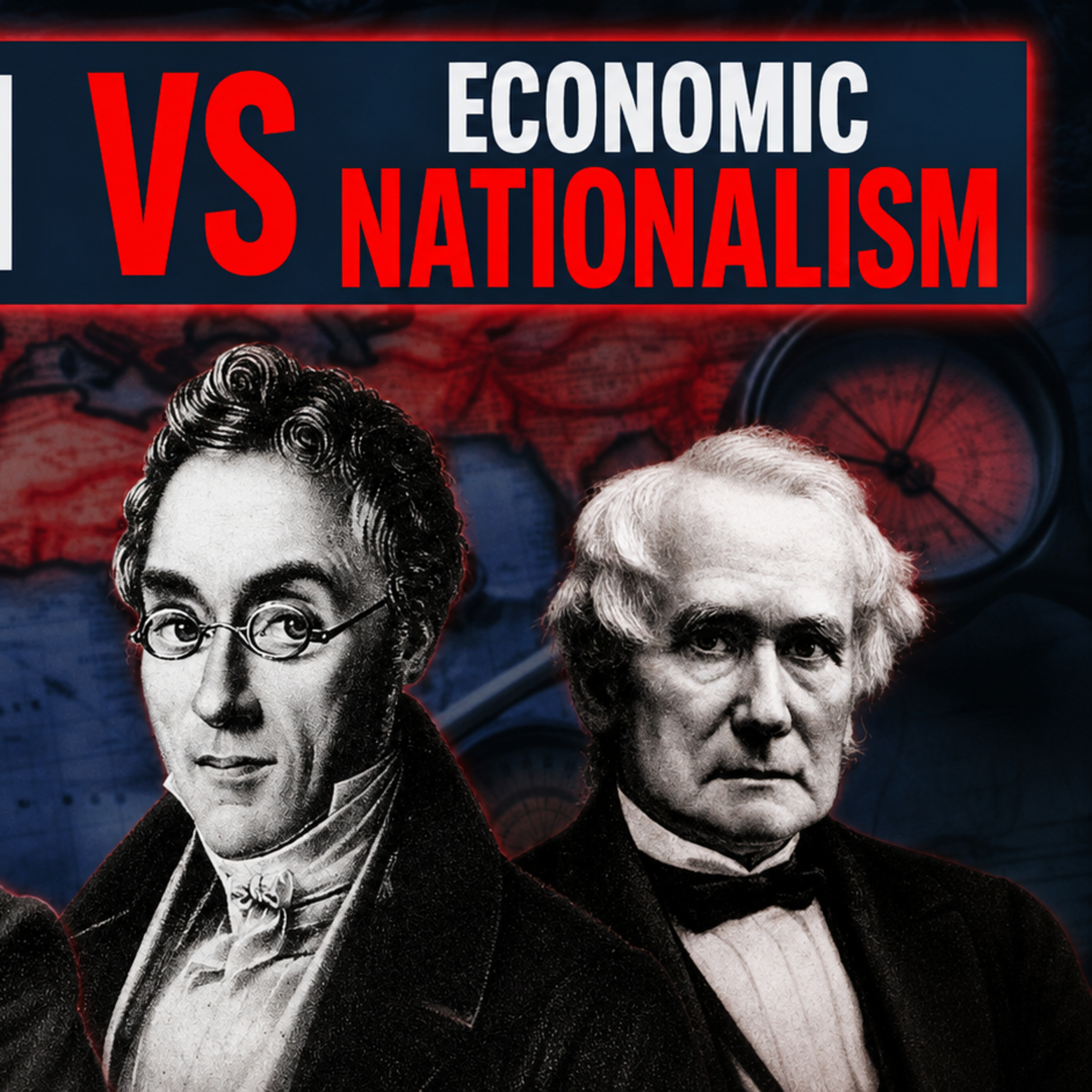
In this episode of 1Dime Radio, I am joined by Peter Ryan, founder of Ryan Research, to recover a forgotten tradition of political economy that refuses the usual choice between Marxism and free-market liberalism. We contrast Karl Marx with Friedrich List and Matthew and Henry Carey, trace economic nationalism from the American System to MMT and Ha-Joon Chang, and ask whether national sovereignty, protectionism, and state capacity offer a more practical path to development and anti-imperialism.
In The Backroom, the Patreon-exclusive segment, we expand this conversation across three additional episodes with Peter Ryan. We discuss nationalist internationalism and Arnold Toynbee’s theory of civilizational cycles; Henry Carey, rentierism, Marxism, and the Irish struggle for national liberation; and, in a nearly three-hour finale, the post-left/post-right convergence, the moral limits of markets, immigration, industrial policy, class coalitions, empire, and whether any populist project can escape establishment capture.
You can listen to 1Dime Radio on Spotify, Apple Podcasts, or wherever you get podcasts.
Timestamps:
0:00 The Backroom Preview: Nationalism Against Imperialism
3:52 1Dime Radio Intro
4:50 Peter Ryan and the Forgotten Economic Tradition
15:07 Karl Marx Versus Friedrich List
22:57 MMT and the Forgotten History of Monetary Sovereignty
34:05 Beyond Libertarianism: Why State Capacity Matters
46:43 Who Controls the State?
57:02 Friedrich List and the Carey School
1:07:26 War, Industry, and America’s Protectionist Turn
1:15:50 Matthew and Henry Carey
1:27:27 Henry Carey, Lincoln, and Marx
1:34:06 Nationalist Internationalism and The Backroom
GUEST:
Peter Ryan is the founder of Ryan Research, where he writes and consults on economics, history, technology, and business strategy. His work has appeared in Compact, UnHerd, Gript, and other publications.
* Ryan Research YouTube channel: https://www.youtube.com/channel/UCfRArvBl7O7AuQFtTTKaUCw
* Ryan Research Substack: https://ryanresearch.substack.com/
* Ryan Research website: https://www.ryanresearch.co/
* Our previous conversation, “Critiquing Left and Right”: https://ryanresearch.substack.com/p/critiquing-left-and-right-tony-chamas
BOOKS DISCUSSED:
* Roman Szporluk, Communism and Nationalism: Karl Marx Versus Friedrich List
https://books.google.com/books?id=8BfoCwAAQBAJ
* Friedrich List, The National System of Political Economy
https://oll.libertyfund.org/titles/lloyd-the-national-system-of-political-economy
* Ha-Joon Chang, Kicking Away the Ladder: Development Strategy in Historical Perspective
https://anthempress.com/books/kicking-away-the-ladder-pb
* Ha-Joon Chang, Bad Samaritans: The Myth of Free Trade and the Secret History of Capitalism
https://hajoonchang.net/writings
PETER RYAN ON THE CAREY SCHOOL:
* “The Carey Project Launch”
https://ryanresearch.substack.com/p/the-carey-project-launch-partnered
* “Rent Is a Symptom, Not the Disease: A Careyist Review of Economic Rents”
https://ryanresearch.substack.com/p/rent-is-a-symptom-not-the-disease
RELATED ESSAY:
* “Nationalist Internationalism: The Case for Nationalism Beyond the Nation-State”
https://1dimereview.substack.com/p/nationalist-internationalism
FOLLOW 1Dime:
* 1Dime Radio YouTube channel: https://youtube.com/@1dimeradio
* Substack: https://1dimereview.substack.com/
* X/Twitter: https://x.com/1DimeOfficial
* Instagram: https://www.instagram.com/tonyof1dime/
* Main 1Dime YouTube channel: https://www.youtube.com/@1Dimee
Leave a like, comment, and subscribe. Give 1Dime Radio a 5-star rating on Spotify, Apple Podcasts, or wherever you listen.
Get every episode summarized
Each time 1Dime Radio publishes, we email you a written briefing from the transcript — the topics, who appeared, and any specific claims, with the ad reads skipped.
Email me new episodesFree for 3 shows. No card needed.
Hosts & guests
Transcript ready
1,041 searchable segments. Every word is indexed and playable.
Full transcript
1Dime Radio — The Forgotten Left Economics Tradition (Ft. Peter Ryan). Machine-transcribed; use the interactive transcript above to jump the player to any line.
And so there's a large degree where these 19th century economic nationalists had it already baked into their conception and carry similar That their emphasis on national autonomy national sovereignty working within the nation is the first step towards this international harmony And that's why so many of them had like proto anti imperialist solidarity sympathies with other nations you can find this all over the place in Henry Kerry. He is constantly critiquing the way in which imperialism is being done China India so forth so forth obviously Ireland But just to really hammer that point You know tell the anti-nationalist leftist who like opposed it all there is never been arguably a more potent ideological force against imperialism then nationalism It's not even a question And to anyone who thinks right the nationalism is an obstacle
to internationalism And that which you know leaves the implicit pre-separition That actually like having America dominate the world or some kind of like empire spreading its tentacles brings us closer to internationalism than nationalism would well What led to the rise of nationalism imperialism so that's already like false and by the way i say that just because This thing you know, it's interesting with a lot of cosmopolitan leftists especially some more more explicit about it than others There's like an implicit view that some geopolitical power Is gonna be like like that that in a routine or nationalism is Gonna happen through that But the thing is it's like a lot of the anti-American communist Marxists They just think the same thing except that look. Oh, let's be some other state like some Soviet Union will basically Spread its view and somehow as if this won't lead to just You know states being subordinate to geopolitics as they usually are
It's like if anything why not extend the right to self-determination of all nations Like that's more significant because to be a true nationalist like in a consistent way Isn't many ways to be internationalists But internationalists on the cosmopolitan sense, but in the sense of like Well, every nation has its right to autonomy right and You actually do need a rules-based order to preserve that autonomy or else this is the will of the strongest in which case That's nationalism for me and not the or you know Right Yeah, yes, and I think um, it just comes down to Kind of like you know, no one else is gonna feed your family or care about your family like you got to get a job and Be responsible because you have the most incentive so like Nations have the most incentive to get themselves out of the trap of imperialism uh, and their nationals like guys and this is where it gets beyond just like numbers and sense of economics
The culture the politics the literature the poetry That all plays into creating the fervor For people to fight And push out imperialists and create their own sovereign nations um and fighting is a way that you confer legitimacy um To a new nation state that comes out of that an anti-aparitalist nation state so This is where like I can go back to Ireland as an example and If we're coming out of the 19th century No, Ireland is this small nation And they're dealing with the throes of how do they conceptualize their struggle You're listening to one-dime radio Become a patron at patreon.com slash one-dime to support the show and get access to extra content I'm not saying I'm gonna rule the world or I'm gonna change the world But I guarantee that I will spark the brain that will change the world And that's our job. We might not be the one But let's not be selfish and because we're not gonna change the world let's not talk about how we should change it
By moderately conservative I mean simply before you act think well about all possible consequences For us we're called someone a relativist By which I mean it's a person that holds that any views is good as any other views No one believes that every view is as good as every other views You want to do politics you got to fucking understand the issue It's not all just emotions and fantasy life Remember my friend a wise man can learn more from a fierce question and a food can learn from a wise cancer Welcome to one-dime radio today. I'm here with Peter Ryan of Ryan Research She runs a YouTube channel a subs tech and a website dedicated to researching topics that I would say are very in line with What we've been doing at one-dime radio in terms of being quite heterodox eclectic You know not afraid to broach beyond left and right
Peter has a very interesting journey and we'll get into that because in many ways it's Led into his path that converges with a lot of what I've converged on Through a very different direction It's many people know many people listen to what I've been doing the past year of kind of Got into the left through economics and found very frustrated with the left on many other things Various components with it and you know I'm reluctant as to whether I identify as left despite having very obviously left wing views on major things like economics and I added a conversation some of some of you might have listened to it on Peter on Peter's channel called critiquing left and right and That was a good discussion, but I don't think it'll really give a good idea as to where I really other risks are coming from and I think now having Peter on my show today a lot of a chance to give
His background, which I think is quite interesting and you know, why should you listen to this because The main topic and we'll get to it after introductions is on nationalism Marxism and A lot of the things honestly that a lot of people who Followed both my main channel and my second channel have found me through and really liked me most for which is the economics particularly MMT modern monetary theory And the theme only man nationalism versus Marxism because You know just to maybe disclaim I've never actually viewed myself as a nationalist prior, you know until I really was in Marxist circles And they would describe what I believe and propose as nationalist as a pit in a pejorative way And even if they say like okay, even if that's not jeronia only ideology is prioritizing a nation That's not all that defines it This is your methodologically nationalist because even if you have beliefs that are socialist and you believe in a national road to social and I makes you
Nationalists or if you take the particularisms of nation seriously or nationalist they call social democrats nationalist This led me to a bunch of interesting thoughts. We're going to discuss actually a whole line of historical thought That tends to get bracketed out frankly. I was completely mostly oblivious to Prior to Peter put a putting me on to it, which is that you know we're typically Todd that it's Marx or canes if you're like left wing on economics marks or canes But during Marx's time around that era there was like a whole Set of thinkers who were proposing ideas that were kind of arrival to Marx that Many ways overlap a bit with canes and is impregnared a lot of canes and is some and represent the kind of Maybe path not taken. We'll see. We'll we'll talk about that But first and foremost Ryan anything you'd like to add to introduce yourself and tell us a bit about your
Political journey and how you know, maybe you've found if you found me I guess because I was I'm very glad you found my work because then I wouldn't have found this That I'm just started going into Yeah, hey everybody. My name is Peter Ryan. I am the founder and CEO of Ryan research my own consulting company I have a podcast and a blog and all that other stuff Just a quick as short as I can summary of my resume what I've done to get here Um, I have a green economics. I have a master's in global history Uh, I spent a lot of time in my early years Working kind of the tech startup world eventually kind of culminating in really getting narrowly focused into cryptocurrency uh politically just grew up as like a normie in the suburbs of america Uh, kind of the typical leaning kind of right conservative Uh, in the wake of the 2008 financial crisis
It seemed like there was a Effervescence of libertarian media that proliferated It was naturally drew to it because it seemed like an answer to the problem that came about because of that it also To their credit. Uh, they're one of the strongest voices that were anti-war So I would say uh, I was maybe even more drawn to them because of the emotional response to being against the Iraq war and everything that came about because of that But also because they had these answers to the economy And so I eventually drifted more into that libertarian space Uh, and that what naturally drifted me more into the cryptocurrency space um and became uh the leading research analyst at a company called coin desk Uh, where I had the chance to really just go as deep as I wanted Into understanding the minnee heral realities um of this new revolution in capitalism um so much of what was said from the Political libertarians is that we don't have to think about our goals as we need to win elections or we need to like educate people
To get them on board with our platform Instead it became we can circumvent the state entirely because of the technological logic of cryptocurrency So that was attracted to me. So I from an intellectual level I was learning and going deeper on it and then from just like a journalist and analyst level Um, I was getting to know these capitalist. I was getting to know how these businesses work I was getting to know how the technology work and by my time in 2018-2019 Because I was so exposed and so intimate to this sector. I just became Totally uh disenchanted with it. Uh, it's kind of hilarious because we talk so much about These political spheres of about like how did you get influenced or how did some influencer change your perception But for me in this regard it was really that for my career. I had to study this thing So deeply that I eventually came to the conclusion that all these libertarians and all these sort of uh Silicon Valley
businessmen that were sort of Implicitly parroting libertarian ideology through their pursuit of this industry Uh, that their entire philosophy was bullshit because I saw materially How these guys cheated how these guys went into speculation Uh, how there was a lot of criminal behavior that ranged from the obvious fraud like a sandbakeman freed or uh, more just you know darker shady or stuff And so became completely disenchanted and decided that um, I was definitely as a young man uh, certainly Seated with these ideas of libertarianism and sort of directions of where to steer my talking points and all that And I realized you know rightly or wrongly if that was my fault or that's just the trap that most of us get um locked inside of uh, I had to understand The precursors and the road to how these ideological talking points came about
And so I said I have to just study history So I went back uh to the university college Dublin to get a master's in global history And that was my opportunity to basically um completely dump my a priori assumptions and just try my best to study I think a sort of a Central emphasis of it all is how did multiple nations develop how did we get from pre-development to develop Because that would essentially answer these questions around does capitalism or socialism or right wing or left wing make more sense Uh, who was right and It was fortuitous that I did that in Ireland because the unique history of Ireland I think provides a prism of how to look at this through And it provides the nuances that we might not always get when we kind of strictly look at the United States or the UK or You know russian. It's various iterations
Uh, and so that became a great learning experience for me Uh, and I basically landed in the vicinity of You know being pro nationalist but more so in the ideological sense of how these 19th century Uh, nationalist sought and these men were liberal. They were also educated They were not always coming it from like You know the very vulgar Uh, reactionary crude uh sense that we talk about nationalism in today's 2010s 2020s Um, iterations of it and so that's where a lot of Right wingers today would call all these 19th century nationals They would like call them communist or something because of the ideas they supported Um, or the way they saw internationalism So forth so forth So I began to go down that tradition Uh, and trying to learn more and more and and share my
New way of of seeing the world through this lens Since then And so I landed on you know, there's different terms we can use that are more accurate or more descriptive depending on the context but um We're going to get into a way to explain that through a book uh by an author that was released in the 1980s the author is roman s forlick and he wrote a book called um Uh communism and nationalism carl marks versus fredrick list um carl marks obviously the founder of marches Frederick list um one of the archetypes of intellectuals for nationalism or economic nationalism and so it's actually a great book that uh takes Conversation away from like carl marks versus Adam Smith And then also like you're saying sort of takes it away from like carl marks versus canes And so by reading this book and deriving some insights we can see the ways in which uh nationalism actually accords
To a more uh logical and a smarter tradition then is typically given credit for especially by the marx's to comment on it um And that if we fast forward um The what the ideas that fredrick list talk about and the wider zeitgeist that he was a part of talk about Are essentially uh in many ways like the only tradition because Whatever you want to say about kind of the aesthetics of any given state they're nominally communist they're nominally capitalist or They might do some bad things over here some good things over here The question of as i said how did a country go from pre-development to developed And if our goal is to answer that question the answer Are the policies that Fredrick list talked about and this is echoed in a more modern palatable scholar uh especially to marx's uh the south korean hanshun shang
whose Principal book that i think this probably put him on the map he won awards for it uh kicking away the latter um Was a modern take on this economic nationalist perspective although he adds a lot more death and breath to that um to that core idea uh and The fidelity to fredrick list in changs book um Is is such an emphasis and shouldn't be kind of reduced because he isn't eclectic thinker that you know will say good things about leftist The title kicking away the latter is a quote from fredrick list principal book from the 1840s And the concept is just all about how rich countries that develop first Did certain policies to get them to be rich but then there is an ideological Backwashing that happens where they make these free market ideas that they give to less developed countries as like the
Recipes of develop But of course what they actually do is they kick away the latter of development uh and thus locking Those countries into like a peripheral status compared to these more developed core countries And so That's where i think is a good sort of modern landing place to look at like ching As a descendant of the tradition of list and to look at these policies In kind of the way that chang does where it's not that like you know Is is this more right is this more wrong? It's that if you're trying to answer the question of how do you develop a country Which almost always comes down to kind of the core question Then the answer is economic nationalism the answer is fredrick list and the precursor of an economic nationalism actually has to Definitely go back to more of the political nationalism the cultural nationalism the sort of You know
Wu wawa nationalism in a sense Because those things come about because There are people that are inspired by these these other ideas that eventually find their way To more of the materialist economics So hopefully that gives a good yarn of you know who i am and what my ideological priors and current status are Yeah, that's a good point and you also have to win elections to at least for an democratic somewhat democratic society to implement those policies So no one can't really separate the economic and ideological nationalism completely Because i think many people on the left will agree with a lot of the economic nationalism They won't usually want to call it that the one will want to call it something like social democracy or Or something like kainsianism or whatever But it's like let's remember the ways in which these policies that
Are let religion made it right because y'all you need a degree of state power to do that And to have that state power be legitimated you need A legitimation story right or else you're just going to be called bad authoritarian evil. Oh can't do that Um you need something a legitimate that that's really important and i think That's that's actually you know it's brings me to kind of frustration I have with social democrats because it's i'm definitely closer to them than i am with marxas But i always found this and it's actually would kind of push me to flirt with marxas and communists When i did you know especially after Bernies first defeat In the 2016 and that kind of period up until really like 2020 then i was still you know Marxish Around until probably a couple years after that too flirting with it you know what i mean never like dying always a bit of an eclectic one But i always thought frankly like this sounds really Sounded to put it really
Bluntly like i thought like you know the problem with social democrats I mean there's a lot of them are a bunch of pussies like they're they're like totally stuck to political correctness They can't speak in a language of ordinary people They can only speak in this like technocratic pc hr mentality Honestly there just and that's why they get seen by people of all sides of the aisle is liberals Like they're just liberals You know you might be left-ish on economics and they'll say okay were progressives and it's like really is that deligit Idealgy progressivism so You know there's there's a lot there Some of the people who are listening to this right now will probably have heard of hotchunchang He's quite popular with a lot of left-wing people who's focused on economics. I really like some of those early I don't know if they cannot work as you know interestingly for me the one that i've read two that are out of hotchunchang where bad Samaritans and His introductory book on economics actually uh way back when
And uh, I thought those were really good. I mean that would those definitely were part of my journey as well I think like people have heard of eight learning economics the youtube channel i had him on um And i also also he's He's less uh the i would say Not as sophisticated but gary is economics on Recently Uh, who these people are both popular for popularizing. I would say the ideas that are very That i have some overlap with what we're talking about here We're gonna get into like a whole tradition that kind of pretty figured that Also for listeners. They'll be really relevant as i mean didn't this isn't this what kind of brought you to MMT So before we get into Friedrich list I know you're really into MMT Is this kind of like part of your journey because a lot of people love MMT here I mean i've gotten marks as to accept MMT a lot of them are where the most dogmatic opponents
The some of them got increasingly built on it the more they learned Yeah, so it's interesting because I may have been MMT-pilled before i got fully disenchanted From libertarianism or you know whatever variation of it Um, which is funny it it certainly helped in that journey But i like to stickly recall a period where i'm like still working in crypto my circles are crypto people And i remember like posting this meme of it was like um a guy carrying a drunk guy away Um, and then there's like more beers on the table or something like that off to the side um, and so like the meme was like the beers are like MMT Like they got on like Being carried away by the libertarians, but like i really want The MMT So there wasn't attractiveness That was so resonant back and um like given keltans book coming out
There's there seem to be something new and interesting that they were definitely getting at Whether you agree with every specific Rule of of keltans version of MMT um, there was like a core Substance to it all um, and i think maybe like to that degree like studying cryptocurrency What are you doing you're studying Accurrency you're studying money you're studying banking you're studying central banking You're trying to understand how inflation works and so like obviously a right-winger or a libertarian Will say something to the degree that you know always and everywhere Printing money means inflation go up Uh, and this is a formulacic certainty because of just the way our Um, you know money supply formula is written and like that makes sense and certainly makes sense to like younger people that like are just sort of Getting these ideas for the first time
But then like MMT is saying well wait a minute if you increase production more than you sort of print the money You actually don't do inflation And that's that's kind of the secret of it all so if there's more output There's more goods and services in the economy because you printed money and you invested it in productive things You actually offset inflation So it's not always and everywhere true That printing the money causes hyperinflation so then The entire rationale for why we need a cryptocurrency why we need specifically bitcoin as a limited supply currency Uh, it goes out the window and so like that that was very interesting to me as I was so Intimate with sort of these ideas around money central banking and so forth And so then I just kept getting deeper into Well, then it becomes and I don't know if the MM tears have always
Successfully articulated sort of the next level of all this Um, and I don't think they were trying to at that period of time like I don't think kelton was trying to make her book What happens next it was like let me just try to explain the basics of my MMT Well actually it is interesting because that book came about because she tried to Sell politicians on it originally and a lot of the politicians who she explicitly did not name Uh said, well, you know, this makes sense, but my voters will never believe this I could never say this to my voters. They're going to think I'm crazy And so she's set about to change things But then again think as this kelton then did work with the Biden administration and Um to try to push them in a certain direction and Look, there's a split in MMT all this cell you like there's a split between people who are more democratic party progressive adjacent And people who are trying to build something else Yeah, so that's just bill Mitchell is one of the people who's trying to build something else. I mean he's trying to
You I don't know how much you can gauge with bill Mitchell compared to the other MGRs He's my favorite him and I like L Randall Ray as well Uh, you know, it's not about like more Mosers great too, but Mitchell I think Paul is the one that politically tries to create a vision around his ideas In a way I yields me more. I would it like I said I don't think I would say like I am lockstep with the current cadre of MMT thinkers even though I like them a lot. I think they offer a lot of great contributions I think they're thinking interestingly Although I'm sure you would say a lot of them suffer from all these Kind of modern left-wing hang ups of the democratic socialist or sort of Wokeism or whatever not bill Mitchell Yeah, so there's but there's things um, whether it's him or others. Yeah, that filled that but I would say um Getting back to like What I think Kelton sets up is that she's saying like look in terms of the the logic of the concept um
Like this is why MMT like doesn't lead to hyperinflation and she explains it in day But then it's like MMT can be used Like to do anything because like as they always say MMT is like not a policy prescription. It's just an explanation. It's a description of like how this works So then it's like well, what is the secret recipe to getting goods and services more than the Value of the money supply that you print because then that's developed that's productive economics And so then it becomes well, how do you then locate the rest of that Recipe and that's where again that I get to Haundry and Chang I get to Frederick list and like all this type of stuff of how you develop an economy and use all that money supply To then invest in things and how you invest in those things and watch the criteria for that um, as you say How do you get the precursor which is the legitimacy of the government to do all those policies? But then um To recycle a little bit
um When it comes to again the kernel of truth of MMT it's not so much that I think kelton or any of these people woke up in the 2010s and said wow we invented this thing from whole cloth I think what they were drawing on whether they directly footnoted or not. I think some obviously have But I love of course. There's a wider tradition that stretches back into history um of people talking about the same idea whether there is a very A tethered connection to these fears or if these things are kind of happening um You know at different periods spontaneously Uh the fact remains that this there's a historical precedent and so this is where Doing my historical research you find things like chartalism um you find things like um, you know, nap Who was the famous chartalist uh that kind of went into all this stuff and if you don't like that You can find other versions of this stuff uh particularly
Um a 19th century Irish American economist named Henry Kerry who falls into the economic nationalist perspective alongside Frederick list And we can talk later about why I think he's probably a better more informative Uh thinker uh to talk about these ideas uh with uh, but like for instance he's an america he was Lincoln's like top economist everyone always says Uh, and he was pioneering so much of these ideas because he was going through this period of you know the stops and starts of the united states central bank of understanding uh the wild cat banks that were emerging in america And how that was maybe bad and and then how eventually lincoln's greenback how was that to be used and What could the future of the greenback? And so by the time lincoln died the civil wars over um, he's very much convinced that Uh more of a national central central bank that uses a greenback system
um would be a good mechanism to not just um you know print the money or or guide investment within the silo But he was very much interested in a similar uh concept to your getting out with uh Stributism is like he was trying to figure out how to marry these ideas if like there there's a role for the centralized state In in guidance in setting parameters in and checking speculation and corruption and and criminality but There needs to be that That sort of Going down to the local level and creating all of these like small banks that invest in their local areas um And so he was trying to marry those concepts with the greenback and so even then beyond You have in the late 19th century particularly in the midwest you have a lot of these populist monetary movement start of uh, you know people the greenback party you have uh people that were trying to say like you know
They were pro silver versus pro gold because like silver was the more ubiquitous metal So that would kind of stimulate a money printing per se Uh, and so all of these movements uh We're gaining steam in late 19th century America and there was always this populist flavor to it And it's funny that a lot of these MM tears today Come out of the University of Kansas Which is like i don't think there's maybe that much of a direct connection But just it's funny to me that so much activity of that late 19th century Uh populist monetary theory Was located um in the midwest near cancels so Yeah, that's the different way is to look at this stuff and to see Uh, not just any contemporary influencer thinker as The end all be all of this stuff and the only way to see it and you have to go along with the rest of the baggage that they bring themselves along But that it connects to this continuum of history where we can actually find evidence of
Other people saying these same things maybe saying better things alongside them and thus we don't have to accept All the baggage of this this this this current world dominated by You know the united states in sort of Anglo liberalism Uh, that we're all sort of infected by So Yeah, so MMT is an important piece of that MMT speaks to the transition as I get into this more developmentalist Focus on national economics, but it also speaks to like this continuum of history You touch on a very Important thing which I think is overlooked um when you're talking about carries rule and trying to square Something that involves distribution of power, but also The concentration of state power needed to get that done. This is a paradox that I think in some ways blurs the Authoritarian libertarian dichotomy
In the way that I think is important to look at kind of like how you know a lot of things today blur the left right distinction Left right binary Libertarian authoritarian is also something I find annoying is a kind of binary. It's why the axis, you know that Political compass axis. I think is very inadequate for understanding things and I touched on this actually and the last chapter of my Upcoming book on democracy freedom to change nothing I call it the paradox of authoritarian democratization Which is that even in theory if you wanted to radically democratize society through distribution of power You know, whether that be uh property Whether that be simply even a more modest like social democratic agenda like in the United States like uh What Bernie Sanders more or less wanted to do with his you know kind of new deal style Uh policies. I mean you would need to overcome a lot of the checks and balances that are kind of designed against that like from the Supreme Court the Senate
There's a lot of checks against that you would actually need to exercise a considerable amount of power to break through that even if you wanted to Do something that is actually more democratic even if you wanted to reform the system in such a way that would make the system at a Electoral level more democratic when it comes to let's say the rule of the Senate or perhaps you know Like let's see wanted the Senate to be randomly selected and to have congress the way it is because congress is kind of Probably more in most democratic part of the government To really looks any broad structural changes hits the impediment of the structure Designed against it and that's a paradox because like The constitution and the structures designed against concentration of the power But what if that is causing the problems and what if you need a concentration of power to break that But we're aware of the risk because like there's the obvious cesarous risk at play which is you know
You know populism has been used by like demagogues to concentrate power and create narcos dates basically like you know You go chavez and I mean there's it goes down the list. There's there's a lot of examples of that right But we have to be aware of that and I've always found this a frustration of social democrats um They're very especially in the US context where there's far more checks like in in Canada You know a majority government can pretty well do most of what it wants you know Uh the big the big barriers actually the provinces and all the you know the federalists the system Um the bureaucracies of the provinces the municipal governments which Again requires centralization overcome but I mean, this is the thing is like is that make me authoritarian But I also have a distributive vision in part which you know I like for me. I don't think I don't really subscribe to the idea of like socialism in the state sense like that it's only just
Government ownership is better. I think what government does matters more than what government owns So like this is so This is a really crucial thing, you know is like we shouldn't be afraid of state power We shouldn't be like anarchities or Libertarian bros who think like well the market will solve it or society will solve it or people will solve it Government has a role to play um and you can do that without being like a fucking Stalinist Which many people on the left will believe you have to either be a Marxist Leninist or Libertarian socialists of some kind and that's where I think we're a bit A heredox in that regard, you know Because some people who might who are projecting their own binary thinking on to you Might say aren't you propose are you just proposing Uh authoritarian social democracy isn't that fascism me well, this is where um A lot of the stuff is just common sense and natural and what I appreciate
To some degree about my libertarian priors is that experience forces you into extreme logical um booby traps or you know these esoteric debates you have with people and when you read things and uh from those authors um like for instance eventually like you're conservative then you're like A libertarian and then you're an archocapalist and you're forced to the extrema of like Okay, you may have accepted the night watchman state, but like hey You're just a wimp for doing that the real hardcore guys Just totally reject the state altogether And so that experience like again forces you to think through all the logical conclusions of certain positions and not just kind of stop at um You know unborderless uh like places where it's like it doesn't make sense to necessarily stop there Um like if I truly believe this logic i'm going to fall it all the way to the conclusion um, but what that does is like also like okay, so
For most people and for myself it's like um do I actually believe in this stuff of the non-aggression principle the nap Do I believe that the government as monopoly on violence is always Uh wrong because it essentially is breaking the non-aggression principle and that it does has this monopoly on violence um like that extrema like do I accept that um i don't i think The state is a neutral phenomenon of human societies I think that uh the state comes about because of a A natural settling point of how monopolies on violence are created That has a lot to do with legitimacy around that that legitimacy can be um enforced it can be very troubling it also can be very untroubling it can be very healthy and very holistic of the more democratic principle um And thus because it has a monopoly in violence i don't think that
There is this standard of a non-aggression principle that the state is unable to act like The state needs to be proactive in using its monopoly on violence and its secondary, interstitialary um Echoes you know in policies of that have embedded threats of violence with them you go to jail if you don't follow that you get Find if you don't follow that of course, but it uses that to structure a society create parameters create context for us to all operate within um and so 99% of people except these you know, whack job anarchists done either the libertarian right or um the more anarcho-communist left You know really have this like super logical conclusion that they have to reject the state totally But most people in the world accept the underlying premise of the state um and so then it becomes like okay, so like The state can make an enforced laws we all agree to this concept the question is
What laws are we allowing it to set an enforce and what is the legitimacy Process and feedback loop that supports all of that and so like that's the more pertinent question Um then just like oh well is it like if we do this that's inherently you know authoritarian and it's like Is it authoritarian to follow a speed limit? Again, like this is where like doing the stupidity of the libertarian rabbit hole journey um and having to deal with those questions like who's going to build the roads who enforces a speed limit Like all these types of things it kind of i popped down the inverse side of a lot of that type of stuff where it's like there needs to be a speed limit and there needs to be appropriate force used to like kind of Make sure society follows along all that Similarly you can go down the list with more commonly accepted realms where people are cool with um just like unvarnished state force which if you just if you have blinders on you just look at that one realm of society
um You of course you're gonna call that authoritarian because that's where forces being used um a lot of people think drugs and the black market of drugs um is a very appropriate place to Really emphasize the use of state violence to police it There's going to be people on both the right and the left that also see that as like you're either breaking uh, you know innocent business man's ability to sell a product to in to an innocent customer that wants that or you again on the left you're depriving uh the bodily autonomy of someone to ingest drugs of their own uh you know free choice um and and so forth a similar reasoning with the drug dealer um to be part of all that community um so Yeah, so when when you when you of that extreme logical conclusion And you look at very narrow slices of society um you might see that as authoritarian whereas most people in society see that as that
That is how society functions we all accept uh different degrees of force and the state interaction in different facets and again this is part of the real mechanism of not we just have to abolish the state or you know use the state extremely but it's it's a question of um different levers to be pulled and different contexts and when you use certain things and again that's what are the policies who are the people in it? What's our legitimacy feedback? And those are the more interesting questions um that i think disabuse like any of this like very very shallow react- reactionary like emotionally uh rejection of like anything like in this economic nationalist policy uh like recipe framework of being like overly authoritarian that you have to use the state to like force a tariff or you have to use the state um to like tell a bank like you can't invest
in stock speculation sorry so like i don't care if that comes off as authoritarian like that's in the best interest of the society the nation and so forth so yeah i i i i think that's a very just shallow critique that doesn't really deal with uh the underlying efficacy of each individual policy the wider context and again like 90 percent 99 percent of people agree with the legitimacy of the concept of a state with the degree to which the state can use them in opley and violence break the non-aggression principle to create parameters uh for society that's in the general best interest so it's just it's it's almost silly to have to like constantly get bogged down by these people up where we could make progress to all those more interesting questions that i rose so to just recap i think the shallow critique of talking about economic nationalism or talking about using the state to create conditions and stimulus in the economy to spur an act of development
or a parameter of development or how the market should operate or how individuals within society should operate maybe even on a cultural level i think the shallow rejection of that as an apiary assumption of an extreme uh right wing person on the libertarian side or the extreme left wing person um on the communist side which sort of horseshoe into just this general anarchism which totally rejects the state um i think that's a shallow critique i don't think it's justified and the real debate in questions to be had or all about what are the realms where can use that force what are the exact policies that we're asking for what are the people that are in government that are implementing those policies and what is the feedback loop mechanism so that we can elect people appoint people get people in and be able to remove them if they're doing wrong and take away legitimacy so that's where i think if we're getting into the realm of
of dealing with anarchists essentially and always combating our uh sort of uh solutions of how we should approach the economy um whether they're just like uh tactile uh anarchists where just like just in this space they have a big problem with the state starting itself in any way um but there may be like a neglectful to mention it in a space that they do like the state to uh to get into so i just i just i just think that's like a pointless debate to be had so that just brings us back into the conversation of um you know the state is good and how should we think about the state in certain contexts and as i believe you were saying right before me um you know there's this thing that goes back and forth with like authoritarianism and the state and whether you're on the right to left there's big state little state um and again it's very shallow but when i think about it i think it's like do i want you know be state like a really heavy burdensome state that has a lot of
unproductive functions to it and it's very messy and it's very um incapable of doing anything um except just consumption and sort of uh bringing everything down with it no i don't want it to be state but i don't want the inverse of that either which is the anorexic state i don't want to state that's so deprived of any nutrients and any muscle and any capacity uh to apply itself and have even the nutrition to use its brain power to apply itself in that regard um that is pointless it's a pointless institution so i think again this is just this is an implicit assumption of everybody that we want a state that's fit we want a state that has big biceps but a small waistline and that's the crucial thing uh when we think about economic nationalist that's that's kind of what they're getting at they are they are like the athletic state they're not the ob-state of like a caricature of the communist and they're not the anorexic state which is the caricature of libertarians so that's i think a good sort of contextual setting to place us in as we start to
get into uh the residence conversation i think that is a good way to put it because i think huns kelsen who's a great social democratic jurist critic of Marxism had this point called anarchism or totalitarianism and he critiqued the way Marxists tend to view the state which is they tend to you know whereas anarchists you know of course they reject it they want to abolish a state Marxists say they want to abolish a state but wait until you know clash classes abolished but in the process they don't really think about really deeply at all what kind of state they're trying to build there's a checks on it and what it can do in fact the checks really on the state or how powerful the state is that doesn't really matter so much as the supposed class character of it right whether it's like a proletarian state and if
it's moving to communism ostensibly it is uh you know that's what justifies it so for them it's like a proletarian state it's not really this more practical question that i think matters more from most people which is like what can the state actually do you know so when it comes to this line of thinking the one that rings a bell is obviously john minard canes maybe people who are adjacent to that mmt thinkers um you know thinkers you mentioned and are gonna give us a little brief overview to their ideas john carry Henry not john john Henry carry at john carried jesus christ no not john not john carry not not to be mistaken with the guy who ran for president against bush and failed but um yeah Henry carry and um Friedrich lists tell us a little bit about these two thinkers one of them correct me from wrong um Friedrich lists kind
of somewhat of a contemporary of marks a little bit a little bit after um but he's in that kind of time period whereas carry also but carries like you know directly trying to advise Lincoln tell us a bit about these thinkers and to what extent if if marks acknowledge them if at all yes so they are both contemporaries of marks um in some ways they're before marks um but i'll start off with saying that um the traditional story we hear uh as we get into economics uh or as we read our history or economic textbooks is that economics starts with Adam Smith in 1776 his book the wealth of nations comes on the scene and this is usually described as the uh text of capitalism
and Adam Smith is the archetype of the capitalist economist um but of course um later down the road we have Karl Marx come along says wait a tick some of this stuff is problematic he writes does capital he writes a couple volumes he writes other things like the communist manifesto um and he spurs a larger movement of Marxists of Marxism of uh social democracy of all the echoes of of Marx come about in the late 19th century and they're forward um and so these are these are the two temples of our economic understanding we have Adam Smith capitalism and a reaction with Karl Marx social it uh so we have right and we have left and when we think about a character like Frederick List who is probably the most famous of this tradition of thinkers um he is sometimes
mentioned in textbooks uh usually it is a very small aside a footnote where they'll say something to agree oh and there was this kind of other thing um that was kind of loosely maybe like capitalist and and maybe like loosely a little bit like uh status and even quasi socialists in some ways um but it's always painted as very simplistic very like non-relevant very much sort of yet happen for a few years and then we moved on and we got back to like this normal um one v one for Smith versus Marx and that description is more so a side effect of our cold war and post cold war Anglo-American liberals ikeis that is because obviously um Adam Smith became a much much larger than life figure in explaining the merits of
Anglo liberal capitalist democracy in conflict with Karl Marx's um you know whether Marx would agree with what became the Soviet Union yes or no but Karl Marx's byproduct of the Soviet Union a socialist Marxian some would call a communist state uh and so the cold war bifurcation of Smith versus Marx served the propaganda of the US versus the Soviet Union and thus you know there's no place for Frederick List to really fit into that although Frederick List and again we've talked about the nomenclature here the tradition he represents not capitalism not socialism but uh nationalism or economic nationalism protectionism words like these they were actually prior to the cold war much more popular much more broadly
much more widely read than people like in Adam Smith or Karl Marx depending on the country you're in and we can we can see this especially when we use things um like the google whatever it's called e-grams or like the trends that you can see when google goes into its sort of archival database of books that stretch back in you know hundreds of years ago and so when we keyword search authors um Karl Marx Adam Smith so forth so forth what we actually find especially in the middle of the 19th century and before that these economic nationalists these protectionists were way more influential in terms of their uh popularity among different texts all around then Karl Marx in the contemporary period of their writing and Marx only shoots above them towards the end of the 19th century and so how do we start to explain um this anachronism where we've
totally forgotten this tradition of economic nationalism protectionism in today but when these men actually lived and their ideas were going around and being proliferated they were actually hugely popular hugely influential um and so we just have to go back to the original text to the secondary text of people commenting on them and swirling around them uh and so we get to a figure like Frederick List um who again who who is usually the chosen architect to to go against a Smith or Marx um I would say that uh when you really get to know this material he is good he's a good introduction sometimes uh he is not the end all be all there's some things where he's a little too simplistic there's other things where uh he may be even like kind of goes against the grain of his other um fellow travelers in this tradition um and so that's where I would say he might be some of those yeah I would say the premier fellow traveler that I find is a better
archetype to fill this role is someone like Henry Kerry uh he was an American of Irish descent uh he was uh living in the area of Philadelphia um his father most notably was named Matthew Kerry he was born in Dublin Ireland um and it's important to talk about his father because these men really act as a as a duo as they cross through the 19th century uh and so Matthew Kerry was born in the 18th century in Dublin Ireland uh and as a young man he became part of the revolutionary milieu that was going on in Ireland at the time and of course this was a swirl of millions that was going on let's say France and the revolutionary zeitgeist of France of course that same zeitgeist was starting to swirl in America in the 13 colonies uh so these things were all sort of talking to one another being influenced by one another but there was a real uh starting point of
course in his homeland of Ireland uh and the men that were thinking about you know what they want out of their political independence of course how that connected to economics and so the precursors that would become protectionism are actually in many ways found in the newspapers and journals and pamphlets of that revolutionary zeitgeist in Dublin Ireland that was trying to kind of break away and have and eventually they failed at their revolution during the 18th century but the rationales behind that were very much having to do with creating these ideas around protectionism uh and so essentially because Matthew Kerry is a prominent writer of that scene he actually gets exiled he has to run away from Ireland because the British would uh not be nice to him to put it uh generously so he ends up actually in Paris for a short time he syncs up with Lafayette
Ben Franklin particularly uh while he was over there and so he thus you know kind of gets a footing and gets the advertisement of America he then goes from France to Philadelphia in the United States and he is part of the 1780s and 1790s swirl of creating the United States actually doing like the constitution drafting and one of the things that ends up happening is that his magazine which was called the American Museum be the premier periodical publication of the founding fathers the first draft of the constitution to be publicized out was actually published in his American museum magazine so that just gives you a sense of like this random Irish immigrant just became like a central intellectual of the early American period so that's that's where he kind of lands and
then he goes on to become a very popular book publisher uh his most popular um product was a bible so you know he was selling a lot of those at the time uh but he was selling other books he was importing books from Europe to sell in America uh and he was crafting his own um independent track of intellectual work and especially economic work um you could say that he wasn't as systematic he wasn't as maybe academic and professional as those were the come later but it's also contextual given the nature of his upbringing in Ireland uh given that you know again Adam Smith wrote the wealth of nations in 1776 uh and even that was a tremendous work um everybody was still trying to palm and figure out like what exactly is the discipline of economics um and let alone like what is what is the structure of academic work like in a university perspective so Matthew Kerry becomes
a prominent intellectual he really becomes associated with Alexander Hamilton's vision of economic nationalism uh probably uh next to a Frederick list even though Hamilton will be sort of known for his political chops and what he represented in terms of like federalism or anything like that the secondary thing that people will start to think of them about um are his works when he was the treasury secretary of america um his report on manufacturers um a great report that is part of the canon of protectionism of how people think about developing an economy and of course is um not just siloed in that tradition but is you know part of the general american a canon of of sacred um so Hamilton's important and his report on manufacturers important and his sort of general like you know he supported a central bank and and other things like this um so
Kerry becomes really associated with that the thing is though that Hamilton you know he kind of has a fading out um a power that even though people like we have the play of Hamilton and there's sort of this like putting Hamilton on a pedestal he kind of has a sour ending because he kind of fades out of um like ability and this has to do with kind of like my it's weird there's like because he's yeah just there's like war things that are like it's sort of an esoteric concern but he like falls out of favor and then he'll obviously like dies in a duel uh so his like his story ends actually pretty early in the construction of the american state and the ideology behind it and so it's actually funny the degree to which we have a cult of Hamilton today if there's any one man that is responsible for that i would say it is Matthew Kerry because Matthew Kerry lives into the 18 30s if not 40s i forget the exact date um but he is like the principal
fanboy of Hamilton and i think to some degree he was a rather short uh you know Irish immigrant with an accent and he had a bum leg so he walked weird i just have kind of a feeling he preferred that his ideas were represented by this larger than life figure of Hamilton who was treasury secretary and was washington's best friend and like all this other stuff um even though there are things that Kerry and Hamilton when you read their direct works they actually disagree with each other and and probably would uh you know find that their finalized policy prescriptions would be at odds sometimes but anyway that just goes to the point that Hamilton becomes a larger than life figure of this this has a lot to do with his report on manufacturers as a as a text that can continually be used as um you know solar scripture you can go back to this thing and and derive an appeal to authority although it's logically good in its own right um
the funny thing about that is just a quick aside is that there's speculation of how much Hamilton himself wrote the report on manufacturers it's in fact if you if you study the process of how it was made um his assistant was a guy named um uh Trent Cox something like that his last name was Cox uh COXD uh and Cox was writer in Matthew Kerry's American Museum Mago and they were fellow travelers and um and colleagues in in developing their ideas and so there's even like a degree to which um how much inspiration influenced did Matthew Kerry have on the creation of the report on manufacturers and thus as he continually uses that uh and Hamilton into his uh twilight years uh like is he kind of shilling his own material that he inspired because these things were all present not and not just his writing in Dublin Ireland during that period
but his fellow travelers within Dublin so the these ideas were already established in contrast to the kind of Anglo liberalism that was existed in the 13 colleges at the time because the thing that ends up happening that's important uh and and please continue to follow me on this this long rant is that despite Hamilton trying to get these ideas across it despite Matthew Kerry being there alongside to publicize and push these ideas um america in these first decades remains kind of inert on the economic policy front of course the the political revolutionary aspect is very prominent of breaking away from England of of how it should be handled with democracy and taxes and all that stuff uh but they didn't grasp the Hamiltonian program at first and it basically takes uh the period of the Napoleonic Wars in Europe because Europe's a trading partner and so the trade gets disrupted
from that so america can't really trade and there's reasons around they decided to do that from a policy level and that the other countries obviously couldn't trade with america and then they end up fighting a course of war the war of 1812 with the England again and that is what really shakes them to the bone and so in this period of time you have president Thomas Jefferson you have president James Madison and these guys are obviously coming out of the south and they're representing this very as isid kind of a nerd kind of you know not really thinking too far ahead Anglo liberalism uh like as long as we can just have this agrarian idealism of you and farmers and our plantations we never have to worry about anything and isn't this so grand and great um but the conclusion of the war of 1812 uh basically reveals to them and a lot of other people of that persuasion that that's stupid that's like un like completely non-viable uh and so I know this to be the case
is because they directly wrote letters to Matthew Kerry having may acopus about yeah I was kind of wrong to disagree with you in this sense and you were kind of right a lot of these ideas and so not to say that they become overnight conversions and totally endorse these programs of Matthew Kerry but they they basically are pieces of evidence that show the zeitgeist transition away from Anglo liberal agrarian idealism to a more Hamiltonian economic nationalism and that is kind of being led by Matthew Kerry because in 1814 to 1815 he releases a series of pamphlets that then become a book called the olive branch this had a lot to do with politics and sexualism of north-first south of thinking about the wars thinking about how to sort of link the states up thinking about federalism but this sort of argument also brings people along
the way into the gravity of his economic ideas and so these economic ideas start to come about um tariffs the first tariff is the tariff the Dallas tariff of 1816 that's the first one directed not to raise revenue which is kind of a misnomer like when we talk about economic nationalism we're not talking about tariffs just to raise taxes this was the first tariff directed to influence very particular manufacturing sectors um so you're you're getting a very kind of like scientific application of policy to direct the economy into manufacturing then you have um internal improvements so thinking about highways thinking about canals this takes a little bit longer to get through congress um and to get into federal policy which eventually does sort of towards the end of the 1820s but uh the eerie canal famously starts commencement uh of the construction in 1817 uh and so at a state level you're seeing the state the New York state and
might not be the US state but the New York state which actually has a lot of influence uh it gets heavily involved in the construction of the eerie canal and that's sort of an underlooked aspect of how much state and public involvement there was uh but that becomes that becomes a huge success in uh obviously linking the agricultural communities um more inland uh to the harbors and ports of New York and so forth uh so that was a huge aspect of uh the rise of America uh so you have tariffs you have internal improvements um and then you have like national banking um if people recall the national banker the central bank of the United States uh lost its charter a few years before the war of 1812 is that important to clear that's important to clarify you know where this is not the same guy the the dad and the son dad with Hamilton the son with Lincoln and you know you mentioned about how uh Lincoln today is like kind of
night and thus area Hamilton is sort of gotten all popular again with like you know the play and all that it is interesting because Hamilton used to be the kind of more villainized founding father he's the one especially people on the left didn't like the left actually used to like Jefferson and uh yeah with weird this is what hey this is why i said Matthew Kerry like on a thorough examination these two men Hamilton and Kerry would disagree with one another um they they have like different sort of antecedent motivations and perspectives that they come to the table with even though they kind of kind of converge with the report on manufacturers and as i would call it like Hamilton is doing cynical economic nationalism whereas Kerry is doing like idealist economic nationalism yeah what i was just about to say is like it's funny that Hamilton is the more liked one now and i think a lot of that has to do with the racial component like
they kind of we really discovered that Hamilton was you know more progressive on race for his time I guess because he grew up in Jamaica i mean the British uh Jimmy what is it just what he was a literal immigrant no no i'll get to it i'll get to it yeah it just it does tell you a little bit about where the left has gone a little bit which is you know it judges by these categories more used to be more skeptical Hamilton but one of the good the first actually left wing defenses of Hamilton that i read was radical Hamilton by Christian perenti you might be familiar with it i had Christian perenti on my show a while back he's a really interesting guy he's gone in a kind of post-left direction um and uh very interesting guy i have some disagreements with it with him of course but like what he did point out about that about in radical Hamilton was this state led
development and when we're talking about that i think carries very well with it and then i'll bring us to both carries but to list and list i think the detail you dropped before that's worth reminding is like how to enchain credits list is his most important influence that's pretty significant i mean that oh yeah that is very significant because how to enchain is gary's economics as biggest influence that's so he claims so he claims yeah right he had a monon show even i don't know how perceptive gary is of like all the no probably not tangents that one could go deeper on with chain but but yeah sir i mean chain like his shallow description is like of course he's like with the left and he's with that kind of that gary's economics vibe of course so to
agree that anyone goes deeper into like hey what's behind you know kicking away the ladder like what are you drawing from and and chang when he'd never describe himself like he's not he's not a a joctrine heir or listing and he's his description of what he is is like i'm a guy who's read a lot of stuff and i liked having a toolkit of a little bit of Marxist a little bit of listing and stuff that i applied depending on the context um so i mean that's i think how would chang would describe himself so what is from carry's son's relation to Lincoln what did he do exactly so so let me just finish this like how do we get to the son Henry Kerry by going back to Matthew Kerry the father and so i think these guys just like in your head too like you have Matthew Kerry the father he's a little bit short he's got a bum leg you know he's got an irish tweet accent to him and then the son Henry Kerry he's taller he's kind of jockier he's born in america so he has an
american accent so if that helps separates them when we talk about them so anyway we have Matthew Kerry as i said born in Dublin part of that revolutionary milieu a lot of the protectionist economic national ideas are already formed or being formed in Dublin at that time 1770s 1780s he is exiled from Ireland because the British are coming after him for his written material and so he ends up going to France he meets Ben Franklin he then decides i'm going to make my luck in Philadelphia in the american project uh and doing so he established himself as a very influential and impactful publisher uh with the american museum magazine and then with his sort of holistic book publishing business where he's able to really dominate a lot of the intellectual zeitgeist of early america and so with that being said um he is associated with hamilton
however as populars hamilton got with being the treasury secretary um he has a fading out going into the 19th century and he ultimately dies very early uh and so the legacy of hamilton was most taken up by a character like Matthew Kerry who constantly referenced him and constantly talked about him as kind of an appeal to authority for his own ideas even though there's a more esoteric analysis one could do to show how these two men would probably differ on a lot of different accounts but as we get through the numpley out of wars and through the war of 1812 with england the founding fathers who became president tomas jefferson james madison who were from the south and were part of more of a agnostic anglo liberal uh agrarian idealist tradition uh through those wars uh and especially the war of 1812 became persuaded that this agrarian idealism was really stupid
and they directly wrote letters to math eukary explaining these mayocopas now they didn't fully become overnight converts and zealots but they were pieces of evidence that shows the transition out of that early american sort of anostasism to economics and just to focus on political independence to more of a soverentist approach that would echo the report on manufacturers of hamilton and that would really give birth to mathew kerry the father his sort of worldview mathew kerry had a best selling book they said it sold only second to all the bibles he was selling in america in terms of national bestsellers who's called the olive branch it was a series of pamphlets that became a book in 1814 to 1815 this is where he's sort of started to talk about the project of how to better construct the political system in the United States they dealt a lot with politics about how you do federalism but this brought mathew kerry really into the spotlight and allowed his
economic ideas to really take center stage and so those economic ideas were tariffs were internal improvements were a national central bank and so these things the tariff first tariff directed at manufacturing happens with the dayless tariff of 1816 then you have internal improvements this is a little bit slower to get through the federal level it really kind of commences in the 1820s toward the end of it but on a state level you have projects like in new york the eerie canal that has a lot of under looked public direction and implementation behind it but that becomes a huge centerpiece of the emergence of economic success and development of the united states linking kind of the midwestern frontier agricultural areas with the more urban port cities of new york and so forth so that becomes a big reason that's commenced in 1817 and then you have the national bank
which was attempted but before all this commenced it lost its charter and was abolished a few years prior but because of the kerry popularity and the conclusion of the war 1812 it was rechartered and brought back and so these three core planks were all implemented in the wake of kerry's rise and this basically starts to become more systematized under the umbrella of the american system which is most popularized by the kentucky and politician henry clay in america and clay becomes a big proponent of this and he's a disciple of kerry now kerry continues his book publishing but he also starts to create a proto think tank network essentially and he is teaching others this he's getting colleagues he's by no means you know the one and only source of these ideas there's other
men that are coming up with this stuff but he is really a ringleader to some degree he's connecting all these dots together with people in centralizing them in his sort of philadelphia and think tank institutions and thus we get to sort of the late 1810s into the 1820s and this is where a very interesting young german named fredrick list who is talking about a lot of again sort of a focus on political liberalism and independence in that regard is also like encountering a degree of like german you know oppression and he gets exiled to philadelphia and so by happenstance he ends up in philadelphia as a younger man and he becomes under the wing of this think tank network in fact fredrick list whose most famous work the national system of political economy which comes out in the 1840s before that his other most famous work are is called the outlines an american political
economy and he does the principal research work within this think tank network so much so that in the introduction to this book he thinks the think tank i'm forgetting the exact name of what they called themselves right now but you can read the introduction and see he is thanking them as an essential institution that he was able to learn and get statistical information about early america and how its economy worked uh so no doubt through the resources provided but also through the the indirect and direct zeitgeist totalage that he was experiencing then totally shaped this young germans perspective on the economy and whether you want to say it or not mac you carry as like the executive of this institution you know helped give birth to that first text and ultimately the second text in the 1840s by proxy and so matt you carry becomes such an important figure in the
creation of fredrick list and fredrick list is in every way derivative in a neutral way of not insulting him i'm just saying he is derivative of the network in zeitgeist matt you carry created in filadelvia and the early american project that was evolving into this Hamiltonian economic protectionist nationalist project and so then we start to fast forward matt you carry has a son so again think matt you carry double an accent short bumleg his son henry carry taller jokier american accent born america so he obviously is brought up in a much more interesting environment he's around the founding fathers he's in filadelvia his father's got a little bit of money there's books surrounding him so he becomes a much more systematic thinker he becomes a much more you know a a would be professor type when you when you examine his writing then his father so
he ends up in his early days being more of a businessman in the book business but starts to get into thinking about himself as an independent writer he funny enough kind of has a little bit of teenage rebellion and kind of like backs the Anglo liberal tradition a little bit and he's like kind of endorsing Adam Smith to the chagrin of his father but eventually around the turn of the 1830s into the 1840s as he arrives around his 30s into his 40s he has a complete like literal overnight you know zealot convert experience and there's a quote that he uses in one of the texts that he wrote where it was like a bolt of lightning struck him or something and ever since that night he liked totally rejected some of the musings he had as a younger man with kind of Anglo liberalism and totally took up the mantle of his father i think there's probably a some degree to do with
the ramifications of the economic crisis of the panic of 1837 that occurs has to do with the passing of his father that occurs around that period it has to do with the fact that we're gearing up and especially into the famine of Ireland which is very much is a is a conversant issue between him as a a man one step removed from Ireland his father being Irish who writes alongside all this other stuff a lot of text about Ireland they were embedded in the immigrant community of Philadelphia where his father literally was on the side also doing like non-profit institutions to help Irish immigrants get off the streets so not to mention you know a republican revolutionary secret societies that may have also been part of that milieu so there was a there was a no way and Henry Kerry eventually goes over to Ireland to experience and see things himself so these kind of events the panic of 1837 the general milieu that Andrew Jackson created the sort of aftermath of that which I think is he's
probably a bad president which people disagree with me on but panic of 1837 Andrew Jackson his father dying and then the Irish famine the Irish friend becomes like a really big case study of like what happened here and there's there's an economic explanation for why this happened and so as he then emerges out of the 1840s into the 1850s and 60s and 70s he becomes this master of trying to systematize and complete the ideology of economic nationalism so he writes a series of books and he ends up becoming a very prominent economic economist within the emergent wig tradition in early America and this would give birth to the Republicans and of course this is where Abraham Lincoln comes out of and so that's where it's told all the time whether Lincoln was reading Henry Kerry or they had these direct advisor relationships when he was in the White House Henry
Kerry became such an influence on how Abraham Lincoln saw the economy and what's funny as a small footnote I tend to hear sometimes Marxist today go on about how Lincoln thanked Marx or something because Marx congratulated him on winning the presidency and this is evidence that Lincoln was a Marxist because he wrote you know a nice word or two about Marx and it's like that is such paper thin justification for an association whereas Henry Kerry was like like literally an advisor literally a prominent thinker within the wigs and the Republicans that we can easily attribute a relationship so the idea that there would be like a Marxist kind of one upsmanship on like what were Lincoln's ideas on the economy is like very laughable in this regard so anyway you have Henry Kerry you have him
backing Lincoln you have Lincoln listening to him and then in dust you get policies like one of the most unique to come out of this period that goes into civil war is the greenback and so the green back is as we were discussing with mmt is this creation of sort of a state money without debt and pushing that into the economy funding him as any get funded and even though it's very complicated of how you associate inflation with either the war because like wars destructive war is going to cause problems and there's inflation but there's also this printing of the currency and there's a debate to be had of how bad truly was the inflation do if you could single it out this greenback money printing but contemporary in the contemporary timeline of this Henry Kerry really figures out like this is not something just for wartime we can use this in peacetime and this should be a central plank of how we start managing the relationship between
a national central bank and sort of a ton of local banks and he tried to marry as I said before this kind of puzzle and paradox of you need a degree of statement opley to do these certain things with a national bank to print greenbacks to sort of set certain standards but you also want a lot of decision making made at the local level and thus you want numerous banks across the local level to invest in the economy so there's other modern ways to kind of explain that concept but Kerry was in real time figuring a lot of this stuff out and setting the table for what would come next which would eventually culminate in people like Stephanie Keltin that comes and does her book on MMT in the past few years so that's why Kerry is so interesting because he talks a lot about this and and finally one of the other things that we should say in
regards to Marxism in the context is that you're asked at the beginning of this discussion about these men were they contemporaries of Marx and so yes but even not just they lived at the same time of course Marx and list were Germans so they they had that in common but they also kind of passed each other by in writing for a newspaper in Germany and so there was an experience where like they were like kind of that close like in terms of getting a job as an editor but more uniquely was that the New York Tribune in America was a very prominent Wig newspaper and Henry Kerry basically owned their economic vertical he was their guy writing about the economy he was very important for that publication funny enough guess who else was a very important journalist for that publication Karl Marx he was their European correspondent so you literally
have side by side the same newspaper Marx and Kerry writing articles blah blah blah blah and they had they had letters private letters back and forth and what's actually very funny is that Marx has way more of a gripe with Henry Kerry then Kerry has with him Henry Kerry is almost like oblivious to Marx having a problem with him because he will write to Marx and be like hey I loved your book you know you should check this out or like he's like very blase about the whole thing oh this was interesting you wrote on Europe and then Marx will like to angles like in another letter he'll be I hate this guy Henry Kerry he's got this wrong he's got this you know he doesn't see his problem here and that ultimately turns into Marx includes in his public writing critiques of Henry Kerry so we have Marx directly he critiques Frederick lists too but I think there's
like a stronger critique almost to the stain he kind of has for Kerry and then this goes back to the fact that I think Kerry has a better command of an ideology and then Frederick lists does and so it's almost like Marx saw him maybe as a more worthy opponent Marx does say directly Kerry is the only American economist worth listening to so something along those lines so yeah that's it that's an interesting contextual fact of understanding these men and despite the fact that no one knows who Henry Kerry is he was like central within Marx's mind in how he thought about the economy and who he thought was at odds with him and also I mean you used to think Russia was too backward for socialist let me sort of changes on that at the end and look the guy was like 45 who knows what he would have thought if he lived that's why I'm so again taking this
man's word of is like the word of God like the way fucking so many Marxists treat him like a profit but anyway anyone who's really interested in what we're talking about here it's one of my favorite essays I've written this year national internationalism the case for nationalism beyond the nation state and it's overlapping with a lot of what you're doing as well you wrote this short essay on the Palestinian is the Irish and the Boris which talks about the kind of internationalist dimension of Irish nationalism and it's why Irish nationalists today should support Palestine unlike the kind of you know right-wing nationalist who are against that who think that that it's a distraction actually it's very important to it yeah I highly recommend people check that out and by the way it's there's audio there's audio you can listen to it in audio who lazy to read you can listen to it and it's on sub-stack it's free guys you know some people are afraid of going on sub-stack I don't I've
noticed this phenomenon where a lot of people don't check out sub-stack because if they don't have the app there's their new to the platform they've never been there they think it's something you have to pay for you don't you can just just follow and subscribe for free it's completely free subscribe to both of our sub-stacks in the description and you can listen to the nationalist internationalism essay because I just dropped the genealogy of woke as a mess a audio on my on my Spotify so I would like people can listen to it but I've had on the sub-stack for like months if people are like holy you live released for free I'm like it was always free like did you you could have just checked it out there but anyway but it's not free though is the back room segment and that is what we're going to discuss next we're going to discuss the more cultural component of nationalism of economic nationalism civilization we're going to talk about Arnold Toin B and who's a thinker who was influenced by ibn Haldun those who are been listeners for a while on this channel though they've done podcasts and a main video channel on this thinker ibn
and the cycle of civilizations on decadence on you know how civilizations rise and fall we're going to talk about all that kind of stuff in the back room along with you know some of the themes we discussed here regarding nationalism economics yada yada so go check it out but come a patron if you're not already it's the best way to support this channel it's really the only way this channel survive it's my main source of income from all what I do here and how we keep this show afloat so we'll see you there in the back room and in the discord too because you get that too by being a patron and check out ryan research become a patron at patreon.com slash one dime to support the show and get access to extra content i'm sick and tired of revolutionaries or protest movements which focus on those ecstatic moments oh my god one million people on shintagma square on tachrir in ishtambul and so on we were also enthusiastic there and so on
and so on i'm not impressed by that at all i think this is even relatively easy to do the true test of a revolution or radical social change is how do ordinary people experience the change when the ecstatic moment is over when things return to normal that's the most difficult task when nothing happens when just everyday life is here how is this everyday life different from the previous everyday life
More episodes
More from 1Dime Radio

The American Revolution: A Revolution Unfinished
1Dime Radio

The Post-Woke Age?: Mamdani, AI Job Loss, & the "Vibe Shift"
1Dime Radio

Marxism vs Elite Theory (Ft. Chris Cutrone)
1Dime Radio

The Culture War is The Class War: A Theory of the Two Lefts
1Dime Radio