S3e17: Marlene McNab – Healing Intergenerational Trauma
About this episode
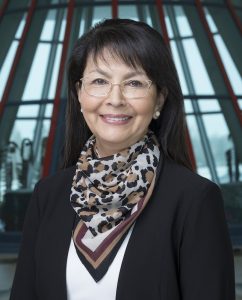
Marlene McNab is our guest this week. Many years before Marlene came to the Process, she found sobriety. She came to see, though, that her underlying intergenerational trauma still needed to be healed. Her work at the Hoffman Process profoundly supported this healing. After the Process, Marlene felt she had “mended a broken link in her family chain.”
A Nêhiýawak (Plains Cree) member of the George Gordon First Nation, Marlene learned about the Hoffman Process from a health store magazine. She saw the Hoffman Quadrinity symbol and became curious about it. It appealed to her because of her Indigenous background and how they use the Medicine Wheel. Subsequently, she found it easier to relate to the Process work through this similarity.
Marlene attended an Indian Residential School, as did her mother and grandmother. With deep compassion, Marlene shares the painful truth about the horrors of these institutions and the pain they have caused for generations of Indigenous peoples. One of the most profound processes she had to heal was learning how to grieve because “this grief is real.” Marlene adds, “It’s a living energy I need to consistently release.”
Photo by David Stobbe / StobbePhoto.ca
More About Marelene McNab:
Marlene McNab teaches Indigenous Social Work at the First Nations University of Canada in Regina, Saskatchewan. Her personal and professional paths have culminated in a desire to share what she has experienced in her healing process and in the reclaiming and remembering of her Nêhiýawak (Plains Cree) identity.
Currently, a Ph.D. candidate at the Johnson Shoyama Graduate School of Public Policy, Marlene’s research focuses on studying the recovery process from intergenerational trauma and addictions. She’s also developing a recovery-oriented framework for substance use interventions.
In her 30-year career as a community-based trauma therapist and professor of Indigenous social work, Marlene has witnessed first-hand the impacts of historical trauma in Canada’s Indigenous communities. As a result, she has been steadfast in helping others break intergenerational cycles, create awareness, and heal trauma responses.
As mentioned in this episode
The Medicine Wheel and The Four Directions
History of the Nêhiýawak (Plains Cree)
First Nations University of Canada in Regina, Saskatchewan
Get every episode summarized
Each time The Hoffman Podcast publishes, we email you a written briefing from the transcript — the topics, who appeared, and any specific claims, with the ad reads skipped.
Email me new episodesFree for 3 shows. No card needed.
Hosts & guests

No transcript yet
This episode has not been transcribed. Request it and it moves to the front of the queue.
More episodes
More from The Hoffman Podcast

S13e1: Jo Mattoon – A Wisdom Tradition With Deep Roots and New Shoots
The Hoffman Podcast
S12e22 (non-grad): Cory Muscara – Life is the Meditation Cushion
The Hoffman Podcast
S12e21: Mike Ingrasci – The Gifts That Come With Change
The Hoffman Podcast
S12e20: Sara Bissell Rubin – Living With the Human Experience of Pain
The Hoffman Podcast