S13e1: Jo Mattoon – A Wisdom Tradition With Deep Roots and New Shoots
About this episode
“Maybe there’s a person who’s written a book, or a professor who’s done some kind of research, and then they build a curriculum based on that perfectly wonderful approach to things. But that is not the Hoffman Process, right? Because, really, Bob Hoffman understood things more intuitively. …This is a wisdom tradition program.“ – Jo Mattoon
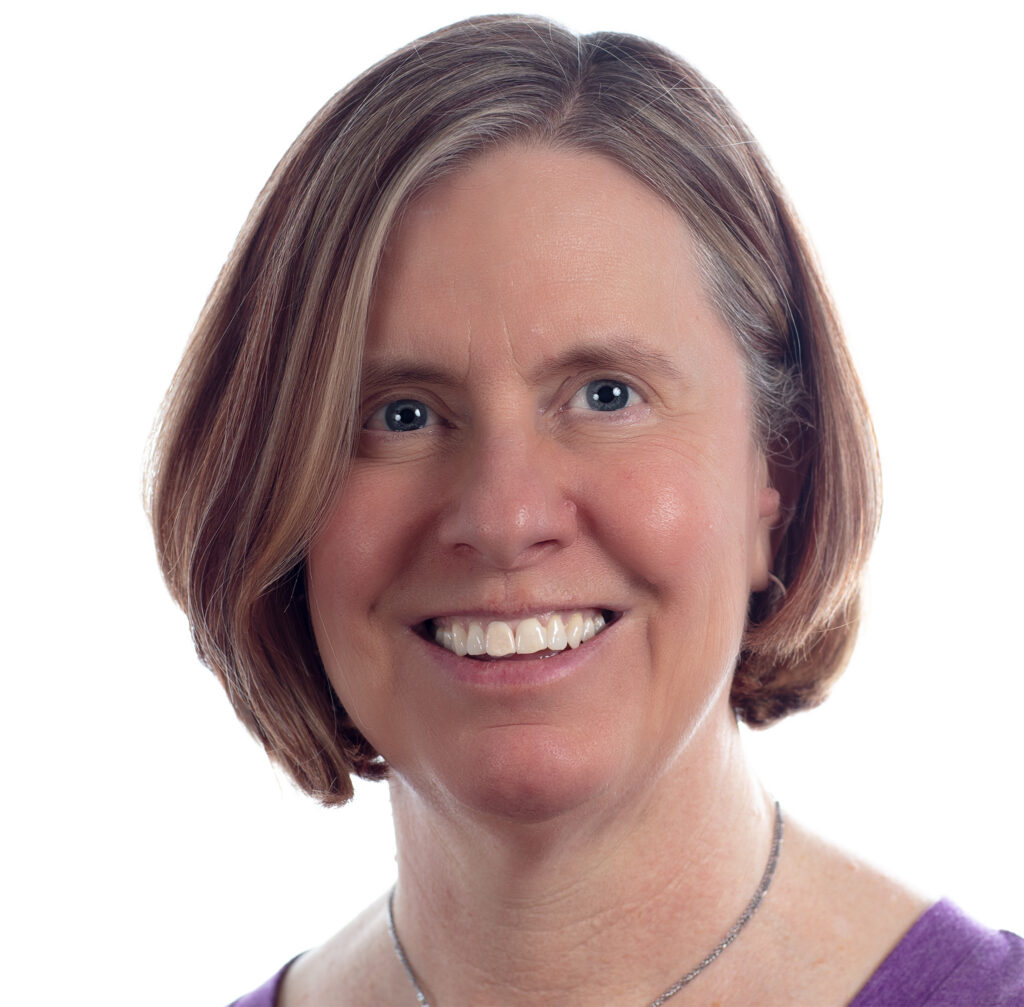
Welcome to season 13 of Love’s Everyday Radius. Our guest is beloved Hoffman Process teacher, Jo Mattoon. In this fascinating conversation, Jo shares the ongoing changes happening within Hoffman Institute Foundation and the new Hoffman centers worldwide. Behind the scenes, Hoffman teachers and staff work to support the change and growth needed to meet the desires of those ready to take the Process and of our alumni.
You’ll hear stories about Bob Hoffman and his collaborators who supported him in creating the Process. As Programs Manager, Jo shares how the Process training guide is continually updated while remaining true to its roots. And in the stories about the new Hoffman Center in China, you’ll discover how the wisdom tradition at the heart of the Process can support different cultures worldwide.
From the growth and development of our teaching team, to the occasional updates integrated into the Process, to our new alumni portal, Hoffman Alumni Home, the Hoffman Institute continues to fulfill Bob Hoffman’s vision of “world peace one person at a time.” Hoffman International continues to grow its capacity to offer the Process around the world and shepherd serious change and transformation in those who attend through the opening of new centers around the world.
At the center of everything Hoffman does are the deep roots of wisdom that have grounded the Process since its earliest inception. Deep roots support new strong shoots. We hope you enjoy this grounded, wise conversation.
https://youtu.be/F9iq_XheMDM
Listen on Apple Podcasts
Listen on Spotify
More about Jo Mattoon:
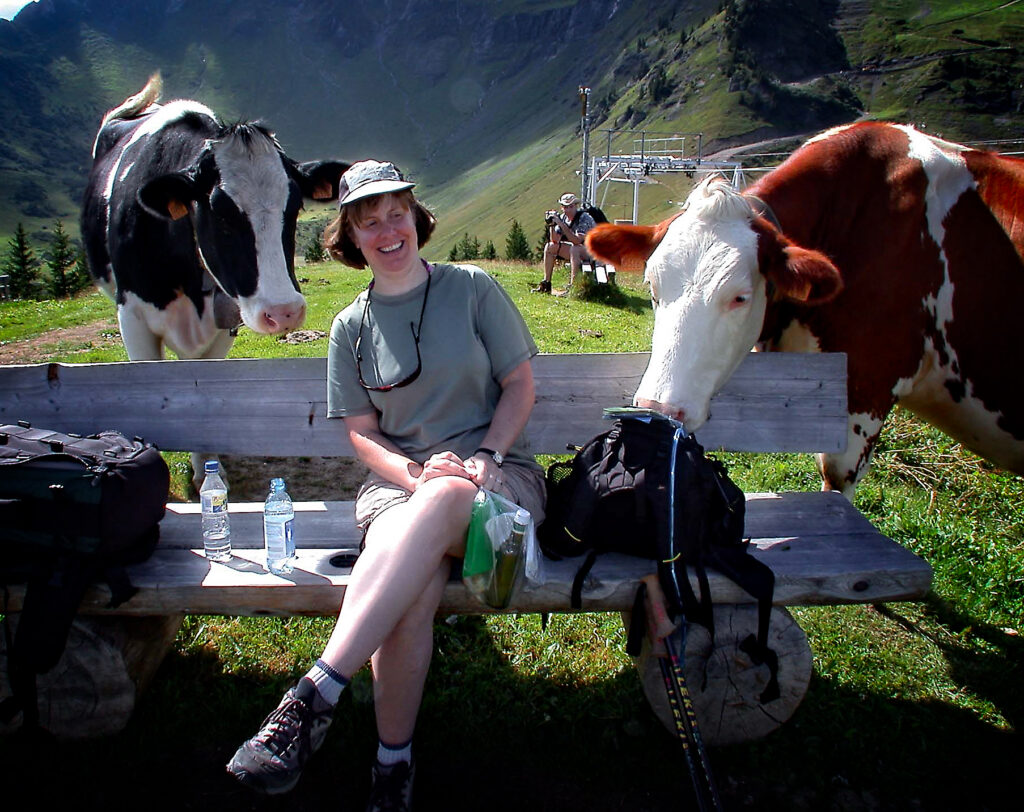
Jo Mattoon holds a B.A. in the Humanities and a Master’s in Public Administration. Her first career was as a Human Resources executive; her second career was as an executive coach/leadership trainer. She has now found her true purpose in teaching/coaching for the Hoffman Process.
In addition to teaching and coaching, Jo leads the Programs Team for Hoffman Institute Foundation (HIF). The team is responsible for the development and upkeep of all of HIF’s program curriculum, including the Process and alumni offerings.
A fourth-generation Coloradan, Jo loves travel, learning, finding the humor in life, coyotes, the arts, and tasty food. You can find out more about Jo by following her on Instagram.
As mentioned in this episode:
Hoffman Process Canada venue in Calgary, Alberta: Sanctum
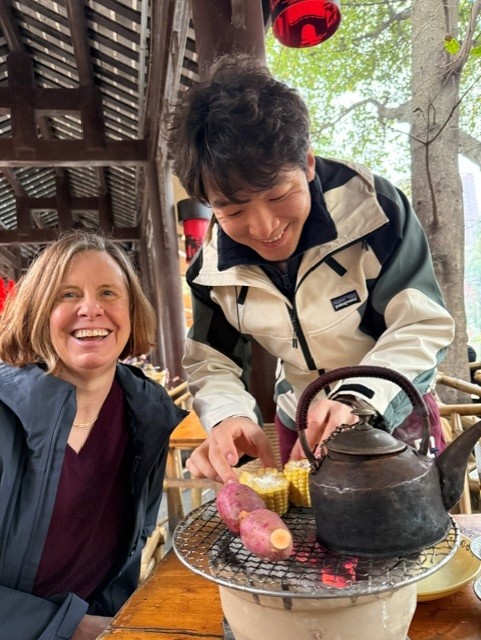
Hoffman Center, China
• Discover more about China Hoffman: Hoffman Process® Launches in China.
• Honoring the parents is a cultural value in China:
“Filial piety is the virtue of exhibiting love and respect for one’s parents, elders, and ancestors…” Read more…
Hoffman International
• Hoffman International Conference at Hoffman Institute, Germany.
• 17 Hoffman Centers in 14 countries worldwide.
Hoffman teachers & staff mentioned concerning Hoffman China:
¤ Crystal Jenkins, Hoffman teacher and Director of Teacher Training.
• Matt Brannagan, Hoffman teacher and CEO – Listen to Matt on the Hoffman Podcast.
¤ Kevin Eyres, Hoffman teacher – Listen to Kevin on the Hoffman Podcast.
• Michelle Smith – Hoffman logistics.
Bob Hoffman, Founder of the Hoffman Process.
Claudio Naranjo, Chilean psychiatrist and pioneer in integrating psychotherapy and spiritual traditions.
Raz Ingrasci, beloved Hoffman teacher and founder of the Hoffman Institute Foundation.
• Listen to Raz on the Hoffman Podcast
Andy Milberg, a beloved Hoffman teacher.
• Listen to Andy on the Hoffman Podcast
• Listen to Andy talking about the Negative Love Syndrome on the Hoffman Podcast
Hoffman Programs Team:
• Jo Mattoon – Programs Manager since 2022.
¤ Shawn McAndrew – Hoffman Editor and Programs Specialist.
• Jason Beegle – Hoffman Process Teacher.
¤ Jess Zimerman – Hoffman Process Teacher.
Jasin Deegan – Alumni Department Manager and creator of Hoffman Alumni Home
HOFFMAN ALUMNI HOME:
Hoffman Alumni Home is a dedicated space for Hoffman graduates to access alumni resources, connect to the community, and continue engaging with the work beyond their foundational Hoffman program.
Hoffman Tools mentioned:
¤ The Cycle of Transformation:
https://youtu.be/EIKfjNdpgsk?si=Sl8B_9hJpTI7aib8
Self-Compassion & Kristin Neff
Listen to Kristin Neff on The Hoffman Podcast
Kristin says that compassion has three components: kindness, mindfulness, and humanity. “Compassion is grounded in a sense of shared humanity.” At its core, compassion is the understanding that we are doing the best we can, moment to moment. That we are human beings. We are part of a much larger whole. Moment by moment, we are doing the best we can, learning and trying with care and love. If we learn this, things become much easier to deal with.
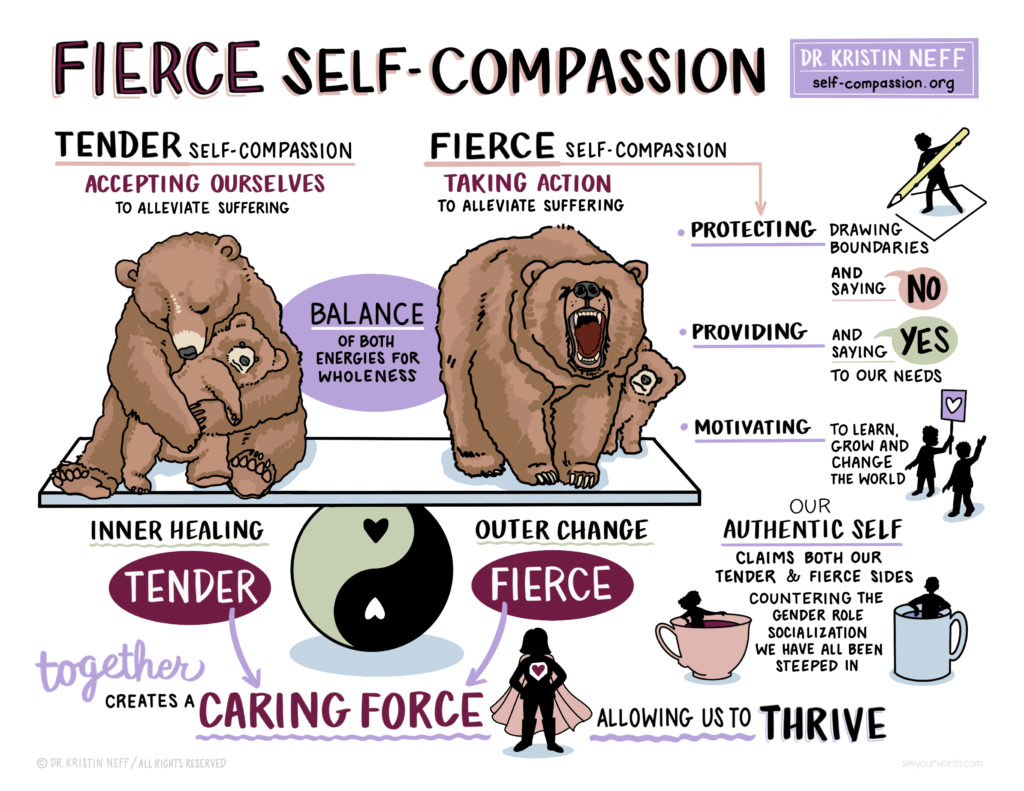
Kristin also writes about Fierce Self-Compassion, as diagrammed below.
Get every episode summarized
Each time The Hoffman Podcast publishes, we email you a written briefing from the transcript — the topics, who appeared, and any specific claims, with the ad reads skipped.
Email me new episodesFree for 3 shows. No card needed.
Hosts & guests
Transcript ready
292 searchable segments. Every word is indexed and playable.
Full transcript
The Hoffman Podcast — S13e1: Jo Mattoon – A Wisdom Tradition With Deep Roots and New Shoots. Machine-transcribed; use the interactive transcript above to jump the player to any line.
Hello, Hoffman friends. You may not know that our podcast sponsor, the Hoffman Institute Foundation, is a non-profit organization. We depend on donations to support the things that make our community thrive, scholarships, teacher training, facility upkeep, and even the underwriting of this podcast. If you feel moved to support our good work, please check out HoffmanInstitute.org-donate. I don't know what the percentage is drew, but I think some portion of why this work works is because of the community. If I tried to teach a Hoffman process to one person, they wouldn't have anything compared to the experience they have in that group setting. Okay, that's what Raz used to say, healing comes in community. Welcome everybody. My name is Drew Horning and this podcast is called Love's Everyday Radius. It's brought to you by the Hoffman Institute and its stories and anecdotes
and people we interview about their life post process and how it lives in the world radiating love. Hey everybody. Welcome to the Hoffman podcast. Joe Motone is with us. Joe, welcome. Thank you Drew. Happy to be here with you. Super happy to have this conversation and we have some interesting topics to talk about only. Always. There's always interesting things at the Hoffman Institute. There there are. And you're about to head into teaching next week, aren't you? I am. I'm going to Calgary, Canada. So to our site that's in the Alberta province up there, very excited. And this is kind of the life of a Hoffman teacher. You're doing pre calls or post calls or you're in a process. You have a bunch of pre calls this week, don't you? I do. I still have one
homework for someone who's been a little slow and reading homeworks. How are those pre calls? People pretty anxious about heading into it, but I imagine really excited as well. You know, it's a funny that you brought that combo because I always asked them how they're feeling about their upcoming process. And if I had a hundred dollars for every time I got a combination of anxious and excited, I would be a much richer woman. And you know what? Feels like a really appropriate combination to walk into it. It's so unknown. You and I, we know what we're getting in for, but they are they're walking into the unknown. And I'm excited and anxious also. It makes sense. It's such an immersive experience. Even though we know what's going to happen, we're not sure where our students are, exactly somewhere at different places. It's always what's going to happen this week and this process. Exactly. I remember years ago, one of the very, very long-term teachers saying to me that he's
still got nervous the first day of teaching. And as a new teacher, that was especially comforting, but it's true. All these years later, I'm no longer a newbie and I still do. And I think his point was right. It shows that we still care and it's still important for us to as teachers. Yeah, that's good. The fact that we care. Yeah, exactly. I'm so curious about, I guess first I want to start with China becoming a new site. And this whole role that Hoffman International plays, take us into the world of what it's like to support because the US supported China launching. And then the larger issue of like, wow, what is this thing called Hoffman International? How do people launch? And then you've been in China, Bunch, haven't you? At two times, yep. So what's it like to have launched China? Well, I would love to take all the credit for it, but you also went to China and so much of this
was the support that came from both Crystal Jenkins, our director teacher training, and Matt Brannigan, our CEO, who is truly the wisdom behind us, but just for some context. So currently I believe there are 17 Hoffman centers around the world, 17 I think in 14 countries, if I remember correctly, China, not the newest one, I personally South Africa is coming online right now, but people often ask, how does this international institute work? And you know, it's it's interesting. Each country has its own license, its own center, but there is this connected board and connected brain trust internationally that comes together to make sure that if you or I were to recommend someone to go take the process in Brazil or in Russia or in England, the their experience
would still be the Hoffman process, right? And that's what the purpose is. And so my understanding of what's happened was when there was somebody who wanted to start up in China, they come to the board, they ask for it, but then one of the established centers actually ends up being the mentor to help them get everything in place to do that. So we've done that most recently with China, currently the UK Center is helping South Africa come on board. So what's involved in that, you know, it's everything. We share all of our materials, I think Matt Ranigan to this day still meets weekly with our Chinese partners to help guide them as they're starting through both the building of their institute and their programs. And so it's really actually exciting because I got to go first in May of 2025 and I was there. They had, it sent the people they thought who might be teachers to take
the process around the world. We had a number of them both in the US and Canada, but they also went to UK and Australia. They took the process. Matt and Crystal went and helped them higher from this group of people that had taken the process. But then what you and I got to assist with initially and I got to do this in May of 2025 was go spend a week with the folks that they had hired to be teachers to help them in their training. And of course, Crystal Jenkins, our director of teacher training was the lead in this. But what a gift it was. And for me, I was exciting. I was there for their first training week and got to see them at that very initial phase. Then I saw some of them because they came and did, you know, training with us internships like we do with hour teacher candidates here. They came to that. It's kind of a two-part training, isn't it? It is. The first part is kind of classroom training for them. They learn the process,
they learn the materials, they learn kind of the skill set. And then this is the same we do it here. Then they actually get to come in the classroom, are partnered with a senior teacher who much to sometimes the pain and suffering of all of us have been through us. We get graded and watched on every single thing. But that's how we learn. That's how we get to help. We get to actually watch the senior teachers, but we also get to practice in an environment where the teachers they were able to step in if needed. So they came into that, got an opportunity to be with them. But then in January of this year, I had the honor of getting to assist them in teaching their very first process in China, which blows my mind that from May of 2025 to January of 2026, they got everything ready to go. So it was myself, Kevin Eris, one of our other teachers,
and then one of our logistics folks, one of our long-term logistics folks, Michelle Smith, they got to go and be on site and help. They did that first process in English with people that were multilingual. And then all their processes, since then, a moving forward will be the in-manderance. So what's an amazing experience. Wow. And then they're off. They're often running, launching, serving the Chinese community. Yes. They've already had one on their own. They still have an American teacher there just to ask support with a translator to help. But yeah, they're rocking, running, and they're doing great. And can I just add one thing about my experience in China? Yes. You know, so interesting is people often ask, is the Hoffman process culturally based? Right? Would it work in a different culture? And of course, we assume it does. Brazil was the second place that took on the Hoffman process after the US initially happens all throughout Europe, Russia,
other locations like that. But for example, in China, honoring if the parent is such a cultural value and thing, and our work, we ask you to not just honor your parents, we ask you to get upset about the stuff you didn't get in your childhood. And so it's so interesting. Even our Chinese colleagues were like, is this going to work in this culture? And as you know, we do cathartic expressive work to express that pent-up hurt, that pent-up anger and stuff. And it was like, are we going to be able to have Chinese students do it? It was a big question, wasn't it? Yes, it was a huge question. We all kept our fingers crossed. We kind of do a taster of it the very first night. Oh, it wasn't looking good. It was pretty, you know, they were going through the motions because they're also very good students, but they didn't seem like it, but the day that we really go into that work, they just let themselves go. And it was quite frankly,
I wish I could get some of the American and Canadian groups to express as fully as they did. But what it showed to me is how universal this work is, because this really comes back to who we are as people versus just some kind of cultural program. There's a real common humanity that despite some of the traditions of each country and cultural norms of each country, that even those are different, they actually relate to the work fundamentally, universally. 100%. Yeah. Wow. Wow, Joe. That must have been cool to see as a very first process in China. Yeah, it was it was humbling to me to get to have the opportunity and the honor of being there and to get to support. And it just yet again shows me how much the process is humans teaching themselves. We could be there to hold that space, create the experiences for them, but just like
I experience each time I teach here, they just took it and made it their own. It was quite brilliant. Humans teaching themselves. It's kind of a key piece and it actually is a nice transition to the teaching guide and the wisdom downloaded in the teaching guide. And I'm going to ask you about that. But first, one of the things you're pointing to is that even though there's wonderful wisdom in the teaching guide and even though the teachers bring their full resources from excellent training that happens, people get the wisdom from themselves. Their own spirit supports them in gaining insight and understanding. Absolutely. It's probably what one of the many things that makes the process so good is that there's not gurus up there that the guru is the spiritual self, the integrated quadrinity inside of them. Exactly. And I know we're going to transition to
kind of how we do updates to the work and even build our other programming. But what I understand of Bob Hoffman was even Bob was never a guru and didn't want to be from the very beginning. He was about partnering with others to bring this work into fruition and into a way that it could be used in group settings. Yeah. There's a humility, a humbleness to that. And from what I understand, Bob wasn't the most humble guy. So the fact that it worked out that way. Well, maybe underneath some of his confidence was this larger belief that people had the wisdom inside of them. And if we just created an experience that they could access it. I'm guessing so. Yeah. I love the process. It's just one experience after another, isn't it? It's such an immersive journey. It is. And I get easily bored. And the fact that I have yet to be bored
in what nine years of teaching tells me how every week and every student and every person's experience, every teaching team combination, it is literally a new adventure every single time. I couldn't agree more. The unfolding, the journey, you just never know what's going to happen. There's a group energy with the students. There's a group energy with the teachers, switching sites. I mean, it's fun talking about the process, isn't it? It is. There's something just makes me smile. I feel so lucky to be associated with this thing that is so good. And continues to be good. You know, part of my job is to tweak it as needed. That's a very simplified explanation of what we ultimately do. But at its core, we don't mess with it big time because it's so good. And it was interesting. I got to attend the Hoppin International Conference that was helped this year and talked to colleagues who teach
this work around the world and realized we all do some things a little different that do fit within our culture. But ultimately, it is the Hoppin process and it works. And it works even with those little tweaks that each country brings to it. So let's talk about that. You and a couple other teachers, administrators flew to Germany. Is that where it was this year? Correct. And all these teachers come together. Is it every other year? It's every few years. I don't know if they have a regular thing on that. But it's the people who hold the license for each of the centers. So I think it's a combination of their board meeting. And then what they do is invite teachers also to come from each of the centers to have an opportunity to do that kind of connection and learning and sharing. It was invaluable for me, especially as the person who kind of manages the curriculum upkeep
for us to be able to have that level of connection and conversation with people from other centers. Yeah, imagine the sharing that goes on of different ways. They do it and some centers do like the US is by far the largest of those we offer the most processes, don't we? Yeah. My understanding is between the US and Canada that we're basically half the processes around the world in the year. So that gives you a sense of scale. And then it would be maybe the UK next? Yes, I believe UK. I believe Brazil is also one of the largest. In fact, they may be the next largest. Wonderful. So if you're a Hoffman teacher, one of the things that you make your best friend is the teaching guide because that is the holder of the wisdom tradition, if you will, the information and downloading that into your brain, into your heart is the most important part of
training. But how do those words, how do those ideas get into the teaching guide? Well, they've been there for decades, first of all, right? Yeah, it's interesting at the conference, one of the long, long term teachers in the UK was really giving some history on Bob and sort of how the process itself came into. And it's so interesting because so often now, so many programs, at least in our culture, maybe there's a person who's written a book or a professor who's done some kind of research, and then they build a curriculum based on that perfectly wonderful approaches to things. But that is not the Hoffman process, right? Because really Bob Hoffman really understood things more intuitively, had these insights. But then this does lead into answering your question. What he did was he collaborated. So he collaborated with people like the psychiatrist, Claudia Naranjo,
some of the early people that he brought in to be teachers that he trained, but also got their involvement in that. So we talk about how this is a wisdom tradition program basis versus, like I said, coming from some type of research study. And then that has continued over time. I've actually had the luck, the joy of interviewing some of those original folks that did collaborate with Bob Hoffman about it. And it does. It sounds like it was sort of like Bob would come up with an idea. And they would say that doesn't make any sense in the real world whatsoever. Not always, of course, you had wonderful ideas too. But it was this ongoing group involvement in making the work, taking the insights and adding to them, reworking them so that they could be in a program. And that's the tradition that's continued. So people before me were the first ones to actually
get it written into that teaching guide that you're referring to. In many ways, we think of the teaching guide as much as anything a training manual for our teachers so that again, we're consistent in that we are teaching the work, not the jump between the process or the drew horning process. But we really are teaching the Hoffman process, right? Yeah. And there's an interesting tension there that it is Joe who's conveying the concepts or the principles or some of those wisdom traditions or its drew. But in reality, we want to sort of both embody it and be authentic about it. But also not be so personality driven that it's more drew coming through or more Joe coming through, but the ideas and the principles and the concepts and the embodied nature of it. It's a delicate balance, isn't it? It is, but you've articulated it perfectly. And that's why I taped so long to become a
Hoffman teacher in addition to that ability to work with people in such important work. But also that everything, how can you live it? How can you actually teach it as much from your presence as thing? How you can bring your own lived experience, but it is still the Hoffman process. Presence, that's such a big thing. I walked into my Hoffman process all of my head. Everything was about my intellect and stuff. And that was the hardest part for me in teacher training was getting out of my bloody head, man. And to just be the work instead of trying to think that work. It's so hard for so many of us, isn't it? Yeah, it is. But the beauty of having the teaching guide is then it becomes, it doesn't think for us in some ways. What like that? Yeah, I've never thought of it that way, but it does because we do it. And the beauty of the work is we all, you and I
included, we get to be engaged in its constant review. It's upkeep myself and my team who coordinate and manage it. I think of us more as coordinators of it versus developers of that. Because this was wisdom tradition and it continues to be. So as we make changes, which happen at a glacial pace? And I'm okay with that. Not just because my first career was in government. So I already know how to do glacial base. No, actually what we do is we do a lot of process and actually the creation because we want to hold true to it, but continue to let those places that need the change occur. When I first took on this role as as programs manager in 2022,
Razzan Grassi, who, no, I laid founder. And I remember him sharing with me because I had to meet with him, I wanted to meet with him to really talk about what gets changed, where do we play, what needs to never change? Yeah, because he was one of those early coordinators with Bob and has continued to be such a primary wisdom source for our institute. And he actually quoted Bob and all sort of sort of quote him was that Bob talked about that when you work within the teaching materials, they're like ornaments on a Christmas tree. You can move the ornaments around. You don't have your Christmas tree look the same every single year, but all the same ornaments are there. And so as we do things, we often do that. Maybe something needs to flow a little different. Maybe it needs to change just a little bit, but it keeps the integrity of the bases. Now certainly things over the
years, like my understanding you and I both heard these stories. Those first few years, they were pretty in your face when they did teaching, right? Much more confrontational. Much more. But you know, we also know from adult learning theory that that's not the best way for adults to learn. It doesn't last does it? It doesn't. And so that's a place where yes, things are different than they were in those early days. And we know that that is a lot more effective as a result of that kind of support. Yeah, we just bring so much more kindness, support, even love, if you will. And space holding for people to navigate their journey because it is true. The research does show that that's what creates the lasting changes to be seen, to be held, to be supported in this change experience. But to this day, teachers literally every process, and you know this, we keep a
clipboard where teachers can write suggestions or things that need to be fixed, like typos, but even more importantly, ideas of how to present the work in a way that's going to work better. And then every few years, we go through all of those. And we do make so many of the changes. And the beauty is we still have good connection with some of our longer term teachers who can help us maintain also that historical memory of what is that? Keep peace. Like I like loved the podcasts that you guys did recently with Andy Melberg who unfortunately has retired from us, but he talked about negative loves syndrome. No man, I want to talk to in the whole world about negative loves syndrome better than Andy Melberg with his knowledge whenever he would teach it, I would take notes, I would get a new insight every single time I saw him teach that piece. And it was one Andy's pieces. So he taught
it on a regular basis, right? So the fact that we still have that kind of connection to help us in the ongoing upkeep of this program helps too. We do have so many new teachers we're growing, we're expanding, we're trying to bring down our wait lists. And we have teachers who've been here long time. Andy was a 30 plus year teacher. And there are other teachers still on the faculty who have been here a long time, is that true? Yeah, exactly. And the beauty of this international relationship is I've also over time reached out to some of the teachers that are in some of the other sites that have been here to help get perspective on topics. Yeah, it's a good combination of an openness to new research and new ideas and not putting our head in the sand. And at the same time
being respectful of the tradition that has been the process and what has worked so well over the years and acknowledging Bob's beauty and the work that he did in downloading this incredible experience. Can I share an example of that? Yeah, I'd love that. As you're speaking, what comes to mind to me is in our cycle of transformation, which is not only the agenda for our week when we do the process, but it's the tool set that we use to transform these patterns that we pick up in our childhood. But of course, one of those steps is compassion and forgiveness. And you know, so Bob understood the importance. In fact, from what I understand, it was really his first major insight was that if we could understand the childhoods of our parents, it could help us move toward forgiving them. But then I look at some of the work that's been in Added in over the years related
to self compassion, you know, the work that comes out of some of the research of people like Kristin Neff and all the other folks that have followed in her footsteps. And it's such a good example of Bob's core is still there with the forgiveness. In fact, we do some experiences that are 100% still Bob. And we've been able to use that beautiful research around self compassion, its power to add to that learning. So we haven't lost the the original, but we're still moving forward with what serves us yet another area of a delicate balance. Oh, Joe, so good. I know. Give me, I'm excited to talk about the process. If there's a way to be a nerd in the Hoffman world, I am like a Hoffman nerd. And you are too, my friend. I know you are because we have conversations about this. Yeah. We do. Don't wait. It's, it's we can go down rabbit holes. Can't we? Yeah, for sure.
Yeah. But there's no better place to be a nerd around Hoffman than the holder of the teaching guide and all the concepts and what gets changed and deleted and added. Thank you for stewarding that part for the Hoffman Institute. Joe, it's so it's so important. Is it not? It is. I love it. And just to reiterate, I really see it as an aggregator role. I know, I know. It's not all you. I know. I know. I'm like, the same way our job is to gather all that great wisdom and make it sound like something you could teach. Yeah. I think that that's where we bring our little special part is turning it into something that we can actually from an actionable way teach. You made this point twice. So I just want to highlight it like and it's so true about Hoffman. It's not about the individuals like we all work on teams. Nobody's driving something from a lone wolf like we're all about collaboration and teams and you have a great team
now, don't you? Wait, too. I'm feeling lucky and yeah, it's been great because for a couple years, it was myself and Sean McCandru, who's one of our organizational gems. She does editing and technical work. But in the last couple years with the emphasis on really expanding our alumni offerings, I now have a couple more teachers working with me who can really focus on that because the process of course is important, but we also want to have that ongoing support. Yeah, I mean, let's shout them out, Jason. Jason Beagle and Jess Zimmerman. Yeah. Yes, Zimmerman. And then even another shout out to Jason Deegan for hall is great work with the alumni. He's hopefully people really are leaning into this new alumni platform that's coming out. Can you talk about that just a little bit? Yeah, Jason Deegan is brilliant. I mean, right.
One of the stories in the world around Bob Hoffman was a little bit like do the process then go home and fire your therapist and throw away yourself health books. And while we appreciate that, we also know that that's not actually the full story that all of us, myself included, for many years, I continued to actually use programming before it became a Hoffman teacher because it was value for me to stay connected to the work in a little bit more formalized way. And I think our alumni have asked for that to be focused on the board has said this is an important place for us strategically to really continue to support this amazing group of alumni that we have. So Jason's team is working on that not only, I mean, they become one of our big clients for developing new programming or updating some of our old programming with our alumni programs. But and Jason would have
to talk about it more, but creating a kind of a one-stop shopping through this beautiful new portal that they're going to create that will give people access to all the different programs we are we support, but more importantly to create ongoing connection with each other. Because in addition to that team thing and people training themselves, I don't know what the percentage is drew, but I think some portion of why this work works is because of the community. If I tried to teach a Hoffman process to one person, they wouldn't have anything compared to the experience they have in that group setting. That's what Razz used to say healing comes in community. The healing nature of community, right? Yeah, beautiful, beautiful. And so for that, we've got lots of expanded programs in alumni and new platform were launching. So for all those listening, stay tuned, keep your ears to the ground because there's lots of offerings coming your way. And it's exciting.
The little previews I've had knowing some of the programming that my group is developing to support that. I'm just couldn't be more excited for that. Well, Joe, great talking to you on a Monday morning here, two of four Hoffman teachers based in Colorado. Correct. A toasty Monday morning. I know it's hot. Stay cool out there. Always lovely to spend a Monday morning with you, Drew My pal. You as well, friend and colleague. Thank you. Thank you for listening to the Hoffman podcast. My name is Matt Brandigan. I'm the CEO of the Hoffman Institute of Foundation and a Hoffman teacher. Our mission is to provide greater access to the wisdom and power of love within ourselves and our relationships and in the world. To learn more or to support our mission, we invite you to visit HoffmanInstitute.org.
More episodes
More from The Hoffman Podcast

S12e22 (non-grad): Cory Muscara – Life is the Meditation Cushion
The Hoffman Podcast
S12e21: Mike Ingrasci – The Gifts That Come With Change
The Hoffman Podcast
S12e20: Sara Bissell Rubin – Living With the Human Experience of Pain
The Hoffman Podcast
S12e19: Julie Shapiro – Bubba, Buddha, and a Bench
The Hoffman Podcast