About this episode
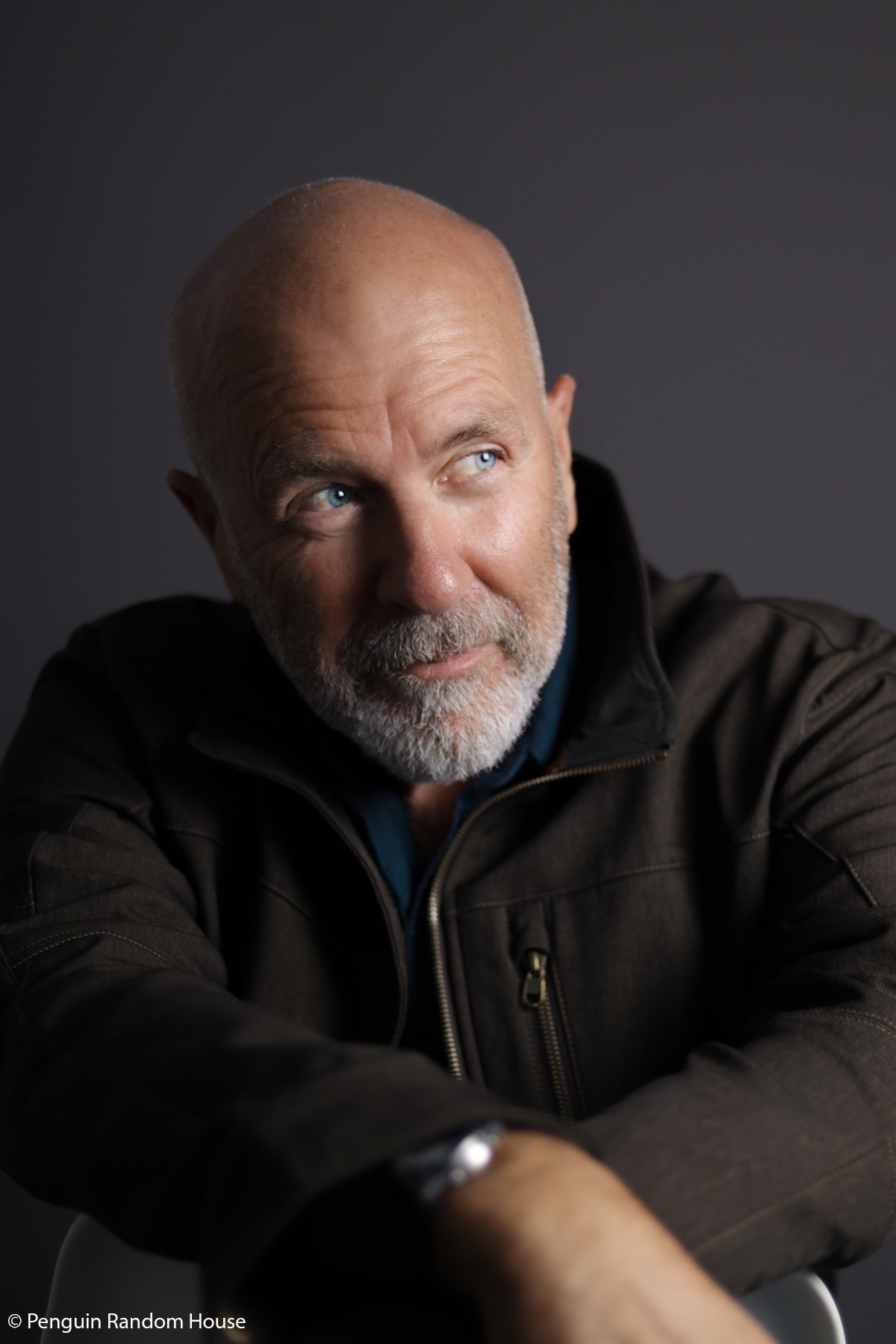
Prize-winning writer Richard Flanagan has released a dazzling collection of writing, essays, articles and speeches, from a range of topics close to the author’s heart.
Get every episode summarized
Each time Nightlife publishes, we email you a written briefing from the transcript — the topics, who appeared, and any specific claims, with the ad reads skipped.
Email me new episodesFree for 3 shows. No card needed.
Hosts & guests
Transcript ready
296 searchable segments. Every word is indexed and playable.
Full transcript
Nightlife — Richard Flanagan reveals his prize winning Heresies. Machine-transcribed; use the interactive transcript above to jump the player to any line.
ABC Listen, podcasts, radio, news, music and more. Johnny Sennhees in the studio is a claim to straight and author. Richard Flanagan. Richard, good evening to you and welcome to Nightlife. It's lovely to be here with your fellow Tasmania. A fellow Tasmania? Yeah, well I've got some, we've got some questions about that a bit later on as well. I loved when one of these pieces in your new book Heresys. You are asked to give a talk about Australia literature and you think, well maybe I should list the top 10 Tasmania novels. And I was rather eagerly flipping the page thinking, well, what is top 10 Tasmania novels? I'm not thinking, are they a 10 other than his own? And then of course the number one one is Albert Camus, the outsider, which you say is a quintessentially Tasmania and the experience I love that. Tell me why. Well the point really is that you go to out to discover in the particular of another world, yourself.
So in the stranger which is about the natural world, it's about violence, truth, the way people don't want the truth. In a strange way, when I first read that, I was only 12 years old, I picked it out and then you read comics and westerns up till then and I was in the school library and it was the skinniest book I could find. So I thought I could manage it. And I read this very strange novel, which I didn't obviously understand, but in which some fundamental way moved me and I did understand, I understood the sun, the light, the extraordinary natural world. And I understood the way you can be punished for telling the truth. So all these things were familiar to me. And you know, it's strange how we discover the truth of ourselves. We discover that we're not alone in a Russian dinner party in Moscow in the 1880s or we discover ourselves in an English country house in the early 20th century or we, you know, a Colombian village in the mid 20th century.
And on and on and on and on. And really, one of the loveless things I've experienced as a writer is when I travel with my books and I'm, you know, can be, I was in Romania of all places on a book tour just before COVID struck in Transylvania and I'm doing a reading in this. There are all these people have been reading me there for 20 years and say how these books speak to them. And they're about a world they know nothing about the world you and I grew up in in distant Tasmania. But I think if you add succeeds when it speaks about something particular and real on a very concrete way and then in that you discover the universal. Yeah, because I love the point you're making about people who go on about national literature and the literature of a nation and so on.
I remember when Patrick White, when the Nobel Prize, they said it was an award for bringing a nation to literature. And I thought it's an, it is, as you say, an idea. In fact, it's a nonsense idea that there's no really such thing as a national literature. Is that right? I think so. I mean, it's just an idea of a category or a shelf you put certain things on, but it's not true to us, you know, that people talk of Australian values or I mean, they don't exist. They're human values. So funny thing is that people talk a lot about Australian values. Yeah, they're human values. And there's human failings too, you know, each of us carries within us the possibility of being, you know, the murderer, the saint, you know, the fool and the wise man. We carry within us the possibility of being a million other things, some better, some far worse.
I think we go to art to remind ourselves we could be any of those people, you know, I think that's the power of us. It reminds us we're not alone and it teaches us to show some humility towards other people's experience. Because a good book speaks to everybody in the world. If they're listening. It should remind anyone who cares to read it of one thing that they're not alone. So when you feel that the things that have happened to you or the thoughts you've had, the most foolish thoughts that actually have been shared by someone else, someone else understood that, someone else felt that. And I think when you go to, when you experience great works, whether it's a novel or a painting or music or a movie, you discover in it your own rejected thoughts, you know, the things you were too embarrassed to ashamed to say and you think, I felt that, but I never dared say it, never dared think it.
But others have thought it and it's a human thing to think that way. It's not a wrong thing. You give an address at one point, which you're account in, in heresies of an address in which you're speaking. Unfortunately, via Zoom or one of those technologies, because it was covered to a very distinguished US gathering where you say, I speak from a slave society to another. To me, about Tasmania, which of course, the darkness of its past, you and I both grew up not probably knowing much about it and we learned about it as we became adult. How does it feel for you there today living in that? Well, knowing what happened. How does it feel? I think it's not so much how I feel. It's that it's shaped everything that I am and I have to be true to it, you know. And so in one way, I try and understand it, I try and learn from it.
But I think what really made an impression on me growing up there was the silence about so many things. You remember how we were told there were no Aboriginal Tasmanians. I was definitively told this. It was a terrible thing, but it's over now because they're all gone. And yet we knew someone sitting across from us in a classroom was black. We knew that. Everyone was descended from free settlers, but everyone knew that there was convict blood in almost all the families there. And that the slave system, I mean, it was a white, wasn't just white there were actually in the archives office of Tasmania. There's the most extraordinary thing I found there one day, this beautiful red Morocco bound, Karan, for Muslim convicts to swear on in court cases. So there were people from all around the world. There were slavery vault leaders from the Caribbean, that were Maori chieftains.
There were the Irish, of course, trade union leaders from Britain, the early stages, the industrial revolution. And all these people are thrown together, but it's set up on the slavery model that prevailed in the Caribbean. Great big plantations and the slave sent out to work them. Often when I read the early history of Tasmania, often I haven't entertained this kind of shy hope that it might have been something else. Almost that if those early acts of almost arbitrary and frightened violence by frightened white people who didn't know what was going on, dumped there, that it might have gone another way. Do you think it ever could have gone another way? Other than the wholesale destruction of the people, the indigenous people, I mean. Well, of course it could have. I think it's always wrong to think that because things turned out one way they couldn't have turned out another, but they did turn out that way. And so Tasmania never had those waves of success of prosperity and migration that the rest of Australia had.
So most Tasmanians are descended from either the survivors of that near total genocide or these, this convict slave system. For a quarter of its modern history, it was a totalitarian society. And I think those traumas, they just don't affect individuals. They pass through them to families, to communities, and then to the entire society. And they take generations to come to terms with, to understand, and sometimes it falls to people to speak about them. Historians, journalists, and sometimes artists, novelists, and so on. And I think it's really only in the last 30 or so years that Tasmanians began to address these huge traumas of this genocide and this slave system.
And in fact, the place, oddly the first place my books took off in America was in the Deep South. And I'd go there on these book tours and you'd meet African Americans and you would feel you had things deeply in common with them, you know, because their experiences in my way, outly different. But in another way, not so dissimilar, I mean, after the slave ships stopped taking Africans to America, they were re-rooted and took the convicts to Van Duman's land, same votes, same system. Yeah, I received when I, I'm not a family member, I researched our own family history the same, that they, this is what happened, they came out as, as essentially, well, they came out as prisoners, but within immediately put into servitude here. And that's the way the economy was.
Yeah, and when they ended transportation in the 1850s, similar to America where they had the Jim Crow laws after the emancipation of slaves there. And the Jim Crow laws were designed to keep African Americans down to really keep the atleast oppressive system going in the absence of slavery. Well, similarly in Tasmania, they passed this thing called the Masters and Apprentices Act, which even by the dreadful standards of 19th century British Empire were deemed appalling. And so then there were several more generations that lived under these very oppressive labor laws designed to keep people at the bottom. And that's not the other people we were descended from and when I remember I wrote my first novel, which in part deals with some of these things, the genocide, the slave system.
And one of the, my mother's cousins rings up and says to her, what, that he wanted her, my mother to speak to me, because I shouldn't be bringing these things up. You know, why don't I want to write about such things? They weren't worthy of being written about. And that's what I mean by that silence. People just couldn't bear to, you know, face it. And instead they invented these fictions about who they were, where they came from. Not just Tasmania, the rest of Australia too has invented fictions about ourselves, haven't we? Yeah, absolutely. I think the most extraordinary one is the way you look at most countries that have been invaded, that have suffered terrible violence. And they come to some sort of accommodation with that in their thinking.
I mean, it would be very strange to hear British people talking about the Norman invasion as the black-armed band view of British history. You know, like they accept they're in conquered. An oppressive foreign power takes over with great violence and oppression that goes on for centuries. But they have an understanding of it. In fact, the Normans are the root of their aristocracy these days. Yeah, yeah, yeah, yeah, to this day. And I think we haven't, I'm astonished at the way, as a nation, I mean, there's as individuals, I think the majority of Australians have made enormous progress in this regard. But as a nation, we're still unable to acknowledge the very simple fact that there was an invasion, that there was terrible violence with it, the consequences of which we lived to this day.
And if we could just acknowledge that and then seek to do something about it, then we also can share in that great gift of the 60s. Of the 60,000 years of indigenous culture and society here. And then I think we become an extraordinary country because once you view yourself as being part of a 60,000 year old tradition, once you see yourself as an old nation, an old country, everything becomes different. I think the book finishes, heresies finishes with some words of Archie Roach, the great, the great, the beautiful Archie Roach. And he's talking about Australia down, the National Anthem. And he says, how, whether Australians know it or not, whether they want it or not, they belong here.
And he says, we all belong here, whether you know it or not, you belong here. And what people, what he says, what I've always thought is that we're all the authors of our own story here. It's a really beautiful idea that sees the nation as an act of creation. And we can create it as a nightmare or we can create it as this invitation to dream in which everyone's welcome, everyone has a place and we're not exiles, we're not aliens. What happened, do you think, with the voice proposal, was it just not widely understood, not very well understood, was it a rejection of a call for help for Aboriginal people? We are as a country and I know you think this too, not unkind. We can be generous, we can be open minded, we can be welcoming.
What happened with the voice, do you think? Well, there's a speech I made, the closing address to the Sydney Roder's Festival that was made in the middle of the voice referendum when it had turned very ugly. I think several things happened, but above all, I think in a strange way, what happened with the proposal was designed by its indigenous leaders to be the smallest, most conservative proposal that could win the conservative voters in Australia. And the conservative parties, it was far from being a radical measure, it was from its invention designed to be something that conservative people would find acceptable.
And so the leaders for the yes vote presented it as a very small change, which institutionally, constitutionally, it was, it was a minor, minor proposal. And yet, I think the no vote stumbled onto a truth, because they went around frightening people with lies and with a really vile device of racist campaign, but they did say it's not a small thing, it's a large thing. And in that, I think they were right. And I think that if the yes campaign could have opened up to the largeness of it, the actual measures were small, almost insignificant, but the symbolism of it was enormous. And we're constantly told symbols don't matter, but when, for a lot of me is a lensky, stayed in Kiev when the Russians were already at the Kiev airport, and on the outskirts of Kiev.
And when he said to the Americans, he didn't want to ride, he just wanted ammunition. Global history cusped around that moment. And he was just one man, he was just a symbol, but around that symbol, the whole history of the 21st century took a different turn. Symbols really matter. And I think the symbolic act of Australia saying yes to our indigenous people, yes to the great gift and generosity of what you're proposing and what you're offering us, that would have made us a different nation. It didn't happen. And some might say Australia is changing rapidly more than half the country now speak a language or a born overseas. It's a changing country that you wonder whether this moment for a chance to reconcile with ourselves might be gone.
No, I don't. I think when I put all these articles together and these speeches and so on from over the last 20 years, I realized a lot of them speak of hope. And I think hope is a verb to act is to hope. And to hope is to act, you know, that it is. And I believe that if you appeal to people's kindness and goodness, change becomes possible. I think the dilemma of the age, the poison of the age is that power wants us only to despair. It wants to tell us that the problems are too large and that you're impotent. And at that point, they've won. If we accept that premise, they've won and then the world is a dark place. And if you just look at your screens, you know, which our world is full of now, we just see in the stories about power, corporate power, political power, military power, and they're overwhelmingly stories of despair and horror.
But if we look at those around us, our friends, our family, we see people like ourselves, flawed them with problems. But we see goodness and kindness and people striving to make this world a little better. And in those small ways, there's hope and the world does become better. And I genuinely believe if we just took campus from that world, which is actually our reality, that world of power pouring in the screen. That's not the world we live in. We live in this world of fellow, flawed human beings. And there's a lot of hope in that. And the more we look to that and act within that, change becomes possible. I also genuinely believe that the other idea is that the change is too large, whether it's climate change, whether it's, you know, build up a military, martin, other countries and so on.
But a lot of the solutions are small things, you know, there's a parrot in this bushland just near where I live, there's less than eight or 700 of them left. The other fastest parrot in the world, the Swift parrot. Oh, the Swift parrot, yeah. That's right. A people that they could be saved just by a few regulatory changes around logging in Tasmania. That's simple. And then you've saved a species. It's not difficult. But we're constantly told things aren't possible, you know, there's so much as possible. So much can be made better. And we just shouldn't believe the lies of power that we can't do these things that they're not possible. You know, we shouldn't accept. You know, when 70% of the country wants gambling ads ended and the government says it's too hard and it's going to be too hard for the television companies and the sporting cards, we shouldn't accept these things.
And it would be a better world when we force our governments to change on that. So I think, you know, we should have the courage of our beliefs, look to ourselves and in small ways, large change becomes possible. Richard Flanagan's my guest, the great Australian writer. With climate change, for many years, it seems even though we knew about it, it couldn't say you didn't know about it. It seemed almost an idea that a lot of people couldn't process in what was required. Where do you think we sit with this as the world continues to warm? Is it, are you optimistic about our ability to adapt because we'll have to, won't we? Can't prevent anymore? Climate climate change is obviously happening. It's not, that's not something in the future.
More carbon's poured into the atmosphere since Millie Vanilley had there, their bogus hit back in the early 90s, then poured into the atmosphere in all human history before it. By then, 1992, 1993, when you exactly what was happening, and we loud the unfettered power of the fossil fuel corporations to dominate our politics, and you know, that it was that that led to this present crisis, we can, again, we can accept that it's only going to get over the world. That it's only going to get worse and worse, but it's going to get a lot worse than this we do more. And we can, we can have less change for the worse if we continue to, to act to stop coal mines, to stop gas fracking and so on.
And there's a lot of Australia could do. I mean, that's another thing I find extraordinary when our leaders tell us that we're a small nation and we can't make a difference. But I mean, you know, again, Ukraine, it's only got a population slightly bigger than Australia and an economy far smaller. Israel, again, a small nation around which world history is changing, whatever one thinks of it, small nations can have an outsize impact. It's just that we choose to go with the status quo. We don't have to do that. No, we don't have to do that, but we're doing it. And you're right. We are at the moment, but I sort of feel, you can feel change. I remember, I'm sure you did this as a kid. You go to those, you go to railway tracks in the country town you lived in in Tasmania and you put your ear to the rail.
And you'd hear this sort of vibration coming out through the steel rods and it'd be the train which you still couldn't see and you couldn't hear, but you could hear the vibration through the rods. And you can hear that vibration of change coming. There's a train coming of change. And when you talk to young people, you can hear it, you know, that people know there has to be large change now. Because these issues are all related, this excessive corporate power, the growing inequality in our country, the growing injustice in our country. All these things are tied together and it's going to need great change and great courage, but you can hear the change coming. You've got a hidden Tasmania, you have it all in a kind of microcosm in a way. You've, you know, the problems in Tasmania, they're not too large to get your head around in some ways. You pointed out that, you know, it's not too difficult to work out what salmon fishing, well, it's not what salmon farming is doing to Mokori Harbour.
It's not too difficult to figure out what's happening to the southwest wilderness, what's happening to the western tea, what's happening to other parts of Tasmania's beautiful environment. Because people, that's only a small place, people say it. Well, I think that's right. But get even so. It's difficult to get acceptance of the need for action. Yeah, absolutely. It is. But I think change is, or power is more obvious in remote places. I mean, I think in large places, they're more shrouds that a great power and its excesses and its obscenity. And I think in little places, power just behaves without embarrassment. And so people are more aware of it. But what I mean, what you're seeing in Tasmania is what we're going to be seeing more of in Australia, that is that you're seeing the complete collapse of both major parties and a rising crossbenchment. I think the crossbench there is up to 36% or something, Labor parties down and low 20s, liberals, I think, somewhere similar to the crossbench.
But what you can see is there's new forms of government coming that are going to be very different. And you know, these crossbenchers represent all sorts of different people. But it is an expression of a desire to change, to change our system and to try and have something more represented. I'm talking to Richard Flanagan, the writer, about his... Well, there's a new collection of a lot of his speeches and pieces he's written for journalism as well as other things. And he's called Heresys, occasional pieces, and if you're new to Richard Flanagan's writings, not a bad place to start, then you can get to work on his wonderful novels as well. Are you engaged on something new? Yeah, I'm back at the table writing a novel. And that's what I love. When I left school, I got this job in a surveying company, it was called a Chineman.
It was like a bush labor and you had to cut the tracks in the bush for the surveyor. And one day it was too wet for us to go away out and they were throwing furniture out of the office and I was to take it to the tip. And there was this old chair, wooden chair, and it was broken. And I liked it. I thought I'd fix it up. And one day I'll sit on that and I'll write all my books. And I've still got that chair. I don't know if we are still there. And I sit on it and I had some pretty ordinary jobs when I was young. I saw how hard it is for most people just to make a very humble living, how hard their work is. And I'm very grateful that I've ended up being fortunate enough to be allowed to sit at a table when I write my stories and to don't know when it's blowing the whistle on me.
They know yet, but it hasn't happened so far. You write, you say, in a room on Bruny Island. We've got listeners on Bruny Island. Which looks across into Resident Cove. No, not quite. No, not Resident Cove. It was my old place there used to look across to Resident Cove where the last of others at the genocide were put in this tragic camp where more of them died. I think that's the remaining paloap people when the Waibalena settlement on Flinders Island were relocated in the late 1840s to Oyster Code. So it's a sad place, but that area, the channel area is also a very beautiful place. And there is a strong indigenous spirit about it.
And there are a lot of paloap people who live up and down the channel, you know, remain important to this day. A stranger, one of the pieces I laughed at was you said you're invited to speak at the press club and received a very poor reception. Ah, no, not a poor reception. You said I basically got out of there as far as I could. But the pace you were offering was extremely interesting because it was involved a lot of criticism of the government's building of the museum in France, the Monge Centre. It cost a stupendous cost of some 100 million dollars which you explore the possibilities of how else we might spend that money. But as you think rightly say, it was part of a national missmaking which is recent, it's happening in our generation, what you call Anzacary.
It doesn't go down well with some people, but you're right to point out that we are creating this story from very small beginnings. Yeah, I mean, Tony Abbott said we need some winners. He made some comment like that and he wanted to get away from Gallipoli which is just a spectacular defeat in Massacre. What I find really interesting about Australians is again and again we don't choose warrior heroes and there was that huge attempt to make Ben Robert Smith which is still continuing the great warrior hero. And I don't think even with his crimes, even without his crimes, I don't think that's the sort of person Australians respect. And you look at our war heroes, we choose people like Simpson and his donkey. Not even in Australia.
Not in Australia, but somebody who goes to help with great courage but who's there helping the wounded and the dying. And then in World War II, it's weird and done lot, a doctor, again not a warrior, but someone who with great character and heroism, United's men to come together communally so they all work together to survive. And then just this week we've seen the Israeli government refuse to or declare its military of any criminal wrongdoing with the death of Zomey Frankham. And the death of Zomey Frankham is a terrible tragedy and it is also a crime. But there is a Bout Zomey Frankham, again something that Australians really respond to, that person going into a war zone just to help people live to survive.
And I think that speaks to something quite extraordinary about us, that the other things we respond to as a people. And I don't know why that is, but we respond to that far more than we respond to the Ben Robert Smith idea of who we are. You say one of the pieces for a long time I didn't feel Australian didn't want to be called that, didn't even know what it meant really. What does it mean now? I was probably saved from being in Australia and Bob being in Tasmania and saved from being in Australia. You saved from being in Australia because you live in the South anyways. That's right. I mean, I don't think that I just think I grew up in a particular place that I found beautiful and finally I feel it's sacred country.
And when I go around the rest of Australia, I meet people in the Kimberley or North East Arnhem land or southern New South Wales or wherever you go through this enormous continent. You meet people who have those same feelings about their country. That moves me enormously. You know, this love, this sense as Archie Roach said that we belong that I think is the basis of goodness and of possibility and of caring. You're not an old like it Richard. I'm aging rapidly fellow. I feel it. You're not an old like it, too old to go to the Franklid again? I went down last year, I try and get down every year. I've got a mate who wants me to go down in a month or two and I will know I'll rattle down again but it gets a measurably harder.
I went down with an old mate who's up to 50 years of going down now but we're a little bit of a circus act on their way down. I'd have to say. I've said a lot of linen counts. I aching the places where I used to play. That was like that. But for as long as I can manage it all, I'll keep going. That's a very special place for me and when I first started going down, I couldn't believe that something so extraordinary existed in my backyard and that I could just go there and live down there. And these days when I go down, I think this extraordinary world exists because Australians came together when it was going to be damned and it was inevitable. There was just no argument that it was you'd remember. I remember very clearly.
Whatever you thought about the Franklin, whether you wanted it to be damned or not, you wanted to sit so it's inevitable because that's the way the world is. And you go down through this most beautiful world day after day going deeper and deeper into this extraordinary country and this ancient country. And you realize it all exists because people stood up and said there was something that mattered more than money and power. Yeah. And they won. And I think that hope that gave me as a young man to realize you could take on power against all odds. And if you came together in good faith, you could actually win. That's sustained me ever since. Hey, I can't let you go. As you're a Tasmanian and therefore like all Tasmanians have an opinion on the new stadium.
They've been proposed for Hobart to house the Tasmanian Devil's. The 40 team that will take the competition into the competition in 2028. You don't like it. Why? Well, I think it's an incredible tragedy for Tasmania. First, people are losing their jobs in Tasmania already to pay for this. Hospital services are being kept for this and we've got the worst health system in the country. We're going to start seeing layoffs from school. Taf courses are being closed down all to pay for a stadium and we've already got to. I'm the mainland because it's so much bigger. You know, an infrastructure project gone wrong. It's an embarrassment for politicians and bureaucrats. But this, this stadium's already well over two billion. An annual budget in revenue is 9 billion.
And I think that puts very clearly in focus the cost that's going to have to be paid. The only reason it's happening is because this bullying sporting code, the AFL, insisted on it as the price of Tasmanians having the footytown. They should have been given quarter of a century before. And no other state was ever asked to build a major stadium. Anastatium with a roof simply because of these corporate bullies in the AFL. That's profoundly wrong. The second thing that's deeply upsetting about it is you have this extraordinary colonial city at the heart of Moula. It's a modern Hobart. And this is going to completely dwarf it and destroy so much of that historic city scape.
I think Australians will be horrified when they see this go up. I think too that just in terms of the Tasmanian football team, it's going to make its future much more problematic because it's divided Tasmanians. Tasmanians never ever supported this on all polling. There was always about 60% of people opposed to it. They wanted the football team but they're not on the stadium. No, because we had two stadiums. And they know we can't afford it. And we can't afford it. That's where we're at. The only of all this is when you're going to have Andrew Dylan and the knobs of the AFL when the corner's executives and God knows what are their executives in their corporate boxes popping the champagne. In the hill that rises up behind the stadium.
There are more and more homeless people. Two, three hundred yards away. There are more and more people living in tents in that bit of Tasmanian winter, wet sleeping bags. Up on the domain. Up on the domain. And every day, I walk there every day with my dog. And every day there's more of these poor Tasmanians. And that we can't even house them. But we will build this obscenity and destroy our future for the next generation. It's beyond belief. Richard, it's been a tremendous pleasure talking with you. Congratulations on the collection. It's called Heresies. And as I said, it's a terrific way for Richard's writing if you haven't experienced it before. If you want to read something, it's to you. Read the narrow road to the deep north, which of course won't even the Book of Prize. And if you love that too, which you will, you can go back to plenty of early delights called Fish and the Death of a River Guy,
which is actually about him too. He's been in lots and lots and lots of ways. Well, actually, not in lots of ways. It is him as well. It's been a tremendous pleasure, Richard. Thank you. Thank you very much. You've been listening to a Nightlife podcast for more great conversations about the issues that impact you, as well as features on travel and food, head to the Nightlife webpage. You'll find it at abc.net.au-knightlife. You don't need to be a knight owl to enjoy the nightlife.
More episodes
More from Nightlife

Nightlife News Breakdown - Ellen Ransley - Courier Mail
Nightlife

Bird Flu Threat to Backyard Feeding
Nightlife

Foreign Correspondent - Matthew Doran - ABC Middle East
Nightlife

The Challenge: Who wrote the 1896 poem Mulga Bills Bicycle?
Nightlife