About this episode
Paulette Perhach, freelance writer and writing coach, shares tips on how to prevent your aging relatives from getting scammed. Plus, we take calls from listeners with their stories and questions about protecting yourself and loved ones against financial fraud.
=> "How to Prevent Aging Parents and Relatives From Making Financial Mistakes" (New York Times, January 2026)
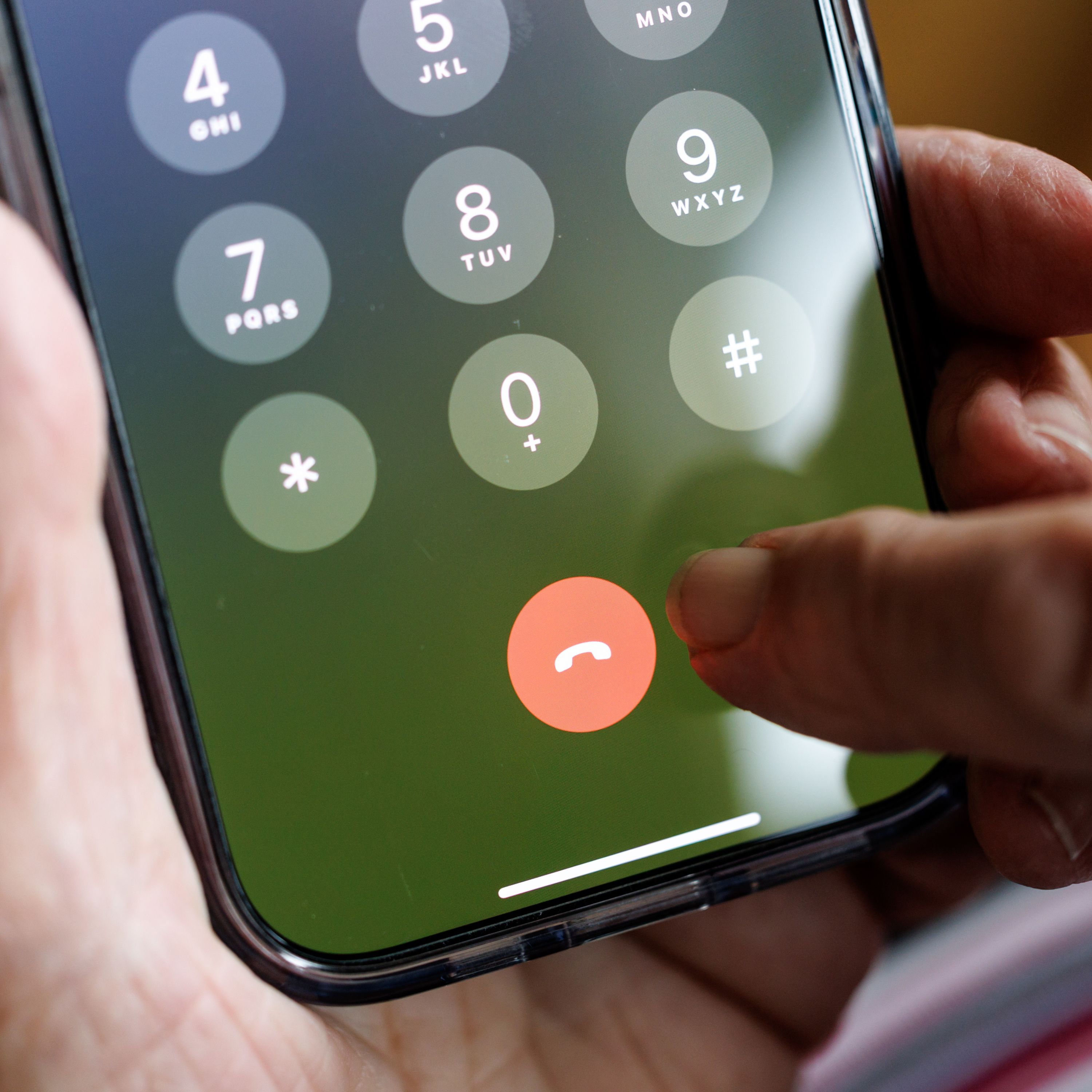
photo: A woman over 90 years old makes a phone call with an iphone on 16.03.2025 in Norden (Lower Saxony). Photo: Matthias Balk/dpa (Photo by Matthias Balk/picture alliance via Getty Images)
Hosted by Simplecast, an AdsWizz company. See pcm.adswizz.com for information about our collection and use of personal data for advertising.
Interactive timestamps
Jump to segmentGet every episode summarized
Each time The Brian Lehrer Show publishes, we email you a written briefing from the transcript — the topics, who appeared, and any specific claims, with the ad reads skipped.
Email me new episodesFree for 3 shows. No card needed.
Hosts & guests
Transcript ready
266 searchable segments. Every word is indexed and playable.
Full transcript
The Brian Lehrer Show — Protecting Aging Relatives from Scams. Machine-transcribed; use the interactive transcript above to jump the player to any line.
0:00In 2024, a truck crashed into Canaw in Moresque, where I work. 146 of our dogs needed homes fast. We asked for help on Facebook. Our story spread through WhatsApp messages and Instagram reposts. Immediately, people stepped up and just six hours later, every dog was fostered. I'll never forget how our community showed up for us. Learn how over 3.5 billion people connect to what matters with meta at meta.com slash community. Here's a shift worth noting. Better health care is care that meets patients where they are. United health group is bringing it directly to living rooms. This is a win for patients managing chronic conditions. And here's the interesting thing. By closing those care gaps, administering in-home exams and identifying risks earlier, more diseases can be prevented and patient outcomes can improve. In 2025 alone, United Health Group patients received over 19 million home visits. Learn more at UnitedHealthGroup.com slash commitment. [♪ OUTRO MUSIC PLAYING [♪
1:09On WNYC and next up as part of our ongoing coverage of cybersecurity and digital safety in your own lives, we talk to a conversation about how to protect your aging relatives in particular today from falling for scams, especially as those scams get more sophisticated. And as the scammers have learned that people over, say, around 70 seem to be particularly susceptible as prey. So we're going to invite your phone calls for you to call out any scams that you as a senior or seniors you know have been approached with in recent times. And we're going to ask advice from our guest, Paulette Perhatch, freelance writer, whose recent piece in the New York Times is how to prevent aging parents and relatives from making financial mistakes. Paulette, thanks for coming on for this. Welcome to WNYC.
2:09Yeah, thank you for having me for covering this really important topic. And listeners, do you have an aging parent or other loved one who recently fell for a scam, 212-433-WNYC? Say what it is, so others know that those predators are out there. 212-433-9692, or maybe you or someone you know have almost fallen for a scam targeted at seniors until you realize, wait a second, something doesn't seem right here. 212-433-WNYC, tell us your stories. Call out these particular scams as a matter of helping people enhance their cybersecurity and that of their loved ones, especially older loved ones in this case. 212-433-WNYC, 433-9692. I'll start with one in particular, Paulette, that we heard about recently.
3:10We heard from someone who fell for an AI-generated video of Anderson Cooper, supposedly of Anderson Cooper, selling a product that could supposedly prevent or reverse the effects of Alzheimer's. Have you heard of that one? And with the rise of AI and deep-fake videos, does that one represent something? So that one, I believe, is probably so new that we haven't seen it in reports. I looked specifically at the 2024 report from the FBI's Internet Crime Complaint Center, which pulls out elder scams as a particular subset that they study. And I think what we're looking at there is this idea of transfer trust. Well, if Anderson Cooper says it, then it must be true. And the problem now is that AI is interrupting our ability to trust that we really are hearing it from a particular person.
4:11You wrote about a woman whose mother came to her with a common check fraud scam. What was that one? So essentially, she came to her with a check and she said, really, all I have to do is the check look legitimate. She says you had to deposit it and then send a money order for a lower amount with third party. This is called a check fraud scam. So essentially, if you see anything that is just too good to be true, it's a really good idea to say, okay, let me pause here and say, is this really true? Because that one has definitely been on the rise as well. Jim and Milburn has one, Jim, you're on WNYC. Hello. Hi, I got a text the other like two days ago. And it purported to be a traffic violation that I owed money for and a very helpful QR code to scan for it. But the giveaway, if you looked at it carefully, was that it was in the courtroom of Judge John Smith, kind of. I don't think if I was able to point a judge,
5:13I would appoint John Smith, who's generic. Jim, thank you very much. All right. Good one to know with QR codes in addition to traditional links and phone numbers to call now. Jay and Yonkers, you're on WNYC, hi, Jay. Hi, there. I have received many calls from a fictitious grandson who was claims he was in an auto accident. And he's been in the hospital with stitches and a broken nose. And now to get out of jail before his hearing, a bond has to be placed. And I'm a given a phone number and a name of a lawyer, named Mr. Green. And it seems like these repeated calls in the sky green is always the lawyer. And I do know that several people who elderly folks have actually been financial victims of such calls. So people should be very, very careful when their grandchild calls them.
6:15Thank you, Jay. You know, my mother, not that long ago, told me you'd be getting one of those calls, Paulette. And she had a method, or at least advice, for others to prevent being fooled. Because, OK, somebody calls and says, it's your grandson. I'm in trouble. And you say, Joey, is that you? And then the scammer can say, yeah, it's Joey. Instead, you should say, oh, you're my grandson? What's your name? Mm-hmm. One of the challenges with AI now is that they will actually take their voice and likeness. So you could get a video call from the phone number of your grandson. Wow. That looks and sounds like your grandson. So I would encourage people to go a step further and to have a private family code where it's like you can ask. If your grandson granddaughter or anyone in your family calls and says, I need money. I just had an accident. You are in such a panicked mode. And when you're in that hot state,
7:16you are not thinking with your brain in the same way as you would be if you were in a cool state, if you weren't feeling stress. So it's really important to just know, I mean, this elder fraud has seen a 10-fold increase since 2018, which may be the effect of increased reporting, but either way, it is skyrocketing. And the top ones to look out for, the most common are fishing and spoofing, tech support, extortion, and then personal data breach. So those are the top four to look out for. So what are the top four defenses? So I think the top four defenses are pausing is always a great idea. Thinking about not only if you're giving your money, but if you're giving anything of value, which includes your private data. If anyone is asking you a question about your private data, really think about, is this someone that I contacted? Did I contact them from a trusted site?
8:18I actually almost fell for a scam while reporting this story, because I did a search, a Google search for United Airlines phone number. And I found a helpful website that said, it's basically like how to get a human at any place. I never called United. It was a place that purported to get you to a human at certain companies, but it was them. And so it is very difficult. You want to make sure you're always looking at the right website, look at where emails come from. I got an email recently that was for looking for an apartment. And it said Zillow at gmail.com. And so clearly it was not from Zillow. If someone claims that your device is infected or compromised and pressures you to accept any kind of remote access, I think pausing is always one of your best tools and then getting a second opinion. Diane and Bunten, you're on WNYC.
9:20Hi, Diane. Hey, hey. So I've been getting several in this last week from Bank of America saying that called this number, so I called the number, and there was a representative there saying yes, there's been unusual activities on your banking account. They've been using your ATM, but with the wrong code, oh, what do you call expiration date? Call the vendor. And in this case, also call Amazon. Of course, instead I called my bank. And no, actually I did. I did call Amazon and they've said, yeah, they've definitely got a wrong number there for your expiration code, which is interesting. And they, what's the punchline here? I called my representative at Bank of America. She said, do not do anything more, nothing more. This is a scam, so that's my story. Thank you. Yeah, so those kinds of things, one piece of that,
10:20the search for the customer phone number, how do I get a human on the phone? That's such and such a company. You may wind up on a website that's not giving you the real customer service number, but one that's going to take you to a scam site, right? Mm-hmm. And one helpful resource is that AARP has a fraud watch network helpline, and that is available both for elders to call directly or for family members who have a question about, is this legitimate? So they're volunteers that are available for people to use as a resource. Right. And that caller said that the texts were allegedly from Bank of America, another caller who were not going to have time for says they got something like that from Chase. So they're using bank names as one of the ways in. So in our last minute, and listeners, we're going to come back and do versions of this again
11:21and again and again. Are there meaningful steps the government is taking to get ahead of this if the scam industry has ballooned to the extent that you say since 2018? Yeah, I really covered in the article, the personal steps that people can take. So I didn't do deep research on the government. And I think people should really rely on themselves and their families to stay ahead of this and to really educate themselves. So thinking about having open honest conversations about money in your family is very important. Helping each other to really be able to talk about this is also really important. Paul, that perhaps is New York Times article is how to prevent aging parents and relatives from making financial mistakes. Thank you so much for enlightening us this much. Thank you for having me. And that's the Brain Lair Show for today. Produced by Lisa Allison, Mary Croke, Amina Serna, Carl Boisbrand, and Esperanza Rosenbaum
12:22with help today from Sasha Linden Cohen. Our interns this spring are Arlo Bivens and Jack Walker. Zach Gotter Cohen produces our daily politics podcast and Megan Ryan is the head of live radio, Shayna Sengstack and Milton Ruiz at the audio controls. Stay tuned for Allison. Since WNYC's first broadcast in 1924, we've been dedicated to creating the kind of content we know the world needs. Since then, New York Public Radio's rigorous journalism has gone on to win a Peabody Award and a Dupont Columbia Award among others. In addition to this award-winning reporting, your sponsorship also supports inspiring storytelling and extraordinary music that is free and accessible to all. To get in touch and find out more, visit sponsorship.wnyc.org.
More episodes
More from The Brian Lehrer Show

Tuesday Morning Politics: State of Iran War; Home Stretch to Midterms
The Brian Lehrer Show

The CDC and Measles Deaths
The Brian Lehrer Show

History of the War on Terror
The Brian Lehrer Show

Labor Day: Working Class; White Collar Unions; Supermarkets; Summer Songs
The Brian Lehrer Show