About this episode
New York Times science and global health reporter Apoorva Mandavilli talks about the new CDC director's challenge of Pennsylvania's report of two measles deaths in the state.
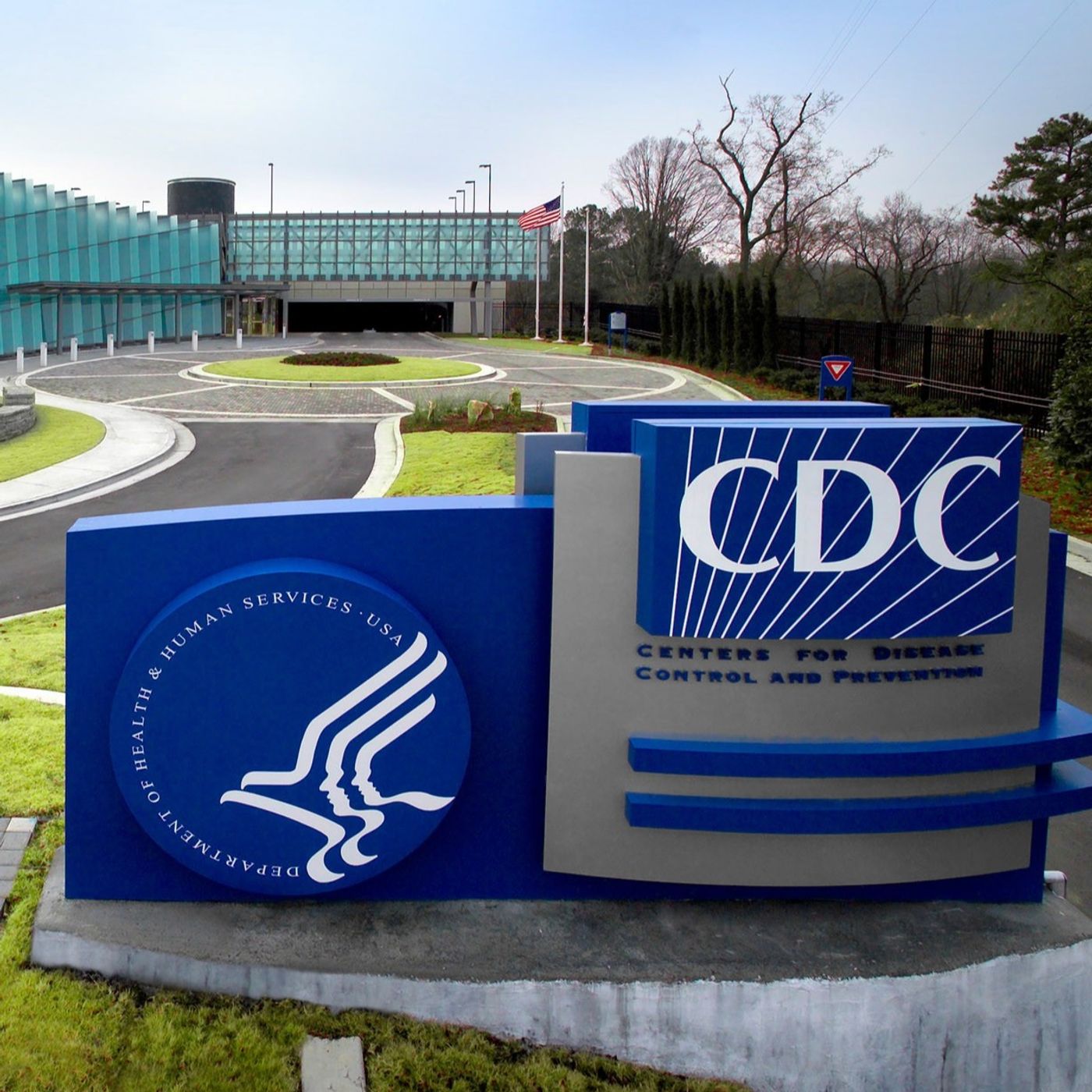
Photo: The exterior of CDC′s Tom Harkin Global Communications Center in Atlanta, Georgia. (Photo by: James Gathany, Centers for Disease Control and Prevention via Wikimedia Commons)
Hosted by Simplecast, an AdsWizz company. See pcm.adswizz.com for information about our collection and use of personal data for advertising.
Get every episode summarized
Each time The Brian Lehrer Show publishes, we email you a written briefing from the transcript — the topics, who appeared, and any specific claims, with the ad reads skipped.
Email me new episodesFree for 3 shows. No card needed.
Hosts & guests
Transcript ready
398 searchable segments. Every word is indexed and playable.
Full transcript
The Brian Lehrer Show — The CDC and Measles Deaths. Machine-transcribed; use the interactive transcript above to jump the player to any line.
Bray and Lair on WNYC. Now this week's Health and Climate Tuesday section of the show, something we do every week to make sure those topics are buried by faster, developing, or more sensational news stories. You may remember the two weeks ago in this segment we were talking about measles cases going up while vaccination rates are going down nationwide. And during that segment, our guest Julie Robner from KFF Health News broke the news to us that Pennsylvania had just announced that morning the first two measles deaths in the US this year. Well that turned out to be just the beginning of a dispute between the state of Pennsylvania and the RFK Junior Federal Health Department about whether those deaths, both of infants, should be attributed to measles or not. So let's take a close look at the arguments, what uncertainty then may actually be, and
the politics as well, with me now to help sort out what we know and what we don't is a poor Vamanda Ville who covers science and global health for the New York Times and has now written multiple articles about this dispute. A poor Ville is always good to have you welcome back to WNYC. Always a pleasure, thanks for having me, Brian. Before we get to the fight over these two deaths, can you set the larger scene from Pennsylvania for us? This state has become kind of the country's measles hotspot, right? At the moment, Pennsylvania is one of the hotspots, but as we've been seeing for the past couple of years, almost every state now has been affected by measles and we've had large ongoing outbreaks in a variety of states across the country. And Pennsylvania, yes, has been battling this outbreak for several weeks now and it's actually been escalating quite rapidly. So it does not look like an outbreak that's about to go away anytime soon. We've had almost 100 hospitalizations already and nearly 600 cases as of Friday. So in August 25th, that was the day of that previous segment.
The State Health Department reported two deaths to the CDC, the Centers for Disease Control, and Governor Shapiro announced them in a news conference. Here's 20 seconds of that fully vaccinated. And just this morning, the Pennsylvania Department of Health announced the first two measles associated deaths in Pennsylvania in 35 years. Both of the individuals were from Lancaster County and both were unvaccinated. Both were unvaccinated, making a big point of that. Now I will point out that a little later in the same news conference, he turned to the topic of Secretary Kennedy and he said this. Part of the reason why I was late is I've been sitting out in the parking lot talking to Secretary Kennedy who reached out to me this morning. And while I appreciate his willingness to offer staff to assist us, we think we're able
to manage this through the Department of Health. I was very, very blunt with him and I made very clear that his actions and the rhetoric that's coming from this administration are having a negative impact on communities across America, particularly right here in Pennsylvania, that there's real life consequences to spreading misinformation. There's real life consequences to scaring people. So walk us through a part of the beginning of what happened after that news conference because when we were doing that segment and Julie Robner helped break the story to our listeners at least, it seemed like open and shut, he announced two measles deaths, the governor of Pennsylvania announced them, but then what happened? Well so things got very complicated and somewhat ugly really. So after the governor announced those deaths, Secretary Kennedy took to social media to
say that the governor was jumping the gun, that he was taking giddy delight in announcing these deaths. And he accused Pennsylvania officials of potentially fabricating the deaths. He said there was no evidence to indicate that these deaths were because of measles. To be fair, I will note that Governor Shapiro said these individuals were unvaccinated and we now know they were both infants who were too young to be vaccinated. So the fact that they were unvaccinated makes it sound like they were people who were older who maybe chose not to get vaccinated, but in this case they were newborns infants. And so they could not have been vaccinated. But let me jump in on that point for just a second because I know in at least one of the cases, you could tell me if it was true with the other. In at least one of the cases of these newborns, the mother was unvaccinated and also I think didn't just test positive for measles but had measles, right? That is correct and she was hospitalized. We're not sure about the other one, but yes, in both of these cases, I mean, you know, it's a technicality that they were unvaccinated.
But we do know that the way you protect infants from measles is by having herd immunity in a community because you can't vaccinate pregnant women. It's the kind of vaccine that it is. It's a live attenuated virus so you can't give it to pregnant women and you can't give it to babies. And so the way you protect people like that and anybody who's immunocompromised is by protecting the community at large. So that is a given in this case that in the end, they did, they were exposed to measles and that proved perhaps dangerous and fatal for them. And so in this case, Secretary Kennedy was saying, you have no proof that measles is actually what caused these deaths and he was accusing the governor of making these very premature conclusions and saying that maybe these deaths were not because of measles at all. Right. So in that case, the baby tested positive, apparently, and I guess we could say medically clearly had it passed on to the baby by the pregnant unvaccinated mother.
And the death that we know more about is this newborn whose mother had measles and the Lancaster County coroner said the immediate cause of death was a ruptured spleen. Now, you explored this in one of your articles. What's the relationship if any according to doctors between a measles infection and a ruptured spleen, in this case a fatal ruptured spleen in a newborn? Right. So these things get very complicated. It's very difficult to draw a direct cause of line from something like measles to a ruptured spleen. But we know that in children and in adults, if you have a measles infection, it can cause an inflammation of the spleen. It can enlarge the spleen. We don't know what it exactly does in newborns because we haven't had a lot of newborn cases. We haven't actually had a lot of congenital measles where the baby got it from the mother in order to be able to say this is exactly what would happen. But we know enough in this case to say, okay, measles does affect the spleen.
This baby had a ruptured spleen. And so Pennsylvania's officials did a full investigation. They did an epidemiological investigation and a medical investigation. And they concluded that the stuff was a result of measles. Now normally what would happen is Pennsylvania would report that to the CDC and the CDC would say, okay, got it and they would update their national tally. And that would be that. But this time, the CDC decided that it was going to question Pennsylvania's judgment and it did not actually update its national tally. It just added a little asterisk and said, we don't have enough information to say that these deaths are because of measles. And is that fair in that first case and we're going to get to the second baby in just a minute? But your colleague at the time, Rachel Bedard, a geriatrician and palliative care doctor, wrote an opinion piece. I'm sure you saw it called, how not to announce a measles death. And her argument was the governor Shapiro did announce too early and did say more than
the state could back up at that time in the way he presented it. How do you make of that critique? I know you don't write opinions. You're a reporter and I'm asking you about an opinion piece by one of your colleagues. But there's a context for that that a lot of people who have no truck with RFK's conspiracy theories might look at the way this went down and come to the same conclusion. Well so as you point out, I'm not an opinion writer, but I'm a reporter who talks to a lot of public health experts and the people that I have talked to say there's every reason in this case to reasonably conclude that this death was because of measles. Because we know that measles can affect the spleen, because we know that measles can inflame the spleen. And also it's exceptionally rare for a baby to be born with a ruptured spleen and we don't know anything about this birth that would cause that that would indicate that that would be something that could have happened for other reasons. And so when that's the case, even if you cannot conclusively prove that measles caused that
spleen to rupture, even if you can't show that exact line of events, you can say the mother was sick, the mother was hospitalized, the baby had measles, the baby had these other things and the baby had eventually died of this ruptured spleen which we know can sometimes happen because of measles. So what other conclusion could you come to with any percentage chance of the alternative explanation being right than the baby basically died of measles? That's correct. And also, you know, it's not always that measles can be pointed as the exact direct cause of death, but all of these viral infections think back to COVID take a really big toll on the body. So when somebody, for example, died of COVID, a heart attack related to COVID, would you say that the person died of a heart attack and not of COVID or would you say that the person died eventually because of COVID, because COVID caused that heart attack. And so this is that same argument that we're coming back to now with measles where they're
arguing that unless you can prove that measles caused that death, it shouldn't be counted as a measles death. Listeners, any questions or any medical professionals yourselves want to weigh in on this public dispute between the state of Pennsylvania and the federal centers for disease control under Health and Human Services Secretary RFK Jr. about how to categorize the two infant deaths in Pennsylvania that the state says were the first two measles deaths in the United States this year. And the CDC says not so fast. 212433 WNYC 212433 9692 call or tax doctors or anyone else 212433 WNYC. We're the poor of Amanda Ville, science and global health reporter at the New York Times. The other case involves from the reporting I've seen a baby who was what about six weeks
old and had two months old and had a condition that almost certainly just about certainly would have led to the death of the baby very soon anyway with or without measles. Is that a fair characterization? Apparently in babies with that condition, death usually occurs before six months of age. In this case, it happened a lot sooner and again, we don't know exactly whether you can say this baby would have died at two months, even without measles. But in this case, the coroner did conclude that measles was a cause of death. And in that case, the coroner concluded, is that even a more conclusive report from the coroner than in the other one we were just talking about with the Reptard Spleen? You know, it's been a little bit hard to understand exactly why the coroner has concluded so differently in each of these cases because you could say in each case there is another
cause that they could point to. And it's also unclear to me why the CDC is still continuing to say that measles is not the cause of death after the coroner whom they agreed with before. As Nau said, the second death is because of measles. And so none of this is particularly clear or conclusive is what I would say. Here's David and Alpine, New Jersey, who is going to raise. I think an interesting question that I think we have an interesting answer to. But David, you're on WNYC. Thank you for calling in. You're very welcome. I really do appreciate you taking my call. You have a reporter on a news station talking about something where the reporter just said it's inconclusive, which really raises the question. You know, you talk about seeing the forest from the tree. This is one tree in a huge forest. And the tree according to the reporter is in the size of which begs the question, why are we even talking about this as news?
If not for the reason of keeping this concept of this illness and the forefront for political purposes, I don't understand how this categorizes as news. I'll give you a partial answer from me, David. You can say whatever you want to it. And then we'll see what a poor guy has to say. The forest, to me, is the fact that the number of measles cases in the United States is spiking, while the vaccination rate is declining. Those two things seem to be related. Other these two babies can be said to have died conclusively from measles or just quote with measles is just a leading indicator of the larger issue. More measles, which I'm going to get to this with a poor guy, whether or not people die from it, can also cause many serious lifelong side effects that don't make as much news
as a death. And so that, to me, is the forest and why it's news. The context is declining vaccination rates and spiking measles cases nationwide with their potential implications. David, is there anything you want to say to that that I convince you in any way? Well, I think you unwittingly proved my point because it's the definition of sensationalizing. You admit that you want to keep this in the forefront and you admit that the death is doing that, but you don't have the facts to show that the death is caused by that. That's not news. Right. Well, thank you, David. I appreciate it. What is news, indisputably, is the fact that the governor of Pennsylvania made one declaration the Health and Human Services Secretary of the United States contradicted it. And I think it's a public service to help the general public understand what that dispute
is about, acknowledge the uncertainties as I think we're doing, but not just ignore it. Anyway, a poor thing, anything you would add to that? I would say it's not sensationalizing to talk about the deaths of newborns ever. It's extremely unusual to have deaths associated with measles. If we only want to call it that and not say these deaths, we know them to be because of measles, to even have deaths associated with measles, especially in newborns, is a serious and off-issue that it needs discussion. And I think what you, the point you made, Brian, about there being this backdrop of escalating measles cases all across the country, that's really the important point here as well, because when you have those kinds of cases, then you have all sorts of people who are medically vulnerable, pregnant women, babies too young to be vaccinated, compromised people who are exposed to it. Just in the last day or so, we've now heard that there was a two-month-old in Pittsburgh who was exposed to measles at a hospital. There's a daycare center in Atlanta that's associated with an outbreak where some of the
babies are also too young to be vaccinated. And so what this does when you have these outbreaks is that it exposes all of those people, and we know that young babies are particularly susceptible to measles, and that they're because they're too young to be vaccinated, we do have to take extra care when we think about them being at risk. So to my mind, that makes this extremely noteworthy. Some interesting looking medical professionals calling in on this. John and Westchester, a physician, hang on, you're going to be second here. We're going to take Susie in the village, an epidemiologist. First, Susie on WNYC. Hi. Oh, hi. Yeah, I just wanted to clarify that usually you have both proximal and distal causes of death or disease or whatever. So in this case, the proximal cause might have been the ruptured spleen, the distal cause, and the more important thing would be the measles. And if you look at death certificates, you'll see that often there are a number of causes
listed. You could die of, as you pointed out, a heart attack because of severe COVID. What killed you? Covet killed you. The proximal cause was the heart attack, the distal cause was the COVID. So, I mean, and measles is known to kill vulnerable children in refugee camps in Africa. A friend of mine was doing a vaccine campaign there. A third of children who got measles were dying of it. This is not trivial. It needs attention. It needs to be publicized. Susie, thank you for your call. John and Westchester, a physician, he says. You're on WNYC. Thank you for calling in. Not sure. I think all the people have spoken before. I've really summarized a lot of the data. But we have an expression in medicine because a lot of times in medicine or surgery, you cannot identify the cause with 100% certainty.
And I think that's what's being brought up here. We'll make certain assumptions. We'll come to a diagnosis. And we're 95% sure that's the cause. But we can't prove it because the tests that we have are not absolutely definitive. If you, so the expression we have in medicine is that when you hear hoof feats, you don't look for zebras. If you have somebody with an infectious disease like measles, like a young newborn who is immunologically compromised, who then gets a ruptured spleen and has no other reasonable cause to have a ruptured spleen. And the mother had measles or didn't have measles. That child was exposed to measles. And it just makes sense that if you have a ruptured spleen as the proximal cause of death and it was secondary to a disease that the child had, measles, that those two are related and that is the cause of death, to make an issue out of this. And to say, well, we hear hoof feats, we're going to go look for zebras and some other cause. It doesn't make any sense.
And to be honest with you, as a physician, and I see all these people getting infected, as one of the people said before, herd immunity is what protects everybody. When you eliminate herd immunity, you eliminate the protection for large swaths of the population. And that's what JFK RFK Jr. has done. And in my opinion, RFK Jr. should be brought up on trial for murder. And on your analogy, which by the way, if I ever write a book about public health, I think I'm going to call it when you hear hoof feats, you don't look for zebras. So thank you for that. But on your point about herd immunity, listen to rights. Just to hammer home the point. Sorry, now here's the quote. I live in Pennsylvania. I'm immunosuppressed. I need to know if measles is near me. This is not sensationalizing. Dr. Evert, the action to that?
No, I totally agree with them. I totally agree with them. This needs to be publicized. It needs to be known. The public needs to know when there's an infectious disease in that community that they are potentially exposed to, especially if they're immunocompromised. There's no question about that. Thank you very much for your call. One more in this set. What in white plans a pathologist? Hi, Trip. What does that mean to the lay listener that you're a pathologist? Hi there. Well, I worked in a lab, but in the earlier days I used to do autopsies. And when we do autopsies, there are things that are like the immediate cause of death, say pneumonia. Now, some people just get pneumonia and they die of pneumonia. Other people have an underlying disease, like they have cancer or their immunosuppressed. And the underlying disease made them more susceptible to the mornia.
So we say, even though they died of pneumonia, the real proximal cause of death is the patient had metastatic cancer. And you essentially agree with the prior physician's side is that, in this case, we had a proximal cause of death, which was the ruptured spleen, and then an underlying disease, which is associated with ruptured spleen, namely measles. Trip, thank you very much for chiming in. Here's a listener text to pour that gets to one of the follow-up questions that I mentioned that I was going to ask. Listen to rights. There are major health issues caused by measles. It doesn't have to cause death to be very dangerous. Listen to rights. I got measles as a child before a measles vaccine was available as a result. My perfectly good eyesight was affected and I began to wear glasses. So I don't know if that listener can prove that cause in effect.
It's true. We had another caller when we did that original segment two weeks ago who was talking about deafness being caused by measles. I've read that that is a side effect that occurs. So I guess you don't even call it a side effect when it comes from the disease, but an effect that occurs. So can you talk at all about some of the non-death serious consequences of measles that maybe you should do a follow-up article on? Maybe you're being under reported because everybody's focusing on deaths. Well, so there are deaths because of measles directly and if you want to talk a little bit more about how there are side effects that can cause other complications that do eventually also lead to death. One of the things that's really poorly understood about measles is that when you have measles it robs your body of its immune memory. So if you've had a prior infection that you should really be immune to, measles sort of destroys that immune memory and so you're now again vulnerable to those diseases.
And there was in fact a study that tried to look at this issue and they concluded that measles may have accounted for as many as half of all infectious disease deaths in children before the vaccines were widely introduced. So that tells you that it's not just about that particular measles infection in that particular moment. You are basically setting off a series of health effects on your body that can cause illness way down the line, that can cause death way down the line. And there are also complications from measles that sometimes show up years and years after the infection has resolved that can also cause death. So when we talk about measles death in this very narrow way and trying to just pinpoint the cause of death in that exact moment we're really neglecting all of those deaths and also all of the other side effects as you mentioned. Other complications that can occur months to years after the infection. You know on what RFK Jr. is really getting at here which I'm not even sure we've stated
explicitly or that a lot of coverage states explicitly. It's not that the vaccine doesn't prevent measles. He agrees that it does. The argument is the ill effects of measles hurt fewer people than the side effects of vaccines do. Right? Does he say that explicitly? He has said that in the past. He's been saying that less lately. He has also said some things that are completely inaccurate like that the measles vaccine contains fetal debris and that the protection from it really wanes and it becomes useless. Over time, none of those things are true. And he has also said in that particular Amish community where these deaths happen in fact my colleague Teddy Rosenbluss went to Lancaster, Pennsylvania and reported this. She said he was actually there a few years ago talking to that particular community warning them against how public health agencies will try to get them to vaccinate and don't fall for it and saying that the cure for measles is chicken soup and vitamin A. So he has certainly had a part in increasing some of the vaccine hesitancy.
He said if I remember correctly that he had measles as a kid and the cure was chicken soup and vitamin A as if that was going to be the cure for everybody who gets measles and that should be sort of the default position. But one follow up and then we're out of time. Since the science community is almost unanimous on the vaccine being safe, what evidence or comparative risk statistics, there's a public health term, right? Comparative risk statistics does RFK even claim there are behind suggesting that the vaccine be less than universal and that's good for public health. He has said that there are deaths from measles vaccine every year but those data have not been made public and we have just reams and reams of data globally from the billions of people who have received these vaccines that the vaccine is safe. When you hear hoofbeats don't look for zebra.
A poor, demand of Ellie Science and Global Health Reporter at the New York Times. Thank you very much. Thank you Brian.
More episodes
More from The Brian Lehrer Show

Tuesday Morning Politics: State of Iran War; Home Stretch to Midterms
The Brian Lehrer Show

History of the War on Terror
The Brian Lehrer Show

Labor Day: Working Class; White Collar Unions; Supermarkets; Summer Songs
The Brian Lehrer Show

Brian Lehrer Weekend: El Niño; NYC Schools & AI; Jeff Spurgeon
The Brian Lehrer Show