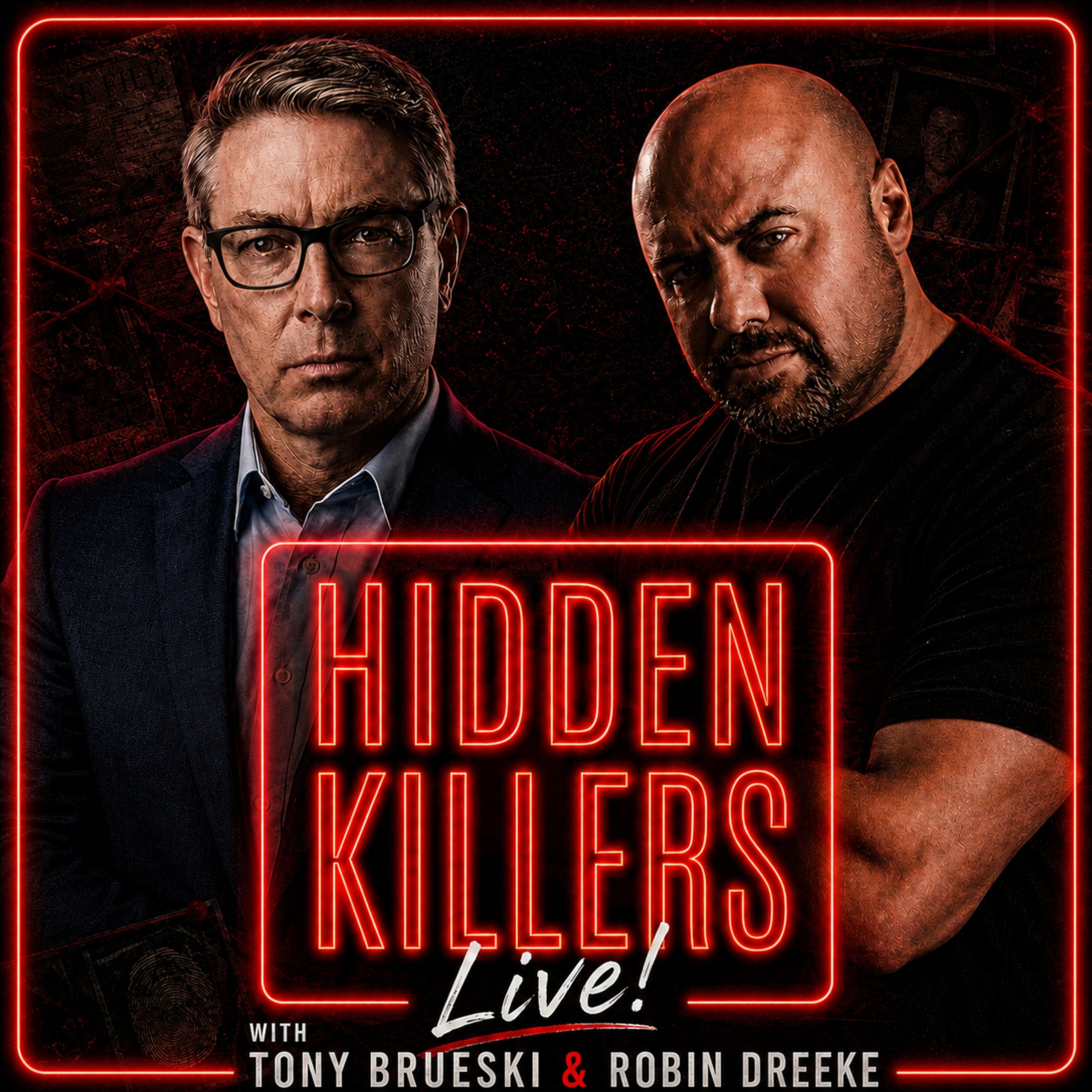
Patrick Clancy's Lawyer Demanded WHAT From the Conspiracy Accounts?!
About this episode
The warning went out on September 8, 2026, and it was aimed at the accounts that spent months claiming Patrick Clancy had something to do with his own children's deaths. Eric Faddis, defense attorney and former prosecutor, joins Hidden Killers Live to explain what that warning means for the people it was written to.
Patrick's attorney, Howard Cooper, calls it a "relentless, escalating and destructive defamation campaign." His statement says the claims are outright falsehoods and that the people spreading them appear to be doing it for followers. It says every appropriate measure will be pursued to hold them accountable, including legally. It closes with four words that change the stakes for anyone posting under a screen name: law enforcement has been notified.
Tony asks Eric the questions the audience is already asking. Can a lawyer actually find out who is behind a TikTok or Reddit account? At what point does a hot take become defamation a court will punish? What does an influencer have to turn over once they get sued? When does a smear campaign become a crime instead of a lawsuit? And if Patrick's team wins against a few of the biggest names, does this corner of true crime finally change?
Patrick Clancy testified as the prosecution's first witness at the trial of his former wife, Lindsay Clancy, who was charged with three counts of first-degree murder in the January 2023 deaths of their three children. The jury deadlocked after 38 hours and the judge declared a mistrial on September 4, 2026. Whether there will be a second trial is now up to Plymouth County DA Tim Cruz.
Listen Anywhere You Get Podcasts: https://pod.link/1655749292
Want to comment and watch this podcast as a video? Check out our YouTube Channel. https://www.youtube.com/@hiddenkillerspod?sub_confirmation=1
Join Our SubStack For AD-FREE ADVANCE EPISODES & EXTRAS!: https://hiddenkillers.substack.com/
Instagram https://www.instagram.com/hiddenkillerspod/
Facebook https://www.facebook.com/hiddenkillerspod/
Tik-Tok https://www.tiktok.com/@hiddenkillerspod
X Twitter https://x.com/tonybpod
This publication contains commentary and opinion based on publicly available information. All individuals are presumed innocent until proven guilty in a court of law. Nothing published here should be taken as a statement of fact, health or legal advice.
#LindsayClancy #PatrickClancy #HiddenKillers #TrueCrime #TrueCrimePodcast #EricFaddis #Defamation #ClancyTrial #Duxbury #TrueCrimeCommunity
Get every episode summarized
Each time Hidden Killers Live! Daily True Crime News & Breakdowns publishes, we email you a written briefing from the transcript — the topics, who appeared, and any specific claims, with the ad reads skipped.
Email me new episodesFree for 3 shows. No card needed.
Transcript ready
245 searchable segments. Every word is indexed and playable.
Full transcript
Hidden Killers Live! Daily True Crime News & Breakdowns — Patrick Clancy's Lawyer Demanded WHAT From the Conspiracy Accounts?!. Machine-transcribed; use the interactive transcript above to jump the player to any line.
This is Hidden Tillers Live with Tony Brusky and Robin Dree. There are consequences to actions. For weeks on this podcast, we've been sounding the alarm on the vial, baseless conspiracies, targeting Patrick Lansing. We've been saying it was time for him to take the gloves off and go after these toxic online sleuths legally. Now he's doing exactly that through his attorney. Patrick has issued a stern warning. The defamation campaign stops now or lawsuits are coming. But what does hunting down internet trolls look like in actual practice, joining us to continue the very conversation we started just a few weeks ago on this very topic, defense attorney and former prosecutor Eric Fattis, along with Robin Drake, retired FBI special agent and chief of the counterintelligence behavior analysis program. Eric, let's start practically speaking.
How difficult is it for a legal team to track down an unmask, TikTok users, Reddit sleuths, people disposting their videos? I mean, I get when you have brands and bigger names that may be doing this, but a lot of it doesn't even necessarily come from bigger names. Some does, but the tendrils are the thousands of people that just keep spreading it. It's whack-a-mole from hell. I mean, how do you go about trying to patrol something like this or bring consequences to those who just refuse to stop spreading baseless lies about a man who lost his three children? That's true. There are a lot of complicating factors to that. You know, one is that you really need a solid investigator and probably an investigation team and not one that is limited to your home state, but one that has reached throughout the country and I guess conceivably internationally, because these folks, they could be anywhere.
And then on top of that, how do you learn who they are? Some of these folks do this anonymously. Sometimes they are working through encrypted channels and things like that. And so getting a pass those barriers is tough too. And then on top of that, how do you identify that they're the ones who were actually posting? I don't say it's an exit counter, something like that where it's a textual post. How do you identify that they're the person behind that doing that work? You know, you can do production for records or quests. You can do certain legal mechanisms to try to learn that, but it is a tremendous undertaking with so many moving parts. Is there a way, Eric, I'm going to research here as I was talking about this, it just keeps coming to my mind like you're saying how challenging and difficult this is. Our laws, I don't think have kept up nearly as fast on defamation or even cease and assist or restraining orders. I mean, is there any other legal mechanizations that you think would fit better or on top of?
But again, if you can't identify these individuals, how do you do that? So I guess a multiple question packet here is, should we be updating the laws? How would we update them and would any other mechanisms work better or in congruence with a defamation suit? Everything go. Yeah, you know, I agree that the defamation laws are kind of behind the times on stuff like this. You know, back in the day, you might have a person in a news article who was quoted making a factual statement that was defamatory. And then you can go to the reporter and be like, hey, it was John who said that wasn't it. You can go to John and you can bring a claim for defamation against that person. Here, there's anonymity issues, there are platform issues. And so the logistics of trying to bring a successful claim against these folks, let alone whether it would even be collectible if they have assets that kind of thing. And in what state do you bring it?
You know, there are then you and jurisdiction issues when we're talking about digital communications and where those would fall on. Let's let's try and define the line here between theory, which exists in many cases and and defamation. A lot of creators protect themselves by throwing in phrases like in my opinion and it's just a theory. I mean, legally, where is the line drawn? Where a true crime, you know, hot take crosses over into financially, you know, ruining us defamation with what's being said online. It is a bit glorious, I'd say. You know, and for defamation, that only applies to statements of fact, not opinions. Well, what's the difference between those two if I say, you know, in my opinion, Reddington is a bad person or something.
Oh, sure. I mean, he's a horrible dresser. You know, those things, an opinion or is that actually statement of fact veiled as an opinion? You know, I think you can include that qualifying language and that might confer some protections. But really, the heart of it is, was it actually a representation of fact that was wrong or not? And, you know, who decides that ultimately a jury, you know, months or years down the road? And so you can see sort of how attenuated and complicated it could be to try to prevail on a defamation claim under these circumstances. But there's a big difference between saying, I don't like how Reddington or I think Reddington is a bad dresser versus Patrick Lancy killed his children. You know, there's ones in opinion, a clear opinion. The other is a statement of fact of something that isn't even up for debate. I mean, you can't just like one randomly go online and start accusing people of killing their children when there's no evidence pointing to that whatsoever.
There's no charges of it. I mean, that is, I mean, that is, that's a defamatory statement right there. So there, I mean, there is a big difference there. Is there a big difference? So even if, I mean, how well does, how well is one protected who makes the statement of I think Patrick Lancy killed his children in my opinion? I don't feel that way, by the way, but how protected truly is someone who just follows it up with that caveat. Right. You know, I think you can't make what is an obvious statement of fact and then sort of do this cop out and be like, oh, well, that's just in my opinion or that's, you know, the theory that I'm thinking. And that is Patrick Lancy killed his children. I think if you're asserting that in an affirmative factual sense, and then you just sort of hang something on the end saying, that's just my opinion, I'm sure that that provides complete protection. I think the jury is going to look at what was the meaning of the statement? What was the intention of the declarative?
Those things matter too. And, and, you know, if it's to get a bunch of views by saying something provocative, like Patrick Lancy killed their children, I think adding on in my opinion, I'm not sure that that that provides full protection. Yeah. And so I looked it up for those that are curious. So the famous rule was 1964 and it's still standing as of this past summer, the last nationwide statue for defamation was updated in 2010. Last practical updates of the state anti-slap and deep fake bills was 2025, 26. So they're kind of doing little things along the way. So when someone is, I lost my train of thoughts, I was going on that side and I thought, go back, I mean, Tony, go back to your head. Let's talk about the, what actually would happen here, you know, the threats have been made. So if an influencer does get hit with one of these suits, and I mean, an influencer, just somebody who's been saying this online, I would assume they'd be looking at folks that
have somewhat of a, of a following to, to go after someone who's saying things like this. So if an influencer gets hit with one of these suits, I mean, what exactly does the discovery process look like for something like this? Are they suddenly going to have to hand over their private DMs and monetization records to prove they were profiting off of the falsehoods? Because a lot of the people who are saying this sort of shit aren't making money. They're just, they're, they're, they're getting their emotional capital, if you will, by feeding this machine and, and these theories. And there's just a lot of people that do that. This is what they do all day. And they're, it's not necessarily a money making venture for them. Even if they have large followings and their voice is making an impact in the ether. If there's no profit mode of going on, just sheer, I want my voice to be heard mode of going on. Does that change the dynamics of a potential suit? Well, it doesn't change the letter of the law in the sense that the, the claimant would
not have to prove that the influence are actually made money. But it certainly changes the nature and dynamic of the case. Because if you can show that there is some monetary intent for making false statements about somebody, that probably increases your damages. It certainly makes the at fault party look more culpable. You probably have a stronger case. That being said, even if there was no monetary intent, just the reputation of damage, if you can prove it on behalf of somebody like Patrick Clancy, who is received death threats allegedly, it seems like that. You could prove that. And so, you know, that monetary intent piece, though, it would certainly be a factor in how the case is handled. And here's what I was, I forgot to ask when I let it slip my mind. So and what about cases like this, Eric? Because I think this is part of the challenge with us also. A lot of people are putting in really inflammatory titles on videos, titles on articles, titles
on tick, all these things that are the clickbait that the algorithms picking up on that are very, very inflammatory, very derogatory and could be subject to defamation. But the content of the video themselves has nothing to do with that. So there's an impact there, obviously, but is it, I mean, how does that look that by a court? I know I hear you and I've seen that myself. I've seen where there's some kind of, you know, provocative title like, Patrick Kilded voice. You want to blame. Yeah, yeah. So father's actually the one to blame. And then you get into that the content and it's like, well, these are some theories and, you know, some people have suggested this, whatever. But that title alone, Robin, that alone can be a factual representation that could cause damage to another person. And so even if they're sort of hiding behind this title and trying to protect themselves in the content itself, that title is on the table when it comes to possibly defamatory statements, for sure. And doesn't also defamation, doesn't have to show that the person being targeted in
this case, Patrick would have monetary loss because of the defamation. Does he have to show that, not show that because like, I know the challenge in this case is, he's is employed, he is working in Manhattan and he's married and, but he's getting assaulted and so because in this case to me, it's not necessarily the monetary loss, although if he loses a job over it, that's one thing. But also the the fear factor of his life and physical threats against him because of this, because as we said yesterday, you know, you got a lot of people self radicalizing because you have all these people out there saying all these horrendous things, well, they come together and want to group and they start escalating up from there together. So is that come part of it? You know, it depends on the jurisdiction, Robyn, some jurisdictions for civil tort claims, like a defamation claim, do require showing of economic loss. Now, this can be a modicum of economic loss. It could be, you know, that a person works hourly and they had to take five minutes out of their day to respond to somebody else and didn't get paid for that five minutes because they're responding to a death threat or something.
That would probably be enough, whereas other jurisdictions just say, hey, the threat alone, the reputational harm, the emotional distress, the pain and suffering, the inconvenience, those are all legitimate categories of damages too. And those would be at the forefront item, I'd imagine, of a case like this. And I doubt a judge is going to kick such a case just because there might be some difficulty in showing some financial loss that that's really not what's that issue in this toward anyone. And one more fall into that because everyone keeps now taking pictures of Patrick with his new wife, can she fall, can she also file as a separate or to be on with her or does she not have a claim even though she's not really being targeted by name necessarily, but because she's being photographed together with him. You know, most, my understanding is, is most states do not allow for like a, what's called a derivative claim like that. So for example, if someone, let's say a different claim, someone's hurting a car accident, a husband, and he can no longer be romantic with his wife, the wife would have a derivative claim against the at fault party in that sense.
But in this sense, I doubt a court's going to let that kind of a derivative claim. I think the wife would have to show, would have to meet the elements on her own that there was a full statement against and she suffered damages. What about the ones that claimed she was the mistress? Oh, yeah, that would be a direct claim, that would be a direct statement affecting the wife there and that could be grounds, yeah. Is it ever, I mean, let me ask you this. I mean, at the end of the day, I'm going to guess a lot of the people who have gone down this road. I mean, I can't think of any reputable creators that have gone down this road. It's just a lot of kind of one-offs, if you will, that some have some followings. But is it, is it truly worth it for Patrick Lansing to go after these people and continue to draw more attention? I mean, people have their dumb ass opinions no matter what. The facts don't matter to some people. And these are the ones who are going down this road. Does it, do you, should you keep pouring fuel on the fire that you will never truly extinguish
because these people will never truly be extinguished? And there's, there's far more of them than any human could possibly whack a mole down. You know, when deciding to file a lawsuit, there are legal considerations and there are practical considerations. And you've got, you've got to have both front of mind because you could have the strongest case in the world. But if it is not collectible, if there is no way your attorney's going to get paid, if there, you know, those things might dissuade someone from pursuing such a lawsuit. Now, on the other hand, Tony, you look at the Alex Jones and InfoWorth stuff. That he was prominent enough to where it did make sense to go after him for defamation based on some statements he made that a jury determined were farthest about a school student is my understanding. And so if it's a bigot of influence and they have assets and they're all the sizeable platform maybe in this world it does. Yeah, I agree there. I've yet to see one that's you know, Susie from Paduca being anywhere close to InfoWorths, you know, in terms of, of stature.
What about the criminal cross over? Patrick's team mentioned notifying law enforcement. I mean, at what point does a coordinated, relentlessly, online smear campaign cross, you know, from a civil defamation issue into to criminal cyber stocking when they say we notified law enforcement. What does that mean? You know, is that a completely hollow threat that that and they know law enforcement would be hard pressed to sort of bring a criminal action on this or do they have something more that some of which might not be public, you know, side stocking. You have to prove that there is emotional distress. You have to prove usually repeated contacts that are unwanted and you told the person to stop. You have to prove a knowledge on behalf of the other person that they knew that this is going to cause distress to somebody and they keep doing it. And then you have to contrast that our way ahead against possible first amendment concerns, which I think Jensie may have
mentioned in the comments. And so it gets a little prickly and a little tough in this in this world of cyber stocking and online harassment, everything else. Yeah, I mean, it's really kind of new territory for everybody in terms of how how this ecosystem all works and the causes and effects. I mean, some are obvious shit. You make up claims about somebody that are patently false and continue to pedal them. There might be consequences at some point for saying a human being did horrific things to their children when they clearly did not. Maybe just maybe your thoughts in the comments section on substack in YouTube. We'd love for you to weigh in right there as we continue our conversation about the aftermath and the consequences of the Lindsey Clancy case.
More episodes
More from Hidden Killers Live! Daily True Crime News & Breakdowns
Lindsay Clancy's Lawyer Said WHAT About Patrick Rumors?!
Hidden Killers Live! Daily True Crime News & Breakdowns
Anna Kepner Case: What Shauntel Asked a Judge to Change
Hidden Killers Live! Daily True Crime News & Breakdowns
Lindsay Clancy’s Defense Says Prosecutors Never Offered WHAT?!
Hidden Killers Live! Daily True Crime News & Breakdowns
Lindsay Clancy: Eleven Jurors Wanted WHAT?!
Hidden Killers Live! Daily True Crime News & Breakdowns