About this episode
Get access to The Backroom (100+ exclusive episodes) on Patreon: https://www.patreon.com/OneDime
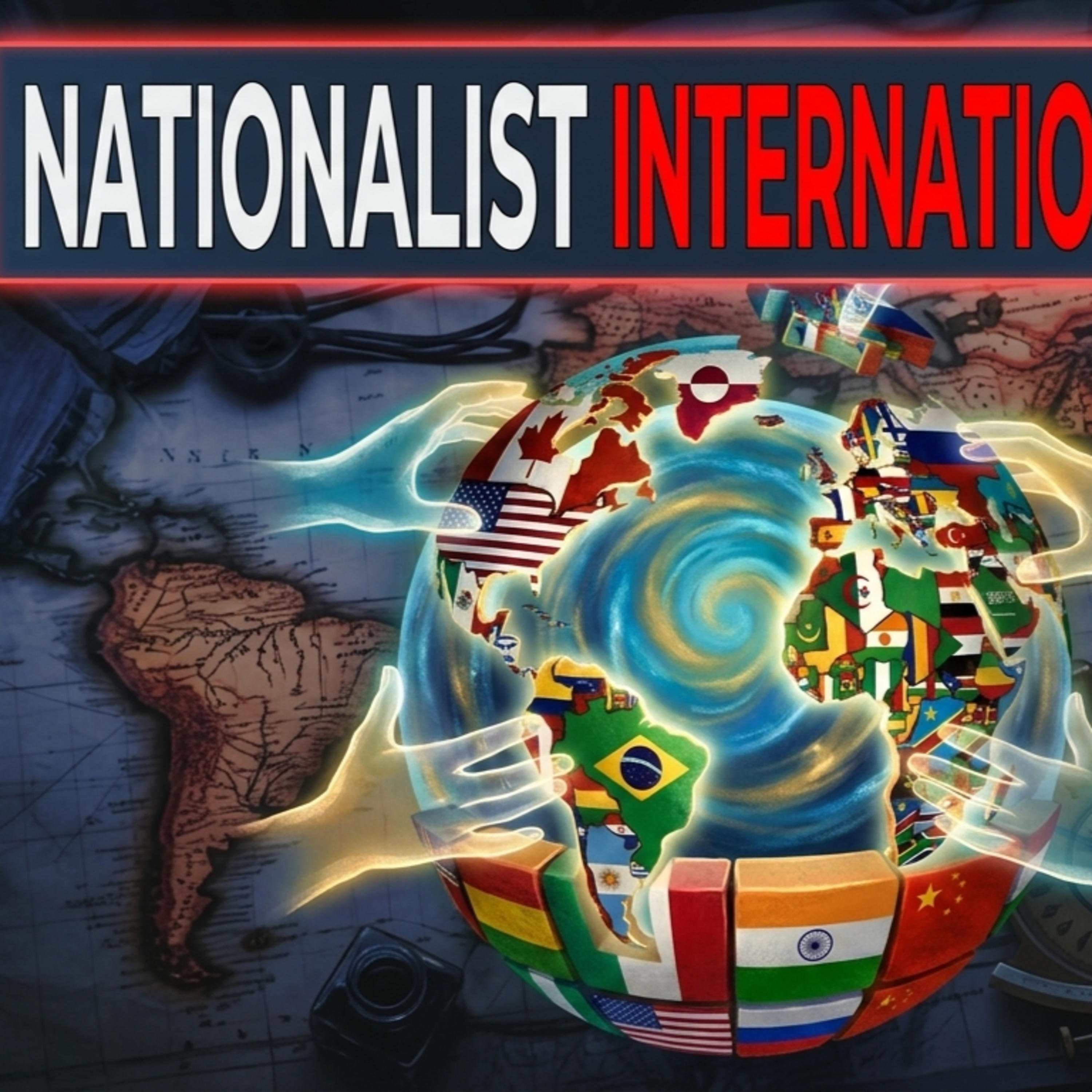
This week on 1Dime Radio, I’m joined once again by Dr. Cadell Last, founder of Philosophy Portal, for a deep discussion on *nationalist internationalism*, the idea that genuine internationalism actually requires nationalism as a precondition. We explore why national sovereignty, taxing the rich, immigration control, labor power, and democratic self-determination often cannot be secured by isolated states alone, but instead require serious international coordination between nations.
This episode was originally a patron-only bonus episode. In the Backroom preview at the start, we also get into Nick Fuentes, the return of repressed contradictions, and the increasingly unavoidable questions around race, gender, immigration, and identity that mainstream liberals and much of the left have struggled to confront directly.
Timestamps:
00:00:00 Backroom preview, race, white culture, and repressed contradictions
00:03:53 Immigration, demographic change, and the Nick Fuentes phenomenon
00:10:49 A different critique of immigration
00:14:23 Nationalist internationalism
00:18:05 Why Marxist internationalism lacks a real libidinal anchor
00:30:56 Marxism’s cultural blind spot
00:37:13 Global capitalism, assimilation, and the nation-state
00:43:03 Borders, capital flight, and international coordination
00:48:48 Religion, depoliticization, and politics as substitute faith
00:52:01 What kind of socialism can answer the meaning crisis?
00:59:27 The EU, the UN, and stronger unions against fragmentation
01:03:25 Final thoughts on nationalism and internationalism as a dialectical process
GUEST:
Dr. Cadell Last, Philosophy Portal
• Website: https://cadelllast.com/
• Philosophy Portal: https://philosophyportal.online/about
• YouTube: https://www.youtube.com/@PhilosophyPortal
• Substack: https://philosophyportal.substack.com/
• X/Twitter: https://x.com/cadellnlast
FOLLOW 1Dime:
• Substack: https://1dimereview.substack.com/
• X/Twitter: https://x.com/1DimeOfficial
• Instagram: instagram.com/1dimeman
• Check out my main channel videos: https://www.youtube.com/@1Dimee
Leave a like, drop a comment, and give the show a 5-star rating on Spotify, Apple, or wherever you listen to this.
Tags: #Nationalism #Internationalism #Immigration
Get every episode summarized
Each time 1Dime Radio publishes, we email you a written briefing from the transcript — the topics, who appeared, and any specific claims, with the ad reads skipped.
Email me new episodesFree for 3 shows. No card needed.
Hosts & guests
Transcript ready
862 searchable segments. Every word is indexed and playable.
Full transcript
1Dime Radio — Nationalist Internationalism (Ft. Cadell Last). Machine-transcribed; use the interactive transcript above to jump the player to any line.
I remember it was a common talking point. In like, woke discourse even among, like I would say, PMC white people and black people. So I say PMC because this is like, not something I would ever hear with like written people without master's degrees, but this common talking point, oh, there's no such thing as white culture. Whites have to go, what do you, what, what, what, whites are you talking about there? Ridiculous. It's really ridiculous. And then now you have this mirror reaction. It's a very popular, you might see it everywhere, which is, they say, it's like responding to like a bunch of clips of, you know, kind of woke influencers saying, oh, whites don't have culture. And then it shows like, like this kind of compilation of just random things associated with so-called white civilization that, which is like the Roman Empire, the Germans, Poland, or just like British Empire, just really random things. A lot of countries that wouldn't have even seen themselves as part of the same race and whatsoever, but it's that
reaction, you know, like if you're going to reify this notion of blackness or black as a race as a group, you know, it's like, I guess part of why for me, like I never bought into it is because I'm in a strange category of, you know, a mostly Arabic, but I'm also, you know, I've also European Arabs in America for some reason are put under the white category and Europe, they're not. And it's kind of your white passing, especially if you don't have like a big beard or something, you know, and aren't very darker. People from the Levant are generally quite light. These things function socially though, you know, like it's interesting how these things function. So like white, like you say, white passing, you know, like that, I mean, these things seem socially real in a way, like they are, but they're just not a group. Like the real group identities, not real. The feature is real, but the group identities, not real. It's like, yeah, being wider or darker is like a feature like, yeah, you're taller and shorter, you know what I mean? And, you know, I kind of detected that when I was at McMaster
University back in the 2000s, when all this stuff I perceived to be germinating or planting the seeds, it's like, okay, you guys are just like inverting a stereotypical power narrative of like British colonialism. Like if you take like the most racist British colonialists and people who had race, race, realist hierarchies, and you can, you know, I was reading all like the 18th century, 17th century biologists and, you know, who were thinking about these things about race. I mean, and woke left is just like a weird inversion of this. You know, it's like just taking it and flipping it upside down. And, you know, whether it's explicit or not. But I think, you know, that's what I saw it as. And I always thought, well, this isn't going to go anywhere. And then, well, whenever. You're listening to OneDime Radio. Become a patron at patreon.com slash OneDime to support the show and get access to extra content. I'm not saying I'm going to rule the world or I'm going to change the world. But I guarantee that I will spot the brain
that will change the world. And that's our job. We might not be the ones. But let's not be selfish. And because we're not going to change the world, let's not talk about how we should change it. By moderately conservative, I mean simply. Before you act, think well about all possible consequences. Philosophers call someone a relativist, by which they mean it's a person that holds that any views as good as any other views. No one believes that every view is as good as every other view. You want to do politics. You got to fucking understand the issues. It's not all just emotions and fantasy life. Remember my friend, a wise man, you can learn more from a few questions. And a few can learn from a wise cancer. Welcome to the back room. I'm here again with Dr. Kiddell last to follow up on our previous discussion, which was on the broader zeitgeist. Big shifts that are occurring. Why we need to understand popular cultures, understand what the culture is feeling.
And we talked about religion, mainly centered on the first episode. This one is more explicitly focused on the big return of a lot of repressed issues. And those issues are immigration, demographic change, which we've been talking about a lot. Yeah, I mean, immigration, you know, you presents it so far, I think, in one of the four dimensions of Nick Fuentes' appeal and the demographic change. And actually, you know, in my, you know, study, so to speak, of his rise to fame. The immigration issue and the demographic change actually seems to be the one that he was most concerned about. And the thing that was stimulating the most intellectual attention among the right wing study circles that he was working with before he became famous concerns over demographic changes when he went to university, being in a growing up in an all white neighborhood. And then, you know, from his perception, for his perception, like moving to Boston and seeing a very multicultural city
thinking that America itself was being lost. Of course, he's associating America with a kind of white image of America, but, you know, when you look at the demographics in the view, was the Patrick Bed David interview. Yeah, yeah, in the Patrick Bed David interview. But if you look at the demographic data, I mean, from the 1950s to today in Europe and America and Canada, you know, the big narrative that now someone like Tucker Carlson is just normalizing and realizing is the the great replacement narrative, right? Which is ultimately organizing all these people's thoughts about immigration and demographics, the idea that white people are being replaced. And at least in Nick Fuentes ideology, the world jury is orchestrating it and, you know, that Europe and North America are going to become parts of the third world. Yeah, I should just clarify if it wasn't obvious already to the audience. When we say Fuentes bodies, or as a symptom of these things, it's not
that he is particularly correct and how he responds to them or understands them or explains them. In fact, I think Fuentes, the way he talks about like the men women issue is not just a symptom of the problem and actually makes the problem worse in that it's precisely exact like the way in which, you know, this man going on the way the funders on women. I mean, yeah, I mean, yeah, he looks like he's never had the touch of a woman ever. Well, he hasn't. Yeah, he views, he views, well, he views their their role as like basically to be subordinate. He views them as kind of like inherently jokes about I don't want a woman that speaks English. I don't want to speak to her. Yeah, it's insane. Yeah, the way it's it's it's actually so in many ways, antichristian to like it's very antichristian. Yeah, it's just it's very absurd. The race race stuff's antichristian too, but like the. Yeah, I mean, but we should be saying is like, how in the fuck are we at a place where people are
listening to this kid. Yeah, you know, saying women don't have the right to vote. Like saying, yeah, but in the post liberal thought, that's becoming common, which is crazy. It is the level and how did it get this bad? Like, how did it get this bad that people are listening to this? And it's that 's the real question. That's the real question and censorship can only like avoid it. It can deal with the contradiction that is happening. It's it's like, you know, Peterson, I remember when Peterson is still a member in like 2016 when Peterson was called like a sexist. Right. And he looks Peterson looks like a goddamn feminist. Compared to he looks like a fifth wave. This is this is worth thinking. Like Peterson scapegoated post modernism. Right. It was post modern neo Marxism. That was the enemy. But it's now it's if you follow downstream of Peterson to the people we're
talking about in the post liberal space, they're scapegoating modernism. Right. And the thing is is like, and my my my fun like the motivation behind my work is this movement towards scapegoating post modernism and then scapegoating modernism and then you go further back and you scapegoat something else, it's not going to work. It's not going to work. It it has to be something that takes up modernism and takes up post modernism and goes forward. And I know that there are people in certain circles that think that the word for that is metamonernism or or or various discourses associated with metamonernism. I haven't necessarily been super impressed with the stuff I see coming out of the metamonern space. But at the same time, I think, you know, at least they're trying to take up this jump. We'll see what happens. Yeah, yeah, we'll have to see what happens with that. It's like, but the deep thing with the
immigration, yeah, to go back on the immigration thing, the demographics, you brought up the demographic of great replacement. The great, which is, and you know, well, what basically related to what you were saying before, with these kind of impossible far right fantasies of going back to this imagined world. Yeah, part of why what that does what I kind of hate is it creates this mirror of decay where they end up embracing ideas. They're so polarizing that now the other side will have an even harder time talking about the issue because that is what they're facing. It's like now anything like if you even bring up something like 80 20 rule or whatever, if you even talked about like the market sexual market places, you know, you would be associated with being on the manosphere, due to the way in which that discourse has been hijacked. And now I know is whenever you talk about immigration, they will say, oh, you're are they'll assume it's like a like racist and that you're you're concerned about it for the same
reasons. Even if you might be concerned about it because you're aware that it will trigger this reaction. And then instead of looking at cause and effect, the fucking answers always to just like look at the effect and somehow suppress the effect suppress the reaction as if without suppressing what it's reacting to, because it's like, okay, demographic change. There is a there's yeah, I'm curious what you think about that first because I think it's a little different in Europe in the US, but I come at my critique of immigration in a very different way, from the way Tucker Carlson and Nick Fuentes does do. But it's it's what is important because like yeah, you you all get they all get lumped in together. And I think there is something about demographic change that is there that is a truth. I just think they focused too much on the white aspect of it, but you know, here's what your thoughts are first. Well, I guess my starting point for thinking about this is
somehow related to that story that I told you off recording about my two summer in Cameroon, where you know, when I was younger, I think it was 2008, 2009, almost everyone who came up to me that wasn't associated with the environmental organization I was working for at the time was looking to get to where I was, whether they had the idea that I was living in Europe or Canada or America, it didn't matter. It's just I think that at the end of the day, when we're thinking about this immigration issue, I don't think that this is going anywhere. If anything, this problem is going to intensify because most of the world's population lives in the quote unquote third world or developing world or nonwestern world, however, we want to categorize these things. And it's just not a tenable model of global development to organize our society around the expectation that all the people from the developing world can come to the developed world, quote, unquote. And we haven't yet thought about how the world actually developed equitably for the total body of the working
class, including the European and North American working class. So I guess that's the starting point for me is is how do we recognize the severity and the level of the problem? And then how do we take steps towards developing an international ism where the working class and the various regions of the world actually see opportunities where they are? Because my I guess presupposition, again, inspired by that experience from Cameroon is that the guys who are looking to get to wherever I was wanted to get there because they didn't see any economic or political opportunities in Cameroon. And so in that sense, I mean, they have every motivation, they have every incentive to take a risk. And I think that's in large part what we're seeing and what we're going to continue see going forward are mostly young guys from the developing world, presuming that they have a better opportunity in life to jump on a rickety boat across the Mediterranean, try to get to Europe, then to have faith in the project of
their own nations. Yeah, and that's the thing, right? Like I do like to always critique the right when supporting, for example, like if they support war, and generally to prevent, you'd want to prevent refugee crises, prevent sanctions and regime change that could or civil wars that could destabilize countries that cause refugees. And I'm very sympathetic to refugees. I take a similar position to the hope on that. But the reality is there's a lot of mass immigration is not refugees. It's just people coming for opportunity, especially in America. You know, and in a lot of Europe too, a lot of people come from North Africa, Latin America, they come for jobs, because even the taking a very small wage for a very shitty job is going to deliver them better prospects than it would, you know, in their country, because they can buy more with the currency that they're earning. Yep. And you mentioned international, you said international
realism, what I think is interesting is a real internationalism that actually is genuine would be in nationalist internationalism, in the sense that nationalism is a precursor to genuine internationalism, because you'd want every country to make their country great. And that is not done by having all the people in the third world leave their like all the men who are with skills to leave the third world to go to the first world to then go compete with people in the first world and lower their standards. It just is just a brace the bottom. I think that has to be the future of the left. I think the future of the left has to be thinking the dialectic of nationalism and international instead of just a negation of national or like I think like the problem, like the prop, sorry, which ends up being globalism. Yeah, I do internationalism without nationalism is globalism. The left tends to just pretend they can negate the nation state and just think about the international or the global. And then the right seems to think that it can just think about the nation state like, for example, America
first. And that it can just ignore the international. But I think that the hard work is how do we sublate the nation state for a real internationalism, which is to take up the challenge of the nation state, as well as the context of international economics and politics, they have to be thought together. And if they're not thought together, then I don't think we have a serious polity. That's what's missing. That's what's missing in the post liberal discourse. And that's that binary too is sometimes projected because many people on the left when they hear my critique of immigration, they think I am making the kind of, you know, nationalist argument that doesn't see that internationalism to some extent is necessary to actually solve broader problems, right? They project that myopia that, you know, the right has when it comes to just put my nation first, I only care about my nation, I care about my people only. They think that that is necessarily the position, unless your position is workers of the world unite. And like you said, you put it perfectly when you said they just try to skip over the nation state.
And that's what it's doing. Exactly. You start off with internationalist politics as opposed to having internationalism as a goal. The what that ends up doing is like, you know, it totally dismisses the reality that you have to build a movement's first grassroots movements. They call it grass roots, because it's rooted in the local, regional and national cultures of that country. And that involves starting there, every country needs to do that. That's how you build movements. You don't start off by saying everyone in the world is the same workers of the world. And that's a globalist mentality. And you know, why people believe in this? The people believe in themselves, the people who usually believe in this fantasy that you can just skip the nation state rather than work going through it. So exactly. They are usually globalists themselves in the sense that they are, they meet this trope of the rootless cosmopolitan, which is they don't use mean like by that mean like Jew, right? The non Jewish Jewish is when, you know, Stalin used that term to actually kind of popularize that
term, use it that way. In today's world, the rootless cosmopolitan is just somebody in a big city or who has an opportunity to travel a lot and live abroad a lot. I mean, we might be rootless cosmopolitan. I am. I am. Yeah. A lot of and I'm not repressing it. I mean, I'm part of this system. And, you know, and, and, you know, and then we shouldn't scapegoat rootless cosmopolitan. But we have to be reflective about our own political position and our own political circumstances as well. So, yeah, because a lot of the mindset is when Marx is talk about workers of the world unite, you know, I'm really now thinking more and more that there's from a psychoanalytic point of view that there's no libidinal link for this. Like that, like, you know, when Marxists talk about workers of the world unite day, I know some Marx say, we're waiting to spark, you know, the spark of international class consciousness. But it will never come. It will never come. The spark will never happen. Unless
it's thinking the nation and the international together, I don't think we can do it because I think there is a libidinal link for the nation. And there is a libidinal link for religion. And there is a libidinal link for race and ethnicity. I think all of those things are clear. Like the working class quote unquote, if we want to see from that perspective, there are libidinal links for those things. But there is no libidinal link for the international working class. Maybe it could emerge, I'm open to them. Like, maybe it could emerge if we take things in the right steps. But it would have to be steps that include the nation state. And the reason why that has to be done is if that's not done, then the working class can too easily, and we shouldn't underestimate this problem, the working class can to the international working class can to easily become its own worst enemy. Right? And so unless the nation state and all of the projects associated with their taken up and then go to the international level, the working class is much more likely to see itself as
its own worst enemy than to see itself as a united universal brotherhood. You mentioned the maybe we maybe it is possible, right? The workers of the old unite. I think it is already possible, but not with workers, not with ordinary people with globalists. And that's why it comes from globalists. And what I mean by globalists, it's the two categories I put is the limousine liberal and the kind of Latte left us. So the I would just say, you know, the what I mean by the rootless cosmopolitan is somebody who has and then I call it the cosmopolitan privilege. Because a lot of the you think about it growing up if you grow up in a city, just a big city that's multicultural and are in a position where you have the luxury to actually experience the diversity of culture around you, right? Whether by food, education, that's a privilege. Most people don't get to do that. Most people's prejudices, their simple
mindedness, their primitiveness that the globalists will often attribute to them is not a result of their lack of virtues. It's a result of their sociology. Like if you only grow up in one area and you maybe travel a couple times in your whole life, if at all, outside of the country, you're going to be shaped by the limited worldview that you are socializing. And hence, the idea of Muslims coming into your country is going to tend sound 10 times scarier than if you are a person of a multiracial background who's encountered with actual Muslims know that they're not that scary and regular people, right? But most people don't experience that. So of course, you're going to have French people in the rural areas absolutely petrified our of their mind. A Muslim immigration, you know, like it's just a different circumstance, not to mention the fact that, you know, just in general mass immigration is something they're going to be weary of given that they already are like competing with each other in their own country over jobs. That's what I'm talking about.
Yeah, so the only people who have the privilege to kind of be like, oh, why don't we just all be human? It's maybe that's true. Maybe there's a truth in that. Maybe that's good. But that is not that's a luxury belief in my opinion. Most people don't get to have that open-mindedness. I think there is a truth to it. I just think if things aren't put in the right order, then it becomes empty abstract idealism. But like it, I mean, if you build up the links in the right way in the right order, it would make sense that there would there could be a solidarity between workers if they share the same interests and the same problem. But it's just, if you're jumping all of the steps that it would take to get there, then it's far more likely that the working class will see itself as its own worst enemy, which is what I mean when, you know, pointing towards what you're saying about very logical for someone who's growing up and say, for example, rural France to see immigrants being competitors for them, then opposed to part of the same international working class because, you know, they're already
competing with workers. Perfect example of this is in Canada, there's often like this debate, which province is the most racist? And everyone likes to point at Quebec or Alberta? I'm gonna say Alberta. The reality though is that it actually is not even about province, it's actually cities. Because if you look at Montreal, Montreal is known to be like the Wokas city, among one of the Wokas cities in the world, you know, it's there with like Neckonneck with Toronto, and probably more honestly, because it has the more art world there. And the rest of Quebec though, however, super xenophobic, extremely xenophobic, and they also have a sense of culture and identity. They have kind of what like Quebec is more like Europe in the sense that they have a strong like ethnic identity in the way that a lot of Canadians don't because a lot of the even like generation little Canadians, they have their ancestors kind of mixed. It's like Irish, Scottish, you know, English kind of all mixed together, mixed together with other people. So they they're more
they're less, you know, I guess likely to be ethno nationalist, but even then that's not like that's not like they never can be. But in Europe, I mean, it's just a whole different question. Like in Europe, they can make legitimate claims. Like in Ireland, the far right saying stuff like they indigenous people of Ireland have a right. And no, this is I heard from leftists talking about land back and indigenous. Well, left, well, right. Like the woke the woke right stuff in a car Benjamin makes the same point. He always talks about the indigenous people of England. I wonder if does he include the people in the colo British common commonwealth colonies? All the black. He's focused on England. Interesting. Like he's totally like his his point of view is like, no, we've given up the empire. You know, we've given up the the other territories. But now it they're he's dealing with the defense of of England. Like he'll give
examples of, for example, as someone born in England, he says the Pakistani government would never let someone like him hold office in Pakistan. But in England, we're letting people born in Pakistan have political power in our parliament. So sort of saying like that's a good point. It's a good point. But he's making a nativeest argument for political power. Well, it gets it is where the kind of a multiculturalist argument does kind of all part like I remember, you know, for a lot you probably knew that for quite a while of until literally just very recently in Jagmeet Singh was the leader of Canada's NDP. He was the Indian Sikh with a turban and they beard very visible minority. And you know, the people with common sense were like, yeah, he's never going to win. Just like that's not going to happen. And there was a lot of the people in the in the liberal left bubble like in the NDP
bubble kept keeping them as leaders. They're like, no, no, we just might we just need to fight the racism. And I remember thinking like, man, like Algerians who are a third generation can barely do that in France. Right. You know, the French blood, the black people in French are still kind of often still marginalized despite being like second generation citizens like all the soccer players. You know, they use you on the soccer team. They're all French, right? Very French, but you know, they're kind of seen this and not really French because that's a difference in a homogenous state as opposed to settler state where you have a different relationship to land and blood and soil and all that. The other the other component is like just the practicality of it. So how do you deal with that? I wouldn't fucking if I could not imagine I imagine I spoke perfect Spanish. I went to go run for politics in Mexico. Like I'd be, you know, that'd be ostracized as a gringo. And rightfully so probably, you know, I wouldn't blame them anyway. I wouldn't blame them.
Even if I was, even if I was like, you know, I spoke the language perfectly. It's like, you know, not all countries are American Canada, which are built kind of on ideas. Sure. France is technically built with an idea, but it's still homogenous. So it has this conflict that's kind of why it takes in more migrants than other countries. But like a lot of countries are very tied to their ethnicity, like Poland, and they say keep pulling Polish. Well, I think one of the, I think one of the problems here is we struggle to think the unity between the particular and the universal or the local and the global. That we think that to be universal or to be global, we should negate the local, we should negate the particular. But I think the power is seeing the unity of the both and taking them up. I mean, that's ultimately what we would do if we affirm the argument that you can only run for political office in England. If you were born in England, and you were, I mean, to take the nativeest
argument, if you were ethnically English, I think that would probably be taking it too far. But to say that you can't, like, I mean, isn't it an America like Arnold Schwarzenegger could never run for president because he wasn't born in America? You know, like that you'd have to be born in a certain country to be able to run for high political office. So just seeing the unity between the local and the global, the particular and the universal, to see them as less in some sort of irreducible antagonism, but to see them as actually strengthening universality and strengthening globalism, I think would be an important first principle. What do you mean by that? That to be truly universal, it would be truly global would not be to just simply negate ethnic or national identity, but rather to take it up as part of your universal global identity. That you can stand for your universe. Yeah, you can stand for universality and globalism and stand for being a Canadian or
being a white man. It's not antithetical to universality or globalism. And at the end of the day, why are you not using it? Or internationalism, like what how would I like to differentiate them? I like to differentiate them. I like to really be particular about it. Like, I like to say, I don't know national anti-globalism, because internationalism has a word in it. Internationalism has the word nationalism in it for a reason, because it's kind of like implies, you know, nations kind of working together. That's the next step. As opposed to globalism, it's like superseating the nation state. And that's why I like to try to capitalism and corporations superseding the nation state. I like global elites, you know, I will use that in the future. That's an important distinction. So we should make a distinction between internationalism and globalism. But okay, so like the term internationalism, I think that term is a good example of uniting the particular in the universal. Like we're talking about the universal, the international, but we're including within the universal, the particular, the national. And I think we should just do that
with as a general principle, meaning why would we want, you know, like people on the post-liberal discourse, they talk about the global nomad as building a kind of cultural, multi-cultural sludge, or what is the call in the monoculture? The monoculture. Yeah, they talk about it as a modernist monoculture. But like if we were to really take up an international project, like why wouldn't we want, you know, the uniqueness and the diversity of Japan and Ireland and Mexico and whatever? Like I don't want to lose those cultures for the international. Like those are the building blocks of the international. That's, this is a, it gets at a really interesting contradiction where the people who do not care about culture really can't answer. They say they don't care about culture, but apparently they do. Well, but even like actually Marxists, this is where I found where I kind of turned away from
Marxism is, while trying to keep the good things, because that's still trying to like, you know, work through these traditions and take what I learned and use them. There's a lot of things I learned from it. But part of where I think it's a big blind spot in Marxism is that it's completely oblivious to the cultural realm. And you take, you know, when Marxists, you know, their vision of internationalism is a one-world government. If you take a lot of them at their word, most of them don't even really believe in that the whole international communism thing. When I really pressed them, it can tell. They don't really believe in it. Or I haven't really thought about it. It's like, I think for most Marxists and where I like to exotic, I like to be sympathetic. I think it functions in Nervana principle. Do you know what I mean? Or it's a kind of, not Nervana, but not, no, that's not the right word. No, no, no. I mean, it's kind of, it's a Nervana. It is just a kind of, it's a heaven, it's a future. It's a utopian, it's a utopian vision with no actuality.
Yeah, but it's something you can kind of like think about as a distant way to drive you forward. It's like a unreflective teleology. It's a pseudo-escatology. But I love taking ideas to logical conclusions because I like to think, okay, well, what if there was communism, one-world government, what would that look like? Because that tells you a bit where the direction you might want to take us based on that end goal. And I find there is a weird way in which, you know, there's kind of, okay, so to me, like, yeah, genuine internationalism would be allowed for particularism. Exactly. That's why I'm arguing. And I think there always will be cities, like urban centers, metropolis, that have a multicultural house where you get that urban monoculture. Right. So Toronto is kind of a fascinating experiment, right? In diversity, New York, Chicago, I think those places are great. But we don't want to make every place in the world like that. And the implication of mass immigration is to make everyone like that. Like,
if you take it, like, if you believe that there's no issue at all culturally with it, which some kind of will say, or, you know, like, at least it'll act as if they think it's not an issue. But if you take it to its absolute conclusion, if you take the far left policies, which is open borders, that is the conclusion. Everyone moving to the global north. And some people, you know, are explicit that they want to make everyone urbanized. You know that there's this book called Half Earth Socialism. And their solution to the climate change is basically to have half the earth, nobody lives in, conserve half the earth, and have everyone concentrated in cities. And I think, God, these are just silly ideas. These are just silly ideas. But in a certain sense, in really, they're not really happening. Well, it takes what's already happening to like a very crazy radical conclusion, which is a rapid urbanization. And within that, it's like, I think of why is Toronto cool to live in? I get to experience different cultures. Now, that's because those
cultures are still something that exists. I myself as a multicultural person, I'm pretty, I'm not very rooted in the cultures that I'm ethnically related to. Like, you know, I'm very distant from Lebanese culture compared to people who are full Lebanese. I'm even way more distant compared to like, you know, New Mexico and Germany, very, very, that's all very distant to me. My mom was, my mom's American, right? So I got US citizenship. I'm culturally Canadian. It's the country I grew up in. It's why I identify pretty strongly. And I'm can tell by the way, you are Canadian. I don't know if you can tell if I'm Canadian or not. You might have lost a little bit of your Canadianness. Yeah. Well, look, we all contain it, depending on who we're around. I guess, you know, we're not, but yeah, that's a whole other thing. Canada, I have a certain kind of fidelity to also because I like Canada as a kind of post-racial country. But even that, and for one, not in America as a post-racial country, even that, right? That can't work in every country, right? It's post-racial also because we have
different, we have multiculturalism because we still have cultures coming in. You don't want to make the whole world multicultural because then you just, you'll have everyone be like me, which is like not rooted in a particular community with its traditions that will lose its traditions. And it's why big cities, people in big cities, have similar cultures with each other, more than they do with the, you know, the older parts of the country, which are much more diverse, and where you see like local cultures are very diverse, even within the countries, whereas urban, there is, there is like tenancies that you see across all urban cities. Some are different, you know what I mean? But that's why they call the urban monoculture, right? We want to want a world, right, where there isn't like where everyone's a fucking rootless cosmopolitan. That's kind of dystopian. So there's that. And also even for the post-racial experiments to work, which can really only work in, you know, the settled areas, the settlers states in my opinion, which is like US, Canada, Australia, New Zealand. And even then that only works
if there's integration, assimilation into the civic culture, or else you just get aerial societies, which we're starting to see. Well, look at the ethnic enclaves. Yeah, with the Indian community, everyone knows that's a real thing, which is you have whole cities that are basically just Indians, like, you know, Surrey, Brampton, you know, Suburb, and that you have a parallel society. They're not socializing with each other. It's you know, you build this, like I think America, like I love the idea of America, like that, you know, and you can, anyone can be American, anyone can be Canadian, we had similar thing going on. But you had a assimilate, and that only works with assimilation and mass immigration, you know, disincentivizes assimilation if it's coming from particular areas. So is all this being driven? In your view, is this immigration thing being driven by economic incentives? Is it driven by global economic incentives? By global capitalism, absolutely. Yeah, that's what I would say. Yeah. 100%. Yeah.
So it's insisting that's where, like, you know, the horseshoe theory, your friends, right? Yeah, Greg. Yeah, Greg, and then the horseshoe theory podcast where like, you know, the far left and the far right converge on issues, right? I think that's in some sense happening with the far left and the far right right now in a weird way, like, and it's happening in a very obscene and unreflected way. But how so? Well, specifically on Israel, the far left and the far right are working on Israel as an enemy. But I think in some ways, you could see the far left and the far right converge on global capitalism as an enemy. She actually, I actually don't quite see that. Well, just on this level, the far left is still very wedded to liberalism. In fact, I think there's a more liberal taleism where, like, if you look at the Marxist end goal versus the liberal end goal, one is just the socialist version of the other. Like, one wants the communist
open society. I mean, people who, one person who had a public kind of conflict with openly said that he said, you know, open society would be fine as long as it's communist. And if you look at what their solution, it's a stateless, classless, borderless society, borderless world. You know, kind of wild. I don't, I don't, I don't, I don't hold that, that, that, me either. Yeah. But that's why in principle, they oppose borders now. So they end up justifying or rationalizing being tied to the global liberal world order. And it's the big, the big issue, right? So like, Marxists recognize that mass immigration is driven by global capital. But what they say is that, you know, I'm talking about the true believer Marxists here, not the ones who are more practical and don't really believe in the whole, the real ones, because I, I found this debating the people at platypus, except Chris Kitchhorn. Chris Kitchhorn, my opinion, doesn't really believe in communism. He's a Marxist, but he's not a communist. Okay. And I got the sense you don't have to be. Yeah,
wouldn't surprise me. I mean, that's the impression I get. But Marx himself did believe in communism. And the true believers really did believe in that. And they believe that, okay, immigration is driven by global capital. And it is useless. They think it's useless to have things like borders, because it doesn't get at the root of the problem. You need to get at the root of the problem, which is abolishing capitalism. And that is only possible if you have international world socialist revolution. And I'm thinking like, okay, so you're not going to deal with this. That's what you're going to tell the working classes of your countries that you're going to wait until the global world revolution until you address this problem. And it goes back to what you were telling me earlier, which I think was a good point that like, in a time also of a meaning crisis, identity crisis, lack of initiation crisis. What is the right selling? What is the left selling? Oh, you know, actually, the West isn't real. Nations aren't real. Yeah, it's all arbitrary. It's like giving them nothing. No answers, no identities. It's like, what are they selling? They're only they can only sell stuff to people
who are outcasts from places. That's kind of what what the rootless cosmopolitan thing to me is. It's like people who are outcasts or global kind of cosmopolitan can only identify with this vision. It has that's why I think the left hasn't grown despite the decline of liberal center. It's only in the far right. And even when the right has been unpopular like Trump, what do we see? It's not the left growing. The left continues to decline. I think it could be I think it could be I've said this to my to to Dimitri a friend at philosophy portal. It because you know, he's in Netherlands and he's going to like he's exploring the socialist party in the Netherlands and the far right populist parties in the Netherlands. And he's just he thinks the socialist parties in the Netherlands are just dead and empty and all the right wing populist energy is very strong, just like we've been saying. It could be that the true hesitate true form of it could be that a true form of something like Marxism or international socialism actually comes out of the antinomies of right wing populism.
Like that we fully need to go into the conservative moment in order to think through what a actual international would look like. I mean, it would make sense if we're going to fully take on the particular. It would make sense if we're going to fully think the nation and the international to think international that we have to, you know, and that's kind of been my disposition since 2016 was to to mourn the death of the money a lot. And to your point about control and Marxism and saying that you distance yourself from Marxism, I kind of I said this to him. I take it seriously that you're the last Marxist. Like I'm not trying to be a Marxist. Like I say, control is the last Marxist, okay? Then we can go on. But how do we move forward? I think we have to take up the question of the I'm more and more like I don't see another way then to take up the
particular and to take up the national as a serious political determination. And then even like someone like Gary Stephenson when I follow his, I mean, Gary Stephenson's working on the level of the nation like I'm on the level of the party politics. And he recognizes that it has to be a coordination between nations, you know, before we could have an international socialism. Before you're in social democracy, I mean, that's kind of why I don't understand when I get a lot of like critique whenever I make any point about like why you need borders, they say, oh, you're a nationalist, you don't you know that to solve problems, it's it's international. Look, everyone with a brain knows that to solve problems that are international requires international coordination, including the social Democrats who aren't even communist. Like Thomas Piketty, this advocacy for the wealth tech says that you need to have it imposed by like the European union, you need other countries to impose it or else they'll have capital flight. Yeah. And like
look at the far right, they've kind of even realized over time that they need to coordinate with other countries to reduce mass integration like Trump in Mexico, Trump in El Salvador, in Meloni, blaming French colonialism, even if my, take your anti-colonial stance, my literal approach, my literal approach is to short circuit, try to short circuit, circuit both lacks. Like to not have any a reactive distance from from any disposition right or left, but for the conservatives to short circuit with communism, for the communist to short circuit with conservatism. And the same thing in theology, for the Christians to short circuit with atheism, for the atheists to short circuit with Christianity. Like in a deep sense, like both are needed, like and I mean that, like I think both are true. Like or somehow the true includes both. Like in a sense, like doesn't it have to be like that? Like I never understood like the far left progressives who
treat right-wing ideology as if it's like an alien other planet of non-humans. Like no, like these people are humans. Like they're part of communism. Like how isn't like the right wing or conservatism has to be a part of it? They're humans. They're part of the society. That was brilliantly put, especially the part about the lacks. They both lack. That's so important. You want to, you want to think like not just how I can make my ideology win and make the ideology lose. Rather, how do I make all movements better? That's an, I think, I think unique philosophy for that. I think that would be the function of philosophy here. Because another thing that like is a long-running, you know, question for me in my relationship with you. And I think you brought this up in private notes and stuff like that is this weird relationship between politics and philosophy. How they're kind of like the opposite to each other. And I've like said how like I don't really fit anywhere. And I have some sort of
like existential anxiety about that. And like you mentioned like that politics is about forwarding like a positive non-contradictory political vision. Whereas philosophy is always in the contradiction. It's always in the maybe I don't know. It's a question. I think they need each other. And, and you know, I'm just thinking about how do I relate as a philosopher to these political issues? Yes, absolutely. And even then within the deep pluralist world, this Benjamin Sudobaker would say where there's inevitability a lot of differences. Not only is, not only is the approach of actually you would want to make people who are conservative, more socialist, and you would want to make leftists who are socialist, more conservative. Not only is that better? That's also what is necessary for anything to happen. Exactly. Because that's the only way you can agree on some things and not agree on everything and get things done. That's like how you get
the deal right? Because what is it? What is the scenario that each side envisions then? It's totalitarianism. My group dominates your or we somehow vert everyone, which is the Woke is fantasy. Woke is why I tied it to evangelicalism in my essay is that it's tied to this fantasy that it's like your belief comes first before the interests and that you need to have the correct consciousness and that you need to spread that consciousness. It's why like there's this never going to be a time where everyone becomes leftist or everyone becomes rightist. It never going to make sense. It doesn't make any sense. Now you don't have to think about it for a second to know it doesn't make sense. But the problem is is no one follows through the consequences of that obvious self-evident fact. You know, but like I honestly think like doesn't it just feel right? Like I feel like I feel like I'm far enough along in my own process to like know this about myself is like as someone who leans socialist and as someone who leans atheist in terms of my spontaneous
intuitive presuppositions and like the nature of my being, it just feels right to explore conservatism. It just feels right to explore Christianity. Like it actually helps me. Whereas I feel like the people who are deep in Christianity or the people who are deep in conservatism, I actually think like you would benefit a lot by exploring like a little serious socialist literature or like exploring some secular thinkers like it would open up your thinking in an interesting way. It wouldn't but like if you see it as a zero sum conflict like oh if I explore socialist literature that means I can't be a conservative or if I explore more secular atheist thinking that that's somehow a threat to my Christianity. Like I think that's just you know really we need to get further on that. Well I actually only see it really with one side so I don't I rarely ever see people who are religious who are like obsessively only look into religious thinkers and don't look into anything modern as kind of the opposite. I tend to see that you know at least with so it's different between people who are born into the religion versus converts. So with converts what I
tend to see seems at least you know this is generalization here. People who get very into religion sometimes get a little depoliticized if anything and that's maybe one of my critiques of religion and that would be an important point. Whereas people who are not in religion at all get hyper politicized and treat politics like religion. And honestly if those people get that's why I'm pro religion is get those flat. Honestly like I think some people they're not they're better not in politics. Like they can't they can't handle contradiction. They're just they're what they want out of politics which is like meaning and belonging is much better served by religion being part of an actual community rather than you know being part of an online swarm and building your identity around hitting like people on the right. But I think both I think both of the things you said there I've seen good examples of both. Like I've seen good examples of religious people depoliticizing and I've seen good examples of more politically oriented people putting their religious
enthusiasm in politics. We touched on this in the in the for YouTube side as well and I think it's totally and we that contradiction is an important one to think the theoretical. I think a lot of let and I've seen a lot of leftist people who are like really politically charged on like issues of global capitalism and doing a lot of good work in principle about these issues. They burn out because they don't have a theological or religious foundation and they put their religious enthusiasm in a place where it's not meant. So yet both of these things this would be important theoretical unity. I do think we were able to touch on the things we wanted to do. Oh yeah, pretty much everything. Yeah, one final point I just want to end off on to touch on one more time was you know I really thought it was interesting when you you know made this point about how the leftist isn't selling anything to deal with the meaning crisis and it's not selling convincing
solutions that seem plausible to a lot of the things that are happening in the zeitgeist and issues. People think are important their answer is either unconvincing or insufficient or to say it's not a problem. So with immigration it's not a problem. They're solution to you know economics. I mean I think I actually agree with at least you know I would agree more with Gary Stevenson than Carl Benjamin on economics for example but it's like yeah okay then what do you have about the the cultural question? What do you have about the meaning crisis? They don't have anything and a part of me thinks that the only the solutions and I think I say solutions because I don't like to think that there's going to be one solution there's going to be movements that can maybe make each other better and converge as opposed to one big thing and one big battle between friends and enemies which I think is the wrong way to look at what's happening. It's far too complex for that. I kind of think so I've been dabbling a lot for a while which is okay what is what is socialism
look like? Because the issue you know that I have with communism is it's so implausible and it's as such a bad track record. In my issue with democratic socialism there's there's other issues I have with it structurally in terms of particularly in the US but what I think it has its issue is actually it's kind of does it's also too materialistic and that it doesn't have an answer to the meaning crisis it doesn't have an issue to the cultural questions. I tend to vote you know generally for like democratic socialist and social democrats it's where you know I generally how I tend to vote in terms of lesser evilism I guess but it's it's like I just think that they don't win partially because they don't they're not tapped into what everyone else is feeling and it would be powerful if they did too it shouldn't just be seen as the culture world like I'm I used to think the culture words of destruction no the culture and class war are related the culture and economics are related you can't stop separating them what I think what I've been increasingly going on I was
been dabbling on okay we're in a world where there's a return of nationalism we also have a return of religion I've dabbled okay what is christian socialism look like what does national socialism look like that isn't fascist because I think there is not one solution but you know something in that trajectory I think would be more powerful but even then because it's like these are very different things christian socialism would mean something very different from national socialism and some ways I'm actually I find it more appealing because one thing I like about Christianity is precisely it's universalist component it's kind of it has a genuine kind of universal ism to it yeah the way that like nationalism is a little bit too closed it's too narrow but where I do champion nationalism is in diverse countries this is the answer I've come to so far tentatively I haven't like put out my candidate article the one I think of the totally I was going to send you because I want to think on that for longer but in very diverse
countries I think nationalism is actually a very positive anti-racist force and it can be or because if you have racial conflicts occur and the divisions occur for such a long time which you might get as balconization and I mean if history is any indication who what is the worst the far right has ever done when it got the most powerful in america hard to separate and Nick Fuentes you know he says he's a nationalist right america for america for but he has a vision which is so you know so racialized in a very diverse country that's going to probably inevitably lead if you know assuming his vision was people I came more in power would lead to balconization of the united states because there's some very white areas and there's some areas that are far too diverse far too diverse for him to ever capture like he's never Nick Fuentes that's what he said though like we'll never win New York they'll never win Chicago they'll
never win ethnically diverse areas so then what does that mean the white nationalists will carve out their ethno states yeah it's obvious separation and that's terrible I would never want that for America the people who the people who practically follow his thinking the people who like the grippers there's a conversation with a guy I forget his name but I think it's Eric something and he had a conversation and he's building a white only commune I forget if it's an arkansas or something but it got a lot of press coverage recently but like that's kind of where they go like is to build an ethnic uncle like to build a white only commune and their ideas they're going to have these across america they're going to have these gripper communes like white only unglaves and like have them network throughout america I don't know if that's the direction things will go or how much power those things will accrue but you know it's certainly a different form of nationalism than the one you have in mind yeah I think their nationalism is native is it's it's it's it's well it's it's
it's not it's not it's not civic nationalism like with the founders or or the republican party you know and it's the end of the civil war which is really when america first becomes a nation it's after the civil war established by the republican party it's a civic identity as opposed to this very racialized vision which yeah like in an american context I kept thinking about this constantly when I was watching these two films which say a lot about the zeitgeist I'm sure you've seen civil war and then there was now the new paltamas anderson movie which is also a kind of civil warish context which white nationalist capture the government yeah yeah I was thinking the whole time like you can't let these fucking motherfuckers deal seventy seventeen seventy six like you can't have them right right right right the left one like say oh those slave owners they weren't good you're gonna see those ideas to these people who are totally not embodying those ideas at all it is crazy to me like that there's so much but like it is great for in general speaking countries
have to for any movements are rooted partially in the traditions of those places like you know Mao for example he would try to fuse dialectics with with Taoism even regardless if he was correct in that you know comparison or not he tried to make it seem compatible dialectical materialism with Taoism Mao also appeared appealed to Sunyat Sen right as the communist did who is the previous Republican so did the KMT interestingly always in history movements our outgrowth of prior movements the founding fathers built on British liberalism centuries of Republican thought in England and the Renaissance you can't just like build out of all movements come out of something this rejection of the past is is dead end and I think people on the left should really look at the positive traditions of the past that are worth looking at like I think in America America is lucky it has one of the few national traditions that where you can actually think of a post-racial nationalism that's
not really the case in a lot of Europe I think in Europe you need a better European union maybe and you need to you know make your Europe doesn't go to war which was this problem for centuries yeah America is lucky where it can do a non-racist nationalism it affects probably the way to avoid ethnic conflict if anything but right now you have this kind of a stalemate I view the same with Canada too because Canada if we don't have strong nationhood well all the provinces are just going to separate and then within the provinces they're going to want to get rid of immigrants and is this it's not it's not very good that's why I hated land back discourse by the way I was so hostile to land back discourse I'm like you are opening that you're in Canada talking about land back you know this is just going to lead to the separation of all the provinces is going to separate and we're going to have no country now why would anyone be better off that way why would anyone be better off that way that's the question why would anyone be better off living in their
white enclaves in their black enclaves well in the context of in the context of global capitalism and you know capital mobility taxing wealth as a problem and all this type of stuff my presupposition is that if we fraction lower and lower we lose sight of the ability to deal with this issue whereas if we can build stronger and stronger higher order unions but that's a good direction to go because it allows us to at least be able to approach the problem so I'm a defender like I want a better European Union me too yeah yeah I mean and I don't want a fraction do you and I don't want America to fraction into ethnic enclaves or Canada to fraction to ethnic enclaves I would like yeah a stronger national identity and a stronger continental identity in the long run because I think in the end of the day everyone benefits from that but I think just what we're trying to say is that universal dimension or that international direction it shouldn't
it should take up the problem of the particular it shouldn't avoid it it shouldn't just negate it it should take it up and and that's actually paradoxically perhaps the only way we can stop it from fractionating into ethnic enclaves and to lowest common denominator political directions which are organized around things that are perhaps easy for people to legitimately attach to but in the long run they don't have the our best interests at heart as a people in regards to what I think both of us take as the major issue is the way global capitalism basically function this is a brilliant point I have to send you my candidacy because like half of it is literally just talking about nationalism it's to the point where I have debated even separating into two things it's just that I need to have writing so much on nationalism because I know that inevitably I would get like this backlash because I felt in the moment I felt that when I wrote it like at the height of the Trump you know when Canadians were freaking out of a Trump annex in Canada
54 scale revival of Canadian patriotism and I was thinking like I feel this in the zeitgeist it's always existed you know it's just that it's one of these things we're an interesting example yeah where I kind of wrote that and but I know the backlash you got all the typical arguments against nationalism was trying to clarify what I meant and one of those things I said was this distinction between internationalism and globalism and what you just said before which is you're kind of getting at really which is what if you don't go through if you don't go towards net internationalism through the nation state and you just reject nationalism what is the alternative to nationalism if you just reject it locally I think that's the realism and localism yeah I think that's the problem that Gary Stevenson's dealing with and he's running away from it you know I actually think like in the Karl Benjamin Gary Stevenson thing he's like Drake and Karl Benjamin was like Kendrick Lamar because right after right after the unite the kingdom rally Gary went on a tour to Australia
just like Drake wins but see I'm gonna go on a tour in Australia it's like I'm gonna I'm getting out of the kingdom I can't do I can't do a tour in England that's what that's what liberals will say is when Trump when Trump wins they say I'm gonna leave the country you know it's like all right that's that's what you're gonna do that's taking to solve the problem yeah so many so many people I know who who say those things it's so we're doing it shows their privilege too that's the thing like they can do that yeah yeah they can go to Mexico and they can go to Mexico and yeah not understand why Mexicans would complain about them being there exactly exactly which is the thing there's like cities in Mexico that are just like Americans building their enclives and Mexicans complain about it I'm like I get it yeah yeah yeah you can go both ways all the California Buddhist and Bali and I don't know for you we should be viewing it like dialectical process as opposed to this idea that nationalism is inherently opposed to internationalism
and that exactly yeah exactly so I just I just say as a as a final thought I think you know 20th century is so haunted by these signifiers fascism and communism you say you get rid of the idea of communism I think I I I for a similar reason have a distance between myself and the word communism because it's just it it seems like we have to take up the next step before we can even think about what communism might be but I think the dialectic between national and international socialism is where I see the current tensions and all these discussions about post-liberalism need to take up this antonomi if we're gonna actually work both ends of the spectrum so to speak to see the value in national culture that could be an important dimension of what you're saying as a
solution to the meaning crisis and and other things but at the end of the day these things won't work unless they're approaching the international dimension in the way global capitalism basically functions so I think both both sides are absolutely necessary yeah this is this is phenomenal novel conversation cadale always a pleasure to talk to you this is all mine next time I love your work and if you like conversations like this check out lassafi portal I really recommend actually the secular conversation Daniel Tutt on the crisis of initiation really I really like that a lot and yeah thank you for listening become a patron at patreon.com slash one dime to support the show and get access to extra content I am chic and tired of the revolutionaries or protest movements which focus on those ecstatic moments oh my god one million people on syntagma square on
tachrir in Istanbul and so on we were also enthusiastic there and so on and so on I'm not impressed by that at all I think this is even relatively easy to do the true test of a revolution or radical social change is how do ordinary people experience the change when the ecstatic moment is over when things return to normal that's the most difficult task when nothing happens when just everyday life is here how is this everyday life different from the previous everyday life
More episodes
More from 1Dime Radio

The Forgotten Left Economics Tradition (Ft. Peter Ryan)
1Dime Radio

The American Revolution: A Revolution Unfinished
1Dime Radio

The Post-Woke Age?: Mamdani, AI Job Loss, & the "Vibe Shift"
1Dime Radio

Marxism vs Elite Theory (Ft. Chris Cutrone)
1Dime Radio