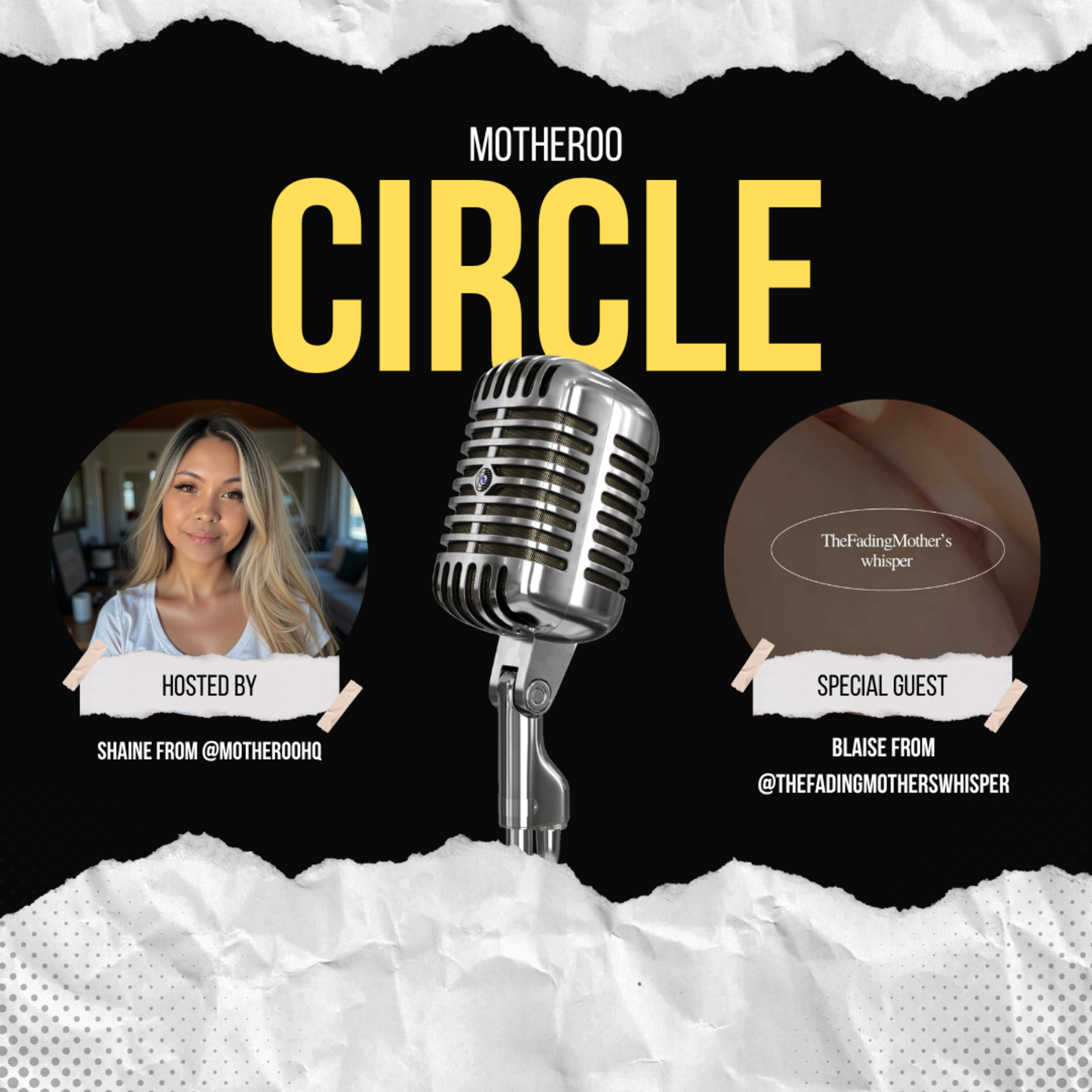
Motheroo Circle: Attachment Theory with Blaise from @thefadingmotherswhisper
About this episode
In this episode of Motheroo Circle, we sit down with Blaise from @thefadingmotherswhisper to gently explore attachment theory—what it is, how attachment styles form, and what truly supports a secure, healthy bond between mother and baby. Together, we reflect on how modern life shapes these connections, from the pressures mothers carry to the sensory world babies experience. This conversation offers a grounded, compassionate look at both sides of the relationship, inviting you to better understand not only your child, but yourself within the attachment journey.
Blaise's instagram:
instagram.com/thefadingmotherswhisper
The Official website:
MotherooHQ's socials:
instagram.com/motherooHQ
instagram.com/motheroopodcast
Get every episode summarized
Each time Motheroo Podcast publishes, we email you a written briefing from the transcript — the topics, who appeared, and any specific claims, with the ad reads skipped.
Email me new episodesFree for 3 shows. No card needed.
Hosts & guests
Transcript ready
337 searchable segments. Every word is indexed and playable.
Full transcript
Motheroo Podcast — Motheroo Circle: Attachment Theory with Blaise from @thefadingmotherswhisper. Machine-transcribed; use the interactive transcript above to jump the player to any line.
Hi and welcome to Mother of Podcasts. So I've got Blaze from the Fading Mother's Whisperer and she would like to talk about the attachment theory. And so Blaze, what is your background and how did you start with learning about attachment theory and like what made you want to learn more about it all and that. Hi yeah so I initially was touched on during my early study in doing my undergraduate degree. I always found it fascinating and the emphasis on the early years was something that I understood as a concept and it made a lot of sense to me
but I think entering motherhood and watching it play out and actually experiencing what it's like to be involved in the attachment process between mother and baby it really kind of just amplified my interest and took me back to just centralising that a little bit in my thinking and I also, I am on maternity leave at the minute but I work within child services so I've also my career has been before children working systemically with families around a lot of these things and managing separation, parenting, setting up children going into care. So many layers are all where attachment theory features. So yeah, different kind of strands really. Yeah I think that's what got me into my own blog, blogging as well because I became a mum and I just wasn't sure and
I didn't want to be a parent, a parent like my mum was and so I wanted to go deep into it and I had a look at attachment theory and I thought that seems to like give me a more informed way of how I want to parent and could you tell me about the four styles of attachment? Yeah of course so I think it's useful to initially point out that there's four styles one being secure and then the other three essentially being categories of insecure attachments. They're all styles within insecure so not successfully attached to the primary care give-up. So secure is obviously the one that we're all striving for and that's where yeah the child successfully internalises their presence and warmth of their parent typically and primarily the mother but it can be whoever's the primary care give-up and then within the insecure we've got
ambivalent anxious and avoidant which kind of play out in different ways and also our result. Essentially that is how the child responds to managing the failure of the internalisation of the parent so there's not really a clear path to why say one child might become anxious and one child might become avoidant in their attachment style it's just the way the child develops in response to what was lacking essentially but I think it's important it's within that I'm sorry I don't I get so involved because I love it so much it's been hard to because with anxious and avoidant they essentially have a strategy to managing whereas ambivalent that's they're the
ones trickiest to work with because they don't really have a strategy they're very ambivalent about what it is and what it means to connect to another and it really kind of stunts their relational premises throughout their lifespan yeah how early is it really set like how how early can they form this attachment attachment style yeah it's such a good question it's so interesting because I think a lot of people quite find it quite shocking to learn that attachment style from the lens of attachment theory is actually solidified by the age of three so it is pioneered in the early years those are the crucial critical developing years and the brain is developing so rapidly that but yeah by the time they're three and development essentially slows down a little bit
they will already have an established attachment style that doesn't mean it can never be changed corrected repaired with awareness understanding sensitivity nurture all these things but it's just whatever has those that child experience has been up until up until that point they will enter early childhood with an established attachment style yeah okay so is it more easier to change or repair the for example if they were the last one this organized or fearful is is it easier to change it in the early years or is it like it's just fixed I think that the so the brain maintains neuroplasticity so it can rewire so neuro connections would
have been formed but I do they can be there can always be new connections made within the brain but it would require some undoing because by that stage there is some concrete it like visual elements in the brain even empathy you're we're not born with it it develops and it there's signs of it by that age and that essentially is a part of the attachment process your feelings being empathised with feeling seen feeling heard feeling that somebody can kind of enter your emotional reality and that that builds the security and the relationship at the same time that it's building parts of the brain so I do believe in correction and repair but it's it's work it's it's easier to get it right in the early years than to try and correct it later if that makes sense yeah so how late can you do you know if it's like repairable in the teenage years
or like what age would would it be that's more difficult to repair yeah so I think so in my work interestingly I've actually witnessed the repair play out in later relationships because what we've got to remember is once it's internalised it's them repeated because our expectations of another are formed so then it's then it's happening with your romantic partner or your best friend so typically the work that I've done and I'm not saying it's not wouldn't be repairable if the parent had the awareness in TM as an adolescent and because I have worked with that a lot but I actually have worked more so with two adults trying to correct their experience from when they were younger with each other and because they're projecting their expectation onto the partner and it doesn't even belong with them so it's understanding that and then learning that there's another way and I have absolutely
watched it successfully done on many occasions and with parent and team as well okay yeah so it is it has worked so that's a good thing I guess and it does take a while for the person if it was an adult to like to have a lot of sessions for example with you to repair it or it's an ongoing work yeah so it's ongoing work within the relationship as well obviously I can do my bit and I can offer a safe space to kind of play out what is happening and relationally and think about alternatives but ultimately it's the the person having a new experience experience repeatedly enough so that it overrides the belief system it might be useful
to just for an example if somebody I just thinks oh everybody's going to leave me everybody's going to go I'm not worthy of somebody staying with me I'm not lovable these are the kind of things that perhaps play out when somebody's experiencing difficulty and the more the person stays and disconfirms the belief then that's internalized and that forms the correction but when that belief is so deeply entrenched and embedded in the psyche it's it's tough and it's painful it's a painful process and that's why the fragility of the infant brain is so precious because that's when all the belief systems have become in some embedded yeah that's what's so different it's time yeah it is um so what could build a healthy attachment what can what can uh what can help and
like what can parents do to start building a more secure attachment yeah so I mean the the key is presence being as present with our children as we possibly can in those early years and I think that this kind of leads me on to how I've ended up where I am with creating my my Instagram and the content I produce is I feel a type of rage and the system because it's not being supportive motherhood isn't being protected anymore and children and parents are being robbed of the time that is required to build healthy secure attachments it doesn't mean they're not possible I'm not saying that but we are up against it when like maternity leave in the US it's like six weeks like here we do get a better package but it's still not mothers are still going back to work before
their baby knows they're separate and we're expecting them to form secure attachment in conditions that are so unnatural yes I agree it is um it is heartbreaking um it's so hard to also I think it's a it's a difficult topic when it comes to like maternity leave and I find it heartbreaking for some moms that has to go back to work because I feel like it's really crucial for them to stay with their babies for as long as they can you know and I'm very lucky enough to have be able to stay home for as long as I can and I I think also the promoting of child care is a is something that has a lot of impact on parents because you know they have
more options they say or free free child care for this amount of years and it's it's making them feel like oh there's a system that is supporting them but it's not really supporting them it's encouraging separation in the early years yeah absolutely I love the way you put that and I completely agree because I think that it's almost selling a bit of a lie and there's a belief that we're being held by the system but even the messages like babies need socialisation we know this isn't true babies need connection yes I encourage it what it does is it kind of convinces the family that they're being supported in the way they need to look we're going to
offer you what your child needs when it's like no a child needs their mother and the mother often and not always moms want to go back to work and I'm all for that if that's their choices but often it has a mom's heart out to return to work early so why are we funding nursery why can't we fund the mom to stay with the baby and have better outcomes for all families yes I completely agree with that one it's like you know in some moms do want to stay home and it's just not possible and yeah it's really difficult yeah it is and and that's um what I this is why I find it so difficult sometimes um carrying this message because I'm so sensitive and protective and moms and sometimes I feel this sense of like delivering the news that people don't want to hear because I haven't got the solution like I can tell a mother that it's the priority that she remains with her baby but I cannot tell her in the current world how to make that possible or practical
yeah because it's so difficult and people can't survive and so yeah sometimes it feels like I'm delivering a message problem without a solution but it doesn't make it any less true a baby in their mom yeah I really feel that as well I feel like the whole thing about socializing as well getting them all you know they need to socialize and they really just need their mom they need connection they need presence and you know the pressure to go back to work the pressure that they have to just provide instead of giving that connection to the child is so heartbreaking yeah yeah really really years and I think that um what I see in maths what I notice working in child services and in general I feel like mothers are actually having to become a bit desensitized
the pain of being away from their child and that's with an a fully grown adult that has logic and reason and what what concerns me is a baby that doesn't have the capacity for anything other than what is immediately being experienced in their nervous system what is happening for them because unfortunately it is shut down if they cannot tolerate the pain of the separation they will shut down and learn how to not feel and not need the connection and that is when you start seeing the attachment difficulties and the attachment injuries because the it hasn't been safe for the child to trust the presence of the parent because it's too painful when they have to go again and this does not mean every mother that goes to work this is I'm not saying this is a blanket statement there's there's variables but it we are what I'm what I'm capturing here is we are allowing that potential in in children babies and infants and it's just not right
yes yeah and I see in it as well I've worked in before I had my little one I've worked in child care for almost like a decade and I've seen how difficult it is for the child to recover in you know during the day from being dropped off in the morning and some would even you know still be crying throughout the day because you know they're looking for their mom and they're looking for that connection with their mother instead of being hand out to a complete stranger yeah exactly and why wouldn't they be why would and before preverbal when there's no communication and the child and you can't explain I'm coming back there is an ex the further child there can be an experience of abandonment happening because they they don't know that you're coming back and yes it's learned
that you do and you can and that is a I guess you could say that that is a successful adaption that then happens that can be positive but they're so teeny that there's all there's also the argument are they well adapted or are they well defended against the absence that they've had to tolerate yeah are they now this really together independent baby that's unnatural but that can just manage their mother leaving them or have they just had to find a way and what is the consequence and this is what this is what I'm passionate about and even saying it I feel protective over any mom that's listening that's had to do it but I'm like but we cannot stop talking about this we need to protect babies and moms and moms yeah definitely 100% and we really need a better system
to support both moms and the baby because it's it's really awful to see it in when I was working in childcare and yeah yeah I was actually the room leader so I because the ratio was one to four and I had to take care for babies it's um difficult because as a child care educator you can't cater for each need as well so it's you know it's really difficult especially when they're getting dropped off crying and then there's another one that's coming and cry as well it's like what can you do you know yeah yeah 100% I actually think that there's a lot for the workers as well because and yeah that's it's it's it's it's so tough it's so unnatural watching a baby torn from their
mom and tears and they're like clapping and like well this is funded this must be right yeah but they just don't babies don't understand you know they don't know when the mom is going to come back off they're going to come back yeah it's such a trauma and that word is heavy and I use it so tentatively because it's so it's so it feels I feel a sadness to capture it in that way when it it's so difficult for it to be seen like that if that makes sense but like yeah there is something very big that's going on here for the baby and yeah it's it's really it's really kind of worrying yeah and I feel like my job as um what are the we post online regarding these topics I feel like it's really good that we're raising awareness in the topics so it's because I feel like
yeah like you said parents have become so dissensitized with the whole just you know drop your kids off to take it and just go to work and see them I don't know for the last five years of your busy schedule like yeah yeah it's just become like a second priority instead of the first you know and and it serves the sister to have to wage it because that people aren't necessarily thriving in those conditions it's just that's what they need to keep the roof over their head and to do the basic things so it's it's it doesn't seem to me that anyone is massively better fit in from it in the family and even men I think they're disempowered I think that men wants to provide it's not nice for a man to feel like I cannot support my family she has to work as well I think that could be very disempowered and I think it can make them lose some of their purpose as the as
the prep winner the provider which can actually really fuel men and make them thrive yeah yeah agree it's really heartbreaking with um so I want to go in and ask you about this actually how can I what's the best way to I guess build this secure relationship um because I was thinking about parents that have trauma or has anxious or avoidant attachment styles because you know not everyone was built with a secure attachment oh not everyone is has a secure attachment what can they do to um I guess to build that baby's secure relationship
yeah so I guess I guess what you're kind of touching on is to like prevent the patterns from repeating yes and how did it attachment injury themselves um so firstly it's a challenge and I take my health to any mother healing on the job because it's one thing trying to build a secure attachment but when you're at a deficit and that you've experienced a deprivation yourself in terms of your relational world and you've been let down in whatever form it is absolutely possible but it's a challenge and I really do feel for mums healing on the job as I say and I think that the first stage would be the awareness around what is it what went wrong for you and how does it play out now because we can't give our children what we didn't have if we haven't identified what was missing so and I mean in an in an ideal world you know they say like the hill before you have children
yeah that would be absolutely brilliant but for a lot of people their children bring to search bring to the surface what needs to be healed so it's not always realistic but I think that yeah for that that parent it would just require some sense around what their attachment style is and how it developed for example if they're avoidant how can that how can they bring that awareness into their experience with their child so when their child needs them what does it do to them is do they want to run and hide what is the emotional closeness terrifying and why these are just the kind of questions that I'd think about with my clients and to just help them track it a little bit and yeah just kind of keep keep using their their child rather than seeing it as a trigger see as a tool and insight to their own healing okay my child is triggering me because
children will okay what is that feeling okay they're making me feel like they're intense their emotions are intense why do they need me so much I don't want them to need me so much I want to pull back for example we might be noticing that there could be some avoidant traits coming up could be an expose things like this and so yeah I guess and and then what did you need this is always great what if you could sit with your little self what did you need and how can you give that to your child but I think anyone that is in the process of trying to identify this and trying to not repeat patterns they've already got the they're already one fit in the door because they've got the awareness of something didn't work for me and I want to make it different and that is already doing your children better yeah I agree yeah um because I've found my my mum I guess this is I feel like I relate to that topic a little bit
more than most people um I had a really difficult connection with my mum and it's uh being a parent being a first-time parent it's overwhelming already enough with all the information I have to learn and and then I realise that it's more important to actually learn about my own attachment style and what I need to do to avoid you know passing on the trauma that I had good for you yeah it's really yeah it's really difficult because I'm learning about code co-regulation rupture and repair all that and um what would you I guess what advice would you give
to someone who has difficulty with rupture and repairing like when they they just cannot see through it and they and they realise you know they all know what if I damage my child how can they repair it and what would be the best way to I guess deal with that moment so are you are you are you kind of touching on if if a parent recognises in the moment that there's been a rupture how to repair it or yeah so essentially repair is an example of connection because rupture means disconnect in that moment there is a there is an experience of disconnect between parent and child and what we want to teach children is that disagreement and whatever
your big feelings or whatever might be happening for you or doesn't lead to loss of connection because love isn't conditional and we are attachment will remain intact even when we're challenged massively challenged so the repair is just solidifying returning to that truth so it's all kicked off there's meltdown mum's overwhelmed child's doing their thing mum doesn't like how she's handled it she's entered her own state of dysregulation and um there's just been a huge disconnect so it's just about coming back to the moment and replaying it reliving it with the child this is what was happening for mummy I don't like the way I did this I wish I could have done this differently seeing what they want to volunteer depending on their age what's developmentally appropriate and this can be done in play and drawings or whatever or just a simple conversation
I wish I did it differently I wish I did it better and and it's no this doesn't mean that you're not sometimes the child might have also you know displayed a behaviour that needed some that you needed to respond to and that was actually quite appropriate but it's just revisiting the moments where you feel that you have done yourself and your child a disservice in whatever way and explaining it and reconnecting so they leave the conversation and you leave the conversation with a sense of what went wrong and that it hasn't ruptured the relationship and you're you're reconnected and then conflict doesn't become scary because you don't always end in a repair and that is what is one of the key features to safe and secure attachment yes that makes sense sorry yeah that makes sense yeah and I think um yeah I think
that perfect parenting doesn't exist I guess in realistic ideal yeah it's not realistic at all and also we're going our children what that we can't be human yeah but we can have feelings too it's okay to like that's part of the process of teaching them how to manage is recognizing when we haven't that's really when they watch us manage but it's equally it can be equally pioneering when they watch us fail and own it and tell them that we see it and we recognize yeah it's a really good example for them that you know you can be angry and you know you can also repair and just you know everything's going to be okay at the end and I think that's more important than just trying to be perfect I think that's what I was trying to do at the start
when I didn't know as much as I didn't know and that I would always aim to be perfect and I would feel guilty and it was impossible with you know with were humans and we tend to make mistakes and it's it's really good to just show them that you're always there and that you know you're not going to leave if things fall apart absolutely yeah I like the way you put that that's exactly yeah that they can fall apart and we're still we're still a family I still accept you in the full spectrum of what and who you are and what that looks like over time and in moments and I think I think parents yeah like feeling like needing to be the perfect parent I think that often that can come from fear around
perhaps if you I'm not saying you personally this is just a general statement I'm just kind of putting together different thoughts if you weren't if you haven't successfully internalised the rupture of repair cycle for example and you not being the perfect parent is quite scary because you're the one that then having to do the repair that you never experienced done for you so it might just feel safer not to rupture and that's where I think births this idea of the perfect parent but it's like that's not realistic it's okay to rupture it's okay to be imperfect the weight is in the repair and I actually just think it's the most wonderful safety net of life is just to think oh my god I snapped and rather than tipping into spiraling mum guilt that we all can go down that road because that's just when you love your kids so much you just want to get right but it's so lovely to just lean into like I can repair this yeah that's that's it yeah
and um and you're also I was thinking about correlation and you know we can't teach them to become until we are calm so until I think I said I'm right so I guess you kind of know they can't regulate babies can't really regulate their own nervous system and yeah and I find that in in my culture because I was I was born in a Philippines and I guess the the thing with parents is that you know you just they tend to think that babies can just calm down by themselves without you know the caregiver or the mum and there's I find that quite heart breaking
as well it's yeah but and that's that's a cultural injustice that we've been served there because we know that we know they can't and we know that a baby can't self-regulate we've known this for years but and that they need them they actually depend on the physical presence of their mothers bodies when they're that little to co-regulate and to calm down and to self-soothe and if we were if we were still and able to support healthy dependence which is just allowing a baby to be fully dependent on their mum to to in every way then we wouldn't have to dress up this old there so that we need to get them to self-regulate we need to get them to manage and we let's just accept that they can't and let them be with their mum because they will eventually but but let's assume because we know that babies cannot like what babies expected to self-regulate and now
we like track milestones like they like prizes like although they were self-soothing at this age and like when they're so little still and it just it just feels like that becomes the goal rather than the goal being like allowing the infant to be dependent and letting them belong to the mum for a set of beautiful period that's very short in the life. Yes yeah I guess I have my own experience in life out of other adults and friends and family would say you know they can can't you won't you'll be relieved when your child when your baby can self-regulate and self self-soothe and it's just not ideal I think we need to really get rid of that that idea that babies you know you're spoiling the baby or you've got to sleep train the babies so that they can self-soothe it's not ideal.
Yeah it's radical radical to assume okay let's leave this baby to Christ so that they learn how to self-soothe that baby hasn't learned how to self-soothe that baby's learned how to shut down because they believe that you don't come because they even in their deepest and darkest cry you have ignored them like how and it's not standardized but we're still advertising sleep training like it's like this glorified method but then just like what do you need mother to be okay to give to your baby night and day because that is what is expected unfortunately kind of unfortunately in these early years and that's what where the system needs reaching in mother just needs to be better held so healthy attachment could be supported and nurtured and celebrated like moms are almost like shamed for being like overly attached but oh do you never leave them oh let's cry like I got that it's red for isn't it like an emotional and pathic responsive
attuned mum feeling like she needs to explain why she's picking her baby up because they're crying yeah yeah I guess you get a bit of like you know the looks that are you know a bit ridiculous why don't you just leave the baby you're spoiling her yeah it's crazy almost like you're neurotic for not being able to manage their cry rather than like no I'm biologically wired to this baby and every instinct is provoking a response like why is it being denied by my culture like and society like it's crazy yeah it's really um it's also hard to navigate that you know as a first-time parent it's like am I doing it wrong like making moms I can guess their own instinct yeah absolutely I think I think it's harder for first-time moms I feel like well even for me I've found even with my second I felt more just like I would not
listen to a thing that anyone says but I think when you're when it's your first they can be a sense of like you're just trying to figure it out and you can you can be manipulated to believe that you're doing somehow doing it wrong yeah trust in your instincts and then add in just to do a bit of a full circle here but the very real concept of having to return to work and preparing for that like you're preparing for early separation a lot of that is denial of instinct but as we were saying you have to get a bit de-sensitized if that is your only option yeah yeah yeah that's I guess that's the reality for some people and it's yeah it's really difficult because they're chosen reality so it's such a sensitive topic yeah it is yeah um I just want to conclude the podcast again and what do you think you would like to say to first-time parents that
are navigating I guess the different opinions and the different I guess the I guess during maternity leave and what can they do to sorry I'm a bit mumbling here I'm just thinking what can you say to parents that are struggling with their own attachment and what can they do for to have a better secure attachment for their child so initially the first kind of part of the question from what I heard is I would just always say just lean on instincts and the connection is never the wrong choice so regardless of the noise
and whatever you'll be told if connection if returning to connection is what feels like it contains a single moment just don't doubt it if you let it let in your instinct least because instincts will often lead us to connection you know if the baby's crying pick them up or whatever it is instincts and collection are inherently linked when it comes to mother and baby relationship because that is the way that nature intended um and in terms of yeah the secure attachment um I would just start by saying like a wet like if you are if you are consciously trying to be able to secure attachment that is the first step to building a secure attachment because you are you are you have got the awareness regardless of what your star was and as I say my my heart goes out to the healing mother because that makes the job double hard but what whether you're repeating
patterns or trying to break them just having the awareness of I um raising my child in a way where I'm intentionally trying to build a secure attachment is without a doubt the first step to create you know yeah I think that's that's like he's having awareness in the first place that's how we can do better yeah well thank you for joining me in today's episode um thank you for having me it's been lovely and I love your page we we share a similar message and I think we should stick with it yeah putting it out there it's important yes it is important it's um make making for time parents more aware is I think what I really want to do in this you know it's it's a good type of work and you're doing such a great job with your page as well and thank you for raising
awareness in those you know really difficult topics that we talked about yeah absolutely thank you so much for having me thank you
More episodes
More from Motheroo Podcast

When Sleep Charts Lie: Real Science on Childhood Sleep
Motheroo Podcast

They’re Watching Us Scroll: What Technoference Is Doing to Our Kids’ Brains and...
Motheroo Podcast

The #1 Predictor of Adult Success Isn’t Academics—It’s This Simple Family Habit
Motheroo Podcast

The Hidden Reason Toddlers Keep Doing What You Just Said NOT to Do
Motheroo Podcast