About this episode
Get every episode summarized
Each time Today in Focus publishes, we email you a written briefing from the transcript — the topics, who appeared, and any specific claims, with the ad reads skipped.
Email me new episodesFree for 3 shows. No card needed.
Hosts & guests

Transcript ready
225 searchable segments. Every word is indexed and playable.
Full transcript
Today in Focus — Iran war escalates: what’s Trump’s endgame? - The Latest. Machine-transcribed; use the interactive transcript above to jump the player to any line.
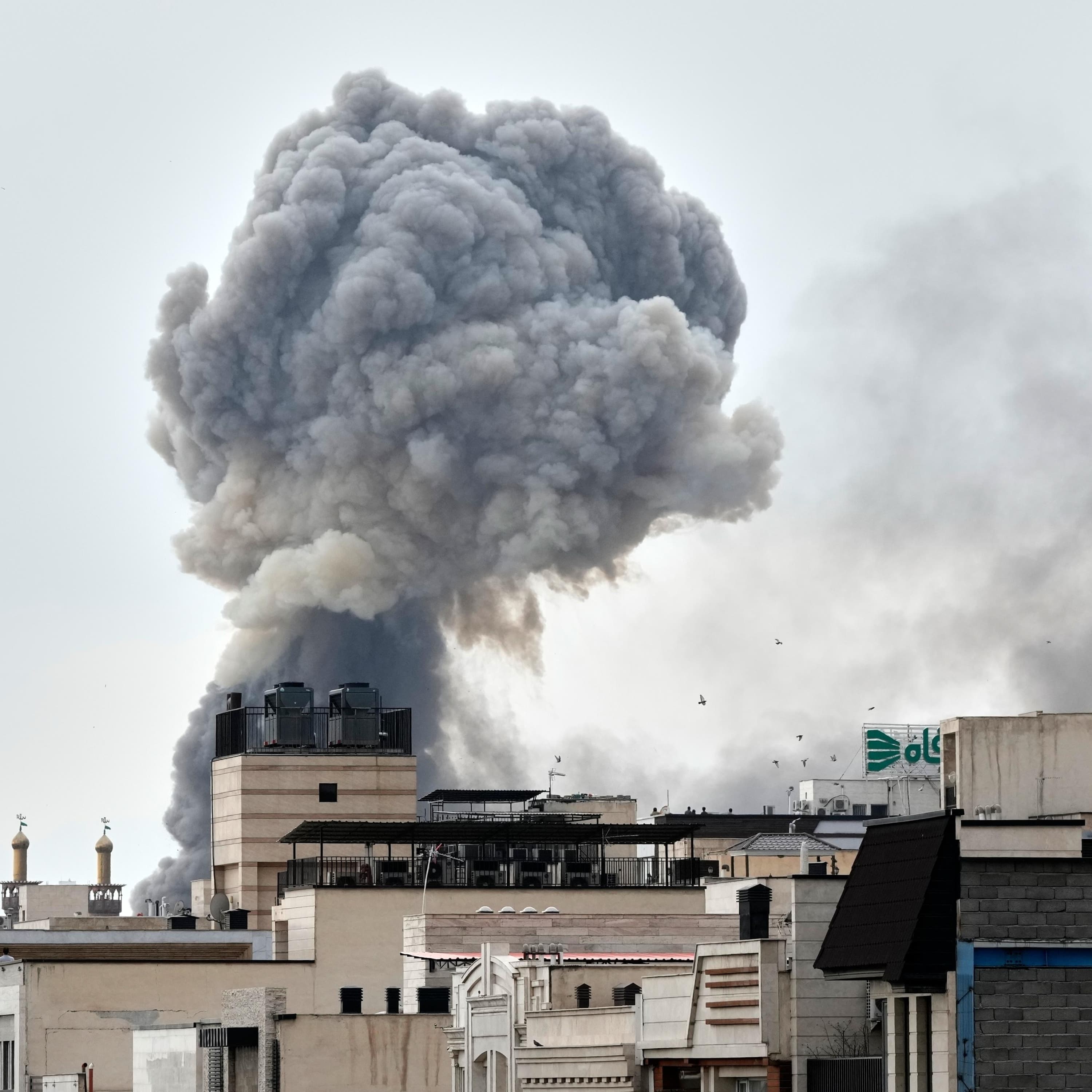
This is the Guardian. The kind of playback has been pretty extraordinary, perhaps a lot more than the American sorter would be. This is not a so-called regime change war, but the regime sure did change on America's first conditions of President Trump's choosing. Nobody else's, as it should be. This is a war of choice. Chaos in Iran kind of works for Israel. We have seen a sort of falling apart of the rules-based order. Today, escalation and retaliation as war rocks the Middle East. From the Guardians to Day in Focus, this is the latest with me, Nashineq Bar. Joining me today is Jamie Wilson, the Guardians Head of International News. Jamie, we've just heard from Pete Hegseth, the U.S. Secretary of War, as he's rebranded the Defense Secretary position.
Now, he's made his first statement since Israel and the U.S. began this bombardment of Iran on Saturday. What did we learn? I think crucially, we learned probably for the first time since the bombs started on Saturday morning. Exactly what the U.S. war reigns are here. He was pretty clear. This wasn't going to be a forever war. The aim was to destroy the Iranian missiles, to destroy the Iranian navy, with the ultimate aim of destroying any defenses that Iran has that would allow them to build a nuclear weapon. He accused Iran of basically waging war on America and American people for 47 years and said that this wasn't about regime change. They definitely were changing the regime. Funny to mention. Yeah, it was typically Hegseth quite punchy, quite angry, very angry with the media who were asking questions as normal saying that the media had no real right to know what was going on on the ground or what the American sort of was actually happening in terms of the operation.
So yeah. And of course, there are wider implications across the Gulf. The war has spread. Lebanon has been hit by bombs from Israel. Hezbollah has been striking Israel. Saudi, Bahrain, Qatar. I mean, everyone seems to be embroiled in some way in retaliatory strides. How do you think this plays out for the Gulf? And how do you think those countries will respond? Well, yeah. I mean, he promised that this wasn't going to turn into some major wider regional war that was going to go on for months or years. And that this was a matter of days or weeks rather than months or years. But they kind of blow back. Has been pretty extraordinary. Perhaps a lot more than the American sort. It would be Iran has an awful lot of these Shaheed drones that it's been using or that it's given to the Russians that they've been using in Ukraine for many years. They're very low tech. They're very inexpensive. But they're quite hard to defend against. And so they managed to fire them at countries across the region from Qwait to Saudi Arabia to Bahrain.
And in Dubai, where we've seen these drones crushing in, so kind of hotels that European and other tourists use throughout the year. So pretty extraordinary scenes to see that happen. The Gulf countries have put out a statement this morning condemning the Iranians for their response. But it's hard to imagine that sort of behind the scenes, they're also probably not quite angry with the Americans for having launched this war that has then led them to be under attack. I mean, there's going to be, you know, certainly for bases like Dubai, which relies on its tourist industry, seeing drones crushing and exploding into hotels is not going to be great for that going forward. So behind the scenes, there's probably quite a lot of anger. And even from the American perspective, I mean, you had three fighter planes shot down in Qwait and these extraordinary images of the pilots parachuting down. And that was actually done by mistake by the Qwaiti. So you can just see this picture of chaos. Yeah, I mean, that was sort of, yeah, kind of extraordinary images video of these planes falling out of the sky.
As you say, it's shot down in a friendly fire instant by the Qwaitis. But yeah, it just shows that it's not everything goes to plan when you launch these kind of major wars against a country that does have certainly a lot less missiles and defenses than it had before the war in June last year, when a lot of that was taken out. This still has an awful lot of capability to fight back. How long that capability lasts, we're not sure. And that's going to be one of the big questions for probably the next few days and weeks of if it goes on that long, it's actually how long can Iran keep firing back? The Americans and Israelis have complete control of the skies over Iran at the moment it seems. So, you know, and presumably the Iranians have a limited supply, but how big that supplies we just don't know. Right. And of course, there's also wider concern in the UK that we may be embroiled in this conflict in somewhere or another. Because on Sunday, you know, you saw the Prime Minister saying that there wasn't going to be permission to the US to use UK military bases in the region
to launch strikes on Iran. Now, that very quickly changed and the US did use UK military bases, of course, as we saw. Jamie, how realistic is it you think that the UK will be dragged into this conflict? Yeah, it's, I mean, I'm sure that Keir Starmer will be desperate not to get dragged into any further, but I mean, yeah, as you say, the kind of position has already changed just in a few short days that and we've also seen drones fired at a British Air Force base in Cyprus, which is pretty extraordinary. We don't exactly know where that drone came from possibly. It was fired by his bomber in Lebanon rather than coming all the way from Iran, but you just never know quite what, what, what may happen next. And yeah, at some point, maybe that the UK has, it feels it has to get involved to stop that from happening or to, yeah, I'm sure, I'm sure they'll be resistant to that, but, but they've already got, you know, British has already already got dragged into it far more than they'd like to, I'm sure. And try to, interesting how furious Trump was, not being allowed to use the British British Air Force bases to begin with, he's already said that today,
that Starmer was far too slow in allowing that to happen. Yeah, he changes tune very quickly. And of course, our colleagues on politics weekly will be exploring that question a bit further. Jamie, when it comes to the global ramifications, there are further consequences. When we look at, you know, the price of oil rocketing, when we look at, you know, the economic situation that this war may place many countries in. Well, that's, yeah, again, that's a really big question, is the, or we've already seen your price go up considerably, the longer this goes on, the longer the ships aren't, getting through the streets of farmers, then the straight farmers rather than, you know, the higher, that's likely to go. That has all sorts of major implications, really, not least for inflation, which has been a huge issue across so many countries, and including in America, and that has potentially big implications for the midterms that Trump's doing everything he can to try and rein in the cost of living in the US. But gas prices go up, other prices go up, that potentially could play badly for the midterms. And you do wonder how that tarnis though, with the midterms, with, you know,
how the American electorate feel about potential for this war and how it affects their pocket. I mean, is that a calculation, do you think, for the White House right now? Because we just don't understand Trump's thinking entirely on this. It's really hard to know what he's thinking. He's not up for election next time around. But, you know, if the Republicans do really badly in the midterms, that's going to make the sort of last two years, he's in office incredibly difficult for him. So you would think he's thinking about politics. You know, lots of people saying, well, actually, you know, part of this is to try and kind of stop people from talking about the Epstein revelations. Is that true? It's really hard to know. I find that so to launch such a massive war for that, I think it's a little bit unlikely, but you never know, you never know. Jamie, how much do you infer that the agenda for this war has actually been set by Israel? Because it is a primary objective for Netanyahu to absolutely degrade Iran. Well, yeah, I mean, certainly Netanyahu has Trump's ear definitely feels like. This is very much and is Israeli-led war.
Hexath, when he was speaking kind of interestingly, actually, said that the sort of war aims of the US and Israel potentially were quite different. And for Israel, I think the aim is to is regime change in Iran, or even a civil war in Iran, that chaos in Iran kind of works for Israel in a way. It means that they're not a threat to Israel. And it means that Iran's proxies, including Hezbollah and Lebanon, is not a threat either. So definitely, we know that Netanyahu is incredibly influential inside the White House, and it does feel like, yeah, but they very much push this at this moment. And meanwhile, of course, strikes are raining down on Iran. And Trump has claimed that they have killed 48 of Iran's top leaders, including, of course, the Ayatollah. Jamie, what do you make of this alleged invitation he's given to the Iranian people to take this once-in-a-lifetime opportunity for generational change? How likely is it that the Iranian regime will fall? I mean, we've seen an incredible sort of split-screen moments in Iran
over the last few days with some of the population, jubilant at the killing of the Ayatollah, who they see as having kind of held them back for years. And we are just a few short weeks since these massive protests across Iran, in which thousands of people died. We still have no real idea exactly how many thousands died, but an awful lot. So we've sort of seen kind of real jubilation from part of the country. But at the same time, an awful lot of people out on the streets in the morning, and absolutely furious at what's going on, and very angry with America, and which of those two sides wins out at this point is really hard to say, other than the regime is still by far the heaviest, more heavily armed than the civilian population. I mean, the Syrian regime doesn't have any arms. It's sort of, you know, one side is a real military force, the other one isn't.
So, but at the same time, things can change very quickly. We saw that in Syria last year with the fall of the Assad regime, which crumbled incredibly quickly. So when these things do take hold, it can happen very fast. And then, Jamie, finally, if we just pretend for a moment that we are living in normal times, what possible legal justification is there for these strikes? And what president does it say on a global political stage? It's very hard at this point to see any kind of legal justification for this. This is a war of choice that wasn't, you know, I think pretty much all the US intelligence assessments were that there was no immediate threat from Iran at this point. So this was very much a war of choice, you know, carried out now, probably because both the US and Israel saw that Iran was at possibly as weak as point that it could possibly be. As I said, following the attacks last June in which an awful lot of the Iranian,
sort of, you know, missiles and military defenses were taken out. And then the recent protests that has absolutely roiled the country and presumably they thought this, if there is going to be a moment when the regime does fall, this is it. Hence why, why to do this now. But there's no legal justification for that in that sense. But just absolutely meets Israel and America's objectives. Absolutely, absolutely. And yeah, I mean, you know, we have seen sort of falling apart of the rules-based order. And since Trump took office for his second term and how that plays out, yeah, that sort of, I guess somebody like Vladimir Putin would, you know, seeing another strong man failed is not probably not something he's desperately keen to see either. But at the same time, kind of the sort of condemnation of his invasion of Ukraine becomes much harder when something like this happens. And I guess for China, you know, the kind of always the big question is, will they, will they decide
at some point invade Taiwan? And again, does this give them license to do that? I'm not sure, but sort of some, certainly some people think so. Gosh, Jamie, thank you for your time. You're very welcome. That's it for today. My huge thanks again to Jamie Wilson, the Guardians Head of International News. Thanks for listening to this episode of The Latest, the new evening edition of Today in Focus. Today in Focus will be back tomorrow morning with more analysis of this situation in Iran, and we'll be back tomorrow night. This episode was presented by me, Noshinikbo, the producers were Brynie Moore and Annie Levespa. The senior producer was Ryan Ram-Gobin and the lead producer was Zoe Hitch. This is The Guardian. Hi, this is Farnoosh Trabi from So Money with Farnoosh Trabi, and today I want to talk to you about Boost Mobile. Quick money tip, stop paying a carrier tax.
If your phone bill feels trapped in a pricey plan, this is your sign to Unlock Savings. Boost Mobile helps you reset your spending with the $25 unlimited forever plan. You can bring your own phone, pay $25 and get unlimited wireless forever, and that simple switch can unlock up to $600 in savings a year. That's money you could put towards paying down debt, investing, or something that actually brings you joy. Though savings are based on average annual single line payment of AT&T, Verizon, and T-Mobile customers compared to 12 months on the Boost Mobile Unlimited plan as of January 2026. For full offer details, visit boostmobile.com.
More episodes
More from Today in Focus

Is Trump trying to buy votes? – The Latest
Today in Focus

The young and healthy Dutchman who moved into a care home
Today in Focus

Why is Trump silent on UK sanctions against Israeli West Bank settlements? – The...
Today in Focus

Inside Reform UK
Today in Focus